“Sooner or later you’re going to get what’s coming to you.”
Introduce me to a group of dysfunctional teenagers that go somewhere and all but one return because someone’s no longer breathing and now everyone else is a suspect, and I’m a happy camper. Add some social issue soup to the mix and I’ll be hooked. It doesn’t matter how many books along these lines I read; I just keep coming back for more.
Savana and Jesse are neighbours who’ve known one another for years. They’re friends and there is absolutely some chemistry between them so when Jesse asked her to meet him at Cray’s Warehouse, the senior class’ summer break party spot, of course she was going to go.
She didn’t expect to see someone fall out of a fourth storey window when she got there. She definitely didn’t plan on getting caught up in a murder investigation. But here we are.
I have a horrible feeling this is just the beginning.
Supplementing the narrative, which is told by Savana and Jesse, are transcripts of an audio file, interviews and text messages, as well as an email and news article.
This was a quick, entertaining read. I guessed the who but not the why.
I don’t know what it is about books like these. They feel like a guilty pleasure. I don’t expect to stop reading them anytime soon, though.
“Don’t assume you know the whole story.”
Thank you so much to NetGalley and Harlequin Australia for the opportunity to read this book.
⭐⭐⭐⭐
Rating: 4 out of 5.
Once Upon a Blurb
Six friends. Five suspects. One murder.
Savana Caruso and Jesse Melo have known each other since they were kids, so when Jesse asks Savana to meet him at Cray’s Warehouse in the middle of the night, she doesn’t hesitate. But before Savana can find Jesse, she bears witness to a horrifying murder, standing helpless on the ground as a mysterious figure is pushed out of the fourth floor of the warehouse.
Six teens were there that night, and five of them are now potential suspects. With the police circling, Savana knows what will happen if the wrong person is charged, but someone is willing to do whatever it takes to keep the truth from coming to light.
Best friends Donna, Rae and Kat skipped school on Wednesday afternoon to traipse through the woods. Two of them returned on Saturday. One is still missing.
Donna Ramirez is a wannabe rebel. Her mother, who left when Donna was 9, now has a new family. Donna has an older brother, Jay. She lives with her father, Hector, who is fluent in Dad jokes.
Donna doesn’t remember what happened in the woods.
Tammie-Rae (Rae) Hooper is a preppy church girl and star of the athletics team. She lives with her parents and her brother, Brandon. Her parents have a list of “Forbidden Demonic Things”. It’s a long list.
They love you so long as you stay their good girl.
Rae returned from the woods screaming.
Their sweat glands have been on overdrive since they returned and they’re mighty peckish.
“Remember what we promised each other?”
Wallflower nerd Katherine (Kat) Larkin recently began wearing oversized men’s flannel shirts. She’s smart and loves Nancy Drew books.
Kat is still missing.
The story is told by each of the girls as well as Marybeth Larkin, Kat’s mother. Through them, you meet some of Little Hope’s townsfolk, including town boogeyman, Ronnie Gaskins, who murdered his parents when he was a child.
I flew through this book. I wasn’t a fan of the amount of times I read about how much weight one character had gained and the size of another’s breasts but there was a lot to love. The 90’s pop culture nostalgia. The mystery of what happened to the girls during the missing time. The squishy body horror. The newspaper articles and zine pages. Snooping in Kat’s diary. The fact that I was hooked the entire time.
If they didn’t live in a small town, Donna, Rae and Kat may not have ever become friends. If it wasn’t for newspaper club, they probably would have remained acquaintances. They reminded me of the intensity of teenage friendships: the shared experiences and the bonds that feel unbreakable.
I’m a teensy bit obsessed with the prayer to Scully, “our lady of The X-Files”.
Favourite no context quote:
“I will be the Batman of toilets.”
Thank you so much to NetGalley and Titan Books for the opportunity to read this book.
⭐⭐⭐⭐⭐
Rating: 4.5 out of 5.
Once Upon a Blurb
Three girls went into the woods. Only two came back, covered in blood and with no memory of what happened. Or did they?
Being fifteen is tough, tougher when you live in a boring-ass small town like Little Hope, California (population 8,302) in 1996. Donna, Rae and Kat keep each other sane with the fervour of teen girl friendships, zine-making and some amateur sleuthing into the town’s most enduring mysteries: a lost gold mine, and why little Ronnie Gaskins burned his parents alive a decade ago.
Their hunt will lead them to a hidden cave from which only two of them return alive. Donna the troublemaker can’t remember anything. Rae seems to be trying to escape her memories of what happened, while her close-minded religious family presses her for answers. And Kat? Sweet, wannabe writer Kat who rebelled against her mom’s beauty pageant dreams by getting fat? She’s missing. Dead. Or terribly traumatised, out there in the woods, alone.
As the police circle and Kat’s frantic mother Marybeth starts doing some investigating of her own, Rae and Donna will have to return to the cave where they discover a secret so shattering that no-one who encounters it will ever be the same.
It’s a miracle and it’s a curse, the secrets our bodies keep.
When Rory agreed to temporarily move back to her hometown to support her pregnant twin, Scarlett, irrevocable changes to her life (and body) weren’t what she had in mind. After running into Ian, who’s been in love with her forever, at a bar, she has an accident on her way home.
It wasn’t a bear that attacked Rory that night under the watchful gaze of the full moon. It turns out werewolves aren’t as fictional as we’ve all been led to believe.
“Yep. Werewolf,” I say. “A real thing apparently. Who knew?”
While Rory was justifiably concerned about Bambi’s welfare after the accident, it’s not Rory’s car Bambi needs to worry about; it’s her appetite.
The body horror is strong with this one, with the transformation process a particularly visceral experience. The close encounters with a smorgasbord of meats will mean you’re likely to either crave a big juicy steak while reading or reconsider your carnivore status entirely. Or, if you’re like me, your stomach will be turning even as you wish you had a cheeseburger in front of you waiting to be devoured.
Having a female werewolf central to the story doesn’t just make for an entertaining read. It also paves the way for themes of power and control, rage, how we live after trauma and the reclamation of bodily autonomy when your body has been used by another as an object and it doesn’t feel like you inhabit it anymore. Rory’s struggles with what her life looks like now and with her family and past are explored while she works her way through the deli section of the local supermarket.
In all the fairy tales, the wolf is big and bad and dangerous. A predator. Devious and evil. Something to be feared. But fairy tales are bullshit. Maybe wolves just get a bad edit.
There are worse things to be. I know because I’ve faced those monsters.
Thank you so much to NetGalley and Titan Books for the opportunity to read this book.
⭐⭐⭐⭐
Rating: 4 out of 5.
Once Upon a Blurb
Rory Morris isn’t thrilled to be moving back to her hometown. There are bad memories there. But her twin sister, Scarlett, is pregnant and needs support, so Rory returns to the place she thought she’d put in her rearview. After a night out at a bar where she runs into Ian, an old almost-flame, she hits a large animal with her car. And when she gets out to investigate, she’s attacked.
Rory survives, miraculously, but life begins to look and feel different. She’s unnaturally strong, with an aversion to silver – and suddenly the moon has her in its thrall. She’s changing into someone else – something else. But does that mean she’s putting those close to her in danger? Or is embracing the wildness inside her the key to acceptance?
This darkly comedic love story is a brilliantly layered portrait of trauma, rage and vulnerability.
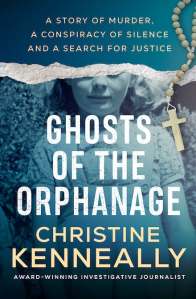
For more than a hundred years, the people of Vermont had, knowingly or unknowingly, sent their children in reverent offering to the huge house on the hill outside of town. The obedient servants of the Catholic God took the children in, and in return, behind the locked doors of St. Joseph’s Orphanage, out of their own pain and misery, and with all their immense entitlement, they devoured them.
Some books stay with me because they were so well written. Others linger because they invited me into a world that I previously knew very little of, or their content haunts me. Then there are those that introduce me to people I’ll never forget.
This book was all of the above. I expect it to be one of my favourite non-fiction reads of the year.
Investigating some of the worst abuses of power I’ve ever read about, abuse that took place over the course of decades and throughout continents by seemingly countless perpetrators, this is not an easy read. Important, absolutely. Easy, not even close.
However, despite detailing abuses that run the gamut – verbal, emotional, physical, sexual, medical, neglect, torture, even murder – the descriptions are not as graphic as I had expected them to be. That’s not to say that there’s any doubt about the level of brutality these children survived (or didn’t, in some cases). The content is potentially triggering but it’s delivered as sensitively as possible.
The research that preceded this book was extensive, consisting of hundreds of interviews as well as … take a deep breath …
thousands of pages of transcripts from the St. Joseph’s litigation in the 1990s and files from Vermont Catholic Charities, which included contemporaneous logs from social workers at the orphanage, medical records, historic photographs, and letters written by priests and other workers in child welfare at the time, as well as handwritten diaries, police records, autopsy reports, transcripts from secret church tribunals, priest rehabilitation reports, orphanage settlement letters, historic newspaper articles, death and birth certificates, and government files and reports from many jurisdictions.
While the bulk of the book focuses on the atrocities that took place at St. Joseph’s Orphanage in Vermont, you’ll also learn about other orphanages in America, Canada, Australia, Ireland and Scotland.
“I thought I was the reason all that stuff happened,” he told me. “All that time, I thought it was only happening to me, but it was happening all over the place.”
Geoff Meyer
Sally Dale is integral to this book but hers is not the only story that will stay with you. I’m in awe of the courage, resilience and determination of the children I was introduced to, those who lived to become adults as well as those who didn’t.
As adults, many have fought for justice against one of the oldest institutions in the world. The pain of hearing their stories was well and truly offset by the privilege of getting to know these remarkable survivors.
I can’t recommend this book highly enough, but my recommendation comes with a word of warning: please take good care of yourself while you’re reading it. And make sure you have tissues on hand.
Now I know that some people have always moved freely between the reality that is plain to see and its hinterlands: the institutions, the orphanages, the places where things happen behind closed doors and stay hidden.
Thank you so much to Hachette Australia for the opportunity to read this book.
⭐⭐⭐⭐⭐
Rating: 5 out of 5.
Once Upon a Blurb
A shocking expose of the dark, secret history of Catholic orphanages – the violence, abuse, and even murder that took place within their walls – and a call to hold the powerful to account.
Ghosts of the Orphanage is the result of ten years of investigation by award-winning journalist Christine Kenneally. What she has uncovered is shocking, yet it was all hiding in plain sight.
Terrible things, abuse, both physical and psychological, and even deaths have happened in orphanages all over the world for many years. The survivors have been telling what happened to them for a long time, but no one has been listening. Authorities have too often been unwilling to accept their stories. And a victim’s options for recourse have been limited by the years it has taken many survivors to process their trauma, tell their stories, and pursue legal action.
Centering on St. Joseph’s, a Catholic orphanage in Vermont, Kenneally investigates and shares the stories of survivors. She has fought to expose the truth and hold the powerful – many of them Catholic priests and nuns – to account. And it is working. As these stories have come to light, the laws in Vermont have been forced to change, including the statute of limitations on prosecuting them.
Told with human compassion, novelistic detail and a powerful sense of purpose, Ghosts of the Orphanage is not only a gripping story but a reckoning. It is proof that real evil lurks at the edges of our society, and that, if we have the courage, we can bring it into the light and defeat it.
I’ve read books about complex trauma before. Most focus exclusively on those who have experienced trauma, classifying them as victims or survivors. They tend to talk about what happened to people and then discuss the various short and long term impacts, and offer suggestions for managing them.
I’ve also read books about perpetrators before, although these reads generally focus on serial killers, a result of my interest in criminal profiling. More often than not, a perpetrator is painted as only that. If mention is made of any victimisation that they have experienced, it’s in a reductive manner. This happened to this person as a child. Therefore, this person acted in this way as an adult.
This book is designed to be a guide to evidence-based psychological frameworks that can aid in understanding the nature of complex traumas, the tasks of recovery, the nature of those who perpetrate abuse, and broader issues involved in service provision and trauma management.
What drew me to this book was the fact that its author works as both a clinical and forensic psychologist. As someone with a trauma history, I’m always looking for new, better ways to manage its impacts. As someone with a psychology degree (the most expensive piece of paper I own), I am interested in the why behind the what when people act in ways that victimise others.
I love that this book delves into something that most people conveniently ignore: sometimes a person is both victim and perpetrator.
We have neat binaries in our minds: victims and perpetrators. Some people are both, and we struggle to know where to place these people and how to respond to them.
One of my favourite parts of this book was its exploration of the way the media highlights the stories of survivors of trauma whose impacts are socially acceptable; these are usually young, attractive, educated, heterosexual, white women. What’s lost in the narrative is everyone else, including those who are incarcerated, homeless, struggle with addiction or virtually any other impact that makes it easier for us to focus on someone’s behaviour at the risk of ignoring their underlying trauma.
When we think about complex trauma it is essential to hold all survivors in mind – not just those we judge to be worthy of healing (typically those we see as being most like us).
I also appreciated the acknowledgment that many perpetrators are very skilled at hiding their true colours from the people they’re not victimising. So many times when I’m reading news articles about a horrific crime, I see quotes from people who know the alleged perpetrator, who talk about what a nice, wonderful, community minded person they are. They can’t believe that their friend, coworker, family member or acquaintance would be capable of such violence.
People who engage in abusive acts often demonstrate situation and context-dependent behaviours, so that people who are not being victimised by them will often see very different behaviours.
A blend of theory and case studies (composites so as not to breach confidentiality), this book would be of interest to both trauma survivors and those who work in helping professions. I anticipate that readers who work with trauma survivors will find the information relating to managing vicarious trauma particularly helpful.
Thank you so much to Scribe Publications for the opportunity to read this book.
⭐⭐⭐⭐⭐
Rating: 4.5 out of 5.
Once Upon a Blurb
A groundbreaking book that will broaden and expand your thinking, whether you are a trauma survivor, a clinician, someone who loves a survivor, or someone seeking to understand abuse.
The relationship between trauma and mental health is becoming better recognised, but survivors and professionals alike remain confused about how best to understand and treat it. In Reclaim, through a series of case studies and expert analysis, Dr Ahona Guha explores complex traumas, how survivors can recover and heal, and the nature of those who abuse. She shines a light on the ‘difficult’ trauma victims that society often ignores, and tackles vital questions such as, ‘Why are psychological abuse and coercive control so difficult to spot?’, ‘What kinds of behaviours should we see as red flags?’, and ‘Why do some people harm others, and how do we protect ourselves from them?’
As a clinical and forensic psychologist, Dr Guha has had extensive experience in working with those who perpetrate harm – including stalkers, sex offenders, violent offenders, and those who threaten, bully and harass – and she has a deep understanding of the psychological and social factors that cause people to abuse others. In turn, her clinical work in the trauma treatment field has led her to recognise the enormous impacts of complex trauma, and the failures of systems when working with those who have been victimised.
By emphasising compassion above all, Dr Guha calls for us to become better informed about perpetrators and the needs of victims, so we might reclaim a safer, healthier society for everyone.
Every time I read a Mary SanGiovanni book I remember how much I love them. I’m also reminded of how fun it is when she introduces something I’ve either never heard of or know very little about, generating enough interest in me that I decide I need to become an expert in whatever the something is.
In Inside the Asylum, this was tulpas. I’d never heard of them but by the end of the book I’d read everything I could find about them. Years later, they came up in some random TV episode. The person sitting next to me asked if I knew what that word was. Naturally, I proceeded to tell them all about tulpas, including some handy hints for how to make one if they were so inclined.
While I was trying to find my way out of the Savage Woods, I began reading about tree spirits. When I wasn’t busy trying to pronounce Kèkpëchehëlat.
This is my first Mary SanGiovanni read that isn’t a Kathy Ryan book (note to self: read the rest of Mary’s books!). I kept thinking that the subject matter was right up Kathy’s alley and loved that her research had a cameo, even though she didn’t.
Brothers Todd and Kenny decide Nilhollow is the perfect place for their camping trip. They don’t believe the “clichéd stuff about cursed grounds, unexplained hiker deaths and disappearances, lights in the sky, that sort of thing.”
They’re also dismissive about the reports of the missing people “turning up inside-out and hanging from trees”. What brothers Todd and Kenny don’t realise is that they’re first chapter characters and, as such, they’re almost certainly destined to stop breathing before the main characters show up.
Something about Nilhollow was just … all wrong.
Which brings me to Julia Russo, who’s trying to escape her abusive ex-boyfriend, Darren. Darren, who clearly doesn’t understand the purpose of a restraining order, decides to run Julia off the road. In the wrong part of the woods.
Officer Pete Grainger, a New Jersey state trooper, knows Julia’s situation well and has developed some not especially professional feelings for her. Of course, when he learns she’s in trouble, Grainge responds. So do a whole gaggle of law enforcement corpses in the making.
This book is an absolute splatterfest and I loved every squishy, crunchy, rending moment. I flew through it, cheering on the trees as they painted the woods red. I’m more convinced than ever that I need to read everything Mary SanGiovanni ever writes.
“You need to warn the others that whatever slept in these woods is awake now, and it wants blood.”
Thank you very much to NetGalley and Lyrical Underground, an imprint of Kensington Books, for the opportunity to read this book.
⭐⭐⭐⭐⭐
Rating: 5 out of 5.
Once Upon a Blurb
Nilhollow – six-hundred-plus acres of haunted woods in New Jersey’s Pine Barrens – is the stuff of urban legend. Amid tales of tree spirits and all-powerful forest gods are frightening accounts of hikers who went insane right before taking their own lives. It is here that Julia Russo flees when her violent ex-boyfriend runs her off the road … here that she vanishes without a trace.
State Trooper Peter Grainger has witnessed unspeakable things that have broken other men. But he has to find Julia and can’t turn back now. Every step takes him closer to an ugliness that won’t be appeased – a centuries-old, devouring hatred rising up to eviscerate humankind. Waiting, feeding, surviving. It’s unstoppable. And its time has come.
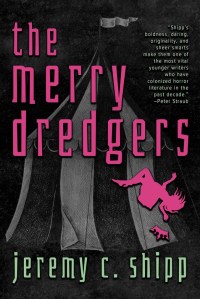
Phina is dressed as a princess when she learns her sister has joined a cult. Eff has written her a letter on a series of postcards, assuring Phina that she most definitely hasn’t joined a cult. As you well know, this means Eff has absolutely, positively joined a cult. Phina agrees.
Right now, all I know for sure is that my sister definitely joined a cult, and I need to find a way to save her.
Before she can come up with a rock solid plan to extricate Eff, Phina learns that her sister has come into contact with some solid rocks. Eff has been in an “accident”, if you think a cult member falling into a quarry soon after telling a family member that they’ve joined a not cult isn’t suspicious.
Phina goes into investigation mode, deciding that the only way she’ll be able to narrow down the list of suspects is to join said cult.
Eff always likes to talk about the crossroads moments in a person’s life, and this definitely feels like one of those.
Welcome to Goblintropolis, home of the Merry Dredgers. Side bar: If your cult wants to recruit me, it would help your cause considerably if your commune’s located in an abandoned amusement park.
This was one of those books that I flew through, wanting to know what was next even as I asked myself what on earth I was reading. I had a similar experience with this book as I did with The Atrocities, absolutely loving it until the very end.
I was hooked until the final couple of pages, when an element of the story that I’d hoped would drag on for a while resolved almost instantaneously. I have a few unanswered questions but am mostly okay with having those linger.
Sometimes the banter between Phina and Nichelle seemed a bit forced but this could be explained by Phina’s need to fit in quickly with the Merry Dredgers.
I want to visit Goblintropolis. I’m most looking forward to seeing the eyeball tree. I love that someone’s trying to put Humpty Dumpty back together again.
New favourite insult:
“She’s nothing but a spud-brained charlatan.”
Thank you so much to Meerkat Press for the opportunity to read this book.
⭐⭐⭐⭐
Rating: 4 out of 5.
Once Upon a Blurb
Seraphina Ramon will stop at nothing to find out the truth about why her sister Eff is in a coma after a very suspicious “accident.” Even if it means infiltrating the last place Seraphina knows Eff was alive: a once-abandoned amusement park now populated by a community of cultists.
Follow Seraphina through the mouth of the Goblin: To the left, a wolf-themed rollercoaster rests on the blackened earth, curled up like a dead snake. To the right, an animatronic Humpty Dumpty falls off a concrete castle and shatters on the ground, only to reform itself moments later. Up ahead, cultists giggle as they meditate in a hall of mirrors. This is the last place in the world Seraphina wants to be, but the best way to investigate this bizarre cult, is to join them.
Violet’s father is appalled by her behaviour (climbing trees is most inappropriate) and is threatening to send her to finishing school so he can marry her off to an eligible young man. Violet wants to be a scientist. She would also like to be allowed to wear trousers. No one understands her “insect obsession”.
‘Is there something wrong with me?’
Kate – 2019
When Kate leaves her abusive relationship, she goes to Weyward Cottage, which was owned by her great-aunt. It is here that she will come to terms with her past and discover her heritage.
I am the monster.
The first Weyward child is always a girl. This is the story of three of them, centuries apart yet connected.
Although each Weyward is given a voice in this story, Altha’s is the only one told in first person. I found something to like about all three women. In particular, their affinity with nature endeared them to me.
Be aware that on page violence against women is part of the story in every timeline. The graphic nature of some of this abuse may be triggering for some readers. Thankfully, women reclaiming their power and having the courage to be themselves was also part of the story.
Favourite no context quote:
Perhaps one day, she said, there would be a safer time. When women could walk the earth, shining bright with power, and yet live.
Thank you so much to NetGalley and The Borough Press, an imprint of HarperCollins UK, for the opportunity to read this book.
⭐⭐⭐⭐
Rating: 4 out of 5.
Once Upon a Blurb
Kate, 2019 Kate flees London – abandoning everything – for Cumbria and Weyward Cottage, inherited from her great-aunt. There, a secret lurks in the bones of the house, hidden ever since the witch-hunts of the 17th century.
Violet, 1942 Violet is more interested in collecting insects and climbing trees than in becoming a proper young lady. Until a chain of shocking events changes her life forever.
Altha, 1619 Altha is on trial for witchcraft, accused of killing a local man. Known for her uncanny connection with nature and animals, she is a threat that must be eliminated.
But Weyward women belong to the wild. And they cannot be tamed…
Weaving together the stories of three women across five centuries, Weyward is an enthralling novel of female resilience and the transformative power of the natural world.
I’m fascinated by why humans do the strange things we do. This book answered some of the questions I’ve had, as well as some I didn’t have until I started reading.
While I have an interest in neuroscience, I don’t have a scientific background so am usually hesitant to dive into books that explore it. The blurb made this one sound like it would be accessible without a bunch of prior knowledge so I took a chance. I loved it so much that I practically inhaled it.
I have so much more appreciation for the complexities of the brain and how much we still don’t know about how it works. Given how many of its parts are involved in tasks that we often do without a second thought, it’s astounding that we function at all.
Just speaking a simple sentence, for example, requires the successful execution of operations such as word retrieval, the application of syntax (i.e., the rules used to properly arrange words in a sentence), coordinating the activity of the muscles involved in speech, sprinkling in appropriate changes in tone and pitch, and so on. Each of these tasks might require the contribution of different parts of the brain, causing language to be reliant on a large number of functioning brain regions for it to be fully operational.
This book explains how the different parts of the brain work but I’m also much more aware now of the many ways that things can go wrong. Illness, trauma and other unexpected bumps in the road that affect even one part of the brain can have life changing consequences.
Each chapter covers a different area of behaviour: identification, physicality, obsessions, exceptionalism, intimacy, personality, belief, communication, suggestibility, absence, disconnection and reality.
There are so many disorders and syndromes covered in this book, some I’d already heard of but others that were new to me. There’s Cotard’s syndrome, where you’re convinced you’re dead or have lost organs, blood or body parts, and Capgras syndrome, where you believe people close to you have been replaced by imposters. There’s clinical lycanthropy/zoanthropy, pica, hoarding, objectophilia, dissociative identity disorder, the placebo effect, folie à deux, agnosia, alien hand syndrome, Alice in Wonderland syndrome and more.
Despite how strange some of them may seem, they often just represent the extremes of the spectrum of normal human tendencies – and they are not completely foreign to us.
A lot of the stories will stay with me but probably none more so than that of Kim Peek, who had a condition called an encephalocele, “where an incompletely developed cranium allows part of the brain to bulge outside the skull – potentially twisting, distorting, and damaging brain tissue in the process.” Despite considerable brain damage, Kim was able to do something extraordinary.
He eventually could read a page in 8 to 10 seconds while memorizing all the information on it. He even began reading and comprehending the right and left pages of a book simultaneously (with his right and left eyes).
By the time he died in 2009 at the age of 58, Kim had read – and memorized – more than 12,000 books.
Morbid curiosity may make you want to read this book but, thanks to the author’s approach, you never lose sight of the fact that these are real people you’re reading about, people who have often suffered greatly as a result of what’s happening in their brain.
This book did what I’m always looking for in non-fiction. I learned plenty of interesting new things. It held my attention. It made me think. It made me want to learn more.
Thank you so much to NetGalley and Nicholas Brealey Publishing, an imprint of John Murray Press, for the opportunity to read this book.
⭐⭐⭐⭐⭐
Rating: 5 out of 5.
Once Upon a Blurb
The human brain is an impossibly complex and delicate instrument – capable of extraordinary calculations, abundant creativity and linguistic dexterity. But the brain is not just the most brilliant of evolutionary wonders. It’s also one of the most bizarre.
This book shows a whole other side of how brains work – from the patient who is afraid to take a shower because she fears her body will slip down the drain to a man who is convinced, against all evidence, that he is a cat, and a woman who compulsively snacks on cigarette ashes.
Entertaining though they are, these cases are more than just oddities. In attempting to understand them, neuroscientists have uncovered important details about how the brain works. Bizarre will examine these details while explaining what neuroscience’s most unusual patients have taught us about normal brain function -ideal both for readers seeking a better appreciation of the inner workings of the brain and those who simply want some extraordinary topics for dinner party conversation.
Tyson Parks, once upon a bestselling author, is struggling both creatively and financially. He’s already spent the advance he received for the book he was supposed to be writing and his agent isn’t exactly thrilled that the work in progress Tyson presents to him doesn’t even remotely resemble the pitch. Sent away with an impossible deadline and strict instructions to write the book he was supposed to be writing, Tyson feels defeated.
Sarah, Tyson’s partner, goes all out for his birthday, buying him a one of a kind antique desk. They both hope this will give Tyson the boost he needs to get back in the game.
Now, instead of completing the historical horror novel he wanted to write, Tyson finds himself embroiled in a real life historical horror, one that’s almost three hundred years in the making.
I found this book easy to get into and I was keen to see how the history of Tyson’s desk impacted on his present. Almost immediately I started comparing Tyson to Jack Torrance. It was hard not to. The author even references Jack, and adds a few other King references in for good measure.
I was completely on board until the on page rape scene. I love so many types of horror: body horror, slashers, supernatural horror, gore, psychological horror, monster horror… This rape scene, though? It seemed to me that it was only there as a plot device, showing the reader that the desk is influencing Tyson to act in a way that he never would without it. There are so many ways you can show me that someone is morphing into a bad guy without using rape to do it. Sexual assault has its place in fiction but not when there’s no sensitivity given to the material.
But here’s the reality: when you are joined with someone for over a decade of life, and when that decade has been a good decade – a litany of loving moments, shared compassion and consistent, unflagging support – you build a level of trust, a balustrade of understanding, of love.
Of forgiveness.
This just made me mad. Oh, and then there’s this.
It was up to Sarah to decide now. Was their story over, or had the future already been written? Sarah let out a held breath, her shoulders slump and she leans forward, her forehead to his chest.
She allows him to give himself back to her, and she to him.
Tyson, Sarah might forgive you for brutally raping her but I don’t.
If it wasn’t for this scene, I probably would have continued to enjoy this read. It coloured everything I read after it, though, and I never made it back to my initial enjoyment.
Because I really liked the way this novel started, I’d be interested in trying another book by this author. I’d definitely check out the reviews first to make sure I chose one that’s right for me.
Thank you so much to NetGalley and Cemetery Dance Publications for the opportunity to read this book.
⭐⭐⭐
Rating: 2.5 out of 5.
Once Upon a Blurb
On his 59th birthday, Tyson Parks – a famous, but struggling, horror writer – receives an antique desk from his partner, Sarah, in the hopes it will rekindle his creative juices. Perhaps inspire him to write another best-selling novel and prove his best years aren’t behind him.
A continent away, a mysterious woman makes inquiries with her sources around the world, seeking the whereabouts of a certain artifact her family has been hunting for centuries. With the help of a New York City private detective, she finally finds what she’s been looking for.
It’s in the home of Tyson Parks.
Meanwhile, as Tyson begins to use his new desk, he begins acting… strange. Violent. His writing more disturbing than anything he’s done before. But publishers are paying top dollar, convinced his new work will be a hit, and Tyson will do whatever it takes to protect his newfound success.
Even if it means the destruction of the ones he loves.






 Schizanthus Nerd