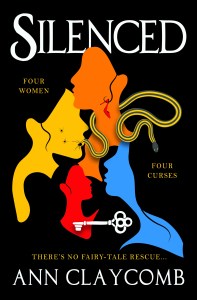
Four women who work for the same company have experienced sexualised violence by the CEO. This is a man who will use all of his considerable power to silence the women he assaults.
He’s counting on us not telling anyone because we’re afraid they won’t believe us.
Jo, Abony, Ranjani and Maia have all tried to find ways to be heard but each has been constricted, by fairy tales of all things. These are definitely not the Disney sanitised versions with songs and adorable talking animals.
This is a difficult but important read. It highlights the many ways people who have experienced sexualised violence can be silenced by not only the perpetrator but also the systems we expect to help victims of these crimes.
“If you weren’t so scared that people would believe women, why have you tried so hard to silence us?”
It also clearly explores trauma responses and how the impacts can vary from person to person and across time. These can include the inability to say the words and the shrinking of your world.
There are scenes that describe the violations the women have experienced. While they’re not especially graphic, they don’t allow any doubt about what each woman has experienced so please tread carefully if you are likely find this content difficult to read.
Thank you so much to NetGalley and Titan Books for the opportunity to read this book.
⭐⭐⭐⭐
Rating: 4 out of 5.
Once Upon a Blurb
Four women. Four enchantments. One man. But he is no handsome prince, and this is no sugar-sweet fairy tale. Jo, Abony, Ranjani, and Maia all have something in common: they have each been cursed by the CEO of their workplace after he abused his power to prey on them. He wants them silent and uses his sinister dark magic to keep them quiet about what he did. But Jo, Abony, Ranjani and Maia are not fairy-tale princesses waiting to be rescued. They are fierce, angry women with a bond forged in pain, and they’re about to discover that they have power of their own.
In this sharply written, bitingly relevant modern fable, the magic is dark and damaging, and the women are determined to rescue themselves.
Jess Hill’s See What You Made Me Do is one of the best books I’ve ever read about domestic abuse. I was keen to see how she’d tackle #MeToo and have been impatiently waiting for my library’s copies to arrive so I could dive in.
This essay traces #MeToo from its origins (before it became a hashtag), with a particular focus on how it has played out across Australia’s cultural landscape since 2017. There are examples from the media, education, politics and the legal system, all of which I’d followed in real time but which felt more overwhelming when they were explored one after the other. I don’t know that Australia’s celebrated mateship has ever felt so toxic to me.
There have been battles undertaken in courts, the media and public opinion. We’ve learned just how brutal Australia’s defamation laws are. There are powerful people abusing their power and systems supporting them in their endeavours.
Don’t get me wrong; there have been positives, like #LetHerSpeak. Conversations have taken place that were once considered taboo and there are more people visibly working towards implementing changes to legislation, processes and policies. There are survivors turned advocates who are transforming the way we think about consent and grooming, and their voices have led to others finding their own. Good things are happening.
So, why do I still feel so angry having read this essay?
Maybe it’s about reporting a sexual assault to the police in 2017 and getting my hopes up about the positive impact #MeToo would have on the way my report was treated. Then being told that there was insufficient evidence to pursue criminal charges and subsequently learning that the investigation consisted solely of the detective phoning my psychologist to ask if I had a mental illness that would cause me to fabricate the sexual assault.
Maybe it’s about something a detective said to me a few months ago when they were trying their darnedest to dissuade me from formally reporting a series of sexual assaults (different detective, different perpetrator). No one ever gets a good outcome, they told me. Even if there is a conviction, and that’s a big if, it’s never going to be enough and what you’d have to go through to get it wouldn’t be worth it.
They talked about the things I would have seen in media (like some of the cases I read about here) and noted that they are the minority, and that I shouldn’t align my expectations with those outcomes. Even when someone reports a rape the same day and there’s physical evidence and CCTV footage, it’s almost impossible to get a conviction.They said they were telling me all of this to help me.
This is the same man who helpfully told me that my having a mental illness would be used against me because it would speak to both my credibility and character. ‘You mean the PTSD I have as a result of the sexual assaults I’d be reporting?’ The very same. Huh.
As I read this essay I wondered if the detective was right, that there’s no point in reporting. But you know what? It’s attitudes like this that contribute to silence, the antithesis of #MeToo.
[And besides, this is the same police force whose representatives roll their eyes and pull faces at women who are reporting AVO breaches, who say that behaviour that clearly constitute breaches (written in black and white on the AVO) are in fact not breaches at all. Who write down what you say and then neglect to put it in their system so there’s no record you ever made a report. Who you have to insist write it down in the first place and give you an event number because, even though they think you’re overreacting, they don’t understand what this person’s capable of or how they may escalate.]
I’m mad because I read something like this essay and I get hopeful, but then think about all of the peoples’ experiences it doesn’t encapsulate because only some voices are heard. I want change for all of us, not just the lucky few who, let’s face it, probably shouldn’t be called lucky at all. Because they experienced what they did in the first place. Because even if they did get an outcome that looks like a win, it came at a great cost. Because being an advocate continues to cost.
In lesser hands, this essay could have been an absolute mess, but it’s not. At all. It is well written and clearly involved extensive research but, to be honest, I’d expect nothing less from Jess’ work.
It was a compulsive read. I gained even more respect and admiration for the survivors who tell their story publicly. The powers that be, political and otherwise, lost what little faith I still had in them, not that there was much to lose. I want everyone to read this essay and I want to read it again to pick up on anything I missed when I rushed through it the first time.
So, where do I currently stand on #MeToo? Despite my own experiences, I’m stubbornly hopeful. The systems still fail survivors but more and more of us are demanding change, and we’re done being silenced.
⭐⭐⭐⭐⭐
Rating: 5 out of 5.
Once Upon a Blurb
In 2021, Australia saw rage and revelation, as #MeToo powered an insurgency against sexism and sexual violence. From once isolated survivors to political staffers, women everywhere were refusing to keep men’s secrets.
In this electrifying essay, Jess Hill traces the conditions that gave birth to #MeToo and tells the stories of women who – often at great personal cost – found themselves at the centre of this movement. Hill exposes the networks of backlash against them – in government, media, schools, and in our national psyche. This is a powerful essay about shame, secrecy and, most of all, a revolutionary movement for accountability.
Before I begin, please be warned that there are potential sexual assault triggers in this book and possibly this review. If you have a #MeToo story, whether you’ve shared it or not, whether it happened yesterday or decades ago, you are stronger than you think you are and healing is possible.
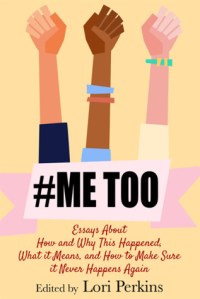
#MeToo – Essays About How and Why This Happened, What it Means and How to Make Sure it Never Happens Again delivers what it promises. While I personally connected with some essays more than others, overall this book does a really good job of shedding a light on this … I don’t want to call it a movement because that implies an ending. Perhaps cultural shift is a more hopeful term?
Some of the essays were political and others were heart wrenching accounts of experiences people have survived. Written by males and females, some who’ve experienced sexual assault and some who haven’t, I appreciated the different viewpoints and the opportunity to consider opinions that differed from my own.
I think my personal favourite was the first essay, where I learned of Patricia Douglas, who in 1937 was the first woman to “publicly call out the studios”. We’ve been inundated with news items of men and women silenced for so long bravely coming forward and telling their #MeToo stories. Knowing how difficult this is for survivors today I can only imagine the courage it must have taken for Patricia Douglas to speak of this in 1937. That is one extraordinary woman!
I could go into detail about the contents of each essay, what I liked, what irritated me, what encouraged me to want to do more in this area, but what I’d really like is for you to read it yourself. Riverdale Avenue Books has committed to making this ebook available to download FOR FREE across platforms and are selling the paperback at cost, so they’re not making money from this project.
While you’re reading, please be safe if there are likely to be triggers for you and reach out for support if you need to, but also:
Think about the issues (painful as they are).
Consider what you personally have the power to do to make sure we’re not talking about this time in history as a movement that could have been the catalyst for lasting change, if only …
One of the things I love about #MeToo is that people who have been living in silence are finding their voices. Survivors are finding the support they deserve and I hope they’re accessing services that can help them navigate healing.
I could tell you my #MeToo story but I think I’ll give you a lesson in your response when someone tells you their #Metoo story. Believe me when I say that your response, especially if you’re the first person they’ve told, can make all the difference.
Now, some of these are outrageous in their insensitivity whereas others are more subtly damaging but I’ve heard every one. Please don’t say any of these to a survivor.
“What did you do to make him think he could?” – a friend
“What were you wearing?” – a friend
“He was only being affectionate.” – his wife
“How many seconds/minutes did it happen for?” – teacher in charge of student welfare, said in the context of if it didn’t last long enough it didn’t count
“He told me what happened and he said that he didn’t mean to. It was an accident.” – his wife
“Did you enjoy having sex with him? Is that why you didn’t tell earlier?” – a friend’s mother who worked as a nurse who primarily cared for abused children
“Are you sure he did that?” – a friend
“It couldn’t have possibly happened the way you described.” – the detective investigating my case
“He told us what you said about him. You embarrassed us and we didn’t know what to say. He was really quite mad about it.” – friends
“Are you sure it was him? Maybe it was someone else and you’re only saying it was him because you don’t want to tell me who it really was.” – teacher in charge of student welfare
“You’re saying it happened the second time you saw him? That never happens! Why didn’t he do it the first time you met?” – the detective investigating my case
“You can’t tell your friends about this. They’re not old enough to be able to handle it.” – teacher in charge of student welfare
“The Royal Commission is unable to investigate individual matters.” – Royal Commission into Institutional Responses to Child Sexual Abuse
“He’s going through a difficult divorce, he’s an alcoholic and he has two children, one a girl a few years older than you. This would make his life even more difficult.” – teacher in charge of student welfare, who thought if I felt sorry for her friend I’d shut up
“I can’t see you anymore. I can’t talk to you about any assault other than the one you were referred to us for.” – sexual assault counsellor
“You’re the only one who’s made a complaint about him so far. Unless someone else makes a complaint there’s nothing we can do.” – the detective investigating my case
It’s pretty complicated coming up with dodgy reasons to shut someone up, isn’t it? Want to know what you can say that will help someone who has trusted you with their #MeToo story?
I believe you
It was not your fault
You are not alone
Simple, huh?!
Thank you so much to NetGalley and Riverdale Avenue Books for the opportunity to read this book.
⭐⭐⭐⭐⭐
Rating: 5 out of 5.
Once Upon a Blurb
More than 16 million people had posted their #MeToo story and support against sexual harassment by mid-October as a reaction to Rose McGowan’s brave admission that she had allegedly been raped by Hollywood mogul Harvey Weinstein. A groundswell of reaction to and exposure of this sexual predation was unleashed that has spread throughout Europe and beyond. New revelations of unacceptable behavior in every industry break every day as people come forward in response to the viral #MeToo posts. Protests are scheduled such as the “Take back the Workplace” Hollywood march in November of 2017, and legislation is being drafted in New York and California to finally change the way things have been for far too long.
This is the turning point. Things are going to change.
This is a historic moment and it needs to be memorialised, passed around and passed on. Although social media is a fantastic means of igniting a fire, it needs to keep burning, like a torch.
So Riverdale Avenue Books, a woman-owned leading hybrid publisher, is putting its money, words and power, behind this and publishing this collection of 26 essays from people who understand want to make this change, and we, as a society, have got to figure out a way to drive that change forward.
So pass this book around. Share it with your sons, brothers, fathers, your daughters, sisters and mothers, your co-workers and friends. Read passages to them, if they won’t read it for themselves. Leave it on the desk of someone who should know better.

 Schizanthus Nerd