Lost & Found – Helen Chandler-Wilde

Welcome to my stop on the Lost & Found blog tour. 

My relationship with my stuff over the years has been complicated, contradictory and, at times, confounding.

I rebelled against my family’s bah humbug spirit by decorating my entire bedroom each Christmas as a teenager. I went through a stage in my 20’s where I attempted to recapture my childhood Disneyana style.

When I’m fidgety, I love nothing more than sorting through and throwing out stuff I don’t need anymore. I don’t plan on stopping adding to my book collection until I’m crushed under its weight. My stuff was in a storage unit for over six months during lockdown and I was surprised by how few items I use on a daily basis.

It’s pretty safe to say this book and I were destined to find one another.

This was a fascinating read, combining memoir and investigation. The author lost almost all of her belongings in a storage unit fire in her 20’s. Just thinking about that makes me want to hug my Nan’s paintings.

This experience has given the author a unique perspective regarding what our stuff means to us and how it changes over time.

Possessions can fix a memory, for good or bad. They make one version of the past permanent, giving it an outsized importance that it hasn’t earned, while other memories fall away.

Each chapter tackles our “thoughts and behaviours around our possessions”, beginning with an item lost in the fire that’s relevant to the lesson. The author explores her own relationship to her possessions as well as sharing what insights fields such as neuroscience, psychology and philosophy have to offer.

Looking at the role social status and nostalgia play in how and why we accumulate stuff, as well as delving into scarcity and hoarding, I don’t think you could read this book without examining your own experiences and maybe taking some action. I was compelled to stop reading mid chapter to tackle some items I’d been meaning to sort through for months and I felt so much better afterwards.

Handy hint: If you want to buy something, holding off for just 72 hours can be enough for you to determine if it’s something you really want or an impulse spend.

We can choose things that please us or help us to feel that yesterday wasn’t so long ago. If chosen smartly, they can please us for a while, but they will never be the centre of our lives.

Thank you so much to Random Things Tours and Aster, an imprint of Octopus Publishing Group, for the opportunity to read this book.

Rating: 5 out of 5.

Once Upon a Blurb

An exploration into why we keep holding on to material things and what they mean to us

On New Year’s Eve of 2018, journalist Helen Chandler-Wilde lost everything she owned in a storage unit fire in Croydon, where she’d stowed all her possessions after a big break-up. She was left devastated, and forced to re-evaluate her relationship with owning material things. 

A mix of memoir, self-help and journalism, Lost & Found explores the psychological reasons for why we buy and keep the things we do, and explains how we can liberate ourselves from the tyranny of ‘too much’. Helen interviews people from all walks of life, including behavioural psychologists on the science of nostalgia, a nun on what it’s like to own almost nothing and consumer psychologists on why we spend impulsively, to help us better understand why we’re surrounded by clutter and what we can do to change it.

This smart-thinking book explains the sociological quirks of human nature and the fascinating science behind why we buy and hold onto things. By the end of it, your relationship with your belongings will be changed forever.

Lost & Found Blog Tour

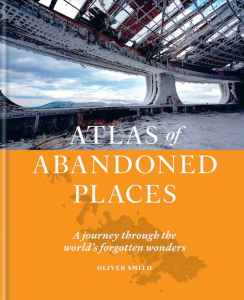
Atlas of Abandoned Places – Oliver Smith

To step into an abandoned place is to cross a kind of threshold into the past – to time travel from the present day to the instant that people departed.

I love abandoned places photography. I enjoy poring over the photos for evidence of the lives of the people who used to inhabit the spaces. There always seems to be a haunted beauty attached to these places, as they gradually erode and nature reclaims them.

I’ve come to expect books about abandoned places to showcase a photographer’s favourite sites. This is the first abandoned places book I’ve read that’s been written by a travel writer. The images are stock photos, which meant I didn’t get get to feel like I was tagging along with someone who may have had to climb fences and find ways to get into buildings undetected. However, it also meant that, rather than the purple prose I’m used to reading in abandoned places books, the information that’s presented here captured my attention just as much as the photography.

Separated into parts by geography – Europe, the Americas and the Caribbean, the Middle East and the Caucasus, Asia, Oceania and Africa – this book explores fifty abandoned places, from trains, palaces and a theme park to entire towns. Each four page entry contains photos and a map, along with information about the history, current state and any future plans for the site.

I most want to explore:

  • The Paris Catacombs, not the 1.6km (1 mile) tourist attraction but the network an area of about 320km (200 miles) that haven’t been entirely mapped yet. I want to see the places that remain undiscovered and unmarked by graffiti.
  • City Hall Station, New York.

Two hundred policemen were called to hold back the curious crowds, and the Mayor of New York took the controls of the inaugural train. He had so much fun he refused to hand them back to the driver.

  • Ciudad Perdida (meaning ‘Lost City’), Colombia. You’ll need to hike for four days to get there but the journey sounds as amazing as the destination.

Organized tours see participants traversing rushing rivers on rope bridges, passing waterfalls where hummingbirds dart through the humid air, and sleeping in hammocks listening to the night-time symphony of the forest.

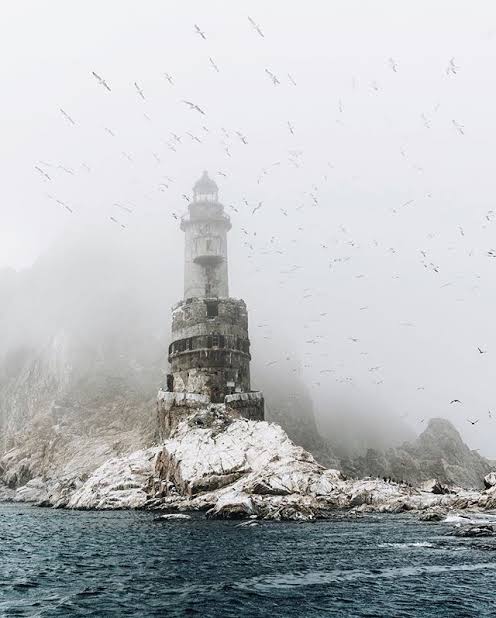
  • Aniva Lighthouse, at the tip of Sakhalin, Russia. It’s desolate and remote, the perfect place to get lost in a book.
description

There’s a lot of very interesting information in this book. I’m always on the lookout for fun facts and all things strange and unusual. I found those here too.

For £99, you can buy your very own knighthood. It’s for Sealand, a country that no others recognise, but it’s probably your only chance to be knighted.

Bodie in California is a typo. It’s named after W.S. Bodey, a prospector from New York. If you visit, fair warning: don’t souvenir any trinkets you come across.

‘The Curse of Bodie’ goes that objects stolen from the ghost town have brought tragedy and even death to their new homes. Items are still regularly returned to Bodie in the post, with notes of repentance from sorry thieves.

The grand opening of the Orpheum Theatre in New Bedford, Massachusetts happened the day the Titanic sank.

New York’s “City Hall Station provided the inspiration for the Teenage Mutant Ninja Turtles’ lair.”

For places that seem lifeless, their lesson is that – in some form or other – life goes on.

Thank you so much to Hachette Australia for the opportunity to read this book.

Rating: 5 out of 5.

Once Upon a Blurb

Explore the wonders that the world forgot with award-winning travel writer Oliver Smith – from breathtaking buildings with a dark past to decaying reminders of more troubled times.

The globe is littered with forgotten monuments, their beauty matched only by the secrets of their past.

A glorious palace lies abandoned by a fallen dictator. A grand monument to communism sits forgotten atop a mountain. Two never-launched space shuttles slowly crumble, left to rot in the middle of the desert. Explore these and many more of the world’s lost wonders in this atlas like no other.

With remarkable stories, bespoke maps and stunning photography of fifty forsaken sites, Atlas of Abandoned Places travels the world beneath the surface; the sites with stories to tell, the ones you won’t find in any guidebook.

Award-winning travel writer Oliver Smith is your guide on a long-lost path, shining a light on the places that the world forgot.