Millicent Quibb #1: The Millicent Quibb School of Etiquette for Young Ladies of Mad Science – Kate McKinnon

Illustrations – Alfredo Cáceres
Your skin will harden, your bangs will burn, your minds will be trapped in a psychological prison of broken mirrors and strange echoes

Sound like fun? Come on in! The duck pond’s fine!

Narrated by Dr Candlestank, a mad scientist who gave me these vibes for some reason …

Kate McKinnon in Ghostbusters

… this is the story of the Porch sisters.
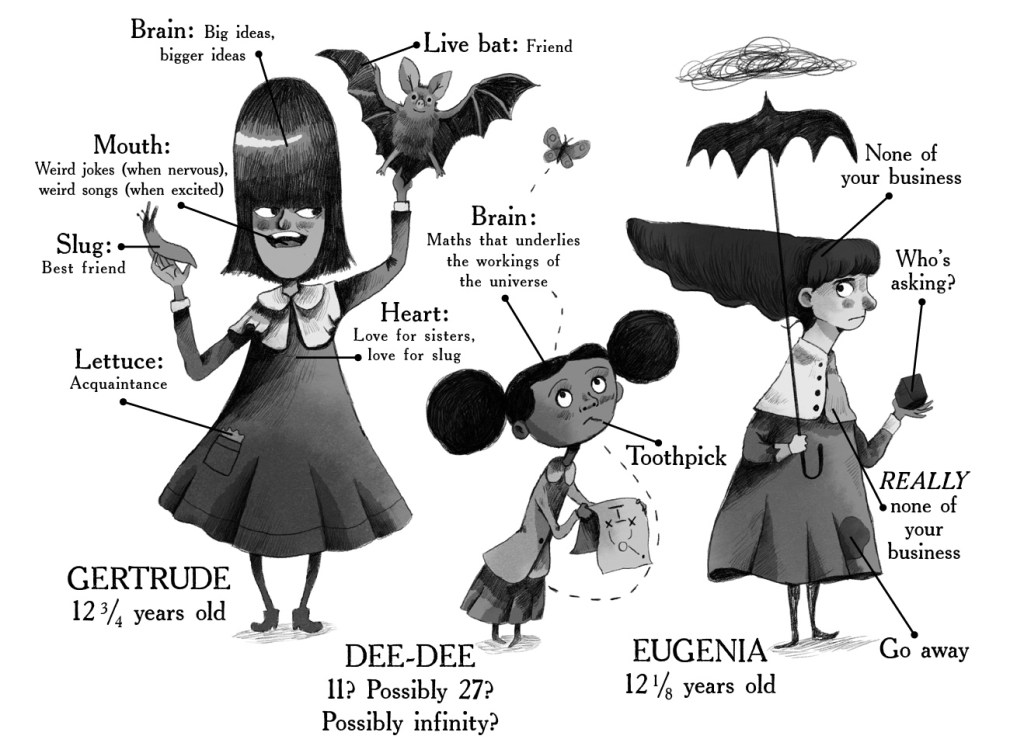
The Porch sisters

The Porch sisters aren’t like the rest of their family, not the least because their names don’t include Lavinia. It might also have something to do with their interests.

Eugenia likes rocks and explosions. Dee-Dee is mechanically minded. Gertrude is an entomologist in the making who has questions, like “what makes the purple feathers on pigeons sparkle and what makes soap bubbles have rainbows in them and where does a newt lay eggs and do cat whiskers feel anything and are guinea pigs related to pigs and how is a chilli pepper hot and things like that.”

Good questions, the answers of which are not going to be found at Mrs Wintermacher’s School of Etiquette for Girls. If only there was a school that catered to the strange and unusual…

Millicent Quibb

Meet Millicent Quibb. Strange. Unusual. Mad scientist.

“Look – I know I’m ‘scary’ and my house is ‘a hoard’ and there are ‘tarantulas everywhere’. I’m not ‘good with children’ and I don’t ‘have social skills’. I was ‘kicked out of etiquette school when I was young’ and now I’m ‘a pariah’.”

Did I mention she runs a school? The Porch sisters are in need of a school and Millicent is in need of, well…

“So you want us, a group of children with no skills at all, to help you protect the town against a hidden organisation of evil mad scientists?”

Yes. You’re finally getting it.”

We’re doomed! Or are we?

I’m very aware of the pushback against children’s books written by celebrities and I usually bypass them. This one grabbed my attention, though. Adult me enjoyed it but not quite as much as kid me would have, probably in part because I kept thinking of all of the kid’s books on my TBR pile that aren’t written by celebrities.

Putting that aside for a moment, this madcap adventure (with footnotes) felt similar to my first read of Roald Dahl books when I was a kid, over the top bonkers fun. Alfredo Cáceres’ illustrations helped amplify the quirky.

I loved seeing outcasts being true to themselves, refusing to be squished into boxes that conform to society’s expectations.

“We are about to embark on a long, dangerous mission for which none of us is qualified.”

Thank you so much to NetGalley and HarperCollins Children’s Books for the opportunity to read this book.

Rating: 4 out of 5.

Once Upon a Blurb

Gertrude, Eugenia, and Dee-Dee Porch do not belong. They don’t belong in the snooty town of Antiquarium, where the only dog allowed is the bichon frise. They don’t belong with their adoptive family, where all their cousins are named Lavinia. And after getting kicked out of the last etiquette school that would take them, the girls expect to be sent away for good… until they receive a mysterious invitation.

Suddenly the girls are under the tutelage of the infamous Millicent Quibb – a mad scientist with worms in her hair and oysters in her bathtub. Dangerous? Yes! More fun than they’ve ever had? Absolutely! But when the sisters are asked to save their town from an evil cabal of mad scientists, they must learn to embrace what has always made them stand out – before it’s too late!

Perfect for fans of Roald Dahl and Lemony Snicket’s A Series of Unfortunate Events, The Millicent Quibb School of Etiquette for Young Ladies of Mad Science is the unbelievably hilarious, madcap adventure debut from comedic superstar Kate McKinnon – an unforgettable and laugh-out-loud funny story, and a warm-hearted celebration of individuality, imagination, and eccentricity.

Before Dementia – Dr Kate Gregorevic

When you’re caring for someone, that puts you in the role of advocate and I’ve found that the best way to understand the options for the person you’re caring for is to educate yourself.

You can’t rely on a neuropsychiatrist who disregards everything in a patient’s history that could explain some or all of their symptoms and relies on intimidation tactics to enforce compliance in a testing process they haven’t explained in a way that ensures the patient understands the task, then promptly diagnoses Alzheimer’s and sends you on your way with no explanation or follow up… But I digress.

As a carer, you’re entrusted to make the best decisions for the person you’re caring for, decisions that align with their values and are made alongside them; decisions that are made with and/or for them, not at them. You need to know what questions to ask and when, and you need to be able to weigh up the costs and benefits of treatments, and you need to somehow find a way to look after yourself in the process.

I’ve read a bunch of books about dementia but this is the first one I’ve wanted to talk about. It actually answered questions I’ve had that other books skirt around but ultimately raise more questions.

This book explains dementia in a way that’s easy to understand. This is the first time I’ve had someone explain why there isn’t medication that can reverse or at least stop the progression of dementia and it made sense. I particularly liked the way the symptoms are explained.

Dementia occurs when a disease or progressive processes cause damage, and brain function is impaired enough to impact everyday life. The symptoms of dementia are the result of a brain that is no longer able to correctly take in information, interpret it, and act on it. Dementia is a “syndrome,” or a collection of symptoms, and it can be caused by many different diseases.

Having something like this to hold onto when symptoms lead to frustration provides much needed perspective.

I learned a lot of useful information, things that should be explained by doctors but aren’t. For example, I didn’t realise that mild cognitive impairment (MCI) doesn’t automatically mean someone will progress to dementia. In fact, most don’t. It’s also made clear that memory loss doesn’t automatically equal dementia; other factors that may contribute to this are “lack of sleep, medications someone is taking, or anxiety, which can be fixed.”

One of my favourite things about this book is that it highlights that dementia risk isn’t equal. Racism, poverty, stress and whether you have access to education and preventative healthcare all have a bearing on your risk, despite the lifestyle strategies you may be employing. It’s clear that systems have a role to play in prevention.

Understanding health through an equality lens means considering gender, race, and disability, and how they intersect. It means integrating poverty, discrimination, and healthcare access as central when developing models of healthcare.

I’m not sure if this was a test or not but the list of ten brain healthy foods only had eight bullet points, which could be stretched to nine foods if “fish, poultry” are counted as two.

If your future health planning looks pretty lazy overall with a dash of it ain’t broke yet, I have good news for you. Many of the tips, especially around lifestyle decisions, in this book that could help prevent dementia are also good for a bunch of other conditions so a single good choice is a protective measure for many.

This book is intended to be read before someone you love is diagnosed with dementia. Given the prevalence and, let’s face it, how busy you are, it’s likely you won’t even look for this book until after you meet someone living with dementia. This has a lot of good information and it does cover some of what to expect after a diagnosis but I and I’m sure many others would benefit from a sequel, After Dementia.

Thank you so much to NetGalley and HCI Books for the opportunity to read this book.

Rating: 5 out of 5.

Once Upon a Blurb

Structured around 20 questions you need to ask to help prevent, prepare, and cope, this book is a friendly, authoritative guide for anyone facing dementia and those who care for them. Exploring why disease is a social construct just as much as a biological construct, it helps us understand what it means to live with or care for someone with dementia.

How do I know if I have dementia, and how will I live with it if I do? Can people with dementia consent to sex? Can they choose euthanasia for their future selves? And can we prevent or push back its onset?

Chances are you know someone with dementia, but how well do you really understand the condition? Dementia is a complex interplay of biological, social, and psychological factors, and understanding it means understanding more about society and ourselves.

Approaching the topic through 20 insightful questions, geriatrician Dr. Kate Gregorevic explains the physical state of dementia, how to relate the diagnosis to real life, what questions to ask your doctor, strategies for preventing the condition, and how we can make our homes and society better for people with dementia.

While this book tackles some uncomfortable questions, its purpose is to help—to prevent, to prepare, to cope and to understand—and provide you with strategies for moving forward.

A Mother’s Story – Rosie Batty, with Bryce Corbett

Sometimes, unless you’ve lived through something, you don’t quite understand.

I thought I’d gone about this backwards. I read Hope first, which focuses on the time since Rosie Batty was named Australian of the Year in 2015. This book, first published in September 2015, explores Rosie’s childhood, the violence Greg Anderson chose to perpetrate against her and her son, and Rosie’s relationship with her son, Luke.

It would make more sense chronologically to read this book before Hope but for me, accidentally reading them in the wrong order was a blessing of sorts. When I read Hope, I knew the basics of Rosie’s story. I don’t know if you can be Australian and not know who Rosie is. I didn’t know what I didn’t know, though. If I’d read this book first, I don’t think I could have read them back to back.

This is one of the most infuriating books I’ve ever read. Don’t get me wrong; it’s not because it’s not well written. Seeing the series of events that led up to Luke Batty’s murder and the opportunities that were missed by the police and the child protection and court systems laid out one after another, and knowing where it was leading had me seeing red. This book includes so many red flags, I started wondering if that’s what it should have been called.

And so began a cycle of threats and fear that would continue until the day Greg died.

Rosie did everything she could to protect her son. She called the police and provided information to them about Greg’s whereabouts when there were warrants out for his arrest. She cooperated with child protection. She attended court date after court date. To say that Rosie and Luke Batty were failed by the system is an understatement.

If I downplayed the violence and threats, no one took them seriously. But if I became hysterical, I was written off as a melodramatic – or mad – woman. Decades of exposure to family violence had muted the official response to it, and I was suffering for that.

If I was Rosie, I’m sure I’d be a big ball of rage. Rosie, though, went into action mode. From the first time she spoke to the media to now, Rosie has been advocating for change.

My template in life when confronted with tragedy had been to push down the sadness, draw on my reserves of country English stoicism and do what must be done.

Rosie’s insights should make this a must read for anyone working in a helping profession. Readers who have experienced domestic or family violence will identify with Greg’s behaviours and the agonising position Rosie was in.

It’s an important marker in the life of anyone who has suffered family violence to have someone explain the different types of violence that exist, for the terror you’ve suffered to be given a name, and to be assured, most importantly, that none of it is your fault.

This book is heartbreaking. It’s also a testament to a mother’s love for her child and her concerted effort to protect him.

Rating: 5 out of 5.

Once Upon a Blurb

Rosie Batty knows pain no woman should have to suffer. Her son was killed by his father in a violent incident in February 2014, a horrendous event that shocked not only the nation, but the world. Greg Anderson murdered his 11-year-old son Luke and was then shot by police at the Tyabb cricket oval. Rosie had suffered years of family violence, and had had intervention and custody orders in place in an effort to protect herself and her son. Rosie has since become an outspoken and dynamic crusader against domestic violence, winning hearts and mind all over Australia with her compassion, courage, grace and forgiveness. In January 2015, Rosie was named Australian of the Year, 2015. Inspiring, heartfelt and profoundly moving, this is Rosie’s story.

Hope – Rosie Batty, with Sue Smethurst

It is the cruellest act to have your child snatched from your life, especially when they are just out of arm’s reach.

Luke Batty was murdered on 12 February 2014. The fact that his father perpetrated this violence continues to horrify me. I am acutely aware of how privileged I am that I will never be able to comprehend the grief that Rosie Batty, Luke’s Mum, lives with.

I’m in awe of Rosie. Her courage and resilience, tested every day for a decade now, is astounding. The fact that she’s able to put one foot in front of the other in any capacity amazes me. That she has spent the past ten years advocating for change, telling her story countless times and giving of herself to support others who have experienced domestic and family violence? There just aren’t words for that.

This isn’t the kind of book you look forward to reading in the traditional sense. It is one that I preordered and began reading as soon as it finished downloading on my Kindle, though. If Rosie was going to be brave enough to tell me even part of her story, then I wanted to hear her.

Nothing and no one can prepare you for the day after the worst day of your life. The sun comes up, but it’s not as bright. Life is never the same again.

I’m not naive enough to think that I could hold any part of her pain for her by reading her story, although I wish I could. My story, while it pales in comparison to Rosie’s, can make people uncomfortable and unsure of how to respond. This is part of the reason why I didn’t want to shy away from Rosie’s story, even though I knew it was going to hurt to read.

I was infuriated to learn that Rosie was forced to sit in the back of a police car – alone – for hours, near where her son was just murdered. The hate she has received as a result of her advocacy, by “making the invisible visible”, made my blood boil.

It was only once I started reading this book that I realised I’d gone about this backwards. I discovered A Mother’s Story, the book I should have read first. I want to get to know Luke, and learn more about Rosie’s life prior to the event that turned her before into after.

While Rosie’s story is unique, unfortunately it is not an uncommon one. Worldwide, more than one third of women have been beaten, coerced into sex or abused in some way. On average, a woman dies violently every week in Australia, usually at the hands of someone she knows. Police get called to one domestic violence matter every two minutes. About one in six women and one in nine men experience physical and/or sexual abuse before the age of 15.

Something that stood out to me about who Rosie is was the fact that, even in her memoir, she’s not making it all about her, when she would absolutely be justified in doing so. Instead, she shines a light on other women who have experienced domestic and family violence. Some, like Rosie, have become household names in Australia. Some, I was introduced to here.

The sentence that hit me the hardest was when Rosie was talking about being a mother.

I have memories of being a mother and the experience of what motherhood was like, but I’m not a mother any more.

One of my takeaways from this book was the gentle reminder that people’s responses to trauma vary and that’s okay. You don’t know how you will respond unless it happens to you. Let’s hope you never have to find out.

I have the greatest respect for Rosie. She’s real. She hates that you know who she is because of what happened to Luke. She’s authentic. She doesn’t gloss over the dark days and doesn’t big-note herself, although she certainly could with all that she’s achieved in spite of what life’s taken from her.

She’s someone who has found pockets of joy. She enjoys being in nature, she loves animals and she’s an accomplished swearer. I’ll probably never have the opportunity to sit down and talk to Rosie but, if I did, it would be a privilege to be able to laugh and cry with her. She sounds like a kindred spirit.

Sometimes you just have to dust off your feathers, stretch your wings and find hope to take flight.

Rating: 5 out of 5.

Once Upon a Blurb

After tragedy, how do we find hope? A memoir about what it takes to get through the very worst of times from Rosie Batty – a woman who has experienced tragedy, who had lost all hope, yet now is intent on finding it again.

On a warm summer’s evening in February 2014, eleven-year-old Luke Batty was killed by his father at cricket practice. It was a horrific act of family violence that shocked Australia. 

The next morning, his mother Rosie bravely stood before the media. Her powerful and gut-wrenching words about family violence galvanised the nation and catapulted her into the spotlight. From that day on, Rosie Batty campaigned tirelessly to protect women and children, winning hearts and minds with her courage and compassion, singlehandedly changing the conversation around domestic violence in this country. Rosie’s remarkable efforts were recognised when she became the 2015 Australian of the Year and a year later she was named one of the World’s Greatest Leaders by Fortune magazine. However, behind Rosie’s steely public resolve and seemingly unbreakable spirit, she was a mum grieving the loss of her adored son.

What happens when you become an accidental hero? What happens the day after the worst day of your life? What happens when you are forced to confront the emptiness and silence of a house that once buzzed with the energy of a young son? 

You go to dark places from which you’re not sure you’ll ever recover.

Following on from her runaway best-seller A Mother’s Story, which detailed the lead up to her son’s murder, Hope shares what happened to Rosie the day after the worst day of her life and how she reclaimed hope when all hope was lost. She shares her struggles with anxiety, PTSD, self-doubt and self-loathing and how she finally confronted her grief. She shares the stories of those who have inspired her to keep going, and given her hope when she needed it most. In this heartfelt, and at times heartbreaking memoir, Rosie tells how she found the light on her darkest days and how she found the hope to carry on.

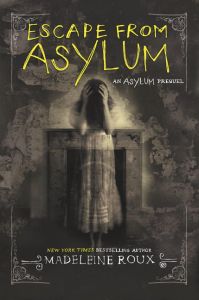
Asylum #0: Escape From Asylum – Madeleine Roux

To be Patient Zero meant losing himself, not to death, but to something much worse.

I was in a reading by slump so decided it was time for a comfort reread. I chose the Asylum series. Read into that what you will…

Before we go to summer school with Dan, Abby and Jordan, we need to visit Brookline when its rooms were cells, not dorm rooms.

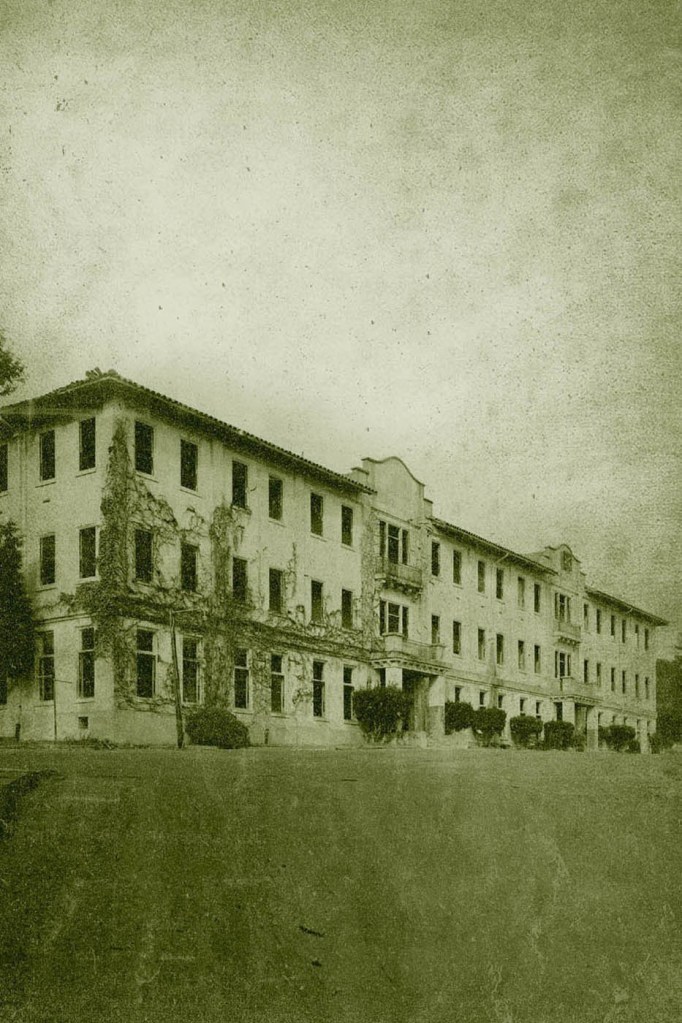
This is Brookline the asylum. Trust me; you do not want to be here.

“This place … It’s not quite what it looks like. It’s not what it seems.”

It’s 1968 and Ricky is being dropped off by his mother and Butch at his third ‘retreat’. Sure, there was the incident with Butch. Ricky’s not denying that, even if Butch had it coming. This is about more than that, though. This is about Martin.

Homophobia is rife and we’re still decades away from people calling out conversion therapy for the horror show that it is. I remember that we all dreaded and feared the Warden but, after all of these years, the specifics were hazy in my mind. However, I never forgot that he’s an extraordinarily disturbed man with a god complex who should be a patient, not staff.

“Whatever else he is, he’s also a butcher. A monster.”

For Ricky, the only good thing about Brookline is Kay. She’s also there for ‘treatment’ and I spent the entire book wanting to protect her.

“You know you and I are just different. Different isn’t sick.”

I’d never seen a book that included found photos when I first read this series. I was absolutely fascinated turning the pages to discover new creepy images. I looked forward to rediscovering the photos this time around and was not disappointed.

Brookline. Photo credit: James W. Rosenthal, Library of Congress

I’d forgotten that we meet Dennis in this book and I’ve only just realised that Roger was first introduced here as well. The deeper you allow yourself to wander around in the underbelly of Brookline, the more rewarded you’ll be. And more disturbed, too, by the depravity of those in power.

I wish there’d been details of everything that took place between Chapter 47 and the Epilogue. I need to know what Kay’s life looked like post Brookline.

“If we can survive in here, we can do anything.”

Rating: 4 out of 5.

Once Upon a Blurb

The nightmare is just beginning.

Ricky Desmond has been through this all before. If he could just get through to his mother, he could convince her that he doesn’t belong at Brookline. From the man who thinks he can fly to the woman who killed her husband, the other patients are nothing like him; all he did was lose his temper just a little bit, just the once. But when Ricky is selected by the sinister Warden Crawford for a very special program — a program that the warden claims will not cure him but perfect him — Ricky realises that he may not be able to wait for his mom a second longer. With the help of a sympathetic nurse and a fellow patient, Ricky needs to escape now.

Set long before Dan, Abby, and Jordan ever walked the hallways of the Brookline asylum — back when it was still a functioning psych ward and not a dorm — Escape From Asylum is a mind-bending and scary installment in the Asylum series that can stand on its own for new readers or provide missing puzzle pieces for series fans.

Anne: An Adaptation of Anne of Green Gables (Sort Of) – Kathleen Gros

Okay, that was all kinds of adorable. It’s weird, though, because part of me was excited about the changes that had been made to modernise Anne with an E’s story but another part of me wished some of the things I loved about the original remained. I loved the story so much that I’m certain I would’ve felt the same even if it wasn’t about my kindred spirit but if it wasn’t an adaptation (sort of) of her story, maybe I wouldn’t have found it in the first place.

All of that to say, I love Anne Shirley Cuthbert no matter where I find her, the format she chooses to tell me her story or the variations I’ve encountered along the way.

There were changes in this sort of adaptation I was fairly neutral about. For example, Anne doesn’t line up with what Marilla and Matthew expected because they wanted a younger child, not a boy.

I loved that Anne has been through the foster system instead of spending much of her childhood in an orphanage. We need more stories about foster kids that don’t set out to pathologise them. Avonlea is now an apartment building called Avon-Lea and Marilla gets to do something other than housework!

I wasn’t the biggest fan of the way Marilla and Anne’s relationship was portrayed in this graphic novel. It’s so much more positive than any version I’ve come across and it definitely sounds like I want poor Anne to experience the pain of not knowing if she will ever find her way into Marilla’s heart. I don’t. I really don’t. However, one of the things I love about their relationship is that it doesn’t come easy. Being able to witness Anne’s influence on Marilla and her gradual softening is something I look forward to whenever I revisit their story. This Marilla doesn’t have the sharp edges I’ve come to expect and, to be honest, love about her.

I also usually enjoy the struggle Anne has about the clothes Marilla allows her to wear because the payoff is so rewarding. Here, Anne has more agency because she gets to decide for herself what she wants to wear for the first time in her life (absolutely wonderful) but this means the impact is lessened later on when the dress scene happens (kind of disappointing).

Then there was the biggest thing I was conflicted about, Anne and Diana. It’s been so engrained in me that Anne and Gilbert are meant for each other, despite their beginnings, that it’s never even occurred to me that Anne could fall for anyone else. Another of the things I always adore about Anne is her kindred spirit friendship with Diana. Seeing them in a different light took a moment for me to get used to but they won me over. It made my heart go all gooey watching them blush around each other and by the end I was essentially ’Gilbert who?’

No, this is not the story you grew up with. That’s why the ‘sort of’ comes after ‘adaptation’. But it was close enough that I felt like I was reading about the characters I’ve known for decades. And when I thought about the changes that were made to each character, it wasn’t hard to believe that this is who they would be if they were here with us now.

Rating: 4 out of 5.

Once Upon a Blurb

Anne Shirley has been in foster care her whole life. So when the Cuthberts take her in, she hopes it’s for good. They seem to be hitting it off, but how will they react to the trouble that Anne can sometimes find herself in … like accidentally dyeing her hair green or taking a dangerous dare that leaves her in a cast?

Then Anne meets Diana Barry, a girl who lives in her apartment building, the Avon-Lea. The two become fast friends, as Anne finds she can share anything with Diana. As time goes on, though, Anne starts to develop more-than-friends feelings for Diana.

A new foster home, a new school, and a first-time crush — it’s a lot all at once. But if anyone can handle life’s twists and turns, it’s the irrepressible Anne Shirley.

After the Forest – Kell Woods

‘Something happened to Hans and me when we were children.’

Indeed. When they were children, Greta and Hans were led into the forest and abandoned by their father. There they encountered gingerbread, an oven and a cage. You might think you know their story but you don’t know what happened next.

Fast forward fifteen years, Greta Rosenthal is a 22 year old with no dowry, so obviously no man will ever want her. It’s not exactly helping her cause that people think she’s a witch.

It’s a good thing that Greta knows how to bake because Hans is doing his best to gamble away any money her gingerbread sales generate.

Ginger. Honey. Cinnamon. Flour.

It was clear what must be done. What Greta had always done to solve a problem.

Bake.

We catch up with the siblings in 1650, a time of superstition and suspicion. The people of the Black Forest have been impacted greatly by the war. They’re not averse to accusing their neighbours of witchcraft.

This could be a problem for Greta because remember the gingerbread everyone loves so much? Her recipe may sorta kinda involve a dash or two of witchiness.

I really felt for Greta. Here she was doing her best to survive the trauma of abandonment and captivity with a brother who’s not helping her cause at all and a town full of people just itching for another witch trial.

Alone in the forest there is real fear. Once felt, it is never forgotten.

My favourite character was the book, because of course it was. But when you meet them you’ll understand why.

I shall take care of you and you shall take care of me.

I really enjoyed learning how magic works in Greta’s world and seeing how the different types were used throughout the book.

I used to actively avoid retellings. I wrongly assumed that I knew the stories well enough already and that nothing could (or maybe even should) be added to them. Then I fell in love with a few books that I didn’t realise were retellings when I started reading them and I finally got it. Retellings don’t diminish the original stories. They add to them: new perspectives, character depth, what happened after The End.

Greta’s story didn’t end when she and Hans survived the gingerbread house in the forest. It was only just beginning.

You learn to be careful when you have been lost.

Magic gingerbread to the rescue!

Thank you so much to NetGalley and HarperVoyager, an imprint of HarperCollins Australia, for the opportunity to read this book.

Rating: 4 out of 5.

Once Upon a Blurb

Ginger. Honey. Cinnamon. Flour.

A drop of blood to bind its power. 

1650: The Black Forest, Wurttemberg. Fifteen years after the witch in the gingerbread house, Greta and Hans are struggling to get by. Their father and stepmother are long dead, Hans is deeply in debt from gambling, and the countryside lies in ruin, its people recovering in the aftermath of a brutal war.

Greta has a secret, though: the witch’s grimoire, secreted away and whispering in her ear, and the recipe inside that makes the most sinfully delicious – and addictive – gingerbread. As long as she can bake, Greta can keep her small family afloat.

But in a village full of superstition, Greta and her intoxicating gingerbread is a source of ever-growing suspicion and vicious gossip.

And now, dark magic is returning to the woods and Greta’s own power – magic she is still trying to understand – may be the only thing that can save her …

If it doesn’t kill her first.

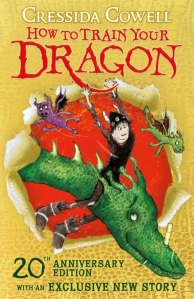
How to Train Your Dragon – Cressida Cowell

How to Train Your Dragon was first published in 2003, when I was too old to read children’s books. This twentieth anniversary edition finds me when I’m old enough to appreciate children’s books anew. I may be one of the only people on the planet who has never read How to Train Your Dragon or watched the movies or the TV series. Until now.

I was not a natural at the Heroism business. I had to work at it. This is the story of becoming a Hero the Hard Way.

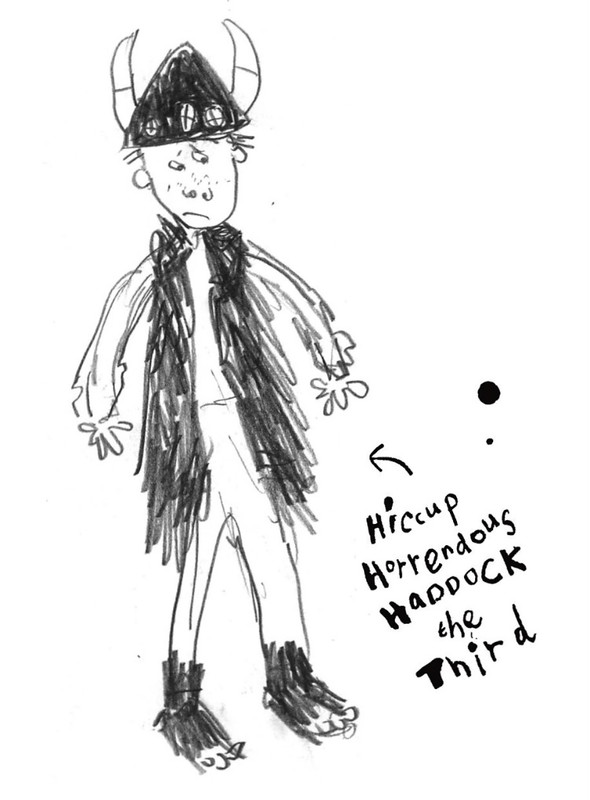
I don’t know that it’s wise to call a Viking a sweetheart but that’s the first word I think of when I think of secret Dragonwatcher Hiccup Horrendous Haddock the Third.

description

Ten and a half year old Hiccup is the son of the Chief of the Tribe of the Hairy Hooligans and the tribe is expecting big things from him. Only, Hiccup isn’t like other Vikings.

‘You can’t put Hiccup in charge, sir, he’s USELESS.’

Hiccup is hoping to prove himself useful by passing the Dragon Initiation Programme. Considering the alternative is exile, let’s cheer him on.

First, he’ll need to choose a dragon from thousands of sleeping ones, preferably without waking them all. Then he’ll need to train it. Fortunately for Hiccup, Professor Yobbish’s seminal work, How to Train Your Dragon, is included here in its entirety. That’ll help him out.

Be on the lookout for a Fiendishly Clever Plan and singing supper.

I’m most looking forward to getting to know Fishlegs better, if only because they named their dragon Horrorcow. Toothless, Hiccup’s exceptionally rare dragon, manages to steal the show.

description

‘I’ve often thought that that book needs a little something extra … I can’t quite put my finger on it…’

‘WORDS,’ said Hiccup. ‘That book needs a lot more words.’

Ask and you shall receive. In this twentieth anniversary edition, more words is exactly what you get. An entire new story even!

In How to Train Your Hogfly, Hiccup needs to train a Hogfly called Hellsbells to prevent a BLOOD FEUD. Hellsbells the lapdragon is just as entertaining as Toothless but for an entirely different reason.

That is the most untrainable dragon I have ever seen in my entire life’

No pressure, Hiccup.

The first thing I did when I finished reading this book was buy a signed copy. The second thing I did was order the next five books in the series from the library.

I fell in love with the characters. I looked forward to the next illustration. I laughed. I wished there was a kid in earshot while I was reading so I’d have a legitimate reason to read aloud.

This book is so much fun! I might be twenty years late to the party but I get it now!

For when the world needs a Hero …

… it might as well be YOU.

Thank you so much to Hachette Australia for the opportunity to read this book.

Rating: 5 out of 5.

Once Upon a Blurb

‘The world will need a Hero, and it might as well be you …’

Hiccup Horrendous Haddock the Third is a smallish Viking with a longish name.

The Hairy Hooligan tribe think he’s totally useless, but Hiccup is about to face his destiny … with one tiny dragon.Can he prove his worth and become a HERO or will he be banished from his tribe for ever?

In celebration of 20 years of How to Train Your Dragon, this special commemorative edition features the original – now classic – How to Train Your Dragon story with exclusive content, including some rare Viking material (featuring Hiccup Horrendous Haddock III’s birth certificate!) and a hilarious brand new adventure called How to Train Your Hogfly starring fan favourites as well as exciting new dragons. 

Fully illustrated with Cressida Cowell’s artwork, this is a MUST HAVE for anyone who grew up reading and loving How to Train Your Dragon, as well as the perfect introduction for new readers to this beloved, classic series.

We Need to Talk About Ageing – Melissa Levi

In a society that fetishises youth, the prospect of ageing is, at best, daunting. At worst, it’s terrifying. Verging on superstition, society clings to the belief that if we can deny and conceal ageing by focusing solely on youth, relegating the aged to live behind closed doors (often literally), then we can deny ageing itself.

It’s all too easy to put off difficult conversations. In this book, clinical psychologist Melissa Levi makes a really good case for having conversations about ageing early and often.

This book covers what Melissa calls the three trajectories of ageing: successful ageing, normal ageing and compromised ageing. Along the way, she demystifies common reversible and chronic conditions and their treatments, highlighting that even when a condition is not treatable, there are still ways you can manage it.

I found the chapter about carers particularly helpful. Despite rounding out the book discussing the Grim Reaper, this book is surprisingly hopeful. A lot of time is spent providing information and encouraging you to have conversations with your loved ones to ensure older people are given the choices and dignity they deserve.

While readers beginning to think about ageing will find plenty of information, the stories of older people and their families were what I most looked forward to. It’s one thing to read suggestions for managing a condition but being a fly on the wall when people are applying these to their lives makes them feel more doable.

Every so often, I was reminded that I was reading a book written by a clinical psychologist. After telling a loved one you have concerns, the author invites the reader to ask questions, one of which was ‘How does this information align with your experience of how things are going?’ I don’t think I’ve ever heard a sentence like this from anyone other than a psychologist. Thankfully, the majority of the book is written in a down to earth, relatable way.

I lost count of the number of times I was referred to a specific page on the author’s website. Sometimes this is so you can access downloadable versions of information covered in the book, including checklists. Other times, though, such as in the case of sleep hygiene strategies, the only way for you to access this information is to visit the author’s website. I didn’t want to have to consistently stop reading to visit a website. I wanted the book to contain all of the information, as appendices if necessary.

When I visited the author’s website, I discovered that some of the promised information hasn’t been uploaded yet. Granted, the book was published less than two weeks before I read it but after having been annoyed by how many times I was referred to it, I expected the website to be a fount of supplemental knowledge.

There’s an index so you can easily find information about a specific topic and a list of resources (primarily Australian) you can contact for further information or support. The summaries at the end of the chapters are very helpful. I wish I’d had the opportunity to meet Melissa’s Zaida.

I learned that the losses that often come with age (loss of health, memory, friends, roles, independence) was not the loss of joy, the loss of quality of life, or the loss of one’s inextinguishable will to live.

Thank you so much to Hachette Australia for the opportunity to read this book.

Rating: 3.5 out of 5.

Once Upon a Blurb

Do you get the sense that something’s just not quite right with Mum, Grandpa or yourself?

Does your family avoid having the big conversations about ageing?

Are you confused and overwhelmed?

You are not alone.

With over a decade of experience specialising in older people’s mental health and dementia in Australia, clinical psychologist Melissa Levi has helped more than a thousand older people, and their families, navigate the ageing journey. While every family’s story is unique, Melissa has come to know that we all share common fears and questions about ageing – the same questions that her own family had when her grandfather was diagnosed with dementia.

In We Need to Talk About Ageing, Melissa encourages us to understand that while getting older is inevitable, the experience doesn’t need to be overwhelming, or clouded with uncertainty or confusion. Melissa provides expert information on what to expect as you get older, how to identify symptoms of common medical and psychiatric conditions in later life, and, most importantly, what you can do and where to go for help.

Melissa also shares practical strategies, tips and discussion prompts, so you and your family are equipped to have the big conversations about ageing and are empowered to plan for the future. This book will help you to clarify your options, find your way through the aged-care maze, make informed, values-aligned decisions, and ultimately experience greater meaning, joy and connection.

The Witching Tide – Margaret Meyer

Cover image of The Witching Tide by Margaret Meyer

‘It’s like Cleftwater’s got ringed about by badness – by ill luck,’ she said. ‘And at its middle is you.’

Dedicated to the women who “fell victim to the 1645-7 East Anglian witch-hunt”, this was never going to be a light read. I’m not generally drawn to historical fiction but can’t help myself where witches are concerned, probably because if I’d been born in the wrong century, it’s very likely I would have been burned at the stake.

Master Makepeace, “with his great knowledge of witches”, is on his way to Cleftwater. This is really bad news for the women of the coastal village. Having “gathered considerable evidence of their Devilish work”, Master Makepeace quickly stirs up a witch-hunt. Loyalties are tested and accusations are made.

Martha, mute since childhood, is caught in the middle. Trusted by her community as a midwife and healer, Martha is now tasked with searching the bodies of the accused for telltale signs of witchcraft.

When? When would they come for her? If they came, what then? Nothing then. She would be less than nothing. Disowned, stateless. Worse than that: she would be reinvented, made monstrous; every one of her misdeeds and defects – real or imagined – magnified a thousandfold.

God help her then. God help them all. All the taken women.

I could practically smell Cleftwater as I followed Martha but, try as I might, I didn’t form a connection with any of the characters so when the stakes were raised (not literally), I didn’t feel the danger. It was as though I was watching from a safe distance rather than being in the thick of it. The poppet’s role was not as integral to the story as I had hoped and the resistance was quieter.

I expect those who read a lot more historical fiction than I do will appreciate the research that has gone into making this story as accurate as possible. My expectations and reality were never destined to meet, though. Martha’s story was never going to fire me up like Alix E. Harrow’s The Once and Future Witches did. In hindsight, it was unfair of me to expect it to.

Thank you so much to Hachette Australia for the opportunity to read this book.

Rating: 3 out of 5.

Once Upon a Blurb

East Anglia, 1645. Martha Hallybread, a midwife, healer and servant, has lived for more than four decades in her beloved coastal village of Cleftwater. Everyone knows Martha, but no one has ever heard her speak.

One morning, the peaceful atmosphere is violently shattered and Martha becomes a silent witness to a witch hunt. As a trusted member of the community, she is enlisted to search the bodies of the accused women. But whilst Martha wants to help her friends, she also harbours a dark secret.

In desperation, she revives a witching doll that she inherited from her mother, in the hope that it will bring protection. But the doll’s true powers are unknowable, the tide is turning, and time is running out …

A spellbinding and intoxicating novel inspired by true events, The Witching Tide breathes new life into history whilst holding up a mirror to the world we live in now. A story of loyalty and betrayal, fear and obsession, the impact of misogyny and the power of resistance, it is a magnificent debut from a striking new voice.