I fell in love with Bump immediately in The Vanishing Season and now he’s back, shedding fur throughout the pages of No Mercy. Ellery and Reed are back, too. After the events of the first book (you could read this book as a standalone but I’d highly recommend reading them in order) Ellery has been suspended from her job and forced into group therapy with other survivors of violent crimes.
Because this is Ellery she’s not so interested in looking inward because, ugh, feelings! Rather, this is the perfect opportunity to get herself personally involved in the crimes affecting some of the other group members. Ellery starts investigating an unsolved sexual assault, whose perpetrator may be responsible for a number of other assaults. She also manages to get entangled in a historic arson case despite the convicted arsonist having already spent decades in prison.
Naturally Ellery, who is strong, determined and at times petulant, jumps in head first and pretty soon Reed, FBI profiler and the man who rescued her from Francis Coben’s closet many years ago, has joined her in Boston. Even though Ellery basically has Reed wrapped around her little finger I still really like him, or maybe I just want him to cook for me. No matter how much I like Reed he’s a runner up to his adorable daughter, Tula, who’s my favourite human character of this book. Sorry, but no human could ever own a piece of my heart like Bump does!
I loved that there was more of a focus on Ellery and Reed’s relationship in this book. Their initial interactions in the first book were understandably awkward because of their shared history up to that point. While they’re still finding their way they’re more comfortable in each other’s presence and they’re building a more equal relationship, although Reed still feels the need to protect Ellery and Ellery still understandably chafes at physical and emotional closeness with any man, even Reed.
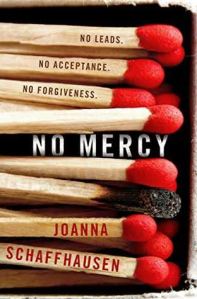
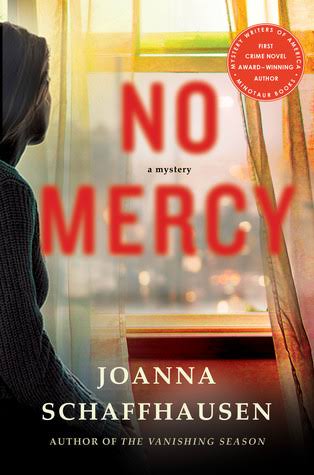
Cover Rant: When I reviewed The Vanishing Season I’d only seen the American cover and thought it was nice enough, if a bit tame as a representation of Ellery’s personality and story. Then I saw the UK version which, pardon the pun, nailed it! The American cover for No Mercy again falls short for me while the UK version shines. The American cover for this book doesn’t give the reader any sense of who Ellery is or what this story is about. I think Ellery would be disappointed that there isn’t anything gritty or honest about this cover. Sure, looking outside the window you can tell that the story has moved to the city, but the matches on the UK cover? They grab my attention and make me want to know more!
Thank you so much to NetGalley and Minotaur Books, an imprint of St. Martin’s Press, for the opportunity to read this book. Please publish the third book soon! I’m hanging off a cliff here waiting to find out what’s next for Reed!!!
⭐⭐⭐⭐⭐
Rating: 5 out of 5.
Once Upon a Blurb
Police officer Ellery Hathaway is on involuntary leave from her job because she shot a murderer in cold blood and refuses to apologise for it. Forced into group therapy for victims of violent crime, Ellery immediately finds higher priorities than “getting in touch with her feelings.”
For one, she suspects a fellow group member may have helped to convict the wrong man for a deadly arson incident years ago. For another, Ellery finds herself in the desperate clutches of a woman who survived a brutal rape. He is still out there, this man with the Spider-Man-like ability to climb through bedroom windows, and his victim beseeches Ellery for help in capturing her attacker.
Ellery seeks advice from her friend, FBI profiler Reed Markham, who liberated her from a killer’s closet when she was a child. Reed remains drawn to this unpredictable woman, the one he rescued but couldn’t quite save. The trouble is, Reed is up for a potential big promotion, and his boss has just one condition for the new job – stay away from Ellery. Ellery ignores all the warnings. Instead, she starts digging around in everyone’s past but her own – a move that, at best, could put her out of work permanently, and at worst, could put her in the city morgue.
When I read the blurb for this book I was drawn by the idea of someone fulfilling one of my dreams: living in a library. Imagine all of the uninterrupted reading time at night when everyone else goes home and you’re surrounded by shelves and shelves of books and the smell of books and the ambience of a library. Ah, heaven!
Now imagine the creepy factor of a dead body found in the library and subsequent mysterious footprints, noises in the middle of the night and messages written on the walls. Sounds like the making of a fun horror book, huh?!
Had the blurb I read even whispered the word ‘romantic’ I would have run a mile and so I was suitably horrified when I discovered an extended blurb on Goodreads cheerfully telling me I was reading a ‘romantic thriller’. Had this been a library book I would have stopped reading immediately but as I’d promised to review this book I grimaced and turned the page.
Given my romantiphobe tendencies I probably should have hated this book but I didn’t. It was never going to be something I would love and gush over, and I wish I’d known that before I started reading, but in between the budding romance and the frustration with some of the characters there were some sections that I enjoyed and found relatable.
Mallory’s home situation made me want to reach through the pages and strangle someone. Her once vibrant mother is now essentially a puppet on a string for controlling, emotionally abusive [insert swear word of your choice here] Charlie. I found the conversations between Mallory and her mother infuriatingly accurate given the circumstances and their personalities. I had hoped for a fairytale ending to that situation but unfortunately real life doesn’t guarantee those so it was probably too much to hope for.
The idea that someone who’s recently homeless and simultaneously trying to find food, shelter and any semblance of safety has time to agonise over a crush on a boy or to go indoor rock climbing with said boy just didn’t seem feasible to me. I’m fairly certain Maslow would agree.
He reaches for me slowly, and I’m powerless. Hypnotized by the graze of his fingers against the side of my thumb.
Spencer, while suitably adorable, spent his time wanting more from his life than living in a mansion with the loving family who adopted him and feeling guilty for wanting more, especially considering Mallory has “real” problems. I have trouble mustering up sympathy for a rich kid with supportive parents who’s scared of telling them that what is expected of him isn’t what he wants and any sympathy I had for him faded when he took out his frustration by starting a fight with some jerk at ice hockey practice.
I would have loved for his adoption to play more of a role in the book but it wasn’t the focus. Similarly the discussion surrounding addiction, while obviously sad, was pretty much glossed over.
Mallory and Spencer aren’t the meddling kids I’d hope they’d be; when I wanted them to investigate strange footsteps in the otherwise empty library they hid out in the bathroom. They finally do investigate but much later than I would have. The dead body in the library and the mystery of the ‘ghost’ were fairly tame and repetitive from my perspective. It was basically footprint, footprint, message on the wall, message on the wall, cool creative message, another footprint, and a few other signs finally leading to a resolution that seemed obvious from early on.
If you like sweet romances between people from disparate walks of life this could be the book for you. If you’re looking for creepy with potential for horror and ghosts then this is probably not the book you’re looking for.
Thank you to NetGalley and Sourcebooks Fire for the opportunity to read this book.
⭐⭐⭐
Rating: 3 out of 5.
Once Upon a Blurb
Spencer volunteers at the library. Sure, it’s community service, but he likes his work. Especially if it means getting to see Mallory.
Mallory spends a lot of time keeping her head down. When you’re sixteen and homeless, nothing matters more than being anonymous. But Spencer’s charm makes her want to be noticed.
Then sinister things start happening at the library. Mysterious symbols and terrifying warnings begin to appear, and management grows suspicious. Spencer and Mallory know a homeless teenager makes an easy target, and if they can’t find the real culprit soon, they could lose more than just their safe haven …
Isn’t it strange how our past shapes and torments us when we least expect it?
I’ve heard Dr. Phil say countless times that whatever story he’s focusing on is a cautionary tale. This story is definitely a cautionary tale. If you ever wondered how people wind up in abusive family relationships and how previously confident people transform into meek shadows of their former selves, you’ll gain insight by reading this book. If you weren’t already convinced how calculated and methodical perpetrators are in the execution of the physical and psychological beating down of their victims, here is a great example.
I spent so much time wondering why Cynthia Galbraith was in prison in the first place while reading When Evil Calls Your Name. Surely after the events described in White is the Coldest Colour Cynthia is due for some good fortune. I wondered about the competency of her legal team. The crime she committed seemed as though it should come under the banner of self defence or diminished responsibility.
The more I read though, the more I wondered about her complicity in the atrocities committed by her husband. Does being a victim excuse you from being responsible when you know or at least strongly suspect something heinous is happening in your home? If it’s hidden in plain sight does that give you permission to ignore and deny its presence? At what point does your inaction become criminal?
While not an easy read I found this book easier to digest than the details of Dr Galbraith’s crimes and thought processes of the first book in the series. You could read When Evil Calls Your Name without having already read White is the Coldest Colour but I’d personally recommend reading them in order to get the most out of them. I already had thoughts about Cynthia’s character going into this book and found it interesting to confirm some thoughts and discard others.
Transported from the prison of her home where we left her in White is the Coldest Colour to three years into her sixteen year sentence at White Haven Women’s Prison at the beginning of this book, we uncover the events that led her to White Haven by accessing her therapeutic journal and we also learn about her time behind bars. I appreciated that Cynthia’s story was not sugarcoated. I felt the claustrophobia of her cell and her continued torment as she relived the traumas she experienced through nightmares and recollections. There’s no magical transformation. Instead we see firsthand how the years of abuse continue to be caustic to Cynthia’s self esteem and identity.
I will quibble about the use of the word monster to describe Dr Galbraith and those of his ilk. While it’s certainly convenient and comfortable to label such depravity monstrous but I am not inclined to use that term myself as the label implies they are less than human. If we strip these people of their humanity are we then saying what they did was in their nature, they had no choice and are therefore not responsible for their actions?
Make no mistake; they are human, despite how much we’d prefer to dissociate from them. They are fallible and disgusting humans who make conscious decisions to enforce their will on others, but humans nonetheless. In a way I’m disappointed that the early life of Dr Galbraith has not been explored in the first two books in this series as I would be interested in knowing if there were experiences or behaviour in his childhood that signalled the way his life would unfold.
I don’t want to, and will never, understand why he does what he does other than the desire for power and control. I’m certainly not seeking to excuse anything he’s inflicted on any of his victims but I found it so interesting watching Cynthia’s story unfold that I wonder what I’d feel if I learned more about him.
The much needed update regarding the Mailer family from the first book was welcome but did come across as too simplistic and easy for my liking. The information about the Mailer’s and the final session with Cynthia’s prison counsellor seemed a tad rushed so I was thankful for the epilogue.
I found it interesting that in both books the children in the Galbraith family were largely unseen and silent. I could soliloquise about the silencing of children who grow up in violent homes but instead I’ll just say that, whether this was the author’s intention or not, I noticed and appreciated the authenticity this added to the family dynamics.
I don’t think this book could ever have been as gripping as the first in the series, with its police and child protection investigations and threat of imminent danger to the various victims. However the story this book told was captivating in its own right and I’m looking forward to reading the rest of John Nicholl’s books.
Thank you so much to NetGalley and Bloodhound Books for introducing me to this brilliant author.
⭐⭐⭐⭐⭐
Rating: 4.5 out of 5.
Once Upon a Blurb
Even the darkest secrets can’t stay hidden forever …
When twenty-nine-year-old Cynthia Galbraith struggles to come to terms with her traumatic past and the realities of prison life, a prison counsellor persuades her to write a diary exploring the events that led to a life sentence for murder.
Although unconvinced at first, Cynthia finally decides she has all the time in the world and very little, if anything, to lose. As she begins writing she holds back nothing: sharing the thoughts she hadn’t dare vocalise, the things that keep her awake at night and haunt her waking hours.
I’ve never enjoyed thinking about how many tortuous, excruciating and imaginative ways I could kill off a book villain as much as I did when reading about the big bad in White is the Coldest Colour. This is not a villain that you love to hate. This is a villain you want to suffer as much as possible before his eventual bloody demise.
Dr David Galbraith is many things. He is a husband, a father, an esteemed colleague, a renowned child psychiatrist. He is also a master manipulator and sadistic predator. He terrorises his family and his child victims alike, and he consistently gets away with it because he’s so good at what he does. He uses his intelligence to come across as charismatic and charming when the situation calls for it and because of his position in the community and his chameleonic prowess, no one suspects him. His true colours are only on display when and to whom he chooses, and if his control slips for a moment and his true self is revealed, he can easily lay on the charm and regain control.
While there’s certainly no shortage of paperback villains, Dr David Galbraith stands apart from the usual big bad in the chilling authenticity of his portrayal. The way he interacts with his wife will be hauntingly familiar to readers who have experienced the brutality of domestic violence. The calculated measures undertaken to groom the child and family of a potential new victim will shine a light on the predatory nature of child molesters.
I can’t remember the last book that genuinely scared me before this one. Give me horror, blood and guts, serial killers or clowns and I’ll enjoy watching from the sidelines, but real life? Real life can offer the scariest plots of all and the events in this book will reflect portions of some readers’ reality – and that is scary as hell to think about.
I stumbled upon this book when I found its sequel on NetGalley and needed to know what led to the events in When Evil Calls Your Name before I read Cynthia Galbraith’s story. Having never heard of this author before I’ve now found a new favourite. If John Nicholl’s other books have even echoes of the dark, gritty nature of White is the Coldest Colour then I know I need to read everything he’s ever written.
This book is definitely not for the faint of heart. It’s confronting, painful and real. Because of the author’s experience in police and child protection there’s an authenticity to the conversations and behaviours of the predators that gave me the creeps in a way I find lacking in most crime novels.
⭐⭐⭐⭐⭐
Rating: 5 out of 5.
Once Upon a Blurb
Be careful who you trust …
The Mailer family is oblivious to the terrible danger that enters their lives when seven-year-old Anthony is referred to the child guidance service by the family GP, following the breakdown of his parents’ marriage.
Fifty-eight-year-old Dr David Galbraith, a sadistic, predatory paedophile, employed as a consultant child psychiatrist, has already murdered one child in the soundproofed cellar below the South Wales Georgian town-house he shares with his wife and two young daughters.
When Anthony becomes Galbraith’s latest obsession he will stop at nothing to make his grotesque fantasies reality.
First, an admission. I used to be a free verse snob, prejudging something I had no experience reading. That all changed the day I discovered Ellen Hopkins and realised that some of the most emotional and engaging books are written in this format, so I was excited to see what Ebb and Flow had in store for me. Beside the joy of appreciating the story and characters, it also had me ugly crying in the form of “This is so beautiful!” 😭. So, to all of the free verse authors out there, my sincere apologies. I’ve reformed and am converted now!
The past year of Jett’s life has gone from bad to worse. His father is in prison, his mother moved him to the mainland and Jett has allowed victimhood to define him and his behaviour. As a result he’s made some really poor decisions and he’s been sent to stay with his granny for the summer, a well needed time out for Jett and his mother.
I adored Jett’s cotton candy granny, whose hair colour coordinates with her house colour. She is one of the coolest grannies ever! Her unconditional love for Jett came across as so genuine. She loves him no matter what and she gives him the space he needs to work through the guilt and shame he’s carrying about the events of the past year, yet also gently pushes him when he needs it.
Jett’s granny reminded me of my Nan and that’s probably one reason why I instantly connected with her. My Nan and I also played board games (except she always played to win whereas Jett’s granny takes it a little easier on him), she’d take me to visit her friends (Jett’s granny takes him visiting as well) and she was my favourite person in the entire world (I expect Jett feels much the same). My Nan passed on her love of reading, her quirkiness and her ‘normal is boring’ attitude to me.
The most valuable thing Nan ever gave me, which mirrors what Jett’s granny gives him, was her unshakeable belief in my goodness and ability to do whatever I set my mind to. Even now, over a decade after she went to hold my seat at the canasta table in heaven, I can still hear her telling me, “I knew you could do it” every time I accomplish anything, big or small.
Without Jett’s granny I expect things would have turned out a lot differently for this 11 year old. I know he’s going to look back years from now and credit his granny and those experiences with her that summer with the man he becomes. Now I’m talking about him like he doesn’t live on pages but if any author can make me ugly cry at how beautiful their book is, their characters are going to become a part of me. Especially when I cry while thinking about them to write my review – that’s a first!
Jett’s summer is one of respite, of taking stock and learning to take responsibility for his actions. He has the opportunity to consider the kid he was before he went to the mainland, who he became once there and the man he wants to become. Shining a spotlight on how difficult it is to face up to the actions you regret and forgiving others as well as yourself, Jett’s journey is ultimately one of redemption and hope.
While this is marketed as a children’s book, it has a lot to offer adults as well. The writing is simply gorgeous and reminded me why I love this author. There’s at once a simplicity and depth to the way Heather Smith writes and as with The Agony of Bun O’Keefe I was happily motoring along, loving the book but not realising my emotional investment in her characters until the ugly cry escaped. I wound up on the final page of Ebb and Flow with a satisfied sigh and tears running down my face, and the only word I could think of was beautiful.
Heather Smith’s writing reminds me of the feeling I get reading a Billie Letts book. There’s a vulnerability, openness and loveable quirkiness in their characters, and you’re permitted access to the real person beneath the façade. As you gradually delve into Jett’s rotten year you meet Alf who is adorable and childlike and the alleged villain of the story who I really liked, and whose emotions and acts I could empathise with. Cotton candy granny will remain my favourite character in this book, but she definitely had some pretty impressive competition for that title.
Ebb and Flow is both heartbreaking and heartwarming. I half want to say that I hope schools use this book as part of their English curriculum but if schools are still like they were back in the olden days when I attended, they tend to analyse the fun out of really good books, and I’d hate for that to happen to this one.
Thank you so much to NetGalley and Kids Can Press for the opportunity read this book. I can’t wait for Heather Smith’s next book!
⭐⭐⭐⭐⭐
Rating: 5 out of 5.
Once Upon a Blurb
One summer, after a long plane ride and a rotten bad year I went to Grandma Jo’s. It was my mother’s idea. Jett, what you need is a change of scenery. I think she needed a change of scenery, too. One without me. Because that rotten bad year? That was my fault.
Thus begins the poignant story, told in free verse, of eleven-year-old Jett. Last year, Jett and his mother had moved to a new town for a fresh start after his father went to jail. But Jett soon learned that fresh starts aren’t all they’re cracked up to be. When he befriended a boy with a difficult home life, Jett found himself in a cycle of bad decisions that culminated in the betrayal of a friend – a shameful secret he still hasn’t forgiven himself for. Will a summer spent with his unconventional grandmother help Jett find his way to redemption?
Writing in artfully crafted free-verse vignettes, Heather T. Smith uses a deceptively simple style to tell a powerful and emotionally charged story. The engaging narrative and the mystery of Jett’s secret keep the pages turning and will appeal to both reluctant and avid readers. This captivating book offers a terrific opportunity for classroom discussions about the many ways to tell a story and how a small number of carefully chosen words can have a huge impact. It also showcases the positive character traits of empathy resilience, courage, and responsibility.
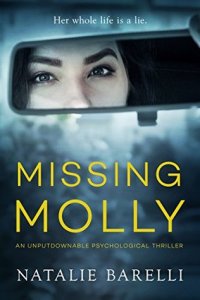
When I first saw the cover for Missing Molly I wasn’t overly interested in the book as it’s fairly generic and doesn’t really capture your imagination. The blurb, however, really grabbed my attention and I had to read it.
Rachel Holloway works for a small struggling newspaper, the South Hackney Herald, and to try to generate some much needed interest and advertising dollars the team decide to embark upon a new venture – podcasting. Piggybacking off the idea of Serial, an extraordinarily popular investigative podcast, the Herald team decide to focus on a nearby unsolved true crime story.
They’re going to find Molly Forster, whose parents and older sister were murdered fifteen year ago when she was a child. Molly has been missing ever since. The problem is that Rachel Holloway is Molly Forster and there’s a good reason why she doesn’t want to be found.
While I was definitely interested in knowing what came next and I enjoyed the slow reveal of the information discovered during the investigation and its impact on the various characters, I don’t imagine it’s going to be one of those books that lingers in my mind, with me thinking about the characters weeks later. I didn’t particularly love or hate any of the characters and unfortunately I didn’t emotionally connect to any of them.
I was entertained and I liked the guessing game of whether Rachel really was Molly or if in fact she was psychotic, although I found myself searching for red herrings that I never found and didn’t get caught up in unexpected twists and turns like I’d hoped. There was one incident that initially surprised me but one I’d read it it made perfect sense and I was able to come up with the reasons behind this and who had done what quite easily.
Favourite quote:
“Memories, unpleasant ones, are like a scab. You hate them but you pick at them anyway”
Thank you so much to NetGalley, The Last Bureau and Pikko’s House for the opportunity to read this book.
⭐⭐⭐
Rating: 3 out of 5.
Once Upon a Blurb
Everyone has secrets, and Rachel Holloway is no exception. She’s worked hard to keep the past where it belongs: dead and buried. And so far, she’s been very successful.
But now the small newspaper where she works wants to produce a podcast on a cold case: the disappearance twelve years ago of little Molly Forster.
Some secrets should never see the light of day, and as far as Rachel is concerned, whatever happened to little Molly is one of them. Rachel has a life now, a boyfriend she loves and a three-year-old daughter she adores, and she will do anything to protect them.
But to do that, no one can ever know that she is Molly Forster.
I’ve done it! I’ve finally done it!! I’ve found an author whose writing is worthy of being compared to Tess Gerritsen in a sentence like “I’ve finally found an author as good as Tess” or “This book had everything I love about Tess books and more, and it’s not even written by Tess!”
Friends, please allow me to introduce you (if you haven’t already discovered her) to Joanna Schaffhausen. I’m going to go out on a limb here and call it early … remember this name because Joanna’s ability to immerse you in her character’s world has bestseller written all over it. I feel as though nothing I say here can possibly do justice to her debut but I’ll give it a shot and encourage you to read it yourself so we can gush together about how much we loved it.
Ellery Hathaway is the sole survivor of infamous serial killer Francis Michael Coben. Saved by Agent Reed Markham before she became Coben’s seventeenth murder victim, Ellery now works as a police officer in a quiet town where no one knows who she really is. She is the only one who believes there’s a link between three seemingly unconnected disappearances in three years in her town, which all occurred around her birthday, the day she was abducted fourteen years ago. Ellery’s next birthday is approaching and she calls Reed, knowing he is the only one who will believe her.
I wanted to both rush through The Vanishing Season and read as slowly as possible to draw the experience of the first read out for as long as possible. I became immersed by about paragraph 3 and each time I came back to where I’d left the story I got sucked straight back in. I wound up so engaged that I didn’t realise I’d said, not thought, “I knew it!” until one of the people that had been respectfully honouring my ‘don’t you dare interrupt me until I finish my book or there will be dire consequences’ look came from the other side of the house to find out what my outburst was about. Oops!
I know a book has its hooks in me when I start repeating a phrase to myself while reading, as if the number of times I repeat it can magically increase the likelihood of my being able to influence the outcome. Yes, in my mind I wield that much power! In this case I had two magical phrases:
“Please don’t let Bump die!”
“Let the killer be anyone but 🤚.” (And, no, I’m not telling you who the hand represents but it seemed an appropriate substitute given the content of the book.)
I adored Bump. The loyal and trustworthy male in Ellery’s life, Bump is a basset hound who loves walks and rides in the car, liberally distributing slobber over humans he likes and dreams of the day when someone will accidentally drop a piece of chocolate in his vicinity. Also, the story surrounding the choice of his name is wonderful and dog owners everywhere will relate and wonder why they didn’t think of naming their dog Bump.
I loved the people characters as well. No one was perfect. All of the major players had pasts which influenced the way they thought and acted in the situation they found themselves in. There were questionable ethics and life choices, secrets galore and issues surrounding trust were hiding beneath the surface, and shame and guilt were both explored.
I really enjoyed Ellery and Brady’s banter. Their friendship felt comfortable and their bond over 80’s music and quips about what they disagreed on made me feel like I was being included. I almost wanted to add my own opinion a couple of times. I’m looking forward to reading Ellery and Reed banter in future books. There were hints of it here but good banter takes time to develop in a friendship so I’m thankful it didn’t happen immediately.
Coben gave me a what a fantastic yet disgusting and interesting in a disturbing way vibe that was similar to the way I felt when reading about Hannibal Lecter. Which brings me to the gore. It was gruesome enough to satisfy the disturbed side of me that watches B grade movies in part to cheer when the gigantic shark leaps out of the water and takes down a plane, yet it wasn’t so focused on the brutality of the murders that it detracted from the interactions between characters and the mystery of who was behind the murders and why.
The references to sexual assault are not gratuitous by any means but I felt the character directly affected was so realistic that if this has been your experience you are likely to see parts of your own response mirrored back at you (which incidentally I applaud because life after sexual assault is rarely written well). I wasn’t personally triggered while reading, instead feeling hopeful when I encountered ‘me, too’ moments.
I’m always interested, when someone is rescued after being kidnapped or otherwise traumatised, in what happens next. What becomes of the survivor? What does their life look like now compared to what it looked like prior to whatever happened to them? How do they cope? Do they think they’re a victim or a survivor? So many books that explore the effects of sexual assault portray the person who experiences it as either a victim hiding from the world in a corner or someone who’s taking on the world and has no residual physical or psychological impacts in their life.
The character in The Vanishing Season who’s been sexually assaulted was irrevocably changed by their experiences and is a wonderful mix of strength and vulnerability. They’ve overcome so much but there are still physical reminders on their body and in their home that speak to the pain they carry with them. They’re at a point in their life where they’ve worked so hard to no longer be the victim yet they still feel the need to hide. I loved the dichotomies and the implication that healing from sexual assault isn’t a one size fits all process.
If I were to nitpick I’d tell you that I wanted more details of the Big Bad’s background. It’s not as though we don’t know some pivotal moments in their life that help set their particular brand of crazy in motion and we’re given access to the twisted way they think, but I wanted more. To be fair, I have an obsession interest in what causes people with similar genetic and environmental factors to take drastically different paths in life, so my need to know more says more about me than it does about this book. I was also left wanting to know what happens to Anna after the book finished.
And now for your chance to laugh at and with me, I’ll tell you my favourite How Stupid Am I moment I encountered while reading. Initially when I read the town’s name I got Woodbury confused with Woodsboro and for a while I was thinking of how funny it would be if there was a cameo of some random person in a Scream mask running through a scene. 🤪
I love debut novels but I often wind up disappointed by a feeling of knowing how good a book could have been if only that brilliant idea had the execution you usually only expect with experience. Joanna’s debut had the excitement of a first time author’s passion but was written with the character development, story arc, backstories, delightful twists and sucked into a reading black hole ability I only expect of the greats once they’ve found their feet. There were some sentences where the imagery made it feel like I was reading poetry.
I don’t even know Joanna yet I feel proud of her for writing such an impressive debut. If this is what she can accomplish with a first novel I can only imagine how much fun it’s going to be to read her future novels. If anyone has any spare stars I’d love to borrow some because ⭐️⭐️⭐️⭐️⭐️ aren’t enough.
Thank you to NetGalley, Minotaur Books and St. Martin’s Press for ✨ granting my wish ✨ and giving me this opportunity to read this book. I don’t know if I can wait for the next Ellery/Reed/Bump book to be released. I’ve found a new author whose books will be added to my to be read list sight unseen.
⭐⭐⭐⭐⭐
Rating: 5 out of 5.
Once Upon a Blurb
Ellery Hathaway knows a thing or two about serial killers, but not through her police training. She’s an officer in sleepy Woodbury, MA, where a bicycle theft still makes the newspapers. No one there knows she was once victim number seventeen in the grisly story of serial killer Francis Michael Coben. The only victim who lived.
When three people disappear from her town in three years, all around her birthday – the day she was kidnapped so long ago – Ellery fears someone knows her secret. Someone very dangerous. Her superiors dismiss her concerns, but Ellery knows the vanishing season is coming and anyone could be next. She contacts the one man she knows will believe her: the FBI agent who saved her from a killer’s closet all those years ago.
Agent Reed Markham made his name and fame on the back of the Coben case, but his fortunes have since turned. His marriage is in shambles, his bosses think he’s washed up, and worst of all, he blew a major investigation. When Ellery calls him, he can’t help but wonder: sure, he rescued her, but was she ever truly saved? His greatest triumph is Ellery’s waking nightmare, and now both of them are about to be sucked into the past, back to the case that made them … with a killer who can’t let go.



 Schizanthus Nerd