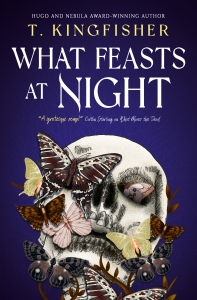
Sworn Soldier #2: What Feasts at Night – T. Kingfisher

Prodigal wastrel Easton is returning to Gallacia with Hob, kan horse, and Mr Angus, kan long time friend, whose grunt vocabulary is impressive.

All things being equal, Easton would prefer to be in Paris but Miss Potter is coming to visit the fungus and practice her Gallacian.

What trash has the wind blown in, then?

It’s all very grim and grey, but that’s as Gallacian as carved turnip shutters. It’s not usually this quiet, though.

It seems that trouble follows whenever this trio are together. The current trouble involves the very real complications that result from a superstition coming for you. What feasts at night, besides me? It’s best if you find out yourself but it’ll take your breath away.

I loved the descriptions that reminded me early on that I wasn’t invited along for a simple catch up amongst the friends who survived the first book: “a tangle of vines draped over a bare tree like spilled entrails.”

Speaking of the first book, you really should read it before this one. This could be read as a standalone in a pinch but you’ll want to read What Moves the Dead once you’ve finished this one anyway. Plus, there’s spoilers for the first book here and you really don’t want anyone ruining the fun for you.

I’m aware that this is a cop out but I can’t choose a favourite in this series. I felt more dread in the first book but I enjoyed the interaction between the characters more in this one.

The depiction of PTSD (called soldier’s heart here) is authentic. PTSD invades every aspect of your life, regardless of the shape of the ‘war’ you survived. The impacts Easton experiences in this series are realistic.

I love catch-all phrases and I found one here that I’m going to have fun irritating people with, particularly when someone asks how I am when it’s a throwaway line, not a genuine inquiry.

“I’m keeping”

Make sure you save some mushrooms for Miss Potter and see if you can get the Widow to smile.

“Hmmph!”

It might be a good idea to check under your pillow before you go to bed tonight.

I now have a more pressing need for a book that gives Miss Potter centre stage. I see this taking place in England. Easton and Angus visit her, perhaps for a wedding. There’s a mycological emergency of sorts, possibly involving fairies…

“Until next we meet, young sinner!”

Thank you so much to NetGalley and Titan Books for the opportunity to read this novella.

Rating: 5 out of 5.

Once Upon a Blurb

When Alex Easton travels to Gallacia as a favour to their friend, Britain’s foremost mycologist Miss Potter, they find their home empty, the caretaker dead, and the grounds blanketed by an uncanny silence. The locals won’t talk about what happened to the caretaker. None of them will set foot on the grounds.

Whispers of an unearthly breath-stealing creature from Gallacian folklore don’t trouble practical Easton. But as their sleep is increasingly disturbed by vivid nightmares and odd happenings perplex the household, they are forced to confront the possibility that there is more to the old folk stories than they’d like to believe.

A dark shadow hangs over Easton’s house. And nobody will rest until justice is done.
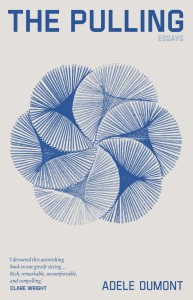
The Pulling – Adele Dumont

Pulling out just one shaft of hair at a time always felt so insignificant, something imperceptible. Who could notice one strand missing from a whole, overly thick head of hair?

I’ve never known anyone who compulsively pulls their hair out. I mean, I probably have because an estimated 2% of the population have trichotillomania, but shame keeps it hidden in plain sight.

Hair pulling is not even something that makes a whole lot of sense, even to those who live with it.

I am struggling to translate all this to you; when I am not in the midst of it I myself struggle to fathom it. Such is the strangeness of all this that – once I have returned to the world – I find it difficult to contemplate or believe in its subsuming power.

Logic would say that pulling your hair out couldn’t possibly help anything. For people with trichotillomania, though, it does (in the moment at least) and that makes it even more confounding.

It’s such a well kept secret that most people haven’t heard of it. Even amongst those who compulsively pull their hair, there’s isolation. Yet, despite this, there are commonalities.

We all like to think we’re unique but one of the fascinating things about trichotillomania is that it looks similar across sufferers, including those who don’t yet know there’s a word for it. Who knew that there’s a hierarchy of hair, that it’s not just about pulling hair but the right hair? Why do people who pull do so in a predictable pattern? When hardly anyone is talking about this, how are there so many common denominators?

I’m not the biggest fan of the medical model when it’s applied to mental health. It can result us taking on a diagnosis as our identity and with the amount of time people can spend pulling, it’s not hard to see how this happens but it makes me uncomfortable.

This is a brave book. Because, as I’ve mentioned, people simply don’t talk about this. Because there’s so much shame attached to it.

This is a painful book. It hurts to witness, even from a distance, the struggle Adele experiences every day.

This is an important book. Brené Brown says it better than I ever could: “If you put shame in a petri dish, it needs three ingredients to grow exponentially: secrecy, silence, and judgement. If you put the same amount of shame in the petri dish and douse it with empathy, it can’t survive.”

I love memoirs. There’s something special about being invited into someone’s life and having them share some of their innermost thoughts. Adele Dumont, in sharing her experience, is shining a light on trichotillomania. Shame and secrets don’t do so well in the light.

Thank you so much to Scribe Publications for the opportunity to read this book.

Rating: 4 out of 5.

Once Upon a Blurb

When Adele Dumont is diagnosed with trichotillomania — compulsive hair-pulling — it makes sense of much of her life to date. The seemingly harmless quirk of her late teens, which rapidly developed into almost uncontrollable urges and then into trance-like episodes, is a hallmark of the disease, as is the secrecy with which she guarded her condition from her family, friends, and the world at large.

The diagnosis also opens up a rich line of inquiry. Where might the origins of this condition be found? How can we distinguish between a nervous habit and a compulsion? And how do we balance the relief of being ‘seen’ by others with our experience of shame?

The Pulling is a fascinating exploration of the inner workings of a mind. In perfectly judged prose, both probing and affecting, Dumont illuminates how easily ritual can slide into obsession, and how close beneath the surface horror and darkness can lie.

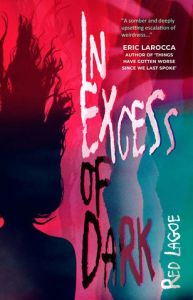
In Excess of Dark – Red Lagoe

Grief is a monster. A real-world monster that ravages the body and mind and spirit.

You know how you can never truly know what another person is thinking? It turns out that’s not entirely accurate. Karina’s deepest, darkest imaginings have the uncanny ability to come true.

She’s always had this ability, although it used to be much easier to put this down to correlation rather than causation. Recent events have changed that somewhat. It’s pretty safe to say you might want to stay on Karina’s good side now or you may no longer have a good side.

“Don’t pretend you didn’t want this to happen. I know … somehow … you did this.”

Grief can distort the way you see things but in Karina’s case, her desperate need to be with her loved ones will have her coming face to face with the darkness.

This book doesn’t shy away from the depths of despair that threaten to overwhelm you when you’re grieving. Looking straight into the rawness of the pain and the guilt that can accompany it, this is at times an uncomfortable read but that’s how you know it’s done its job.

I would have liked some of the characters to be more fleshed out (maybe literally). I wish I could have met Karina’s father and spent more time exploring her relationship with her husband and son.

Things get fairly splatty, much to my delight. While I absolutely loved the body horror, I was hoping for a larger body count. That says more about me than the book, though. Unless we’re in a slasher where the blood is practically dripping off the pages, I’m going to be wanting more insides to become outsides.

I finished this read in one sitting. I wish it had been longer, not because it was lacking but because I wanted to spend more time in the darkness with Karina. I’m keen to read more books by this author.

Think positive thoughts.

Thank you so much to NetGalley and DarkLit Press for the opportunity to read this novella.

Rating: 4.5 out of 5.

Once Upon a Blurb

What if every terrible thing imagined came true? Every fleeting, nightmarish thought a reality? For grief-stricken Karina, her newfound ability to turn her worst daydreams into palpable truths has sent her into a downward spiral of depression and guilt. Coupled with the appearance of an enigmatic shadow figure and visions of her dead family, she grapples to maintain her sanity while desperately attempting to harness her abilities and reunite with her loved ones.

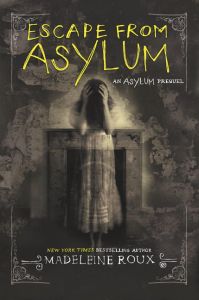
Asylum #0: Escape From Asylum – Madeleine Roux

To be Patient Zero meant losing himself, not to death, but to something much worse.

I was in a reading by slump so decided it was time for a comfort reread. I chose the Asylum series. Read into that what you will…

Before we go to summer school with Dan, Abby and Jordan, we need to visit Brookline when its rooms were cells, not dorm rooms.

This is Brookline the asylum. Trust me; you do not want to be here.

“This place … It’s not quite what it looks like. It’s not what it seems.”

It’s 1968 and Ricky is being dropped off by his mother and Butch at his third ‘retreat’. Sure, there was the incident with Butch. Ricky’s not denying that, even if Butch had it coming. This is about more than that, though. This is about Martin.

Homophobia is rife and we’re still decades away from people calling out conversion therapy for the horror show that it is. I remember that we all dreaded and feared the Warden but, after all of these years, the specifics were hazy in my mind. However, I never forgot that he’s an extraordinarily disturbed man with a god complex who should be a patient, not staff.

“Whatever else he is, he’s also a butcher. A monster.”

For Ricky, the only good thing about Brookline is Kay. She’s also there for ‘treatment’ and I spent the entire book wanting to protect her.

“You know you and I are just different. Different isn’t sick.”

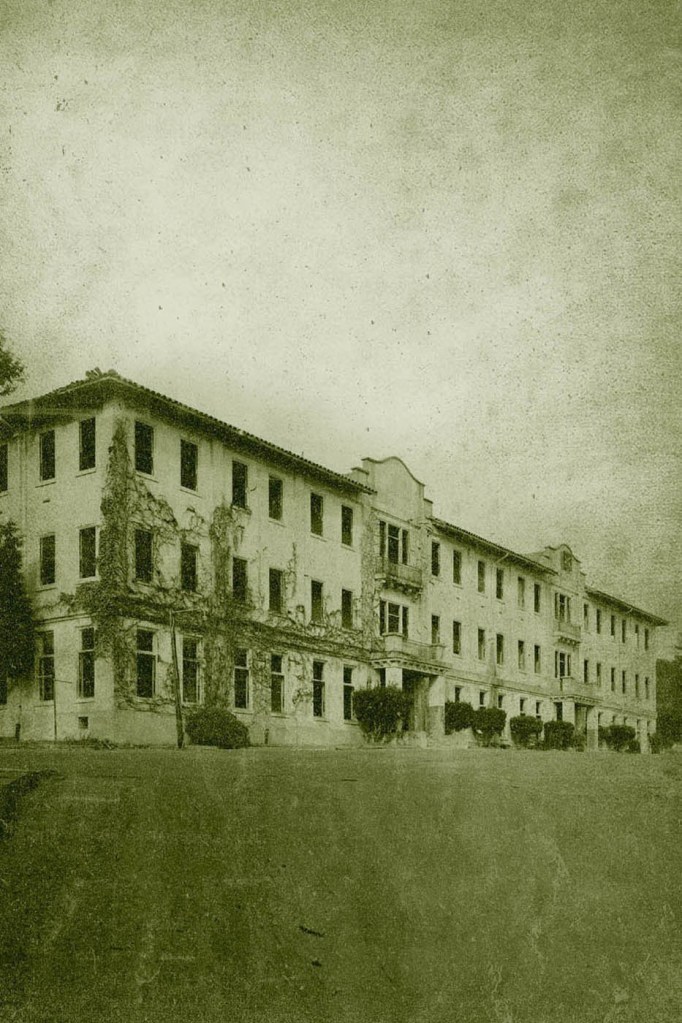
I’d never seen a book that included found photos when I first read this series. I was absolutely fascinated turning the pages to discover new creepy images. I looked forward to rediscovering the photos this time around and was not disappointed.

Brookline. Photo credit: James W. Rosenthal, Library of Congress

I’d forgotten that we meet Dennis in this book and I’ve only just realised that Roger was first introduced here as well. The deeper you allow yourself to wander around in the underbelly of Brookline, the more rewarded you’ll be. And more disturbed, too, by the depravity of those in power.

I wish there’d been details of everything that took place between Chapter 47 and the Epilogue. I need to know what Kay’s life looked like post Brookline.

“If we can survive in here, we can do anything.”

Rating: 4 out of 5.

Once Upon a Blurb

The nightmare is just beginning.

Ricky Desmond has been through this all before. If he could just get through to his mother, he could convince her that he doesn’t belong at Brookline. From the man who thinks he can fly to the woman who killed her husband, the other patients are nothing like him; all he did was lose his temper just a little bit, just the once. But when Ricky is selected by the sinister Warden Crawford for a very special program — a program that the warden claims will not cure him but perfect him — Ricky realises that he may not be able to wait for his mom a second longer. With the help of a sympathetic nurse and a fellow patient, Ricky needs to escape now.

Set long before Dan, Abby, and Jordan ever walked the hallways of the Brookline asylum — back when it was still a functioning psych ward and not a dorm — Escape From Asylum is a mind-bending and scary installment in the Asylum series that can stand on its own for new readers or provide missing puzzle pieces for series fans.

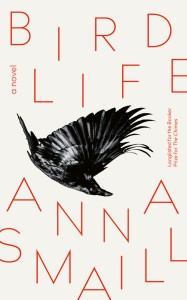
Bird Life – Anna Smaill

Dinah’s twin brother, Michael, was a musical prodigy. She still sees him, even though she moved across the world after he died.

‘He built the world, and we both lived inside it. He made it up, and I believed him.’

Animals have spoken to Yasuko since she was 13. Her son has recently left home.

‘I am scared that it is happening again.’

When Dinah and Yasuko meet, they form a friendship, connected by their grief.

I was keen to explore the lives of these two women impacted by mental illness. Given the blurb and some early reviews, I was expecting magical realism and lines blurring reality and inner lives in turmoil.

I couldn’t wait to see how their friendship unfolded so became frustrated waiting for them to meet. The first part introduces you to each woman separately and their lives don’t intersect until the second part.

I didn’t connect with or particularly like either of the main characters. It’s weird, though, because I feel like I know them better than they know themselves and at the same time don’t really know them at all.

This book delves into grief and anger, and the frustration and pain that accompany them. One of the passages that has stayed with me speaks to how tiring grief is.

‘I think because when you lose someone, you have to relearn everything. You have to learn the whole world all over again. But the world without that person in it. That takes a lot of energy, and a very long time.’

It’s possible I stayed too close to this story’s surface and that if I’d dived deeper I would have gotten more out of it. What I was most looking forward to once Yasuko was able to hear animals speaking again was learning what the dog she and her son used to see every night was saying. I acknowledge this misses the point of the entire book but that’s the type of reader that I am.

I didn’t spend time trying to figure out what was real and what was a symptom of mental illness. As far as I was concerned, it was all real to the main characters and so I took the position of going there with them to try to better understand them.

Favourite no context quote:

‘You need to stop beating yourself up. The world is doing a great job of that without your help.’

Thank you so much to Scribe Publications for the opportunity to read this book.

Rating: 3.5 out of 5.

Once Upon a Blurb

In Ueno Park, Tokyo, as workers and tourists gather for lunch, the pollen blows, a fountain erupts, pigeons scatter, and two women meet, changing the course of one another’s lives.

Dinah has come to Japan from New Zealand to teach English and grieve the death of her brother, Michael, a troubled genius who was able to channel his problems into music as a classical pianist — until he wasn’t. In the seemingly empty, eerie apartment block where Dinah has been housed, she sees Michael everywhere, even as she feels his absence sharply.

Yasuko is polished, precise, and keenly observant — of her students and colleagues at the language school, and of the natural world. When she was thirteen, animals began to speak to her, to tell her things she did not always want to hear. She has suppressed these powers for many years, but sometimes she allows them to resurface, to the dismay of her adult son, Jun. One day, she returns home, and Jun has gone. Even her special gifts cannot bring him back.

As these two women deal with their individual trauma, they form an unlikely friendship in which each will help the other to see a different possible world, as Smaill teases out the tension between our internal and external lives and asks what we lose by having to choose between them.

Rental Person Who Does Nothing – Shoji Morimoto

Translator – Don Knotting

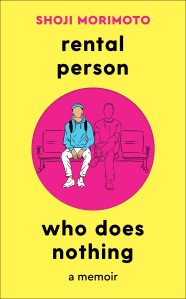
Cover image of Rental Person Who Does Nothing by Shoji Morimoto

‘Hello, I’m Rental Person.’

The novelty was what drew me to this book. I wondered what a rental person would even do and had fun imagining what I would hire someone to do if I had the opportunity. I eventually settled on a bucket list item I haven’t managed to convince anyone in my life to do with me, a shark cage dive. The people in my life are so sensible… Anyway, the possibilities made this one of my most anticipated reads of the year.

Although I enjoy lazy days as much as the next person, I don’t understand “a wish to live without doing anything”. My interest in reading about people who see the world differently to me was a draw card as well.

I thought I’d caught Morimoto out because surely writing a book constitutes doing something. Although a part of me wishes he had written this book with the hope of gaining more insight into his life, I couldn’t help but chuckle when I read that he provided simple answers to a writer and editor, who then wrote his book for him. Doing nothing? Goal achieved.

When I read about what people requested from Rental Person, I was struck by the simplicity of a lot of the requests: waving goodbye to them at a train station, helping them finish a drink, saving a place for them in a busy park. I also reconsidered my Rental Person wish; I’m pretty sure cage diving would constitute doing something unless Rental Person simply watched me do it. And where’s the fun in that?! I’d be wanting a shared experience with someone.

I began to marvel at the bravery of people sending a request to a stranger, asking them to be there with them as they did something that was important to them.

Every so often, I’d be struck by a gem like this:

Depth of discussion and depth of relationship don’t always go hand in hand.

Then I’d be puzzled by the detached vibe that came across elsewhere.

People might think I’m cold for saying this, but when I’m listening to clients, I’m thinking, That would be interesting to tweet, or Good, that’s great material. Maybe I’m less emotional than other people, or perhaps I’m simply not affected by other people’s emotions. I think this makes me suited to being Rental Person. I don’t get too involved in the client’s world.

I’m not naturally responsive. It doesn’t really matter to me what people do or say.

I’m not sure why this was the case but I had assumed Rental Person was a single man in his early 20’s. I was surprised to learn that when this book was written, he was 35 and had a wife and child.

When he started ‘Do-nothing Rental’ in June 2018, Morimoto charged train fare and the cost of food (if applicable). He mentioned he was living off his savings at the time and I wondered about the sustainability of this.

According to his Twitter profile, Morimoto now charges a request fee of 30,000 yen, transportation expenses from Kokubunji station and expenses such as food and drink (if applicable). For corporate use, the cost begins at 100,000 yen. I know he needs to make a living but if you’re asking him to help you finish a drink, that makes it a pretty expensive drink. I wonder if the introduction of the request fee has changed the types of things people are requesting.

In the book, I got the impression that Morimoto wasn’t especially keen on repeat business. A 2022 Fortune article changed my understanding of this as Morimoto said that “one in four of his clients were repeat customers, including one who had hired him 270 times”.

As someone who doesn’t understand small talk, I wondered why people would hire someone who only provides simple responses. It wasn’t until I made it to the section about how reciprocity works in Japanese society that I finally understood why it would be so valuable (no pun intended) to spend time with someone with no expectations attached to the interaction. I get it now.

After all of my musings about cage diving and other bucket list items, I’ve decided that making a Rental Person request isn’t for me. I can definitely see how this would be helpful for other people, though, if they can afford it.

I couldn’t do anything, so I started ‘doing nothing’.

Thank you so much to Pan Macmillan Australia for the opportunity to read this book.

Title: Rental Person Who Does Nothing

Author: Shoji Morimoto

Translator: Don Knotting

Publisher: Pan Macmillan Australia

Imprint: Picador

Published: 11 July 2023

RRP: AUD $29.99 (trade paperback)

Rating: 3.5 out of 5.

Once Upon a Blurb

Today, I’m starting a ‘rent a person who does nothing‘ service … Except for very simple conversation, I’m afraid I can do nothing.

Shoji Morimoto was constantly being told that he was a ‘do-nothing’ because he lacked initiative. Dispirited and unemployed, it occurred to him that if he was so good at doing nothing, perhaps he could turn it into a business. And with one tweet, he began his business of renting himself out … to do nothing.

Morimoto, aka Rental Person, provides a fascinating service to the lonely and socially anxious. Sitting with a client undergoing surgery, accompanying a newly-divorced client to her favourite restaurant, visiting the site of a client’s suicide attempt are just a few of his thousands of true life adventures. He is dependable, non-judgemental and committed to remaining a stranger and the curious encounters he shares are revelatory about both Japanese society and human psychology.

In Rental Person Who Does Nothing, Morimoto chronicles his extraordinary experiences in his unique line of work and reflects on how we consider relationships, jobs and family in our search for meaningful connection and purpose in life.

Good Girls – Hadley Freeman

Anorexia was in some ways like a security blanket for me because it allowed me to hide from the world, it provided structure and rules, and there was always one simple right answer: don’t eat.

I love memoirs. Sometimes they make you feel seen through shared lived experience. Other times they invite you into a world that’s unlike what you’ve known. You are given the opportunity to see your struggles in a new light and may discover new ways to cope, survive and maybe even thrive. There are just so many possibilities when you open yourself up to accompanying someone as they do life in their own unique way, even if you only meet one another within the pages.

I have read about eating disorders since I was an early teen. Although never officially diagnosed, I absolutely had one at the time. I was lucky enough to stumble upon the right book at the right time, something that allowed me to change some of my eating habits before the slope got too slippery. That’s not to say that disordered eating didn’t follow me into my adult life. But this book reminded me that Hadley’s story could have very easily been my own.

Hadley stopped eating when she was fourteen and spent several years living in psychiatric wards.

I had developed, the doctor said, anorexia nervosa. He was right about that, but pretty much nothing else he told me about anorexia turned out to be correct: why I had it, what it felt like, or what life would be like when I was in so-called recovery.

Hadley’s experience was so different to my own and pretty much everything I’ve ever read about eating disorders. But that’s a good thing. Eating disorders, much life like itself, aren’t one size fits all. (Pun purely accidental but now my brain can’t come up with an alternative.) When we’re only looking for a specific presentation of something, we’re likely to miss more than we see.

That’s what I remember perhaps most of all: the loneliness. I genuinely didn’t understand what was happening to me, and nor, it often seemed, did anyone else.

Thank you so much to NetGalley and 4th Estate, an imprint of HarperCollins, for the opportunity to read this book.

Rating: 4 out of 5.

Once Upon a Blurb

From Hadley Freeman, the bestselling author of House of Glass, comes her searing and powerful memoir about mental ill health and her experience with anorexia. 

This is how the Anorexia Speak worked in my head:

‘Boys like girls with curves on them’ – If you ever eat anything you will be mauled by thuggish boys with giant paws for hands

‘Don’t you get hungry?’ – You are so strong and special, and I envy your strength and specialness

‘Have you tried swimming? I find that really improves my appetite’ – You need to do more exercise

In this astonishing and brave account of life with anorexia Hadley Freeman starts with the trigger that sparked her illness and moves through four hospitalisations, offering extraordinary insight into her various struggles.

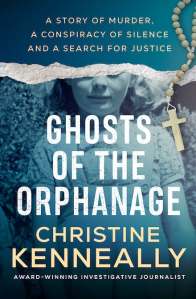
Ghosts of the Orphanage – Christine Kenneally

For more than a hundred years, the people of Vermont had, knowingly or unknowingly, sent their children in reverent offering to the huge house on the hill outside of town. The obedient servants of the Catholic God took the children in, and in return, behind the locked doors of St. Joseph’s Orphanage, out of their own pain and misery, and with all their immense entitlement, they devoured them.

Some books stay with me because they were so well written. Others linger because they invited me into a world that I previously knew very little of, or their content haunts me. Then there are those that introduce me to people I’ll never forget.

This book was all of the above. I expect it to be one of my favourite non-fiction reads of the year.

Investigating some of the worst abuses of power I’ve ever read about, abuse that took place over the course of decades and throughout continents by seemingly countless perpetrators, this is not an easy read. Important, absolutely. Easy, not even close.

However, despite detailing abuses that run the gamut – verbal, emotional, physical, sexual, medical, neglect, torture, even murder – the descriptions are not as graphic as I had expected them to be. That’s not to say that there’s any doubt about the level of brutality these children survived (or didn’t, in some cases). The content is potentially triggering but it’s delivered as sensitively as possible.

The research that preceded this book was extensive, consisting of hundreds of interviews as well as … take a deep breath …

thousands of pages of transcripts from the St. Joseph’s litigation in the 1990s and files from Vermont Catholic Charities, which included contemporaneous logs from social workers at the orphanage, medical records, historic photographs, and letters written by priests and other workers in child welfare at the time, as well as handwritten diaries, police records, autopsy reports, transcripts from secret church tribunals, priest rehabilitation reports, orphanage settlement letters, historic newspaper articles, death and birth certificates, and government files and reports from many jurisdictions.

While the bulk of the book focuses on the atrocities that took place at St. Joseph’s Orphanage in Vermont, you’ll also learn about other orphanages in America, Canada, Australia, Ireland and Scotland.

“I thought I was the reason all that stuff happened,” he told me. “All that time, I thought it was only happening to me, but it was happening all over the place.”

Geoff Meyer

Sally Dale is integral to this book but hers is not the only story that will stay with you. I’m in awe of the courage, resilience and determination of the children I was introduced to, those who lived to become adults as well as those who didn’t.

As adults, many have fought for justice against one of the oldest institutions in the world. The pain of hearing their stories was well and truly offset by the privilege of getting to know these remarkable survivors.

I can’t recommend this book highly enough, but my recommendation comes with a word of warning: please take good care of yourself while you’re reading it. And make sure you have tissues on hand.

Now I know that some people have always moved freely between the reality that is plain to see and its hinterlands: the institutions, the orphanages, the places where things happen behind closed doors and stay hidden.

Thank you so much to Hachette Australia for the opportunity to read this book.

Rating: 5 out of 5.

Once Upon a Blurb

A shocking expose of the dark, secret history of Catholic orphanages – the violence, abuse, and even murder that took place within their walls – and a call to hold the powerful to account.

Ghosts of the Orphanage is the result of ten years of investigation by award-winning journalist Christine Kenneally. What she has uncovered is shocking, yet it was all hiding in plain sight.

Terrible things, abuse, both physical and psychological, and even deaths have happened in orphanages all over the world for many years. The survivors have been telling what happened to them for a long time, but no one has been listening. Authorities have too often been unwilling to accept their stories. And a victim’s options for recourse have been limited by the years it has taken many survivors to process their trauma, tell their stories, and pursue legal action.

Centering on St. Joseph’s, a Catholic orphanage in Vermont, Kenneally investigates and shares the stories of survivors. She has fought to expose the truth and hold the powerful – many of them Catholic priests and nuns – to account. And it is working. As these stories have come to light, the laws in Vermont have been forced to change, including the statute of limitations on prosecuting them.

Told with human compassion, novelistic detail and a powerful sense of purpose, Ghosts of the Orphanage is not only a gripping story but a reckoning. It is proof that real evil lurks at the edges of our society, and that, if we have the courage, we can bring it into the light and defeat it.

Reclaim – Dr Ahona Guha

I’ve read books about complex trauma before. Most focus exclusively on those who have experienced trauma, classifying them as victims or survivors. They tend to talk about what happened to people and then discuss the various short and long term impacts, and offer suggestions for managing them.

I’ve also read books about perpetrators before, although these reads generally focus on serial killers, a result of my interest in criminal profiling. More often than not, a perpetrator is painted as only that. If mention is made of any victimisation that they have experienced, it’s in a reductive manner. This happened to this person as a child. Therefore, this person acted in this way as an adult.

This book is designed to be a guide to evidence-based psychological frameworks that can aid in understanding the nature of complex traumas, the tasks of recovery, the nature of those who perpetrate abuse, and broader issues involved in service provision and trauma management.

What drew me to this book was the fact that its author works as both a clinical and forensic psychologist. As someone with a trauma history, I’m always looking for new, better ways to manage its impacts. As someone with a psychology degree (the most expensive piece of paper I own), I am interested in the why behind the what when people act in ways that victimise others.

I love that this book delves into something that most people conveniently ignore: sometimes a person is both victim and perpetrator.

We have neat binaries in our minds: victims and perpetrators. Some people are both, and we struggle to know where to place these people and how to respond to them.

One of my favourite parts of this book was its exploration of the way the media highlights the stories of survivors of trauma whose impacts are socially acceptable; these are usually young, attractive, educated, heterosexual, white women. What’s lost in the narrative is everyone else, including those who are incarcerated, homeless, struggle with addiction or virtually any other impact that makes it easier for us to focus on someone’s behaviour at the risk of ignoring their underlying trauma.

When we think about complex trauma it is essential to hold all survivors in mind – not just those we judge to be worthy of healing (typically those we see as being most like us).

I also appreciated the acknowledgment that many perpetrators are very skilled at hiding their true colours from the people they’re not victimising. So many times when I’m reading news articles about a horrific crime, I see quotes from people who know the alleged perpetrator, who talk about what a nice, wonderful, community minded person they are. They can’t believe that their friend, coworker, family member or acquaintance would be capable of such violence.

People who engage in abusive acts often demonstrate situation and context-dependent behaviours, so that people who are not being victimised by them will often see very different behaviours.

A blend of theory and case studies (composites so as not to breach confidentiality), this book would be of interest to both trauma survivors and those who work in helping professions. I anticipate that readers who work with trauma survivors will find the information relating to managing vicarious trauma particularly helpful.

Thank you so much to Scribe Publications for the opportunity to read this book.

Rating: 4.5 out of 5.

Once Upon a Blurb

A groundbreaking book that will broaden and expand your thinking, whether you are a trauma survivor, a clinician, someone who loves a survivor, or someone seeking to understand abuse.

The relationship between trauma and mental health is becoming better recognised, but survivors and professionals alike remain confused about how best to understand and treat it. In Reclaim, through a series of case studies and expert analysis, Dr Ahona Guha explores complex traumas, how survivors can recover and heal, and the nature of those who abuse. She shines a light on the ‘difficult’ trauma victims that society often ignores, and tackles vital questions such as, ‘Why are psychological abuse and coercive control so difficult to spot?’, ‘What kinds of behaviours should we see as red flags?’, and ‘Why do some people harm others, and how do we protect ourselves from them?’

As a clinical and forensic psychologist, Dr Guha has had extensive experience in working with those who perpetrate harm – including stalkers, sex offenders, violent offenders, and those who threaten, bully and harass – and she has a deep understanding of the psychological and social factors that cause people to abuse others. In turn, her clinical work in the trauma treatment field has led her to recognise the enormous impacts of complex trauma, and the failures of systems when working with those who have been victimised.

By emphasising compassion above all, Dr Guha calls for us to become better informed about perpetrators and the needs of victims, so we might reclaim a safer, healthier society for everyone.

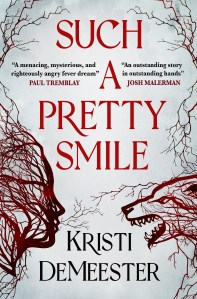
Such a Pretty Smile – Kristi DeMeester

Lila’s mother, a famous artist, keeps her past a secret from her daughter.

Tell me. Tell me about before.

Thirteen year old Lila wants more freedom but her mother refuses to give it to her.

Caroline is haunted by her past. She’s convinced that The Cur is back and wants to protect her daughter from experiencing what she has.

“There are things that I’ve seen … Things I can’t ever forget.”

Told by Lila in 2019 and Caroline in 2004, this is a story of fear, nightmares and accidental art. It’s the past intruding on the present, it’s patronising men, it’s equating being good with being safe, it’s about what happens when we refuse to be silenced.

I was interested in the relationship between this mother and daughter. I wanted to find out what had happened in Caroline’s past. Some of Caroline’s art fascinated me.

As I read about Caroline’s sculptures, I could see them. There was some repulsion attached to them due to some of their components but I could imagine myself finding treasures from nature, random leaves and branches (not some of the other objects Caroline uses), and attempting to create art from them.

I expect this will be a polarising read. I finished reading this book over a month ago and still don’t really know how I feel about it. Where this book lost me was the ending. After having me hooked until that point, I just didn’t buy the explanation. Maybe I missed something and a reread will fill in some blanks for me.

Thank you so much to NetGalley and Titan Books for the opportunity to read this book.

Rating: 3.5 out of 5.

Once Upon a Blurb

There’s something out there that’s killing. Known only as The Cur, he leaves no traces, save for the torn bodies of girls, on the verge of becoming women, who are known as trouble-makers; those who refuse to conform, to know their place. Girls who don’t know when to shut up.

2019: Thirteen year old Lila Sawyer has secrets she can’t share with anyone. Not the school psychologist she’s seeing. Not her father, who has a new wife, and a new baby. And not her mother – the infamous Caroline Sawyer, a unique artist whose eerie sculptures, made from bent twigs and crimped leaves, have made her a local celebrity. But soon Lila feels haunted from within, terrorised by a delicious evil that shows her how to find her voice – until she is punished for using it.

2004: Caroline Sawyer hears dogs everywhere. Snarling, barking, teeth snapping that no one else seems to notice. At first, she blames the phantom sounds on her insomnia and her acute stress in caring for her ailing father. But then the delusions begin to take shape – both in her waking hours, and in the violent, visceral sculptures she creates while in a trance-like state. Her fiancé is convinced she needs help. Her new psychiatrist waives her “problem” away with pills. But Caroline’s past is a dark cellar, filled with repressed memories and a lurking horror that the men around her can’t understand.

As past demons become a present threat, both Caroline and Lila must chase the source of this unrelenting, oppressive power to its malignant core. Brilliantly paced, unsettling to the bone, and unapologetically fierce, Such a Pretty Smile is a powerful allegory for what it can mean to be a woman, and an untamed rallying cry for anyone ever told to sit down, shut up, and smile pretty.