Mercy House – Alena Dillon

Spoilers Ahead! (marked in purple)

“Two eighty-four Chauncey Street. It’s the one with the angel doorknocker. Arrive any time. Day or night. You can be safe.”

Sisters Evelyn, Josephine and Maria have run Mercy House for twenty five years, providing a safe place for women who are escaping violence. Although they are undoubtably effective in their mission, they don’t always play by the strict rules of the Catholic Church.

“It’s what we’ve feared,” Josephine said. “It’s him.”

Bishop Hawkins is coming to visit Mercy House. His visit is part of the ‘nun-quisition’, which puts the actions of nuns under the microscope because of their “secular mentality” and “feminist spirit”. (Never mind that the same church actively moves priests between parishes and pays hush money to sweep much greater offences under the rug.) Besides the fear that the methods they employ in their ministry won’t stand up to close scrutiny, Evelyn has her own personal reasons for never wanting to see this ‘man of God’ again.

When you think of nuns, Evelyn is probably not who you have in mind. She loves what she does but still grumbles at getting woken up in the middle of the night when it’s her turn to answer the door. Her beliefs aren’t as strictly tied to her faith as you’d expect and if there’s a loophole that will produce better results, you can be sure she’ll find it.

Actually, none of the Sisters who run Mercy House line up with stereotypical nuns. Would you ever expect nuns to have a conversation like this?

“Crap baskets,” Maria said.

“Yeah. Major crap baskets,” Evelyn agreed.

Love it!

As much as I loved the three Sisters, I hated Hawkins and spent much of the book overcome by a seething fury, imagining all of the ways that I wanted to see him suffer. You don’t want to just angry your way through a book though. Fortunately there were some amazing women who balanced out my rage with wonder at their courage and resilience. These women are dealing with shame and secrets, and trying their best to survive their past.

While I liked each of the residents of Mercy House, it was Desiree who stood out, and for good reason. Desiree has this in your face brashness. She acts tough but she’s vulnerable as well, although she definitely doesn’t want you to acknowledge that part of her. She speaks her mind and oftentimes says what everyone else is thinking. You’d want to be her friend but she’d make a fierce enemy so don’t get on the wrong side of her. She was responsible for most of my smiles while I was reading.

“This is sweet and all, but we were promised we’d get pizza if we came to church. So …”

The women of Mercy House have been through some really difficult life experiences, none of which are glossed over. Please be safe while reading, especially if you are likely to be triggered by any of the content.

Although it made the narrative neater, it seemed unlikely to me that during the course of the book, no new residents came seeking refuge at Mercy House after we met Lucia.

I don’t know if publishers don’t know about readers like myself but whenever there’s a website included in a book I’m going to look it up. There’s a website in this book, SaveMercyHouse.com, that doesn’t exist. Given the book’s themes, I would have loved to have seen a page that represented what was mentioned in the book, along with details of relevant helplines and organisations that readers could donate to.

I think I understand why the author left the story where they do. Although there are many characters who make their mark on the lives and/or hearts of the nuns who run Mercy House, this story really is Evelyn’s. Her story ends with possibilities for the future but overall the book didn’t give me the answers I hoped for.

😇 Did Mercy House stay open?

😇 Was Evelyn ever called Sister again?

😇 What happened between Evelyn and Eloise?

😇 Were there any consequences for the bishop?

😇 Were there any consequences for John?

😇 What happened to the five Mercy House residents we got to know?

What wonders can be built from broken stuff.

Rating: 4 out of 5.

Once Upon a Blurb

In the Bedford-Stuyvesant neighborhood of Brooklyn stands a century-old row house presided over by renegade, silver-haired Sister Evelyn. Gruff and indomitable on the surface, warm and wry underneath, Evelyn and her fellow sisters makes Mercy House a safe haven for the abused and abandoned. 

Women like Lucia, who arrives in the dead of night; Mei-Li, the Chinese and Russian house veteran; Desiree, a loud and proud prostitute; Esther, a Haitian immigrant and aspiring collegiate; and Katrina, knitter of lumpy scarves … all of them know what it’s like to be broken by men.

Little daunts Evelyn, until she receives word that Bishop Robert Hawkins is coming to investigate Mercy House and the nuns, whose secret efforts to help the women in ways forbidden by the Church may be uncovered. But Evelyn has secrets too, dark enough to threaten everything she has built.

Evelyn will do anything to protect Mercy House and the vibrant, diverse women it serves – confront gang members, challenge her beliefs, even face her past. As she fights to defend all that she loves, she discovers the extraordinary power of mercy and the grace it grants, not just to those who receive it, but to those strong enough to bestow it.
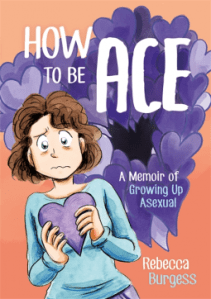
How To Be Ace: A Memoir of Growing Up Asexual – Rebecca Burgess

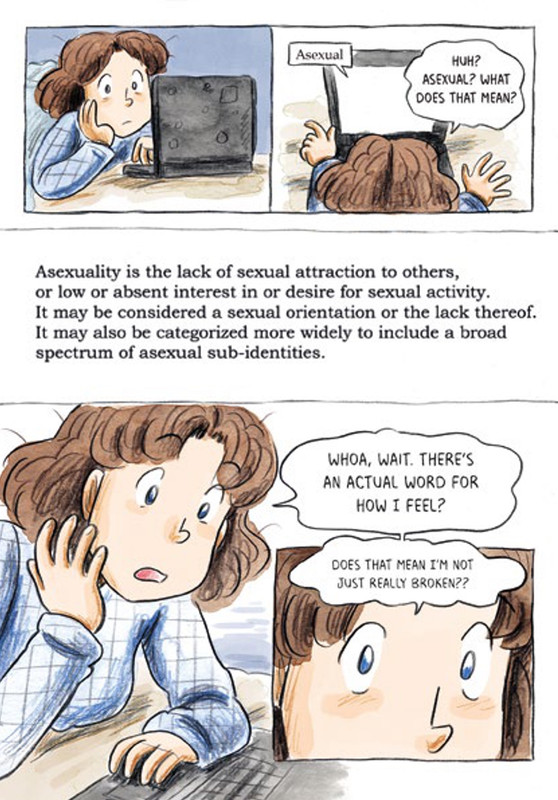
When Rebecca was growing up they weren’t interested in talking about relationships and sex like the rest of their classmates. They didn’t understand why sex was such a big deal but assumed they’d “grow into” it when they got older.

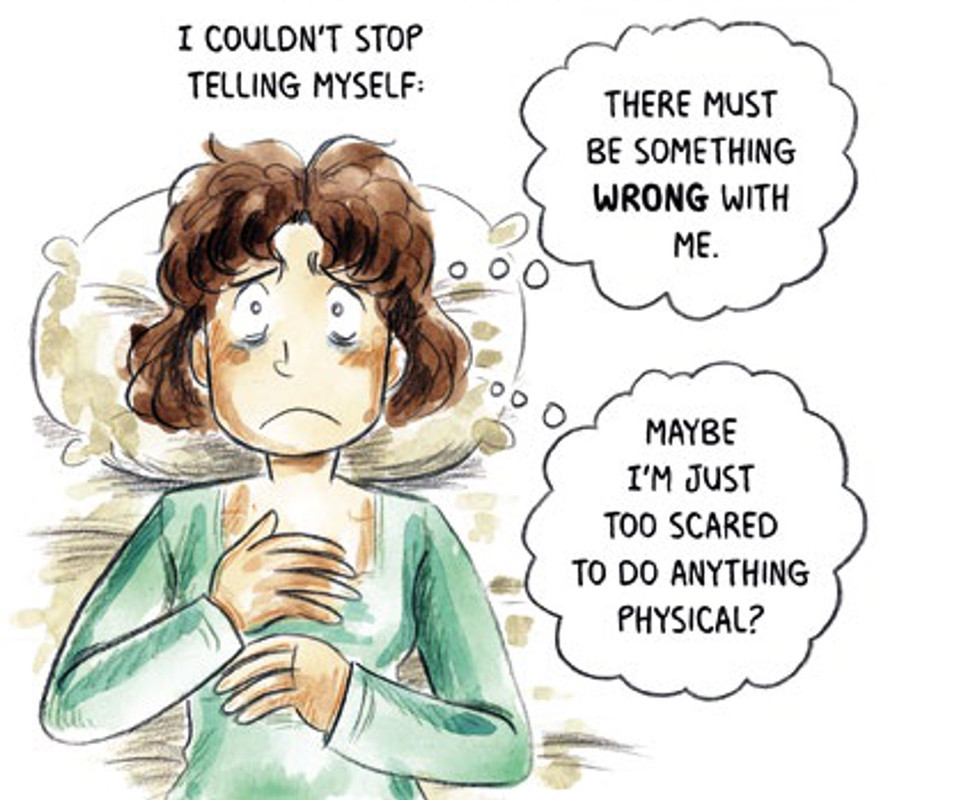
They tried to have relationships but it just didn’t feel right. They thought that something must be wrong with them.

description

It wasn’t until they were at university that they began to accept that being different was okay and that they didn’t have to pretend to be like everyone else.

description

Rebecca’s story takes the reader from the bullying they experienced in childhood through to managing their mental health. Information about asexuality is scattered through the graphic novel, with insights into what relationships can look like for people who identify as asexual.

There was a greater focus on mental health than I had expected. I didn’t personally learn anything new about asexuality from the panels that provide information but they do give readers a good introduction. I anticipate that being able to follow Rebecca’s journey from struggling with their sexuality to their eventual acceptance of who they are will be helpful for readers who can relate to her experiences and provide new understanding for those who don’t understand asexuality.

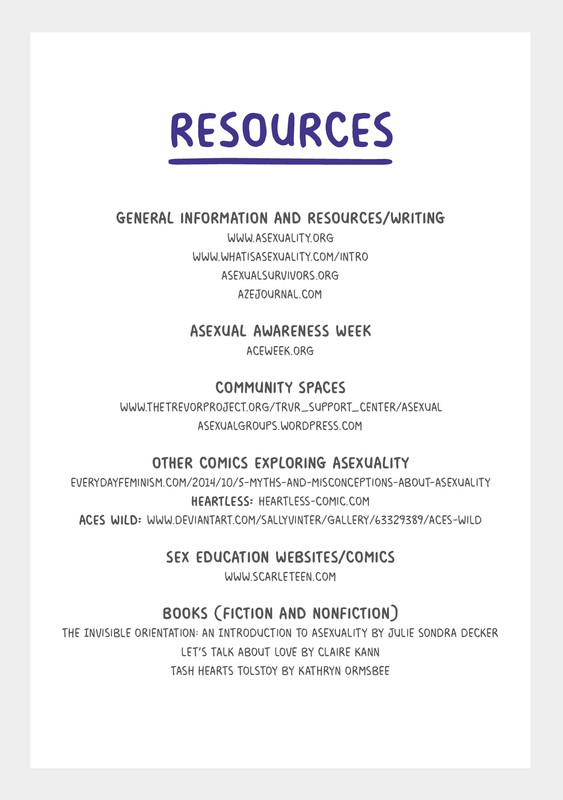
There are resources at the end of Rebecca’s story. Because asexuality is so misunderstood I’m including them here so you can check them out for yourself.

description

Thank you so much to NetGalley and Jessica Kingsley Publishers for the opportunity to read this graphic novel.

Rating: 3.5 out of 5.

Once Upon a Blurb

“When I was in school, everyone got to a certain age where they became interested in talking about only one thing: boys, girls and sex. Me though? I was only interested in comics.”

Growing up, Rebecca assumes sex is just a scary new thing they will ‘grow into’ as they gets older, but when they leaves school, starts working, and does grow up, they starts to wonder why they doesn’t want to have sex with other people.

In this brave, hilarious and empowering graphic memoir, we follow Rebecca as they navigate a culture obsessed with sex – from being bullied at school and trying to fit in with friends, to forcing themself into relationships and experiencing anxiety and OCD – before coming to understand and embrace their asexual identity.

Giving unparalleled insight into asexuality and asexual relationships, How To Be Ace shows the importance of learning to be happy and proud of who you are.

The Perfect World of Miwako Sumida – Clarissa Goenawan

She’d said she wanted to tell me something. Maybe I could find out what, if I traced her path somehow.

Miwako Sumida was only 20 when she died. Her story is told by three people who each knew part of it. Ryusei was the man who loved Miwako. Chie, who began her life as a “transparent girl”, was Miwako’s best friend. Fumi, Ryusei’s sister, was Miwako’s employer. I want to tell you all about them but can’t, because spoilers.

I really liked Miwako. She was blunt. She could be stand-offish. If you wanted to know her at all, you had to work for it. But she was worth the effort.

“You know, she just made everything better. More intense. More colorful. When I looked at her, I used to think, ‘Hey, maybe the world isn’t such a bad place.’”

Her kindred spirit potential was evident to me early on, right about the time she bailed on karaoke with her friends to go to a bookstore. However, even though I saw her through the eyes of three people who knew her best, I still didn’t truly feel like I knew Miwako and I loved that about her.

Miwako was quite deliberately unknowable and although this would usually frustrate me, it somehow endeared her to me even more. It wasn’t until after her death that the secrets she was carrying were revealed and even then, it wasn’t an easy reveal. There was work involved.

I was sad that Miwako’s secrets weighed so heavily on her and that she never sought the support she deserved. Even though I knew from the blurb that she died by suicide I kept wanting her to reach out to one of the people who loved her, to trust them enough with the parts of herself that filled her with shame.

Miwako was not the only one keeping secrets. Ryusei, Chie and Fumi’s stories each highlighted, through their own stories or their memories of Miwako, the pain we feel when we keep parts of ourselves hidden and how secrets can change the course of our lives.

Given the difficult content that’s explored in this book I was surprised that I felt almost meditative while I was reading it. There’s something that I haven’t identified yet about the way it was written that made it feel like the words were washing over me.

It was really easy for me to get into. I found myself dreading the introduction of a new voice each time a new part began because I wasn’t ready to say goodbye to the one I’d been spending time with. Each time, though, the new voice would suck me in and I’d be wanting to learn more of their story.

I was keen to spend more time with Ryusei in the months between his part of the story ending and the next time I saw him. I need to know how he spent his days and how he managed his grief over time, and his story is unfinished in my mind because I don’t have those details.

I really liked Chie and enjoyed getting to know different aspects of Miwako through their shared experience. Overall, though, it seemed to me that Chie’s main role in this story was to provide information to Ryusei and I don’t think she will stay with me. In contrast, I expect Ryusei and Fumi’s stories to linger with me.

Although I’m still having trouble deciding between Miwako and Fumi, I’m almost positive Fumi is my favourite character. And I can’t tell you why, because spoilers. Again!

The final revelation about Miwako’s life read a bit like an info dump to me and I wasn’t entirely sold on all of the details, but in the end it didn’t matter. I loved this book, so much so that I bought my copy of the author’s debut, Rainbirds, before I’d even read a quarter of this one.

But when it came to Miwako Sumida, nothing was as I expected.

Thank you so much to Scribe Publications for the opportunity to read this book.

Rating: 4.5 out of 5.

Once Upon a Blurb

A bewitching novel set in contemporary Japan about the mysterious suicide of a young woman.

Miwako Sumida is dead.

Now those closest to her try to piece together the fragments of her life. Ryusei, who has always loved her, follows Miwako’s trail to a remote Japanese village. Chie, Miwako’s best friend, was the only person to know her true identity – but is now the time to reveal it? Meanwhile, Fumi, Ryusei’s sister, is harbouring her own haunting secret.

Together, they realise that the young woman they thought they knew had more going on behind her seemingly perfect façade than they could ever have dreamed. 

Liar Liar – Laurie Katz

Before I say anything else, I want to make a few things clear. I believe Laurie. What she experienced – being sexually assaulted, the perpetrator’s subsequent behaviour, the harmful responses she received from friends and university staff members – was horrific and she is not to blame for any of it. She deserved to be believed and supported while she was at college and she deserves those same things now.

What Laurie has accomplished here is remarkable. Writing about the events of your life is a difficult task under the best of circumstances. Needing to write accounts of my own experiences of sexual assault for non-public reasons has given me a general idea of just how daunting and painful a process this can be. I can’t even begin to imagine the vulnerability people must feel sharing this publicly and I commend Laurie for the courage and resilience this finished book represents.

Laurie was raped on the third Saturday of her freshman year of college. She was not only discouraged from reporting this to the police by university staff members but was also denied justice through the university’s own reporting process. Worse still, she was formally accused of lying by the university.

After essentially trying to cope with this trauma by herself, managing the best she could by overachieving and self-medicating, Laurie eventually found the support she deserved from the very beginning.

Given the subject matter, this was always going to be a difficult read, even though the book itself is quite short. If you find descriptions of sexual assault triggering, please be safe while reading this book. I had psyched myself up for the details I knew would be coming but was surprised by a few additional descriptions that I didn’t have time to prepare for. In particular, I thought the book was winding up so I let my guard down, then got hit by a major new revelation in the final chapter.

The next part of this review is difficult for me to write. I don’t feel like I have the right to judge anyone’s experiences or the choices they make so this isn’t that. However, I’m also uneasy critiquing the way anyone writes about their experiences, and that’s what this feels like.

Having said that, at times Laurie’s story came across as quite disjointed and could have benefited from some further editing. I recognise that traumatic memories are not formed in the nice, neat, linear way that non-traumatic memories are. Sometimes memories are only retained in flashes. They’re not necessarily remembered in the right order. There may be aspects of a sexual assault a victim never remembers.

All of this makes it harder to form a step by step narrative in our own heads, let alone when we try to make sense of it with others. I asked myself if I needed to take that into consideration as I was reading this book. I’d wonder about things, like where Sarah was or why no one accompanied Laurie to court, only to find out the answers in later chapters. The narrative jumped back and forth in time, making it more difficult to get a clear idea of the order of events.

The publisher says this book is part of a series that “tells the stories of the people who have battled and beaten mental health issues.” Although this should be obvious I feel I need to point out that sexual assault is not a mental health issue. Granted, it can result in a wide variety of trauma impacts, some of which include depression, anxiety and PTSD, but in and of itself it is not a mental health issue.

Thank you so much to NetGalley and Trigger Publishing for the opportunity to read this book.

Rating: 3.5 out of 5.

Once Upon a Blurb

Like any student about to start university, Laurie Katz was excited to see what the year would bring. Little did she know that just three weeks into her first term, her life would come crashing down around her. What had started as a fun night out with friends ended with Laurie, alone with a terrible secret: she had been raped.

Traumatised and confused, she set out to get justice against her attacker. But when the authorities at her university dismissed her case, and warned her that she could be expelled, she was left unsure where to turn. It seemed as though things couldn’t get worse, then her attacker filed his own case.

Laurie’s story is a brave and honest reminder of the injustice still felt in society around sexual abuse. Laurie offers readers her advice, and provides them with the hope that they too can overcome a similar trauma.

Fighting Words – Kimberly Brubaker Bradley

I could always count on Suki. Suki fixed everything.

Della has always been able to rely on Suki, her older sister. Suki has taken care of and protected Della her whole life. Now the sisters are in foster care and their mother’s boyfriend, Clifton, is in prison. Della keeps getting in trouble at school and Suki wakes up screaming each night.

I’ve learned that some things are almost impossible to talk about because they’re things no one wants to know.

I think we can sometimes underestimate the importance of young readers being able to see themselves in books. Although it’s wonderful to be able to escape into a world that only exists in your imagination, watching a character live through an experience that you can relate to is its own special type of magic.

Della and Suki’s story has the potential to reach readers who have experienced, or are still experiencing, sexual assault. I want Della’s words to reach through the page to let those readers know that they’re not alone and that there are people who will help them.

I loved Della. She’s a little spitfire but she’s also so courageous and resilient. Despite everything she’s experienced she is still loving and fiercely loyal. Her bond with Suki was beautiful, although the beauty was tinged with some sadness because Suki should never have been put in the position of caring for and protecting her younger sister.

I really hope this book finds its way to the readers it needs to. The story of these sisters is heartbreaking but ultimately hopeful. It clearly shows how important people’s responses to disclosures of sexual assault are to those who have the courage to speak up. Some of the impacts of this type of trauma are explored, as are some of the ways they can be managed.

Sometimes you’ve got a story you need to find the courage to tell.

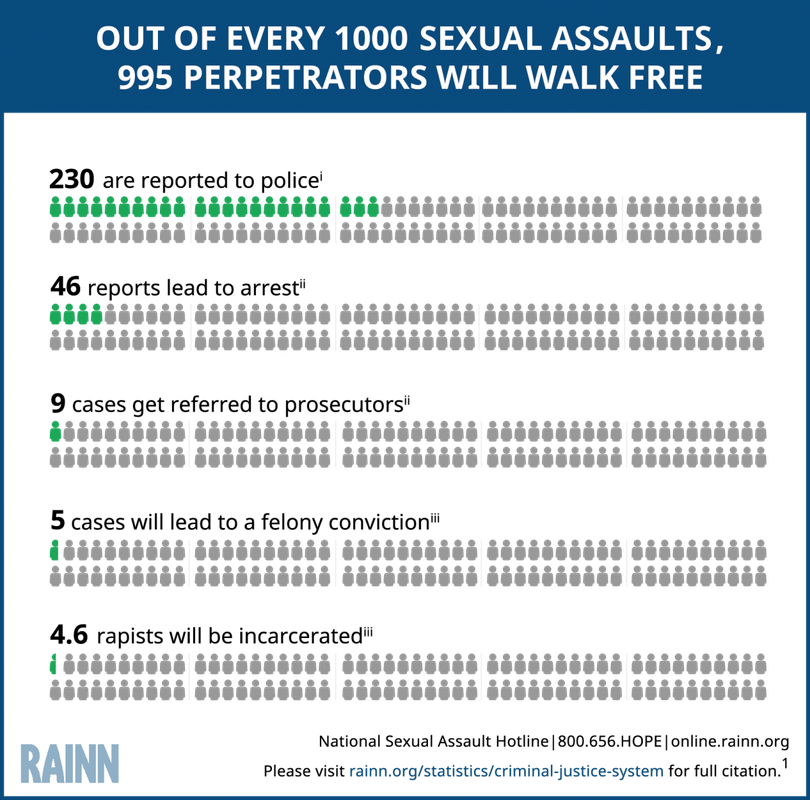
While I was relieved that the abuser in this story was incarcerated I know that this will not be part of the story for so many survivors. The majority of perpetrators of sexual assault will never spend a day in prison. The statistics are absolutely horrifying.

description

I don’t say this to discourage people from reporting what was done to them. It’s just that the majority of stories I’ve read that address sexual assault result in the conviction of the perpetrator. This is not a complaint about this book, merely a general observation.

We want the baddies to have consequences for their actions. I understand that. But when fiction only represents the outcome for the minority of victims of this crime, do we risk sending the message that being able to heal from this sexual assault is reliant upon the incarceration of the offender?

There are discussion notes at the end of the book, where the recommended reading age is said to be 14+. When I was a kid I only read books about kids who were my age or older so at 14 I wouldn’t have picked up a book where the main character was 12, but that’s probably just one of my quirks.

I can pretty much guarantee the word ‘snow’ will take on a whole new meaning once you’ve read this book.

Thank you to NetGalley and Text Publishing for the opportunity to read this book.

Rating: 4 out of 5.

Once Upon a Blurb

Della can’t work out why her adored older sister Suki screams in her sleep. Suki has always been Della’s protector, especially after their mother went to prison and her boyfriend took the sisters in. But who has been protecting Suki?

Della is in trouble at school for having a big mouth, but after she stands up to the class bully other girls rally to her cause. When Suki tries to kill herself, Della decides it’s time to tell their secrets and speak out about the terrible things that happened to Suki. Bound by love and trauma, these two sisters must find their own voices before they can find their way back to each other.

Based on the author’s personal experience, this gripping and essential story explodes the stigma around child sexual abuse. Written from the heart, with tenderness, compassion and humour, Fighting Words is about finding the words to talk about the most difficult things in young adults’ lives.

The Raven – Jonathan Janz

Humans have always been monsters. We just needed a push to embrace our shadow side.

In a world of monsters, Dez is a Latent. That sounds fancy, like his superpowers are just about to emerge. It actually means Dez is one of the few people that don’t have any powers, which is especially unfortunate considering he’s surrounded by cannibals, vampires, werewolves and satyrs. Dez has managed, against all odds, to survive for two years since the Four Winds but any moment could be his last.

Although it was the promise of monsters and blood spatter that drew me to this book, it was Dez himself that sucked me in. Despite all of the horrors he’s witnessed and participated in to stay alive, he has retained his humanity. He still has feelings. The grief and guilt he lives with for surviving while so many of his loved ones didn’t threatens to consume him. Although the odds are very slim that she’s still alive, Dez maintains hope of finding Susan, who he last saw being dragged away.

I learned enough about Dez’s personal history to become invested in his survival. The details provided about the various monsters enabled me to picture them, but I also understood that Dez still has a lot to learn, if only he can survive long enough.

So much blood is shed you could probably swim laps in it. I’m a huge fan of visceral horror so loved the descriptions of the carnage, where “shredded guts oozed like wine drenched cutlets” and a “chest was a wicker weave of stringed meat”.

I’m really hoping for a sequel that will take me to Blood Country. Some answers are given in this book. New people and monsters are introduced, and many are eviscerated, bludgeoned and ripped to shreds. But we’re on a journey here, and we’re not even close to the finish line. We need to search for loved ones, get to know new acquaintances (who are hopefully trustworthy) and battle more monsters.

This book surprised me in the best possible way. When I first saw the cover image I found it striking but didn’t really think it was signalling that this was the book for me. It was the blurb that enticed me and I’m so glad I took a chance on The Raven because it was a winner. I’m definitely going to be seeking out more books by this author.

Thank you so much to NetGalley and Flame Tree Press for the opportunity to read this book.

Rating: 4.5 out of 5.

Once Upon a Blurb

Fearing that mankind is heading toward nuclear extinction, a group of geneticists unleash a plot to save the world. They’ve discovered that mythological creatures such as werewolves, vampires, witches, and satyrs were once real, and that these monstrous genetic strands are still present in human DNA. These radical scientists unleash the bestial side of human beings that had been dormant for eons, and within months, most people are dead, and bloodthirsty creatures rule the earth. Despite the fact that Dez McClane has no special powers, he is determined to atone for the lives he couldn’t save and to save the woman he loves. But how long can a man survive in a world full of monsters? 

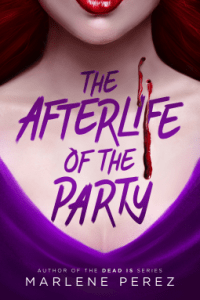
Afterlife #1: The Afterlife of the Party – Marlene Perez

Spoilers Ahead!

Join Tansy as she embarks on a road trip with her friend/crush Vaughan. They’re following a band that’s on tour, but not because they’re groupies. They’re trying to save Tansy’s best friend, Skylar, from the clutches of Travis, the band’s lead singer. Travis is a vampire that’s been feasting on Skylar.

The first in a planned trilogy, The Afterlife of the Party sucked me in straight away. (See what I did there? 🧛🏼‍♂️) I felt like I already knew Tansy, Skylar and Vaughan, and enjoyed hanging out with them. I loved the name of the vampire’s band, ‘The Drainers’, and I was keen to learn all about Tansy’s witch heritage.

I appreciated that consent was addressed in a vampire story, although after the vampires were introduced there were a number of scenes that had me scratching my head. I do need to acknowledge that I read an uncorrected proof so it’s entirely possible that the things I struggled with may not be included in the final version. Having said that …

Rose and Thorn mostly wandered in and out of scenes and didn’t contribute a great deal to the story. I anticipate they will have a larger role in the sequels, and I hope they do because their characters have the potential to become very interesting. However, by the end of this book both they and the Paranormal Activities Committee they work for seem pretty irrelevant.

I didn’t always feel the urgency of Tansy and Vaughn’s attempts to find Skylar. Especially when Tansey found Skylar close to death, did a quick healing spell on her and then left her again.

Sometimes terms that had already been defined, like Bleeders, would be reexplained in later chapters.

Tansey says she told Granny the “entire story” but less than ten paragraphs later she mentions a key part of the story that she has kept from her.

I knew I’d have to tell her eventually, but I wasn’t quite ready for the look of disappointment I’d see.

The showdown that I knew was inevitable as soon as a certain character was introduced disappointed me. It was over and done with much too quickly for my liking. If someone is going to try to take out a Big Bad I want there to be more of a fight, and maybe a cliché Big Bad monologue to go with it. While there are still plenty of baddies left for our heroes to deal with in the sequels, if it was that easy to get rid of the Big Bad then won’t their underling’s deaths be even easier?

I hope the sequels reveal the identity of Tansy’s father and explain what the deal is with Connor. I want more time with Granny, who could become my favourite character if I got to know her better. I’d also love to see Tansy and her friends cross paths with other hidden world creatures.

Thank you so much to NetGalley and Entangled Teen, an imprint of Entangled Publishing, for the opportunity to read this book.

Rating: 3.5 out of 5.

Once Upon a Blurb

When my best friend Skyler told me about this party in the Hollywood Hills, I was less than enthused. As it turned out, my feelings were more than justified. That party ruined my life.

Tansy didn’t even want to go to the party. It’s hard enough living in one of your best friend’s shadows and secretly in love with your other best friend.

And now she’s leaving it a vampire.

Now her best friend Skyler is stuck on the road trip from hell, on tour as a groupie with a literal band of vamps. Tansy sets out with Vaughn, her other BFF turned maybe more, to save Skylar’s life and take down the band. But when they find themselves in the middle of a vampire war, will Tansy be able to make the ultimate sacrifice to save her friends?

Misfits – Hunter Shea

You know how it feels when you discover the urban legend that terrified you as a child is actually real? Mick, Marnie, Chuck, Heidi and Vent do. Everyone who lives in Milbury, Connecticut know better than to step foot on Dracula Drive.

Dare to walk,

Down Dracula Drive,

In day or night,

You won’t survive.

They wait in trees,

And hide below,

Hungry for people,

Too blind to know.

After one of them is brutally raped, they all want payback. It’s time to find out if Melon Heads are simply the stuff of legends or if there really are cannibals living in the forest. It’s going to get bloody!

“What do we have to lose … besides everything?”

This book was a lot darker than I was expecting. With sexual assault as the precursor for all of the bloody, bone crunching, insides are now your outsides action, I was initially torn. If I didn’t already have some trust in its author I probably wouldn’t have even attempted this book.

I’m always wary of how sexual assault is going to be portrayed within horror. It’s certainly not sugar coated in Misfits so this could easily trigger some readers. However, while the physical and psychological impacts of this trauma are undeniable, the character whose assault becomes the catalyst for everything that comes later is portrayed as resilient.

Usually I cheer on the squishy demise of horror characters. Sure, there were a few lambs to the slaughter whose bloodshed felt like poetic justice, but I really liked the five stoners and was invested in their survival. They quickly became real to me and the fact that they were all underdogs endeared them to me as much as their friendship and individual personalities.

“Aw, you called me a freak. That’s the nicest thing you ever said to me.”

I had planned on cheering on any Melon Head eviscerations or limb extractions I witnessed. Unexpectedly, my curiosity overrode my bloodlust. I wanted to spend time with them to learn more about their history and way of life.

Prior to this book I’d never heard the Melon Head urban legend and spent an embarrassing amount of time thinking that was the name of a band from my childhood. Over halfway through the book I finally enlisted Google’s help. They were Blind Melon, not Melon Head, dufus!

This was definitely not the B grade horror I had hoped for. It was actually better. It’s probably going to take me a while to forgive the author for the way the story unfolded for one of my favourite characters but kudos to them for making me care that much about someone I only met this week.

“There’s nothing to be afraid of.”

Thank you so much to NetGalley and Flame Tree Press for the opportunity to read this book.

Rating: 4 out of 5.

Once Upon a Blurb

During the height of the 90s grunge era, five high school friends living on the fringe are driven to the breaking point. When one of their friends is brutally raped by a drunk townie, they decide to take matters into their own hands. Deep in the woods of Milbury, Connecticut, there lives the legend of the Melon Heads, a race of creatures that shun human interaction and prey on those who dare to wander down Dracula Drive. Maybe this night, one band of misfits can help the other. Or maybe some legends are meant to be feared for a reason. 

Survivors: Children’s Lives After the Holocaust – Rebecca Clifford

If you cannot recount the story of your own family, your home town, or your formative experiences, how do you make sense of your childhood and its impacts?

Most of us take our early childhood memories for granted. They form part of the story we tell ourselves about who we are and where we came from. For so many children who survived the Holocaust, these memories are either entirely missing or exist only in fragments. There are often no surviving family members who can help them fill in the blanks.

The survivors whose stories are explored in this book were all born between 1935 and 1944. Previous books I’ve read about Holocaust survivors were written by people who were either teenagers or adults during the war. The oldest survivors mentioned here were only ten years old in 1945.

“For most survivors who are not young child survivors, there was a before, you see.”

From an interview with Zilla C., conducted by psychoanalyst Judith Kestenberg in 1987

Even though I’ve now read the excerpts of their stories I’m still have trouble getting my head around what their lives have been like. For so many years they were not even counted as Holocaust survivors and were encouraged to simply move on with their lives and forget what memories they had of that time.

‘Just think it never happened,’ they urged, ‘and you will start a fresh new life.’

Paulette S., on how OSE staff tried to prepare her to move across the globe

In addition, there was a “disconnect between what children after the war felt and what their adult carers expected them to feel.”

The children’s wartime experiences consisted of at least one of the following:

survival in hiding, in flight to a neutral country or Allied territory, in ghettos and transit camps, and in concentration camps.

The ways these children coped with the trauma of the war and the subsequent traumas of being moved between institutional care, family members, and foster and adoptive homes is addressed. Some of the children lived in stable, loving homes during the war, albeit not with family members, only to be abruptly taken from them at the end of the war.

More often than not, they were moved to countries where they didn’t know the language. Many went to live with strangers and had to try to figure out who they were with little to no assistance.

Survivors has been extensively researched, with sources from “archival material, including care agency files, records from care homes, indemnity claims, psychiatric reports, letters, photographs, and unpublished memoirs, documents originating from nearly a dozen different countries”. The bibliography and detailed footnotes make up almost 15% of the book.

I had expected almost all of the book to consist of detailed stories of individual survivors. Snippets of interviews with survivors are included, as are overviews of the wartime experiences of a number of them. There is also a lot of information and commentary on changes that occurred throughout the decades that impacted on survivors. Some of these changes relate to what was happening in the world at the time and some examines the ways survivors have related to their stories as they grew older.

We should not be surprised to find that the way in which we tell the stories of our lives changes over time; this is true for child survivors as it is for all people.

I found it unusual that whenever survivors in general were discussed, most of the time they would be referred to as ‘she’ or ‘her’, even though interviews with male survivors are also included in the book. Some information was repeated in different chapters and I began to dread seeing the phrase ‘as we have seen’, but I came away with a much better understanding of both the short and long term impacts of the Holocaust on these young survivors.

I’m left wanting to know more about the individuals I was introduced to. Having said that, I agree with the author (an oral historian) that the level of detail I’m interested in would require many more volumes.

Thank you so much to NetGalley and Yale University Press for the opportunity to read this book.

Rating: 4.5 out of 5.

Once Upon a Blurb

Told for the first time from their perspective, the story of children who survived the chaos and trauma of the Holocaust.

How can we make sense of our lives when we do not know where we come from? This was a pressing question for the youngest survivors of the Holocaust, whose prewar memories were vague or nonexistent. In this beautifully written account, Rebecca Clifford follows the lives of one hundred Jewish children out of the ruins of conflict through their adulthood and into old age.

Drawing on archives and interviews, Clifford charts the experiences of these child survivors and those who cared for them – as well as those who studied them, such as Anna Freud. Survivors explores the aftermath of the Holocaust in the long term, and reveals how these children – often branded “the lucky ones” – had to struggle to be able to call themselves “survivors” at all. Challenging our assumptions about trauma, Clifford’s powerful and surprising narrative helps us understand what it was like living after, and living with, childhoods marked by rupture and loss.

The Gift – Edith Eger

Hope. It’s what lit the fire within my soul when I read The Choice and it’s what made its flame shine even brighter as I made my way through The Gift. Hope that I can do the work that I know I need to do in order to address the pain and trauma I’ve experienced. Hope, because if Edith Eger can do it then so can I. Hope, which Dr Eger defines as “the awareness that suffering, however terrible, is temporary; and the curiosity to discover what happens next.”

One of my takeaways from The Choice was a desire to have the opportunity to be counselled by Dr Eger, a survivor whose experiences, compassion and insight combine to allow her to get to the root of a problem before she lovingly guides you towards the you that you’ve been stifling under layers of pain, anger, [insert relevant adjective/s here], and paralysing what if’s. You may never have the honour of sitting across from Dr Eger in her office but this book is the next best thing.

All therapy is grief work. A process of confronting a life where you expect one thing and get another, a life that brings you the unexpected and unanticipated.

If you’ve already read The Choice then you’ll be familiar with some of the stories of Dr Eger’s life and those of her patients that are included in this book. You’ll also find stories that will be new to you, which help illustrate the points Dr Eger makes as she hands you the keys that will help you unlock the prison of your mind.

To heal doesn’t mean to get over it, but it does mean that we are able to be wounded and whole, to find happiness and fulfillment in our lives despite our loss.

Twelve keys are presented in this book. Dr Eger addresses the prisons of victimhood, avoidance, self-neglect, secrets, guilt and shame, unresolved grief, rigidity, resentment, paralysing fear, judgement, hopelessness, and not forgiving.

At the end of each chapter you’ll find ‘Keys to Free Yourself’. These consolidate what you’ve learned in the chapter and can be used to facilitate your own healing. Some require you to use your imagination. Others provide prompts that you can use in journalling. Then there are some that would be ideal to work through with a therapist.

I like to remind my patients: the opposite of depression is expression.

What comes out of you doesn’t make you sick; what stays in there does.

This is one of those books where it would have been much easier to have highlighted the passages that didn’t speak directly to me. While I discovered the gems in this book in the order Dr Eger has presented them, you don’t need to do this. Each chapter is its own lesson, so you can take what you need when you need it. I know I will be rereading this book from cover to cover in the not too distant future but I also anticipate I’ll be spending more time on specific chapters over time.

Although healing from pain and trauma is serious work, that doesn’t mean there aren’t smiles to be had as you make your way through this book. Currently, my favourite smile-inducing quote is about taking charge:

Don’t be Cinderella, sitting in the kitchen waiting for a guy with a foot fetish.

You could dive into this book without having experienced The Choice but I would recommend reading them in the order of publication. While you can apply the lessons to your life without knowing Dr Eger’s own story, they’re enriched by this knowledge.

Because I know what Dr Eger chose to share in The Choice, I trust her when she outlines what she found helpful. I also can’t give myself an out, claiming something is too difficult, when I have witnessed someone I now have such admiration for working through unimaginable pain and trauma to find freedom.

I now recognize that the most damaging prison is in our mind, and the key is in our pocket. No matter how great our suffering or how strong the bars, it’s possible to break free from whatever’s holding us back.

It is not easy. But it is so worth it.

Thank you so much to NetGalley and Rider, an imprint of Ebury Press, Penguin Random House UK, for the opportunity to read this book.

Rating: 5 out of 5.

Once Upon a Blurb

This practical and inspirational guide to healing from the bestselling author of The Choice shows us how to release your self-limiting beliefs and embrace your potential.

The prison is in your mind. The key is in your pocket.

In the end, it’s not what happens to us that matters most – it’s what we choose to do with it. We all face suffering – sadness, loss, despair, fear, anxiety, failure. But we also have a choice; to give in and give up in the face of trauma or difficulties, or to live every moment as a gift.

Celebrated therapist and Holocaust survivor, Dr Edith Eger, provides a hands-on guide that gently encourages us to change the imprisoning thoughts and destructive behaviours that may be holding us back. Accompanied by stories from Eger’s own life and the lives of her patients her empowering lessons help you to see your darkest moments as your greatest teachers and find freedom through the strength that lies within.