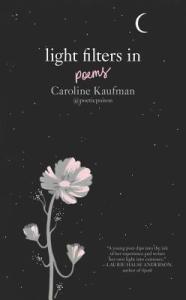
Caroline Kaufman is probably better known (so far) by her Instagram profile @poeticpoison. Published while still a teenager, this book is a mixture of dark and light, heartache and hope. Poetry can be very hit and miss for me and I found that to be the case with this collection as well. I connected with some of her words so deeply that I could have written them myself when I was Caroline’s age.
I’ve spent so much time trying to become who I should be that I lost myself along the way.
Others I struggled with but that’s probably more indicative of my stony cold heart than Caroline’s writing ability. When I read about relationships and heartache it’s akin to a vampire feeling the warmth of sunlight on their skin.
This book is divided into four sections: the darkness falls, the night persists, the dawn breaks, and the sun rises. What I loved above all else is the honesty of these poems.
sometimes I imagine my younger self and I worry she wouldn’t recognize me.
Once upon a nitpick: One of my pet peeves is sentences that don’t begin with a capital letter. It bugs me whenever I see it and for some reason that baffles me it seems to be a cool thing to do these days. Some poems in this book include my beloved capital letters; others don’t.
This collection reminded me of the tumultuous experience of adolescence, a place I don’t like to visit. There’s a rawness to the writing that I really appreciated although overall I don’t feel as though I’m the target audience. I probably would have been when I was a teenager but a lot of the writing felt very young (and rightly so as the author is only 18). I hope that Caroline continues to write from her heart as the authenticity of her voice has the potential to impact a lot of young lives.
⭐⭐⭐⭐
Rating: 3.5 out of 5.
Once Upon a Blurb
In Light Filters In, Caroline Kaufman – known as @poeticpoison – does what she does best: reflects our own experiences back at us and makes us feel less alone, one exquisite and insightful piece at a time. She writes about giving up too much of yourself to someone else, not fitting in, endlessly Googling “how to be happy,” and ultimately figuring out who you are.
This hardcover collection features completely new material plus some fan favourites from Caroline’s account. Filled with haunting, spare pieces of original art, Light Filters In will thrill existing fans and newcomers alike.
… there were monsters in the world, and their greatest advantage was the unwillingness of rational people to believe.
Whenever I start a Stephen King novel I tend to flip through the first couple of pages searching for a list of characters. If I find one I panic a little, wondering how I’ll ever figure out who’s who in the King Zoo if he had to write a list of its inhabitants. If there’s no list I panic a little, wondering how I’ll remember who lives in the Zoo without a guide. There’s no list of characters at the beginning of The Outsider and it’s a testament to Mr King’s ongoing awesomeness that even though I totally sucked at reading this book (it took me over five weeks to finish it!) I was able to pick it up and get drawn back into his world immediately each time. And I knew who everyone was!
People are blind to explanations that lie outside their perception of reality.
You don’t need me to tell you the synopsis for this book. There are so many wonderful reviews already written by people who seem to have read every King book in existence. What I can tell you about is my very drawn out reading experience. When I started this book I had no idea that I would be meeting anyone from Mr. Mercedes, Finders Keepers and End of Watch or that at some point between starting to read and passing the point of no return parentheses would appear after the book’s name on Goodreads to inform me I was reading the fourth book of the Finders Keepers series. I own some of the responsibility for this ignorance as I have been a disgrace to the Kingdom by not having already read the first three books. Boo! Hiss! I suck! I know!
Strange, the things you noticed when your day – your life – suddenly went over a cliff you hadn’t even known was there.
Had I realised though I still would have read this book but after I’d read the first three. If you’re not planning on ever reading the first three books (no judgement here but I am quietly wondering what is wrong with you 😜) you can get away with reading this book as a standalone. If you venture into The Outsider without having already read the others then I need to warn you that you will prematurely learn how previous cases wrapped up, who died and most likely other bits and pieces that I don’t even know are spoilers yet.
‘How weird can this get?’ ‘Weirder,’ she said. Another thing of which she had no doubt.
Despite my own already stated failures in reading this book I would recommend it. Like many others before me I really enjoyed hanging out with Ralph and Holly. I also had quite a soft spot for Ralph’s wife, Jeannie, and would enjoy catching up with her over a coffee.
The more you find, the wronger it gets.
I’ve previously avoided the other books in the Finders Keepers series as my favourite King books have involved such fun as telekinesis, diners that belong in Back to the Future, super fans who understandably need their next read yesterday and the infamous dome surrounding Springfield. I usually get my crime fix through authors like Tess Gerritsen and haven’t wanted to really go there with Mr King before. Having read The Outsider now I do plan on reading Mr. Mercedes, etc, and will most likely reread this one once I’ve finished the first three, but I think I want to remedy some of my glaring omissions in early King lore first.
⭐⭐⭐⭐
Rating: 4 out of 5.
Once Upon a Blurb
When an eleven-year-old boy is found murdered in a town park, reliable eyewitnesses undeniably point to the town’s popular Little League coach, Terry Maitland, as the culprit. DNA evidence and fingerprints confirm the crime was committed by this well-loved family man.
Horrified by the brutal killing, Detective Ralph Anderson, whose own son was once coached by Maitland, orders the suspect to be arrested in a public spectacle. But Maitland has an alibi. And further research confirms he was indeed out of town that day.
As Anderson and the District Attorney trace the clues, the investigation expands from Ohio to Texas. And as horrifying answers begin to emerge, so King’s propulsive story of almost unbearable suspense kicks into high gear.
Terry Maitland seems like a nice guy but there is one rock-hard fact, as unassailable as gravity: a man cannot be in two places at the same time. Can he?
I went on a bit of a journey through Opposite Land while reading this book. I love that this book exists. I hate that it has to.
The title was what initially grabbed my attention: Not That Bad. How many times have I and countless others said that?! Was it because it wasn’t that bad? No. It was that bad but we still live in a world that, on the whole, doesn’t want to know about sexual assault.
It doesn’t quite feel right to say I have a favourite anything where rape culture is concerned so instead I’ll say that the best definition of rape culture I’ve read to date is by Clem Ford:
“A state of existence in which the impact and reality of sexual violence is minimised while the perpetrators of it are supported by a complex system built on flawed human beliefs, mythologies about gender, and good old fashioned misogyny.”
Usually I’d give each contributor in a book of essays an individual star rating and comment on their writing style or whether I connected with their story or not, but I won’t be doing that here. I’m so proud of everyone that contributed to this book and while some essays impacted me more than others, I’m not comfortable critiquing anyone’s experience of rape culture.
Instead I’ll be sharing a quote from each contributor. I highlighted so much of this book and found it difficult in most cases to choose just one for this review. In the end I decided to share the one that stood out the most when I reread my highlighted passages. As such, both the book and my review need to come with a trigger warning. Stop reading now if you need to. 💜
Introduction – Roxane Gay
It was comforting, perhaps, to tell myself that what I went through “wasn’t that bad.” Allowing myself to believe that being gang-raped wasn’t “that bad” allowed me to break down my trauma into something more manageable, into something I could carry with me instead of allowing the magnitude of it to destroy me.
But, in the long run, diminishing my experience hurt me far more than it helped.
Fragments – Aubrey Hirsch
If rape culture had a national sport, it would be … well … something with balls, for sure.
Slaughterhouse Island – Jill Christman
If nothing changes – and in thirty years, not nearly enough has changed – next year, there will be one hundred thousand more assaults on our campuses.
One is too many. One hundred thousand.
& the Truth Is, I Have No Story – Claire Schwartz
This is not about that. This is about everything after.
This is about how, all of a sudden, there was only one after.
The Luckiest MILF in Brooklyn – Lynn Melnick
I know that saying please stop made it no more likely that these things would stop.
Spectator: My Family, My Rapist, and Mourning Online – Brandon Taylor
The only way through all of it was to promise that I would remember it and that at some point, I would make it known what happened there.
I am a hard person because hardness is what comes from a life lived underground.
The Sun – Emma Smith-Stevens
So many times my mind left my body only to return to find it soiled
Sixty-Three Days – AJ McKenna
I resent having to face up to it. I resent having to be a survivor.
“Survivor” is the “special needs” of victimhood. If I say I have survived, I’m fooling nobody. I didn’t.
Only the Lonely – Lisa Mecham
And my hands, my hands. I wrapped them around my shins and pulled in tight and cried and thought about how when you’re hurt, way before you say it, you have to feel it.
What I Told Myself – Vanessa Mártir
I looked over at my daughter, who had moved on to the swings, and that’s when it hit me: I’d been blaming myself for thirty years for what happened to me when I was six.
Stasis – Ally Sheedy
I didn’t go on auditions for films that I felt glorified sex work, that depicted women being sexually abused in a gratuitous way, or that required me to leave my sense of self on the doorstep. (All of these films became huge hits.)
The Ways We Are Taught to Be a Girl – xTx
We learn not to tell everything. We know telling everything will make them see the bad in us. How it is our fault. How we contributed. We fear repercussions, albeit lighter than the ones we will administer to ourselves; slut, bad, ugly, weak, whore, trash, shame, hate. We tell just enough, if we tell at all.
Floccinaucinihilipilification – So Mayer
It’s a conundrum: if you survive, then it – that, the trauma – can’t have been that bad. Being dead is the only way to prove it was. It really was bad. It was terrible. It was so awful there was no way I could survive.
What did this child die of? Shame, mainly. And narrative necessity.
If you survive, you have to prove it was that bad; or else, they think you are.
Surviving is some kind of sin, like floating up off the dunking stool like a witch. You have to be permanently écorchée, heart-on-sleeve, offering up organs and body parts like a medieval saint.
The Life Ruiner – Nora Salem
Perhaps the most horrifying thing about nonconsensual sex is that, in an instant, it erases you. Your own desires, your safety and well-being, your ownership of the body that may very well have been the only thing you ever felt sure you owned – all of it becomes irrelevant, even nonexistent.
All the Angry Women – Lyz Lenz
Anger is the privilege of the truly broken, and yet, I’ve never met a woman who was broken enough that she allowed herself to be angry.
Good Girls – Amy Jo Burns
Much of the furor spread not because a crime occurred, but because these girls had the nerve to say that it had.
A good girl is a quick study, and this is what you, always a good girl, learned: It doesn’t matter how good you are, because a man will always be better.
Utmost Resistance: Law and the Queer Woman or How I Sat in a Classroom and Listened to My Male Classmates Debate How to Define Force and Consent – V.L. Seek
When your truth is so inherently questioned, it is easier to say nothing than anything at all.
Bodies Against Borders – Michelle Chen
The flip side of treating “victims” or “survivors” as subjects of a narrative is that the process of intellectualizing the issue also requires neatly transmuting the subject into the object. And objectifying people who have lived through sexual violence is not a good place to begin, or end, any story – not our own, and not theirs.
Wiping the Stain Clean – Gabrielle Union
Rape is a wound that throbs long after it heals. And for some of us the throbbing gets too loud. Post-traumatic stress syndrome is very real and chips away at the soul and sanity of so many of us who have survived sexual violence.
What We Didn’t Say – Liz Rosema
I don’t even remember his name but I remember what he said – the corner of that page is folded in my memory. I turn right to it.
I Said Yes – Anthony Frame
“It’s your eyes. They’re so … Was that the year it happened?”
Knowing Better – Samhita Mukhopadhyay
She had learned, somewhere in the interim, to do more than simply reveal what had happened to her; she had learned to tell the story of it so that it didn’t become her only story.
Not That Loud: Quiet Encounters with Rape Culture – Miriam Zoila Pérez
Sexual assault is no longer an undercurrent in political life: it shouts at us from news headlines, colors the electoral debates, shapes rally slogans and protest chants. But something doesn’t have to be loud to be deafening, to suck up all the oxygen in the room, to shroud the windows and dim the lights.
Why I Stopped – Zoë Medeiros
Sometimes I see ghosts. The worst ghosts for me are not usually the flashbacks, although those can be pretty bad, but the ones who show me what I might have been if it never happened. It’s like suddenly feeling what it would be like to run on a leg that had never been broken, just for a second, and then it’s gone and the old bone-deep pain is with me again.
Picture Perfect – Sharisse Tracey
For once, I was glad I didn’t have a little sister.
To Get Out from Under It – Stacey May Fowles
What I need is what most women need when they talk about the sexual violence they have endured. I need someone to listen. I need someone to believe me.
Reaping What Rape Culture Sows: Live from the Killing Fields of Growing Up Female in America – Elisabeth Fairfield Stokes
the world, I had learned, was a place that didn’t condemn sexual violence; it accepted and excused it.
Invisible Light Waves – Meredith Talusan
I stayed to prove that he could not affect me
Getting Home – Nicole Boyce
There’s something so naive about insisting that daylight makes a difference. Why do I imagine that violence wears a wristwatch?
Why I Didn’t Say No – Elissa Bassist
Because when a woman challenges a man, then the facts are automatically in dispute, as is the speaker, and the speaker’s license to speak.
Early this week I had my latest experience with rape culture. At a time when I had already read about half of this book I found myself in a room with a man in a position of authority who, while telling me that it wasn’t a matter of whether he believed me or not, also told me numerous times that my story was “unbelievable”, along with an incredulous “How is that even possible?!”
Feeling disempowered by his lack of belief and judgement, and vulnerable after being given no choice over the location of our meeting, I found myself minimising my experience by telling him that the sexual assault I’d experienced in that building (a few offices to my right) wasn’t as bad as the sexual assault I’d experienced across the street from where we were meeting.
“Not as bad.” As soon as the words were out of my mouth the title of this book flashed in my mind and I internally chastised myself. While I couldn’t take back those words I made sure I wasn’t silent when this man went on to talk about the “gains” people achieve by making up false allegations against “poor” men. I (we) have a long way to go but I believe that by refusing to be silent about the “unbelievable” we (I) can be catalysts for change.
If you have read this review and have experienced any form of sexual assault please know that you are not alone and it was not your fault. I believe you. Your story matters. You matter!
If you need support or information you can contact:
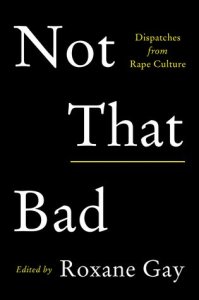
Cultural critic and bestselling author Roxane Gay has edited a collection of essays that explore what it means to live in a world where women are frequently belittled and harassed due to their gender, and offers a call to arms insisting that “not that bad” must no longer be good enough.
I’m not quite sure what to say about this book. I feel weird judging someone’s experiences so I won’t be doing that. Instead my rating and review will be based on the way the book made me feel. I’ve read a lot of books, including memoirs, with the experience of and recovery from sexual assault as an overriding theme but unfortunately this book wasn’t a good fit for me.
Bouncing between journal entries, poetry, stories told in third person where the author refers to himself as ‘he’ or ‘the boy’, letters from teachers and comments about the author from his friends, the reading experience felt disjointed to me. I had this strange sense of feeling guilty for reading the journal entries. The scattered input from teachers and friends had the feel of testimonials or letters of recommendation and seemed to come out of nowhere.
The graphic descriptions of sexual assaults and Grindr hookups were prevalent for a lot of the first half of the book. The Grindr hookups were ultimately explained as part of trauma induced sex addiction and while I understand trauma impacts I couldn’t stop myself from internally screaming for the author to please don’t go into the home of the stranger he just met. I’m not victim blaming here; I just wanted the author to know at the time that they deserved better.
I applaud the author’s transparency and expect his story will be helpful for men in the LGBTQIA community, particularly those who have been sexually assaulted by men. However, because so much of this book is highly triggering and the first half in particular feels like one traumatic experience after another without any respite or hope (that comes later), I worry that the people who would potentially benefit the most from this book may not make it past the flashbacks and descriptions of traumatic events.
Personally I felt so drained and depressed by the trauma of the first half (maybe even as much as the first 60% or so) that my brain wasn’t as receptive to the message of healing. Had there been some sort of integration of the traumatic and recovery sections this may have helped. I think ultimately the style of writing didn’t make me want to keep reading and the trauma content felt so constant that I struggled to finish it.
So far all of the reviews on Amazon have been 5 stars but the majority appear (I could be wrong) to be friends of the author and have mostly only reviewed one or two books. One reviewer in particular had the same first name as one of the friends quoted in the book which raised my suspicions, although I admit I could be wrong about that too.
I don’t want to turn you off reading this book but if you have experienced sexual assault, please hear me when I tell you that there’s a high likelihood this book will trigger you. Please be safe while reading it.
Thank you to NetGalley and BookBuzz.net for the opportunity to read this book. I’m sorry but after high hopes, this one just wasn’t for me.
⭐⭐
Rating: 2 out of 5.
Once Upon a Blurb
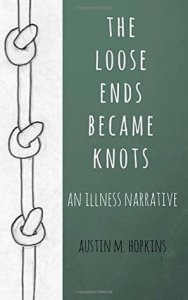
In his debut book, Austin tells his story of emerging into young adulthood while surviving sexual violence and living with mental illness. His story is narrated through journal entries, poetry, and short stories.
First, I want to point out that this book currently has a high proportion of 4 and 5 star reviews so please don’t just read my review and decide based on that alone that this book is not for you. I’d encourage you to read positive reviews as well and then decide for yourself if it’s the book for you or not.
I requested a review copy of Pendle Fire from NetGalley (thank you very much to NetGalley and Bloodhound Books for the opportunity) and I was looking forward to reading it, mostly because I wanted to know about the Hobbledy Man. I loved the sound of the centuries of urban legend coming to life, the question mark over the possibility of witchcraft and a potential apocalypse in the mix. It sounded really interesting and like my type of book. I was aware from the blurb that there’d be an investigation by a social worker into the alleged gang rape of two teenage girls so I expected my review would include content warnings for sexual assault.
However I feel like the book I read about in the blurb and the book I attempted to read over the past ten days were two different books. The blurb was accurate to a point but had it included any of the following information I would have known straight away this wasn’t the book for me:
The Racist, Sexist, Homophobic and Anti-Muslim Parts – There are so many instances throughout the book but I’m not going to quote any of the remarks. Basically you have one group against another group to the point of riots. The escalating riots are actually a large part of the book. I know this is real life and I concede that the author did a good job of showing the escalation of the violence but I’m not personally interested in reading about rioting misogynistic, racist, homophobic, anti [insert any religious belief here] idiots, or corrupt cops for that matter.
The Swearing – I can swear with the best of them but there’s swearing and then there’s utter disrespect. I don’t voluntarily spend time with anyone who calls anyone a c***. I don’t want to read about people who speak to people like that either. Maybe you don’t have a problem with that word but I really do and I’m unapologetic about my disgust surrounding its use. Had I not been trying to read this book to review it I would have stopped reading in chapter 2 when it first showed up and I certainly wouldn’t have still been reading for the subsequent seven (so my Kindle tells me) times it was used.
I tried to connect with the characters, especially the social worker, but none of the people in this story made me need to keep reading to find out what happened to them. Even now at 80% I don’t feel like I need to know how the story ends. It took me a lot longer than it probably should have to realise that there were two characters in the book with the same first name. Yesterday when I was explaining my frustration about this book to someone I couldn’t even remember the name the characters shared or which character one of them was in the book, both of which pointed out to me my lack of investment in this story.
Because this isn’t the sort of book that I’d have started had I known what I do now I can’t tell you how it measures up against others with similar themes. I do, however, want to be specific in telling you that I want to separate the behaviour of the characters in the book from its author. Just because I hated all of the racism, sexism, all the other isms and the disgusting actions of the deplorable characters in their book doesn’t mean that I think for a moment that any of these things should be thought of the author.
This book doesn’t make me want to automatically discount this author’s other books but should I come across another one I’ll be looking at more than the blurb before I decide if it’s for me or not.
Once Upon a Blurb
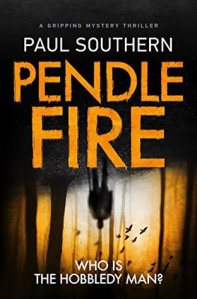
Social worker Johnny Malkin is battling a crippling workload and a hostile local community. That’s on a good day: things are about to get a whole lot worse.
Two fourteen-year-old girls are found wandering Aitken Wood on the slopes of Pendle Hill, claiming to have been raped by a gang of men. With no female social workers available, Johnny is assigned to their case. But what, at first, looks like yet another incident of child exploitation takes a sinister turn when the girls start speaking of a forthcoming apocalypse.
When Johnny interviews one of the girls, Jenna Dunham, her story starts to unravel. His investigation draws him into a tight-knit village community in the shadow of Pendle Hill, where whispers of witchcraft and child abuse go back to the Middle Ages.
One name recurs, The Hobbledy Man. Is he responsible for the outbreaks of violence sweeping across the country?
Isn’t it strange how our past shapes and torments us when we least expect it?
I’ve heard Dr. Phil say countless times that whatever story he’s focusing on is a cautionary tale. This story is definitely a cautionary tale. If you ever wondered how people wind up in abusive family relationships and how previously confident people transform into meek shadows of their former selves, you’ll gain insight by reading this book. If you weren’t already convinced how calculated and methodical perpetrators are in the execution of the physical and psychological beating down of their victims, here is a great example.
I spent so much time wondering why Cynthia Galbraith was in prison in the first place while reading When Evil Calls Your Name. Surely after the events described in White is the Coldest Colour Cynthia is due for some good fortune. I wondered about the competency of her legal team. The crime she committed seemed as though it should come under the banner of self defence or diminished responsibility.
The more I read though, the more I wondered about her complicity in the atrocities committed by her husband. Does being a victim excuse you from being responsible when you know or at least strongly suspect something heinous is happening in your home? If it’s hidden in plain sight does that give you permission to ignore and deny its presence? At what point does your inaction become criminal?
While not an easy read I found this book easier to digest than the details of Dr Galbraith’s crimes and thought processes of the first book in the series. You could read When Evil Calls Your Name without having already read White is the Coldest Colour but I’d personally recommend reading them in order to get the most out of them. I already had thoughts about Cynthia’s character going into this book and found it interesting to confirm some thoughts and discard others.
Transported from the prison of her home where we left her in White is the Coldest Colour to three years into her sixteen year sentence at White Haven Women’s Prison at the beginning of this book, we uncover the events that led her to White Haven by accessing her therapeutic journal and we also learn about her time behind bars. I appreciated that Cynthia’s story was not sugarcoated. I felt the claustrophobia of her cell and her continued torment as she relived the traumas she experienced through nightmares and recollections. There’s no magical transformation. Instead we see firsthand how the years of abuse continue to be caustic to Cynthia’s self esteem and identity.
I will quibble about the use of the word monster to describe Dr Galbraith and those of his ilk. While it’s certainly convenient and comfortable to label such depravity monstrous but I am not inclined to use that term myself as the label implies they are less than human. If we strip these people of their humanity are we then saying what they did was in their nature, they had no choice and are therefore not responsible for their actions?
Make no mistake; they are human, despite how much we’d prefer to dissociate from them. They are fallible and disgusting humans who make conscious decisions to enforce their will on others, but humans nonetheless. In a way I’m disappointed that the early life of Dr Galbraith has not been explored in the first two books in this series as I would be interested in knowing if there were experiences or behaviour in his childhood that signalled the way his life would unfold.
I don’t want to, and will never, understand why he does what he does other than the desire for power and control. I’m certainly not seeking to excuse anything he’s inflicted on any of his victims but I found it so interesting watching Cynthia’s story unfold that I wonder what I’d feel if I learned more about him.
The much needed update regarding the Mailer family from the first book was welcome but did come across as too simplistic and easy for my liking. The information about the Mailer’s and the final session with Cynthia’s prison counsellor seemed a tad rushed so I was thankful for the epilogue.
I found it interesting that in both books the children in the Galbraith family were largely unseen and silent. I could soliloquise about the silencing of children who grow up in violent homes but instead I’ll just say that, whether this was the author’s intention or not, I noticed and appreciated the authenticity this added to the family dynamics.
I don’t think this book could ever have been as gripping as the first in the series, with its police and child protection investigations and threat of imminent danger to the various victims. However the story this book told was captivating in its own right and I’m looking forward to reading the rest of John Nicholl’s books.
Thank you so much to NetGalley and Bloodhound Books for introducing me to this brilliant author.
⭐⭐⭐⭐⭐
Rating: 4.5 out of 5.
Once Upon a Blurb
Even the darkest secrets can’t stay hidden forever …
When twenty-nine-year-old Cynthia Galbraith struggles to come to terms with her traumatic past and the realities of prison life, a prison counsellor persuades her to write a diary exploring the events that led to a life sentence for murder.
Although unconvinced at first, Cynthia finally decides she has all the time in the world and very little, if anything, to lose. As she begins writing she holds back nothing: sharing the thoughts she hadn’t dare vocalise, the things that keep her awake at night and haunt her waking hours.
I’ve never enjoyed thinking about how many tortuous, excruciating and imaginative ways I could kill off a book villain as much as I did when reading about the big bad in White is the Coldest Colour. This is not a villain that you love to hate. This is a villain you want to suffer as much as possible before his eventual bloody demise.
Dr David Galbraith is many things. He is a husband, a father, an esteemed colleague, a renowned child psychiatrist. He is also a master manipulator and sadistic predator. He terrorises his family and his child victims alike, and he consistently gets away with it because he’s so good at what he does. He uses his intelligence to come across as charismatic and charming when the situation calls for it and because of his position in the community and his chameleonic prowess, no one suspects him. His true colours are only on display when and to whom he chooses, and if his control slips for a moment and his true self is revealed, he can easily lay on the charm and regain control.
While there’s certainly no shortage of paperback villains, Dr David Galbraith stands apart from the usual big bad in the chilling authenticity of his portrayal. The way he interacts with his wife will be hauntingly familiar to readers who have experienced the brutality of domestic violence. The calculated measures undertaken to groom the child and family of a potential new victim will shine a light on the predatory nature of child molesters.
I can’t remember the last book that genuinely scared me before this one. Give me horror, blood and guts, serial killers or clowns and I’ll enjoy watching from the sidelines, but real life? Real life can offer the scariest plots of all and the events in this book will reflect portions of some readers’ reality – and that is scary as hell to think about.
I stumbled upon this book when I found its sequel on NetGalley and needed to know what led to the events in When Evil Calls Your Name before I read Cynthia Galbraith’s story. Having never heard of this author before I’ve now found a new favourite. If John Nicholl’s other books have even echoes of the dark, gritty nature of White is the Coldest Colour then I know I need to read everything he’s ever written.
This book is definitely not for the faint of heart. It’s confronting, painful and real. Because of the author’s experience in police and child protection there’s an authenticity to the conversations and behaviours of the predators that gave me the creeps in a way I find lacking in most crime novels.
⭐⭐⭐⭐⭐
Rating: 5 out of 5.
Once Upon a Blurb
Be careful who you trust …
The Mailer family is oblivious to the terrible danger that enters their lives when seven-year-old Anthony is referred to the child guidance service by the family GP, following the breakdown of his parents’ marriage.
Fifty-eight-year-old Dr David Galbraith, a sadistic, predatory paedophile, employed as a consultant child psychiatrist, has already murdered one child in the soundproofed cellar below the South Wales Georgian town-house he shares with his wife and two young daughters.
When Anthony becomes Galbraith’s latest obsession he will stop at nothing to make his grotesque fantasies reality.
I live my life in the small place between “uncomfortable” and “awkward.”
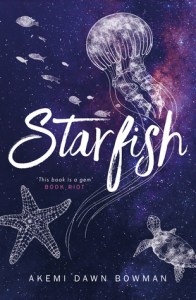
I don’t know how to even begin to explain how I feel about Starfish so I’ll start with something easy. That cover!!! Sarah Creech has created one of the most beautiful covers I’ve ever seen! This artist must be an author’s dream come true. The colours, the layout, the design, the awesomeness of it all combined!
I need this cover image available as a print so I can frame it and admire it every day. I also need Sarah commissioned to create artwork of all of the paintings and drawings described in the book because I really, really need a special limited edition illustrated version of Starfish signed by the author and illustrator in my life. Me, me, me, me, me! Argh! I’m a starfish! Moving on …
I don’t know that I’ve ever experienced such a deep bookish connection with a main character before. I felt my name could have been transposed with Kiko’s so many times and yet there were parts of her story that I’ll never understand.
Kiko’s experience of social anxiety is the most honest and realistic portrayal I have ever come across. I would have been right with her attempting to melt into the wall at a party if I’d had the courage to go in the first place. I was impressed by her ability to push through her fear to be in the vicinity of more than one other person at a time sometimes, even though her successes in that area seemed to be fuelled mostly by her need for approval.
People terrify me. I’d probably spend the whole night wishing I had the superpower to make myself invisible. I don’t know how to be any other way.
Her constant feeling of being out of place, weird and different to everyone else hit home for me, as did her pathological need to be ‘enough’ for a person whose expectations are both unrealistic and impossible to meet. I loved her introspection and keen insights into the actions of those around her and her own feelings and behaviour.
I loved that Kiko has a Japanese father and caucasian mother. I desperately wanted her to learn more about her Japanese heritage. I wished that I had siblings but didn’t envy their relationship. I wanted to be friends with Kiko and Emery. I loved Jamie so much that even though I’m anti-romance I wanted Kiko and Jamie to become a couple.
I’ve always felt like I desperately needed to say my feelings out loud – to form the words and get them out of me, because they’ve always felt like dark clouds in my head that contaminate everything around them.
The long term effects of childhood sexual abuse were handled sensitively. The lingering self doubt, guilt and shame were realistic, as were the character’s experiences and internal dialogue as a result of way this trauma was handled by the people they should have been able to trust to protect them.
The physical abandonment by one parent and the emotional abandonment by the other had me getting pretty imaginative with the voodoo doll depiction in my head of Kiko’s mother. Kiko’s fear of abandonment, rejection and of never being enough were all logical but heartbreaking responses to really dysfunctional family dynamics.
I draw a dragon breaking free from its grave and finally seeing what its wings and fire are for.
Kiko finds her voice through her art and the more she explored her feelings through painting and drawing the more I wished I had the ability to translate images in my head to paper and canvas in that way. I’m one of those people who can sort of draw a fairly decent stick figure sometimes as long as they’re just standing there. I loved the use of art as therapy although I did think that the ending was a bit too easy.
I know there were struggles, anguish and angst along the way but Kiko must be made of stronger stuff than I am. If Kiko’s story was my story I am pretty certain there’d be an epilogue that mentioned how well my therapy was going. There was a point in the book where I had to stop reading for a while because some of the responses Kiko experienced were hitting a bit too close to home. If I had to nitpick I’d point out that while Kiko became all about being her own person and making her life her own, she’s not the one who submits the application that gets her on the life path of her dreams.
I felt for sure that Kiko would remain my favourite character but then I met Hiroshi. My candidate for both Father of the Year and Best Mentor Ever, Hiroshi is wise, sensitive, accepting, vulnerable, loving and adorable! I wanted to hug him, take art classes from him and simply sit and listen to him talk about his life and the world for the rest of my life. Hiroshi is one of those people that you meet and hope they’ll adopt you into their family. Everything about him reminded me that family is not defined by blood.
“I want you to tell me a story. Tell me anger. Tell me sorrow. Tell me happiness. Just tell me something that matters to you.”
Akemi Dawn Bowman’s writing is so beautiful and the translation of Kiko’s feelings to artwork was poetic and stunning. I felt a deep connection with so many characters and didn’t want to finish reading because I wanted to continue to hang out with Kiko and Hiroshi. I saw people in my own life in some of the characters I didn’t connect with and gained some insights into their toxicity, which became some of my favourite lightbulb moments in the book. My favourite passage was the story of the sun goddess, Amaterasu.
Thank you so much to NetGalley and Ink Road, an imprint of Black & White Publishing, for the opportunity to read this incredible debut novel. I cannot wait for this author’s next book to be released.
⭐⭐⭐⭐⭐
Rating: 5 out of 5.
Once Upon a Blurb
A half-Japanese teen grapples with social anxiety and her narcissist mother in the wake of a crushing rejection from art school in this debut novel.
Kiko Himura has always had a hard time saying exactly what she’s thinking. With a mother who makes her feel unremarkable and a half-Japanese heritage she doesn’t quite understand, Kiko prefers to keep her head down, certain that once she makes it into her dream art school, Prism, her real life will begin.
But then Kiko doesn’t get into Prism, at the same time her abusive uncle moves back in with her family. So when she receives an invitation from her childhood friend to leave her small town and tour art schools on the west coast, Kiko jumps at the opportunity in spite of the anxieties and fears that attempt to hold her back. And now that she is finally free to be her own person outside the constricting walls of her home life, Kiko learns life-changing truths about herself, her past, and how to be brave.
From debut author Akemi Dawn Bowman comes a luminous, heartbreaking story of identity, family, and the beauty that emerges when we embrace our true selves.
By now it seems as though this collection of poems are so popular that I don’t need to introduce them. You’ve likely either read them yourself, read multiple reviews already or at least have enough of an idea of its content. I kept hearing about this book and figured I’d catch up to the bandwagon and see what all of the fuss was about.
I appreciate the openness of this poet and the rawness of her work. A lot of the poems in the first of the four sections resonated with me and I liked some of the positivity of the final section, although some of the final section read like pop psychology to me. The middle sections didn’t speak to me at all but I expect that’s partly because I don’t do relationships and don’t particularly want to spend my time hearing about the drama of them or about people having sex. A lot of people love stuff like that but I’m just not one of them.
I really didn’t like most of the illustrations, probably because I didn’t like that one of the early ones featured a poem between a naked woman’s spread legs and wondered whether the poet considered this necessary to make their point. I also really, really don’t like it when people don’t use capital letters, especially for I and I’m. The lack of capitalisation bugged the hell out of me.
The ratings for this book clearly show that I’m in the minority here and that’s okay with me. I love that people experience the same book differently and I love reading reviews that show perspectives that I don’t share or wouldn’t have thought of myself. While I really connected to the poems that spoke to me of my own experiences there weren’t enough of them to make this book one I’d want to reread. I hope you get more out of it than I did.
⭐⭐
Rating: 2 out of 5.
Once Upon a Blurb
Milk and Honey is a collection of poetry and prose about survival. About the experience of violence, abuse, love, loss, and femininity. It is split into four chapters, and each chapter serves a different purpose. Deals with a different pain. Heals a different heartache. Milk and Honey takes readers through a journey of the most bitter moments in life and finds sweetness in them because there is sweetness everywhere if you are just willing to look.
Instruction Manual: Missing. Please work it out as you go along.
Level Bosses:
Level 1 – The Whistler
Level 2 – The Constrictor
Level 3 – The Director
Level 4 – The Father
PRESS START
The most important thing you need to know going into this novella is that you only know what the Witness knows, which in the beginning is very little indeed. This made for a serious amount of confusion on my part and significant helpings of “What the hell did I sign up for?!”
If this story is of interest to you please don’t give up when you get the feeling you’re hallucinating; when every time you think you know where you are the scene changes on you and you don’t know how you got there. Your patience and attempt to retain your sanity will be rewarded if you stick with it. Know that things will fall into place. I graduated from confusion to intrigue and then to fascination and compulsion. I had to know what was coming next and how it would all come together in the end.
Dexter Morgenstern writes at the start of the novella that he wants to write stories for games and as I read I could see this story translating into the gaming world quite easily. I viewed the story much like a game as I progressed and ultimately came to see the story as having four main levels, each with a level boss to face at the end. While there was a cyclical nature to what the player needs to accomplish within the level, each level takes place in a different time period and with different characters.
During each level the Witness gains information, mostly fairly cryptic at the time, which they hope will eventually help them make sense of who they are and what their connection is to the characters they encounter within the game. The characters that remain consistent throughout the levels (besides the Witness) are the girl in the mirror and the Preta, which is translated from Sanskrit as ‘hungry ghost’.
Because characters come and go you get to know their stories but I didn’t find I had the time to connect emotionally with them. Having said that, there’s so much action and running around that it’s not as though any of the characters have time to sit down and have a chat over a cuppa with you anyway. If it helps you to put all of this into context, Dexter describes it himself as a “chaotic trifecta of Buddhism, history, and ghost-zombies”. Intriguing, huh?!
Because I seem to be fairly immune to feeling fear while reading, I wasn’t scared reading Eternal Victim. I was unsettled by it though and for me, feeling unsettled over a period of time is more uncomfortable to sit with than scary moments that come and go. I haven’t been this unsettled by a book in a long time so I was suitably impressed by that.
If you’re squeamish and/or the content warnings apply to you then you may want to skip this book or at least approach it with caution. If you can handle graphic details of tortuous murders committed by deranged serial killer types you should be okay, but you’d be forgiven if you cringe at certain points as your already overactive imagination works overtime. If you can eat while watching a Saw movie you should be fine too.
This novella is certainly not going to be for everyone as it truly is one of the strangest books I’ve read, but it happily transformed for me from being close to ditching it for the first 10% to being glad I persevered fairly soon after. I’d like to reread Eternal Victim to see how the reading experience changes now that I know how it all fits together. I’m definitely interested in reading more books by this author.
Beware the fog!
GAME OVER
Credits: Thank you so much to NetGalley, Dexter Morgenstern and BookBuzz.net for the opportunity to read this novella.
⭐⭐⭐⭐
Rating: 4 out of 5.
Once Upon a Blurb
Follow the Witness as she travels through a perpetual series of nightmares, haunted by a mixture of pernicious serial killers and their imprisoned, undead victims, known as preta. As she wanders through time and memories shared by the killers and their victims, she fights to solve the puzzle of their connection to each other and to herself. Her only hope of salvation lies in connecting key victims to the souls who can rescue them, thus waking her from the nightmare, but one killer follows the next, bringing forth a new set of victims, a new score of preta, and immediately landing her in a new terror.



 Schizanthus Nerd