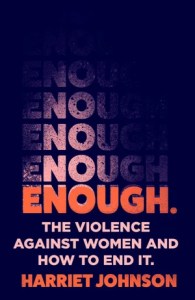
Enough – Harriet Johnson

In her work as a barrister, Harriet Johnson has seen how the criminal justice system can work and also how it can fail women. In this book, Harriet outlines many of the ways violence is perpetrated against women, how the justice system responds to it and how it can be more adequately addressed as well as prevented.

An overview of the law, statistics and case studies are presented about various ways that women experience violence: homicide, sexual violence, domestic abuse, female genital mutilation, stalking, street harassment and online harassment. 

The author clearly points out that even though a dark picture can already be painted using the statistics that are available, there are entire groups of women whose experience is not even captured in them.

If you’re not from the UK, you’ll find that the definitions of offences, the laws that relate to them and the maximum applicable if someone is convicted won’t line up with the laws of your country. The statistics are also UK specific, although most didn’t seem dissimilar to what I know of stats from other countries.

None of the suggested strategies for ending violence against women surprised me. They focus on prevention, as well as making improvements to the systems that are currently in place. It’s about having enough resources and training. It’s taking a long, hard look at the way police and the courts respond to violence. It’s including marginalised women in the statistics because if we don’t have a clear picture of what’s happening, then how can we ever expect things to change.

Favourite quote: “the culture you get is the behaviour you tolerate.”

Thank you so much to NetGalley and William Collins, an imprint of HarperCollins, for the opportunity to read this book. 

Rating: 3.5 out of 5.

Once Upon a Blurb

This is a book that calls time on the endless tide of violence against women and the failures of our criminal justice system to respond.

From barrister Harriet Johnson, Enough lays bare the appalling status quo of abuse against women in our society, offering an irrefutable case for why change is needed in policing and justice. Most vitally, it also gives a manifesto for how to get there.

With expertise, clear-sightedness and appropriate fury, this book helps us see where women are suffering – from homicide to domestic abuse to street harassment. It exposes the ways the criminal justice system lets women down – from officers failing to properly investigate to a lack of consequences when police behaviour is unacceptable, to backlogged courts and the realities of convincing a jury.

Addressing misogyny is to everyone’s benefit and the answers aren’t simple. Enough is the call to arms we can – and must – all get behind.
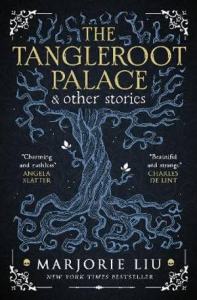
The Tangleroot Palace – Marjorie Liu

While I’d already well and truly fallen in love with Monstress, I hadn’t read anything else by this author. After being wowed by this collection, I will now be working to rectify this egregious mistake.

Sympathy for the Bones

Clora works with bone needles and thread. She doesn’t make mistakes. 

Fear of a hoodoo woman was natural. Fear was how it had to be. 

The Briar and the Rose

In this retelling of Sleeping Beauty, we meet the Duelist who, on Sundays, is called Briar. While six days a week are devoted to violence, the seventh contains love. 

The Duelist had learned, long ago, that oppression could be defeated only through study; like a sword, the mind must always be tended to if it was to aim true. 

The Light and the Fury

Superheroes, war and crystal skulls. 

“Can you be what they need?”
“No,” she said quietly. “But I can try.” 

The Last Dignity of Man

His mother named him Alexander Lutheran. Wasn’t it inevitable that he would aspire to become Lex Luthor? 

And he has lived up to that name, in more ways than one. 

Where the Heart Lives

This story takes place in the Dirk & Steele universe, well before the events of the first book in the series. Although I tend to stay as far away from romance novels as possible, I’m intrigued enough to want to dive into the first book. 

“We all have our homes,” she said quietly. “The ability to choose yours is not a gift to take for granted.” 

After the Blood

Amish vampires! A sequel to the novella, The Robber Bride, which I now need to read. 

Only so long a man could keep secrets while living under his family’s roof. 

Tangleroot Palace

When Sally’s father arranges for her to be married to the Black Knight of the Poisoned Cookies (not his real name), she decides to turn to the Tangleroot forest for help. It’s not like she’s got anything to lose.

Bonus points to the raven in the tree next door that believes in book-life symmetry, waiting to caw until the exact moment the raven in the story did. 

“Most people, when they have questions, ask other people. They do not go running headfirst into a place of night terrors and magic.” 

It is rare for me to love a short story collection more than I love the idea of it but this one exceeded my expectations.

The Light and the Fury was the only story I wasn’t immediately captivated by. The rest, I adored, but none more so than The Last Dignity of Man

Thank you so much to NetGalley and Titan Books for the opportunity to fall in love with this collection.

Rating: 5 out of 5.

Once Upon a Blurb

New York Times bestseller and Hugo, British Fantasy, Romantic Times, and Eisner award-winning author of the graphic novel Monstress, Marjorie Liu leads you deep into the heart of the tangled woods. In her long-awaited debut collection of dark, lush, and spellbinding short fiction, you will find unexpected detours, dangerous magic, and even more dangerous women.

Briar, bodyguard for a body-stealing sorceress, discovers her love for Rose, whose true soul emerges only once a week. An apprentice witch seeks her freedom through betrayal, the bones of the innocent, and a meticulously plotted spell. In a world powered by crystal skulls, a warrior returns to save China from invasion by her jealous ex. A princess runs away from an arranged marriage, finding family in a strange troupe of travelling actors at the border of the kingdom’s deep, dark woods.

Concluding with a gorgeous full-length novella, Marjorie Liu’s first short fiction collection is an unflinching sojourn into her thorny tales of love, revenge, and new beginnings.

A Dark History of Sugar – Neil Buttery

There’s nothing sweet about the history of sugar. Having already read A Dark History of Chocolate, I had some idea of what to expect. 

Even so, it was horrifying reading chapter after chapter about slavery. Centuries worth of humans enslaving other humans to produce something that was once reserved for royalty but we all now have a taste for. Not content with the human cost of producing sugar, we’ve also done irreparable damage to the environment. 

Interestingly, it turns out a spoonful of sugar really does help the medicine go down.

description

Besides coating medicines in sugar to make them more palatable, it has also been used to ‘treat’ a number of conditions. One of my personal favourites was a remedy to treat conjunctivitis, “made up of powdered sugar, pearls and gold leaf that was blown directly into the eye.” It’s also been prescribed “to treat diseases of the loins, urinary tract, eyes and chest as well as headaches and inflammation.”

I learned how food manufacturers massage portion sizes so it appears their products contain less sugar than they really do and how they try to hide sugar in plain sight by calling it any number of things on the packaging. 

By 2018 there were at least fifty-six names in use for sugar in ingredients lists. 

This book, exploring both the production and consumption of sugar, was very well researched. It provides a detailed history but, for the most part, it’s just so depressing. 

The World Wildlife Fund reckons that sugar is ‘responsible for more biodiversity loss than any other crop.’ 

This is not an easy read but it is an eye opening one.

Thank you so much to NetGalley and Pen & Sword History, an imprint of Pen & Sword Books, for granting my wish to read this book. 

Rating: 3.5 out of 5.

Once Upon a Blurb

A Dark History of Sugar delves into our evolutionary history to explain why sugar is so loved, yet is the root cause of so many bad things.

Europe’s colonial past and Britain’s Empire were founded and fuelled on sugar, as was the United States, the greatest superpower on the planet – and they all relied upon slave labour to catalyse it.

A Dark History of Sugar focuses upon the role of the slave trade in sugar production and looks beyond it to how the exploitation of the workers didn’t end with emancipation. It reveals the sickly truth behind the detrimental impact of sugar’s meteoric popularity on the environment and our health. Advertising companies peddle their sugar-laden wares to children with fun cartoon characters, but the reality is not so sweet.

A Dark History of Sugar delves into our long relationship with this sweetest and most ancient of commodities. The book examines the impact of the sugar trade on the economies of Britain and the rest of the world, as well as its influence on health and cultural and social trends over the centuries.

Renowned food historian Neil Buttery takes a look at some of the lesser-known elements of the history of sugar, delving into the murky and mysterious aspects of its phenomenal rise from the first cultivation of the sugar cane plant in Papua New Guinean in 8,000 BCE to becoming an integral part of the cultural fabric of life in Britain and the rest of the West – at whatever cost. The dark history of sugar is one of exploitation: of slaves and workers, of the environment and of the consumer. Wars have been fought over it and it is responsible for what is potentially to be the planet’s greatest health crisis.

And yet we cannot get enough of it, for sugar and sweetness has cast its spell over us all; it is comfort and we reminisce fondly about the sweets, cakes, puddings and fizzy drinks of our childhoods with dewy-eyed nostalgia. To be sweet means to be good, to be innocent; in this book Neil Buttery argues that sugar is nothing of the sort. Indeed, it is guilty of some of the worst crimes against humanity and the planet.

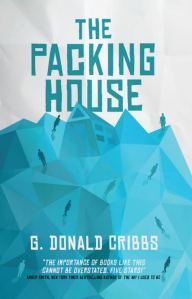
The Packing House – G. Donald Cribbs

Spoilers Ahead! (marked in purple)

I can’t ignore these dreams. They come from somewhere. Maybe they’re trying to tell me something, but what exactly? 

Joel’s nightmares have been getting worse recently. It doesn’t help that his mother is emotionally unavailable and his father has been MIA for over half of his life. When one of Joel’s nightmares is recorded and posted online, it makes it even harder for him to cope.

Childhood sexual assault is always going to be difficult to read about. While there are more books being published where characters have experienced this, not enough are written from the point of view of male survivors. That’s what drew me to this book.

It’s hard to be objective when sexual assault and its impacts are addressed so I’ll focus here on what did and didn’t work for me personally as I read this book.

One of the strengths of this book was that it dealt with trauma that the main character didn’t always have clear memories of. Trauma encodes itself in the brain differently than non-traumatic memories and sometimes this means the memories aren’t accessible until the survivor is safe. Joel’s memories begin to resurface in the themes of his nightmares and in flashbacks. His understanding of what he’s experiencing doesn’t come all at once.

Some aspects of the story didn’t ring true to me. Once Joel talked about what happened to him, his nightmares seemed to disappear. While I hope this is the case for some survivors, this didn’t seem very realistic.

I couldn’t imagine the police, when they showed up to interview Joel at his home, finding it necessary to use their lights and siren to announce themselves. Surely a simple knock on the door would have done the trick. 

I’d also hate to think of a survivor being confronted by the police about such a sensitive topic in front of random family members or having to go with them straight away to the station in a police car to give a statement.

And why do the police say the perpetrator is “charged with” when they haven’t actually charged them yet? They hadn’t even interviewed the victim or conducted an investigation into the allegations.

With such an extended lead up to Joel remembering what happened to him, the events afterwards felt like a whirlwind. I was left with some pretty big question marks and some of those are because the book finishes so abruptly. I don’t know if a sequel is planned or not but here’s the short list of what I need to know…

Was Joel’s perpetrator responsible for what happened to the other boy we learn about from Joel’s childhood? Is there a way around the statute of limitations problem in Joel’s case as he’s only just remembered what happened to him? Does Joel get anything approximating justice from the legal system? Did the perpetrator also offend against Joel’s brother? What is Joel’s brother’s response to what happened to Joel? What possessed Joel to immediately set up candles when he learned what they meant for Amber?

There’s no indication in the blurb that religion is discussed in relation to the events in this book. Given that some readers will want to read it and others will avoid it for that reason alone, heads up: Christianity, including Bible quotes, are a part of this book.

Books in a book: Reading is one of Joel’s escapes. Throughout the book, he reads Fahrenheit 451The OutsidersThe Chocolate War and Catcher in the Rye

Thank you to NetGalley and Cherish Editions, an imprint of Trigger Publishing, for the opportunity to read this book.

Rating: 3 out of 5.

Once Upon a Blurb

When 16-year-old Joel Scrivener has a raging nightmare in study hall and someone records it on their phone, he awakens to a living nightmare where everyone knows his secret, one that he’s suppressed for ten years. Reeling as the whole school finds out the truth, Joel takes to the woods, leaving the bullies and his broken home behind.

However, life as a runaway isn’t easy, as Joel’s hallucinations and nightmares follow him into the wilderness. To stop them once and for all, he pieces clues together with flashes of the images that play endlessly inside his head – will he figure out the identity of the person who caused his nightmare before it’s too late?

Dark Stars – John F.D. Taff (editor)

Horror is something like black taffy these days, enough elasticity to stretch across any room (even the word “room” feels a little confining while discussing the modern state of horror: Is it a room actually? Could be something else), and you’ll find that elasticity here in the pages of this book. 

The Attentionist by Caroline Kepnes

Reg and Maeve really want Tony to call. Naturally, he’ll have a friend so the sisters will be able to go on a double date. 

The phrase you learn in school is fight or flight. As if those are the only choices. As if we’re all so quick to throw a punch or make a run for it. Some of us are slow. We just need a minute to think. 

A Life in Nightmares by Ramsey Campbell

When past and present, reality and nightmares collide. 

“I don’t know why I should dream about the past” 

Papa Eye by Priya Sharma

When Ravi goes to the island, they see life and death in a whole new light. 

“We’ve been struggling with how to explain it. Now you can see for yourself.” 

Volcano by Livia Llewellyn

A new job, a new colleague, a pervasive darkness. 

It still bothers me that I can’t remember last night. 

All the Things He Called Memories by Stephen Graham Jones 

When you’re quarantining with your partner, a research scientist, who wants to discuss your greatest fear. You know, besides the pandemic. 

“Because our minds are puzzle boxes,” Marcy said, obviously. “You can twist them this way, that way, and, if you’re really lucky, maybe once in a while you unlock one of them.” 

Trinity River’s Blues by Chesya Burke 

Jazz, a murder of crows and a woman who sees dead people. 

“This here … this is longing. Its power manifested. You don’t understand who you are and so you let your fears and insecurities control you.” 

The Familiar’s Assistant by Alma Katsu

Eric has spent weeks tracking him down. Now he’s standing at the vampire’s door. 

You can’t accept a monster in your life and think that you’re safe. That you’ll be able to control him. 

Swim in the Blood of a Curious Dream by John F.D. Taff 

Peter just wants to drive his son to their new home. The weather has other ideas. So does Peter’s dead wife. 

Because, as I’ve learned, separation doesn’t diminish the love a child has for their parent.
Nor does death. 

The Sanguintalist by Gemma Files

The blood speaks to Lala. 

Tell me now. Show me, if you can’t form the words. Let me see it.
Let me see it all. 

Mrs. Addison’s Nest by Josh Malerman

This all started in detention fifteen years ago. It ends now. 

REMEMBER WHERE YOU ARE 

Challawa by Usman T. Malik

Karisma returns to Pakistan with her husband. While she’s there, she plans to do some research. 

“Challawa. A mercurial creature that shimmers and is gone. A mirage that evaporates when you get close to it.” 

Enough For Hunger and Enough For Hate by John Langan

Michelle is trying to track down her brother’s killer. And his body. 

“There was nothing I wanted more than to spend every waking second with her.” 

Usually when I pick up an anthology, it’s because there’s one particular author’s story I need to read. This time around, that author was Stephen Graham Jones. 

With anthologies, I always find the stories are a bit of a mixed bag. I love this because there’s usually something for everyone. I also dread this because I know it’s just as likely I’ll encounter stories that I’m not so keen on.

My horror preference is the “would you like more blood with that?” variety. I actively seek out reads where I have the overwhelming urge to look over my shoulder and question whether it’s safe to turn out the lights, as well as my decision to eat before reading. I’m not as comfy with ambiguity so some reads here didn’t work as well for me. 

I enjoyed many of the stories but they didn’t elicit fear in me. The most horrified I felt was when I realised I’d finished more than one story with no way of explaining what it was about because I had no idea.

One of my favourite things about anthologies is the opportunity to find authors whose books have somehow flown under my radar. While I loved the story I came here for, I was also introduced to two authors whose books I definitely need to investigate in the near future: Priya Sharma and Usman T. Malik.

Thank you so much to NetGalley and Titan Books for the opportunity to read this anthology. 

Rating: 3.5 out of 5.

Once Upon a Blurb

Created as an homage to the 1980 classic horror anthology, Dark Forces, edited by Kirby McCauley, this collection contains 12 original novelettes showcasing today’s top horror talent. Dark Stars features all-new stories from award-winning authors and up-and-coming voices like Stephen Graham Jones, Priya Sharma, Usman T. Malik, Caroline Kepnes, and Alma Katsu, with seasoned author John F.D. Taff at the helm. An afterword from original Dark Forces contributor Ramsey Campbell is a poignant finale to this bone-chilling collection.

Within these pages you’ll find tales of dead men walking, an insidious secret summer fling, an island harbouring unspeakable power, and a dark hallway that beckons. You’ll encounter terrible monsters – both human and supernatural – and be forever changed. The stories in Dark Stars run the gamut from traditional to modern, from dark fantasy to neo-noir, from explorations of beloved horror tropes to the unknown – possibly unknowable – threats.

It’s all in here because it’s all out there, now, in horror.

Are You Really OK? – Stacey Dooley

Are you really OK? I don’t think there’d be too many people who could answer that question with a resounding yes after living through what the 2020’s have given us so far. Now, more than ever, we need to do whatever we can to look after our mental health. 

An international team of researchers published a report in October 2021 showing that globally there were estimated to be an extra 76 million cases of anxiety in 2020 than would have been expected if the pandemic hadn’t happened, and 53 million more cases of major depressive disorder. 

In this book, Stacey talks about depression, eating disorders, postnatal depression, postnatal psychosis, obsessive compulsive disorder, gambling addiction and psychosis. She also speaks to people who have experienced domestic abuse, as well as those in the LGBTQ+ community who have been discriminated against or abused because of who they are. Finally, Stacey explores how racism and poverty impact on mental health.

While there are statistics (and some confronting ones at that) and information about potential advances in the future for treating specific mental illnesses, where this book shines is the human element. Stacey interviewed young people living with diagnosed mental illnesses and gave them the opportunity to tell their stories. While she never claims to be an expert herself, Stacey spoke with professionals who treat mental illnesses, some of whom have lived experience. 

The insights you are able to get when people feel safe enough to speak candidly about their lives are always going to resonate more than facts and statistics that remove individual people from the narrative. Although I know people with many of the diagnoses covered in this book and have lived experience of others, I learned a lot. I was invested in the stories of the people who shared their story and expect to continue to wonder how they’re doing, particularly Kyle, whose experience with depression was just heart wrenching. 

None of us get through life unscathed. Sean, a psychiatrist Stacey spoke to, is helping to destigmatise mental illness. No one is immune to mental health issues, Sean says. 

‘But if enough wrong things happen that exceed someone’s ability to cope, no matter how privileged they are, they will get ill’ 

While that knowledge is somewhat terrifying, it’s also comforting because it removes blame from the person with the illness.

But is there hope? Absolutely. 

‘For everyone, no matter how awful the situation you are in, no matter how bad the mental illness or the mental disorder is, it can improve.’ 

Because Stacey’s approach is so down to earth and she’s so relatable, her documentaries and both of her books have a warmth to them, almost as though you’re seeing friends catching up and talking about some of their most difficult experiences. I’ll definitely be rereading this book.

Thank you so much to NetGalley, BBC Books and Penguin Random House UK, Ebury Publishing for the opportunity to read this book.

Rating: 5 out of 5.

Once Upon a Blurb

We are not OK… 

I’ve been fortunate enough to meet many remarkable people over the last decade of making documentaries – sometimes in incredibly hostile environments, where they’ve been really up against it – and I’ve seen the devastating effect that poverty, trauma, violence, abuse, stigma, stress, prejudice and discrimination can have on people’s mental health. It has always been the common thread.

Every week, 1 in 10 young people in the UK experiences symptoms of a common mental health problem, such as anxiety or depression, and 1 in 5 have considered taking their own life at some point. In this book, Stacey Dooley opens up the conversation about mental health in young people, to challenge the stigma and stereotypes around it.

Working in collaboration with mental health experts and charities, Stacey talks to young people across the UK directly affected by mental health issues, and helps tell their stories responsibly, in order to shine a light on life on the mental health frontline and give a voice to young people throughout the UK who are living with mental health conditions across the spectrum. 

As well as hearing about their experiences directly, Stacey speaks to medical experts, counsellors, campaigners and health practitioners who can give detailed insights into the conditions profiled and explore the environmental factors that play a part – including poverty, addiction, identity, pressures of social media and the impact of Covid-19.

The Reckoning: How #MeToo is Changing Australia – Jess Hill

Quarterly Essay #84

Jess Hill’s See What You Made Me Do is one of the best books I’ve ever read about domestic abuse. I was keen to see how she’d tackle #MeToo and have been impatiently waiting for my library’s copies to arrive so I could dive in. 

This essay traces #MeToo from its origins (before it became a hashtag), with a particular focus on how it has played out across Australia’s cultural landscape since 2017. There are examples from the media, education, politics and the legal system, all of which I’d followed in real time but which felt more overwhelming when they were explored one after the other. I don’t know that Australia’s celebrated mateship has ever felt so toxic to me.

There have been battles undertaken in courts, the media and public opinion. We’ve learned just how brutal Australia’s defamation laws are. There are powerful people abusing their power and systems supporting them in their endeavours.

Don’t get me wrong; there have been positives, like #LetHerSpeak. Conversations have taken place that were once considered taboo and there are more people visibly working towards implementing changes to legislation, processes and policies. There are survivors turned advocates who are transforming the way we think about consent and grooming, and their voices have led to others finding their own. Good things are happening.

So, why do I still feel so angry having read this essay? 

Maybe it’s about reporting a sexual assault to the police in 2017 and getting my hopes up about the positive impact #MeToo would have on the way my report was treated. Then being told that there was insufficient evidence to pursue criminal charges and subsequently learning that the investigation consisted solely of the detective phoning my psychologist to ask if I had a mental illness that would cause me to fabricate the sexual assault.

Maybe it’s about something a detective said to me a few months ago when they were trying their darnedest to dissuade me from formally reporting a series of sexual assaults (different detective, different perpetrator). No one ever gets a good outcome, they told me. Even if there is a conviction, and that’s a big if, it’s never going to be enough and what you’d have to go through to get it wouldn’t be worth it.

They talked about the things I would have seen in media (like some of the cases I read about here) and noted that they are the minority, and that I shouldn’t align my expectations with those outcomes. Even when someone reports a rape the same day and there’s physical evidence and CCTV footage, it’s almost impossible to get a conviction.They said they were telling me all of this to help me.

This is the same man who helpfully told me that my having a mental illness would be used against me because it would speak to both my credibility and character. ‘You mean the PTSD I have as a result of the sexual assaults I’d be reporting?’ The very same. Huh.

As I read this essay I wondered if the detective was right, that there’s no point in reporting. But you know what? It’s attitudes like this that contribute to silence, the antithesis of #MeToo. 

[And besides, this is the same police force whose representatives roll their eyes and pull faces at women who are reporting AVO breaches, who say that behaviour that clearly constitute breaches (written in black and white on the AVO) are in fact not breaches at all. Who write down what you say and then neglect to put it in their system so there’s no record you ever made a report. Who you have to insist write it down in the first place and give you an event number because, even though they think you’re overreacting, they don’t understand what this person’s capable of or how they may escalate.]

I’m mad because I read something like this essay and I get hopeful, but then think about all of the peoples’ experiences it doesn’t encapsulate because only some voices are heard. I want change for all of us, not just the lucky few who, let’s face it, probably shouldn’t be called lucky at all. Because they experienced what they did in the first place. Because even if they did get an outcome that looks like a win, it came at a great cost. Because being an advocate continues to cost.

In lesser hands, this essay could have been an absolute mess, but it’s not. At all. It is well written and clearly involved extensive research but, to be honest, I’d expect nothing less from Jess’ work.

It was a compulsive read. I gained even more respect and admiration for the survivors who tell their story publicly. The powers that be, political and otherwise, lost what little faith I still had in them, not that there was much to lose. I want everyone to read this essay and I want to read it again to pick up on anything I missed when I rushed through it the first time.

So, where do I currently stand on #MeToo? Despite my own experiences, I’m stubbornly hopeful. The systems still fail survivors but more and more of us are demanding change, and we’re done being silenced.

Rating: 5 out of 5.

Once Upon a Blurb

In 2021, Australia saw rage and revelation, as #MeToo powered an insurgency against sexism and sexual violence. From once isolated survivors to political staffers, women everywhere were refusing to keep men’s secrets. 

In this electrifying essay, Jess Hill traces the conditions that gave birth to #MeToo and tells the stories of women who – often at great personal cost – found themselves at the centre of this movement. Hill exposes the networks of backlash against them – in government, media, schools, and in our national psyche. This is a powerful essay about shame, secrecy and, most of all, a revolutionary movement for accountability.

The Sisters Grimm #2: Night of Demons and Saints – Menna van Praag

Spoilers Ahead! (marked in purple)

You think you’re ordinary. You never suspect that you’re stronger than you seem, braver than you feel or greater than you imagine. 

It’s been three years since we last spent time with the Sisters Grimm. We catch up with them in the lead up to their 21st birthday. 

‘Tonight we’re stronger than we’ll ever be again.’ 

Goldie’s adorable younger brother, Teddy, isn’t quite as adorable anymore; he’s found some attitude since we last saw him. Goldie is still reeling from loss. Liyana is increasingly worried about her aunt, Nyasha. She’s also missing her girlfriend, Kumiko, who is away studying. Scarlet suspects Eli of keeping secrets. I can’t provide an update about Bea because that would involve spoilers.

We visit Everwhere, which remains magical and beautiful, but is not without its shadows.

This is a story of love, hope and hopelessness, of longing and loneliness, of losing others and yourself.

Goldie’s stories, co-written by Vicky van Praag, are scattered throughout the book, as they were in The Sisters Grimm. My favourite was The Good Girl

‘Not to worry, your voice has been long drowned out by the voices of others. But it’s never too late to listen to your own.’ 

I may have missed something but I found it confusing that Leo could “barely see five miles in any direction”, yet he can’t see Goldie when she’s right in front of him.

There are fewer Alastair Meikle’s illustrations in this book but they were still wonderful. 

I would definitely recommend reading this series in order. If you attempted this book without having already read The Sisters Grimm, you’d be in for some major spoilers and confusion. 

‘There’s a storm coming, child, and you’re the only one who can contain it.’ 

Thank you so much to NetGalley and Bantam Press, an imprint of Transworld Publishers, Penguin Random House UK, for the opportunity to read this book.

Rating: 4 out of 5.

Once Upon a Blurb

And then there were three …

Three years ago, the sisters confronted their demon father in that strange other-world called Everwhere. It was a battle that ended in a devastating loss, and the scars they carry seem to have slowly pushed the sisters apart

One sister, still raw with grief, is now a near recluse but determined to use her powers to resurrect what she has lost.

Another has made the journey to learn more of her family, her culture and her roots.

And another seems to have turned her back on what she is and opted to lead a more normal life.

But now the sisters are about to be brought together once more. Because when the clock strikes midnight, when October ticks into November, when autumn wilts into winter, when All Hallows’ Eve becomes All Saints’ Day, the sisters Grimm will turn twenty-one and reach the zenith of their powers.

And on this night, at this time, in this place called Everwhere, anything is possible …

Windswept & Interesting – Billy Connolly

I grew up watching Billy, first on VHS and then on DVD. I laughed along before I was even old enough to understand what was so funny. I was in the audience for three of his concerts, one of which was during his final tour of Australia. I met him twice and have the photos to prove it, including the one where my camera unexpectedly decided it needed a flash. Billy’s surprised expression is just as awesome as you’d expect. I even managed to get some Billy autographs and a Billy hug.

I’ve laughed so much my body has gotten confused and morphed into ugly crying. I’ve learned to be wary of beige people and to appreciate the freedom of naked dancing (vicariously, not personally). I’ve identified as windswept and interesting for as long as I can remember.

It was just as wonderful as I’d hoped. You can hear Billy in your head as you read his story. I’m going to hear him in my head for real when I listen to the audiobook version. Naturally I needed a copy in every format I could find but the audiobook is going to be an absolute treat; I can’t wait to hear his laughter.

You’ll learn “wee interesting things” about Billy here, some you’ll already know as if it’s your own autobiography, but you won’t care because it’s Billy. The new things may build on things you already knew; they’ll give you an even greater appreciation of the man he is and the things he’s overcome in order to delight you with his worldview.

I highlighted too many quotes to share with you here but I need you to read some of them.

On fashion: 

I once wore a pair of black patent brogues with furry black and white spotted panels on a plane. A flight attendant said, ‘I like your shoes.’ I said, ‘Thanks – I had them made abroad. The shoemaker had a big box of Dalmatian puppies, and you could pick your own …’ It was the only time in my life I was smacked by a flight crew member. 

On weight: 

I can’t control my weight and eat the things I like, so I eat the things I like.

On libraries: 

Everything I’ve achieved in my life has been because of the library. 

On Australian wildlife: 

I’m warning you. Australia is a dangerous place! Australians must be the bravest buggers on the face of the earth. Imminent danger every fucking day. 

On snorkelling: 

I was a bit nervous because I’d just seen Jaws for the first time – you know that movie about a shark that plays the cello? It put me off being in the sea. Every time I put my head underwater, I heard, ’dun dun dun dun dun dun dun dun …’

On scuba diving: 

My favourite underwater trick is to get my buoyancy bang on and stand still vertically. Just stand there looking bored when people swim past. Nod to them as if you’re waiting at a bus stop. Look at your watch. You get the most extraordinary looks from people. 

This is the Billy you already know and love, but in book form. If anything, it made me love him more. 

‘I’m William F. B. Connolly the Third. Here’s some parting advice for you: “Lie on your back and you won’t squash your nose.”’

Rating: 5 out of 5.

Once Upon a Blurb

In his first full-length autobiography, comedy legend and national treasure Billy Connolly reveals the truth behind his windswept and interesting life.

Born in a tenement flat in Glasgow in 1942, orphaned by the age of 4, and a survivor of appalling abuse at the hands of his own family, Billy’s life is a remarkable story of success against all the odds.

Billy found his escape first as an apprentice welder in the shipyards of the River Clyde. Later he became a folk musician – a ‘rambling man’ – with a genuine talent for playing the banjo. But it was his ability to spin stories, tell jokes and hold an audience in the palm of his hand that truly set him apart. 

As a young comedian Billy broke all the rules. He was fearless and outspoken – willing to call out hypocrisy wherever he saw it. But his stand-up was full of warmth, humility and silliness too. His startling, hairy ‘glam-rock’ stage appearance – wearing leotards, scissor suits and banana boots – only added to his appeal.

It was an appearance on Michael Parkinson’s chat show in 1975 – and one outrageous story in particular – that catapulted Billy from cult hero to national star. TV shows, documentaries, international fame and award-winning Hollywood movies followed. Billy’s pitch-perfect stand-up comedy kept coming too – for over 50 years, in fact – until a double diagnosis of cancer and Parkinson’s Disease brought his remarkable live performances to an end. Since then he has continued making TV shows, creating extraordinary drawings … and writing.

Windswept and Interesting is Billy’s story in his own words. It is joyfully funny – stuffed full of hard-earned wisdom as well as countless digressions on fishing, farting and the joys of dancing naked. It is an unforgettable, life-affirming story of a true comedy legend.

House of Hollow – Krystal Sutherland

Three little girls fell through a crack in the world. 

When Iris Hollow was seven, she and her two older sisters, Grey and Vivi, were missing for a month. When they returned, they couldn’t remember where they’d been or what happened to them. Now, a decade later, the past is intruding on their present and their lives will never be the same. 

Dark, dangerous things happened around the Hollow sisters. 

I’ve been obsessed with this cover for months and now I’m equally obsessed with the Hollow sisters. This story is dark but somehow still gorgeous. I both loved and was wary of the intense bond between these sisters. 

It was a compulsive read and the imagery was almost tangible. I don’t think I’ve ever been more relieved that a book didn’t come with Smell-O-Pages.

I absolutely adored this book and want to gush about each of the sisters, their history, the imagery, the horror and the beauty. However, this is one of those books where the less you know going in the better. 

Get to know the Hollows and let their world unfurl around you. Just be prepared for them to get under your skin, whichever way you choose to interpret that. 

I am the thing in the dark.” 

Rating: 5 out of 5.

Once Upon a Blurb

Iris Hollow and her two older sisters are unquestionably strange.

Ever since they disappeared on a suburban street in Scotland as children only to return a month a later with no memory of what happened to them, odd, eerie occurrences seem to follow in their wake. And they’re changing. First, their dark hair turned white. Then, their blue eyes slowly turned black. People find them disturbingly intoxicating, unbearably beautiful and inexplicably dangerous. 

Now, ten years later, seventeen-year-old Iris Hollow is doing all she can to fit in and graduate high school – something her two famously glamorous globe-trotting older sisters, Grey and Vivi, never managed to do. But when Grey goes missing, leaving behind only bizarre clues, Iris and Vivi are left to trace her last few days. They aren’t the only ones looking for her. As they brush against the supernatural, they realise that the story they’ve been told about their past is unravelling and the world that returned them seemingly unharmed ten years ago, might just be calling them home.

Krystal Sutherland’s latest novel is a dark and twisty modern-day fairytale that expertly melds the fantastical with the real as the Hollow sisters discover just how much horror can lie beneath the surface.