See What You Made Me Do – Jess Hill

We talk a lot about the danger of dark alleys, but the truth is that in every country around the world the home is the most dangerous place for a woman.

If you only ever read one book about domestic abuse, please make it this one. While I’d like everyone to read it, I think it should be mandatory for so many professions, including anyone involved in the judicial system, medicine, politics, teaching and counselling.

Domestic abuse is not just violence. It’s worse. It is a unique phenomenon, in which the perpetrator takes advantage of their partner’s love and trust and uses that person’s most intimate details – their deepest desires, shames and secrets – as a blueprint for their abuse.

I thought I knew a lot about domestic abuse already. I’ve experienced it firsthand. I’ve read plenty of fiction and non-fiction books that talk about it. I have a psychology degree. I worked in a women’s refuge for a short time. Yet I learned so much from this book.

What should surprise us about domestic abuse is not that a woman can take a long time to leave, but that she has the mental fortitude to survive.

When the author introduced Biderman’s ‘Chart of Coercion’, saying there are parallels between the experiences of returned prisoners of war and domestic abuse survivors, I admit I was a tad wary. Even as someone well versed in the experience of domestic abuse, I wasn’t sure how the two would or could line up. The way the author outlined the techniques, step by step, sucked me in though. It all made perfect sense and it was horrifying, but I was learning something new and I needed to find out more.

Accompanying extensive research are stories of people who have perpetrated and been victimised by domestic abuse. Prepare to brace yourself as you read these accounts as they are invariably brutal and heartbreaking, but please don’t bypass them, even though that would be easier. (Or else you risk missing out on aha! moments, like when emotional abuse is explained as someone bashing someone with their emotions instead of their fists.)

If you’ve experienced domestic abuse yourself, you will easily recognise the truth of these accounts. If you are fortunate enough to have made it this far without being impacted by this type of trauma, know that these stories are representative of so many people’s lives. Friends, family, neighbours …

I can’t imagine reading these accounts without having a visceral reaction and if you’re struggling to ‘witness’ them on the page, please be sure to practice self care. I don’t know if what helped me will apply to other readers but each time I came across something that was too difficult, I told myself that my discomfort wasn’t even in the same ball park as the horror of actually experiencing that firsthand.

The people who have told their stories have courage beyond my comprehension and I feel we owe it to them to not shy away from their words. It’s too easy to maintain the status quo; maybe what we all need is a wake up call to spur us into action.

There’s so much we still need to do. A recent Australian survey, conducted by White Ribbon, found that

Four in ten young men do not consider punching and hitting to constitute domestic violence

Source: The Sydney Morning Herald 25/10/2020

In NSW, Australia, coercive control is not even a criminal offence. Yet. Hopefully this will change, if proposed coercive control laws aren’t squished by the powers that be. You can find Women’s Safety NSW’s proposal here.

I want people to stop asking ‘Why does she stay?’ and start asking ‘Why does he do that?’

SURVIVOR, QUEENSLAND

P.S. There’s going to be a three part TV series in 2021 hosted by Jess Hill.

Rating: 5 out of 5.

Once Upon a Blurb

At the office of Safe Steps, Victoria’s dedicated 24/7 family violence response call centre, phone counsellors receive a call every three minutes. Many women are repeat callers: on average, they will go back to an abusive partner eight times before leaving for good.

‘You must get so frustrated when you think a woman’s ready to leave and then she decides to go back,’ I say.

‘No,’ replies one phone counsellor, pointedly. ‘I’m frustrated that even though he promised to stop, he chose to abuse her again.’

Women are abused or killed by their partners at astonishing rates: in Australia, almost 17 per cent of women over the age of fifteen – one in six – have been abused by an intimate partner.

In this confronting and deeply researched account, journalist Jess Hill uncovers the ways in which abusers exert control in the darkest – and most intimate – ways imaginable. She asks: What do we know about perpetrators? Why is it so hard to leave? What does successful intervention look like?

What emerges is not only a searing investigation of the violence so many women experience, but a dissection of how that violence can be enabled and reinforced by the judicial system we trust to protect us.

Combining exhaustive research with riveting storytelling, See What You Made Me Do dismantles the flawed logic of victim-blaming and challenges everything you thought you knew about domestic and family violence.

Misfits – Hunter Shea

You know how it feels when you discover the urban legend that terrified you as a child is actually real? Mick, Marnie, Chuck, Heidi and Vent do. Everyone who lives in Milbury, Connecticut know better than to step foot on Dracula Drive.

Dare to walk,

Down Dracula Drive,

In day or night,

You won’t survive.

They wait in trees,

And hide below,

Hungry for people,

Too blind to know.

After one of them is brutally raped, they all want payback. It’s time to find out if Melon Heads are simply the stuff of legends or if there really are cannibals living in the forest. It’s going to get bloody!

“What do we have to lose … besides everything?”

This book was a lot darker than I was expecting. With sexual assault as the precursor for all of the bloody, bone crunching, insides are now your outsides action, I was initially torn. If I didn’t already have some trust in its author I probably wouldn’t have even attempted this book.

I’m always wary of how sexual assault is going to be portrayed within horror. It’s certainly not sugar coated in Misfits so this could easily trigger some readers. However, while the physical and psychological impacts of this trauma are undeniable, the character whose assault becomes the catalyst for everything that comes later is portrayed as resilient.

Usually I cheer on the squishy demise of horror characters. Sure, there were a few lambs to the slaughter whose bloodshed felt like poetic justice, but I really liked the five stoners and was invested in their survival. They quickly became real to me and the fact that they were all underdogs endeared them to me as much as their friendship and individual personalities.

“Aw, you called me a freak. That’s the nicest thing you ever said to me.”

I had planned on cheering on any Melon Head eviscerations or limb extractions I witnessed. Unexpectedly, my curiosity overrode my bloodlust. I wanted to spend time with them to learn more about their history and way of life.

Prior to this book I’d never heard the Melon Head urban legend and spent an embarrassing amount of time thinking that was the name of a band from my childhood. Over halfway through the book I finally enlisted Google’s help. They were Blind Melon, not Melon Head, dufus!

This was definitely not the B grade horror I had hoped for. It was actually better. It’s probably going to take me a while to forgive the author for the way the story unfolded for one of my favourite characters but kudos to them for making me care that much about someone I only met this week.

“There’s nothing to be afraid of.”

Thank you so much to NetGalley and Flame Tree Press for the opportunity to read this book.

Rating: 4 out of 5.

Once Upon a Blurb

During the height of the 90s grunge era, five high school friends living on the fringe are driven to the breaking point. When one of their friends is brutally raped by a drunk townie, they decide to take matters into their own hands. Deep in the woods of Milbury, Connecticut, there lives the legend of the Melon Heads, a race of creatures that shun human interaction and prey on those who dare to wander down Dracula Drive. Maybe this night, one band of misfits can help the other. Or maybe some legends are meant to be feared for a reason. 

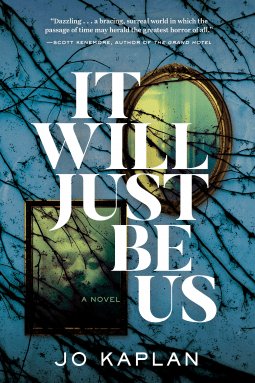
It Will Just Be Us – Jo Kaplan

In Wakefield Manor, a decaying ancestral mansion brooding on the edge of the Great Dismal Swamp in Virginia, there is a locked room.

And this is the sort of opening sentence that immediately sucks me into a book. A decaying mansion, a swamp and a locked room? Please tell me more!

Sam and her sister, Elizabeth, grew up in Wakefield Manor with their neglectful mother. Since it was built, the mansion has witnessed both the mundane and the horrors experienced by those who have lived there, and it has not forgotten them.

Now adults, the sisters have returned to Wakefield Manor, where the locked room from their childhood remains a mystery and a new ghost has appeared.

I love haunted house stories so couldn’t wait to get into this one. I loved the house. I loved the swamp. I loved the way the ghosts made their way into the story and I wanted to spend more time with them.

The past is everywhere, here, wrapped up in the present.

There were a couple of times when I managed to forget what was happening in the story’s present while exploring the past. I never really connected with any of the characters so, although I was interested in learning what happened to each of them, the emotional investment was missing. There were also a number of potentially superfluous paragraphs that took me out of the story.

I tend to gravitate to horror that is more visceral so after the set up of the first couple of chapters I found myself getting antsy. The action picks up towards the end of the book but I spent a good amount of time around the middle simply waiting for it to begin. There was an overall atmospheric feel to the book.

It is a door that should not be opened.

Thank you so much to NetGalley and Crooked Lane Books for the opportunity to read this book.

Rating: 3.5 out of 5.

Once Upon a Blurb

They say there’s a door in Wakefield that never opens …

Sam Wakefield’s ancestral home, a decaying mansion built on the edge of a swamp, isn’t a place for children. Its labyrinthine halls, built by her mad ancestors, are filled with echoes of the past: ghosts and memories knotted together as one. In the presence of phantoms, it’s all Sam can do to disentangle past from present in her daily life. But when her pregnant sister Elizabeth moves in after a fight with her husband, something in the house shifts.

Already navigating her tumultuous relationship with Elizabeth, Sam is even more unsettled by the appearance of a new ghost: a faceless boy who commits disturbing acts – threatening animals, terrorising other children, and following Sam into the depths of the house wielding a knife. When it becomes clear the boy is connected to a locked, forgotten room, one which is never entered, Sam realises this ghost is not like the others. This boy brings doom …

As Elizabeth’s due date approaches, Sam must unravel the mysteries of Wakefield before her sister brings new life into a house marked by death. But as the faceless boy grows stronger, Sam will learn that some doors should stay closed – and some secrets are safer locked away forever.

Survivors: Children’s Lives After the Holocaust – Rebecca Clifford

If you cannot recount the story of your own family, your home town, or your formative experiences, how do you make sense of your childhood and its impacts?

Most of us take our early childhood memories for granted. They form part of the story we tell ourselves about who we are and where we came from. For so many children who survived the Holocaust, these memories are either entirely missing or exist only in fragments. There are often no surviving family members who can help them fill in the blanks.

The survivors whose stories are explored in this book were all born between 1935 and 1944. Previous books I’ve read about Holocaust survivors were written by people who were either teenagers or adults during the war. The oldest survivors mentioned here were only ten years old in 1945.

“For most survivors who are not young child survivors, there was a before, you see.”

From an interview with Zilla C., conducted by psychoanalyst Judith Kestenberg in 1987

Even though I’ve now read the excerpts of their stories I’m still have trouble getting my head around what their lives have been like. For so many years they were not even counted as Holocaust survivors and were encouraged to simply move on with their lives and forget what memories they had of that time.

‘Just think it never happened,’ they urged, ‘and you will start a fresh new life.’

Paulette S., on how OSE staff tried to prepare her to move across the globe

In addition, there was a “disconnect between what children after the war felt and what their adult carers expected them to feel.”

The children’s wartime experiences consisted of at least one of the following:

survival in hiding, in flight to a neutral country or Allied territory, in ghettos and transit camps, and in concentration camps.

The ways these children coped with the trauma of the war and the subsequent traumas of being moved between institutional care, family members, and foster and adoptive homes is addressed. Some of the children lived in stable, loving homes during the war, albeit not with family members, only to be abruptly taken from them at the end of the war.

More often than not, they were moved to countries where they didn’t know the language. Many went to live with strangers and had to try to figure out who they were with little to no assistance.

Survivors has been extensively researched, with sources from “archival material, including care agency files, records from care homes, indemnity claims, psychiatric reports, letters, photographs, and unpublished memoirs, documents originating from nearly a dozen different countries”. The bibliography and detailed footnotes make up almost 15% of the book.

I had expected almost all of the book to consist of detailed stories of individual survivors. Snippets of interviews with survivors are included, as are overviews of the wartime experiences of a number of them. There is also a lot of information and commentary on changes that occurred throughout the decades that impacted on survivors. Some of these changes relate to what was happening in the world at the time and some examines the ways survivors have related to their stories as they grew older.

We should not be surprised to find that the way in which we tell the stories of our lives changes over time; this is true for child survivors as it is for all people.

I found it unusual that whenever survivors in general were discussed, most of the time they would be referred to as ‘she’ or ‘her’, even though interviews with male survivors are also included in the book. Some information was repeated in different chapters and I began to dread seeing the phrase ‘as we have seen’, but I came away with a much better understanding of both the short and long term impacts of the Holocaust on these young survivors.

I’m left wanting to know more about the individuals I was introduced to. Having said that, I agree with the author (an oral historian) that the level of detail I’m interested in would require many more volumes.

Thank you so much to NetGalley and Yale University Press for the opportunity to read this book.

Rating: 4.5 out of 5.

Once Upon a Blurb

Told for the first time from their perspective, the story of children who survived the chaos and trauma of the Holocaust.

How can we make sense of our lives when we do not know where we come from? This was a pressing question for the youngest survivors of the Holocaust, whose prewar memories were vague or nonexistent. In this beautifully written account, Rebecca Clifford follows the lives of one hundred Jewish children out of the ruins of conflict through their adulthood and into old age.

Drawing on archives and interviews, Clifford charts the experiences of these child survivors and those who cared for them – as well as those who studied them, such as Anna Freud. Survivors explores the aftermath of the Holocaust in the long term, and reveals how these children – often branded “the lucky ones” – had to struggle to be able to call themselves “survivors” at all. Challenging our assumptions about trauma, Clifford’s powerful and surprising narrative helps us understand what it was like living after, and living with, childhoods marked by rupture and loss.

The Gift – Edith Eger

Hope. It’s what lit the fire within my soul when I read The Choice and it’s what made its flame shine even brighter as I made my way through The Gift. Hope that I can do the work that I know I need to do in order to address the pain and trauma I’ve experienced. Hope, because if Edith Eger can do it then so can I. Hope, which Dr Eger defines as “the awareness that suffering, however terrible, is temporary; and the curiosity to discover what happens next.”

One of my takeaways from The Choice was a desire to have the opportunity to be counselled by Dr Eger, a survivor whose experiences, compassion and insight combine to allow her to get to the root of a problem before she lovingly guides you towards the you that you’ve been stifling under layers of pain, anger, [insert relevant adjective/s here], and paralysing what if’s. You may never have the honour of sitting across from Dr Eger in her office but this book is the next best thing.

All therapy is grief work. A process of confronting a life where you expect one thing and get another, a life that brings you the unexpected and unanticipated.

If you’ve already read The Choice then you’ll be familiar with some of the stories of Dr Eger’s life and those of her patients that are included in this book. You’ll also find stories that will be new to you, which help illustrate the points Dr Eger makes as she hands you the keys that will help you unlock the prison of your mind.

To heal doesn’t mean to get over it, but it does mean that we are able to be wounded and whole, to find happiness and fulfillment in our lives despite our loss.

Twelve keys are presented in this book. Dr Eger addresses the prisons of victimhood, avoidance, self-neglect, secrets, guilt and shame, unresolved grief, rigidity, resentment, paralysing fear, judgement, hopelessness, and not forgiving.

At the end of each chapter you’ll find ‘Keys to Free Yourself’. These consolidate what you’ve learned in the chapter and can be used to facilitate your own healing. Some require you to use your imagination. Others provide prompts that you can use in journalling. Then there are some that would be ideal to work through with a therapist.

I like to remind my patients: the opposite of depression is expression.

What comes out of you doesn’t make you sick; what stays in there does.

This is one of those books where it would have been much easier to have highlighted the passages that didn’t speak directly to me. While I discovered the gems in this book in the order Dr Eger has presented them, you don’t need to do this. Each chapter is its own lesson, so you can take what you need when you need it. I know I will be rereading this book from cover to cover in the not too distant future but I also anticipate I’ll be spending more time on specific chapters over time.

Although healing from pain and trauma is serious work, that doesn’t mean there aren’t smiles to be had as you make your way through this book. Currently, my favourite smile-inducing quote is about taking charge:

Don’t be Cinderella, sitting in the kitchen waiting for a guy with a foot fetish.

You could dive into this book without having experienced The Choice but I would recommend reading them in the order of publication. While you can apply the lessons to your life without knowing Dr Eger’s own story, they’re enriched by this knowledge.

Because I know what Dr Eger chose to share in The Choice, I trust her when she outlines what she found helpful. I also can’t give myself an out, claiming something is too difficult, when I have witnessed someone I now have such admiration for working through unimaginable pain and trauma to find freedom.

I now recognize that the most damaging prison is in our mind, and the key is in our pocket. No matter how great our suffering or how strong the bars, it’s possible to break free from whatever’s holding us back.

It is not easy. But it is so worth it.

Thank you so much to NetGalley and Rider, an imprint of Ebury Press, Penguin Random House UK, for the opportunity to read this book.

Rating: 5 out of 5.

Once Upon a Blurb

This practical and inspirational guide to healing from the bestselling author of The Choice shows us how to release your self-limiting beliefs and embrace your potential.

The prison is in your mind. The key is in your pocket.

In the end, it’s not what happens to us that matters most – it’s what we choose to do with it. We all face suffering – sadness, loss, despair, fear, anxiety, failure. But we also have a choice; to give in and give up in the face of trauma or difficulties, or to live every moment as a gift.

Celebrated therapist and Holocaust survivor, Dr Edith Eger, provides a hands-on guide that gently encourages us to change the imprisoning thoughts and destructive behaviours that may be holding us back. Accompanied by stories from Eger’s own life and the lives of her patients her empowering lessons help you to see your darkest moments as your greatest teachers and find freedom through the strength that lies within.

Mayhem – Estelle Laure

“Don’t you want to know what’s really going on, Mayhem?”

Mayhem and Roxy, her mother, have recently moved in with Elle, Roxy’s twin sister, and her foster children. Roxy always swore she’d never return to Santa Maria but Mayhem doesn’t know why. It turns out there’s a lot she doesn’t know about being a Brayburn.

This book covers a lot of ground: family legacies, the secrets we keep from ourselves and others, the impacts of trauma and the ways we try to reclaim our power.

I was only three. Lyle saved us. That’s the story.

The portrayal of what it’s like for a child living in a home where domestic violence is the norm was painfully authentic. I could feel what it was like for Mayhem as the abuse was happening to both herself and her mother, the impacts of which were evident throughout the story.

I particularly appreciated the fact that once there was some physical distance between the abused and abuser, life didn’t automatically become sunshine and roses. The abuse wasn’t sensationalised but it also wasn’t sugarcoated.

Roxy doesn’t cry. Neither of us do. We don’t talk about it, even to each other, like if we never say it out loud, it will stop.

There were some sentences that resonated with me so much that I had to reread them immediately and then pause while I absorbed them. I anticipate these quotes will be staying with me for quite a while:

“Don’t let the idea of people overshadow truth.”

“Sometimes it’s hard to hear things, because then you have to admit other things and the story you’ve been telling yourself unravels so fast you can barely handle it.”

I found the names of several businesses in the story absolutely delightful. I’d stop reading when I came across those as well, but only long enough to say to the nearest person, ‘Why didn’t I think of that?’. My favourite was We’ve Got Issues, a comic book store. Brilliant!

Then there were the parts of the story that hovered over my head, just out of reach. In particular, I wasn’t always entirely sure what was happening during the scenes where magic happens. There often wasn’t enough detail given to allow me to ‘see’ what was going on.

There was one scene involving the serial killer where this was especially evident; I didn’t even know what happened until I was given more information a few pages later. Incidentally, I had hoped the serial killer would have more page time than they did. The resolution of their part of the story was much too quick and easy for my liking.

I began to read some reviews to find out if I was the only one who wasn’t always getting it. Plenty of reviewers have mentioned the similarities between this story and The Lost Boys. I’ve never seen that movie and I’m still not sure if it was an advantage or disadvantage coming into this book uninitiated.

It has made me wonder if some of the more magical components of this story were written using a kind of shorthand, where if you were familiar with the movie you’d know exactly what the author was talking about without needing the additional descriptions that would have been beneficial for me.

The person I most wanted to get to know was Neve but she remained somewhat of a mystery to me. I wanted to find out more about her life before she lived with Elle but I only caught a couple of glimpses.

“They do not mess with us,” Neve murmurs, almost to herself. “For good reason.”

I’ve never been a fan of insta-love although sometimes it grows on me as a story progresses. It didn’t here. I also became frustrated as the story never really came together for me, even though there were plenty of elements that I should have loved.

Aspects of the story didn’t have the depth I was looking for and neither did some of the characters. I wanted to come away having a detailed understanding of the way the magic worked but I could only explain it to you in vague terms. I don’t even really know how to explain it but it was like I got a taste of many things but never the entire experience.

“People want to keep secrets from you, but it’s not right. You need to know everything.”

Thank you so much to NetGalley and Wednesday Books, an imprint of St. Martin’s Press, for the opportunity to read this book.

Rating: 3 out of 5.

Once Upon a Blurb

It’s 1987 and unfortunately it’s not all Madonna and cherry lip balm. Mayhem Brayburn has always known there was something off about her and her mother, Roxy. Maybe it has to do with Roxy’s constant physical pain, or maybe with Mayhem’s own irresistible pull to water. Either way, she knows they aren’t like everyone else. 

But when May’s stepfather finally goes too far, Roxy and Mayhem flee to Santa Maria, California, the coastal beach town that holds the answers to all of Mayhem’s questions about who her mother is, her estranged family, and the mysteries of her own self. There she meets the kids who live with her aunt, and it opens the door to the magic that runs through the female lineage in her family, the very magic Mayhem is next in line to inherit and which will change her life for good. 

But when she gets wrapped up in the search for the man who has been kidnapping girls from the beach, her life takes another dangerous turn and she is forced to face the price of vigilante justice and to ask herself whether revenge is worth the cost. 

Here Lie the Secrets – Emma Young

Do you believe in ghosts?

Mia is visiting her aunt in Brooklyn over the summer and plans on hanging out with her friend, Tamara, as they save up for their planned road trip.

Meeting Rav was not on the agenda, nor was spending time with him and his colleagues from the Parapsychology Research Institute as they investigate a potential haunting.

Mia is already haunted by the death of her best friend, Holly, and is certainly not wanting to cross paths with any other ghosts.

It is clear the author has spent a significant amount of time researching the methods investigators use to hunt ghosts, as well as the various arguments for and against the existence of ghosts, prior to writing this book.

While I was really looking forward to this read, there ended up being a mismatch between my expectations and reality, and this coloured the way I experienced this book.

After learning about Rav, a student of parapsychology, in the blurb, I spent a lot of time waiting for some creepy, needing to look over my shoulder content. Instead I found the narrative to be more of an exploration of grief. Not necessarily a bad thing, but certainly not what I’d been hoping for.

When I read about a Ghostbusters belt buckle and found a quote from my all time favourite movie, I began my search for Ghostbusters Easter eggs, but never found them. I was initially interested in the discussions exploring why people do or don’t believe in the existence of ghosts but they felt more like info dumps and when the discussions devolved into arguments I lost interest.

I didn’t connect with any of the characters and expected to feel their grief but never did. The information provided about the summer job felt important at the time it was given but seemed more and more irrelevant as the story progressed.

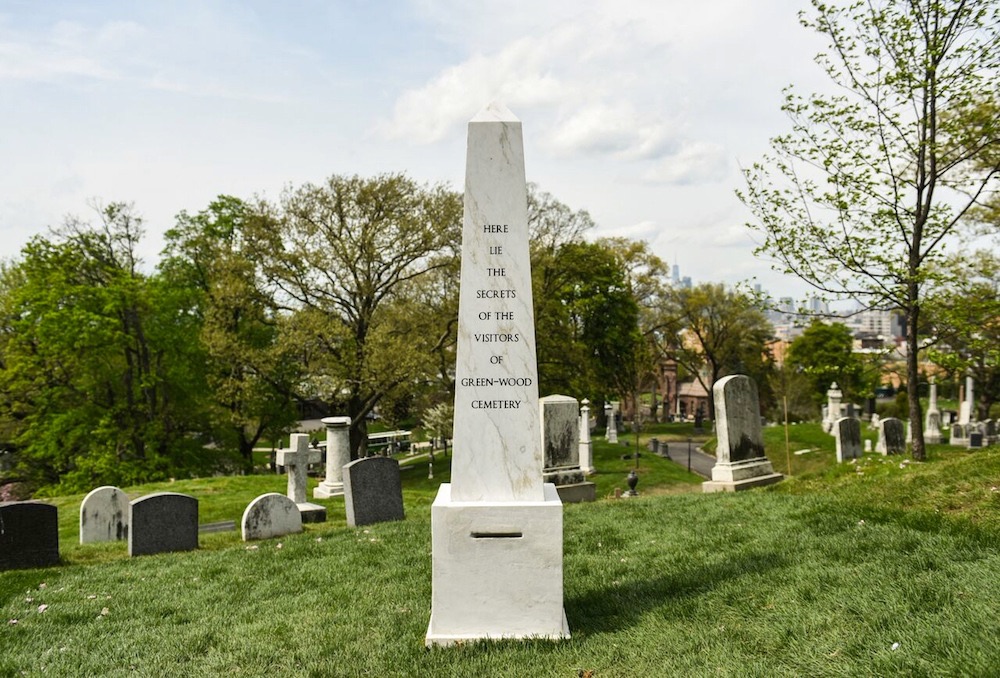
I absolutely loved learning of the existence of the Here Lie the Secrets of the Visitors of Green-Wood Cemetery art installation, where visitors write their secrets on paper and place them into the grave.

description

While this story ultimately wasn’t for me, I would encourage you to check out some of the 4 and 5 star reviews before deciding whether or not this is the book for you.

Thank you so much to NetGalley and Stripes Publishing, an imprint of Little Tiger Group, for the opportunity to read this book.

Rating: 3 out of 5.

Once Upon a Blurb

Mia’s best friend Holly died when they were thirteen. But years later, Holly still hasn’t left her.

Spending the summer in New York, Mia is hoping to escape the visions of Holly that haunt her life at home. There she meets Rav, a parapsychology student, who convinces her to take part in a study into why some people see ghosts. Soon she is caught up in the investigation of Halcyon House, which is reputed to be haunted by a poltergeist. As Mia confronts her fears, what she learns about the house and herself will change her life forever.

What Unbreakable Looks Like – Kate McLaughlin

He names them after flowers. Daisy. Ivy. Iris.

This is Poppy’s story. She’s one of the lucky ones, if you can call her that, considering all of the trauma she has experienced. He called her Poppy. Her real name is Alexa.

Am I ever going to feel like a whole person again?

If you are on the fence, for whatever reason, about how crucial having supportive people around you after trauma is, this is the book for you. I don’t know how extraordinary Lex’s experiences of trafficking are, although I suspect they’re fairly typical. What is extraordinary about Lex’s story is the support she is given from so many people once she’s finally rescued from the life.

The matter of fact way that the events at the beginning of the story are told matched Lex’s flat affect, a result of the trauma she’s experienced, the withdrawal she’s currently experiencing and the dissociation that has helped her survive. I can’t speak to the accuracy of the portrayal of the survivors of human trafficking but given how much I could relate to the trauma impacts of sexual assault that were explored through Lex’s thoughts, feelings and actions, I have to assume they were also pretty much spot on.

This might sound silly (they’re characters in a book, after all) but if you have experienced sexual assault, take what you need from Krys. Take what you need from Jamal, Zack, Elsa, Detective Willis and Dr. Lisa. Each of them, over the course of this book, will say something that will resonate with you. Something you wish someone had said to you. Something you wish you were worthy of hearing (trust me; you are). Personally, I’m trying to figure out a way to adopt Krys or vice versa; I know I need to hear what she’s got to say.

“Honey, you’re here. Sometimes that’s all the strength you need.”

If you’ve experienced sexual assault and haven’t been believed or have needed to find a way to heal without the love and support of the people who should be there for you, I’m so sorry. You deserve to be believed. You deserve to feel safe. You deserve to be loved, safely. You didn’t ask for it, whatever ‘it’ may be, to happen to you and it was not your fault.

“You did nothing wrong. I’m going to keep telling you that until you believe it.”

So, this probably reads like a PSA at this point but, even if there is only a slim chance that someone reading this needs to hear that what happened to them wasn’t their fault, I need to say it.

Prepare yourself for some ugly crying as you hear Lex’s story. If you’re like me, some tears will come as a result of what has been done to her but even more will fall because you’re just so damn proud of her resilience. I was so still as I read this book that I thought I could almost hear my heart breaking at the same time I felt it.

Did I have “Zack is too good to be true” on repeat in my head as I read? Absolutely! Do I hope there really are Zack’s in the world? Do I ever!

When books navigate as much potentially triggering content as this one does it can be difficult to figure out where the line should be drawn between enough information to show the gravity of the situation and graphic content whose only purpose seems to be the shock value. This book walked the line perfectly for me. I learned things about trafficking, particularly around how it can begin, that made my blood boil but the details that were provided, while obviously upsetting, felt necessary to the telling of Lex’s story.

I’m leaving this story (for now) with the wannabe activist inside me trying to figure out the way I can best support people like Lex. Although I’m all sorts of sad and mad after having read Lex’s story, my takeaway is hope. Hope for healing. Hope for more people to understand how to support survivors. Hope that enough people will get riled up over human trafficking that, sooner rather than later, more people don’t experience Lex’s story firsthand.

Thank you so much to NetGalley and Wednesday Books, an imprint of St. Martin’s Press, for the opportunity to read this book.

Rating: 5 out of 5.

Once Upon a Blurb

Lex was taken – trafficked – and now she’s Poppy. Kept in a hotel with other girls, her old life is a distant memory. But when the girls are rescued, she doesn’t quite know how to be Lex again. 

After she moves in with her aunt and uncle, for the first time in a long time, she knows what it is to feel truly safe. Except, she doesn’t trust it. Doesn’t trust her new home. Doesn’t trust her new friend. Doesn’t trust her new life. Instead she trusts what she shouldn’t because that’s what feels right. She doesn’t deserve good things. 

But when she is sexually assaulted by her so-called boyfriend and his friends, Lex is forced to reckon with what happened to her and that just because she is used to it, doesn’t mean it is okay. She’s thrust into the limelight and realises she has the power to help others. But first she’ll have to confront the monsters of her past with the help of her family, friends, and a new love.

Kate McLaughlin’s What Unbreakable Looks Like is a gritty, ultimately hopeful novel about human trafficking through the lens of a girl who has escaped the life and learned to trust, not only others, but in herself.

Shattering Glass – Heather Graham (editor)

I have this Seanan McGuire problem; she’s my favourite author, so of course I need to read everything she’s ever written. This is both a blessing (she’s so prolific!) and curse (she’s so prolific!).

So many of her short stories make their way into anthologies, so I wind up committing to read anthology after anthology when all I wanted to do was read some Seanan. Oftentimes I find the majority of the other stories in these anthologies disappointing. Thankfully this wasn’t the case here.

This anthology, with a theme of female empowerment, contains both fiction and non-fiction. While there were a few contributions where I felt like I could almost hear the author thinking, ‘Okay, so I know the point I want to make but how do I get from here to there?’, overall I was surprised by how much I found to love. The contributions that either resonated with me the most or that I absolutely loved are marked with 💜.

On the Power of “Nasty Women” by Valerie Plame

Am I a “nasty woman”? Damn right I am, and proud of it. That means my voice and my actions are being heard, causing change, and displacing those who are so determined to try to push us back to a time when we had no power, no place, no voice.

The New Girl by Alexandra Sokoloff 💜

“Why doesn’t somebody do something about them?”

Welcome to the Sisterhood by Ellen Kirschman 💜

“Edwin is a legacy,” he said. “Take what you need from him, leave the rest behind and move on.”

Birthright by James L’Etoile

Entitlement and privilege seemed to form a protective shield around the gathering of older white men.

Conversation with Cara Black and Hallie Ephron by Cara Black and Hallie Ephron

There was a story I wanted to tell, was passionate about – women and what they do to survive and what comes back to haunt them.

Thoughts and Prayers by Joe Clifford

That was also part of the problem – a preventable tragedy.

Lifetime Appointment by Josh Stallings

America was lost one degree at a time.

Look at the Water, How it Sparkles by Seanan McGuire 💜

“If I told you that you could make everything good for this family forever, if you’d just agree to take a little walk one day, what would you say?”

Interview with Anne Lamott by Jacqueline Winspear

I want people to know that we are all pretty much the same inside. We all know from loneliness and despair and the fear that we are frauds, and when I share my details of those very human experiences, it gives people a lift, that they are not uniquely screwed up and doomed.

Down, Girl by Rachel Howzell Hall

“You can stay with me if you’d like.”

A Little Off the Top by Angel Luis Colón

It was a strange game of chess but nobody else knew the rules.

Living Alone by Eric Beetner 💜

“I can handle myself.”

Signs by Jess Lourey 💜

Whenever things get really bad in my life – really bad – I receive a sign that lets me know I’m not alone.

The Elephant in the Room by Wendy Corsi Staub 💜

“No tengas miedo. Estará bien.”

Don’t be afraid. It’ll be okay …

A Test for Juniper Green by Danny Gardner

“I said, I’ll take care of it.”

No Body by Clea Simon

Better to have no body, then, if this is what it brought.

Suspended in Time by Kaira Rouda

We believe that we ARE the people, just like you are the people, who must stand up, all of us, and do our part. Because this is what democracy looks like.

Hysterical by Kelli Stanley

“I saw something. Something out there.”

Sneak Preview of Tiger Daughter by S.J. Rozan

She was ready to take on anyone.

Dangerous Deductions by Maria Alexander

And then something bad happens.

Conversation with Jacqueline Winspear and Rhys Bowen – Rhys Bowen and Jacqueline Winspear

It showed them they were capable of so much more than they believed.

Raven and the Cave Girl: An AKA Jayne Story by Dana Cameron

“You came here to kill me,” she said.

Nasty by Toni L.P. Kelner

Nobody made me take on the role of official black sheep in the family, but sometimes I wonder if things might have been different if I’d had a different name.

Mother Church by Joshua Corin 💜

“The spirit of a thing never wavers.”

My Favourite Nasty Woman by Charlaine Harris

not afraid to speak her mind and take action … and be prepared for the consequences. These are character traits I find admirable.

Women on Fire by Jacqueline Winspear

If the outcome affects us, then we’ve got skin in the game.

The War Never Ends by Kate Thornton 💜

But nightmares you have at night are a lot different from the ones you have during the day.

The Lesson by Allison A. Davis

“The stuff they took, you can’t replace, you can’t fix.”

Harpy by Catriona McPherson

Maybe someone sent me. To play you out.”

What Would Grace Hopper Do? Making Art in Interesting Times by Robin C. Stuart

Creation is where we find our solace and our power.

Wild Womb by Sandi Ault 💜

“Never mind,” she said. “I’m a dead woman anyway.”

An Insurrection by Bette Golden Lamb

“We were never free. Never free to choose. Our destiny was to reproduce. That was The Directive.”

Daddy’s Girls by Libby Fischer Hellmann

She expected to be believed.

Interview with Senator Barbara Boxer by Kelli Stanley

In short, I believe there is only one reason to run for public office: to make life better for people.

Learning to Fly by Alison Gaylin

There are some moments in life that are like doors cracking open. You stand there, peering at the sliver of light on the other side, and you make a choice. You open the door wide and risk burning your eyes. Or you close it gently and live in the calm, cool dark.

The Cycle by Travis Richardson

This blue synthetic case was the most consistent thing in her world.

The Gift by Heather Graham

But the really important things they gave us were free – those were the gifts that really mattered.

Love. Acceptance. Empathy. Respect. A strong work ethic. Patriotism.

Thank you so much to NetGalley and Nasty Woman Press for the opportunity to read this anthology.

Rating: 4 out of 5.

Once Upon a Blurb

Shattering Glass is the first in a series of remarkable anthologies published by Nasty Woman Press, a unique non-profit publisher founded to help fund other organisations threatened by the rise of autocracy and the ongoing war against civil and human rights in the United States. A scintillating mixture of top-flight fiction from bestselling authors in multiple genres, fascinating articles, and thought-provoking essays, conversations and interviews, Shattering Glass takes as its theme the empowerment of women, with all profits from the book donated to Planned Parenthood.

Nasty Woman Press is a 501(c)(4) non-profit publisher pledged to fight fascism, racism, misogyny, anti-Semitism, homophobia, Islamophobia, transphobia, and bigotry while promoting human rights and civil rights in the United States and around the globe. 

As writers, readers, editors, artists, librarians, designers, publishing professionals and creative, principled human beings, we cherish the planet and our fragile environment, support science and education, and value health and social services. We believe in taking care of each other. We believe in a better, kinder world.

Contributors to Shattering Glass include legendary political figures and award-winning, critically acclaimed and bestselling authors. 

Someone to Kiss My Scars – Brooke Skipstone

Spoilers Ahead!

Before I tell you anything else, I want you to know there are a significant amount of 5 star reviews for this book and would encourage you to check some of those out before deciding whether this is the book for you.

“There are a lot of things I wish I didn’t remember.”

This could well be the most triggering book I have ever read. I knew before I began that sexual assault would be addressed but I read a lot of books that include content of that nature so I thought I’d be okay. I never expected there would be such consistently graphic content. I don’t think for a moment that the author intended any of the scenes to be gratuitous but it felt at times like I was reading a Virginia Andrews novel.

If there’s been more light included in the story to help counter the overwhelming darkness I might have been okay. Instead I felt more and more weighed down by story after story of trauma. Your response may be different to mine and you may be okay after reading this, but if you’re a survivor of sexual assault, please be safe while reading.

Why was his brain assaulted by other people’s stories when he could remember nothing of his own?

Hunter can take bad memories away from other people but each memory he deletes from them adds to his own burden. Given how their traumas are both related to sexual assault and that they’re best friends, I had trouble believing Jazz could so easily give her memories to Hunter.

While I definitely understand the desire to erase traumatic memories, it still felt selfish of Jazz to ease her burden by heaping it instead on someone she cared about. Hunter doesn’t feel the way I do about this. I didn’t want Jazz silenced; I wanted her to be able to share her story with someone. My only problem with this was the choice to delete memories you don’t want by adding to the trauma of another person.

I balked and very nearly threw my Kindle across the room when a victim of child sexual abuse described their perpetrator as seducing them.

I wanted to know more about Dr Ru and his ‘treatments’, particularly how many other potential Hunters there are wandering around and if the side effects of the treatment differ between patients.

I was interested in spending more time exploring the changes that took place in people when their traumatic memories were removed and wanted to know the long term effects Hunter would experience by overloading his mind with other peoples’ trauma.

Thank you so much to NetGalley and DartFrog Books for the opportunity to read this book.

Rating: 3 out of 5.

Once Upon a Blurb

Hunter needs to remember. Jazz needs to forget. They need each other to heal in this teen thriller of survivor love.

Hunter’s past is a mystery to him, erased by a doctor at the direction of his father. But memories of the secret trauma begin to surface when Hunter sees other people’s memories – visions invading his mind with stories of abuse, teen self-mutilation, rape, and forbidden sex.

His best friend Jazz has dark and disturbing memories of her own that she hides behind her sass and wit. Hunter discovers he can rescue the victims, even though he risks adding their suffering to his own.

Hunter and Jazz kiss each other’s scars and form a bond of empathy no two teens should ever need.