The Packing House – G. Donald Cribbs

Spoilers Ahead! (marked in purple)
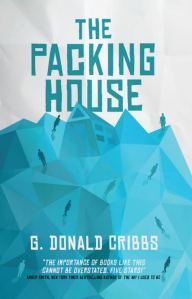
I can’t ignore these dreams. They come from somewhere. Maybe they’re trying to tell me something, but what exactly? 

Joel’s nightmares have been getting worse recently. It doesn’t help that his mother is emotionally unavailable and his father has been MIA for over half of his life. When one of Joel’s nightmares is recorded and posted online, it makes it even harder for him to cope.

Childhood sexual assault is always going to be difficult to read about. While there are more books being published where characters have experienced this, not enough are written from the point of view of male survivors. That’s what drew me to this book.

It’s hard to be objective when sexual assault and its impacts are addressed so I’ll focus here on what did and didn’t work for me personally as I read this book.

One of the strengths of this book was that it dealt with trauma that the main character didn’t always have clear memories of. Trauma encodes itself in the brain differently than non-traumatic memories and sometimes this means the memories aren’t accessible until the survivor is safe. Joel’s memories begin to resurface in the themes of his nightmares and in flashbacks. His understanding of what he’s experiencing doesn’t come all at once.

Some aspects of the story didn’t ring true to me. Once Joel talked about what happened to him, his nightmares seemed to disappear. While I hope this is the case for some survivors, this didn’t seem very realistic.

I couldn’t imagine the police, when they showed up to interview Joel at his home, finding it necessary to use their lights and siren to announce themselves. Surely a simple knock on the door would have done the trick. 

I’d also hate to think of a survivor being confronted by the police about such a sensitive topic in front of random family members or having to go with them straight away to the station in a police car to give a statement.

And why do the police say the perpetrator is “charged with” when they haven’t actually charged them yet? They hadn’t even interviewed the victim or conducted an investigation into the allegations.

With such an extended lead up to Joel remembering what happened to him, the events afterwards felt like a whirlwind. I was left with some pretty big question marks and some of those are because the book finishes so abruptly. I don’t know if a sequel is planned or not but here’s the short list of what I need to know…

Was Joel’s perpetrator responsible for what happened to the other boy we learn about from Joel’s childhood? Is there a way around the statute of limitations problem in Joel’s case as he’s only just remembered what happened to him? Does Joel get anything approximating justice from the legal system? Did the perpetrator also offend against Joel’s brother? What is Joel’s brother’s response to what happened to Joel? What possessed Joel to immediately set up candles when he learned what they meant for Amber?

There’s no indication in the blurb that religion is discussed in relation to the events in this book. Given that some readers will want to read it and others will avoid it for that reason alone, heads up: Christianity, including Bible quotes, are a part of this book.

Books in a book: Reading is one of Joel’s escapes. Throughout the book, he reads Fahrenheit 451The OutsidersThe Chocolate War and Catcher in the Rye

Thank you to NetGalley and Cherish Editions, an imprint of Trigger Publishing, for the opportunity to read this book.

Rating: 3 out of 5.

Once Upon a Blurb

When 16-year-old Joel Scrivener has a raging nightmare in study hall and someone records it on their phone, he awakens to a living nightmare where everyone knows his secret, one that he’s suppressed for ten years. Reeling as the whole school finds out the truth, Joel takes to the woods, leaving the bullies and his broken home behind.

However, life as a runaway isn’t easy, as Joel’s hallucinations and nightmares follow him into the wilderness. To stop them once and for all, he pieces clues together with flashes of the images that play endlessly inside his head – will he figure out the identity of the person who caused his nightmare before it’s too late?

Are You Really OK? – Stacey Dooley

Are you really OK? I don’t think there’d be too many people who could answer that question with a resounding yes after living through what the 2020’s have given us so far. Now, more than ever, we need to do whatever we can to look after our mental health. 

An international team of researchers published a report in October 2021 showing that globally there were estimated to be an extra 76 million cases of anxiety in 2020 than would have been expected if the pandemic hadn’t happened, and 53 million more cases of major depressive disorder. 

In this book, Stacey talks about depression, eating disorders, postnatal depression, postnatal psychosis, obsessive compulsive disorder, gambling addiction and psychosis. She also speaks to people who have experienced domestic abuse, as well as those in the LGBTQ+ community who have been discriminated against or abused because of who they are. Finally, Stacey explores how racism and poverty impact on mental health.

While there are statistics (and some confronting ones at that) and information about potential advances in the future for treating specific mental illnesses, where this book shines is the human element. Stacey interviewed young people living with diagnosed mental illnesses and gave them the opportunity to tell their stories. While she never claims to be an expert herself, Stacey spoke with professionals who treat mental illnesses, some of whom have lived experience. 

The insights you are able to get when people feel safe enough to speak candidly about their lives are always going to resonate more than facts and statistics that remove individual people from the narrative. Although I know people with many of the diagnoses covered in this book and have lived experience of others, I learned a lot. I was invested in the stories of the people who shared their story and expect to continue to wonder how they’re doing, particularly Kyle, whose experience with depression was just heart wrenching. 

None of us get through life unscathed. Sean, a psychiatrist Stacey spoke to, is helping to destigmatise mental illness. No one is immune to mental health issues, Sean says. 

‘But if enough wrong things happen that exceed someone’s ability to cope, no matter how privileged they are, they will get ill’ 

While that knowledge is somewhat terrifying, it’s also comforting because it removes blame from the person with the illness.

But is there hope? Absolutely. 

‘For everyone, no matter how awful the situation you are in, no matter how bad the mental illness or the mental disorder is, it can improve.’ 

Because Stacey’s approach is so down to earth and she’s so relatable, her documentaries and both of her books have a warmth to them, almost as though you’re seeing friends catching up and talking about some of their most difficult experiences. I’ll definitely be rereading this book.

Thank you so much to NetGalley, BBC Books and Penguin Random House UK, Ebury Publishing for the opportunity to read this book.

Rating: 5 out of 5.

Once Upon a Blurb

We are not OK… 

I’ve been fortunate enough to meet many remarkable people over the last decade of making documentaries – sometimes in incredibly hostile environments, where they’ve been really up against it – and I’ve seen the devastating effect that poverty, trauma, violence, abuse, stigma, stress, prejudice and discrimination can have on people’s mental health. It has always been the common thread.

Every week, 1 in 10 young people in the UK experiences symptoms of a common mental health problem, such as anxiety or depression, and 1 in 5 have considered taking their own life at some point. In this book, Stacey Dooley opens up the conversation about mental health in young people, to challenge the stigma and stereotypes around it.

Working in collaboration with mental health experts and charities, Stacey talks to young people across the UK directly affected by mental health issues, and helps tell their stories responsibly, in order to shine a light on life on the mental health frontline and give a voice to young people throughout the UK who are living with mental health conditions across the spectrum. 

As well as hearing about their experiences directly, Stacey speaks to medical experts, counsellors, campaigners and health practitioners who can give detailed insights into the conditions profiled and explore the environmental factors that play a part – including poverty, addiction, identity, pressures of social media and the impact of Covid-19.

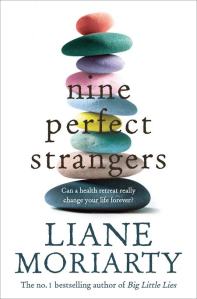
Nine Perfect Strangers – Liane Moriarty

‘In ten days, you will not be the person you are now.’ 

Ten days at a health and wellness retreat. Five of those days spent in silence. Bliss! But you can’t read or write during them. Hold on. What is this place?!

Masha, the director of Tranquillum House, is keen to implement her new protocol. 

Nine people were depending on her. Nine perfect strangers who would soon become like family. 

Stranger 1: Frances, formerly a bestselling romance novelist, has back pain, a bad cold and a paper cut. We hear about her paper cut a lot. 

I’m only temporarily tragic 

Stranger 2: Jessica is married to Ben and loves plastic surgery, maybe more than she loves Ben. 

She couldn’t shake the feeling that if she didn’t record this moment on her phone then it wasn’t really happening, it didn’t count, it wasn’t real life. 

Stranger 3: Ben is married to Jessica and loves his car, maybe more than he loves Jessica. 

He avoided looking at her. He was trying really hard to get over that. 

Stranger 4: Heather, a midwife, is at Tranquillum House with her husband, Napoleon, and daughter, Zoe. 

The rage hit her with the power and momentum of a contraction during active labour. There was no escaping it. 

Stranger 5: Napoleon, a schoolteacher in a disadvantaged area, loves to talk. He’s at Tranquillum House with his wife and daughter. 

But he wasn’t broken. 

Stranger 6: Zoe, who just broke up with her boyfriend, is at Tranquillum House with her parents. 

She tried so hard to be everything for them while they tried so hard to pretend that she wasn’t their only reason for living. 

Stranger 7: Tony runs a sports marketing consultancy and has brilliant tattoos. 😃😃 

Tony would never forget the shocking clarity of the moment that followed. 

Stranger 8: Carmel has four children and is at Tranquillum House to lose weight. 

‘I love everything about this place’ 

Stranger 9: Lars is a family lawyer. 

‘I’m a health-retreat junkie. I indulge and atone, indulge and atone. It works for me.’ 

With a gorgeous location and mandatory smoothies six times a day, our health retreat participants are hopeful that they will go home changed. For the better. All of them have their issues but I suspected from early on that the ethereal Masha might have more than her share.

Reading this book felt like I was bingeing an entire season of a soap opera at once. I don’t mean that as criticism; soap operas are fun to binge. There’s so much drama. The plot lines are delightfully over the top while just barely staying within the realms of possibility. 

I loved the drama of this book and I loved the personalities all bouncing off one another (after they were allowed to speak, that is). Although I laughed at the absurdity of some of the things that happened, nothing happened that I couldn’t imagine actually happening off the page. The entire read felt like a guilty pleasure.

New favourite word: toska. 

There was no adequate English word to describe the kind of anguished longing she felt for something she could not have and did not even want. 

Most of Liane’s books already live in my Kindle’s black hole of good intentions and I loved bingeing Big Little Lies. I’ve been planning to binge this series, too, but wanted to read the book first this time. Now that I’ve read it, I’m even more intrigued to watch Nicole Kidman as Masha and see how it all plays out outside of my imagination. 

This was not how it was supposed to go. 

Rating: 4 out of 5.

Once Upon a Blurb

Could ten days at a health resort really change you forever? Nine perfect strangers are about to find out…

Nine people gather at a remote health resort. Some are here to lose weight, some are here to get a reboot on life, some are here for reasons they can’t even admit to themselves. Amidst all of the luxury and pampering, the mindfulness and meditation, they know these ten days might involve some real work. But none of them could imagine just how challenging the next ten days are going to be.

Frances Welty, the formerly best-selling romantic novelist, arrives at Tranquillum House nursing a bad back, a broken heart, and an exquisitely painful paper cut. She’s immediately intrigued by her fellow guests. Most of them don’t look to be in need of a health resort at all. But the person that intrigues her most is the strange and charismatic owner/director of Tranquillum House. Could this person really have the answers Frances didn’t even know she was seeking? Should Frances put aside her doubts and immerse herself in everything Tranquillum House has to offer – or should she run while she still can?

It’s not long before every guest at Tranquillum House is asking exactly the same question.

The Reckoning: How #MeToo is Changing Australia – Jess Hill

Quarterly Essay #84

Jess Hill’s See What You Made Me Do is one of the best books I’ve ever read about domestic abuse. I was keen to see how she’d tackle #MeToo and have been impatiently waiting for my library’s copies to arrive so I could dive in. 

This essay traces #MeToo from its origins (before it became a hashtag), with a particular focus on how it has played out across Australia’s cultural landscape since 2017. There are examples from the media, education, politics and the legal system, all of which I’d followed in real time but which felt more overwhelming when they were explored one after the other. I don’t know that Australia’s celebrated mateship has ever felt so toxic to me.

There have been battles undertaken in courts, the media and public opinion. We’ve learned just how brutal Australia’s defamation laws are. There are powerful people abusing their power and systems supporting them in their endeavours.

Don’t get me wrong; there have been positives, like #LetHerSpeak. Conversations have taken place that were once considered taboo and there are more people visibly working towards implementing changes to legislation, processes and policies. There are survivors turned advocates who are transforming the way we think about consent and grooming, and their voices have led to others finding their own. Good things are happening.

So, why do I still feel so angry having read this essay? 

Maybe it’s about reporting a sexual assault to the police in 2017 and getting my hopes up about the positive impact #MeToo would have on the way my report was treated. Then being told that there was insufficient evidence to pursue criminal charges and subsequently learning that the investigation consisted solely of the detective phoning my psychologist to ask if I had a mental illness that would cause me to fabricate the sexual assault.

Maybe it’s about something a detective said to me a few months ago when they were trying their darnedest to dissuade me from formally reporting a series of sexual assaults (different detective, different perpetrator). No one ever gets a good outcome, they told me. Even if there is a conviction, and that’s a big if, it’s never going to be enough and what you’d have to go through to get it wouldn’t be worth it.

They talked about the things I would have seen in media (like some of the cases I read about here) and noted that they are the minority, and that I shouldn’t align my expectations with those outcomes. Even when someone reports a rape the same day and there’s physical evidence and CCTV footage, it’s almost impossible to get a conviction.They said they were telling me all of this to help me.

This is the same man who helpfully told me that my having a mental illness would be used against me because it would speak to both my credibility and character. ‘You mean the PTSD I have as a result of the sexual assaults I’d be reporting?’ The very same. Huh.

As I read this essay I wondered if the detective was right, that there’s no point in reporting. But you know what? It’s attitudes like this that contribute to silence, the antithesis of #MeToo. 

[And besides, this is the same police force whose representatives roll their eyes and pull faces at women who are reporting AVO breaches, who say that behaviour that clearly constitute breaches (written in black and white on the AVO) are in fact not breaches at all. Who write down what you say and then neglect to put it in their system so there’s no record you ever made a report. Who you have to insist write it down in the first place and give you an event number because, even though they think you’re overreacting, they don’t understand what this person’s capable of or how they may escalate.]

I’m mad because I read something like this essay and I get hopeful, but then think about all of the peoples’ experiences it doesn’t encapsulate because only some voices are heard. I want change for all of us, not just the lucky few who, let’s face it, probably shouldn’t be called lucky at all. Because they experienced what they did in the first place. Because even if they did get an outcome that looks like a win, it came at a great cost. Because being an advocate continues to cost.

In lesser hands, this essay could have been an absolute mess, but it’s not. At all. It is well written and clearly involved extensive research but, to be honest, I’d expect nothing less from Jess’ work.

It was a compulsive read. I gained even more respect and admiration for the survivors who tell their story publicly. The powers that be, political and otherwise, lost what little faith I still had in them, not that there was much to lose. I want everyone to read this essay and I want to read it again to pick up on anything I missed when I rushed through it the first time.

So, where do I currently stand on #MeToo? Despite my own experiences, I’m stubbornly hopeful. The systems still fail survivors but more and more of us are demanding change, and we’re done being silenced.

Rating: 5 out of 5.

Once Upon a Blurb

In 2021, Australia saw rage and revelation, as #MeToo powered an insurgency against sexism and sexual violence. From once isolated survivors to political staffers, women everywhere were refusing to keep men’s secrets. 

In this electrifying essay, Jess Hill traces the conditions that gave birth to #MeToo and tells the stories of women who – often at great personal cost – found themselves at the centre of this movement. Hill exposes the networks of backlash against them – in government, media, schools, and in our national psyche. This is a powerful essay about shame, secrecy and, most of all, a revolutionary movement for accountability.

The Sisters Grimm #2: Night of Demons and Saints – Menna van Praag

Spoilers Ahead! (marked in purple)

You think you’re ordinary. You never suspect that you’re stronger than you seem, braver than you feel or greater than you imagine. 

It’s been three years since we last spent time with the Sisters Grimm. We catch up with them in the lead up to their 21st birthday. 

‘Tonight we’re stronger than we’ll ever be again.’ 

Goldie’s adorable younger brother, Teddy, isn’t quite as adorable anymore; he’s found some attitude since we last saw him. Goldie is still reeling from loss. Liyana is increasingly worried about her aunt, Nyasha. She’s also missing her girlfriend, Kumiko, who is away studying. Scarlet suspects Eli of keeping secrets. I can’t provide an update about Bea because that would involve spoilers.

We visit Everwhere, which remains magical and beautiful, but is not without its shadows.

This is a story of love, hope and hopelessness, of longing and loneliness, of losing others and yourself.

Goldie’s stories, co-written by Vicky van Praag, are scattered throughout the book, as they were in The Sisters Grimm. My favourite was The Good Girl

‘Not to worry, your voice has been long drowned out by the voices of others. But it’s never too late to listen to your own.’ 

I may have missed something but I found it confusing that Leo could “barely see five miles in any direction”, yet he can’t see Goldie when she’s right in front of him.

There are fewer Alastair Meikle’s illustrations in this book but they were still wonderful. 

I would definitely recommend reading this series in order. If you attempted this book without having already read The Sisters Grimm, you’d be in for some major spoilers and confusion. 

‘There’s a storm coming, child, and you’re the only one who can contain it.’ 

Thank you so much to NetGalley and Bantam Press, an imprint of Transworld Publishers, Penguin Random House UK, for the opportunity to read this book.

Rating: 4 out of 5.

Once Upon a Blurb

And then there were three …

Three years ago, the sisters confronted their demon father in that strange other-world called Everwhere. It was a battle that ended in a devastating loss, and the scars they carry seem to have slowly pushed the sisters apart

One sister, still raw with grief, is now a near recluse but determined to use her powers to resurrect what she has lost.

Another has made the journey to learn more of her family, her culture and her roots.

And another seems to have turned her back on what she is and opted to lead a more normal life.

But now the sisters are about to be brought together once more. Because when the clock strikes midnight, when October ticks into November, when autumn wilts into winter, when All Hallows’ Eve becomes All Saints’ Day, the sisters Grimm will turn twenty-one and reach the zenith of their powers.

And on this night, at this time, in this place called Everwhere, anything is possible …

My Body Keeps Your Secrets – Lucia Osborne-Crowley

It’s been a week since I finished reading this book and I’m still no closer to being able to figure out what I want to say about it. Writing about trauma and shame and the way they show up in the body, the author details her own experiences as well as telling the stories of some of the people she interviewed for this book.

A lot of the content is very difficult to read and at times it felt like I was being intrusive, as though I was sneaking a peek into the author’s journal.

I feel like I’m phoning it in here but rather than waffle on when I really don’t know what to say, I’m going to share some of the quotes I highlighted.

On shame: 

Shame is the emotion that compels us to keep secrets. It comes from the outside, but it lives within. 

What I learned from the interviews I did for this book is that to know you are one thing and be told you are another is a singular form of shame transmission. It is the same thing I keep coming back to, again and again, in these interviews: it is the horror of not knowing what is real and what isn’t, of being taught not to trust yourself, of never knowing who to believe, of knowing that your own reality won’t be trusted if you dare to speak it aloud. 

The false self, Dr Joseph Burgo tells us in Shame, is about escape. When shame is transmitted to us, we become convinced that our authentic self is somehow not good enough, somehow worthy of whatever shameless acts we endured. So then our instinct is to escape that self. To hide from ourselves, to lie to ourselves, to erase the person we were when the first bad thing happened. 

On self destructive behaviours: 

The thing with habits meant to punish is that each time we become accustomed to them, they become normal and no longer bring us enough discomfort to fit the brief. 

On declining conviction rates: 

Some would say that as rape is being spotlit for the rich and famous, it’s being slowly decriminalised for the rest of us. 

On chronic pain: 

So here’s the kicker: ignoring women’s pain not only inhibits the process of healing, it actually makes it more likely that the pain will become permanent. 

I keep coming back to one statistic: that 70 per cent of all sufferers of chronic pain are women. That chronic pain is a disease born when acute pain is ignored. Could our illness be, in part, a product of our society’s belief that we ought to care for others instead of ourselves? 

Rating: 4 out of 5.

Once Upon a Blurb

It occurred to me that the thing that made me the sickest, the thing that made me suffer most, was the fact that I felt so compelled to hide what had been done to me. Because I believed it was all my fault.

Lucia Osborne-Crowley didn’t tell a soul when she was raped aged fifteen. Then, eighteen months after she was attacked, her body began to turn on her – and what followed were sudden bouts of searing, unbearable pain that saw her in and out of hospital for the next ten years.

At twenty-five, Lucia for the first time told the truth about her rape. This disclosure triggered an endless series of appointments with doctors, trauma specialists and therapists. Meanwhile, Lucia threw herself into researching the shadowy intricacies of abuse, trauma and shame.

In My Body Keeps Your Secrets, Lucia shares the voices of women and trans and non-binary people around the world, as well as her own deeply moving testimony. She writes of vulnerability, acceptance and the reclaiming of our selves, all in defiance of a world where atrocities are committed and survivors are repeatedly told to carry the weight of that shame.

Widely researched and boldly argued, this book reveals the secrets our bodies bury deep within them, the way trauma can rewrite our biology, and how our complicated relationships with sex affect our connection with others. Crafted in a daring and immersive literary form, My Body Keeps Your Secrets is a necessary, elegant and empathetic work that further establishes Lucia’s credentials as a key intersectional feminist thinker for a new generation.

The Coffin Confessor – Bill Edgar

Everyone has their secrets. Most people are buried with them. 

I ordered this book from the library thinking it would be a bit of a laugh, really. The thought of someone rocking up to funerals and interrupting them with messages from the person inside the coffin struck me as kind of sacrilegious. It’s also a little bit awesome and potentially terrifying. A message from beyond the grave has the power to both comfort loved ones and to publicly call out people who deserve it. 

The service I would provide to the dying was granting them one last wish, a way for the powerless to leave the world with their conscience clear and the slate wiped clean. A confession before the coffin. The Coffin Confessor. 

The reasons the dying employed the Coffin Confessor were more varied than I’d expected. There were some that felt like cop outs, when I thought someone would have benefited greatly from saying what they needed to say to the other person face to face. Others were payback, pure and simple. But then there were the really touching and absolutely heartbreaking ones. 

A last request – the thing someone can’t let go of when they’re out of time – is as unique as a fingerprint. Sometimes people seem genuinely surprised by what is most important to them, once it comes down to the wire. I know they surprise me. 

The chapters focused on the individual stories of some of the people who have paid Bill to crash their funerals made me think a lot about regrets and what I need to do to make sure I have as few as possible when my expiry date arrives. I thought about the things I don’t want to leave unsaid and how I want to be remembered. 

Maybe this was something people needed – a way to reclaim some agency over how our deaths are marked, the way we’re remembered. 

What struck me most about Bill Edgar is his resilience. He was abused both at home and school, places that should have be safe, and then experienced homelessness, all before he was old enough to vote. He’s gone on to marry, have children, earn a living and is functional, a big ask for anyone, let alone someone who’s experienced the level of trauma he has.

The writing style had a real Aussie bloke feel to it and I liked that about Bill’s story. He’s not pretentious and neither is the way he tells his story. He’s a down to earth guy who’s survived almost unimaginable trauma and gone on to make a name for himself doing a job I’d never even heard of prior to reading this book. Not only that but Bill has also become an advocate for others who were abused at the elite school he attended.

I’d call Bill an inspiration but I suspect he wouldn’t like that word very much and I don’t want to get decked by him. 😃 So instead I’ll just say that this book surprised me in the best possible way. I can’t imagine our paths ever crossing but if they did I’d be honoured to have the opportunity to sit down with Bill and have a chat with him. 

Death comes for us all, but not all of us remember to make the most of the time we have. Out of everything I’ve learned along the way, that’s the only hard and fast rule. 

Rating: 4 out of 5.

Once Upon a Blurb

‘That’s when I stood up, told the best mate to sit down, shut up or f**k off. That the man in the coffin had a few things to say.’

Imagine you are dying with a secret. Something you’ve never had the courage to tell your friends and family. Or a last wish – a task you need carried out before you can rest in peace. Now imagine there’s a man who can take care of all that, who has no respect for the living, who will do anything for the dead.

Bill Edgar is the Coffin Confessor – a one-of-a-kind professional, a man on a mission to make good on these last requests on behalf of his soon-to-be-deceased clients. And this is the extraordinary story of how he became that man.

Bill has been many things in this life: son of one of Australia’s most notorious gangsters, homeless street-kid, maximum-security prisoner, hard man, family man, car thief, professional punching bag, philosopher, inventor, private investigator, victim of horrific childhood sexual abuse and an activist fighting to bring down the institutions that let it happen. A survivor.

As a little boy, he learned the hard way that society is full of people who fall through the cracks – who die without their stories being told. Now his life’s work is to make sure his clients’ voices are heard, and their last wishes delivered: the small-town grandfather who needs his tastefully decorated sex dungeon destroyed before the kids find it. The woman who endured an abusive marriage for decades before finding freedom. The outlaw biker who is afraid of nothing … except telling the world he is in love with another man. The dad who desperately needs to track down his estranged daughter so he can find a way to say he’s sorry, with one final gift.

Confronting and confounding, heartwarming and heartbreaking, The Coffin Confessor is a compelling story of survival and redemption, of a life lived on the fringes of society, on both sides of the law – and what that can teach you about living your best life … and death.

How I Saved the World in a Week – Polly Ho-Yen

Illustrations – George Ermos

“Just because you’re paranoid doesn’t mean they aren’t after you.” I couldn’t get this Joseph Heller quote out of my head when I was reading this book. Billy’s mother, Sylvia, teaches him survival skills every chance she gets. Never mind that a lot of the time this preparation takes place during school hours. 

‘You have to be ready.’

‘Ready for what?’ 

While he loves spending time with his mother and learning new skills, like how to make fire without a match, Billy doesn’t love needing to change schools regularly. 

I mean, what’s the point in trying to get to know someone when you might disappear at any moment?

He also misses his father, who he hasn’t seen for years.

When people start turning grey, Billy starts to think that this is what his mother has been preparing him for. Only his father won’t believe him, believing instead that Sylvia’s preoccupation with teaching her son survival skills is merely a symptom of her mental illness. 

I wouldn’t, couldn’t, believe that everything Sylvia had taught me was all for nothing. 

Thankfully, Billy is about to meet Anwar, who is enthusiastic and loves conducting experiments, and Angharad, who’s loyal but isn’t always that great at keeping her promises (you’ll forgive her for breaking the ones she does, though). His new friends believe Billy about the Greys because they’re kids, so thankfully they haven’t yet learned to disbelieve the unbelievable. 

I think: this is what friends are to each other – someone who knows, without you having to explain, that right at that moment all you need is their help. 

Although it’s not mentioned in the author’s note at the end of the book, I got the feeling this book was written, at least in part, during the pandemic. Especially when I read sentences like this: 

It’s like we’re cut off from the world even though we’re surrounded by people. 

The resolution was a bit too easy and neat for my liking but, taking into consideration the fact that I’m decades older than the target audience, my thoughts on this aren’t especially relevant. If I’d read this book when I was a kid I would have needed everything to work out the way it did.

Although there’s plenty of action, at its heart, this book is about hope, resilience and having trusted people you can rely on. 

‘This thing happening, it shows us the things that are really important. The things that really matter. Everything else … everything else just drops away.’

Rating: 4 out of 5.

Once Upon a Blurb

Rule number one: Always be prepared …

Billy’s mum isn’t like other mums. All she wants is to teach him the Rules of Survival – how to make fire, build shelter and find food. She likes to test Billy on the rules until one day she goes too far, and Billy is sent to live with a dad he barely knows.

Then the world changes forever as people begin to be infected with a mysterious virus that turns their skin grey. As chaos breaks out, Billy has to flee the city. Suddenly he realises that this is what his mum was preparing him for – not just to save his family, but to save the whole world.

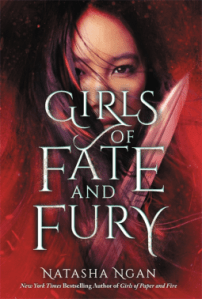
Girls of Paper and Fire #3: Girls of Fate and Fury – Natasha Ngan

“The small bird flies on the wings of the golden-eyed girl” 

Nine Paper Girls. Each claimed their very own piece of my heart in Girls of Paper and Fire. While I loved them all, I identified mostly with three: Lei, the Moonchosen, trained assassin Wren and Blue, winner of the girl with the most attitude award. Then there was sweetheart Lill, not one of the nine but so darn adorable that I couldn’t help but want to protect her from the big, bad world.

My favourites all returned in this final book of the trilogy, a book I’d both anticipated and dreaded. I needed to know what would happen to each of my girls and I couldn’t wait to spend more time with them, loving them and learning from them, but I wasn’t ready to say good bye to them just yet. Although I’m sad to be leaving them behind (for now; I know they’ll be waiting for me when I return for my reread), I’m also grateful because my heart is so full having known them. 

These girls are everything I want in characters, and in myself, if I’m going to be honest. They’ve been through absolute hell but, despite everything, they keep showing up. Although literal survival would be a triumph at this point, they’re always reaching for more. They want justice, they want peace and they’re going to fight, in an actual war, to achieve it. Their resilience, their courage, their ability to still love and be loved, is extraordinary. 

When the world denies you choices, you make your own. 

That’s not to say that they don’t feel the effects of what they’ve survived so far. There are the nightmares, the flashbacks, the dissociation, the times when the past tries its darnedest to swallow them whole. PTSD, although it’s not officially diagnosed in Ikhara (none of our girls really have the time to make an appointment with a psychologist anyway), is evident in the various trauma impacts the reader is privy to. Coping mechanisms, healthy and otherwise, are as varied as the individual characters, and I adore that about this series. There is no one correct way to respond when you’ve experienced the kind of trauma these girls have; all of their responses are normal. 

“Fire in. Fear out.” 

While recovery from sexual assault remains something our girls are all dealing with, another character is having to figure out her life post-disability. This character is a total badass and one of my new favourites. They’re able to acknowledge their disability and the impact it has on their life without it defining them and I loved them even more for that. The authenticity and sensitivity evident in the writing, already proven by the way the author has handled the experience of and survival after sexual assault, are extended to the experience of disability.

There will be reviews that will talk about the story and others that will talk about its themes. I’m here to tell you that I love these girls even more now than I did before I began this book. I got to return to the Hidden Palace to confront the past and spent precious time with characters I didn’t think I’d cross paths with again. 

This isn’t only Lei’s story. We’re also given chapters written from Wren’s perspective in this book and I couldn’t help noticing the differences between the two. Lei, who is more open and leads with her heart, has chapters written in the first person. Wren, the trained assassin who guards her heart more, has chapters written in the third person, almost as if she needed to keep the reader at arm’s length because she’s not certain they’re worthy of her trust.

This is a story for all Paper Girls both on and off the page. Like the books before it, I felt seen in its pages. I was reminded that you can survive your past. You can continue to fight even when your mind and body are telling your spirit you can’t. It’s okay to accept help from the supportive people around you. You are not the labels others place on you. You can look forward to a future where your past, while it can never be undone, doesn’t have to define you. 

“Give them hell, girls. For all of us.” 

Thank you so much to NetGalley and Hodder & Stoughton for the opportunity to read this book.

Rating: 5 out of 5.

Once Upon a Blurb

‘Don’t struggle, Lei-zhi. It’s time to take you back to the Hidden Palace. You’re going home.’

The jaw-dropping conclusion to Girls of Storm and Shadow left the fates of Lei and Wren hanging in the balance. There’s one thing Lei knows – she can never return to the Hidden Palace. The trauma and tragedy she suffered behind those opulent walls will plague her forever. She cannot be trapped there with the sadistic king again, especially without Wren.

The last time Lei saw the girl she loved, Wren was fighting an army of soldiers in a furious battle to the death.

With the two girls torn apart and each in great peril, will they reunite at last, or have their destinies diverged forever?

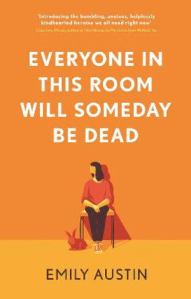
Everyone in This Room Will Someday Be Dead – Emily Austin

Twenty-seven year old Gilda is the new receptionist at St. Rigobert’s Catholic Church. She’s also sort of, not really dating a “self-actualized reality strategist”. That’s life coach speak for being a life coach, if you’re Giuseppe. Between being an “undercover atheist” working at a church and being a gay woman with a girlfriend who’s sort of, not really dating a man, Gilda’s life is kind of complicated these days.

Gilda is on a first name basis with the staff at the emergency department and she’s currently cultivating a dirty dishes sculpture. Her parents could have an entire book dedicated to their own foibles and her younger brother is an alcoholic. Add all of that up and you realise that Gilda could have really used that therapy on the flyer that led her to St. Rigobert’s in the first place. Oh, and the lovely old lady whose job Gilda stumbled into may have been murdered. Nothing to see here, folks.

Because I apparently love books about fellow misfits going about their daily lives, I got sucked straight into this one. Although they’re entirely different people, the socially awkward protagonists of Snowflake and Convenience Store Woman came to mind as I read. 

Gilda’s fascination with, and fear of, death fascinated me. 

I wonder if my death will be what defines me. 

The depiction of mental illness, specifically depression and the panic attacks that accompany anxiety, was authentic. 

I’m “okay” in the loose sense of the word, meaning mostly: I can breathe. I am probably, however, not truly okay. Something is obviously wrong with me. I feel like I just escaped a bear attack. Why does my body react like it is being chased down by predators when it’s not? Am I physically in-tuned to some sort of impending doom that I can’t perceive otherwise? Am I sensing something, or am I just out of whack? Why do I feel this terrible physical dread? Do I have cancer? Am I—

Stop. 

I loved Gilda’s take on so many things:

The preoccupation people have with the way they look… 

“I think our appearance is meaningless,” I sputter. “We’re all just skeletons covered in skin.” 

Biblical loopholes… 

I can’t help noting the use of the male pronouns. I wonder whether this directive applies to me. Am I subject to a womanly loophole? Whoever wrote this book prioritized men so much, he forgot about the other half of humanity. It seems like I can curse my parents with no repercussions at all. 

On not being as invisible as you feel… 

I find it so bizarre that I occupy space, and that I am seen by other people. 

Telling it like it is… 

“It’s easy to feel like you understand everything in life when you’re big-headed, self-important, and stupid.” 

And telling it like it is Part 2… 

Don’t worry, Jeff, life is meaningless; it’s strange and inexplicable that we exist to begin with. We are all basically dead already in the grand scheme of things, and our feelings of sadness are pointless – they are just how our meat sacks react to the chemicals in our bodies. 

Did I mention that Gilda’s essentially a ray of sunshine wrapped in a meat sack?

Rating: 4 out of 5.

Once Upon a Blurb

Meet Gilda. She cannot stop thinking about death. Desperate for relief from her anxious mind and alienated from her repressive family, she responds to a flyer for free therapy at a local church and finds herself abruptly hired to replace the deceased receptionist Grace. It’s not the most obvious job – she’s queer and an atheist for starters – and so in between trying to learn mass, hiding her new maybe-girlfriend and conducting an amateur investigation into Grace’s death, Gilda must avoid revealing the truth of her mortifying existence.

A blend of warmth, deadpan humour, and pitch-perfect observations about the human condition, Everyone in This Room Will Someday Be Dead is a crackling exploration of what it takes to stay afloat in a world where your expiration – and the expiration of those you love – is the only certainty.