Scream Site – Justina Ireland

Scream Site reminded me a little of the Point Horror books I loved as a kid, only with more introspection and fewer scares. I adored the front cover art and the blurb made it sound as though danger would be lurking around every corner.

While it was an okay read it felt like it was a victim of its own marketing in a way. It’s marketed (depending on where you look) towards readers between 12 and 15 years or 12 and 18 years. I think 12 would be towards the higher end of the age group that would enjoy this book most.

I can trace a lot of the problems I had with this book back to its blurb. We’re told very clearly that Faith, Sabrina’s sister, goes missing so I assumed this would happen fairly early in the story and then we’d spend the rest of the book chasing down clues to try to save her before its too late.

As a result of this (wrong) assumption each time I read Faith’s name I was looking for clues and getting ready to learn of her disappearance and potential demise. Then I got bored waiting for the inevitable. By the time it finally happens I was already 85% of the way through the book and I don’t think I’ll be so happy to learn that someone may have been kidnapped ever again.

It’s difficult to know what spoiler territory looks like in a book whose blurb is possibly the biggest spoiler of all so let’s just say there are potential spoilers in my review. Consider yourself warned.

Sabrina is a 14 year old wannabe investigative journalist. She like super wants to apply for a summer internship at a newspaper. If that last sentence annoyed you then this is probably not the book for you. People are “super busy”, things are “super creepy” or “super weird”, and “it was super illegal”. “He, like, volunteers” and is “like the nicest guy in the entire school”.

Why does our main character, who loves documentaries and romantic comedies, decide to investigate a website hosted by horror movie makers? Because she hasn’t come up with a good lead for her internship application and her best (and possibly only) friend thinks it’s a good idea. After watching one video and suitably freaking herself out Sabrina decides there’s more to the story and continues her own personal scare fest for the rest of the book.

Sabrina scares herself when the lights suddenly go out in her home a couple of times but as it’s already established early on that this happens all the time I never expected any jump scares to come as a result of rooms plunging into darkness.

Besides the too much information blurb I found myself questioning too many elements to really enjoy much of the read.

With her sister missing and this website being pretty much her only clue I doubt that Lupe would have handed over her sister’s login information to a 14 year old investigative journalist wannabe she’d just met.

I would have thought that a horror video competition would encourage originality but most of the videos seem to be of girls being chased through the woods. “Everyone shot their videos in the woods.”

We hear about “creepy nursery rhyme recitations” but the vagueness of this detracts from any potential creepiness.

If Evelyn (Sabrina’s best and maybe only friend) was so concerned about Sabrina’s safety while meeting some random person from the internet then why didn’t she go with her? Originally I thought I might like Evelyn with her dyed streak in her hair and somewhat rebellious attitude. I was wrong.

“I care about popularity, and I need you to pull it together, Sabrina. We are perfectly positioned to be in the mid-tier of cool next year, which means we will at least be popular enough to get invited to the good parties. But that’s not going to happen if you keep up with running around like this.”

When it seems as though Sabrina is in actual danger she lies to her mother. I spent most of the book wondering why Sabrina didn’t tell her mother what she was investigating and then I found out. Sabrina finally tells her Mum and she’s not believed. Okay, question answered.

I wasn’t sure why Sabrina didn’t try to warn her sister that she feared she’d be the next victim. Even with the adults of the world in collective disbelief and the risk of not being believed by Faith either, I still would have been warning her to be “super” careful.

Do sophomores and seniors have classes together? They do in this book.

I found it odd that Sabrina didn’t know that the guy her best friend had a crush on last summer is the same guy she has a crush on now; the one she gushes over in the coffee shop in the first chapter. The page after this confusion Evelyn seems to get confused about why Sabrina would be mentioning her uncle in relation to the missing girl. You know, the only uncle that’s mentioned in the book; the police detective.

I doubt detective uncle would be revealing details of an open case to his 14 year old niece. It was also fairly convenient that both times his niece dropped by the police station Uncle John just so happened to be working and sitting at his desk.

While I loved the front cover image and it’s part of the reason why I wanted to read this book in the first place there’s no mention in the entire book of a ferris wheel. Funland “featured go karts, an arcade, and mini-golf”. I had really hoped for a clichéd but fun final scene atop the ferris wheel or on some other unseen but amusement type ride. I was quite disappointed in the big reveal and the explanation that followed.

I came across plenty of typos but as I read an ARC I expect/hope they would have been corrected prior to publication. There was a fair bit of time spent recounting information the characters and reader already know. There were also some sentences that didn’t exactly fit well with what followed, e.g., “Sabrina didn’t sleep at all that night.” The rest of the paragraph talks about her waking up from nightmares.

Thank you very much to NetGalley and Capstone for the opportunity to read this book. Had the blurb not given away too much I expect I would have enjoyed it more.

Rating: 3 out of 5.

Once Upon a Blurb

Sabrina Sebastian’s goal in life is to be an investigative reporter. For her first big story, she researches a popular website called Scream Site, where people post scary videos and compete for the most “screams.” While Sabrina’s friends and her sister, Faith, talk nonstop about the creepy viral videos, Sabrina just hopes that covering this trend will get her the internship she’s wishing for. But as she digs into the truth behind the website, she begins to suspect that these aren’t only aspiring actors and videographers at work. Some clips seem a little too real. And when Faith goes missing, Sabrina must race against time to save her sister from becoming the next video “star.”

The Kiddie Table – Colleen Madden

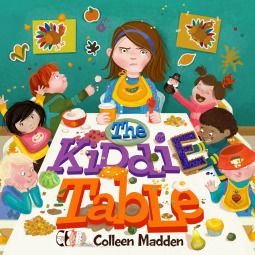
I’ve read this book so many times over the past couple of months, trying in vain to change my opinion about it. I’m sorry; I just don’t get it. Part of it may be that I come from a small family and everyone fit around one table when we had meals with extended family. We also don’t celebrate Thanksgiving in Australia but I don’t think that has any relevance to the way I feel about this book.

This story recounts the tale of an eight year old girl who is relegated to sitting at the kiddie table during her family’s Thanksgiving meal. She’s surrounded by babies and toddlers. For some reason she’s given a bowl of food and a spoon to eat with, and she’s supposed to be drinking out of a sippy cup. I’m not sure what bright spark thought that was a good idea but possibly her parents as the meal is at their home. Throughout the meal our already cranky eight year old becomes increasingly angry until she explodes at the indignity she’s had to suffer.

During her tirade she makes the argument that she knows how to behave and winds up her tantrum with a defiant, “I DESERVE A SPOT AT THE ADULT TABLE!” Now this may well be an indication of why I should never be a parent but if this little brat was my kid I would quite cheerfully explain to her that her dummy spit had proven exactly why she’s not ready to sit at the adult table yet. Like it or not she’d be apologising to the other guests, including all of the kids she freaked out and we’d be having a long chat about her behaviour and acceptable ways to ask for what you want once the guests left.

This kid’s mother is not me. This kid’s mother empathises with her daughter about how she was feeling (that would have been part of my after dinner chat) but then she lets the tantrum kid sit at the adult table! This kid gets rewarded for her bad behaviour! I’m not okay with that.

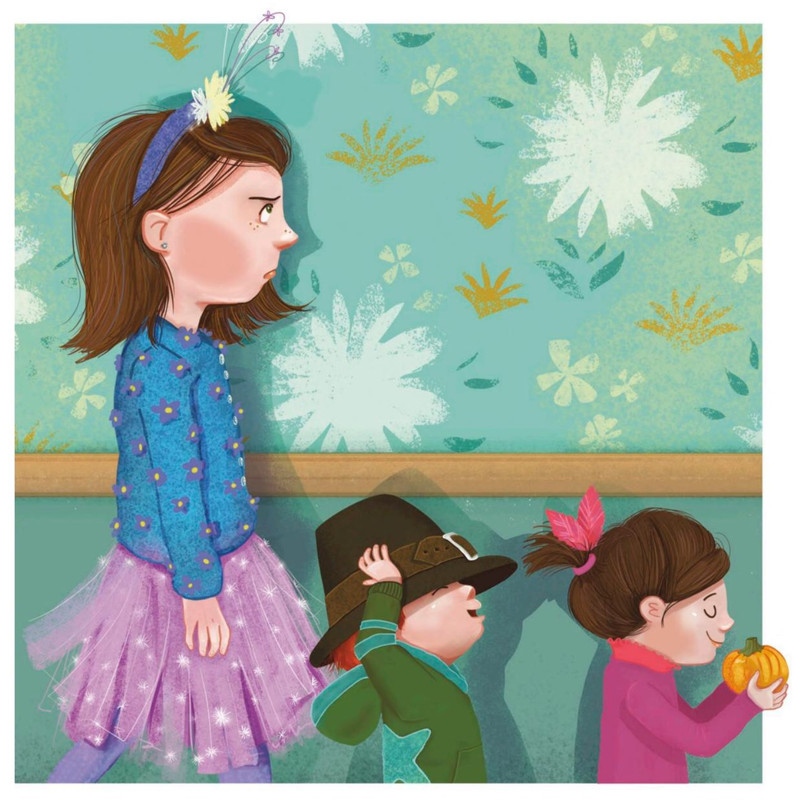
I liked the illustrations. They’re colourful and make our tantrum thrower’s discontent very clear from the get go.

The rhymes didn’t work for me as the meter was off, so the rhythm would feel awkward if read out loud.

I’ve put off writing this review because I hate it when books and I don’t connect. Just because I didn’t like it doesn’t mean you won’t though so please don’t just take my word for it. I’d encourage you to check it out for yourself or at least read some 4 or 5 star reviews before deciding if it’s the book for you or not.

Thank you very much to NetGalley and Capstone for the opportunity to read this book. I really wanted to love it.

Rating: 2 out of 5.

Once Upon a Blurb

At every Thanksgiving there are two tables — the kiddie table and the adult table. So why in the world would an 8-year-old girl be stuck at the kiddie table? She is NOT a baby. She is NOT a toddler. She is a grown-up! She can do two-digit multiplication and knows how to cut her own food. She deserves to be at the adult table! And after an empowered speech and mini-breakdown, the girl is moved to the adult table. Growing up is never easy, and author Colleen Madden brilliantly tackles that issue in this delightful picture book.

Forest Bathing Retreat: Find Wholeness in the Company of Trees – Hannah Fries

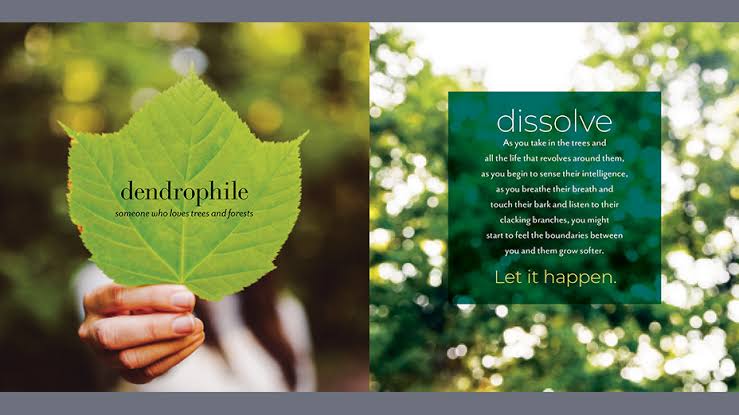
I’d never heard of forest bathing prior to being drawn to the photography on the front cover of this book. In the introduction Robin Wall Kimmerer simplifies the ethereal sounding concept, calling it what it really is, “daydreaming in the woods”. Personally I prefer the daydreaming description but the translation from the Japanese term shinrin-yoku is ‘forest bathing’ so my vote doesn’t count.

I assumed (wrongly) that shinrin-yoku would have its origins centuries ago and would be rich in eastern tradition. The term was first used in the 1980’s so it turns out that I’ve been practicing forest bathing since its inception. Growing up there was a fire trail behind our back fence that was kept clear by the locals and then there was the bush. For those of you outside of Australia, please pretend I’m saying either forest or woods whenever I refer to the bush.

I spent a good portion of my childhood going on bush walks with family and friends. I knew all the trails and even though a portion of it is now a concrete path (ew!) I still know it inside and out. My friends and I would go for walks or bike rides and we’d be gone all day; investigating, having a chat by the edge of the stream we found one day, going off-trail to see what new birds or trees we could find, using getting caught in a surprise storm as an excuse to waltz in the middle of a muddy path under a canopy of trees that were dripping a substantial amount of water on us.

I will be the first to admit I’d prefer to actually do forest bathing than read about it. I did wonder about the need for a book like this to encourage people to spend time hanging out in nature, then got sad as I remembered that peoples’ lives are so busy and screen based these days. Maybe it’s no longer a given that being in nature is something you do without a manual.

There are four sections in this book:

Breathe – a meditative noticing of your body and your surroundings, relaxing your muscles and paying attention to your breathing. Composer Oliver Caplan’s quote (abridged here) about krummholz really spoke to me:

“They remind me of the human spirit and our great capacity for resilience, a new possibility in every breath.”

Connect – connecting to your surroundings through your senses; basically grounding yourself.

Heal – forest bathing as medicine. You won’t find a big list of scientific studies spouting the health benefits associated with “daydreaming in the woods” but if you Google shinrin-yoku it won’t take you long to find them if you really need to know.

Give Thanks – you can figure this one out yourself. 😊

I’m not quite sure who to say this book is for. There will be the people who are totally into mindfulness that will most likely adore this book, with its mindfulness exercises, poetry and wisdom. I will forever be grateful to the person who, when I looked puzzled at the apparent complexity of the whole mindfulness thing, dumbed it down for me and said, “You do realise mindfulness is essentially just about being in the present, don’t you?”

There will be people like myself who have apparently been forest bathers their whole lives who’ll probably look at this book and think that it’s pretty and has some nice quotes and reminders. However, at the end of the day we’d rather be out doing the forest bathing than reading about it.

Initially I thought this could be a nice book for when you’re bogged down in the office and need a mental wander through the woods to centre yourself. Some sections would be helpful for this but the others where you’re basically given instructions on how to appreciate nature have the potential to fall kind of flat when you’re surrounded by concrete.

For those who need a how-to I can see this working if you read a section before you go for your wander and then apply the principles you’ve read about. However some of it reads like step by step instructions and I got this mental picture of someone taking this book with them, standing on the edge of a forest and paging through the book … noticing the edge of the forest … turning the page then pausing … turning the page and scanning their body and mind … trying to find the beginning of the next sentence on the page so they can find their next instruction. Kind of like how landscape photography can be wonderful but if you’re spending the whole time taking photos you don’t get the chance to appreciate the view.

I hope some people will pick up this book who have never forest bathed before because of factors like location or busyness. If this book gets them interested enough to discover how wonderful forest bathing is, then it doesn’t really matter what anyone else thinks of it as it will have done its job.

Thank you very much to NetGalley and Storey Publishing for the opportunity to read this book.

Rating: 3 out of 5.

Once Upon a Blurb

People have been retreating to the woods for quiet, meditation, and inspiration for centuries, and recent research finds that time spent in the forest doesn’t just feel good but is, in fact, good for you. Inspired by the Japanese concept of shinrin-yoku, or forest bathing, poet Hannah Fries invites readers to bask in the company of trees, whether in a city park or a rural nature preserve.

Fries combines her own reflections and guided mindfulness exercises with a curated selection of inspirational writing from poets, naturalists, artists, scientists, and thinkers throughout the centuries and across cultures, including Japanese haiku masters, 19th century European Romantics, American Transcendentalists, and contemporary environmentalists. Accompanied by beautiful forest photography, Forest Bathing Retreat is a distinctive gift that invites frequent revisiting for fresh insights and inspiration.

Rockabilly/Psychobilly: An Art Anthology – Jamie Kendall

I’m sure you’re already familiar with rockabilly. You’ve got plenty of men in suits or leather biker jackets and jeans, hair greased, admiring their cars, bikes and/or women. You’ve got the sexy, sassy bombshells, where oftentimes the only thing bigger than their butts are their breasts. The women are decked out in poodle skirts, short shorts and various combinations of not much, with plenty of Bettie Page inspiration and beehives competing to make it to heaven first. The beer’s flowing and the cigarettes are lit.

Are you as familiar with psychobilly? I hadn’t heard of the word before this book but once I started that section I realised I did know it after all. I love the way psychobilly is described in the introduction:

“I like to think of psychobilly as what happens to the rockabilly crowd once midnight strikes.”

Besides all of the gorgeous artwork, there’s also a playlist running through the book, with each new song flagged by a jukebox for rockabilly or vinyl record for psychobilly.

There are quotes scattered throughout the book by the artists and I think Leon Ryan nailed it with

“I’d rather draw something to be hung and enjoyed in dorms and filthy garages than ignored in a respectable gallery.”

I like an eclectic mix of bits and pieces people call art, including some that reside in respectable galleries. Rockabilly/psychobilly artists, though, these are my people! There’s an honesty to this artwork that I love. These are people inspired by such awesomeness as cartoons, video games, movies, and music.

I’m no art critic, thank goodness, but the gaggle of butts and breasts aside (I’m not going to whinge because it’s part of the style) I really enjoyed this art. There’s something immediately appealing to me about a style that doesn’t care what you think because it’s just doing its thing, whether you’re paying attention or not.

There was a lot to like in this book and so many artists to appreciate. If you’re in the market for a rockabilly/ psychobilly tattoo, you’ll find plenty of inspiration here. There’s even an artist index at the end of the book where the artists’ websites are found so you can find even more awesomeness.

I don’t have a specific rockabilly favourite but some of the ones that drew my attention included:

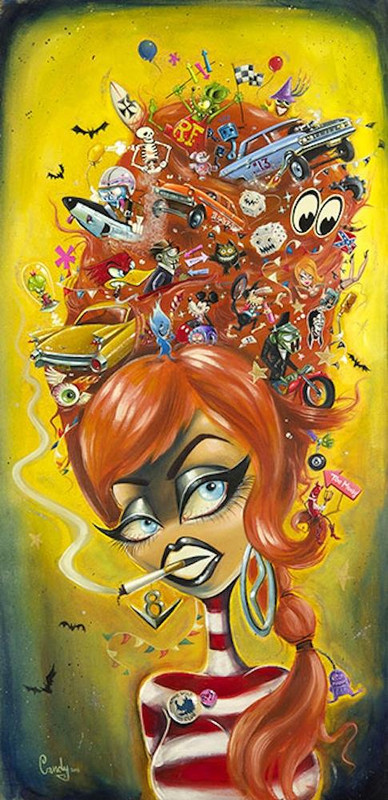
🎙 Candy’s cat eyed woman with the orange beehive that is practically exploding with odds and sods, including three cars, some bats, a skeleton, fluffy dice with teeth, balloons and this green guy of some species holding a checkered flag. Candy’s website is here.

🎙 Nano Barbero’s Rockalavera Rockabilly Weekend México 2015 poster. Nano’s website is here.

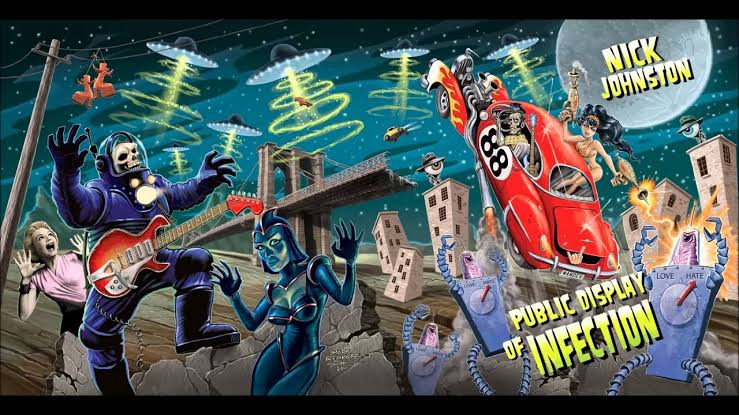
🎙 Mark Rehkopf’s ‘I don’t know what the hell is going on here but I love it’ piece that I’ve discovered is the cover art for Nick Johnston’s Public Display of Infection. It’s got UFO’s, eyeballs in trench coats overlooking the scene from the top of buildings, and there’s too much else to describe but it’s awesome!

In the psychobilly section I really liked:

🧟‍♀️ Miss Cherry Martini’s style but couldn’t choose a favourite so you can find her art here.

🧟‍♂️ Zach Bellissimo’s art, which is here. I wandered around for a while and didn’t find the illustration I was looking for (yet), although I found so much else to love.

🧟‍♀️ Kimberly Poizon’s pages, so of course I looked her up too! Her art can be found here.

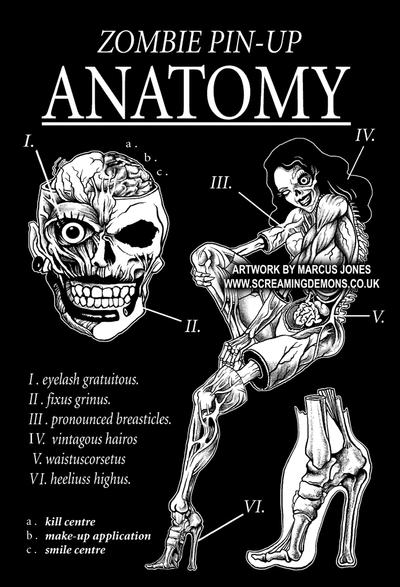
🧟‍♂️ Marcus Jones’ Zombie Pin-Up Anatomy. (I was going to leave it at that, with three artists in each category, but then I found this image and my coffee almost escaped through my nose in a very attractive snort.) Here’s the black and white version; the full colour one in the book is so much better. Marcus’ art can be found here.

It may seem I’ve already shown you all of the Woohoo! moments in this book but I haven’t even come close. I’ve shown you about the equivalent of a dollop of cream on top of a mountainous ice cream sundae. Sure, you can enjoy that dollop but if you don’t stay long enough to try the various flavours of ice cream, sprinkles and hot chocolate fudge sauce 🤤 you won’t realise what you’re missing out on. It’s highly likely your biggest Woohoo! moments are still inside the book waiting for you to discover them.

Going into this I expected to find maybe one or two pictures I’d love and a whole pile of ‘yeah, it was okay’. I’m leaving it trying to figure out if I can afford to buy myself a copy because this is a serious contender to be added to my coffee table for future Woohoo! moments.

Thank you so much to NetGalley and Schiffer Publishing Ltd. for introducing me to so many extraordinarily talented artists I may not have come across otherwise.

Rating: 5 out of 5.

Once Upon a Blurb

A visual road trip from Route 66 to Route 666, this rockin’ collection of more than 600 artworks presents the unapologetically fun and undeniably cool spirit of rockabilly and psychobilly. The 55 artists featured here represent a global subculture and are some of today’s best lowbrow and cartoon artists, the de facto styles of the genre.

Whether you’re burning for nostalgia or learning more about the phenomenon, this massive collection is a study of some of the main themes of modern rockabilly culture: respect the past, be proudly defiant, and stay true to what you like.

Here you’ll see a broad range of stylistic influence from the 1930s to the 1990s as well as other sub-pop cultures like jazz, ska, surf, burlesque, punk, and horror adorning album art, show posters, comics, pin-ups, and more. Complete with a playlist curated by the artists, this is a must-have volume of art by artists who are finding success despite being outsiders.

Did Dinosaurs Have Dentists? – Patrick O’Donnell

Illustrations – Erik Mehlen

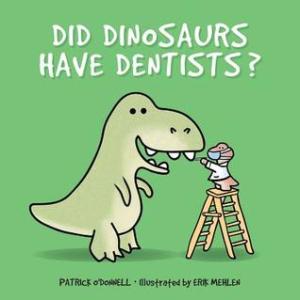
Like many others I have a fairly significant case of dentophobia. My childhood dentist, in their infinite wisdom, told me that because I have deep crevasses in my teeth it was inevitable that I’d end up with a mouthful of fillings regardless of how well I brushed. This was after they’d already tortured treated me throughout my childhood, pulling all of my stubborn baby teeth that refused to leave me.

So, while this is a children’s book and I was reading it with that in mind, part of me was also keen to see if it had any wisdom to share with someone who hasn’t been to a dentist since their wisdom teeth were removed. I’m no closer to making a dental appointment now than I was before reading this book.

I liked the idea of applying dental fears to dinosaurs because dinosaurs make everything better, but overall the book just didn’t work for me. The rhyming worked sometimes and at other times it felt forced, for example, rhyming toothpick with picnic.

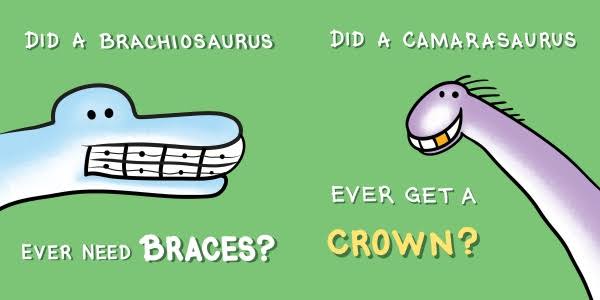
The pictures were cute and colourful. There’s a dinosaur with braces.

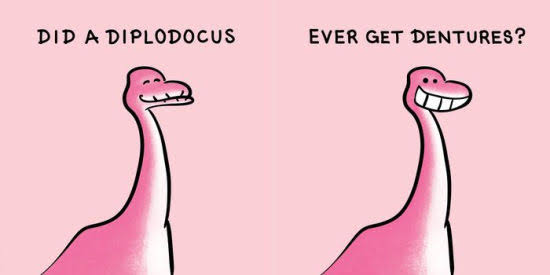
A family sit together munching on their lunch during a picnic with the sun smiling overhead. There’s even a dinosaur in need of dentures, wrinkly mouth and all.

There’s some facts about each dinosaur featured in the book at the end and also a glossary of toothy terms.

I thought it might be me being picky so I read it to my mother, who worked as a dental nurse before she retired. Naturally I pretended she was a child I was reading it to and showed her the illustrations as I read. It didn’t work for her either. Having said that, I haven’t read this book to a kid with dentophobia and a love of dinosaurs. If you want to check it out for yourself, here’s the link to the book on the publisher’s website.

Thank you very much to NetGalley and Schiffer Kids, an imprint of Schiffer Publishing Ltd. for the opportunity to read this book.

Rating: 2 out of 5.

Once Upon a Blurb

What if a brachiosaurus needed braces? If a tyrannosaurus used toothpaste, would it squash the tube? A young child on the way to a dental checkup wonders if dinosaurs ever had cavities and if they had to brush their teeth, floss, get braces, and use fluoride or mouthwash. This whimsical picture book includes eleven common terms related to dental and oral health, along with a glossary of name pronunciations and fun, scientific facts about each of the eleven dinosaurs mentioned in the story. It takes an imaginative, humorous look at dinosaurs’ dental health and eases children’s fears about going to the dentist, while cleverly encouraging them to take care of their own teeth.

Rosie’s Glasses – Dave Whamond

Wow! This is one of the best books I’ve never read! Both wordless and speaking volumes at the same time Rosie’s Glasses is allegedly a children’s book but I think it’s profound enough for all ages to get something from it. I’d actually dare say that the older you are the more you may need this book.

I love the idea of ‘reading’ this book with a child, taking turns telling the stories that are happening within the pages. It’s never too early to learn about perspective and never too late to be gently reminded of it. I adore the exploration of how our emotions can influence the way we see the world and interact with it.

I was talking to one of my doctors last week about how it’s easier to do the same thing over and over again. She is the undisputed Queen of Analogies and All Things Poetic and Deep in my life so naturally she likened thoughts and behaviours to grooves; water being more likely to want to travel the already well worn path. She talked about how it’s possible to carve a new groove in your life, that over time you can essentially train yourself to think and behave in physically and mentally healthier ways. We tend to get set in our grooves of how we see the world and those grooves deepen in time as we tread the same path, unless we make a conscious effort to change them. (P.S. Unlike most people I actually look forward to appointments with my doctors because I have the most profound, caring, extraordinary ones ever!)

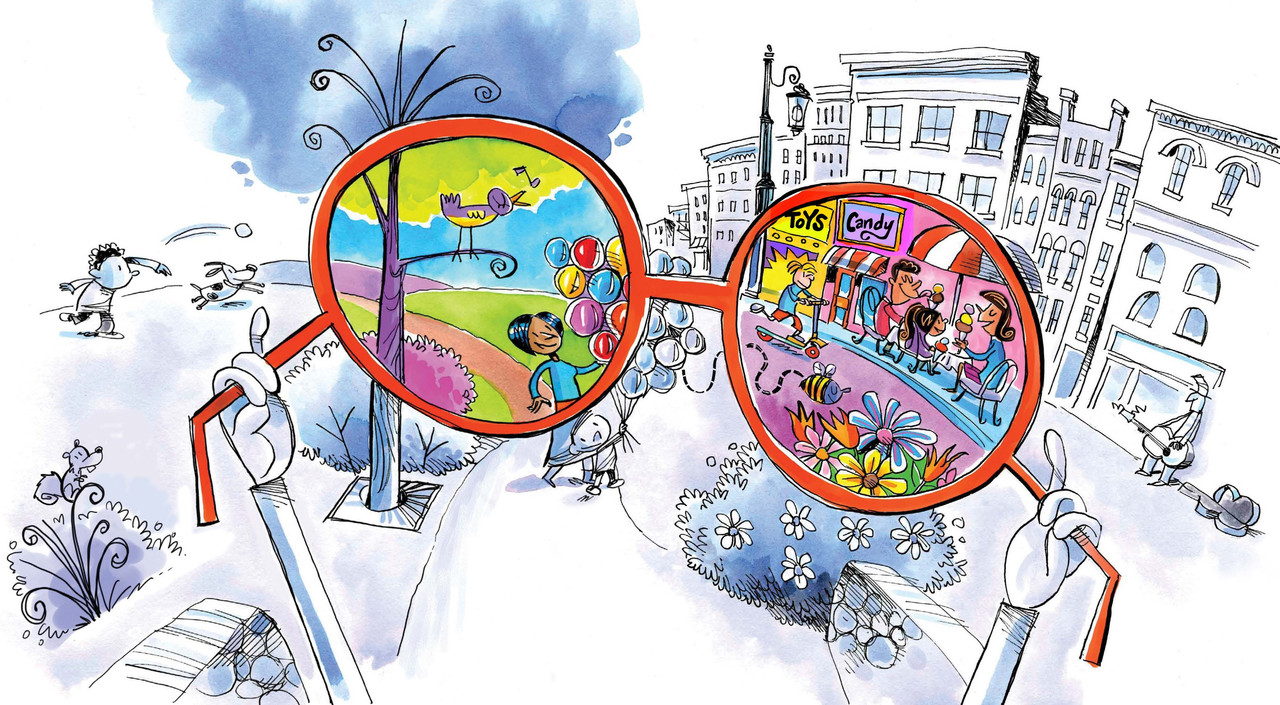
This book reminded me of that conversation. The same thing that’s true of grooves can be said for perspective. We can inadvertently get stuck seeing the world one way when there are so many unexplored possibilities. It can take just the slightest shift in your perspective and your entire outlook can change, much like when Rosie puts on the glasses in this book and all of a sudden a world of colour and wonder opens up around her.

I love that reading the title Rosie’s Glasses made me think of rose-tinted glasses. The positivity associated with rose-tinted glasses seems to get a bad rap all around and even when I looked up ‘rose-tinted’ in the dictionary, Mr Collins told me that it’s “excessively optimistic”. I don’t know though. Is there such thing as too much optimism? I like to think that even when things in our life suck and there doesn’t seem to be any colour in sight that we can still choose to hope. Surely we can acknowledge the suckage of life (I’m not advocating denial) and still find the good as well.

I took some photos while I was sitting at the beach several years ago. Looking out across the ocean the water was sparkling, the sun was shining and the sky was blue. It was a gorgeous day. Then I looked behind me and there were angry storm clouds ready to release buckets and the sky was prematurely dark. If I showed you the photos you’d be forgiven for thinking they were different days, maybe even different seasons. Yet what the camera recorded was determined by what I was looking at at the time.

Until I opened this book, remembering the contrast between the sunny and stormy photos has been my go to in thinking about perspective. Now I think I’ll be imagining Rosie’s glasses whenever I catch myself needing an attitude realignment. If I’m seeing a monochromatic world I can remind myself that I don’t need glasses to change my perspective. I just need to allow myself to see the rest of the spectrum.

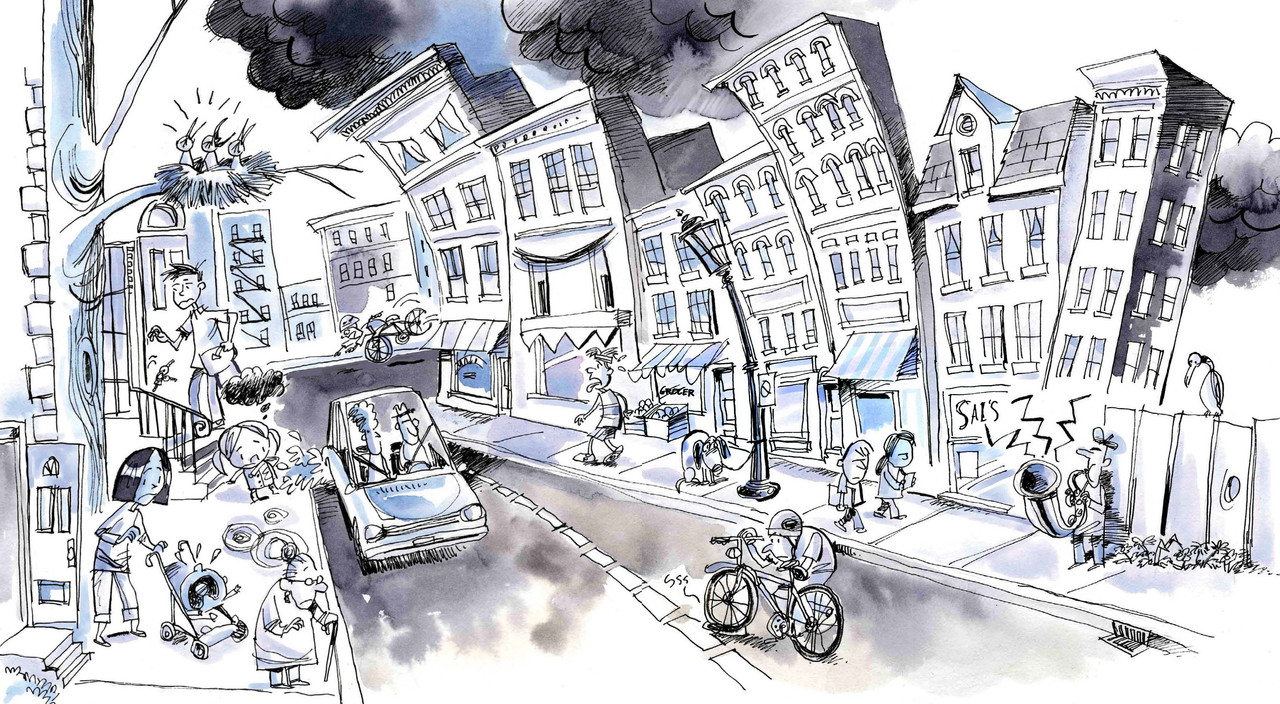
I’ve said in a number of reviews now that the illustrations bring the book alive or they are everything. In this book they really are everything. They’re deceptively simple, easy to ‘read’ but with depth that you appreciate more as you keep looking. Dave Whamond’s illustrations capture the mood and story so well that words really aren’t necessary.

So, as usual, here I am writing a review that’s longer than the actual book but at least this time I’ll have company. That is, unless someone is smart enough to post a review that simply shows two illustrations, one of Rosie’s world without glasses and one with them. Now, why didn’t I think of that?!

Thank you so much to NetGalley and Kids Can Press for the opportunity to discover this little gem. Kid’s book? Sure, I can see that. Yet it’s not only a kid’s book. I’m looking forward to the release of Rosie’s Glasses because in my world it’s going to be a coffee table book so kids and once upon a time kids can both appreciate its message.

Rating: 5 out of 5.

Once Upon a Blurb

In this wordless picture book, Rosie wakes up in a monochrome world, with a dark cloud over her head. As she plods through her miserable, grey day, the cloud follows. Mishaps and mayhem thwart her every move, irritating noises assault her – and the pouring rain makes everything worse. But then, on her way home from school, Rosie finds a pair of strange glasses. When she puts them on, her world transforms into vivid, joyful color. All of a sudden, she can see the beauty and fun in everything around her – and her dark cloud has disappeared. Are the glasses magic? Or could it be that changing how we look at the world can change the way we experience it?

Award-winning author and illustrator Dave Whamond is known for his energetic, humorous and colorful art. Here he uses three different color palettes to powerfully tell a story of how moods can affect what we see. The wordless format encourages visual literacy and deeper readings of the story based on individual interpretation. It also invites nonreaders to develop vocabulary and narrative skill by reading the illustrations. This book offers a perfect lead-in to a discussion about good and bad moods. It also works for lessons on self-awareness and personal development, and as an excellent reminder to children (and adults!) that we can all exercise some control over how we see our world. 

The Loose Ends Became Knots: An Illness Narrative – Austin M. Hopkins

I’m not quite sure what to say about this book. I feel weird judging someone’s experiences so I won’t be doing that. Instead my rating and review will be based on the way the book made me feel. I’ve read a lot of books, including memoirs, with the experience of and recovery from sexual assault as an overriding theme but unfortunately this book wasn’t a good fit for me.

Bouncing between journal entries, poetry, stories told in third person where the author refers to himself as ‘he’ or ‘the boy’, letters from teachers and comments about the author from his friends, the reading experience felt disjointed to me. I had this strange sense of feeling guilty for reading the journal entries. The scattered input from teachers and friends had the feel of testimonials or letters of recommendation and seemed to come out of nowhere.

The graphic descriptions of sexual assaults and Grindr hookups were prevalent for a lot of the first half of the book. The Grindr hookups were ultimately explained as part of trauma induced sex addiction and while I understand trauma impacts I couldn’t stop myself from internally screaming for the author to please don’t go into the home of the stranger he just met. I’m not victim blaming here; I just wanted the author to know at the time that they deserved better.

I applaud the author’s transparency and expect his story will be helpful for men in the LGBTQIA community, particularly those who have been sexually assaulted by men. However, because so much of this book is highly triggering and the first half in particular feels like one traumatic experience after another without any respite or hope (that comes later), I worry that the people who would potentially benefit the most from this book may not make it past the flashbacks and descriptions of traumatic events.

Personally I felt so drained and depressed by the trauma of the first half (maybe even as much as the first 60% or so) that my brain wasn’t as receptive to the message of healing. Had there been some sort of integration of the traumatic and recovery sections this may have helped. I think ultimately the style of writing didn’t make me want to keep reading and the trauma content felt so constant that I struggled to finish it.

So far all of the reviews on Amazon have been 5 stars but the majority appear (I could be wrong) to be friends of the author and have mostly only reviewed one or two books. One reviewer in particular had the same first name as one of the friends quoted in the book which raised my suspicions, although I admit I could be wrong about that too.

I don’t want to turn you off reading this book but if you have experienced sexual assault, please hear me when I tell you that there’s a high likelihood this book will trigger you. Please be safe while reading it.

Thank you to NetGalley and BookBuzz.net for the opportunity to read this book. I’m sorry but after high hopes, this one just wasn’t for me.

Rating: 2 out of 5.

Once Upon a Blurb

In his debut book, Austin tells his story of emerging into young adulthood while surviving sexual violence and living with mental illness. His story is narrated through journal entries, poetry, and short stories.

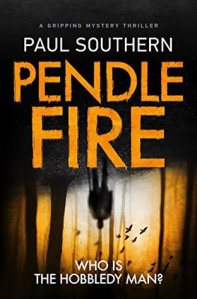
Pendle Fire – Paul Southern

DNF @ 80%

First, I want to point out that this book currently has a high proportion of 4 and 5 star reviews so please don’t just read my review and decide based on that alone that this book is not for you. I’d encourage you to read positive reviews as well and then decide for yourself if it’s the book for you or not.

I requested a review copy of Pendle Fire from NetGalley (thank you very much to NetGalley and Bloodhound Books for the opportunity) and I was looking forward to reading it, mostly because I wanted to know about the Hobbledy Man. I loved the sound of the centuries of urban legend coming to life, the question mark over the possibility of witchcraft and a potential apocalypse in the mix. It sounded really interesting and like my type of book. I was aware from the blurb that there’d be an investigation by a social worker into the alleged gang rape of two teenage girls so I expected my review would include content warnings for sexual assault.

However I feel like the book I read about in the blurb and the book I attempted to read over the past ten days were two different books. The blurb was accurate to a point but had it included any of the following information I would have known straight away this wasn’t the book for me:

The Racist, Sexist, Homophobic and Anti-Muslim Parts – There are so many instances throughout the book but I’m not going to quote any of the remarks. Basically you have one group against another group to the point of riots. The escalating riots are actually a large part of the book. I know this is real life and I concede that the author did a good job of showing the escalation of the violence but I’m not personally interested in reading about rioting misogynistic, racist, homophobic, anti [insert any religious belief here] idiots, or corrupt cops for that matter.

The Swearing – I can swear with the best of them but there’s swearing and then there’s utter disrespect. I don’t voluntarily spend time with anyone who calls anyone a c***. I don’t want to read about people who speak to people like that either. Maybe you don’t have a problem with that word but I really do and I’m unapologetic about my disgust surrounding its use. Had I not been trying to read this book to review it I would have stopped reading in chapter 2 when it first showed up and I certainly wouldn’t have still been reading for the subsequent seven (so my Kindle tells me) times it was used.

I tried to connect with the characters, especially the social worker, but none of the people in this story made me need to keep reading to find out what happened to them. Even now at 80% I don’t feel like I need to know how the story ends. It took me a lot longer than it probably should have to realise that there were two characters in the book with the same first name. Yesterday when I was explaining my frustration about this book to someone I couldn’t even remember the name the characters shared or which character one of them was in the book, both of which pointed out to me my lack of investment in this story.

Because this isn’t the sort of book that I’d have started had I known what I do now I can’t tell you how it measures up against others with similar themes. I do, however, want to be specific in telling you that I want to separate the behaviour of the characters in the book from its author. Just because I hated all of the racism, sexism, all the other isms and the disgusting actions of the deplorable characters in their book doesn’t mean that I think for a moment that any of these things should be thought of the author.

This book doesn’t make me want to automatically discount this author’s other books but should I come across another one I’ll be looking at more than the blurb before I decide if it’s for me or not.

Once Upon a Blurb

Social worker Johnny Malkin is battling a crippling workload and a hostile local community. That’s on a good day: things are about to get a whole lot worse.

Two fourteen-year-old girls are found wandering Aitken Wood on the slopes of Pendle Hill, claiming to have been raped by a gang of men. With no female social workers available, Johnny is assigned to their case. But what, at first, looks like yet another incident of child exploitation takes a sinister turn when the girls start speaking of a forthcoming apocalypse.

When Johnny interviews one of the girls, Jenna Dunham, her story starts to unravel. His investigation draws him into a tight-knit village community in the shadow of Pendle Hill, where whispers of witchcraft and child abuse go back to the Middle Ages.

One name recurs, The Hobbledy Man. Is he responsible for the outbreaks of violence sweeping across the country?

Is he more than just myth?

Dr David Galbraith #2: When Evil Calls Your Name – John Nicholl

Isn’t it strange how our past shapes and torments us when we least expect it?

I’ve heard Dr. Phil say countless times that whatever story he’s focusing on is a cautionary tale. This story is definitely a cautionary tale. If you ever wondered how people wind up in abusive family relationships and how previously confident people transform into meek shadows of their former selves, you’ll gain insight by reading this book. If you weren’t already convinced how calculated and methodical perpetrators are in the execution of the physical and psychological beating down of their victims, here is a great example.

I spent so much time wondering why Cynthia Galbraith was in prison in the first place while reading When Evil Calls Your Name. Surely after the events described in White is the Coldest Colour Cynthia is due for some good fortune. I wondered about the competency of her legal team. The crime she committed seemed as though it should come under the banner of self defence or diminished responsibility.

The more I read though, the more I wondered about her complicity in the atrocities committed by her husband. Does being a victim excuse you from being responsible when you know or at least strongly suspect something heinous is happening in your home? If it’s hidden in plain sight does that give you permission to ignore and deny its presence? At what point does your inaction become criminal?

While not an easy read I found this book easier to digest than the details of Dr Galbraith’s crimes and thought processes of the first book in the series. You could read When Evil Calls Your Name without having already read White is the Coldest Colour but I’d personally recommend reading them in order to get the most out of them. I already had thoughts about Cynthia’s character going into this book and found it interesting to confirm some thoughts and discard others.

Transported from the prison of her home where we left her in White is the Coldest Colour to three years into her sixteen year sentence at White Haven Women’s Prison at the beginning of this book, we uncover the events that led her to White Haven by accessing her therapeutic journal and we also learn about her time behind bars. I appreciated that Cynthia’s story was not sugarcoated. I felt the claustrophobia of her cell and her continued torment as she relived the traumas she experienced through nightmares and recollections. There’s no magical transformation. Instead we see firsthand how the years of abuse continue to be caustic to Cynthia’s self esteem and identity.

I will quibble about the use of the word monster to describe Dr Galbraith and those of his ilk. While it’s certainly convenient and comfortable to label such depravity monstrous but I am not inclined to use that term myself as the label implies they are less than human. If we strip these people of their humanity are we then saying what they did was in their nature, they had no choice and are therefore not responsible for their actions?

Make no mistake; they are human, despite how much we’d prefer to dissociate from them. They are fallible and disgusting humans who make conscious decisions to enforce their will on others, but humans nonetheless. In a way I’m disappointed that the early life of Dr Galbraith has not been explored in the first two books in this series as I would be interested in knowing if there were experiences or behaviour in his childhood that signalled the way his life would unfold.

I don’t want to, and will never, understand why he does what he does other than the desire for power and control. I’m certainly not seeking to excuse anything he’s inflicted on any of his victims but I found it so interesting watching Cynthia’s story unfold that I wonder what I’d feel if I learned more about him.

The much needed update regarding the Mailer family from the first book was welcome but did come across as too simplistic and easy for my liking. The information about the Mailer’s and the final session with Cynthia’s prison counsellor seemed a tad rushed so I was thankful for the epilogue.

I found it interesting that in both books the children in the Galbraith family were largely unseen and silent. I could soliloquise about the silencing of children who grow up in violent homes but instead I’ll just say that, whether this was the author’s intention or not, I noticed and appreciated the authenticity this added to the family dynamics.

I don’t think this book could ever have been as gripping as the first in the series, with its police and child protection investigations and threat of imminent danger to the various victims. However the story this book told was captivating in its own right and I’m looking forward to reading the rest of John Nicholl’s books.

Thank you so much to NetGalley and Bloodhound Books for introducing me to this brilliant author.

Rating: 4.5 out of 5.

Once Upon a Blurb

Even the darkest secrets can’t stay hidden forever …

When twenty-nine-year-old Cynthia Galbraith struggles to come to terms with her traumatic past and the realities of prison life, a prison counsellor persuades her to write a diary exploring the events that led to a life sentence for murder.

Although unconvinced at first, Cynthia finally decides she has all the time in the world and very little, if anything, to lose. As she begins writing she holds back nothing: sharing the thoughts she hadn’t dare vocalise, the things that keep her awake at night and haunt her waking hours. 

Will the truth finally be revealed?

My Favourite Animal: Dogs – Victoria Marcos

With plenty of photos and several questions to test comprehension along the way My Favourite Animal: Dogs is a non-fiction book marketed towards 4 to 8 year olds. Readers will learn some interesting facts about dogs including which are the smallest and largest breeds (measurements are in feet, inches and pounds), how they communicate and how exceptional some of their senses are.

Whether you’re reading this book to a child or whether they’re going it alone they may need a little help with some of the words used. There is a glossary at the end which should help explain more difficult words such as vocalisation or threatened.

Did you know that dogs “can hear sounds from four times as far away” as people can? I knew their hearing was better than ours but didn’t realise it was that much better. This is now my favourite dog fact. My family used to joke that our dog knew when our car was several suburbs away because she’d always get up (even if she’d been snoring seconds earlier) and look through the living room blinds at the road five minutes before the car would drive up the road.

The font is suitable for young readers, with nothing swirly to add unnecessary confusion about what each letter is. There are large areas of empty space around most of the text which gave me the impression the layout may not have been finalised. I would have personally been inclined to use a larger font and/or made adjustments to the spacing to address this. Although to be fair I should acknowledge that I used to be responsible for the layout of a community newspaper so I may be looking at this from my editor’s point of view.

Stock photos are used throughout this book and feature a range of breeds. I adored the brown pup with the floppy ears and head wrinkles who’s intrigued by some daisies. I feel bad (sort of) for laughing at the dog being groomed. They seemed to be trying to get the message across to their human with very intense eyes that they never agreed to anyone putting a pink elastic band in their fur.

When I checked out Victoria Marcos’ Goodreads page I discovered that she has written plenty of other My Favourite Animal books, from sharks to groundhogs. This is the sort of book I would have borrowed from my local library to use as a reference for school projects but I don’t think it would have been part of my personal library.

Thank you to NetGalley and Xist Publishing for the opportunity to read this book.

Rating: 4 out of 5.

Once Upon a Blurb

Learn all about dogs in this informational picture book. Kids ages 4-8 will enjoy learning about dogs through beautiful photos, engaging text and fun questions to test comprehension throughout the book.