The Good Samaritan – John Marrs

There’s a visceral quality to John Marrs’ writing that I love! I read the blurb and immediately judged Laura. I mean, there you are, at your wits end and you call End of the Line. A woman named Laura picks up the phone and her voice is soft and soothing. She listens carefully and without judgement to all of your problems. You feel like finally someone understands what you’re going through so you call a second time, hoping to speak to Laura again. Over time she earns your trust and she goes above and beyond to help you … right over a cliff.

How can you feel anything but disdain for someone who actively encourages people to die by suicide? Read The Good Samaritan and you’ll discover that there are many contradictory and confusing emotions you can attach to her character. I found I developed an empathy I wasn’t expecting to feel for this villain/victim. What shocked me was that I found I could understand where she was coming from and why her actions made perfect sense to her.

I really appreciate when an author can take something I see as a moral no-brainer and adds enough grey that I can no longer accurately distinguish whether something is more black or white. The complexities of Laura’s character had me rooting for her, against my better judgement. I wanted everything to turn out okay for her, despite feeling from the get go she was destined to crash and burn. (Or was she?!) Even after I learned more about her from the perspective of other characters I still liked her.

Accompanying Laura on this journey are her husband, two daughters and son. Running parallel to Laura’s story is that of Ryan, who is grieving the loss of his pregnant wife and desperately searching for answers. We also meet a number of helpline angels who are doing their best to support callers through their most vulnerable times. I would love to tell you all about the story but telling you just one more thing would cause an avalanche of explanations of why that is important, who it relates to and why, and how that’s then going to spiral into something unexpected and extraordinary.

While the themes in this novel are dark, the storytelling is brilliant! I got caught up in the intricacies of the major players’ characters, motivations and actions. With so many pieces of half-truths and hints of information to come being dangled in front of me throughout the book I wondered how the author could possibly wrap it all up in time. Not only were my questions answered, they were satisfying and mostly unexpected. When you have so many people involved in morally questionable actions at best and reprehensible ones at worst, how do you determine what outcome is fitting for them?

The exploration of the events that help mould us into the people we become and our responsibility in determining whether we use the potentially devastating events in our lives to propel us forward or to get stuck in the mire was fascinating. The interplay between nature and nurture is an area of interest for me. The half a psychologist in me (the half that doesn’t pay) got sucked in by the character studies of Laura and Ryan, and gave me so much to chew on I expect I’ll be thinking about them for a while to come.

Thank you so much to NetGalley and Thomas & Mercer for the opportunity to read this book. I have to read everything that John Marrs ever writes!

Rating: 5 out of 5.

Once Upon a Blurb

She’s a friendly voice on the phone. But can you trust her?

The people who call End of the Line need hope. They need reassurance that life is worth living. But some are unlucky enough to get through to Laura. Laura doesn’t want them to hope. She wants them to die.

Laura hasn’t had it easy: she’s survived sickness and a difficult marriage only to find herself heading for forty, unsettled and angry. She doesn’t love talking to people worse off than she is. She craves it.

But now someone’s on to her – Ryan, whose world falls apart when his pregnant wife ends her life, hand in hand with a stranger. Who was this man, and why did they choose to die together?

The sinister truth is within Ryan’s grasp, but he has no idea of the desperate lengths Laura will go to …

Because the best thing about being a Good Samaritan is that you can get away with murder.
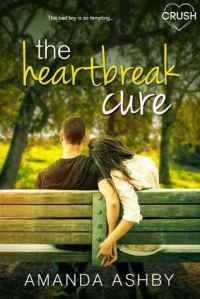
The Heartbreak Cure – Amanda Ashby

Confession time! I accidentally got sucked into wanting to read this book purely because of the brownies and then kinda sorta maybe quite enjoyed the read, despite having the best intentions to rip its romantic heart to shreds. Sure, there were some soppy sentences, mostly focused around how people smelled for some reason, but overall I really enjoyed the story. I feel like I need to apologise to myself because I don’t do romance novels so I’m more than a little disturbed that I liked the characters so much but if I enjoyed it, then the target audience are going to love it!

I’m showing my age here but I’m so glad I grew up in a world without the internet. I can’t even imagine how kidlets and teens these days navigate the awkwardness of growing up knowing the world is watching and most likely recording all of their mistakes, humiliations and heartaches for posterity. Back when I was a teen [she croaks while leaning on her walking stick and wagging her finger] you could quietly hope for the next drama to unfold in someone else’s life so you could be left in peace to pick up the pieces of your shattered heart. These days your most embarrassing moments can go viral. [shudders]

So, what is The Heartbreak Cure? Brownies!!! Baked by the 86 year old grandmother of your cute ex-neighbour boy (who is only a) friend. YUM! Hey, Alex, would you please let Birdie know I feel a heartbreak coming on? 😜

Cat and Alex share the experience of being shamed for something that wasn’t their fault. Cat has been featured in a YouTube video posted by a disgusting doofus 🤬 who enlisted her as a recruit in a summer challenge:

Ask out a loser and see how far she’ll go with you in one week before you break her heart. Bonus points if she gets a tattoo with your name on it.

Seriously, people??? I have no words.

In the slightly unbelievable but hey, it’s fiction category, this girl’s heart was broken over a guy she dated a grand total of three times in one week? And one of those dates was a group date. Maybe I’m out of touch and not the one to comment on the believability factor here, but no one is chipping away at the icicles surrounding this nerd’s heart in just three dates.

And how did doofus find his way into her heart in the first place? He used her Goodreads addiction to pretend he liked the same parts in books that she did. How dare you use a love of books as your weapon of choice, you cowardly, despicable, pathetic excuse for a human being!!

Meanwhile, Alex has been shamed by pretty much the whole community and sadly he’s internalised the seriously bad vibes. Now a lone wolf with a bad boy reputation, he thinks he deserves everything bad that comes his way yet aches to be granted a scholarship to study engineering at a college somewhere far away from the town that’s tarred him without knowing a thing about him personally. Come on, townsfolk with the pitchforks at the ready, he’s Birdie’s grandson! You know! The one who bakes brownies? How bad can he be?!

Anyway, after knowing her humiliating heartbreak made its way to internet land, Cat is feeling pretty darn sorry for herself. She’s even got the creative writing piece where the guy gets massacred by killer ants to prove it. Our Cat is a wannabe journalist on her way to fame via Oprah’s book club. So mid-massacre, who should hop over the fence but the boy with the smouldering good looks and muscles that define any item of clothing he wears, Alex. And he brings brownies that Birdie made. (Open your eyes, Cat! He’s the one!)

Cat comes up with the perfect solution to get the attention off her ugly cry heartbreak video. Why doesn’t she pretend to have a new boyfriend? Why doesn’t she choose our so hot that you could barbeque your dinner on his muscles (did we mention his clothes look wonderful draped over them?) Alex, who kinda has a thing for Cat but of course he’s not good enough for her so she can’t be ‘his’. [Ugh, men thinking of women as property.]

Throw in Cat’s take-no-crap best friend with green hair (Nikki), scary senior editor of the school paper (Mackenzie), doofus heartbreaker rubbing it in with Cat’s ex-friend (Isabel), a liberal sprinkling of adult drama, bucketloads of internal dialogue, angst-a-plenty and a serious amount of baggage following our fake couple wherever they go. What could go wrong?

Favourite sentence:

“Wow, you look like boiled crap.”

Favourite character: Birdie, brownie baker and all round sweetie.

Thank you so much to NetGalley and Entangled Publishing: Teen Crush for the opportunity to read this book.

Rating: 4 out of 5.

Once Upon a Blurb

How to get over a heartbreak:

Step one: Eat your body weight in brownies.

Step two: Throw yourself into your dreams of becoming a famous writer. 

Step three: Beg your (hottie) ex-neighbour to act as your fake boyfriend. 

Step four: Skip step three unless you’re ready for some serious fallout.

After being dumped and humiliated over the summer, Cat Turner does what any sane girl would do. She asks bad boy Alex Locke to be her fake boyfriend and show the world (and her editor at the school newspaper) that she’s fine. Problem is, the more time she spends with Alex, the more she risks getting her heart broken. For real this time. 

The River Keepers – Michael F. Stewart

Spoilers Ahead!

While I was reading this book I kept trying to think of ways to talk about it without including spoilers but I can’t think of any way of saying what I want to without them, so ⚠️ Beware! Spoilers ahead! Read on at your own risk! ⚠️

I’m not sure who writes blurbs for kid’s books these days but The River Keepers was not the book I was expecting it to be when I first read the blurb. Not that that’s necessarily a bad thing as I was entertained by this book and expect it to be well received by its target audience, but I found I spent time trying to reconcile my expectations with reality. I thought there’d be more focus on sci fi, fantasy and magic and I definitely didn’t expect the environmentalism message.

In The River Keepers we meet 11 year old twins Natasha and Reagan, their younger sister Penny and their parents. Their father is a writer and their mother is a nutritionist. The family home is for sale and neither twin want to move house or school, and don’t understand why they’re moving in the first place. The twins plan to sabotage the sale of the property.

After lightning destroys the iconic oak tree in their farmhouse’s yard, the twins discover that the oak is hollow inside and has been the home of a gnome. They find a scroll on the table in the home and gold globs (“gnome guts”) that feel like putty inside the gnome when they accidentally fling him across the yard and break him. I’m not quite sure why one of them has no problem pocketing the gnome’s guts yet they have a problem with their father fixing and painting the dead gnome.

I won’t give away any of the adventures but as you would already know from the blurb, the sisters transform into various animals throughout the book. There’s information about ecosystems and a great message that anyone, including kids, can take action to make positive changes in their local environment.

The twins walk to school with friends Maya and Oscar (and I had the Oscar Mayer jingle in my head each time this pair were mentioned) and the twins end up roping them into their plan to steal and free all of the neighbourhood’s zombie gnome slaves. I wasn’t sure why Natasha wrote in her letter that there was a fee of $9.99. If she was all about freeing the gnomes, why add a charge? The gnome activism reminded me so much of Hermione’s Society for the Promotion of Elfish Welfare (SPEW).

I enjoyed the adventures when any of the sisters transformed into animals and experienced the world as each animal did. This is what I thought I’d signed up for and I would’ve loved for these scenes to be longer and for more animals to have needed their help. I wondered what happened to their clothes when they transformed into animals as they are naked when they transform back into humans. I expected for the 11 year old to be embarrassed to be found naked in the kitchen in the middle of the night by her parents, especially her father, but I didn’t detect that she felt uncomfortable about this at all.

I wasn’t a fan of the book’s use of the word ‘nutso’. I understand that it’s slang but I personally don’t like the word, especially when it’s used to describe people. I also wasn’t a fan of the mouse death scene or the battle to the death between one of the sisters and a centipede.

I liked the writing style and found the book easy to read. I’m unsure if this book has a planned sequel or not but the ending felt abrupt. So, here’s the section of the review where you tell me I read too much into a book that’s aimed for a middle school audience (if you haven’t already), but I’ve always been a prolific question asker so I most likely would’ve had similar questions had I read this book as a child.

While it’s implied that the end of the story is only the beginning of the twin’s adventures, I never found out if the family did end up moving house and if so, where they went. If they moved, did the girls pass on their gnomishness to their friends? As the twins had realised that their younger sister was indeed trustworthy with important secrets, why was she not included in the decision the twins made near the end?

Did the friends continue to steal the gnomes in their neigbourhood and if so did they get caught, as Natasha clearly broadcasted her intent with the letters she wrote to gnome enslavers and the police have already asked about the missing gnomes. Did they ever get in touch with the Gnome Freedom Fighters (GFF) who made the gnome slavery video on the internet and has a hashtag something like #freethegnome gone viral? Were all of the stolen gnomes zombies or were some just statues?

Thank you so much to NetGalley and The Publishing House for the opportunity to read this book.

Rating: 3 out of 5.

Once Upon a Blurb

What would you do if your sister turned into a skunk?

How about a mouse? Or a frog? Would you want to be a snake?

Have you ever wished to swim like an actual fish? Wouldn’t you worry that a snapping turtle might take a bite out of you?

In The River Keepers, two sisters must rise to meet an unexpected challenge. It’s a story infused with the magic and drama outside their backdoor -perhaps yours, too.

Rosie the Tarantula: A True Adventure in Chicago’s Field Museum – Katie Macnamara

Illustrations – Peggy Macnamara

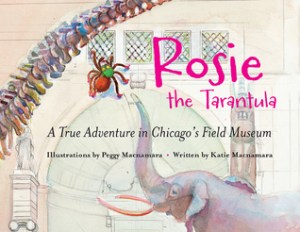
I’ve read this book twice so far and I’m still not sure what to say about it. While I can certainly appreciate the story, artwork and the interesting facts at the end, it’s not the sort of book I’d choose to purchase for a child unless I already knew they had a fascination for spiders or science, or if we’d been on a tour of Chicago’s Field Museum of Natural History and they’d expressed an interest in it.

Without knowing the age group that Rosie the Tarantula is intended to reach it’s difficult to say whether it is appropriate or not but I would expect older children would be more interested.

The rhyming worked well but included words that younger children most likely wouldn’t be familiar with including bespattered and DDT. The facts at the end were very interesting but more so for an adult audience or an older child with an enquiring mind.

The watercolour illustrations were gorgeous but their soft colours aren’t what you usually see in books for younger children, which again leads me to believe this book is more appropriate for older children. I think adults will enjoy the detail in the illustrations more than their children, unless the child has been on a tour of the museum and can point out elements of the pictures they remember seeing during their visit.

While I can see this book selling well in the museum’s gift shop I’m not sure how it will be received outside of this setting. Thank you so much to NetGalley and Northwestern University Press for the opportunity to read this book.

Rating: 3 out of 5.

Once Upon a Blurb

Chicago’s famed Field Museum of Natural History is home to a collection of thirty million geological and biological specimens that enchant and dazzle two million visitors of all ages each year. Based on a true story, Rosie the Tarantula: A True Adventure in Chicago’s Field Museum is a beautifully illustrated introduction to the Field’s treasures through the eyes of Rosie, a member of the museum’s live arachnid collection.

Several years ago, Rosie went on an expedition to the wonders of the Field’s soaring halls, such as Sue the Tyrannosaurus rex, as well as the secret specimens of animal fossils and human artifacts hidden away in drawers, cabinets, and bins. Renowned Field Museum artist-in-residence Peggy Macnamara brings the marvels of the museum to vivid life in a set of gorgeous and meticulously accurate watercolors. Peggy’s daughter Katie narrates the story of this restless arachnid in rhyme ideal for reading aloud to children.

A keepsake quality book that will delight budding young scientists and their families, Rosie the Tarantula provides a colourful, interactive experience with one of Chicago’s foremost cultural institutions. This one-of-a-kind book is rounded out by fascinating notes for adult readers, and other fun features for further reading. 

Backbone: A Memoir – Karen Duffy

“Pain is intensified from trying to control the uncontrollable. Acceptance and resilience have made me stronger.”

This is a quote from Backbone: A Memoir but these two sentences alone epitomise my own experience with chronic pain.

Karen Duffy’s book is part memoir, part how-to guide for living with chronic pain, part lesson in philosophy and etymology, part ‘do you know this quote or cool fact?’, and part funny anecdote. I wound up loving the etymology and the information about philosophy in Karen’s book. I’m always on the prowl for new areas of interest to learn about and I can now add Stoicism to my list.

Having lived in chronic pain world myself for 7.5 years, I’ve read the books, become an expert at timetabling my medication regime, done the breathing techniques and the mindfulness, and honed my patience while waiting for specialists at the hospital. My social interactions mostly consist of doctor’s appointments, and all of the receptionists and pharmacists know me by name. I was the woman that upon stepping into my first pain management appointment and being told the name of the book their treatment plan was solely based on responded by listing what I’d implemented in my life as a result of my reading said book and gave a critique of what was unhelpful.

While I don’t have the same condition as Karen, haven’t lived with chronic pain for even half of the time that she has and doubt I understand the level of pain she lives with, I do know chronic pain. Because I have read the books, medical journals and news articles, Karen’s prescription for pain management wasn’t revolutionary. She covered a lot of the usual techniques – exercise, self care, medication, trips to the doctor and hospital, managing your symptoms, managing your friendships.

What Karen adds that was refreshing is an authority that I find lacking from even the most respected works on chronic pain. Because she’s lived it you can’t very well dismiss what she’s saying with a “Sure, that’s the theory but would you be asking that of me if you understood the pain I face every day?” or “How can I apply that to my life?” because she’s been there, done that, and has the practical examples of how she’s applied it right there in black and white. I don’t know about you but I find it much easier to hear someone who has lived what they’re describing. Karen also understands too well the isolation and uncertainty that come with chronic illness, something textbooks don’t deal with well, if at all.

Karen’s writing style is engaging and I felt like I was chatting with a friend, albeit one who couldn’t hear my responses. I initially found the lack of fluidity between chapters somewhat off-putting and the plethora of quotes distracting but I got used to both. While there were some things said in humour that I didn’t find funny, there was a lot that I related to and found really funny. The quirkier the story, the more I appreciated it. The descriptions of the fun medically based gifts she’s given her neurologist were priceless and I can only imagine that her doctors love having her as a patient, with her optimism and ‘will find a way around the problem’ attitude.

While I admire Karen’s resilience, optimism and penchant for making the best out of a truly awful situation, I equally respected that she is authentic in giving her readers a peek inside what bad days look like as well. What I got from this book above everything else was acceptance, hope and encouragement. One of the hardest things initially about living with chronic pain is the chronic part. While it may fluctuate in severity (even within the same day), chances are you may have it for the rest of your life, and that is an extremely difficult concept for you, your family and friends to accept.

What Karen gave me while reading is encouragement to do the best I can each day. Her attitude of focusing on what she has instead of what she hasn’t and her gratitude is a gentle nudge in the direction I’m trying to keep steering towards. Above all, the “me, too” moments reminded me that although I don’t see many people because I spend most of my time inside the house, I’m not alone and the comfort of that knowledge is everything when you’re surrounded by people who, as a specialist (not mine) told me last week, run rings around you.

I expect this book will be helpful to different people at different stages of their life with chronic pain. Some will read this book soon after their diagnosis and learn vital tools to help them manage their new normal. Had I read this book early on its overall positivity would’ve made me want to hurl it across the room. However, 7.5 years later I read it with appreciation for Karen’s experience and how well she deals with it.

I found I was able to reflect on how I used to deal with my pain (hint: not well at all) and realise that I’ve come further than I realised. I fought against chronic pain for years, pushing myself so hard to try to maintain the life I had before that eventually it all came crashing down around me and I wound up in the worst shape I’ve ever been in in my life. Once I finally learned to accept it for what it is, the pain didn’t magically fade away, but it became so much easier to coexist with.

I’ve been living with the ‘do your best at any given moment’ motto for a few years now but I was encouraged to continue doing that and to look for ways I can help others and to be a better advocate for my health. I am inspired by all of the ways that Karen finds opportunities to be a giver in life.

I adored the idea of your primary doctor being your ‘team captain’. My whole medical team are unbelievably caring, compassionate and resourceful, and go above and beyond all the time for me. I don’t know what I’d do without any of them. It took 1.5 years to find the right team captain for me but they are absolutely incredible and because that’s just who they are, I don’t even know if they realise how extraordinary they are. I had already been mentally writing letters of thanks to my superhero medical support team but Karen’s example has given me the courage to decide to finally put pen to paper.

My favourite sentence in this book is

“My Kindle is my electronic opiate.”

My second favourite sentence in this book is

“Researchers at the University of Liverpool have noted that reading has similar effects to the brain as Cognitive Behavioral Therapy.”

I could’ve told them that if only they’d asked me but knowing the benefits of reading in relation to chronic pain is being studied makes my book nerd heart sing. I look forward to adding reading to my list of pain management techniques I rattle off to doctors when asked and citing this study if queried.

Thank you so much to NetGalley and Arcade Publishing, an imprint of Skyhorse Publishing, for the opportunity to read this book.

Rating: 4 out of 5.

Once Upon a Blurb

Over one-third of the United States population – nearly one hundred million Americans – is currently living with chronic pain, while another 133 million Americans live with some form of chronic illness. Half of the United States population suffers from these invisible illnesses where their symptoms are not always obvious to the casual observer. Among them is Karen Duffy, New York Times bestselling author, former MTV DJ, Revlon model, and actress: she suffers from sarcoidosis, a disorder that causes the growth of inflammatory cells on different organs of the body. In her case, her sarcoidosis is located in her brain, causing her unimaginable pain. For two decades, Duffy has managed to live a full life, despite living in a state of constant pain. In Backbone, a powerful, inspirational, funny, and important manual for surviving pain, Duffy draws on her experience as a patient advocate, trained recreational therapist, and hospice chaplain to illuminate gratifying methods people can use to cope with chronic pain. Backbone is for the massive population of sufferers who are eager to be understood and helped and sends the message that despite the pain, there is a way to seek a good life.

Ellery Hathaway #1: The Vanishing Season – Joanna Schaffhausen

I’ve done it! I’ve finally done it!! I’ve found an author whose writing is worthy of being compared to Tess Gerritsen in a sentence like “I’ve finally found an author as good as Tess” or “This book had everything I love about Tess books and more, and it’s not even written by Tess!”

Friends, please allow me to introduce you (if you haven’t already discovered her) to Joanna Schaffhausen. I’m going to go out on a limb here and call it early … remember this name because Joanna’s ability to immerse you in her character’s world has bestseller written all over it. I feel as though nothing I say here can possibly do justice to her debut but I’ll give it a shot and encourage you to read it yourself so we can gush together about how much we loved it.

Ellery Hathaway is the sole survivor of infamous serial killer Francis Michael Coben. Saved by Agent Reed Markham before she became Coben’s seventeenth murder victim, Ellery now works as a police officer in a quiet town where no one knows who she really is. She is the only one who believes there’s a link between three seemingly unconnected disappearances in three years in her town, which all occurred around her birthday, the day she was abducted fourteen years ago. Ellery’s next birthday is approaching and she calls Reed, knowing he is the only one who will believe her.

I wanted to both rush through The Vanishing Season and read as slowly as possible to draw the experience of the first read out for as long as possible. I became immersed by about paragraph 3 and each time I came back to where I’d left the story I got sucked straight back in. I wound up so engaged that I didn’t realise I’d said, not thought, “I knew it!” until one of the people that had been respectfully honouring my ‘don’t you dare interrupt me until I finish my book or there will be dire consequences’ look came from the other side of the house to find out what my outburst was about. Oops!

I know a book has its hooks in me when I start repeating a phrase to myself while reading, as if the number of times I repeat it can magically increase the likelihood of my being able to influence the outcome. Yes, in my mind I wield that much power! In this case I had two magical phrases:

  1. Please don’t let Bump die!”
  2. “Let the killer be anyone but 🤚.” (And, no, I’m not telling you who the hand represents but it seemed an appropriate substitute given the content of the book.)

I adored Bump. The loyal and trustworthy male in Ellery’s life, Bump is a basset hound who loves walks and rides in the car, liberally distributing slobber over humans he likes and dreams of the day when someone will accidentally drop a piece of chocolate in his vicinity. Also, the story surrounding the choice of his name is wonderful and dog owners everywhere will relate and wonder why they didn’t think of naming their dog Bump.

I loved the people characters as well. No one was perfect. All of the major players had pasts which influenced the way they thought and acted in the situation they found themselves in. There were questionable ethics and life choices, secrets galore and issues surrounding trust were hiding beneath the surface, and shame and guilt were both explored.

I really enjoyed Ellery and Brady’s banter. Their friendship felt comfortable and their bond over 80’s music and quips about what they disagreed on made me feel like I was being included. I almost wanted to add my own opinion a couple of times. I’m looking forward to reading Ellery and Reed banter in future books. There were hints of it here but good banter takes time to develop in a friendship so I’m thankful it didn’t happen immediately.

Coben gave me a what a fantastic yet disgusting and interesting in a disturbing way vibe that was similar to the way I felt when reading about Hannibal Lecter. Which brings me to the gore. It was gruesome enough to satisfy the disturbed side of me that watches B grade movies in part to cheer when the gigantic shark leaps out of the water and takes down a plane, yet it wasn’t so focused on the brutality of the murders that it detracted from the interactions between characters and the mystery of who was behind the murders and why.

The references to sexual assault are not gratuitous by any means but I felt the character directly affected was so realistic that if this has been your experience you are likely to see parts of your own response mirrored back at you (which incidentally I applaud because life after sexual assault is rarely written well). I wasn’t personally triggered while reading, instead feeling hopeful when I encountered ‘me, too’ moments.

I’m always interested, when someone is rescued after being kidnapped or otherwise traumatised, in what happens next. What becomes of the survivor? What does their life look like now compared to what it looked like prior to whatever happened to them? How do they cope? Do they think they’re a victim or a survivor? So many books that explore the effects of sexual assault portray the person who experiences it as either a victim hiding from the world in a corner or someone who’s taking on the world and has no residual physical or psychological impacts in their life.

The character in The Vanishing Season who’s been sexually assaulted was irrevocably changed by their experiences and is a wonderful mix of strength and vulnerability. They’ve overcome so much but there are still physical reminders on their body and in their home that speak to the pain they carry with them. They’re at a point in their life where they’ve worked so hard to no longer be the victim yet they still feel the need to hide. I loved the dichotomies and the implication that healing from sexual assault isn’t a one size fits all process.

If I were to nitpick I’d tell you that I wanted more details of the Big Bad’s background. It’s not as though we don’t know some pivotal moments in their life that help set their particular brand of crazy in motion and we’re given access to the twisted way they think, but I wanted more. To be fair, I have an obsession interest in what causes people with similar genetic and environmental factors to take drastically different paths in life, so my need to know more says more about me than it does about this book. I was also left wanting to know what happens to Anna after the book finished.

And now for your chance to laugh at and with me, I’ll tell you my favourite How Stupid Am I moment I encountered while reading. Initially when I read the town’s name I got Woodbury confused with Woodsboro and for a while I was thinking of how funny it would be if there was a cameo of some random person in a Scream mask running through a scene. 🤪

I love debut novels but I often wind up disappointed by a feeling of knowing how good a book could have been if only that brilliant idea had the execution you usually only expect with experience. Joanna’s debut had the excitement of a first time author’s passion but was written with the character development, story arc, backstories, delightful twists and sucked into a reading black hole ability I only expect of the greats once they’ve found their feet. There were some sentences where the imagery made it feel like I was reading poetry.

I don’t even know Joanna yet I feel proud of her for writing such an impressive debut. If this is what she can accomplish with a first novel I can only imagine how much fun it’s going to be to read her future novels. If anyone has any spare stars I’d love to borrow some because ⭐️⭐️⭐️⭐️⭐️ aren’t enough.

Thank you to NetGalley, Minotaur Books and St. Martin’s Press for ✨ granting my wish ✨ and giving me this opportunity to read this book. I don’t know if I can wait for the next Ellery/Reed/Bump book to be released. I’ve found a new author whose books will be added to my to be read list sight unseen.

Rating: 5 out of 5.

Once Upon a Blurb

Ellery Hathaway knows a thing or two about serial killers, but not through her police training. She’s an officer in sleepy Woodbury, MA, where a bicycle theft still makes the newspapers. No one there knows she was once victim number seventeen in the grisly story of serial killer Francis Michael Coben. The only victim who lived. 

When three people disappear from her town in three years, all around her birthday – the day she was kidnapped so long ago – Ellery fears someone knows her secret. Someone very dangerous. Her superiors dismiss her concerns, but Ellery knows the vanishing season is coming and anyone could be next. She contacts the one man she knows will believe her: the FBI agent who saved her from a killer’s closet all those years ago.

Agent Reed Markham made his name and fame on the back of the Coben case, but his fortunes have since turned. His marriage is in shambles, his bosses think he’s washed up, and worst of all, he blew a major investigation. When Ellery calls him, he can’t help but wonder: sure, he rescued her, but was she ever truly saved? His greatest triumph is Ellery’s waking nightmare, and now both of them are about to be sucked into the past, back to the case that made them … with a killer who can’t let go.

Inside Out T. Rex – Dennis Schatz

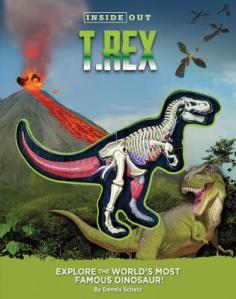
I’ve now read all four books in the Inside Out series and if I was a parent I’d be buying the whole set for my kidlets. Between the die-cut models, the photos and illustrations, and the interesting information that makes you feel like you aren’t even learning, I’d have them on hand to read for fun and for use in school projects. And between you and I, I can imagine some pretty mighty die-cut model battles being fought between T. rex, the shark, the skeleton and the mummy in between reads.

This book gives readers an introduction into what scientists know about T. rex based on the fossils that have been discovered so far and based on their knowledge of other animals’ systems, how they figure out what T. rex may have looked like and behaved.

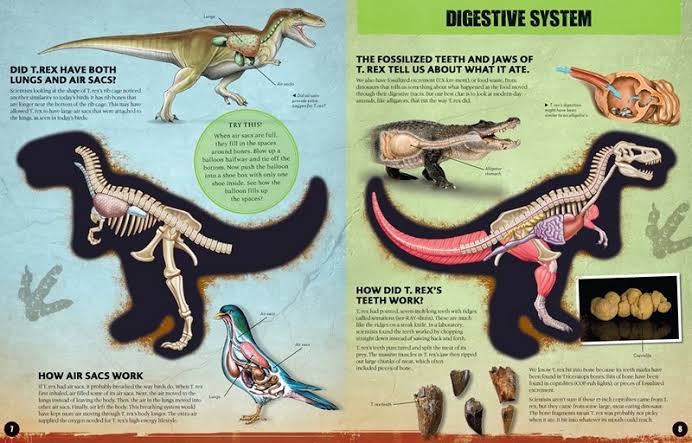
With photos of fossils and plenty of illustrations, we learn about T. rex’s skeletal system and how scientist believe its other systems may have worked, including its cardiopulmonary system, digestive system, reproductive system, nervous system, muscular system and dermal system.

  • We may never know why T. rex had such short arms but we know they were too small for them to feed themselves with.
  • Scientists believe birds are the closest relatives of dinosaurs so look at how birds’ bodies work to make hypotheses about dinosaurs.
  • The T. rex may have had a digestive system similar to an alligator.

Assistance with pronouncing difficult words such as “serrations (ser-RAY-shuns)” are included. My favourite illustration is of a baby dinosaur curled up inside its egg. Aww!

Although we may never know the answers to some of our questions about T. rex this book gives its readers plenty of examples of how scientists work out what the most likely answer is based on current knowledge. Even if questions remain, T. rex will always be the coolest dinosaur!

Thank you so much to NetGalley and Quarto Publishing Group – becker&mayer! kids for the opportunity to read this book.

Rating: 4 out of 5.

Once Upon a Blurb

The Tyrannosaurus rex has long been hailed as the king of the dinosaurs, but what do scientists really know about this prehistoric creature?

Inside Out: T. Rex offers clues to understanding the most compelling and mysterious dinosaur of them all. Loaded with awesome illustrations and captivating text, a die-cut model within the book’s pages will take you inside T. rex’s body to reveal, layer by layer, how these giant beasts lived more than 65 million years ago.

Each page will bring you deeper into the world of the Tyrannosaurus rex, and show how its specialised anatomy, from its razor-sharp teeth to its massive size, established it as the top of the prehistoric food chain.

#MeToo: Essays About How and Why This Happened, What It Means and How to Make Sure it Never Happens Again – Lori Perkins

Before I begin, please be warned that there are potential sexual assault triggers in this book and possibly this review. If you have a #MeToo story, whether you’ve shared it or not, whether it happened yesterday or decades ago, you are stronger than you think you are and healing is possible.

#MeToo – Essays About How and Why This Happened, What it Means and How to Make Sure it Never Happens Again delivers what it promises. While I personally connected with some essays more than others, overall this book does a really good job of shedding a light on this … I don’t want to call it a movement because that implies an ending. Perhaps cultural shift is a more hopeful term?

Some of the essays were political and others were heart wrenching accounts of experiences people have survived. Written by males and females, some who’ve experienced sexual assault and some who haven’t, I appreciated the different viewpoints and the opportunity to consider opinions that differed from my own.

I think my personal favourite was the first essay, where I learned of Patricia Douglas, who in 1937 was the first woman to “publicly call out the studios”. We’ve been inundated with news items of men and women silenced for so long bravely coming forward and telling their #MeToo stories. Knowing how difficult this is for survivors today I can only imagine the courage it must have taken for Patricia Douglas to speak of this in 1937. That is one extraordinary woman!

I could go into detail about the contents of each essay, what I liked, what irritated me, what encouraged me to want to do more in this area, but what I’d really like is for you to read it yourself. Riverdale Avenue Books has committed to making this ebook available to download FOR FREE across platforms and are selling the paperback at cost, so they’re not making money from this project.

While you’re reading, please be safe if there are likely to be triggers for you and reach out for support if you need to, but also:

  • Think about the issues (painful as they are).
  • Consider what you personally have the power to do to make sure we’re not talking about this time in history as a movement that could have been the catalyst for lasting change, if only …

One of the things I love about #MeToo is that people who have been living in silence are finding their voices. Survivors are finding the support they deserve and I hope they’re accessing services that can help them navigate healing.

I could tell you my #MeToo story but I think I’ll give you a lesson in your response when someone tells you their #Metoo story. Believe me when I say that your response, especially if you’re the first person they’ve told, can make all the difference.

Now, some of these are outrageous in their insensitivity whereas others are more subtly damaging but I’ve heard every one. Please don’t say any of these to a survivor.

  • “What did you do to make him think he could?” – a friend
  • “What were you wearing?” – a friend
  • “He was only being affectionate.” – his wife
  • “How many seconds/minutes did it happen for?” – teacher in charge of student welfare, said in the context of if it didn’t last long enough it didn’t count
  • “He told me what happened and he said that he didn’t mean to. It was an accident.” – his wife
  • “Did you enjoy having sex with him? Is that why you didn’t tell earlier?” – a friend’s mother who worked as a nurse who primarily cared for abused children
  • “Are you sure he did that?” – a friend
  • “It couldn’t have possibly happened the way you described.” – the detective investigating my case
  • “He told us what you said about him. You embarrassed us and we didn’t know what to say. He was really quite mad about it.” – friends
  • “Are you sure it was him? Maybe it was someone else and you’re only saying it was him because you don’t want to tell me who it really was.” – teacher in charge of student welfare
  • “You’re saying it happened the second time you saw him? That never happens! Why didn’t he do it the first time you met?” – the detective investigating my case
  • “You can’t tell your friends about this. They’re not old enough to be able to handle it.” – teacher in charge of student welfare
  • “The Royal Commission is unable to investigate individual matters.” – Royal Commission into Institutional Responses to Child Sexual Abuse
  • “He’s going through a difficult divorce, he’s an alcoholic and he has two children, one a girl a few years older than you. This would make his life even more difficult.” – teacher in charge of student welfare, who thought if I felt sorry for her friend I’d shut up
  • “I can’t see you anymore. I can’t talk to you about any assault other than the one you were referred to us for.” – sexual assault counsellor
  • “You’re the only one who’s made a complaint about him so far. Unless someone else makes a complaint there’s nothing we can do.” – the detective investigating my case

It’s pretty complicated coming up with dodgy reasons to shut someone up, isn’t it? Want to know what you can say that will help someone who has trusted you with their #MeToo story?

  • I believe you
  • It was not your fault
  • You are not alone

Simple, huh?!

Thank you so much to NetGalley and Riverdale Avenue Books for the opportunity to read this book.

Rating: 5 out of 5.

Once Upon a Blurb

More than 16 million people had posted their #MeToo story and support against sexual harassment by mid-October as a reaction to Rose McGowan’s brave admission that she had allegedly been raped by Hollywood mogul Harvey Weinstein. A groundswell of reaction to and exposure of this sexual predation was unleashed that has spread throughout Europe and beyond. New revelations of unacceptable behavior in every industry break every day as people come forward in response to the viral #MeToo posts. Protests are scheduled such as the “Take back the Workplace” Hollywood march in November of 2017, and legislation is being drafted in New York and California to finally change the way things have been for far too long.

This is the turning point. Things are going to change.

This is a historic moment and it needs to be memorialised, passed around and passed on. Although social media is a fantastic means of igniting a fire, it needs to keep burning, like a torch.

So Riverdale Avenue Books, a woman-owned leading hybrid publisher, is putting its money, words and power, behind this and publishing this collection of 26 essays from people who understand want to make this change, and we, as a society, have got to figure out a way to drive that change forward.

So pass this book around. Share it with your sons, brothers, fathers, your daughters, sisters and mothers, your co-workers and friends. Read passages to them, if they won’t read it for themselves. Leave it on the desk of someone who should know better. 

Help us make this movement more than a hashtag.

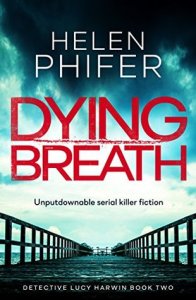
Dying Breath – Helen Phifer

I write this knowing full well I’m surrounded by 5 star reviews so please file this in your 🚨 Danger, Will Robinson! Unpopular Opinions Ahead! 🚨 category.

I’m so conflicted about Dying Breath. By the time I’d finished the first chapter I’d searched Amazon for the first book in the series. By chapter five I no longer wanted to read it and wondered if I’d even make it through this book. By halfway through I wanted to read the first one again. Then partway through the second half I no longer wanted to and could have DNF’ed it (and would have if I hadn’t committed to reviewing it). Now? I honestly don’t know.

Before I go any further, a word of warning. If you plan on reading this series I highly recommend reading them in order. During the course of this book I learned the name of book 1’s killer and what happened to them, so any suspense I would have had if I decide to read The Lost Children has gone bye byes.

What mostly ruined any potential for suspense for me in Dying Breath was that the blurb gave away way too much. Before reading the first sentence of this book I knew how the first two victims were going to die and I knew that this was a copycat killer using infamous serial killers as their inspiration. While reading I kept waiting for the cops to work this out and it takes until after 70% for this to happen. Had I not known that the killer was copying famous murder scenes I imagine I would have wondered along with the police and there would have been some satisfaction upon uncovering the truth instead of me muttering, “Finally!” under my breath.

I enjoyed reading about the killer’s upbringing and pivotal moments in their life that influenced their development down the dark, twisty murder path. The sections from their perspective were my favourite scenes and I wanted more of those.

Part of my problem is that I always compare books in this genre to Tess Gerritsen’s Rizzoli & Isles series. I love the banter between the characters. I love the intricacies of the murders and subsequent investigations. I love the baddies with their own backstories and foibles. I love that the ‘minor’ characters are so well thought out that you feel like you know them as well and can figure out who’s speaking without an “X said”.

Knowing that this is what I’m looking for, here are some of my observations about this book:

  • The banter between characters – there wasn’t the ease in conversations that comes with people who have worked together and seen each other at their best and worst. I didn’t feel like I was being included in inside jokes or that there really were any.
  • I actually found some of the conversations too polite (“I prefer to believe it’s because you’re so good at your job.”) and others cringeworthy (“Aren’t we lucky that we’re all so bloody good at working this stuff out and catching the bad guys and girls.”)
  • No one seemed to have a specific ‘voice’. I couldn’t tell who was who from the way they spoke and sometimes I didn’t even know who was speaking after I was told their name because there wasn’t a personality, quirk or feature I could attach to some of the characters to be able to tell them apart for a long time.
  • The characters didn’t have the confidence in their abilities that I would have liked to have seen. “Catherine smiled at Lucy, making her feel a whole lot better. If the doctor thought she was on to something, there was a good chance she really was. She didn’t often agree with anyone.” And another. “Is that okay?”
  • Some of the wording was awkward. “It’s not for me to say for definite.”
  • The main character’s controlling is he or isn’t he boyfriend. “She wasn’t sure whether she was flattered by his persistence or annoyed that he hadn’t taken any notice of her telling him she wasn’t interested.” Please, girl, grow some self esteem!
  • Apparently in Brooklyn Bay the ambulance service are seriously underfunded. “One of the paramedics looked up at Mattie. ‘We need to get him to the hospital now but we both need to work on him – is there someone to drive the ambulance.’” Ooh! Pick me!

There was a sentence in Chapter 21 that gave away who the murderer was. There were red herrings but I’d already fixated on this person. The murderer takes pride in everything being absolutely perfect, well planned and executed. However, there’s one murder in particular that they don’t copy exactly because they don’t want to have to deal with the clean up of blood. Don’t just not stab the person. If you want to be a copycat you either stab the person and deal with the blood or choose another murder to copy that doesn’t involve so much blood.

For most of the murders it’s vital that the victim matches the original one as closely as possible. Then there’s a murder where it doesn’t matter to the killer if the victim is male or female. With the personality of the killer and their meticulous planning, these things are simply incongruent. So, did we catch the murderer because of our brilliant logic, deductive reasoning and pure brilliance? Nope, we found them by accident.

My favourite character was Toby’s nan. She may have only been in a few pages but that woman has attitude, grit and I loved her. You don’t need to feature in a book to be memorable to me. I just want people to have distinct personalities.

Just a few burning unresolved questions …

  • What happens to Mal? Did what Lucy tell him make things better or worse for him?
  • What eventually happens to the murderer? The end of the book just cut off before that character was resolved enough for me.

After all of this it may sound like I hated this book. I didn’t. It’s just it had so much potential and with some further editing it could have been a superstar, so I’m mostly disappointed by what could have been. I still enjoyed reading it. There were times I could forget about my question marks and simply enjoy the ride but not as often or as long as I would’ve liked. I’m still thinking about whether I’ll read the first book or not. I’m interested in reading the next instalment because despite what I’ve said above I do believe there is a gem to be found here. It just needs to be polished.

Thank you so much to NetGalley and Bookouture for the opportunity to read this book.

Rating: 3 out of 5.

Once Upon a Blurb

Take a breath. Pray it’s not your last.  

Just a few months after a terrifying case that nearly took her life, Detective Lucy Harwin is back with her squad in the coastal town of Brooklyn Bay – and this time, she’s faced with a case more horrifying than anything she’s encountered. 

Along with her partner, Detective Mattie Jackson, Lucy is investigating what appears to be a vicious but isolated murder; a woman found bludgeoned to death on a lonely patch of wasteland. 

But when a second victim is discovered strangled in an alleyway, then a young family shot in their own home, Lucy and the team must face the unthinkable reality – a killer is walking the streets of their town. 

While Lucy and the team try to find the link between these seemingly unconnected murders, they uncover a disturbing truth – these murders are replicating those carried out by infamous serial killers. 

Lucy must get to the killer before he strikes again. But he’s got his sights on her, and is getting ever closer … Can she save herself, before she becomes the final piece in his twisted game? 

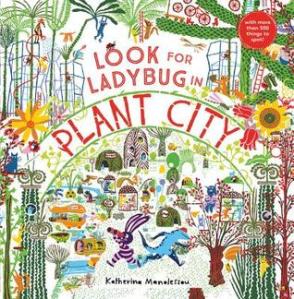
Look for Ladybug in Plant City – Katherina Manolessou

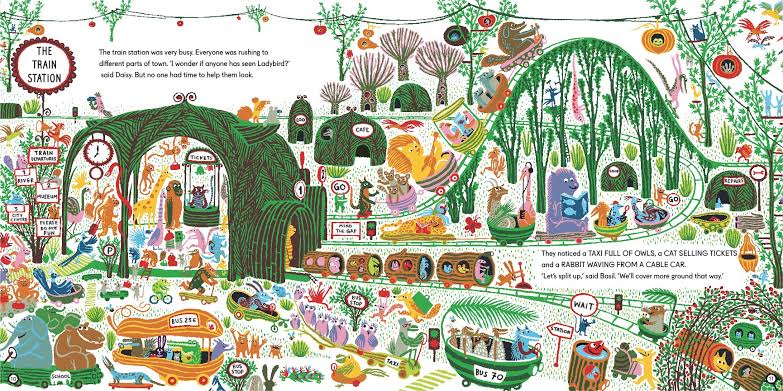
Daisy’s pet Ladybird has decided to play a game of hide-and-seek. Daisy enlists the help of the best detective in Plant City, Basil, to help find him. They search the school, train station, museum, fun fair, restaurant, garden centre, a concert, hospital, riverbank and market. Along the way they find many other animals doing fun activities including a skateboarding crocodile and items such as a picture of a pineapple.

The illustrations were colourful and jam packed with activity. Kids will enjoy spending time searching the pages for animals doing cute and funny things. This book is the first in a planned series and it definitely has potential but I think it could have been more interactive.

I had expected the book to ask the reader/seeker to find more things. As the front cover boasts that there are over 500 things to find I was surprised that each scene only required on average three things to be found. Perhaps additional items to find could have been listed at the back of the book, along the lines of, “Well done! You’ve found Ladybird and some of the residents of Plant City. Can you also find …” and then maybe list some more things to find in each scene.

I know kids can find their own items in the scenes and adults can ask a kid if they can see something but most of the fun of this sort of book is having a big list of items to find and then having the satisfaction of knowing where everything is in each scene.

While I liked the style of the illustrations there were a few animals I couldn’t identify. I’d be able to work around this with a child by asking them to find an animal of a certain colour doing a particular activity. I also would have liked a final page where Daisy and Basil actually find Ladybird. As it stands, Daisy wants to cry because she misses her pet so she and Basil try silly hats on to cheer themselves up so the story itself finishes on a bit of a downer.

Helpful Hint: Just because Daisy and Basil can’t find Ladybird in each scene doesn’t mean you won’t be able to find him.

Thank you so much to NetGalley and Quarto Publishing Group – Frances Lincoln Children’s Books for the opportunity to read this book.

Rating: 3.5 out of 5.

Once Upon a Blurb

Daisy’s pet ladybug goes missing, so she visits super-sleuth Basil, the best detective in Plant City. Can he help her find Ladybug? Follow Daisy and Basil as they look for Ladybug all over Plant City.

Is he in the museum, the carnival, the train station, the school, the concert or the restaurant? Witty, colorful, illustrations packed with visual jokes and plenty of wild things to spot in the background will delight children of all ages.