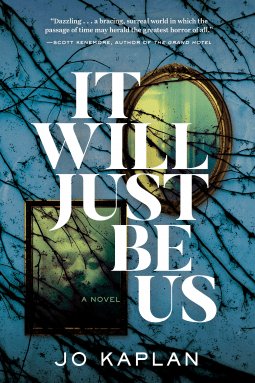
In Wakefield Manor, a decaying ancestral mansion brooding on the edge of the Great Dismal Swamp in Virginia, there is a locked room.
And this is the sort of opening sentence that immediately sucks me into a book. A decaying mansion, a swamp and a locked room? Please tell me more!
Sam and her sister, Elizabeth, grew up in Wakefield Manor with their neglectful mother. Since it was built, the mansion has witnessed both the mundane and the horrors experienced by those who have lived there, and it has not forgotten them.
Now adults, the sisters have returned to Wakefield Manor, where the locked room from their childhood remains a mystery and a new ghost has appeared.
I love haunted house stories so couldn’t wait to get into this one. I loved the house. I loved the swamp. I loved the way the ghosts made their way into the story and I wanted to spend more time with them.
The past is everywhere, here, wrapped up in the present.
There were a couple of times when I managed to forget what was happening in the story’s present while exploring the past. I never really connected with any of the characters so, although I was interested in learning what happened to each of them, the emotional investment was missing. There were also a number of potentially superfluous paragraphs that took me out of the story.
I tend to gravitate to horror that is more visceral so after the set up of the first couple of chapters I found myself getting antsy. The action picks up towards the end of the book but I spent a good amount of time around the middle simply waiting for it to begin. There was an overall atmospheric feel to the book.
It is a door that should not be opened.
Thank you so much to NetGalley and Crooked Lane Books for the opportunity to read this book.
⭐⭐⭐⭐
Rating: 3.5 out of 5.
Once Upon a Blurb
They say there’s a door in Wakefield that never opens …
Sam Wakefield’s ancestral home, a decaying mansion built on the edge of a swamp, isn’t a place for children. Its labyrinthine halls, built by her mad ancestors, are filled with echoes of the past: ghosts and memories knotted together as one. In the presence of phantoms, it’s all Sam can do to disentangle past from present in her daily life. But when her pregnant sister Elizabeth moves in after a fight with her husband, something in the house shifts.
Already navigating her tumultuous relationship with Elizabeth, Sam is even more unsettled by the appearance of a new ghost: a faceless boy who commits disturbing acts – threatening animals, terrorising other children, and following Sam into the depths of the house wielding a knife. When it becomes clear the boy is connected to a locked, forgotten room, one which is never entered, Sam realises this ghost is not like the others. This boy brings doom …
As Elizabeth’s due date approaches, Sam must unravel the mysteries of Wakefield before her sister brings new life into a house marked by death. But as the faceless boy grows stronger, Sam will learn that some doors should stay closed – and some secrets are safer locked away forever.
Eli is a girl of hawthorn and glass. Literally. Her body consists of other substances as well but she’s a made-thing. She’s the perfect assassin, created by a witch to kill ghosts.
Eventually she would turn back into the parts the witch had used to make her – a girl stitched together out of beetle shells and cranberries and a witch’s greed.
Eli and her seven blades have never failed before but something goes wrong this time in the City of Ghosts, and she’s terrified of being unmade.
Seanan McGuire says The Girl of Hawthorn and Glass is a “unique, gripping, engaging book by a voice that the genre has been waiting for.” Anyone who knows me knows Seanan is my favourite author so if they enjoyed it, then logic says I will as well. I loved the concept and this series has so much potential. Amongst other goodies, there’s magic, witches and a labyrinth.
“What’s the magic word?”
“I was trained to kill?”
“Good enough for me.”
You know those photomosaic jigsaw puzzles where each piece is its own tiny picture, but when you finish the puzzle you see the big picture? That’s the image I get when I think about the world building in this book, except the big picture isn’t complete. It’s like I was given a bunch of beautiful, strange little pictures, some that read like poetry. However, I didn’t get enough of them to form an overall picture.
I can see part of the Labyrinth, part of the library and the door of Circinae’s house but I can’t imagine the City of Eyes as a whole. I also couldn’t get a clear picture of what Kite looked like.
I wanted to delve deeper into the history of the City of Eyes. Eli, as a made-thing, wasn’t privy to that information herself so it made sense for the reader to go in blind. We learn a small amount of background information when Eli does. If I’d either been given a history lesson earlier or had the opportunity to interact with more of the Coven, I‘m certain I would have been more invested in the story.
As it was, for most of the book, the Coven’s motivation was unknown. Other than some limited interaction with Circinae, the adult inhabitants of this world remained fairly mysterious. Not an alluring kind of mysterious, though. It was more of an ‘I don’t know who these characters are’ mystery. There were also some scenes where I still don’t really know what happened.
I’m pretty sure I stumbled into a couple of plot holes although, to be fair, there is a forthcoming sequel that could fill them. I’d be interested to see how the story concludes in The Boi of Feather and Steel.
Thank you so much to NetGalley and Dundurn Press for the opportunity to read this book.
⭐⭐⭐
Rating: 3 out of 5.
Once Upon a Blurb
Even teenage assassins have dreams.
Eli isn’t just a teenage girl – she’s a made-thing the witches created to hunt down ghosts in the human world. Trained to kill with her seven magical blades, Eli is a flawless machine, a deadly assassin. But when an assignment goes wrong, Eli starts to question everything she was taught about both worlds, the Coven, and her tyrannical witch-mother.
Worried that she’ll be unmade for her mistake, Eli gets caught up with a group of human and witch renegades, and is given the most difficult and dangerous task in the worlds: capture the Heart of the Coven. With the help of two humans, one motorcycle, and a girl who smells like the sea, Eli is going to get answers – and earn her freedom.
There were several days of perfect reading weather this week: cold, rainy, under a doona in your pyjamas, a coffee in one hand and a book in the other kind of weather. I’m not entirely sure how this happened but four of the six books I reviewed this week were written by or about Holocaust survivors.
I participated in a minor book splurge a few days ago. A company I usually buy from to satisfy by book binge requirements hasn’t had their usual monthly free shipping days since lockdown. I’ve been adding to and subtracting from my shopping cart ever since (mostly adding). I got an email to say they missed me this week (aww!) and, by the way, here’s a code for free shipping. I preordered a couple of books but will also have some happy book mail in time for next week’s book haul post.
I suddenly realised this morning that my blog is three months old today! I’m still having a lot more fun with it than I expected. Thank you to everyone who’s popped by for a squiz!
Word of the Week: renaissance, “a new growth of activity or interest in something, especially art, literature, or music” (from Cambridge Dictionary)
Bookish Highlight of the Week: Edith Eger. I finished The Choice, a couple of years late, and The Gift, which will be published in September. I am in awe of this woman! My current book evangelism consists entirely of, ‘Everyone needs to read Edith’s books!’
Sarah Wilson has helped over 1.2 million people across the world to quit sugar. She has also been an anxiety sufferer her whole life.
In her new book, she directs her intense focus and fierce investigatory skills onto this lifetime companion of hers, looking at the triggers and treatments, the fashions and fads. She reads widely and interviews fellow sufferers, mental health experts, philosophers, and even the Dalai Lama, processing all she learns through the prism her own experiences.
Sarah pulls at the thread of accepted definitions of anxiety, and unravels the notion that it is a difficult, dangerous disease that must be medicated into submission. Ultimately, she re-frames anxiety as a spiritual quest rather than a burdensome affliction, a state of yearning that will lead us closer to what really matters.
Practical and poetic, wise and funny, this is a small book with a big heart. It will encourage the myriad sufferers of the world’s most common mental illness to feel not just better about their condition, but delighted by the possibilities it offers for a richer, fuller life.
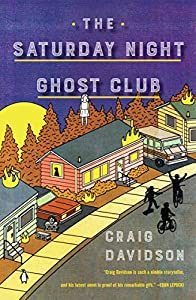
Growing up in 1980s Niagara Falls – a seedy but magical, slightly haunted place – Jake Baker spends most of his time with his uncle Calvin, a kind but eccentric enthusiast of occult artifacts and conspiracy theories. The summer Jake turns twelve, he befriends a pair of siblings new to town, and so Calvin decides to initiate them all into the “Saturday Night Ghost Club.” But as the summer goes on, what begins as a seemingly light-hearted project may ultimately uncover more than any of its members had imagined. With the alternating warmth and sadness of the best coming-of-age stories, The Saturday Night Ghost Club is a note-perfect novel that poignantly examines the haunting mutability of memory and storytelling, as well as the experiences that form the people we become, and establishes Craig Davidson as a remarkable literary talent.
Piper was raised in a cult.
She just doesn’t know it.
Seventeen-year-old Piper knows that Father is a Prophet. Infallible. The chosen one.
She would do anything for Father. That’s why she takes care of all her little sisters. That’s why she runs end-of-the-world drills. That’s why she never asks questions. Because Father knows best.
Until the day he doesn’t. Until the day the government raids the compound and separates Piper from her siblings, from Mother, from the Aunts, from all of Father’s followers – even from Caspian, the boy she loves.
Now Piper is living Outside. Among Them.
With a woman They claim is her real mother – a woman They say Father stole her from.
But Piper knows better. And Piper is going to escape.
I’m the fat Puerto Rican–Polish girl who doesn’t feel like she belongs in her skin, or anywhere else for that matter. I’ve always been too much and yet not enough.
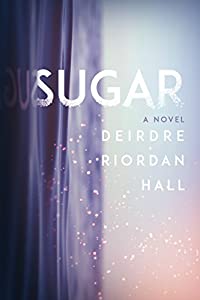
Sugar Legowski-Gracia wasn’t always fat, but fat is what she is now at age seventeen. Not as fat as her mama, who is so big she hasn’t gotten out of bed in months. Not as heavy as her brother, Skunk, who has more meanness in him than fat, which is saying something. But she’s large enough to be the object of ridicule wherever she is: at the grocery store, walking down the street, at school. Sugar’s life is dictated by taking care of Mama in their run-down home – cooking, shopping, and, well, eating. A lot of eating, which Sugar hates as much as she loves.
When Sugar meets Even (not Evan – his nearly illiterate father misspelled his name on the birth certificate), she has the new experience of someone seeing her and not her body. As their unlikely friendship builds, Sugar allows herself to think about the future for the first time, a future not weighed down by her body or her mother.
Soon Sugar will have to decide whether to become the girl that Even helps her see within herself or to sink into the darkness of the skin-deep role her family and her life have created for her.
This is the way the world ends. Again.
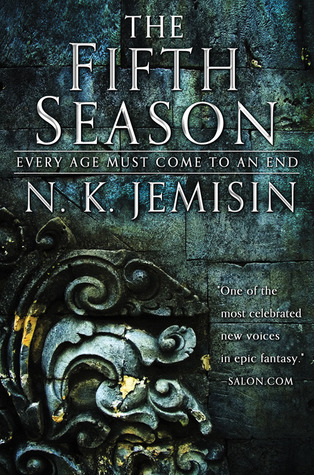
Three terrible things happen in a single day. Essun, a woman living an ordinary life in a small town, comes home to find that her husband has brutally murdered their son and kidnapped their daughter. Meanwhile, mighty Sanze – the world-spanning empire whose innovations have been civilisation’s bedrock for a thousand years – collapses as most of its citizens are murdered to serve a madman’s vengeance. And worst of all, across the heart of the vast continent known as the Stillness, a great red rift has been torn into the heart of the earth, spewing ash enough to darken the sky for years. Or centuries.
Now Essun must pursue the wreckage of her family through a deadly, dying land. Without sunlight, clean water, or arable land, and with limited stockpiles of supplies, there will be war all across the Stillness: a battle royale of nations not for power or territory, but simply for the basic resources necessary to get through the long dark night. Essun does not care if the world falls apart around her. She’ll break it herself, if she must, to save her daughter.
NetGalley
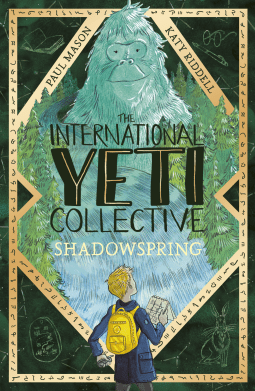
Henry is the new boy at Halbrook Hall – a crumbling boarding school in the Scottish Highlands. He thinks the rumours of yeti lurking in the misty hills are nothing more than stories. Until one day he gets lost in the forest …
As a young yeti, Tadpole loves living in Shadowspring. But now the precious spring water is disappearing and no one knows why. The situation is serious – surely there’s something she can do to help …
When Tadpole accidentally reveals the top-secret location of Shadowspring to Henry, the lost boy she saves, she knows she’s in deep trouble. But what if this human actually has the power to help the yeti not harm them?
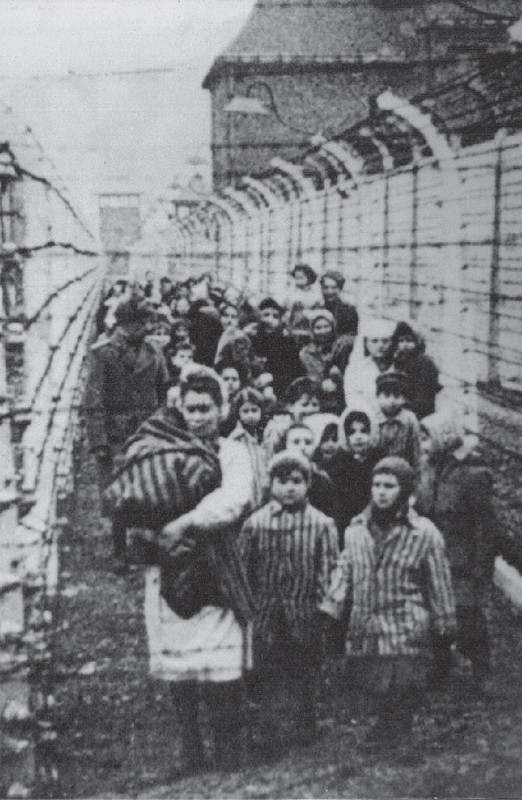
Eva and Miriam Morez were only ten years old when their family was sent to Auschwitz from Romania. Their parents and two older sisters, Edit and Aliz, did not survive the selection line. Eva and Miriam, identical twins, were immediately selected for experimentation by Josef Mengele.
I concentrated all my being on one thing: how to survive one more day in this horrible place.
Although this was not planned, four of the last six books I’ve read were written by or about Holocaust survivors. While the first three either taught me so much that I didn’t already know or touched me so deeply that I know I will carry them in my heart going forward, I felt a disconnect with this book that surprised me.
Throughout the book it seemed like it had been written with a younger audience in mind. It was written quite simply, with explanations given for some words I expect most adults wouldn’t need. It was only at the very end of the book that I learned Eva wanted her book to be used in schools to teach about the Holocaust. What I read makes much more sense to me if I view it as an introduction to the Holocaust.
I also felt like I was a couple of steps removed from the story of Eva’s life. I understood the basics but the level of detail I’ve found in other books written by Holocaust survivors was missing, as was the depth of emotion I have read about and felt in other books. Although this was Eva’s story and she was interviewed extensively, I got the impression that she may not have actually participated in the writing.
Accompanying Eva’s story are photos and maps, which provide context.
The children at the front are Eva (left) and Miriam (right)
This book was originally published in 2009 by Tanglewood Publishing as Surviving the Angel of Death: The True Story of a Mengele Twin in Auschwitz.
Thank you so much to NetGalley and Monoray, an imprint of Octopus Publishing, for the opportunity to read this book.
N.B. I do not allocate star ratings for memoirs or stories about people’s lives based on anything they have experienced; it’s not my place to rate a person’s life. My rating is based solely on my connection to the material presented.
⭐⭐⭐⭐
Rating: 3.5 out of 5.
Once Upon a Blurb
The Nazis spared their lives because they were twins.
In the summer of 1944, Eva Mozes Kor and her family arrived at Auschwitz.
Within thirty minutes, they were separated. Her parents and two older sisters were taken to the gas chambers, while Eva and her twin, Miriam, were herded into the care of the man who became known as the Angel of Death: Dr. Josef Mengele. They were 10 years old.
While twins at Auschwitz were granted the ‘privileges’ of keeping their own clothes and hair, they were also subjected to Mengele’s sadistic medical experiments. They were forced to fight daily for their own survival and many died as a result of the experiments, or from the disease and hunger rife in the concentration camp.
In a narrative told simply, with emotion and astonishing restraint, The Twins of Auschwitz shares the inspirational story of a child’s endurance and survival in the face of truly extraordinary evil.
Also included is an epilogue on Eva’s incredible recovery and her remarkable decision to publicly forgive the Nazis. Through her museum and her lectures, she dedicated her life to giving testimony on the Holocaust, providing a message of hope for people who have suffered, and worked toward goals of forgiveness, peace, and the elimination of hatred and prejudice in the world.
If you cannot recount the story of your own family, your home town, or your formative experiences, how do you make sense of your childhood and its impacts?
Most of us take our early childhood memories for granted. They form part of the story we tell ourselves about who we are and where we came from. For so many children who survived the Holocaust, these memories are either entirely missing or exist only in fragments. There are often no surviving family members who can help them fill in the blanks.
The survivors whose stories are explored in this book were all born between 1935 and 1944. Previous books I’ve read about Holocaust survivors were written by people who were either teenagers or adults during the war. The oldest survivors mentioned here were only ten years old in 1945.
“For most survivors who are not young child survivors, there was a before, you see.”
From an interview with Zilla C., conducted by psychoanalyst Judith Kestenberg in 1987
Even though I’ve now read the excerpts of their stories I’m still have trouble getting my head around what their lives have been like. For so many years they were not even counted as Holocaust survivors and were encouraged to simply move on with their lives and forget what memories they had of that time.
‘Just think it never happened,’ they urged, ‘and you will start a fresh new life.’
Paulette S., on how OSE staff tried to prepare her to move across the globe
In addition, there was a “disconnect between what children after the war felt and what their adult carers expected them to feel.”
The children’s wartime experiences consisted of at least one of the following:
survival in hiding, in flight to a neutral country or Allied territory, in ghettos and transit camps, and in concentration camps.
The ways these children coped with the trauma of the war and the subsequent traumas of being moved between institutional care, family members, and foster and adoptive homes is addressed. Some of the children lived in stable, loving homes during the war, albeit not with family members, only to be abruptly taken from them at the end of the war.
More often than not, they were moved to countries where they didn’t know the language. Many went to live with strangers and had to try to figure out who they were with little to no assistance.
Survivors has been extensively researched, with sources from “archival material, including care agency files, records from care homes, indemnity claims, psychiatric reports, letters, photographs, and unpublished memoirs, documents originating from nearly a dozen different countries”. The bibliography and detailed footnotes make up almost 15% of the book.
I had expected almost all of the book to consist of detailed stories of individual survivors. Snippets of interviews with survivors are included, as are overviews of the wartime experiences of a number of them. There is also a lot of information and commentary on changes that occurred throughout the decades that impacted on survivors. Some of these changes relate to what was happening in the world at the time and some examines the ways survivors have related to their stories as they grew older.
We should not be surprised to find that the way in which we tell the stories of our lives changes over time; this is true for child survivors as it is for all people.
I found it unusual that whenever survivors in general were discussed, most of the time they would be referred to as ‘she’ or ‘her’, even though interviews with male survivors are also included in the book. Some information was repeated in different chapters and I began to dread seeing the phrase ‘as we have seen’, but I came away with a much better understanding of both the short and long term impacts of the Holocaust on these young survivors.
I’m left wanting to know more about the individuals I was introduced to. Having said that, I agree with the author (an oral historian) that the level of detail I’m interested in would require many more volumes.
Thank you so much to NetGalley and Yale University Press for the opportunity to read this book.
⭐⭐⭐⭐⭐
Rating: 4.5 out of 5.
Once Upon a Blurb
Told for the first time from their perspective, the story of children who survived the chaos and trauma of the Holocaust.
How can we make sense of our lives when we do not know where we come from? This was a pressing question for the youngest survivors of the Holocaust, whose prewar memories were vague or nonexistent. In this beautifully written account, Rebecca Clifford follows the lives of one hundred Jewish children out of the ruins of conflict through their adulthood and into old age.
Drawing on archives and interviews, Clifford charts the experiences of these child survivors and those who cared for them – as well as those who studied them, such as Anna Freud. Survivors explores the aftermath of the Holocaust in the long term, and reveals how these children – often branded “the lucky ones” – had to struggle to be able to call themselves “survivors” at all. Challenging our assumptions about trauma, Clifford’s powerful and surprising narrative helps us understand what it was like living after, and living with, childhoods marked by rupture and loss.
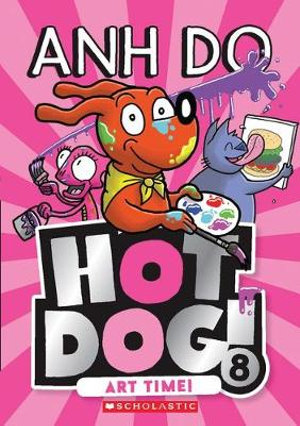
Hotdog and his friends are enjoying painting but they all like to paint different things. Hotdog paints his friends, Kev paints food (of course!) and Lizzie paints monsters. Lizzie loves the monsters but Hotdog and Kev find them really scary. The friends are going to enter a contest hosted by the local art museum.
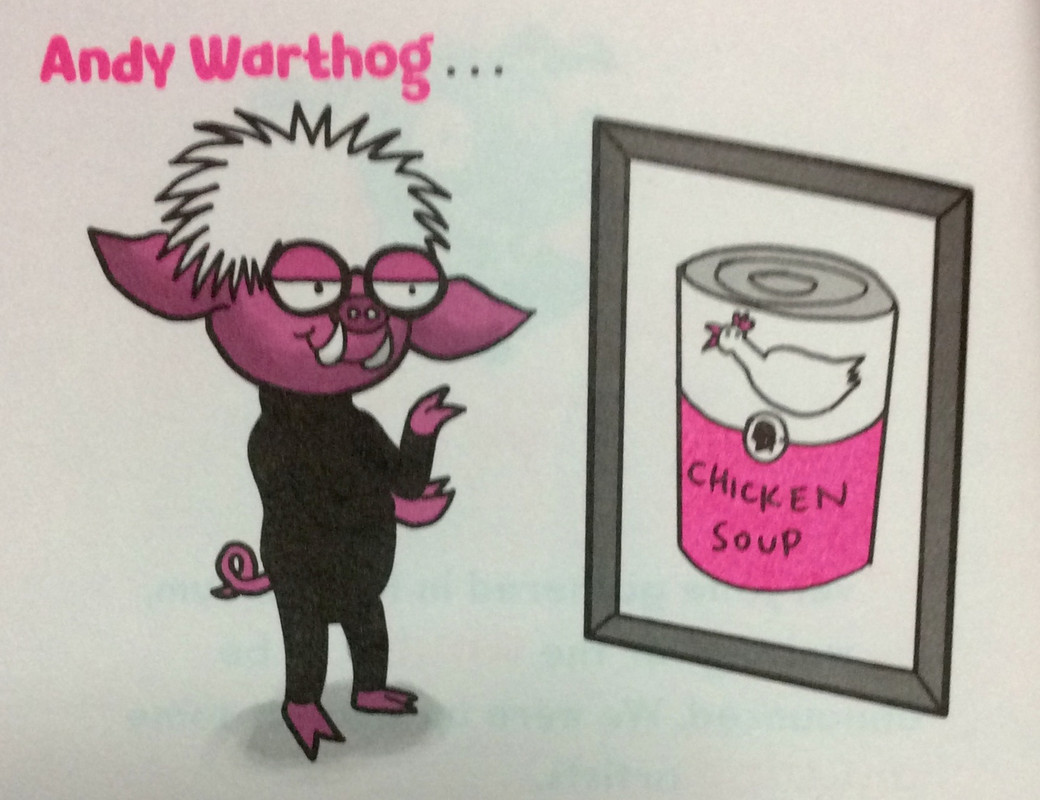
You may (almost) recognise some of the other entrants, which include Pablo Pigasso and Andy Warthog.
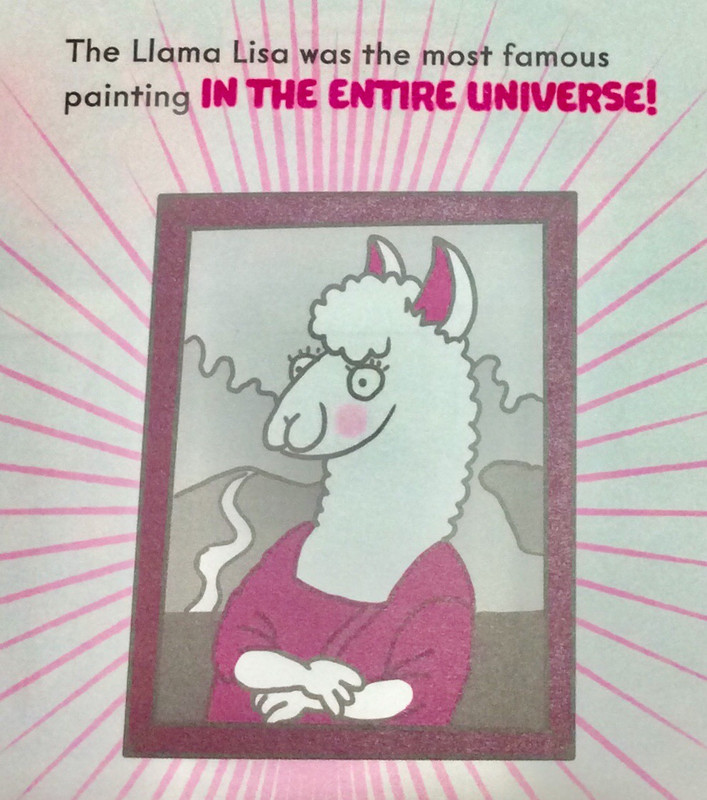
Our three friends are still at the museum when a terrible crime takes place: the Llama Lisa is stolen!
Hotdog, Kev and Lizzie take it upon themselves to follow the clues and track the art thieves down.
I don’t remember a single time in this series where the friends have won a competition and love that, because that’s not what they’re about. These books are all about friendship and teamwork. This time the friends also need to be brave.
‘But, remember, we can do anything when we’re together.’
Each book in this series features a different colour. This book is PINK! Fluro pink. So pink that it wouldn’t have surprised me if I’d discovered it was glow in the dark. It’s not, but it should could have been. Adults may be reaching for sunglasses when they read some words and phrases. Kids will love it! Each of the illustrations also feature a few different shades of pink. My photos do not do these pictures justice or show the vibrancy of the pinks.
After reading this book I realise I need my very own dino bike and want to explore the Castle Creepy Fun Park. I particularly loved the toothy robot crocodiles and Haunted Library. As usual, Dan McGuiness’ illustrations complement Anh Do’s story perfectly.
I can’t wait to see what these friends get up to next!
⭐⭐⭐⭐⭐
Rating: 5 out of 5.
Once Upon a Blurb
Hotdog, Kev and Lizzie enter an art contest at the local museum. But what happens when someone steals the most famous painting in the world the Llama Lisa!?
Can Hotdog and his friends chase down the robbers?
Hope. It’s what lit the fire within my soul when I read The Choice and it’s what made its flame shine even brighter as I made my way through The Gift. Hope that I can do the work that I know I need to do in order to address the pain and trauma I’ve experienced. Hope, because if Edith Eger can do it then so can I. Hope, which Dr Eger defines as “the awareness that suffering, however terrible, is temporary; and the curiosity to discover what happens next.”
One of my takeaways from The Choice was a desire to have the opportunity to be counselled by Dr Eger, a survivor whose experiences, compassion and insight combine to allow her to get to the root of a problem before she lovingly guides you towards the you that you’ve been stifling under layers of pain, anger, [insert relevant adjective/s here], and paralysing what if’s. You may never have the honour of sitting across from Dr Eger in her office but this book is the next best thing.
All therapy is grief work. A process of confronting a life where you expect one thing and get another, a life that brings you the unexpected and unanticipated.
If you’ve already read The Choice then you’ll be familiar with some of the stories of Dr Eger’s life and those of her patients that are included in this book. You’ll also find stories that will be new to you, which help illustrate the points Dr Eger makes as she hands you the keys that will help you unlock the prison of your mind.
To heal doesn’t mean to get over it, but it does mean that we are able to be wounded and whole, to find happiness and fulfillment in our lives despite our loss.
Twelve keys are presented in this book. Dr Eger addresses the prisons of victimhood, avoidance, self-neglect, secrets, guilt and shame, unresolved grief, rigidity, resentment, paralysing fear, judgement, hopelessness, and not forgiving.
At the end of each chapter you’ll find ‘Keys to Free Yourself’. These consolidate what you’ve learned in the chapter and can be used to facilitate your own healing. Some require you to use your imagination. Others provide prompts that you can use in journalling. Then there are some that would be ideal to work through with a therapist.
I like to remind my patients: the opposite of depression is expression.
What comes out of you doesn’t make you sick; what stays in there does.
This is one of those books where it would have been much easier to have highlighted the passages that didn’t speak directly to me. While I discovered the gems in this book in the order Dr Eger has presented them, you don’t need to do this. Each chapter is its own lesson, so you can take what you need when you need it. I know I will be rereading this book from cover to cover in the not too distant future but I also anticipate I’ll be spending more time on specific chapters over time.
Although healing from pain and trauma is serious work, that doesn’t mean there aren’t smiles to be had as you make your way through this book. Currently, my favourite smile-inducing quote is about taking charge:
Don’t be Cinderella, sitting in the kitchen waiting for a guy with a foot fetish.
You could dive into this book without having experienced The Choice but I would recommend reading them in the order of publication. While you can apply the lessons to your life without knowing Dr Eger’s own story, they’re enriched by this knowledge.
Because I know what Dr Eger chose to share in The Choice, I trust her when she outlines what she found helpful. I also can’t give myself an out, claiming something is too difficult, when I have witnessed someone I now have such admiration for working through unimaginable pain and trauma to find freedom.
I now recognize that the most damaging prison is in our mind, and the key is in our pocket. No matter how great our suffering or how strong the bars, it’s possible to break free from whatever’s holding us back.
It is not easy. But it is so worth it.
Thank you so much to NetGalley and Rider, an imprint of Ebury Press, Penguin Random House UK, for the opportunity to read this book.
⭐⭐⭐⭐⭐
Rating: 5 out of 5.
Once Upon a Blurb
This practical and inspirational guide to healing from the bestselling author of The Choice shows us how to release your self-limiting beliefs and embrace your potential.
The prison is in your mind. The key is in your pocket.
In the end, it’s not what happens to us that matters most – it’s what we choose to do with it. We all face suffering – sadness, loss, despair, fear, anxiety, failure. But we also have a choice; to give in and give up in the face of trauma or difficulties, or to live every moment as a gift.
Celebrated therapist and Holocaust survivor, Dr Edith Eger, provides a hands-on guide that gently encourages us to change the imprisoning thoughts and destructive behaviours that may be holding us back. Accompanied by stories from Eger’s own life and the lives of her patients her empowering lessons help you to see your darkest moments as your greatest teachers and find freedom through the strength that lies within.
Cassie has her life all planned out. The plan consists of a summer job in the mall with her boyfriend of two years, followed by moving to New York together to attend colleges across the road from one another. The plan did not include her getting mono, missing prom and graduation, her boyfriend breaking up with her or losing her job.
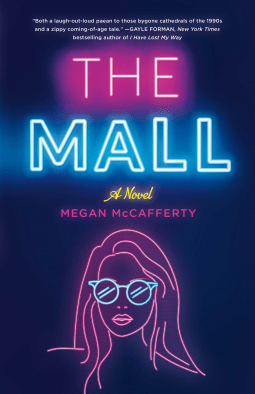
Taking place almost exclusively within the mall during the summer of 1991, there are plenty of 90’s references, from 90210 to Nirvana, from big hair to lycra. This was a quick and easy read, and I enjoyed the nostalgia. I adored the cover design and absolutely loved the “90210 Scale of Parkway Center Mall Employment Awesomeness”, where Dylan McKay is obviously the coolest.
“There’s a fortune hidden somewhere in the mall,” Drea said, “and I’m determined to find it.”
While I liked the concept and was thrilled when the quest for hidden treasure made its way into the story, overall the story fell flat for me. I wanted to get to know two of the characters better, Zoe and Drea, as they had an edge that interested me. Most of the other characters were fairly generic.
Along with the drama of teenage friendships and boys, there’s also slut-shaming, a revenge makeover and a catfight. The list of people Cassie needs to avoid in the mall grows fairly steadily as the story progresses.
Cassie is quite elitist, knowing full well that she’s never going to be one of the mall’s lifers, as she’s destined for bigger and better things in New York. Although she is unarguably book smart, she’s not as mature as she seems to think she is. Often she behaved as though she was closer to 13 than 17.
Something that gave me pause: on the copyright page the author’s name appears after Alloy Entertainment, a book packaging company. It made me wonder how much creative control the author had when they were writing.
Thank you to NetGalley and Wednesday Books, an imprint of St. Martin’s Press, for the opportunity to read this book.
⭐⭐⭐
Rating: 3 out of 5.
Once Upon a Blurb
The year is 1991. Scrunchies, mixtapes and 90210 are, like, totally fresh. Cassie Worthy is psyched to spend the summer after graduation working at the Parkway Center Mall. In six weeks, she and her boyfriend head off to college in NYC to fulfill The Plan: higher education and happily ever after.
But you know what they say about the best laid plans …
Set entirely in a classic “monument to consumerism,” the novel follows Cassie as she finds friendship, love, and ultimately herself, in the most unexpected of places.
“Just remember, no one can take away from you what you’ve put in your mind.”
Sometimes a book will find you at the very moment you need it. This is one of those books. I’ve previously marvelled at the resilience of some other remarkable human beings who survived the Holocaust. Elie Wiesel. Viktor Frankl.
Joining them is Edith Eger. A survivor whose courage both astounds me and gives me hope. A woman who will be occupying the space in my heart that she has made bigger with her compassion. A touchstone for the times I feel like I don’t have the strength to survive my own pain.
What follows is the story of the choices, big and small, that can lead us from trauma to triumph, from darkness to light, from imprisonment to freedom.
It would be so easy to hear even part of Edith’s story and say to yourself that your pain is insignificant compared to what she has experienced but after reading this book I realise that would be a disservice to her. Edith doesn’t rank pain and would prefer your response to be one of, “If she can do it, then so can I!” For someone whose power was taken away in such a brutal way at such a young age, Edith’s message is that much more empowering and impactful.
I can’t begin to imagine how I would have fared if I had been in Edith’s place. What I do know is, like everyone, I have experienced pain and trauma. Through Edith’s story and those of the people she’s counselled, I gained insights into my own life. Light made its way into dark corners that are painful to look at and while there’s still plenty of work to be done, it no longer feels impossible. Now I just need to make a counselling appointment with Edith. 😊
I expected to ugly cry my way through this book and surprised myself when I didn’t. The tears came unexpectedly, when I started rambling about how extraordinary Edith’s story is to someone. I was doing fine, right up until I began to explain that Edith would not have survived had it not been for a loaf of bread. Then I lost it.
Any story that even lightly touches on the Holocaust is bound to include the depravity that humans inflict on other humans. What touched me so much about that part of Edith’s story was it showed me the beauty that can still live within people, despite the ugliness that surrounds them.
I loved the way this book was written. I often felt like I was in conversation with Edith, that I was sitting across from her in a comfy chair in a room with a fireplace warming us as she was telling me a specific part of her story. I ran the gamut of emotions as I was reading but the style itself felt very down to earth.
No one heals in a straight line.
One of my favourite takeaways is the way Edith explains trauma. She doesn’t shy away from talking about the long term impacts she has lived with and that alone endeared her to me. So often the message seems to be that once you have survived the experience it’s all sunshine and roses from that day forward. No, pain hurts and surviving the aftermath of pain hurts too.
Edith’s authenticity when she talked about experiencing flashbacks and nightmares decades after her initial survival spoke to parts of me I can’t even verbalise yet, but I know some of what I felt as I read those parts was a bubbling hope rising up within me. When I read her take on PTSD I actually stopped reading to cheer; what I have long believed was actually being said by someone else.
This is why I now object to pathologizing post-traumatic stress by calling it a disorder. It’s not a disordered reaction to trauma – it’s a common and natural one.
I can already see a time in the near future where I’m going to need to reread this book. Different things are going to speak to me at different parts of my life; I can feel it in my bones.
What happened can never be forgotten and can never be changed. But over time I learned that I can choose how to respond to the past.
It’s not unusual for me to finish a book and be overcome by the need to book evangelise. Oftentimes it’s a wanting to shout from the rooftops, ‘Hey, you! Read this book! Then let’s talk about how much we both loved it.’ I also want to book evangelise The Choice but it’s coming more from a quiet knowing that this book can change lives. It’s a desire for people to get an infusion of compassion and empathy, to see in black and white what can happen when we don’t treat other humans like humans, and to make sure this never happens again.
We can choose what the horror teaches us. To become bitter in our grief and fear. Hostile. Paralyzed. Or to hold on to the childlike part of us, the lively and curious part, the part that is innocent.
I’m in awe of Edith surviving Auschwitz at all. To see what she has done since, both in working towards her own healing and facilitating the healing of countless others? I don’t know enough words to be able to adequately convey the way that makes me feel. This is truly a remarkable woman and if you haven’t already, you really need to read this book.
Thank you so much to NetGalley and Rider, an imprint of Ebury Press, Penguin Random House UK, for the opportunity to read this book.
⭐⭐⭐⭐⭐
Rating: 5 out of 5.
Once Upon a Blurb
In 1944, sixteen-year-old Edith Eger was sent to Auschwitz. There she endured unimaginable experiences, including being made to dance for the infamous Josef Mengele. Over the coming months, Edith’s bravery helped her sister to survive, and led to her bunkmates rescuing her during a death march. When their camp was finally liberated, Edith was pulled from a pile of bodies, barely alive.
In The Choice, Dr Edith Eger shares her experience of the Holocaust and the remarkable stories of those she has helped ever since. Today, she is an internationally acclaimed psychologist whose patients include survivors of abuse and soldiers suffering from PTSD. She explains how many of us live within a mind that has become a prison, and shows how freedom becomes possible once we confront our suffering.
Like Viktor Frankl’s Man’s Search for Meaning, but exceptional in its own right, The Choice is life changing. Warm, compassionate and infinitely wise, it is a profound examination of the human spirit, and our capacity to heal.
Every so often a book will come into my life at exactly the right time. This week I’ve been reading Edith Eger’s The Choice and if ever there was a right book at the right time, it’s this one. I don’t even know how to process it all yet so, although it’s taking me a lot longer to read than I expected, I’m glad I don’t have to put words together in some sort of order about it yet.
In between wrapping my head around Edith’s story and her remarkable insight, I’ve been for a couple of walks on the beach. Today I was about to leave the shore but looked back one last time and saw three dolphins catching a wave! I also found the once upon a tree that I first saw in mid-June.
At the time it was gorgeous, covered with pelagic goose barnacles, but because it was beached they didn’t survive. Eventually the entire thing was covered by sand but it must have found its way to the surface again after last week’s big waves. It just goes to show how powerful the ocean is; the once upon a tree had moved much further along the beach than I thought possible.
American Horror Story is one of my current TV series binges. I’ve rewatched Murder House and Asylum so far, and have had Dominique on repeat in my head for days. Although I absolutely adore Asylum I was relieved to begin Coven last night to hopefully replace my Dominique earworm with some Stevie Nicks instead.
I’ve seen Stevie in concert a few times but being in the audience when she was accompanied by the Melbourne Symphony Orchestra during her Gold Dust tour remains one of my all time concert highlights. I haven’t listened to music much recently but being reminded of how alive it makes me feel has me wanting to remedy that.
Word of the Week: Gléo-dreám. Dreám meant “joy” or “pleasure” in Old English. Gléo-dreám literally means “glee-joy,” but it specifically referred to the feeling of pleasure that comes from listening to music.
Bookish Highlight of the Week: I won a copy of The Lost Soul Atlas by Zana Fraillon in a competition hosted by Hachette Australia Children’s Books. There are so many book competitions I’m not eligible to enter because I don’t live in America so I tend to pounce on any I find that I can enter. I love book mail so much! I can’t wait for this one to arrive so I can read it. Very gently though, because it comes with a signed bookplate! 😊
Consultant psychiatrist Dr Mark Cross knows a lot about anxiety. Many of his patients are sufferers, which is hardly surprising, given anxiety is the most common mental health condition in Australia, affecting up to one in four people at some point in their lives. But Mark also knows about anxiety from another perspective, because he too has suffered from anxiety all his life.
In this book, the well-known author of Changing Minds, who featured on the award-winning ABC TV series of the same name, demystifies this mental illness in his trademark warm and friendly style. He looks at causes, treatments, both medical and natural, anxiety in the workplace and more, sharing his own experiences as well as stories from others.
Two Truths and a Lie. The girls played it all the time in their tiny cabin at Camp Nightingale. Vivian, Natalie, Allison, and first-time camper Emma Davis, the youngest of the group. The games ended when Emma sleepily watched the others sneak out of the cabin in the dead of night. The last she – or anyone – saw of them was Vivian closing the cabin door behind her, hushing Emma with a finger pressed to her lips.
Now a rising star in the New York art scene, Emma turns her past into paintings – massive canvases filled with dark leaves and gnarled branches that cover ghostly shapes in white dresses. The paintings catch the attention of Francesca Harris-White, the socialite and wealthy owner of Camp Nightingale. When Francesca implores her to return to the newly reopened camp as a painting instructor, Emma sees an opportunity to try to find out what really happened to her friends.
Yet it’s immediately clear that all is not right at Camp Nightingale. Already haunted by memories from fifteen years ago, Emma discovers a security camera pointed directly at her cabin, mounting mistrust from Francesca and, most disturbing of all, cryptic clues Vivian left behind about the camp’s twisted origins. As she digs deeper, Emma finds herself sorting through lies from the past while facing threats from both man and nature in the present.
And the closer she gets to the truth about Camp Nightingale, the more she realises it may come at a deadly price.
There is a Wild Man who lives in the deep quiet of Greenhollow, and he listens to the wood. Tobias, tethered to the forest, does not dwell on his past life, but he lives a perfectly unremarkable existence with his cottage, his cat, and his dryads.
When Greenhollow Hall acquires a handsome, intensely curious new owner in Henry Silver, everything changes. Old secrets better left buried are dug up, and Tobias is forced to reckon with his troubled past – both the green magic of the woods, and the dark things that rest in its heart.
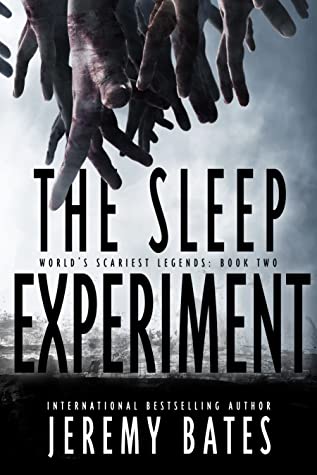
In 1954, at the start of the Cold War, the Soviet military offered four political prisoners their freedom if they participated in an experiment requiring them to remain awake for fourteen days while under the influence of a powerful stimulant gas. The prisoners ultimately reverted to murder, self-mutilation, and madness. None survived.
In 2018, Dr. Roy Wallis, an esteemed psychology professor at UC Berkeley, is attempting to recreate the same experiment during the summer break in a soon-to-be demolished building on campus. He and two student assistants share an eight-hour rotational schedule to observe their young Australian test subjects around the clock.
What begins innocently enough, however, morphs into a nightmare beyond description that no one could have imagined – with, perhaps, the exception of Dr. Roy Wallis himself.
NetGalley
The Nazis spared their lives because they were twins.
In the summer of 1944, Eva Mozes Kor and her family arrived at Auschwitz.
Within thirty minutes, they were separated. Her parents and two older sisters were taken to the gas chambers, while Eva and her twin, Miriam, were herded into the care of the man who became known as the Angel of Death: Dr. Josef Mengele. They were 10 years old.
While twins at Auschwitz were granted the ‘privileges’ of keeping their own clothes and hair, they were also subjected to Mengele’s sadistic medical experiments. They were forced to fight daily for their own survival and many died as a result of the experiments, or from the disease and hunger rife in the concentration camp.
In a narrative told simply, with emotion and astonishing restraint, The Twins of Auschwitz shares the inspirational story of a child’s endurance and survival in the face of truly extraordinary evil.
Also included is an epilogue on Eva’s incredible recovery and her remarkable decision to publicly forgive the Nazis. Through her museum and her lectures, she dedicated her life to giving testimony on the Holocaust, providing a message of hope for people who have suffered, and worked toward goals of forgiveness, peace, and the elimination of hatred and prejudice in the world.








 Schizanthus Nerd