Terrible Worlds: Destinations #3: And Put Away Childish Things – Adrian Tchaikovsky

Mary Bodie’s Underhill children’s books were the inspiration for movies and merchandise. The characters live on in the hearts of the Underlings, who brought their love of the series with them into adulthood.

The series itself was based on stories Magda’s mother, Devaty, told her when she was a child. (Mary was Magda’s pen name.) Devaty claimed to be the “Queen of Fairyland” so she regaled her daughter with stories about Underhill from an asylum.

We catch up with what’s left of the Bodie line at the beginning of the pandemic. Felix ‘Harry’ Bodie, Magda’s grandson, is a minor celebrity with a drinking problem and a curious habit of accidentally running in circles.

“I want you to come and see a wardrobe.”

It turns out that, despite everything Harry has believed up until now, Underhill is real. Unfortunately, all is not well in not-Narnia.

Its residents, which include Timon the fawn, Wish Dog the best dog, Hulder the dryad and Gombles the clown, aren’t exactly as advertised. It’s all a bit decrepit, actually, and there’s nary a Turkish delight in sight. Although there is cosmic dandruff. And swearing, which I’m pretty sure you wouldn’t find in Narnia.

“I am…” Harry said, “not sure what’s going on.”

This is a story of family legacy. It’s about how you respond when the role that was written for you doesn’t line up with reality. It’s characters yearning to fulfil their destiny when the world they inhabit goes off script. It’s portal fiction, which so many of my favourite reads are.

I loved not-Narnia, in all of its dilapidation. I loved its inhabitants, who have been doing the best they can with what they’ve been given. I loved that this felt like one big underdog story, one that was dreary and dismal but that also provided some humour and hope.

Of course, I thought of Narnia frequently and, even when I wasn’t, the book made comparisons for me. The discovery that a fictional world isn’t as fictional as you’d been led to believe reminded me of Lev Grossman’s The Magicians.

I felt a slightly confusing nostalgia about characters I hadn’t grown up with when I read Josh Winning’s The Shadow Glass that I also felt here. I probably spent too much time trying to figure out where on Seanan McGuire’s Wayward Children Compass (Nonsense, Logic, Wickedness, and Virtue) this novella would fit.

This is my first Adrian Tchaikovsky read and it’s safe to say that I’m hooked. I’ve been eyeing off this book for months and it was even better than I’d hoped. The world was literally falling apart, the characters were damaged and I loved every minute of it.

Thank you so much to NetGalley and Solaris, an imprint of Rebellion Publishing, for the opportunity to read this novella.

Rating: 5 out of 5.

Once Upon a Blurb

All roads lead to Underhill, where it’s always winter, and never nice.

Harry Bodie has a famous grandmother, who wrote beloved children’s books set in the delightful world of Underhill. Harry himself is a failing kids’ TV presenter whose every attempt to advance his career ends in self-sabotage. His family history seems to be nothing but an impediment.

An impediment… or worse. What if Underhill is real?What if it has been waiting decades for a promised child to visit? What if it isn’t delightful at all? And what if its denizens have run out of patience and are taking matters into their own hands?

Wayward Children #8: Lost in the Moment and Found – Seanan McGuire

Illustrations – Rovina Cai

Every Heart a Doorway remains my favourite book of all time and I can’t imagine a day when Wayward Children won’t be my favourite series. I look forward to January every year so I can renew the search for my own door.

But … a little piece of my heart breaks every time I’m introduced to a wayward child. I can never forget that childhood trauma connects every wayward. After all, if everything in their lives was unicorns and rainbows, they wouldn’t need a door.

“Some children need to escape from places that will only hurt them, or grind them away until they’re nothing. And some children need to go somewhere else if they’re ever going to grow into the people they were meant to be. The Doors choose carefully.”

It’s safe to say that I hurt for every wayward but Antsy’s story broke me in a way that no other has.

That was the fourth thing she lost: the belief that if something made her unhappy or uncomfortable, she could tell an adult who loved her and they would make everything better.

I didn’t run soon enough. I don’t have words to explain how relieved I am that Antsy did. Not that there wasn’t a cost.

Doors always comes with a cost. Maybe you age out of the world where you belong or you accidentally break a rule and it kicks you out. Antsy’s experience with doors is unlike any we’ve been granted access to before and the cost is similarly unique.

When you consider the reason Antsy found her door in the first place, you’ll realise how appropriate the cost is. People who have experienced trauma that’s a similar shape to Antsy’s will likely have seen this cost play out in their own lives. Maybe not as visibly as in Antsy’s story but it’s still recognisable on the inside.

I doubt we’ll ever walk through Seanan’s door and I don’t think we should ever ask that of her because doors and the worlds that lie behind them are personal. However, between the dedication and the existence of cat-people, I’m pretty sure we’ve never been closer to it.

I would never expect anything different from Rovina Cai but I need to say that the illustrations in this book were practically perfect in every way.

description

I was absolutely delighted to discover that a couple of my favourite Door-touched people had cameos in this book.

Favourite quote:

“If an adult hurt you, that’s on them, not on you. Being bruised doesn’t make you bad, unless you’re a peach, and even a bruised peach is good for making jam.”

I’m thinking of starting a petition to name every month January so I don’t have to wait so long to go on my next not a quest with a wayward.

Rating: 5 out of 5.

Once Upon a Blurb

Welcome to the Shop Where the Lost Things Go.

If you ever lost a sock, you’ll find it here.
If you ever wondered about favourite toy from childhood… it’s probably sitting on a shelf in the back.
And the headphones that you swore that this time you’d keep safe? You guessed it…

Antoinette has lost her father. Metaphorically. He’s not in the shop, and she’ll never see him again. But when Antsy finds herself lost (literally, this time), she finds that however many doors open for her, leaving the Shop for good might not be as simple as it sounds.

And stepping through those doors exacts a price.

Lost in the Moment and Found tells us that childhood and innocence, once lost, can never be found.

City of Nightmares – Rebecca Schaeffer

Welcome to Gotham Newham, a city that can literally crawl with villains, where the authorities are more likely to bribe you than help you. It’s mouldy, it’s smoggy, it smells like “urine and dust, barbecue and burnt coal.” It’s also where you’ll find the the cult that Nessa joined three years ago.

“It’s not a cult.”

Uh huh… It’s called Friends of the Restful Soul. Tell me that’s not a cult!

Ness has been a coward (her words, not mine, but she’s not wrong…) for eight years, ever since her sister turned into a giant spider and started eating people.

See, this is a world where your nightmares become Nightmares. Don’t understand the difference? Well, a Nightmare is what happens when you don’t drink the tap water laced with Helomine or remember to down some Nightmare-prevention drugs and allow yourself to dream. Dreaming results in you waking up as your worst fear.

I had such high expectations for this book that I didn’t think it was possible for it to meet them. I wanted to hold onto my hope so much that I put off reading it for weeks. I needn’t have worried. I was hooked by the second page and I read nonstop until I finished.

Ness is living her best scared life. She runs away from any person, location or situation that could maybe, possibly be dangerous. It’s a good thing she has her badass best friend, Priya, to protect her and the brick box that she calls home (previously the janitor’s closet), the only place she feels safe. Our Ness has trust issues.

I can’t get too close to anyone, you never know who’s already a Nightmare – or who will turn into one.

Badass Priya runs towards danger and is looking forward to the day when she gets paid to kill sea monsters and sky monsters. Basically, any monster will do. Just let Priya at ‘em!

“If it’s attacking me, I kill it. If it’s attacking other people, I kill it. If it’s not attacking anyone, I don’t kill it. I feel like it’s a really simple distinction.”

Then there’s Cy the sigher. He’s probably my favourite character. When you get to know him, you’ll want to be his friend too.

The Nightmares are brilliant, the mayor has an attack pterodactyl and Ness is definitely a cult member.

“Still not a cult.”

I urgently need the sequel!

Favourite no context quote:

“He was still my husband. We just couldn’t communicate anymore because I don’t speak giant cockroach!”

Thank you so much to NetGalley and Hodder & Stoughton for the opportunity to read this book.

Rating: 5 out of 5.

Once Upon a Blurb

Gotham meets Strange the Dreamer in this thrilling young adult fantasy about a cowardly girl who finds herself at the centre of a criminal syndicate conspiracy, in a city where crooked politicians and sinister cults reign and dreaming means waking up as your worst nightmare.

Ever since her sister became a man-eating spider and slaughtered her way through town, nineteen-year-old Ness has been terrified – terrified of some other Nightmare murdering her, and terrified of ending up like her sister. Because in Newham, the city that never sleeps, dreaming means waking up as your worst fear.

Whether that means becoming a Nightmare that’s monstrous only in appearance, to transforming into a twisted, unrecognisable creature that terrorises the city, no one is safe. Ness will do anything to avoid becoming another victim, even if that means lying low among the Friends of the Restful Soul, a questionable organisation that may or may not be a cult.

But being a member of maybe-cult has a price. In order to prove herself, Ness cons her way into what’s supposed to be a simple job for the organisation – only for it to blow up in her face. Literally. Tangled up in the aftermath of an explosive assassination, now Ness and the only other survivor – a Nightmare boy who Ness suspects is planning to eat her – must find their way back to Newham and uncover the sinister truth behind the attack, even as the horrors of her past loom ominously near.

The Light We Carry – Michelle Obama

Michelle Obama’s authenticity and relatability make me want to just sit and listen to her talk about whatever she has on her mind.

There’s a purity that shines through in Michelle’s writing. It’s not naivety or toxic positivity. There’s a self assurance that doesn’t ignore self doubt. It’s a hope that’s infused with kindness, yet there’s an honest discussion about the darkness.

Michelle brings the wisdom she’s earned from different roles in her life to this book: daughter, sister, wife, mother, friend, former First Lady, role model. I love her openness and her tenacity. I’m obsessed with the concept of cultivating a kitchen table of friends.

I want to meet Michelle’s mother and would definitely read a book written by her if she ever changes her mind.

I borrowed this book from the library so didn’t have the luxury of highlighting all of my favourite quotes like I do when I read ebooks. At this point, my ebook purchase is inevitable. Until then, I want to hold onto my current favourite quotes.

Small endeavours help to guard our happiness, to keep it from getting consumed by all that’s big. And when we feel good, it turns out we become less paralysed.

I’ve learned to recognise and appreciate balance when I feel it – to enjoy and make note of the moments when I feel the steadiest, most focused, most clear – and to think analytically about what’s helped me get to that place.

Our hurts become our fears. Our fears become our limits.

The unknown is where possibility glitters. If you don’t take the risk, if you don’t ride out a few jolts, you are taking away your opportunities to transform.

We only hurt ourselves when we hide our realness away.

There’s power in knowing where you don’t want to go.

And then there’s also power in discovering where you want to head next.

Going high is like drawing a line in the sand, a boundary we can make visible and then take a moment to consider. Which side of this do I want to be on? It’s a reminder to pause and be thoughtful, a call to respond with both your heart and your head. Going high is always a test, as I see it.

What I want to say, then, is stay vigorous and faithful, humble and empathetic. Tell the truth, do your best by others, keep perspective, understand history and context. Stay prudent, stay tough, and stay outraged.

But more than anything, don’t forget to do the work.

Rating: 5 out of 5.

Once Upon a Blurb

In an inspiring follow-up to her critically acclaimed, #1 bestselling memoir Becoming, former First Lady Michelle Obama shares practical wisdom and powerful strategies for staying hopeful and balanced in today’s highly uncertain world.

There may be no tidy solutions or pithy answers to life’s big challenges, but Michelle Obama believes that we can all locate and lean on a set of tools to help us better navigate change and remain steady within flux. In The Light We Carry, she opens a frank and honest dialogue with readers, considering the questions many of us wrestle with: How do we build enduring and honest relationships? How can we discover strength and community inside our differences? What tools do we use to address feelings of self-doubt or helplessness? What do we do when it all starts to feel like too much?

Michelle Obama offers readers a series of fresh stories and insightful reflections on change, challenge, and power, including her belief that when we light up for others, we can illuminate the richness and potential of the world around us, discovering deeper truths and new pathways for progress. Drawing from her experiences as a mother, daughter, spouse, friend, and First Lady, she shares the habits and principles she has developed to successfully adapt to change and overcome various obstacles – the earned wisdom that helps her continue to “become.” She details her most valuable practices, like “starting kind,” “going high,” and assembling a “kitchen table” of trusted friends and mentors. With trademark humour, candour, and compassion, she also explores issues connected to race, gender, and visibility, encouraging readers to work through fear, find strength in community, and live with boldness.

“When we are able to recognise our own light, we become empowered to use it,” writes Michelle Obama. A rewarding blend of powerful stories and profound advice that will ignite conversation, The Light We Carry inspires readers to examine their own lives, identify their sources of gladness, and connect meaningfully in a turbulent world.

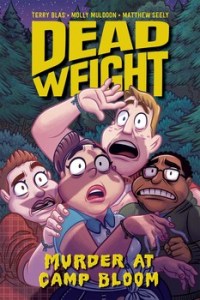
Dead Weight – Terry Blas & Molly Muldoon

Illustrations – Matthew Seely

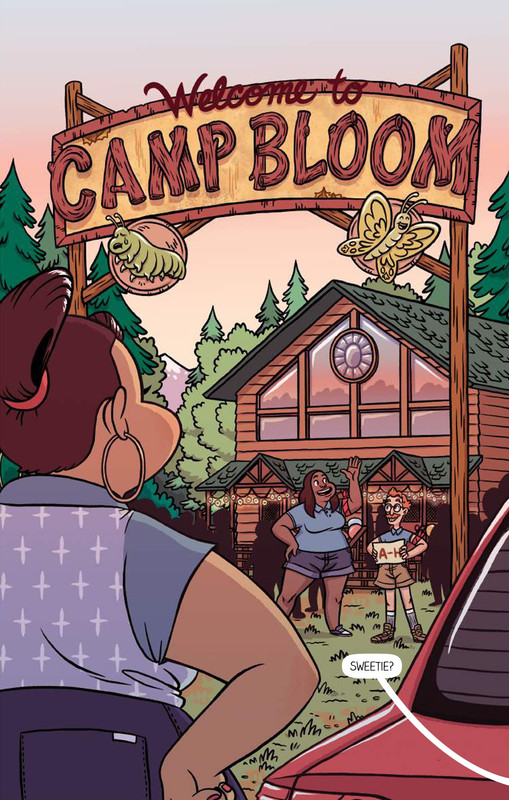
Jesse had her hopes set on attending a fashion program this summer. Her parents had other ideas. She’s just been dumped at fat camp for two whole months!

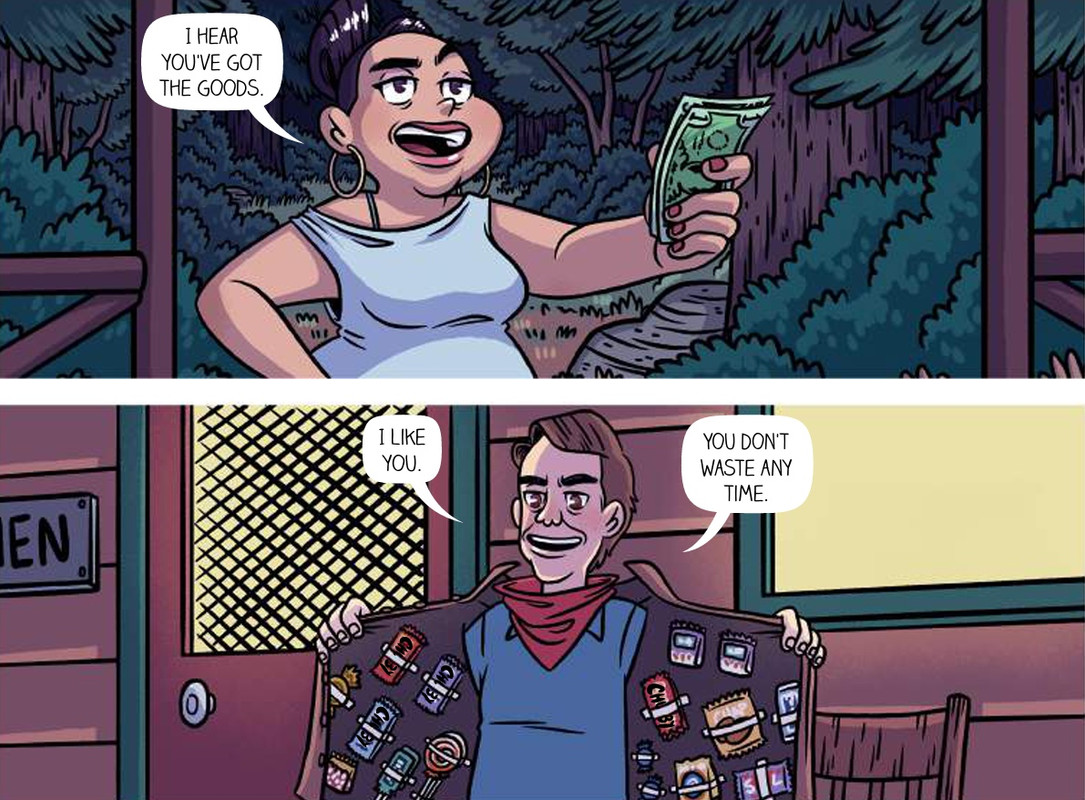
While this is Jesse’s first fat camp experience, some of her fellow campers have endured multiple admissions. It seems that Camp Bloom doesn’t have the best success rate. Maybe someone should speak to the chef…

description

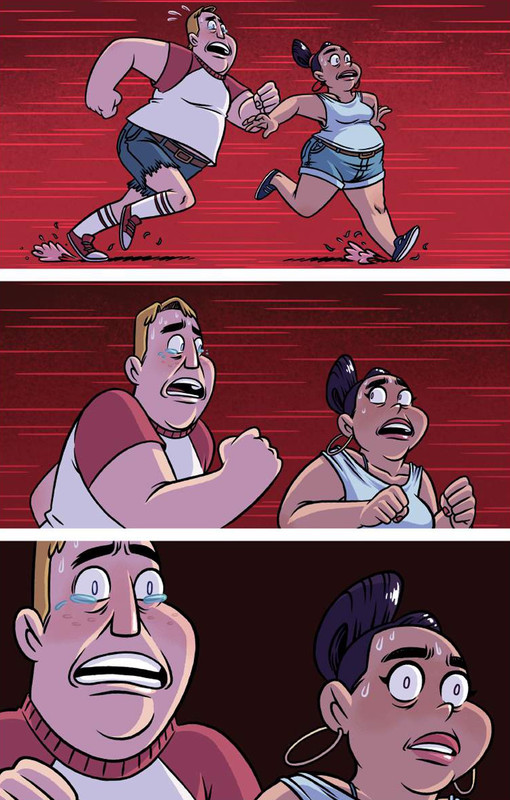
On campfire confession night, Jesse and Noah witness a murder. There’s nothing like murder to inspire an impromptu cardio session.

description

To be fair, if someone told me I couldn’t eat chocolate for two months, I might get a bit stabby too.

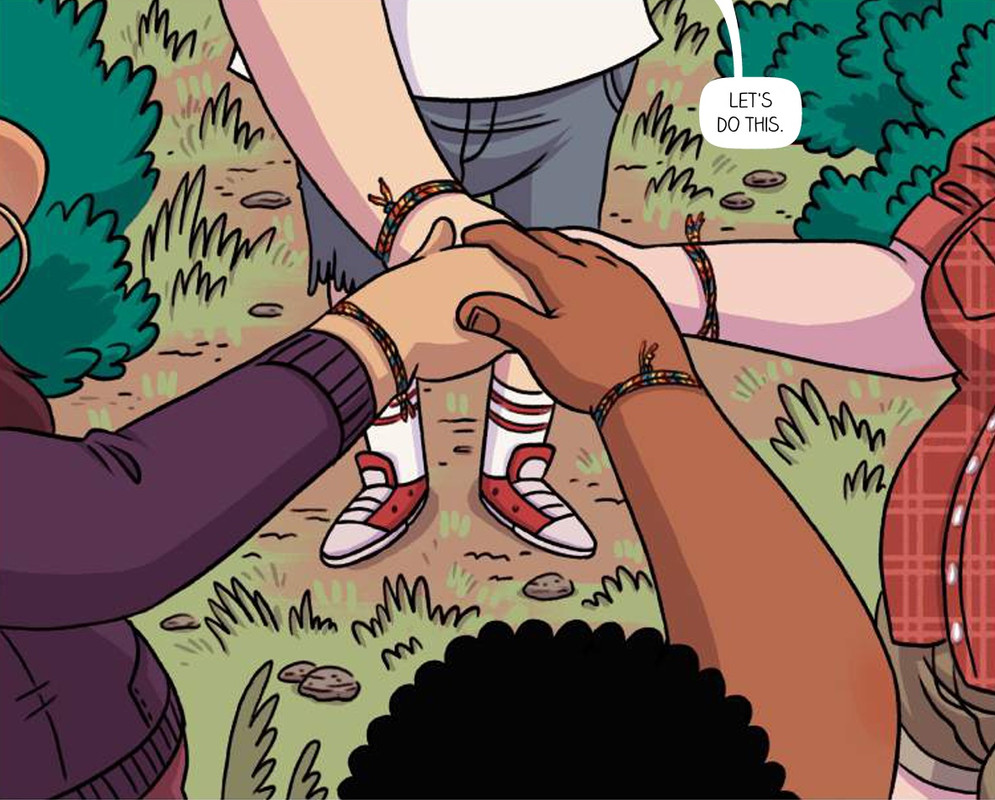
Jesse, Noah, Tony and Kate take it upon themselves to solve the murder mystery.

description

This was an entertaining read. I loved the characters, the representation, the sleuthing and the lack of body shaming.

Throughout the story you discover why each of the main characters are at the camp. My favourite backstory was Kate’s.

Matthew Seely’s illustrations complemented the story well, adding to the humour. The characters are expressive and I loved the colour palette.

I’d like to see Jesse, Noah, Tony and Kate solve another mystery together.

Welcome to Camp Bloom, where you can transform from a crying, fat caterpillar to a happy, skinny butterfly. If someone doesn’t kill you first.

description

Thank you so much to NetGalley and Oni Press for the opportunity to read this graphic novel.

Rating: 5 out of 5.

Once Upon a Blurb

Deep in the Oregon wilderness sits Camp Bloom, a weight-loss camp where “overweight” teens can “get in shape.” Jesse would rather be anywhere else, but her parents are forcing her to go. Noah isn’t sure if he wants to be there, but it’s too late to turn back. Tony is heartbroken at the thought of giving up his phone and internet. And Kate… well, she likes the hikes, at least. As far as these four teens are concerned, it’s just another boring summer.

Until one night, when Jesse and Noah witness a beloved counsellor’s murder. The body’s gone by the next morning, but a blurry photo leads to one clue – the murderer is one of the camp’s staff members!

But which one? As Jesse, Noah, Kate, and Tony investigate, they quickly discover that everyone’s got their secrets… and one of them would kill to keep theirs hidden.

Joy – Corrinne Averiss

Illustrations – Isabelle Follath

Fern adores her Nanna, especially her smile, but Nanna doesn’t smile much anymore.

“It’s like the joy has gone out of her life.”

“What’s joy?” asked Fern.

“Joy is what makes your heart happy and your eyes twinkle.”

Fern takes it upon herself to find some joy and borrow it for Nanna. All afternoon, Fern feels the “whooosh! of joy” but no matter how hard she tries, her catching bag remains empty.

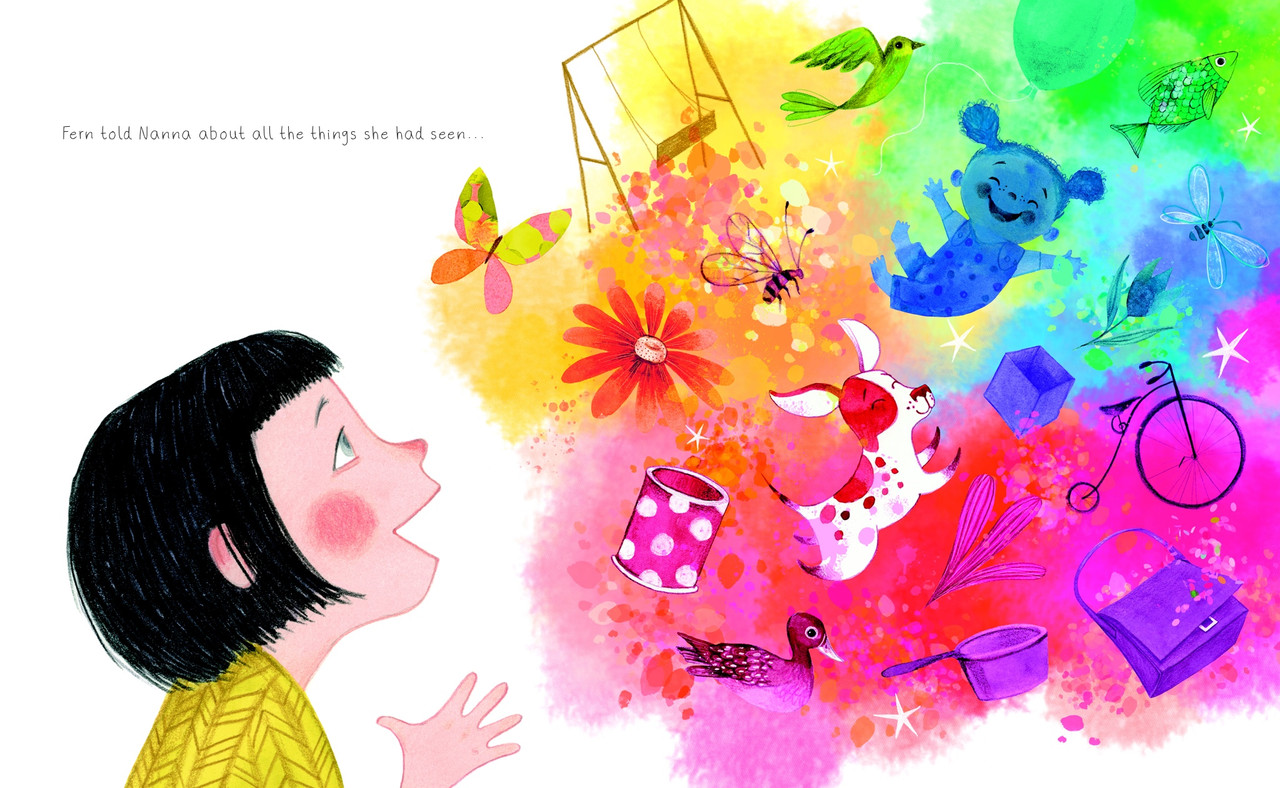
Dejected, Fern returns to her Nanna and tells her about her mission and all of the joy she found.

description

I really liked the relationship between Fern and her Nanna. I loved that Fern was so determined to find some joy for her Nanna but at the same time it saddened me that she was so aware of Nanna’s depression and that she felt responsible for making her feel better.

Fern’s ideas for trying to essentially bottle joy were adorable. I loved the solution: time and connection with a loved one.

Isabelle Follath’s illustrations complemented the story. The characters are expressive and colour is used well to highlight different emotions. I particularly liked the colours and shapes used to depict joy when Fern is attempting to collect it.

Thank you so much to NetGalley and words & pictures, an imprint of Quarto Publishing Group – Frances Lincoln Children’s Books, for the opportunity to read this picture book.

Rating: 5 out of 5.

Once Upon a Blurb

Fern’s Nanna has not been herself of late. And when Mum remarks that all the joy seems to have gone out of her life, Fern decides to fetch the joy back. With her catching-kit at the ready, she goes to the park and finds joy in all sorts of unusual places. Whooooshh! But Fern soon realises that joy doesn’t fit in a bag, or a box or a tin! How will she manage to bring some back to Nanna?

Emotional, funny and uplifting, this beautiful picture book has a strong message about empathy and maintaining loving relationships with our grandparents. Guaranteed to bring a bit of joy into every reader’s life, this story is a pure delight.

Bizarre – Marc Dingman

I’m fascinated by why humans do the strange things we do. This book answered some of the questions I’ve had, as well as some I didn’t have until I started reading.

While I have an interest in neuroscience, I don’t have a scientific background so am usually hesitant to dive into books that explore it. The blurb made this one sound like it would be accessible without a bunch of prior knowledge so I took a chance. I loved it so much that I practically inhaled it.

I have so much more appreciation for the complexities of the brain and how much we still don’t know about how it works. Given how many of its parts are involved in tasks that we often do without a second thought, it’s astounding that we function at all.

Just speaking a simple sentence, for example, requires the successful execution of operations such as word retrieval, the application of syntax (i.e., the rules used to properly arrange words in a sentence), coordinating the activity of the muscles involved in speech, sprinkling in appropriate changes in tone and pitch, and so on. Each of these tasks might require the contribution of different parts of the brain, causing language to be reliant on a large number of functioning brain regions for it to be fully operational.

This book explains how the different parts of the brain work but I’m also much more aware now of the many ways that things can go wrong. Illness, trauma and other unexpected bumps in the road that affect even one part of the brain can have life changing consequences.

Each chapter covers a different area of behaviour: identification, physicality, obsessions, exceptionalism, intimacy, personality, belief, communication, suggestibility, absence, disconnection and reality.

There are so many disorders and syndromes covered in this book, some I’d already heard of but others that were new to me. There’s Cotard’s syndrome, where you’re convinced you’re dead or have lost organs, blood or body parts, and Capgras syndrome, where you believe people close to you have been replaced by imposters. There’s clinical lycanthropy/zoanthropy, pica, hoarding, objectophilia, dissociative identity disorder, the placebo effect, folie à deux, agnosia, alien hand syndrome, Alice in Wonderland syndrome and more.

Despite how strange some of them may seem, they often just represent the extremes of the spectrum of normal human tendencies – and they are not completely foreign to us.

A lot of the stories will stay with me but probably none more so than that of Kim Peek, who had a condition called an encephalocele, “where an incompletely developed cranium allows part of the brain to bulge outside the skull – potentially twisting, distorting, and damaging brain tissue in the process.” Despite considerable brain damage, Kim was able to do something extraordinary.

He eventually could read a page in 8 to 10 seconds while memorizing all the information on it. He even began reading and comprehending the right and left pages of a book simultaneously (with his right and left eyes).

By the time he died in 2009 at the age of 58, Kim had read – and memorized – more than 12,000 books.

Morbid curiosity may make you want to read this book but, thanks to the author’s approach, you never lose sight of the fact that these are real people you’re reading about, people who have often suffered greatly as a result of what’s happening in their brain.

This book did what I’m always looking for in non-fiction. I learned plenty of interesting new things. It held my attention. It made me think. It made me want to learn more.

Thank you so much to NetGalley and Nicholas Brealey Publishing, an imprint of John Murray Press, for the opportunity to read this book.

Rating: 5 out of 5.

Once Upon a Blurb

The human brain is an impossibly complex and delicate instrument – capable of extraordinary calculations, abundant creativity and linguistic dexterity. But the brain is not just the most brilliant of evolutionary wonders. It’s also one of the most bizarre.

This book shows a whole other side of how brains work – from the patient who is afraid to take a shower because she fears her body will slip down the drain to a man who is convinced, against all evidence, that he is a cat, and a woman who compulsively snacks on cigarette ashes.

Entertaining though they are, these cases are more than just oddities. In attempting to understand them, neuroscientists have uncovered important details about how the brain works. Bizarre will examine these details while explaining what neuroscience’s most unusual patients have taught us about normal brain function -ideal both for readers seeking a better appreciation of the inner workings of the brain and those who simply want some extraordinary topics for dinner party conversation.

Contemporary Sand Sculpture – Barbara Purchia & E. Ashley Rooney

During my recent wanderings, I found a duck shaped snowball maker. I bought it for my mother, who loves ducks, despite the fact that if it ever snows where we live it’ll mean there’s something seriously wrong with the weather.

Sans snow, we took this new toy to the beach and proceeded to make some pretty funny duck adjacent lumps of sand. I was especially proud of our best result, which actually looked like a duck (if someone had amputated most of its bill).

Needless to say, if I was to attempt to create a sand sculpture, the result would be abstract at best.

You won’t find the sandcastles from your childhood in this book. These sand sculptures aren’t constructed with a mere bucket and shovel. The tools of this trade can include “bulldozers, pneumatic tampers, generators, cranes, front-end loaders, and huge water pumps to carry water to the top”. Todd Vander Pluym, president of Sand Sculptors International (SSI), has even created a castle that survived a 6.2 earthquake!

Although there are only two ingredients – sand and water – the design possibilities are endless. With imagination and creativity, some engineering and design knowledge, and possession of the right tools, today’s sand artist creates ephemeral, incredible, complex, and “how did they do that with only sand and water” artwork.

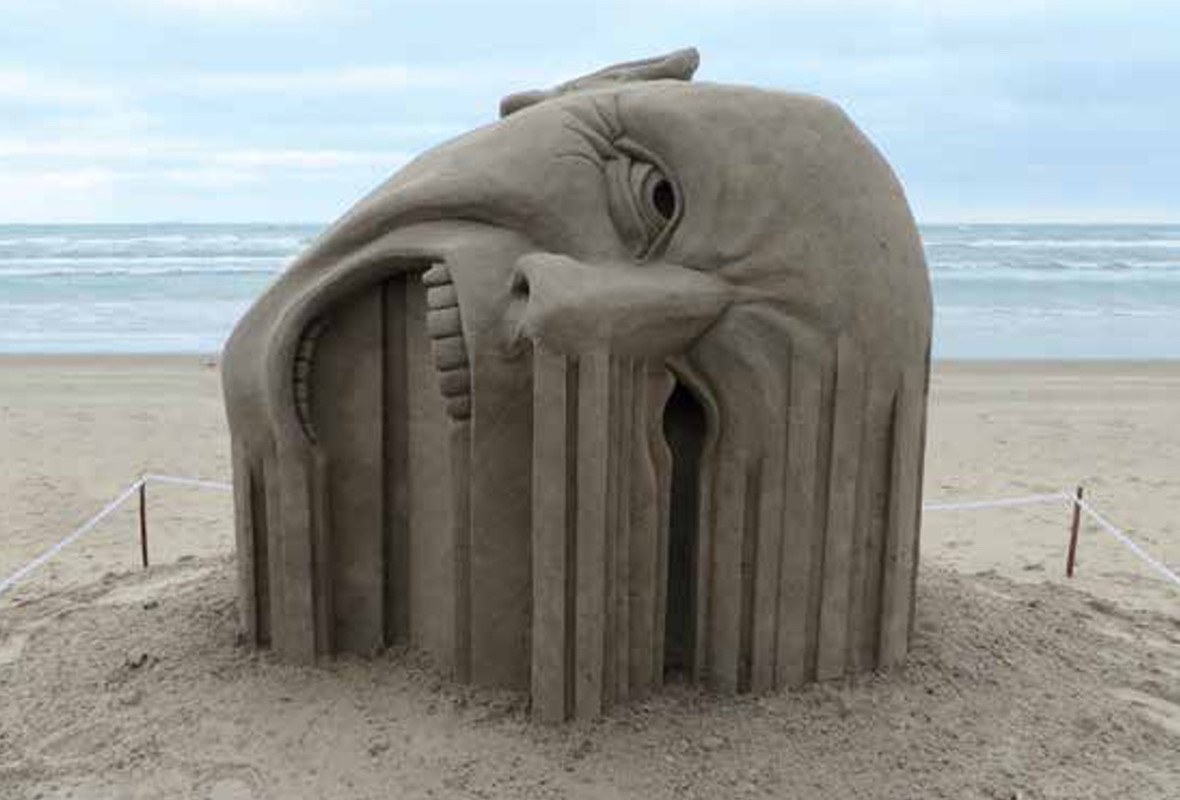
My brain stayed on ‘WOW!’ for the entire book so it’s difficult to choose favourites. Currently, I’m obsessed with:

  • Guy-Olivier Deveau’s Bleeding
description
  • David Ducharme and Marielle Heessels’ My Better Half
description
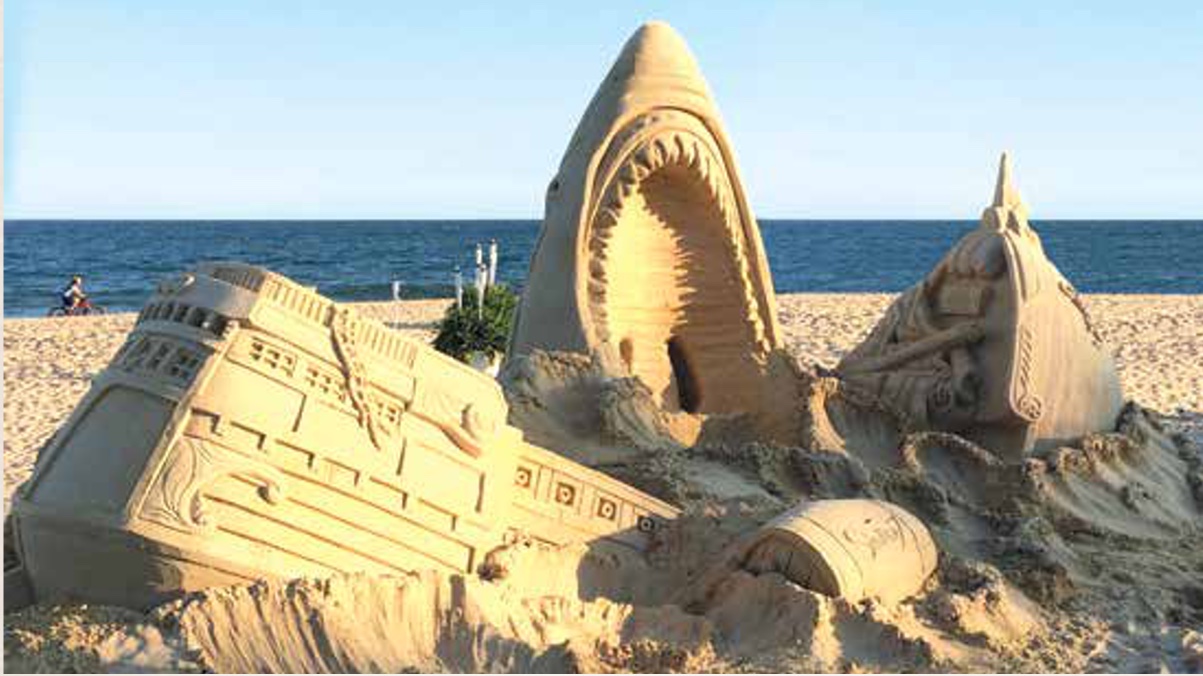
  • Matt Long’s SHARK!
description
  • Jeff Strong’s Consuming Pastime
description

I’m sure my favourites will change every time I revisit this book. I need to find a sand sculpture competition so I can see the artists at work.

Thank you so much to NetGalley and Schiffer Publishing for the opportunity to read this book.

Rating: 5 out of 5.

Once Upon a Blurb

Part performance art and part engineering, sand sculpture has become amazingly sophisticated as artists explore the boundaries of their skill with sand as a medium. Within a very short time, a sculptor can create an awesome, thought-provoking experience that will completely vanish after a few weeks. The photographs are all that’s left. Barbara Purchia and E. Ashley Rooney take you on a round-the-world tour of sandscapes showcasing a dazzling array of sculptural figures, forms, and styles. Behind-the-scenes interviews with the sand masters reveal what motivates them and how they approach their art. Todd Vander Pluym, the world’s premier sand artist and president of Sand Sculptors International (SSI), shares a contemporary history of sand sculpture, and renowned international sculptor Kirk Rademaker describes how he built a new life around this ephemeral medium.The images of these art pieces will have you wanting to stick your toes in the sand!

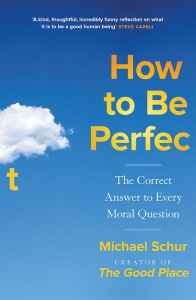
How to Be Perfect – Michael Schur

So, you’re currently season 1 Eleanor but you want to be season 4 Eleanor. How are you going to go about scoring enough points to get into the good place when you don’t have a Chidi in your life? Written by the guy who created Chidi, this book is the next best thing.

Each time I watched Chidi stand at the blackboard I’d feel like I should be taking notes. I wanted to enrol in his class. Now I don’t have to. Michael Schur has read a bunch of long, dry moral philosophy books so you don’t have to. This is your crash course, a road map for map for ethical dilemmas:

What are we doing?

Why are we doing it?

Is there something we could be doing that’s better?

Why is it better?

There’s the “Big Three”:

  • Virtue ethics – “What makes a person good or bad?”
  • Deontology – “the study of duties or obligations”
  • Utilitarianism – a branch of consequentialism, “which cares only about the results or consequences of our actions”.

There’s ubuntu, pragmatism and existentialism.

Life is anguish. Welcome to existentialism!

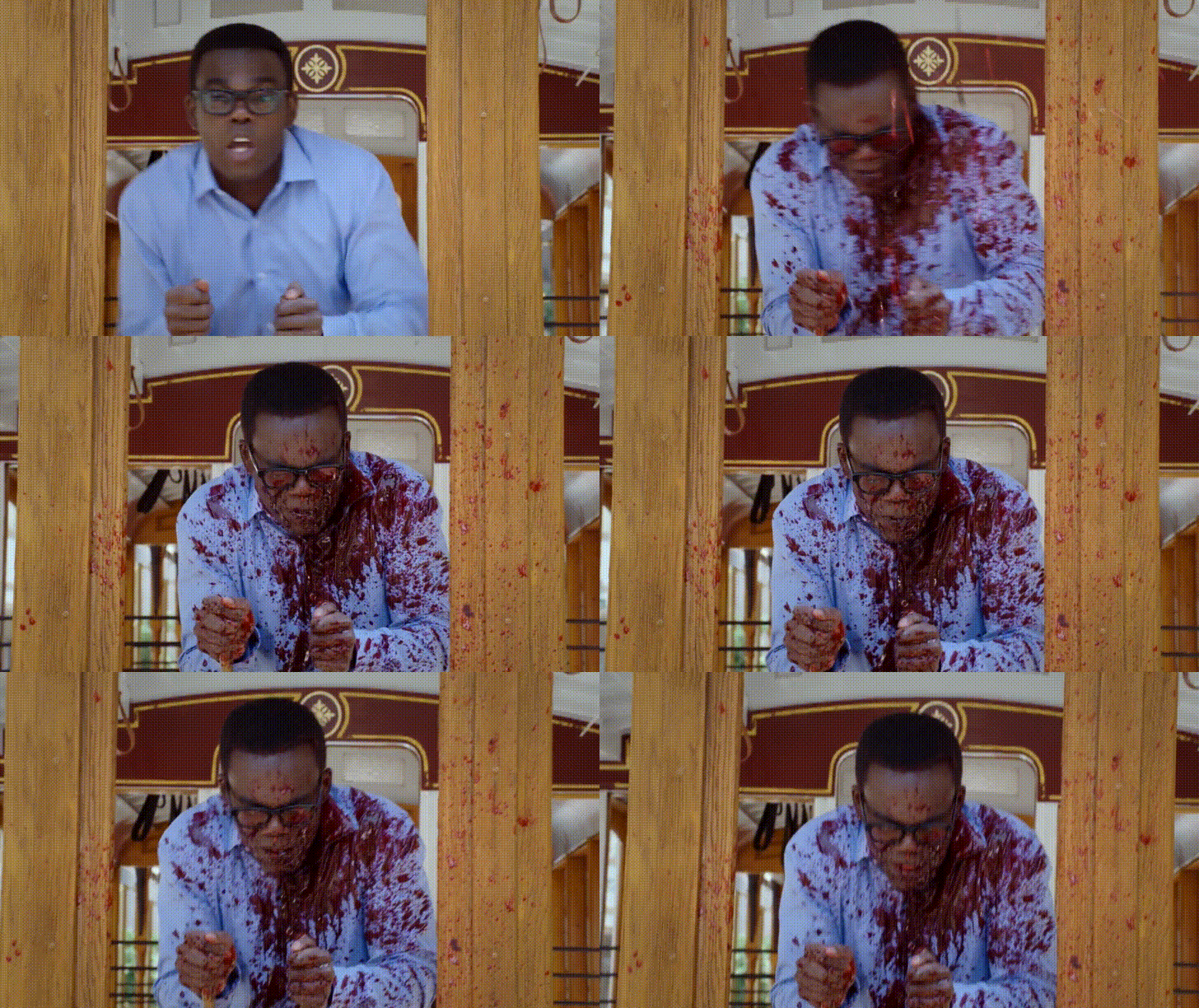
There’s the trolley problem!

description

It’s about trying to do better while acknowledging that no matter how hard we try, we’re not always going to get it right. So it’s also about learning to accept failure.

As soon as I began reading I imagined Chidi teaching me. I thought he’d be the perfect one to narrate the audiobook but then I encountered a problem. Michael Schur has a sense of humour that’s evident in his writing. Chidi? Not so much, and given Chidi’s extreme difficulty in making decisions, it’s likely we’d all be dead before he decided if he was going to sign up for the gig or not. Then my brain helpfully suggested Alan Tudyk for the job and it was all over; I couldn’t move past him and I found myself hearing everything I was reading in his voice. This entertained me as much as the content.

I borrowed this book from the library but plan to buy my own copy so I can continue my journey to season 4 Eleanor. I may have to check out the audiobook to see what it’s like to experience this book without Alan Tudyk in my head.

The trying is important. Keep trying.

I’m not holding the author’s views on pizza against him, but suspect the opposite may not be true.

Rating: 5 out of 5.

Once Upon a Blurb

From the creator of The Good Place and the cocreator of Parks and Recreation, a hilarious, thought-provoking guide to living an ethical life, drawing on 2,500 years of deep thinking from around the world.

Most people think of themselves as “good,” but it’s not always easy to determine what’s “good” or “bad” – especially in a world filled with complicated choices and pitfalls and booby traps and bad advice. Fortunately, many smart philosophers have been pondering this conundrum for millennia and they have guidance for us. With bright wit and deep insight, How to Be Perfect explains concepts like deontology, utilitarianism, existentialism, ubuntu, and more so we can sound cool at parties and become better people.

Schur starts off with easy ethical questions like “Should I punch my friend in the face for no reason?” (No.) and works his way up to the most complex moral issues we all face. Such as: Can I still enjoy great art if it was created by terrible people? How much money should I give to charity? Why bother being good at all when there are no consequences for being bad? And much more. By the time the book is done, we’ll know exactly how to act in every conceivable situation, so as to produce a verifiably maximal amount of moral good. We will be perfect, and all our friends will be jealous. OK, not quite. Instead, we’ll gain fresh, funny, inspiring wisdom on the toughest issues we face every day.

Mort the Meek #3: Mort the Meek and the Perilous Prophecy – Rachel Delahaye

Illustrations – George Ermos

Welcome to Brutalia, where the smell hits you before the locals do. I’m proud to say that my visits thus far have not resulted in ravens eating my eyes. I’ve also somehow managed to avoid being mauled or hugged to death by a Grot Bear.

So why would I want to brave the dangers of Crashbang Cove to return to a decidedly unwelcoming, rat infested island where the locals extend “fists of ferocity”? 

Well, it might have something to do with a trio of locals whose ethos doesn’t quite line up with that of their fellow Brutalians.

“Fighting for what’s right without fighting is always a bit of a struggle,” Mort said. “But, if we surrender, the war on violence will be over.”

Mort, his best friend Weed and tone deaf Punky comprise three quarters of the Pacifist Society of Brutalia. When I tell you Mort and Weed are about to go to war, you’ll understand they’re not exactly thrilled about it.

In this book we meet the locals of Bonrock, who may seem friendly but are they really more interested in torture? We also encounter war toucans, watch poor Doris get demoted and are introduced to Brutalia’s new soup sayer!

I always look forward to the quips at the beginning of each chapter in this series. In the first book, these were made by a couple of chatty, eye hungry ravens. In the second book, we met lobsters Larry and Bruce. This time, we’re introduced to Ratto and Ratty.

Brutalia has long been a place where a misunderstood homonym can result in grievous bodily harm. When you read the author’s bio and discover they studied linguistics, it makes sense how much fun words get to have in this series. It’s easy to imagine the homonyms hanging out with the homophones and the synonyms playing hide and seek with the similes. 

George Ermos’ cover image was what interrupted my scrolling long enough for me to read the blurb of the first book. The illustrations in this book add to the humour. The characters are expressive and there are plenty of fighty, ratty and soupy moments.

Come to Brutalia, where the locals “live like cockroaches and smell like a thousand demon farts”. You won’t be disappointed, although you may need a long, hot shower when you get home.

Favourite no context quote:

“I listen only to the soup.”

Readers with emetophobia may have trouble with some scenes.

Thank you so much to NetGalley and Stripes Publishing, an imprint of Little Tiger Group, for the opportunity to read this book.

Rating: 5 out of 5.

Once Upon a Blurb

When Brutalia’s ever suspicious Queen is forewarned of a new enemy – a nearby island called Bonrock – Mort is worried. As a pacifist, he’s a firm believer that strangers are just friends they haven’t met yet. Then he and his best friend and fellow pacifist Weed are sent to the island to investigate.

But Bonrock is a warm and welcoming place, with luscious landscapes and tropical waters. Mort’s relieved – there’s no need to fight! Until they stumble upon something terrifying… Perhaps there really is trouble in paradise?