Are You Really OK? – Stacey Dooley

Are you really OK? I don’t think there’d be too many people who could answer that question with a resounding yes after living through what the 2020’s have given us so far. Now, more than ever, we need to do whatever we can to look after our mental health. 

An international team of researchers published a report in October 2021 showing that globally there were estimated to be an extra 76 million cases of anxiety in 2020 than would have been expected if the pandemic hadn’t happened, and 53 million more cases of major depressive disorder. 

In this book, Stacey talks about depression, eating disorders, postnatal depression, postnatal psychosis, obsessive compulsive disorder, gambling addiction and psychosis. She also speaks to people who have experienced domestic abuse, as well as those in the LGBTQ+ community who have been discriminated against or abused because of who they are. Finally, Stacey explores how racism and poverty impact on mental health.

While there are statistics (and some confronting ones at that) and information about potential advances in the future for treating specific mental illnesses, where this book shines is the human element. Stacey interviewed young people living with diagnosed mental illnesses and gave them the opportunity to tell their stories. While she never claims to be an expert herself, Stacey spoke with professionals who treat mental illnesses, some of whom have lived experience. 

The insights you are able to get when people feel safe enough to speak candidly about their lives are always going to resonate more than facts and statistics that remove individual people from the narrative. Although I know people with many of the diagnoses covered in this book and have lived experience of others, I learned a lot. I was invested in the stories of the people who shared their story and expect to continue to wonder how they’re doing, particularly Kyle, whose experience with depression was just heart wrenching. 

None of us get through life unscathed. Sean, a psychiatrist Stacey spoke to, is helping to destigmatise mental illness. No one is immune to mental health issues, Sean says. 

‘But if enough wrong things happen that exceed someone’s ability to cope, no matter how privileged they are, they will get ill’ 

While that knowledge is somewhat terrifying, it’s also comforting because it removes blame from the person with the illness.

But is there hope? Absolutely. 

‘For everyone, no matter how awful the situation you are in, no matter how bad the mental illness or the mental disorder is, it can improve.’ 

Because Stacey’s approach is so down to earth and she’s so relatable, her documentaries and both of her books have a warmth to them, almost as though you’re seeing friends catching up and talking about some of their most difficult experiences. I’ll definitely be rereading this book.

Thank you so much to NetGalley, BBC Books and Penguin Random House UK, Ebury Publishing for the opportunity to read this book.

Rating: 5 out of 5.

Once Upon a Blurb

We are not OK… 

I’ve been fortunate enough to meet many remarkable people over the last decade of making documentaries – sometimes in incredibly hostile environments, where they’ve been really up against it – and I’ve seen the devastating effect that poverty, trauma, violence, abuse, stigma, stress, prejudice and discrimination can have on people’s mental health. It has always been the common thread.

Every week, 1 in 10 young people in the UK experiences symptoms of a common mental health problem, such as anxiety or depression, and 1 in 5 have considered taking their own life at some point. In this book, Stacey Dooley opens up the conversation about mental health in young people, to challenge the stigma and stereotypes around it.

Working in collaboration with mental health experts and charities, Stacey talks to young people across the UK directly affected by mental health issues, and helps tell their stories responsibly, in order to shine a light on life on the mental health frontline and give a voice to young people throughout the UK who are living with mental health conditions across the spectrum. 

As well as hearing about their experiences directly, Stacey speaks to medical experts, counsellors, campaigners and health practitioners who can give detailed insights into the conditions profiled and explore the environmental factors that play a part – including poverty, addiction, identity, pressures of social media and the impact of Covid-19.
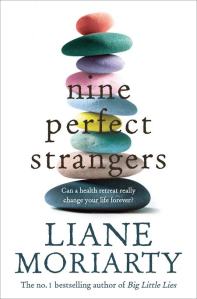
Nine Perfect Strangers – Liane Moriarty

‘In ten days, you will not be the person you are now.’ 

Ten days at a health and wellness retreat. Five of those days spent in silence. Bliss! But you can’t read or write during them. Hold on. What is this place?!

Masha, the director of Tranquillum House, is keen to implement her new protocol. 

Nine people were depending on her. Nine perfect strangers who would soon become like family. 

Stranger 1: Frances, formerly a bestselling romance novelist, has back pain, a bad cold and a paper cut. We hear about her paper cut a lot. 

I’m only temporarily tragic 

Stranger 2: Jessica is married to Ben and loves plastic surgery, maybe more than she loves Ben. 

She couldn’t shake the feeling that if she didn’t record this moment on her phone then it wasn’t really happening, it didn’t count, it wasn’t real life. 

Stranger 3: Ben is married to Jessica and loves his car, maybe more than he loves Jessica. 

He avoided looking at her. He was trying really hard to get over that. 

Stranger 4: Heather, a midwife, is at Tranquillum House with her husband, Napoleon, and daughter, Zoe. 

The rage hit her with the power and momentum of a contraction during active labour. There was no escaping it. 

Stranger 5: Napoleon, a schoolteacher in a disadvantaged area, loves to talk. He’s at Tranquillum House with his wife and daughter. 

But he wasn’t broken. 

Stranger 6: Zoe, who just broke up with her boyfriend, is at Tranquillum House with her parents. 

She tried so hard to be everything for them while they tried so hard to pretend that she wasn’t their only reason for living. 

Stranger 7: Tony runs a sports marketing consultancy and has brilliant tattoos. 😃😃 

Tony would never forget the shocking clarity of the moment that followed. 

Stranger 8: Carmel has four children and is at Tranquillum House to lose weight. 

‘I love everything about this place’ 

Stranger 9: Lars is a family lawyer. 

‘I’m a health-retreat junkie. I indulge and atone, indulge and atone. It works for me.’ 

With a gorgeous location and mandatory smoothies six times a day, our health retreat participants are hopeful that they will go home changed. For the better. All of them have their issues but I suspected from early on that the ethereal Masha might have more than her share.

Reading this book felt like I was bingeing an entire season of a soap opera at once. I don’t mean that as criticism; soap operas are fun to binge. There’s so much drama. The plot lines are delightfully over the top while just barely staying within the realms of possibility. 

I loved the drama of this book and I loved the personalities all bouncing off one another (after they were allowed to speak, that is). Although I laughed at the absurdity of some of the things that happened, nothing happened that I couldn’t imagine actually happening off the page. The entire read felt like a guilty pleasure.

New favourite word: toska. 

There was no adequate English word to describe the kind of anguished longing she felt for something she could not have and did not even want. 

Most of Liane’s books already live in my Kindle’s black hole of good intentions and I loved bingeing Big Little Lies. I’ve been planning to binge this series, too, but wanted to read the book first this time. Now that I’ve read it, I’m even more intrigued to watch Nicole Kidman as Masha and see how it all plays out outside of my imagination. 

This was not how it was supposed to go. 

Rating: 4 out of 5.

Once Upon a Blurb

Could ten days at a health resort really change you forever? Nine perfect strangers are about to find out…

Nine people gather at a remote health resort. Some are here to lose weight, some are here to get a reboot on life, some are here for reasons they can’t even admit to themselves. Amidst all of the luxury and pampering, the mindfulness and meditation, they know these ten days might involve some real work. But none of them could imagine just how challenging the next ten days are going to be.

Frances Welty, the formerly best-selling romantic novelist, arrives at Tranquillum House nursing a bad back, a broken heart, and an exquisitely painful paper cut. She’s immediately intrigued by her fellow guests. Most of them don’t look to be in need of a health resort at all. But the person that intrigues her most is the strange and charismatic owner/director of Tranquillum House. Could this person really have the answers Frances didn’t even know she was seeking? Should Frances put aside her doubts and immerse herself in everything Tranquillum House has to offer – or should she run while she still can?

It’s not long before every guest at Tranquillum House is asking exactly the same question.

The Reckoning: How #MeToo is Changing Australia – Jess Hill

Quarterly Essay #84

Jess Hill’s See What You Made Me Do is one of the best books I’ve ever read about domestic abuse. I was keen to see how she’d tackle #MeToo and have been impatiently waiting for my library’s copies to arrive so I could dive in. 

This essay traces #MeToo from its origins (before it became a hashtag), with a particular focus on how it has played out across Australia’s cultural landscape since 2017. There are examples from the media, education, politics and the legal system, all of which I’d followed in real time but which felt more overwhelming when they were explored one after the other. I don’t know that Australia’s celebrated mateship has ever felt so toxic to me.

There have been battles undertaken in courts, the media and public opinion. We’ve learned just how brutal Australia’s defamation laws are. There are powerful people abusing their power and systems supporting them in their endeavours.

Don’t get me wrong; there have been positives, like #LetHerSpeak. Conversations have taken place that were once considered taboo and there are more people visibly working towards implementing changes to legislation, processes and policies. There are survivors turned advocates who are transforming the way we think about consent and grooming, and their voices have led to others finding their own. Good things are happening.

So, why do I still feel so angry having read this essay? 

Maybe it’s about reporting a sexual assault to the police in 2017 and getting my hopes up about the positive impact #MeToo would have on the way my report was treated. Then being told that there was insufficient evidence to pursue criminal charges and subsequently learning that the investigation consisted solely of the detective phoning my psychologist to ask if I had a mental illness that would cause me to fabricate the sexual assault.

Maybe it’s about something a detective said to me a few months ago when they were trying their darnedest to dissuade me from formally reporting a series of sexual assaults (different detective, different perpetrator). No one ever gets a good outcome, they told me. Even if there is a conviction, and that’s a big if, it’s never going to be enough and what you’d have to go through to get it wouldn’t be worth it.

They talked about the things I would have seen in media (like some of the cases I read about here) and noted that they are the minority, and that I shouldn’t align my expectations with those outcomes. Even when someone reports a rape the same day and there’s physical evidence and CCTV footage, it’s almost impossible to get a conviction.They said they were telling me all of this to help me.

This is the same man who helpfully told me that my having a mental illness would be used against me because it would speak to both my credibility and character. ‘You mean the PTSD I have as a result of the sexual assaults I’d be reporting?’ The very same. Huh.

As I read this essay I wondered if the detective was right, that there’s no point in reporting. But you know what? It’s attitudes like this that contribute to silence, the antithesis of #MeToo. 

[And besides, this is the same police force whose representatives roll their eyes and pull faces at women who are reporting AVO breaches, who say that behaviour that clearly constitute breaches (written in black and white on the AVO) are in fact not breaches at all. Who write down what you say and then neglect to put it in their system so there’s no record you ever made a report. Who you have to insist write it down in the first place and give you an event number because, even though they think you’re overreacting, they don’t understand what this person’s capable of or how they may escalate.]

I’m mad because I read something like this essay and I get hopeful, but then think about all of the peoples’ experiences it doesn’t encapsulate because only some voices are heard. I want change for all of us, not just the lucky few who, let’s face it, probably shouldn’t be called lucky at all. Because they experienced what they did in the first place. Because even if they did get an outcome that looks like a win, it came at a great cost. Because being an advocate continues to cost.

In lesser hands, this essay could have been an absolute mess, but it’s not. At all. It is well written and clearly involved extensive research but, to be honest, I’d expect nothing less from Jess’ work.

It was a compulsive read. I gained even more respect and admiration for the survivors who tell their story publicly. The powers that be, political and otherwise, lost what little faith I still had in them, not that there was much to lose. I want everyone to read this essay and I want to read it again to pick up on anything I missed when I rushed through it the first time.

So, where do I currently stand on #MeToo? Despite my own experiences, I’m stubbornly hopeful. The systems still fail survivors but more and more of us are demanding change, and we’re done being silenced.

Rating: 5 out of 5.

Once Upon a Blurb

In 2021, Australia saw rage and revelation, as #MeToo powered an insurgency against sexism and sexual violence. From once isolated survivors to political staffers, women everywhere were refusing to keep men’s secrets. 

In this electrifying essay, Jess Hill traces the conditions that gave birth to #MeToo and tells the stories of women who – often at great personal cost – found themselves at the centre of this movement. Hill exposes the networks of backlash against them – in government, media, schools, and in our national psyche. This is a powerful essay about shame, secrecy and, most of all, a revolutionary movement for accountability.

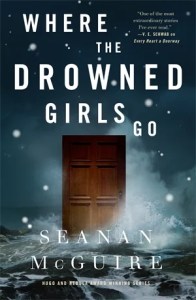
Wayward Children #7: Where the Drowned Girls Go – Seanan McGuire

Illustrations – Rovina Cai

That strange noise you’re hearing? That’s what a contented sigh mixed with an undercurrent of panic sounds like. It’s January so that means I’ve been able to hang out with some Wayward Children, some I already knew and others I’ve just met. Also, it’s January so I now have to wait until the calendar winds its way through all of the other months and says ‘January’ again before I’m allowed to go on my next quest. Yeah, I know. 

No solicitation. No visitors.
No quests. 

In this not-a-quest, we follow Cora, who we already know and love. Cora, who travelled to the Trenches and has quite possibly the best hair ever as a result, broke my heart all over again in this novella. Haunted by her time in the Moors, Cora comes to the very logical but devastating conclusion that if she can only find a way to forget, she will be safe from the Drowned Gods. 

And everyone knew that things from the other side of the door could absolutely leak through into this reality. 

Cora’s decision takes her away from my beloved Eleanor to the Whitethorn Institute, a place where care is weaponised. There we meet more Waywards, their experience of reentry into this world nothing like those we’ve seen so far. I spent much of this book feeling sad and angry and powerless, but I know Waywards and they’re a plucky bunch so hope is never too far away, even when the circumstances look, sound and, dare I say, taste dire.

I love every world I’ve visited so far and every one I’ve heard about in passing. There’s always a part of me, though, that hopes this will be the story of my door, that when I read it I’ll recognise its shape and it will finally open to me. I already know I’m sure, even if my world eventually spits me back out into this one. I’m going to keep believing and it will find me. 

The closest I’ve come to finding my door came in this book, explored in only four sentences. The never ending Halloween of Emily’s world sounded right up my alley and I’m hoping to get to explore it further in a future book.

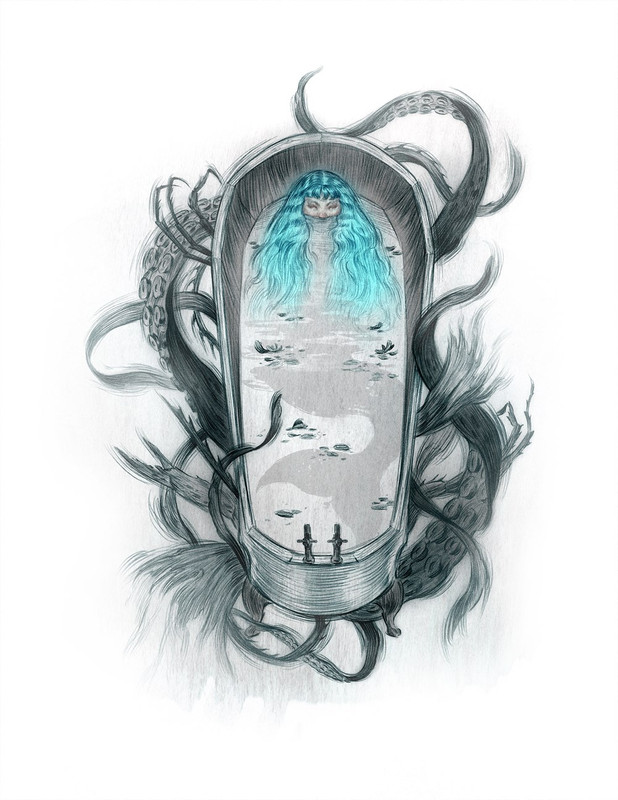
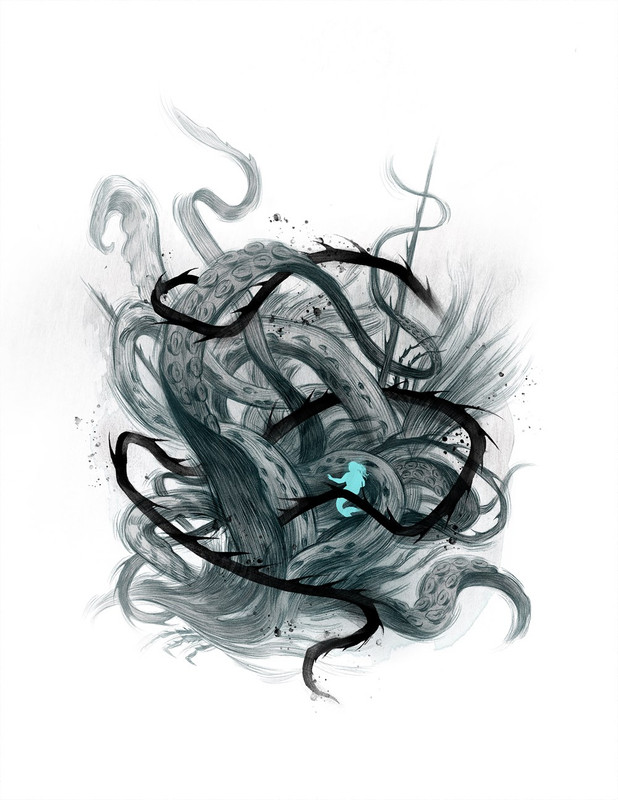
As always, I’m obsessed with Rovina Cai’s illustrations. I’m including two of the ones from this novella here so you can drool over them as well and anticipate the awesomeness of this read if you haven’t been there, done that yet. 

description
description

While I’m still patiently waiting for the time when Seanan is sure enough to share Kade’s story with us, I’m also still hoping to visit Eleanor’s world, as well as those of the nameless girl and one of the matrons. 

“The doors never completely leave us.” 

Rating: 5 out of 5.

Once Upon a Blurb

Welcome to the Whitethorn Institute. The first step is always admitting you need help, and you’ve already taken that step by requesting a transfer into our company.

There is another school for children who fall through doors and fall back out again.

It isn’t as friendly as Eleanor West’s Home for Wayward Children.

And it isn’t as safe.

When Eleanor West decided to open her school, her sanctuary, her Home for Wayward Children, she knew from the beginning that there would be children she couldn’t save; when Cora decides she needs a different direction, a different fate, a different prophecy, Miss West reluctantly agrees to transfer her to the other school, where things are run very differently by Whitethorn, the Headmaster.

She will soon discover that not all doors are welcoming …

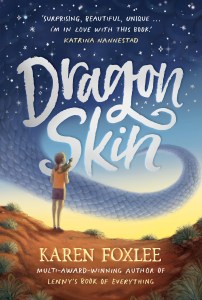
Dragon Skin – Karen Foxlee

Ten year old Pip remembers the before time, the time before Matt moved into her home, the time before his “rumbling rock words” made her feel unsafe. 

Remember to disappear. Remember to stay quiet. Remember to not exist. 

She also remembers Mika (“Mick. Ahhh.”). He arrived at the end of Grade Three, two weeks after Matt moved in. Mika lived with Mrs Jarvinen, his great-grandmother. Pip shared her places with him. 

Mika believed in almost everything! And aliens were his favourite. 

Now Mika is gone and Pip’s mother is a shell of her former self, controlled by Matt and his “weather patterns”, so when Pip finds a dragon that’s barely clinging to life, she knows she needs to look after him all by herself. 

If she told her mum, then her mum would tell Matt and Matt owned everything. Her mother had to tell him everything because he was the king of knowing everything. 

Pip wants to protect Little Fella and make sure he survives. But as Little Fella begins to heal, changes are also taking place within Pip. 

That’s what happened with dragons. You started to believe stuff. 

I loved that this book was set in Australia. There was even some classic Aussie terminology: Pip ‘wags’ school, Archie’s Mum works at the ‘tuckshop’. It delighted me no end when Pip fed Little Fella Weet-Bix, although he did love spaghetti as well.

This book introduced me to a brand new swear adjacent word, ‘Fudge-nuggets’. It was also a surprisingly sensitive exploration of the way a child experiences domestic abuse. Matt is a textbook coercive controller and it made me so sad seeing Pip having to make herself smaller inside her previously safe home. I loved her for her courage and her ability to remain open with her friends despite what she’s experiencing at home.

While the reader is under no illusion about how scary Pip’s home life is, I felt the level of detail provided was age appropriate. Young readers who have experienced domestic abuse will likely see themselves in the way Pip describes her home life and will hopefully see that they’re not alone and that help is available. 

He was dangerous. Dangerous like water. He could seem calm and glassy on top but underneath he was all dark silt and weed. 

We have to find out how to make him happy. We have to solve the mystery of how to keep him happy. We have to make everything perfect. When everything is perfect, he’s happy. 

Pip hated that worse than any of it. Worse than the shouting, the rumbling rock words, the blaring television hiding the meanness. She hated the next day cover-ups. 

Although Pip’s mother doesn’t play a huge role in this book, I appreciated being able to witness her own changes, from being entirely controlled by Matt to the stages of readiness she needed to go through in order to leave her abusive relationship. The fact that this part of the story was told through the topics Pip’s mother searches on her phone showed this progression in a way that highlighted to me how difficult even contemplating leaving can be.

There was potential for an ugly cry, which I cleverly averted by stopping my reading binge abruptly with about ten pages to go. I finished the book the next day, reading a page at a time to save on tissues. 

Love. That’s what you needed mostly, to save things. And Weet-Bix. And spaghetti. 

Rating: 5 out of 5.

Once Upon a Blurb

How to save a dragon:
1) Assemble equipment. Water, Weet-Bix, sugar, syringe, sticky tape, scissors.
2) Believe in everything.

Pip never wants to go home. She likes to sit at the waterhole at dusk and remember Mika, her best friend. At home her mother’s not the same since her boyfriend moved in. They don’t laugh anymore and Pip has to go to bed early, turn off her light and pretend she doesn’t exist. When she finds a half-dead creature at the waterhole, everything changes. She knows she has to save this small dragon and return it to where it comes from. But how?

The Forevers – Chris Whitaker

Spoilers Ahead! (marked in purple)

She was seventeen years old.

She would die in one month.

Mae has grown up knowing that she and her sister, Stella, won’t live long enough to become adults. Asteroid 8050XF11, A.K.A. Selena, is on a collision course with Earth.

So, what do you do when an Extinction Level Event is imminent? Some people put their faith in God and wait for a miracle. Others place their hope in science. If disaster movies have taught us anything, it’s that scientists will consistently fail until just before the credits roll. Then they’ll come up with a solution that’ll save the world. Surely they can do this in real life, too. 

There are the leavers, people “who said their goodbyes or those that simply tired of the wait and disappeared in search of more.” Then there are those who are living like there’s no tomorrow. They figure if you’re not going to live long enough for the consequences to catch up with you, then you might as well do whatever you want.

The countdown is on. There’s one month to go until God performs a miracle, science comes through with the biggest win in the history of the world or everyone dies.

Mae and many others in West spend much of their final month attending school and working. I doubt I would be doing either if I knew the end was nigh. Mae’s also trying to learn the truth behind the recent death of Abi, her former best friend.

Impending doom doesn’t negate the usual high school drama, with popular kids, bullies and outcasts all featured. Some of these kids have significant difficulties in their lives, though, even if you ignore the whole 70 mile wide asteroid that’s going to obliterate them in the very near future thing.

I liked Mae but adored Stella, her eight year old sister, who stole every scene she was in. With such heavy content, I was especially grateful for the comic relief that came in the form of Felix. He was all about sleeping when he’s dead and becoming visible to the love of his life, despite the fact that she already has a boyfriend.

A lot of characters were introduced but I didn’t form a connection with a number of them, due to their personality or because I didn’t get to know them well enough. There’s practically an entire alphabet of content warnings at the end of my review, with so many important issues touched on. However, individual circumstances didn’t always have enough page time for them to be explored in the depth I would have liked. 

For example, for most of the book Sally is pretty much only ever referred to in terms of her weight. She’s the fat girl. She‘s almost always consuming copious amounts of food whenever we see her. She’s fat shamed. A lot. When I finally learned something else about her, I wanted an entire book dedicated to her. There’s so much complexity and emotion there, and it felt like I only just scraped the surface of who she was.

The mystery of what happened to Abi faded into the background at times as the struggles of other characters were explored. There was a resolution, though, and many characters were given the opportunity to do what they needed to in order to finish their stories on their own terms.

Sometimes it took me a while to figure out which character was in a scene with Mae, especially when they’d only be referred to as ‘he’ for several paragraphs before they were named. Some scene changes felt jarring and for a while around the middle of the book I wasn’t even sure if I was enjoying it. 

But this was a compulsive read and Mae and Stella’s relationship kept me invested. An ugly cry snuck up on me at the end and I’m still thinking about several characters. I’m definitely interested in reading more books by this author and I absolutely adored Muhammad Nafay’s cover illustration. 

We made Forever for the creeps and the weirdos, the freaks and the outlaws.

Thank you so much to Allen & Unwin for the opportunity to read this book.

Rating: 3.5 out of 5.

Once Upon a Blurb

Thirty days until the end of the world. What would you do?

They knew the end was coming. They saw it ten years back, when it was far enough away in space and time and meaning.
The changes were gradual, and then sudden.

For Mae and her friends, it means navigating a life where action and consequence are no longer related. Where the popular are both trophies and targets. And where petty grudges turn deadlier with each passing day. So, did Abi Manton jump off the cliff or was she pushed? Her death is just the beginning of the end.

With teachers losing control of their students and themselves, and the end rushing toward all of them, it leaves everyone facing the answer to one, simple question…

What would you do if you could get away with anything?

When Things Get Dark – Ellen Datlow (editor)

This anthology features short stories from some of my favourite writers, including Seanan McGuire. It also introduced me to some writers whose work I hadn’t read before. All are paying tribute to Shirley Jackson.

Like any collection of short stories, there were some I absolutely loved. My favourites in this anthology were those by M. Rickert, Elizabeth Hand, Seanan McGuire, Joyce Carol Oates, Josh Malerman and Kelly Link.

Although the other stories were well written, I often failed to connect with either the main character or the plot. Some I enjoyed, until I realised I’d run out of story before the thing I felt was missing showed up. I don’t expect to love every story in an anthology, though.

Usually when I review anthologies, I’ll include a short quote and a sentence to describe each story: what it’s about, its theme, or what I loved or didn’t love about it. I started doing that here but then abandoned the idea. There were some stories that I couldn’t explain in a sentence without spoiling them for you.

There were others that I couldn’t explain because, quite honestly, I need someone to explain them to me. Perhaps a reread will help me find the missing puzzle pieces. Maybe what I perceived as deliberate ambiguity was actually the literary equivalent of a joke’s punchline going over my head. I may read the review of someone smarter than myself and when they explain it, the lightbulb will finally turn on above my head.

So, instead of giving you an explanation and a quote, I’m only providing a quote here.

Funeral Birds by M. Rickert

The truth was she rarely went to the funerals. Delores was special.

For Sale By Owner by Elizabeth Hand

“That’s trespassing.”

“Only if we get caught,” I replied.

In the Deep Woods; The Light is Different There by Seanan McGuire

She moved here for a haunting, and even if the house refuses to be haunted, she fully intends to be.

A Hundred Miles and a Mile by Carmen Maria Machado

It’s strange, the knowing-not-knowing. It twitches like something that won’t die.

Quiet Dead Things by Cassandra Khaw

“We’re going to die for what happened.”

Something Like Living Creatures by John Langan

“You saw something!” Samantha said.

“Did you?” Kayla said.

“Yes,” Jenna said.

Money of the Dead by Karen Heuler

On one side, life; on the other, death. It was almost, sometimes, as if they could see across the divide, or hear a furtive, melancholy whistle.

Hag by Benjamin Percy

“Without you, the island starves.”

Take Me, I Am Free by Joyce Carol Oates

“Just sit here. Don’t squirm. I’ll be watching from the front window.”

A Trip to Paris by Richard Kadrey

Why won’t you stay dead?

The Party by Paul Tremblay

“I do get into the spirit of my themes. Perhaps too much.”

Refinery Road by Stephen Graham Jones

It was just the three of them, same as it had always been. Same as it would always be.

The Door in the Fence by Jeffrey Ford

“Some people, when they get old, all they can think about is dying. Some, on the other hand, find freedom.”

Pear of Anguish by Gemma Files

The past is a trap and memory is a drug.

Memory is a door.

Special Meal by Josh Malerman

“Do you really not know what today is?” Dad asked. “It’s okay if you don’t.”

Sooner or Later, Your Wife Will Drive Home by Genevieve Valentine

Never be stuck on the road alone, that was the rule.

Tiptoe by Laird Barron

Trouble is, old, weathered pictures are ambiguous. You can’t always tell what’s hiding behind the patina. Nothing, or the worst thing imaginable.

Skinder’s Veil by Kelly Link

Skinder may show up. If he does, DO NOT LET HIM IN.

While I didn’t find any of the stories scary, there were some that were accompanied by a growing sense of dread. Others were unsettling. Then there were those that left behind confusion in their wake. But that’s the beauty of anthologies; there’s usually something for everyone. The times where a question mark appeared over my head? Those stories are probably someone else’s favourites.

Thank you so much to NetGalley and Titan Books for the opportunity to read this book.

Rating: 4 out of 5.

Once Upon a Blurb

A collection of new and exclusive short stories inspired by, and in tribute to, Shirley Jackson.

Shirley Jackson is a seminal writer of horror and mystery fiction, whose legacy resonates globally today. Chilling, human, poignant and strange, her stories have inspired a generation of writers and readers.

This anthology, edited by legendary horror editor Ellen Datlow, will bring together today’s leading horror writers to offer their own personal tribute to the work of Shirley Jackson.

Featuring Joyce Carol Oates, Josh Malerman, Paul Tremblay, Richard Kadrey, Stephen Graham Jones, Elizabeth Hand, Cassandra Khaw, Karen Heuler, Benjamin Percy, John Langan, Laird Barron, M. Rickert, Seanan McGuire, and Genevieve Valentine. 

A Dark History of Chocolate – Emma Kay

You know chocolate accompanied me on my journey through this book, don’t you? You might think that makes this book an outlier. You’d be so wrong. Professional chocoholic here! So much so that if you’re missing some chocolate, it’s fair to assume I‘m responsible.

What this book did give me was a new excuse for my binge reading, chocolate binge combo: immersive reading. You can’t read a book about chocolate without eating some. That would be like watching Willy Wonka & the Chocolate Factory while eating cabbage soup.

I enjoyed learning about chocolate’s dark history, with the obvious exception of the information concerning slavery. In this book, you’ll learn about chocolate’s role in history, from crime to the arts.

Pirates raided ships with cacao on board. Jeffrey Dahmer worked in a chocolate factory. Chocolate is a final meal choice for many death row inmates.

Poisoned chocolate remains one of the most common methods of murder throughout history.

Chocolate was on the menu both the day the Hindenburg crashed and the Titanic sunk.

Chocolate is practically everywhere, it seems. It’s even accompanied astronauts into space.

There was the seemingly ingenious marketing idea of having chocolate rain down from planes, which may have worked better if the ‘bombs’ didn’t result in people below being badly bruised.

Chocolate laced with methamphetamine was marketed to “German homemakers, along with the strap line ‘Hildebrand chocolates are always a delight’. Two to three chocolates a day were recommended to make housework more fun!”

I was sometimes amused and often flabbergasted by the conditions chocolate has been used to ‘treat’ over the years, from headaches, fevers and infections to asthma, heart conditions and burns. It’s also been used as a slimming aid and to “Cleanseth the Teeth”.

Chocolate has even been ‘prescribed’ as a love potion. Handy hint: don’t eat love potion chocolate. You don’t want to know the other ingredients it may contain.

Scattered throughout the book are a bunch of recipes, from Chocolate Creams to the more dubious Chocolate Coated Candied Garlic.

Thank you so much to NetGalley and Pen & Sword History, an imprint of Pen & Sword Books, for granting my wish to read this book.

Rating: 4 out of 5.

Once Upon a Blurb

A Dark History of Chocolate looks at our long relationship with this ancient ‘food of the Gods’. The book examines the impact of the cocoa bean trade on the economies of Britain and the rest of Europe, as well as its influence on health, cultural and social trends over the centuries. Renowned food historian Emma Kay takes a look behind the façade of chocolate – first as a hot drink and then as a sweet – delving into the murky and mysterious aspects of its phenomenal global growth, from a much-prized hot beverage in pre-Colombian Central America to becoming an integral part of the cultural fabric of modern life.

From the seductive corridors of Versailles, serial killers, witchcraft, medicine and war to its manufacturers, the street sellers, criminal gangs, explorers and the arts, chocolate has played a significant role in some of the world’s deadliest and gruesome histories.

If you thought chocolate was all Easter bunnies, romance and gratuity, then you only know half the story. This most ancient of foods has a heritage rooted in exploitation, temptation and mystery.

With the power to be both life-giving and ruinous.

Me Mam. Me Dad. Me. – Malcolm Duffy

It’s always been just Danny and his Mam, Kim. When Kim begins dating Callum, everything seems fine. Callum’s nice to Danny and Kim. But things quickly change. Soon, Callum begins hitting Danny’s Mam, as well as verbally and emotionally abusing her.

Never quite knew what would come out of his mouth. Or what he’d do next.

Danny discovers that what’s happening is called domestic violence and when he reads about it online he becomes scared that Callum will eventually kill his Mam. Danny doesn’t know what to do so he asks his friends what they’d do if someone was hitting their Mam. Almost all of them say they’d tell their Dad, who’d sort it out.

Danny has never met his Dad and doesn’t know anything about him, not even his name. He’s determined to find him, though. Danny will do anything to try to protect his Mam.

Danny speaks Geordie. It didn’t take me as long as I expected it would to get used to his voice, although there are some words he used that I still don’t know the meaning of. Danny is thirteen at the beginning of this book and fifteen at the end. A lot of the time it felt like he was younger.

This book tackles a difficult topic but, for the most part, it was done well. Danny initially doesn’t have words to describe what’s happening at home but once he does he learns about domestic violence. The helplessness of a child in that situation was explored well, with Danny desperate to help his Mam but at the same time he’s powerless to intervene.

I didn’t really buy the resolution of this story. There were a number of scenarios I would have found more likely than what actually happened but it wasn’t outside the realm of possibility.

Thank you so much to NetGalley and Zephyr, an imprint of Head of Zeus, for the opportunity to read this book.

Rating: 3.5 out of 5.

Once Upon a Blurb

Humorous and heartbreaking debut novel with the fresh, funny, honest voice of a 14-year-old Geordie lad recounting the trials and tribulations of family life and finding first love. 

Danny’s mam has a new boyfriend. Initially, all is good – Callum seems nice enough, and Danny can’t deny he’s got a cool set up; big house, fast car, massive TV, and Mam seems to really like him. 

But cracks begin to show, and they’re not the sort that can be easily repaired. As Danny witnesses Mam suffer and Callum spiral out of control he goes in search of his dad. 

The Dad he’s never met. 

Set in Newcastle and Edinburgh, this supremely readable coming-of-age drama tackles domestic violence head on, but finds humour and hope in the most unlikely of­ places. 

Women of a Certain Rage – Liz Byrski (editor)

There’s so much for women to be angry about … Discrimination because of your sexuality, race, ability, gender. The treatment of asylum seekers. Climate change. The inaction of politicians on any number of issues. People refusing to hear you or take you seriously because you’re a woman.

Yet, as women, it’s likely we grew up internalising our anger, swallowing it down, because to be visibly angry is not considered feminine. When we did speak up, our voices were silenced, our experiences minimised, our reality dismissed. Is it any wonder we’re angry?

Even though I’ve been an adult for longer than I was a child, I’ve yet to become comfortable with anger. Anger, when I was growing up, equalled violence and that’s not the manifestation I’m looking for. I want anger to spur me on to action, to propel me to right wrongs, not cause destruction.

In this collection, twenty women write about rage. Among them are writers, teachers, activists and medical professionals, and they range in age from 20’s to 80’s. They have diverse backgrounds but they’re all Australian.

Like other anthologies, some contributions spoke to me more than others. Reneé Pettitt-Schipp’s description of a young asylum seeker’s hope brought tears to my eyes. Goldie Goldbloom’s recollections of Max made me wish I knew him personally. Carly Findlay’s words hurt, as I imagined each scenario she described, but they also left me with hope because there are women like Carly who speak truth into the lives of others.

Rather than tell you what I thought of each contribution I’m going to instead share quotes with you.

Introduction by Liz Byrski

Let us go forth with fear and courage and rage to save the world. – Grace Paley

A Door, Opening by Victoria Midwinter Pitt

Anger is a state of opposition.

It is not merely intellectual, or philosophical. It’s personal.

It is the direct, visceral, spiritual experience of being at odds with something.

Quarantine by Reneé Pettitt-Schipp

Time and time again, it has been proven to me that we either honour the depth of each human emotion, maintaining the fullness of our capacity to feel, or we cut ourselves off and, in walking away from anger and heartbreak, turn our backs on the possibility of our most expansive expression of being a human in this world.

Waiting on the Saviour by Nadine Browne

I wouldn’t be the person I am, nor would I have had the resilience I have, without these women. But nothing we thought or did was ever any good unless it was certified by a man. The path to God itself was through a man. I’m still shocked by how these women can negate their own power, simply by the fact of their gender.

My Father’s Daughter by Jay Martin

I’m still sad, though, that the world that shaped my dad – and still shapes so many men – to believe that their value is in being providers, teachers, knowers of things. It meant I never got to know all of the vulnerabilities, dreams, passions and fears he must have harboured that made him who he was.

Regardless of Decorum: A Response to Seneca’s ‘Of Anger’ by Julienne van Loon

One of the things that makes me angry about Seneca’s ‘Of Anger’ is how bloody reasonable he is throughout.

The Girl Who Never Smiled by Anne Aly

Rage creeps up on you. It’s stealthy like that. Rage has to beat you down first and then, when you’re exhausted and you think you can’t possibly rage any more, it lingers beneath the surface, ready to pounce again. You can see it simmering behind the eyes of the downtrodden, the oppressed and the frustrated – but only if you look hard enough. Rage shadows you.

The Club by Sarah Drummond

The white road markers are plastic and so, instead of a row of smashed wooden posts where he ploughed them down, they flipped back into upright position after the accident like nothing had happened. For some reason, I found this inanimate insouciance disturbing. How dare those posts stand up again. Didn’t they know what had happened here?

Stuck in the Middle by Carrie Cox

Mark Twain, a man who apparently spent his whole life tossing pithy sayings at a sea of scribes, has been credited with comparing anger to an acid, one that can do far more harm to the vessel in which it is stored than to anything on which it is poured. This is how I feel about anger today.

To Scream or Not to Scream by Olivia Muscat

What makes me most upset is that I know where most people’s ignorance is coming from. It’s fear.

Fear of the unknown.

Fear that they may end up like me.

To the Max by Goldie Goldbloom

Goldie remembers how Max would introduce her to them as ‘the love of my life’. Whenever she sold a story, he would grip her forearms and say, ‘The cream always rises to the top.’

The Thief by Nandi Chinna

I found it impossible to articulate the magnitude and intensity of my inner experience and carried it around in my body like a ball of barbed wire that scratched and tore at my insides.

Write-ful Fury by Claire G. Coleman

Fury. It can flow hot and fast like fire dancing along a trail of petrol; it can flow cold, slow and relentless like a glacier; or as cold and breathtakingly fast as an avalanche, leaving me breathless and dying. Either way, when fury passes it’s hard to imagine anything in its path surviving.

Love More by Jane Underwood

Rage sits, like a bulky body part, ready to detonate, able to cause maximum damage. It’s not like the white-hot adrenal flash we call fury, that’s here and gone: you can relieve fury with an upraised middle finger. It’s not like anger – curl up the corner of anger – only sadness and fear there. If you can shift the bulk of a rage – find some squashed high-grade injustice there.

#AustraliaBurns: Rage, a Climate for Change by Margo Kingston

Rage begets action.

The Body Remembers: The Architecture of Pain by Rafeif Ismail

We cannot negotiate with our oppressors without relinquishing part of our own existence.

Everything is Awesome! by Mihaela Nicolescu

The notion of a ‘fair go’ disguises the reality of an unfair system and places the blame on the individual when that system fails them. A genuine ‘mate’ does not judge you for going through a hard time. And an evolved society places more value on the rights of all citizens to have their basic needs met than on the rights of a few citizens to accumulate ridiculous wealth (while one in six children live in poverty).

Uluru Statement from the Heart by Fiona Stanley

I think that in today’s world of corporate, political, bureaucratic and individual corruption and lack of care, we need to convert our anger to action more than ever.

Vicarious trauma: I Was You and You Will Be Me by Carly Findlay

Ableism starts with you.

And it can stop with you, too.

Seen and Not Heard by Meg McKinlay

And what is buried, of course, doesn’t always remain so; when conditions are right – or wrong? – it will vent, even erupt.

Women of a Certain Rage? by Eva Cox

Angry. Cranky. Mad. Can you think of any context when applying these words to a woman would be positive?

Rating: 4 out of 5.

Once Upon a Blurb

This book is the result of what happened when Liz Byrski asked twenty Australian women from widely different backgrounds, races, beliefs and identities to take up the challenge of writing about rage.

The honesty, passion, courage and humour of their very personal stories is engergising and inspiring. If you have ever felt the full force of anger and wondered at its power, then this book is for you.