The Chosen Ones #1: Chosen Ones – Veronica Roth

Some things split your life in half.

It’s been a really long ten days. I’ve finally finished reading this book and I’m so conflicted. As one of my most anticipated reads of the year, there were so many elements I was ready to love. How to do daily life after surviving the battle to end all battles against the big bad. The physical and emotional repercussions years after the event. The various ways different people cope with the memories of trauma. Then there was the unexpected inclusion of some things I absolutely adore reading about but can’t speak about here, because spoilers.

So, why didn’t I devour this book and how did my intended ‘I’m going to shout about it from the rooftops’ become ‘I don’t even know what to say’?

“I’m tired of being celebrated for the worst thing that ever happened to me.”

For a good portion of this book I felt like the story was merely an introduction to the sequel, where stuff will happen. Sure, plenty of stuff happens here too, but there was so much time spent on world-building and catching everyone up on the events of the past ten to fifteen years that I was itching for more. I became frustrated by the descriptions of the buildings the characters were walking past or through; I wanted more action and by the time I got it I was pretty tired.

Sometimes Sloane wondered if the world had been worth saving.

I wanted to get to know our Chosen Ones. I did get to know Sloane, although if the book had been written in first person it probably would have helped me get inside her head more. From the blurb I learned that one Chosen One would not survive this book, and wouldn’t you know it? They’re the one I was most interested in getting to know.

Overall, the remaining Chosen Ones felt mostly two dimensional. I managed some low level frustration for the golden child. The social media star made me want to unfollow their entire character. Then there was the Chosen One that I honestly can’t tell you anything about; I’d need to reread the passages I highlighted to remind me.

The first part of the book really got my hopes up. I love reading about people so damaged by life that they’re trying their best to simply survive, and I’m always enthralled when people who have experienced trauma find ways to overcome it enough to thrive (not that all of our Chosen Ones are thriving). When the second part unexpectedly wandered into territory that I usually actively seek out, my response was more ‘um, they’re doing what now?’ than ‘woohoo!’

But was my experience of this book one big ‘are we there yet?’ No, and that’s part of the conflict I’m left with. I loved Mox. I loved Ziva. I even loved Sloane, despite how many porcupine spines dug into my skin as I tried to get closer to her. I loved the exploration of trauma impacts. I loved the self awareness of this book (yes, the Dark One is a terrible name). I loved the entire concept.

I’ve read so many five star reviews of this book and I envy them because that’s the book I hoped I’d be reading. I expect I will turn up for the sequel, although I will be careful to manage my expectations.

Thank you so much to NetGalley and John Joseph Adams, an imprint of Houghton Mifflin Harcourt, for granting my wish to read this book.

Rating: 3.5 out of 5.

Once Upon a Blurb

A decade ago near Chicago, five teenagers defeated the otherworldly enemy known as the Dark One, whose reign of terror brought widespread destruction and death. The seemingly un-extraordinary teens – Sloane, Matt, Ines, Albie, and Esther – had been brought together by a clandestine government agency because one of them was fated to be the “Chosen One,” prophesised to save the world. With the goal achieved, humankind celebrated the victors and began to mourn their lost loved ones.

Ten years later, though the champions remain celebrities, the world has moved forward and a whole, younger generation doesn’t seem to recall the days of endless fear. But Sloane remembers. It’s impossible for her to forget when the paparazzi haunt her every step just as the Dark One still haunts her dreams. Unlike everyone else, she hasn’t moved on; she’s adrift – no direction, no goals, no purpose. On the eve of the Ten Year Celebration of Peace, a new trauma hits the Chosen: the death of one of their own. And when they gather for the funeral at the enshrined site of their triumph, they discover to their horror that the Dark One’s reign never really ended.

Here Lie the Secrets – Emma Young

Do you believe in ghosts?

Mia is visiting her aunt in Brooklyn over the summer and plans on hanging out with her friend, Tamara, as they save up for their planned road trip.

Meeting Rav was not on the agenda, nor was spending time with him and his colleagues from the Parapsychology Research Institute as they investigate a potential haunting.

Mia is already haunted by the death of her best friend, Holly, and is certainly not wanting to cross paths with any other ghosts.

It is clear the author has spent a significant amount of time researching the methods investigators use to hunt ghosts, as well as the various arguments for and against the existence of ghosts, prior to writing this book.

While I was really looking forward to this read, there ended up being a mismatch between my expectations and reality, and this coloured the way I experienced this book.

After learning about Rav, a student of parapsychology, in the blurb, I spent a lot of time waiting for some creepy, needing to look over my shoulder content. Instead I found the narrative to be more of an exploration of grief. Not necessarily a bad thing, but certainly not what I’d been hoping for.

When I read about a Ghostbusters belt buckle and found a quote from my all time favourite movie, I began my search for Ghostbusters Easter eggs, but never found them. I was initially interested in the discussions exploring why people do or don’t believe in the existence of ghosts but they felt more like info dumps and when the discussions devolved into arguments I lost interest.

I didn’t connect with any of the characters and expected to feel their grief but never did. The information provided about the summer job felt important at the time it was given but seemed more and more irrelevant as the story progressed.

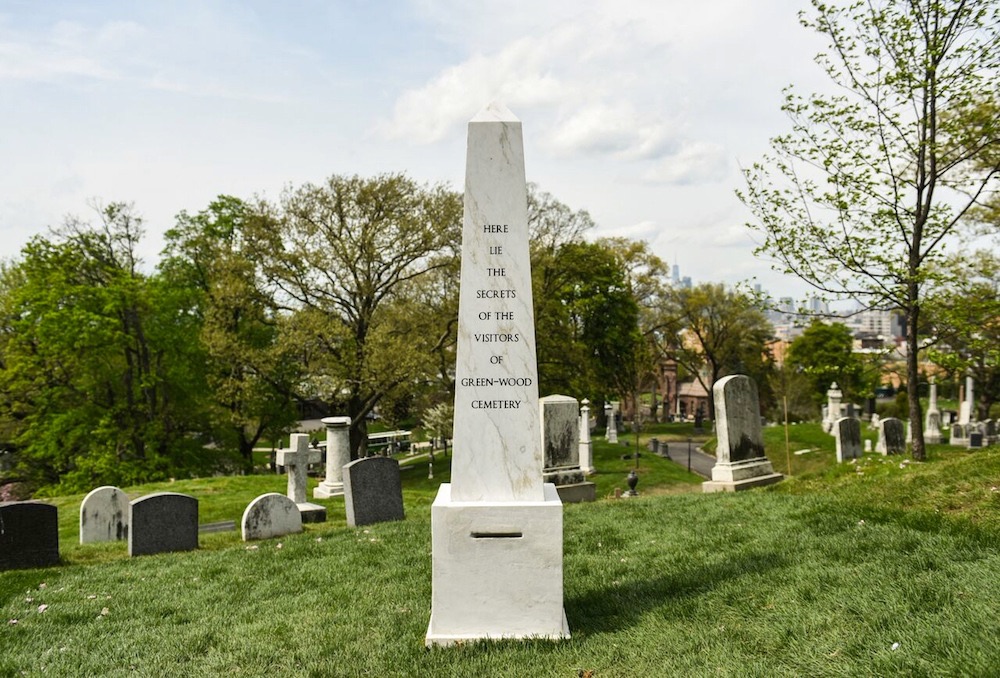
I absolutely loved learning of the existence of the Here Lie the Secrets of the Visitors of Green-Wood Cemetery art installation, where visitors write their secrets on paper and place them into the grave.

description

While this story ultimately wasn’t for me, I would encourage you to check out some of the 4 and 5 star reviews before deciding whether or not this is the book for you.

Thank you so much to NetGalley and Stripes Publishing, an imprint of Little Tiger Group, for the opportunity to read this book.

Rating: 3 out of 5.

Once Upon a Blurb

Mia’s best friend Holly died when they were thirteen. But years later, Holly still hasn’t left her.

Spending the summer in New York, Mia is hoping to escape the visions of Holly that haunt her life at home. There she meets Rav, a parapsychology student, who convinces her to take part in a study into why some people see ghosts. Soon she is caught up in the investigation of Halcyon House, which is reputed to be haunted by a poltergeist. As Mia confronts her fears, what she learns about the house and herself will change her life forever.

What Unbreakable Looks Like – Kate McLaughlin

He names them after flowers. Daisy. Ivy. Iris.

This is Poppy’s story. She’s one of the lucky ones, if you can call her that, considering all of the trauma she has experienced. He called her Poppy. Her real name is Alexa.

Am I ever going to feel like a whole person again?

If you are on the fence, for whatever reason, about how crucial having supportive people around you after trauma is, this is the book for you. I don’t know how extraordinary Lex’s experiences of trafficking are, although I suspect they’re fairly typical. What is extraordinary about Lex’s story is the support she is given from so many people once she’s finally rescued from the life.

The matter of fact way that the events at the beginning of the story are told matched Lex’s flat affect, a result of the trauma she’s experienced, the withdrawal she’s currently experiencing and the dissociation that has helped her survive. I can’t speak to the accuracy of the portrayal of the survivors of human trafficking but given how much I could relate to the trauma impacts of sexual assault that were explored through Lex’s thoughts, feelings and actions, I have to assume they were also pretty much spot on.

This might sound silly (they’re characters in a book, after all) but if you have experienced sexual assault, take what you need from Krys. Take what you need from Jamal, Zack, Elsa, Detective Willis and Dr. Lisa. Each of them, over the course of this book, will say something that will resonate with you. Something you wish someone had said to you. Something you wish you were worthy of hearing (trust me; you are). Personally, I’m trying to figure out a way to adopt Krys or vice versa; I know I need to hear what she’s got to say.

“Honey, you’re here. Sometimes that’s all the strength you need.”

If you’ve experienced sexual assault and haven’t been believed or have needed to find a way to heal without the love and support of the people who should be there for you, I’m so sorry. You deserve to be believed. You deserve to feel safe. You deserve to be loved, safely. You didn’t ask for it, whatever ‘it’ may be, to happen to you and it was not your fault.

“You did nothing wrong. I’m going to keep telling you that until you believe it.”

So, this probably reads like a PSA at this point but, even if there is only a slim chance that someone reading this needs to hear that what happened to them wasn’t their fault, I need to say it.

Prepare yourself for some ugly crying as you hear Lex’s story. If you’re like me, some tears will come as a result of what has been done to her but even more will fall because you’re just so damn proud of her resilience. I was so still as I read this book that I thought I could almost hear my heart breaking at the same time I felt it.

Did I have “Zack is too good to be true” on repeat in my head as I read? Absolutely! Do I hope there really are Zack’s in the world? Do I ever!

When books navigate as much potentially triggering content as this one does it can be difficult to figure out where the line should be drawn between enough information to show the gravity of the situation and graphic content whose only purpose seems to be the shock value. This book walked the line perfectly for me. I learned things about trafficking, particularly around how it can begin, that made my blood boil but the details that were provided, while obviously upsetting, felt necessary to the telling of Lex’s story.

I’m leaving this story (for now) with the wannabe activist inside me trying to figure out the way I can best support people like Lex. Although I’m all sorts of sad and mad after having read Lex’s story, my takeaway is hope. Hope for healing. Hope for more people to understand how to support survivors. Hope that enough people will get riled up over human trafficking that, sooner rather than later, more people don’t experience Lex’s story firsthand.

Thank you so much to NetGalley and Wednesday Books, an imprint of St. Martin’s Press, for the opportunity to read this book.

Rating: 5 out of 5.

Once Upon a Blurb

Lex was taken – trafficked – and now she’s Poppy. Kept in a hotel with other girls, her old life is a distant memory. But when the girls are rescued, she doesn’t quite know how to be Lex again. 

After she moves in with her aunt and uncle, for the first time in a long time, she knows what it is to feel truly safe. Except, she doesn’t trust it. Doesn’t trust her new home. Doesn’t trust her new friend. Doesn’t trust her new life. Instead she trusts what she shouldn’t because that’s what feels right. She doesn’t deserve good things. 

But when she is sexually assaulted by her so-called boyfriend and his friends, Lex is forced to reckon with what happened to her and that just because she is used to it, doesn’t mean it is okay. She’s thrust into the limelight and realises she has the power to help others. But first she’ll have to confront the monsters of her past with the help of her family, friends, and a new love.

Kate McLaughlin’s What Unbreakable Looks Like is a gritty, ultimately hopeful novel about human trafficking through the lens of a girl who has escaped the life and learned to trust, not only others, but in herself.

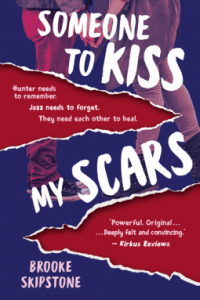
Someone to Kiss My Scars – Brooke Skipstone

Spoilers Ahead!

Before I tell you anything else, I want you to know there are a significant amount of 5 star reviews for this book and would encourage you to check some of those out before deciding whether this is the book for you.

“There are a lot of things I wish I didn’t remember.”

This could well be the most triggering book I have ever read. I knew before I began that sexual assault would be addressed but I read a lot of books that include content of that nature so I thought I’d be okay. I never expected there would be such consistently graphic content. I don’t think for a moment that the author intended any of the scenes to be gratuitous but it felt at times like I was reading a Virginia Andrews novel.

If there’s been more light included in the story to help counter the overwhelming darkness I might have been okay. Instead I felt more and more weighed down by story after story of trauma. Your response may be different to mine and you may be okay after reading this, but if you’re a survivor of sexual assault, please be safe while reading.

Why was his brain assaulted by other people’s stories when he could remember nothing of his own?

Hunter can take bad memories away from other people but each memory he deletes from them adds to his own burden. Given how their traumas are both related to sexual assault and that they’re best friends, I had trouble believing Jazz could so easily give her memories to Hunter.

While I definitely understand the desire to erase traumatic memories, it still felt selfish of Jazz to ease her burden by heaping it instead on someone she cared about. Hunter doesn’t feel the way I do about this. I didn’t want Jazz silenced; I wanted her to be able to share her story with someone. My only problem with this was the choice to delete memories you don’t want by adding to the trauma of another person.

I balked and very nearly threw my Kindle across the room when a victim of child sexual abuse described their perpetrator as seducing them.

I wanted to know more about Dr Ru and his ‘treatments’, particularly how many other potential Hunters there are wandering around and if the side effects of the treatment differ between patients.

I was interested in spending more time exploring the changes that took place in people when their traumatic memories were removed and wanted to know the long term effects Hunter would experience by overloading his mind with other peoples’ trauma.

Thank you so much to NetGalley and DartFrog Books for the opportunity to read this book.

Rating: 3 out of 5.

Once Upon a Blurb

Hunter needs to remember. Jazz needs to forget. They need each other to heal in this teen thriller of survivor love.

Hunter’s past is a mystery to him, erased by a doctor at the direction of his father. But memories of the secret trauma begin to surface when Hunter sees other people’s memories – visions invading his mind with stories of abuse, teen self-mutilation, rape, and forbidden sex.

His best friend Jazz has dark and disturbing memories of her own that she hides behind her sass and wit. Hunter discovers he can rescue the victims, even though he risks adding their suffering to his own.

Hunter and Jazz kiss each other’s scars and form a bond of empathy no two teens should ever need.

Fig Swims the World – Lou Abercrombie

Spoilers Ahead!

I’m sick of my mother controlling me. She’s hacked into my life for too long, insisting on her ‘It’s my way or the highway’ rules; on me having to follow her timetable, dressing the way she suggests; achieving the New Year’s resolutions she makes for me.

Mubla decides what her daughter’s New Year’s resolution is going to be each year. Fig isn’t allowed to quit or fail, even if she hates the goal her mother has chosen. This year Mubla has signed Fig up for acting lessons. Fig doesn’t want to act and the idea of being on a stage terrifies her.

Fig has had enough of her mother controlling her. She decides to make her own resolution: Fig is going to swim the world! There’s just one catch; she can’t swim. Oh, and she’s scared of swimming. And of plenty of animals that live in the water. And of being alone. And the list goes on.

Speaking of lists, Fig loves making them. She also loves maths. Both will come in handy as she plans her adventure.

“It’s as much about the mental challenge as the physical. All you need is self-belief …”

I was looking forward to following Fig’s adventure around the world and when I learned of her struggles with anxiety I was even more invested in her success. I was keen to watch her learn to manage her anxiety, striving to achieve a goal that scared her. However, the more I got to know Fig the less I liked her. She was selfish and spoilt, and she annoyed me so much. The majority of the time Fig was more concerned with getting caught than with the impact her disappearance would be having on the people who love her.

I’ve disliked the main character in other books and still enjoyed the story though, so my frustration with Fig wouldn’t have been an issue for me if it wasn’t for my inability to suspend my disbelief. I read a lot of children’s and YA books and usually don’t have a problem with this. In this instance though, I think it would have helped if I could have read Fig’s story when I was a child. Unfortunately, adult me kept getting distracted, having trouble believing Fig’s year would have transpired the way it did.

Although her parents are supposedly searching for Fig and there’s a social media campaign to find her, she manages to elude everyone for months when this should not have been the case. Why?

  1. Fig used her mother’s credit card to finance the travel portion of her adventure. Her mother and/or the Police could have easily tracked her every step of the way. Why didn’t her mother advise her credit card company that the charges were fraudulent and cancelled them? Fig couldn’t have continued travelling all over the place if her travel reservations were cancelled. If, as her mother claimed, she knew where Fig was then why didn’t she go and bring her home immediately?
  2. Fig uploaded photos of herself to social media along the way. Yes, her account was set to private some of the time but surely someone could have done a reverse image search, figured out her alias and found her by checking the metadata on her photographs.

This family seem to have the kind of money I could only dream of. The swimming equipment that Fig purchased with a “leftover birthday gift voucher” would be equivalent to my income for about two months. Fig doesn’t understand why her mother won’t trust her when she’s previously given her no reason not to, and I understand wanting to rebel against a controlling parent. However, the amount of money Fig must have stolen from her parents and her disregard for the morality of this decision got under my skin.

I had a particular soft spot for Jago, Fig’s younger brother. I wanted to get to know him better. I don’t know how Fig could leave Jago without really considering how her absence would affect him. I also didn’t think she was a good friend to Stella, who was supposed to be her best friend. I wish I could have spent more time with Sage and Myrtle; they were interesting enough to warrant an entire book dedicated to their lives.

Some scenes were too convenient for me and others quite predictable. It seemed awfully convenient for Fig to be seated next to an open water swimmer on a plane when she needed information and encouragement specific to this. The identity of one of the people who follows Fig on social media seemed obvious to me, yet she didn’t figure out who it was until near the end of her adventure. I expected the reveal about one of the minor characters, which happened late in the book, once the first clue was planted.

I admired Fig’s determination in facing her fears and achieving her goal, despite the anxiety she experienced, but I wanted to give her a good talking to whenever she felt the need to complain while she was doing exactly what she wanted.

I hate sailing! I’m sick of this trip!

I’ve loved all of the other books published by Little Tiger Group as much, or even more, than I expected to, so I’m really disappointed that this one didn’t work for me. If I’d managed to get out of my head early on when I was questioning the practicalities I probably would have been able to just keep swimming. Please read some other reviews before deciding if this is the book for you or not. I hope it’s a five star read for you.

Bubble, bubble, breathe.

Thank you so much to NetGalley and Stripes Publishing, an imprint of Little Tiger Group, for the opportunity to read this book.

Rating: 3 out of 5.

Once Upon a Blurb

Fig Fitzsherbert is good at a lot of things: making lists, playing the piano, advanced mathematics. But it’s never quite enough for her high-flying mother, who every New Year’s Day sets Fig an impossible resolution. So one year, Fig decides to set her own challenge instead: she’s going to swim her way round the world. There’s just one tiny problem … Fig can’t swim. Taking it one length at a time, Fig embarks on the adventure of a lifetime. But with her mother closing in, will she be able to keep her head above water and complete her challenge?

Yes to Life in Spite of Everything – Viktor E. Frankl

Viktor Frankl, like anyone who endured the atrocities of the Holocaust, is someone I don’t have the vocabulary to describe. I’m in awe of the resilience and oftentimes almost unfathomable positivity of anyone who has lived through experiences I can’t even imagine.

What’s even more extraordinary is that the lectures Frankl gave, which are the basis of this book, were presented only nine months after his liberation from his final concentration camp.

With an introduction by Daniel Goleman and afterward by Franz Vesely, Viktor’s son-in-law, this book comprises three of Frankl’s lectures:

  • On the Meaning and Value of Life
  • On the Meaning and Value of Life II
  • Experimentum Crucis.

These lectures focus on suicide, forced annihilation and concentration camps respectively. With such difficult content I had expected this read to be quite depressing, but there’s hope running through even the darkest of themes. Given the author’s belief that we can find meaning regardless of our circumstances, this hope felt particularly appropriate.

This meaning, Frankl asserts, can come through “our actions, through loving, and through suffering.” Meaning doesn’t only come from work. Illness, physical or mental, doesn’t necessarily equal loss of meaning. Suffering can be either meaningful or meaningless.

Some of the early text read the way some university philosophy lectures I’ve attended felt, where I was anxious for the lecturer to get to the point, but these sections were the groundwork for what was to come. Frankl gives examples of patients he treated and people he encountered in concentration camps, and these provided the answers to ‘how does this theory apply to real life?’, which is something I always seek.

The third lecture was the one that I found most insightful. Building on the two previous lectures, Frankl discusses his thoughts on the “psychological reactions of the camp prisoners to life in the camp.” Learning how this lecture specifically related to his own ability to find meaning was inspirational.

It can be tempting, when someone talks about the importance of your attitude or finding meaning in suffering, to get into ‘yeah, but’. Yeah, but how would they feel if they were in my situation? Yeah, but what qualifies them to speak to me about suffering? It’s hard to ‘yeah, but’ when the person you’re hearing it from is Viktor Frankl.

While Frankl specifically says that no one’s suffering can be compared to anyone else’s I still find it difficult to think of any of my experiences, not matter how painful they are for me, to be comparable to those who have been subjected to concentration camps. After reading this book part of me wants to admonish myself for having a whinge about any problem I face. However, the overwhelming takeaway for me is if people like Viktor experienced what they did and still managed to find hope and meaning, then it is always possible for me, no matter what comes my way, to change my perspective.

To say yes to life is not only meaningful under all circumstances – because life itself is – but it is also possible under all circumstances.

Thank you so much to NetGalley and Rider, an imprint of Ebury Press, Penguin Random House UK, for the opportunity to read this book.

Rating: 4 out of 5.

Once Upon a Blurb

Just months after his liberation from Auschwitz renowned psychiatrist Viktor Frankl delivered a series of talks revealing the foundations of his life-affirming philosophy for which he would become world famous.

Despite the unspeakable horrors in the camp, Frankl learnt from his fellow inmates that it is always possible to say ‘yes to life’. This profound and timeless lesson is amongst many in this remarkable collection now publishing in English for the very first time.

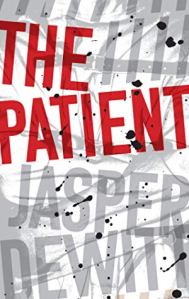
The Patient – Jasper DeWitt

Spoilers Ahead!

But every hospital, even with patients like these, has at least one inmate who’s weird even for the mental ward.

Patient name: Joe

Date of First Admission: 5 June 1973

Patient’s Age at Time of First Admission: 6

Previous Treatments: Unknown

Current Treatments: Mild antidepressants and sedatives

Treatment Administered By: Nessie, Nursing Director

Diagnosis: Disputed; his “symptoms seemed to mutate unpredictably”

Patient Release Date: N/A

This type of patient is obviously insane, but nobody knows how they got that way. What you do know, however, is that it’ll drive you insane trying to figure it out.

When Dr. Parker H — begins working as a psychiatrist at Connecticut State Asylum he’s young, arrogant and confident he will be able to cure the patient the rest of the staff believe is incurable.

“So, tell me. Why do you want to attempt therapy on an incurable patient?”

Joe has been a patient at CSU for over twenty years and no treatments have worked. It’s gotten to the point where he’s almost entirely isolated due to the fact that the people who attempt to treat him either die by suicide or wind up admitted to CSU themselves.

I’ve also come to a conclusion: Whatever Joe has, I’m sure we can’t cure it. I don’t even think we can diagnose it. It’s obviously not in the DSM.

If it turns out that psychiatry isn’t the answer for this man, then who do we need to call instead?

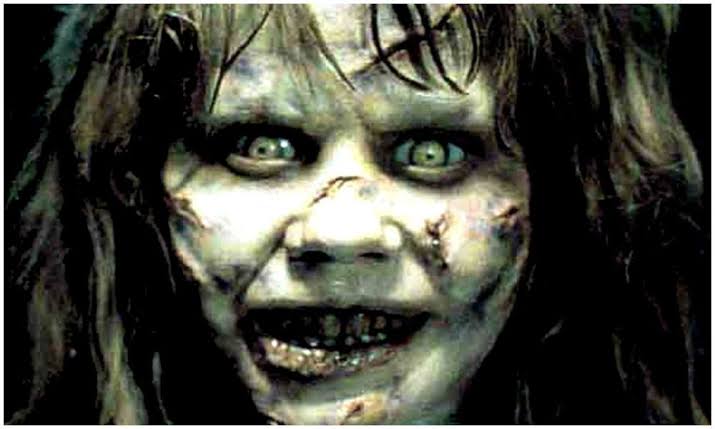
A priest?

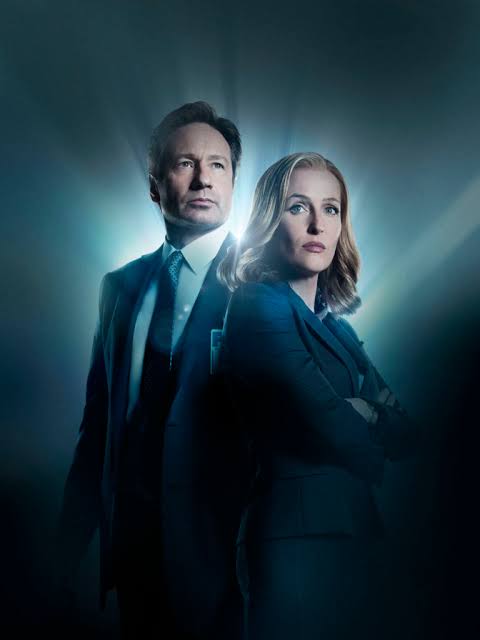
Mulder and Scully?

Moose and Squirrel?

(Hello, boys)

Dr H — adds instalments of Joe’s story on “a now-defunct web forum for medical professionals” over the course of seven weeks, his own recollections interspersed with physician’s notes. We’re told that all names have been changed.

The first instalment, where Dr H — describes CSU, was interesting but it made me wonder if the narrative was going to end up fairly dry. I needn’t have worried. I soon became hooked, searching the pages for clues that would help me diagnose Joe. I love stories set in asylums so I was probably always going to enjoy this book but I was surprised by how compulsive this read became.

I planned to only read the first entry to get a feel for the book before tackling something that publishes sooner. However, this one ended up jumping the queue and I am already trying to figure out when I will have time for a reread. I’m very grateful to have had the entire story to binge on; it would have frustrated me so much if I’d had to wait for new instalments to become available.

It’s been a couple of days since I finished reading and I want to compare theories with someone. Since I don’t know anyone else who’s read it yet I need to blurt something out here. But, SPOILER AHEAD! I have a theory about the end of the book but it’s based on a spoiler so PLEASE don’t read the next paragraph until you’ve finished the book.

⚠️ I have my suspicions about Jocelyn. I could be entirely off base here but I think she was killed by ‘Joe’ when he attacked her, and he then shapeshifted to become her. I want her pregnancy to result in a creepy human/whatever-Joe-is hybrid so I can hopefully find out more about what Joe actually is in a sequel (if there is one). ⚠️

I’m really hoping for a sequel as I have plenty of unanswered questions and need to know what’s next for Dr H — and Joe. I also need some information about Joe’s sister.

Thank you so much to NetGalley and HarperCollins Publishers Australia for the opportunity to read this book.

Bonus Content: A prequel to this book, I used to get letters from my nightmares, was available to read on Reddit at the time I wrote this review. While most parts are available to read on the Reddit website I needed to download the app to read parts 3 and 8 due to sensitive content. While the prequel answered some of my unanswered questions I would recommend you read The Patient first. Had I read the prequel first I would have had a better idea of where Joe’s story was heading and this would have taken away some of the joy of discovery.

Rating: 4.5 out of 5.

Once Upon a Blurb

In a series of online posts, Parker H., a young psychiatrist, chronicles the harrowing account of his time working at a dreary mental hospital in New England. Through this internet message board, Parker hopes to communicate with the world his effort to cure one bewildering patient.

We learn, as Parker did on his first day at the hospital, of the facility’s most difficult, profoundly dangerous case – a forty-year-old man who was originally admitted to the hospital at age six. This patient has no known diagnosis. His symptoms seem to evolve over time. Every person who has attempted to treat him has been driven to madness or suicide.

Desperate and fearful, the hospital’s directors keep him strictly confined and allow minimal contact with staff for their own safety, convinced that releasing him would unleash catastrophe on the outside world. Parker, brilliant and overconfident, takes it upon himself to discover what ails this mystery patient and finally cure him. But from his first encounter with the mystery patient, things spiral out of control, and, facing a possibility beyond his wildest imaginings, Parker is forced to question everything he thought he knew.

This is How I Will Strangle You – Gideon Haigh

While many subjects that were once taboo are now openly discussed, incest is not one of them. It’s something that’s so difficult to even wrap your head around, so reading about it is never going to be easy.

Natasa, the eldest child of Peter and Ruby, endured horrific abuse by both of her parents. Growing up in Australia in the 1970’s, Natasa was failed by all of the adults in her life. Her story is a prime example of how people and institutions that could and should have protected an already vulnerable girl from further abuse failed. Miserably. Countless times. From a Case Closure Summary:

There are at least nine agencies that I know of that have been involved with this family over the past four or five years, none have made any real progress with the family.

So many of these agencies were aware of the physical and sexual abuse Natasa was experiencing, or at the very least suspected it was the case, but failed to intervene.

Natasa’s story is graphic and disturbing, reminding me in many ways of Dave Pelzer’s recollections of his childhood. While there’s a part of me that hopes child protection practices have come so far since the 1970’s that Natasa’s story could never happen again, there’s the other part that knows Natasa is not alone, that there are other Natasa’s experiencing the unthinkable right now.

Originally included in an edition of Griffith Review, Natasa’s story is expanded here and includes letters, reports, emails, photographs and excerpts of Natasa’s own written recollections. The author has also included quotes from professionals in the fields of criminology and medicine, as well as theories by social scientists and psychiatrists. Effects of incest, such as retrospective blame and isolation of affect, are also explained.

Given there were almost 2000 pages of documents collated from medical, therapeutic and legal records, the final word count felt too limited. While I felt like a voyeur reading the graphic details of some of Natasa’s most painful memories there were other aspects of her life that were barely touched upon.

Her experiences at school were something I wish had been given more page time; if I was a teacher I’d definitely want to learn about any behavioural red flags I wasn’t already aware of. I was also interested in learning more about the dynamics between Natasa and her siblings, and how she has managed the long term effects of trauma.

I’m really hesitant to recommend this book to anyone in particular because of the potential for its content to bring up any relevant trauma in readers. If you have experienced any of the abuse detailed in this book please be safe while reading and make sure you have access to support if you need it.

I have no right to rate someone’s experiences so this rating is solely based on the way the book was written.

Rating: 3.5 out of 5.

Once Upon a Blurb

‘I’m just a prisoner of my past. I don’t want to be a prisoner any more.’ Natasa Christidou’s earliest memory is of her father masturbating over her childhood bed. She was two. It was the start of a lifetime’s physical abuse and psychological torture, which included long phases of sex slavery and sex work, institutional neglect and brutal imprisonment.

Aged fifty, Natasa decided to tell her story. Gideon Haigh listened. The result is a compelling work of investigation andreportage of the silent crime of incest – usually so confronting, so taboo, that we prefer to lookaway, because of the social sanctity of ‘the family’.

Today, Natasa lives in a tiny unit in Morwell. She is agoraphobic, vision and hearing impaired, stricken with incontinence, insomnia, panic attacks and back pain as a result of her experiences. Only with the help of a dedicated group of care workers, counsellors and lawyers has she made it so far. She is also a warm, gentle and funny woman whose survival testifies to the resilience of the human spirit.

This Is How I Will Strangle You takes the reader behind the headlines and hysteria around child sex abuse, and reinforces an uncomfortable truth: that women and children are sometimes safer on the street than in their own homes. 

You Let Me In – Camilla Bruce

‘Fiction is sometimes better than reality, don’t you think?’

Romance novelist Cassandra Tipp has been missing for a year and as per her Last Will and Testament, her considerable estate is to be shared by her niece and nephew. The only catch is, in order to make the claim, they need to go to Cassandra’s home and find the password hidden somewhere in the manuscript she left for them.

You’re standing in my study, holding this story in your hands – the last one I’ll ever tell.

In doing so they will learn about Cassandra’s life, from her early childhood onwards, and the versions of the truth that continue to haunt their family.

‘Maybe the past came back to haunt her. She has a history here’

The feedback on this book seems fairly divisive so far. You’ve got the ‘I loved this book!’ people on one side and the ‘What the hell did I just read?!’ people on the other. As I’ve come to expect, I’m a bit of an anomaly. My initial response to this book was ‘What the hell did I just read?! That was so good!’

It’s been over three weeks since I finished reading and I’ve spent plenty of time since then trying to figure out a way of talking about it without wandering into spoiler territory. I also haven’t been able to get Cassandra’s story out of my head.

And things weren’t quite as they seemed.

I’ve gone back and forth countless times, trying to decide one way or another what I truly believe and while that would usually frustrate me, here it has only added to my appreciation of the story. You could see it purely as the ramblings of an elderly woman with a history of unresolved trauma and inadequately treated mental illness. That’s what Dr. Martin, Cassandra’s psychiatrist, would say. And he did. In fact, he wrote an entire book about her.

Or you could believe in Pepper-Man’s existence and know in your heart that what Cassandra says is true.

I’m still not entirely sure exactly which parts of the story I attribute to mental illness and/or trauma and which I believe Pepper-Man is responsible for, but because this is a story I think I can get away with what I still consider cheating. I believe both to be true. How on earth can I hold that position?

I think there were certain traumatic events in Cassandra’s childhood that contributed to genuine mental illness. Whether she would have been mentally ill without these experiences, I cannot say for sure but I suspect she would have been, to a certain extent. I believe that these traumatic experiences caused her to need coping mechanisms and one of these was the creation of Pepper-Man. Now, this is where reality and book world diverge a little: in my heart I want to believe that Pepper-Man truly existed, that somehow this young girl’s trauma physically manifested a protector. An unconventional protector, sure, but a protector nonetheless.

‘Can’t both stories be true?’ I asked. ‘Why is it that only because one thing is true, the other thing is not? Why do we always have to decide?’

I’m definitely interested in learning what other readers believe and if the author ever answers this question in an interview and you don’t think I know of its existence, please, please send me the link.

I wanted someone to know, you see. To know my truth, now that I am gone. How everything and none of it happened.

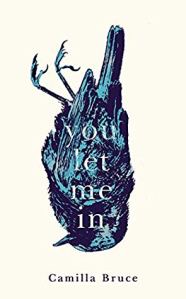
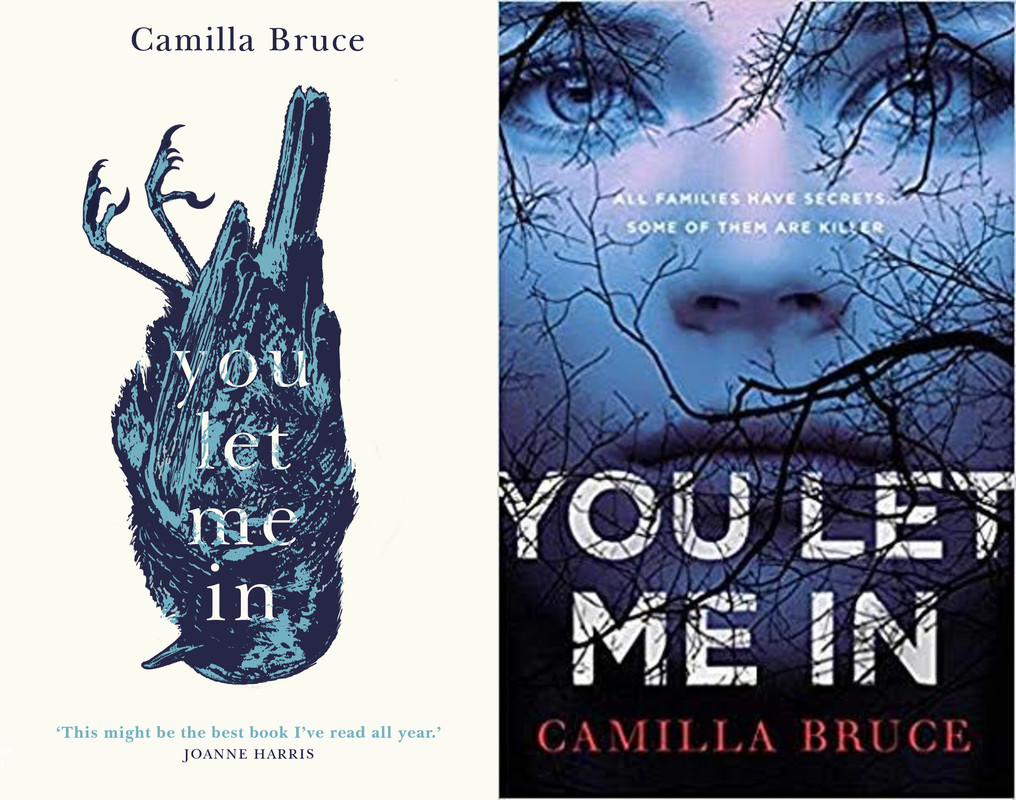
I’m not usually a ‘Have you considered adding more pink?’ kind of person but definitely feel like an opportunity was missed when the covers were designed for this book. Cassandra, the main character, is an author whose books all feature pink covers so it would have been perfect if this book’s cover had been a creepy Pepper-Man design in various shades of pink. Usually when I buy a book I make sure I choose my favourite cover image, even if it costs more. Unfortunately I don’t have a favourite here.

‘She would have us believe she’s off with the faeries’

While you probably need to know upfront that this is a strange story and it may not be for you, I don’t want you to not attempt it at all. If you’re intrigued and want a sneak peek, you can currently download a digital preview of the first 34 pages here.

Thank you so much to NetGalley and Bantam Press, an imprint of Transworld Publishers, Penguin Random House UK, for the opportunity to read this book.

Rating: 5 out of 5.

Once Upon a Blurb

Everyone knew bestselling novelist Cassandra Tipp had twice got away with murder. 

Even her family were convinced of her guilt. 

So when she disappears, leaving only a long letter behind, they can but suspect that her conscience finally killed her. 

But the letter is not what anyone expected. It tells two chilling, darkly disturbing stories. One is a story of bloody nights and magical gifts, of children lost to the woods, of husbands made from twigs and leaves and feathers and bones …

The other is the story of a little girl who was cruelly treated and grew up crooked in the shadows …

But which story is true? And where is Cassie now?

Where the World Turns Wild – Nicola Penfold

Spoilers Ahead!

Once upon a time, almost fifty years ago, climate change and deforestation and humans ransacking everything good and beautiful, had driven our planet to breaking point. Nature was dying – plants and trees, animals, birds, insects – new species disappeared every day. But then the ReWilders created the disease.

Juniper is thirteen and her brother, Bear, is six. They aren’t like the other kids in their school. They were born in the Wild and are immune to the disease the ReWilders created.

We came from the Wild and one day we’ll go back there.

I’m a sucker for stories that feature outcasts and these siblings are some of the most loveable outcasts I’ve ever met. Juniper’s love for her brother is fierce. It’s protective. It’s unconditional. It’s the kind of love that wraps you up and keeps you warm because you know that no matter what anyone else thinks about you, this one person will always be there for you.

Their grandmother, Annie Rose, is one of the last Plant Keepers in the city. I absolutely adored Annie Rose! My brain skyrocketed into Fahrenheit 451 level anxiety when I learned this city had banned books that are even tangentially related to nature. I loved Annie Rose even more when I found out she had not only hidden forbidden books in her home, but she’d also fed the Wild to her grandchildren through their pages.

“The books you read when you’re young, they become part of you.”

After spending some time shadowing Juniper and Bear as they navigated the grey of the city, entering the green of the Wild felt wondrous. As Juniper and Bear took in their new landscape, with its colours and textures and sounds, I felt like I was rediscovering my love of nature. I could feel them breathing in cleaner air and seeing animals they’d only ever known via forbidden books coming to life before their eyes.

My heart attached itself to Ghost from the first time I saw them. I’d love to tell you all about Ghost but don’t want to ruin anything for you. Keep a piece of your heart reserved for them though. They deserve it.

This book has been on my radar for months but for a long time I didn’t think this was the right book for me right now. Between the sheer number of climate change news articles I see daily and the fact that huge chunks of Australia have been burning for the past three months, I wasn’t sure I wanted to be spending my escape from reality time thinking about it as well.

It kept nagging at me though, every time I saw positive reviews piling up. It didn’t hurt that it’s published by Little Tiger Group, one of my favourite children and YA publishers. I’m so glad I finally couldn’t help myself because my initial reasons for hesitating were unfounded. Yes, this book does deal with some big issues. Yes, it’s scary because it’s not farfetched; this could become our world if we don’t make some serious changes to the way we treat the planet. But, yes, there’s also so much love and courage and hope infused in this book.

I knew from the blurb that Juniper and Bear would leave the city at some point, yet I still cried when they did, although I’m definitely not tearing up about it now as I’m writing this review. I also didn’t tear up another time later in the book and I most certainly didn’t notice any additional water in my eyes twice during the acknowledgements. That must have been someone else.

I loved the importance of names in this book. Because Juniper’s name related to the Wild and this was a serious no no in this highly controlled environment, she was called June instead when she was at school. The name of the city’s leader was well suited to their description. Although I didn’t even wonder about its name in the beginning, when I finally learned the origin of the name of the valley where Juniper and Bear were born it had such a lovely symmetry to it. I’m going to pay much more attention to the names of people and places during my inevitable reread.

I kept wondering if the reason given to people for Portia Steel’s absence was a cover up for her having succumbed to the disease herself, or maybe that was just wishful thinking on my part. I’m also wondering what became of Annie Rose, Ms Endo and Etienne, and hoping for the best.

Kate Forrester’s cover image was what initially drew me to this book but it’s only now that I’ve finished reading it that I can appreciate all of the details that they included. I’m seeing more of the story in its design the longer I look at it.

Thank you so much to NetGalley and Stripes Publishing, an imprint of Little Tiger Group, for the opportunity to read this book.

Rating: 5 out of 5.

Once Upon a Blurb

Juniper Greene lives in a walled city from which nature has been banished, following the outbreak of a deadly man-made disease many years earlier. While most people seem content to live in such a cage, she and her little brother Bear have always known about their resistance to the disease, and dream of escaping into the wild. To the one place humans have survived outside of cities. To where their mother is.

When scientists discover that the siblings provide the key to fighting the disease, the pair must flee for their lives. As they cross the barren Buffer Zone and journey into the unknown, Juniper and Bear can only guess at the dangers that lie ahead. Nature can be cruel as well as kind … Will they ever find the home they’ve been searching for?