Welcome to the book that made me think being diagnosed with diabetes was one of the scariest things that could happen to me as a kid. It’s talked about as if it’s a shameful secret for both Stacey and her parents, giving yourself insulin injections is labelled “gross” and there are multiple references to how Stacey could die if she doesn’t manage her diabetes. No wonder I was scared.
We’ve already read Kristy and Claudia’s first BSC books. Now it’s Stacey’s turn. Stacey was the babysitter who made me want to be sophisticated long before I’d wrapped my head around what sophistication meant. She was also the one who added an extended visit to Central Park and clothes shopping in New York to my bucket list before I knew what one was.
In the beginning of book #3 we learn it’s been two months since Kristy had her great idea. I guess Stoneybrook Central Time must slow down rapidly after this book if the babysitters stay roughly the same age during the next 128 regular series books and all of the Super Specials, Mysteries, Super Mysteries, Friends Forever and Portrait Collection. Wow, that’s a lot of books to have to spend being frozen in time at the most awkward age ever.
In what is the BSC’s biggest existential crisis since Mary Anne almost had to leave the club because of the Phantom Caller in book #2, they have to deal with copycats. Their rivals are The Baby-sitters Agency (because apparently no one in Stoneybrook can think of an original or catchy name). The BSA have older babysitters who are allowed to babysit later than the BSC club members can. They don’t advertise business hours so it’s okay to call them during the hours of the week when it’s not Monday, Wednesday or Friday from 5:30pm to 6pm. They even have balloons!
Okay, maybe that last one could have a downside.
“I hereby change this meeting of the Baby-sitters Club to an emergency meeting,” she announced.
Sidebar: Why is the first ‘s’ in sitters always capitalised on the BSC logo but never in the book’s text?
Pretty soon after we all decide, “We’re doomed”, it’s time to get into the trash talk.
“They have smart mouths, they sass the teachers, they hate school, they hang around at the mall. You know, that kind of kid.”
Oh, dear, my Claudia. Pull up a chair and let me explain to you how trash talk is actually supposed to go.
It’s even possible the BSA might have spies listening in on the BSC’s conversations. Not that we’re getting dramatic about this or anything.
Besides the expected two emergency meetings, there’s also a special planning session. There’s even a triple-emergency club meeting; this is when you know things are super duper serious. What’s the bet Kristy grew up to become one of those annoying people who loves team meetings and is solely responsible for them dragging on long after they’re supposed to end …
But it’s not all bad news. It’s the Crisis of the Competing Clubs that leads Kristy to come up with her Kid-Kit idea, after all.
We babysit for Charlotte Johansenn, who’s having trouble at school but at least she has the honour of being the first kid to explore a Kid-Kit. We also find Jamie (Hi-hi!) Newton in our kitchen after school because his mother is in hospital giving birth to his brand new baby sister, Lucy. Aww! The girls also book a job babysitting for Nina and Eleanor Marshall but didn’t think to invite me along.
I never really thought about how wealthy Stacey’s family must have been before now. Her bedroom in their New York apartment overlooked Central Park, their apartment building had its own doorman and she attended a private school. That all sounds pretty fancy to me.
I’d completely forgotten that Mary Anne wears reading glasses.
I realised that Kristy’s mother works in Stamford. I had always read that as Stanford. Huh.
We’ve heard of the eight Pike kids already but this is the first time we meet Mallory, future BSC Junior Officer. Sort of. She’s in the room but doesn’t get a speaking role.
Stacey and Charlotte visit Polly’s Fine Candy so prepare to hear all about the chocolate and other sugar filled delicacies. It felt really mean of Stacey to pull out money in front of Charlotte, who’s practically drooling at this point, only to change her mind and tell poor Charlotte she can’t have anything. Charlotte is a lot more forgiving than I would have been. I bet Claudia would have bought one of everything for her. This scene reminded me that it was Stacey gazing longingly at the white chocolate that prompted me to ask my parents to buy me some.
Word of the book: traitor. Various people are called traitors at least three times.
This book’s school dance: Snowflake Dance.
It’s almost time for Mary Anne to save the day! Yay! The book that initiated me into the BSC!
⭐⭐⭐⭐⭐
Rating: 5 out of 5.
Once Upon a Blurb
The truth about Stacey is that she has diabetes. Nobody knows … except her friends in the Baby-sitters Club.
But even they don’t know the real truth about Stacey. Stacey’s problem is her parents. They won’t admit she has the disease, and they drag her to practically every doctor in America!
Seeing so many doctors made Stacey lose one friend, and she won’t let it happen again. Especially now – when the Baby-sitters Club needs her more than ever.
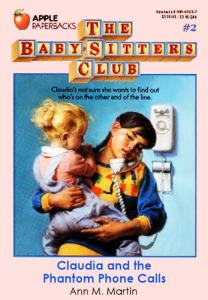
Claudia, I blame you for my obsession with getting a phone in my bedroom as a kid, along with my own private phone number. You’re also responsible for me making sure there’s always some junk food hidden in my bedroom, in case of emergency.
Claudia’s fashion choices also started my love of all things quirky, something that’s followed me into my adult life. I still buy weird and wonderful earrings because of Claudia, coming up with combinations that make other people look at me like I’m weird but not always wonderful. My current favourite pairing is a shark in one ear and a human skeleton in the other (the shark won).
This is the first BSC mystery and, given Claudia’s love of all things Nancy Drew, it’s only fitting that she’s the one to tell it. A jewel thief, known as the Phantom Caller, has been getting closer and closer to Stoneybrook. This book seems so tame as an adult but I remember it scared me as a kid.
It’s time for some emergency BSC meetings. Our favourite babysitters, who are always prepared, come up with codes to use if they find themselves at a babysitting job when the house is being robbed. Now, if only they can remember what words they’re supposed to say.
“Have you found my b- I mean, did you see my – Have you found my … my …”
In between all of the phone calls where the caller doesn’t speak (what is it with creepy phone calls and babysitters?), we’re also watching boys make food sculptures from their cafeteria food and preparing for the first school dance of the year, the Halloween Hop. Claudia is pining over Trevor Sandbourne, resident poet and cute shy guy, but is sitting back hoping and waiting because a girl can’t possibly ask a boy to a dance. The world as we know it would end!
We also tag along for babysitting jobs with Jamie (Hi-hi!) Newton (along with his cousins Rob, Brenda and Rosie Feldman), Nina and Eleanor Marshall, Karen and Andrew Brewer, Charlotte Johanssen, David Michael Thomas, and Claire and Margo Pike (although we only hear that this job has been scheduled; we don’t actually get to hang out with the Pike girls).
Watson has bought Karen a book called The Witch Next Door. This kid does not need this sort of encouragement. She already believes Morbidda Destiny Mrs Porter next door is a witch. In this book the curse Karen is obsessed with is the multiplication of her freckles.
Kristy reminds up she’s a professional babysitter:
“One false move and I’ll punch your lights out.”
Mary Anne sets prowler traps, Home Alone style. She also reads The Secret Garden. BSC books informed a lot of my own choices growing up. I read The Secret Garden for the first time because Mary Anne did and it ended up becoming one of my favourite books.
Stacey uses a TV remote control when she’s babysitting Charlotte. When this book was published, remote controls were a revolutionary idea for me. If we wanted to change the channel we had to get up off the lounge, walk across the room and turn the dial on the TV. I’d also never heard of cable TV before I read this book. Then, when Stacey turned on Channel 47, my mind was blown. We had 5 TV stations in Australia at the time.
Claudia has an actual conversation with Janine, who doesn’t annoy me anymore. She also spends time with her grandmother, Mimi, one of my favourite fictional characters of all time. I adored Mimi. Even now, she melts my heart every time she says, “my Claudia” and her wisdom stands the test of time.
“You know, my Claudia, that in order for things to change, you must change them. You will grow to be an old woman like me, if you wait for others to change things that do not please you.”
My biggest revelation, rereading this book after so many years, was discovering that “no problem” was considered slang in 1986. Go figure!
⭐⭐⭐⭐⭐
Rating: 5 out of 5.
Once Upon a Blurb
Kristy, Claudia, Mary Anne, and Stacey try to be prepared for anything when they babysit. So when they hear about the Phantom Caller, a jewel thief who’s been breaking into nearby homes, they come up with a plan to keep their kids safe.
But when Claudia and the other girls start receiving creepy phone calls while they’re out on jobs, they start to get really spooked. Will the mystery caller scare off the BSC?
“Politics doesn’t have to be what people think it is. It can be something more.”
Long before I wanted Jacinda Ardern to be my prime minister, I wanted Barack Obama to be my president. Other than a few standout moments, like Julia Gillard’s efforts in establishing the Royal Commission into Institutional Responses to Child Sexual Abuse and our current prime minister’s poorly timed vacation while much of the country was burning in 2019, I couldn’t tell you a great deal about politics in Australia.
Billy Connolly taught me everything I knew about politics as a kid, with ‘The desire to be a politician should bar you for life from ever becoming one’ and ‘Don’t vote, it just encourages them’ recited on a regular basis in my home when I was growing up.
In A Promised Land, Obama mentions something known as the “What’s the point of voting if nothing ever changes?” syndrome, which pretty much sums up my political worldview as an adult.
[I’d be hard pressed to tell you anything that impacts me personally that’s a priority for politicians in Australia. My single attempt at getting my local member of parliament to mobilise any of their resources to help members of their constituent and the rest of the state in positions similar to mine (those who were being screwed over by changes to the Worker’s Compensation system, which had already resulted in several deaths by suicide by the time I met with them) resulted in an incredulous, ‘What do you want me to do about it?!’ and towards the end of the meeting, a more pointed, ‘You’re f*cked’ (actually, they said that twice during the meeting), before the obligatory, ‘Vote for my party in the next election if you want to see changes’. So, yeah. Politics and I aren’t exactly friends.]
To say that this book is outside of my comfort zone is an understatement. I never thought I’d voluntarily read anything classified as a political memoir. But it’s Obama and I was interested in what he had to say, even if I had to sift through politics that I previously haven’t either cared about or understood to hear it.
This, I was coming to realize, was the nature of the presidency: Sometimes your most important work involved the stuff nobody noticed.
I was surprised by how much I loved this book. I learned so much about the ins and outs of political decisions and the fact that I found the details interesting says a lot about the quality of the writing. But the human stories were what really sucked me in.
This is a book where a football is not a football, where Dr. No scrutinises all things ethical to avoid scandal (“If it sounds fun, you can’t go.”) and the president is the one who brings out the cake for people’s birthdays. Also, and I may be the only one who thinks this is kinda cool, although I’d hate it if anyone was paying that much attention to me, “Renegade to Secondary Hold” was Secret Service code for Obama going to the bathroom.
Make no mistake: this is a heavy book, providing in depth details of decisions relating to the financial crisis, war, healthcare, foreign policy, immigration, human rights and a whole bunch of other unfolding crises that wind up on a president’s to do list.
No one had nuclear war or terrorism on their minds. No one except me. Scanning people in the pews – friends, family members, colleagues, some of whom caught my eye and smiled or waved with excitement – I realized this was now part of my job: maintaining an outward sense of normalcy, upholding for everyone the fiction that we live in a safe and orderly world, even as I stared down the dark hole of chance and prepared as best I could for the possibility that at any given moment on any given day chaos might break through.
I found myself getting bogged down in the details of the financial crisis and for a few days I’d catch myself daydreaming about some of the books I could be reading instead. Everything after that, though, I couldn’t get enough of. Having read little else for almost two weeks, part of me feels like I’ve always been reading this book and another part of me is sad that it wasn’t even longer.
This is also literally a very heavy book and an awkward one to hold; I lay in bed the first night, when I hadn’t even finished the first hundred pages, trying to figure out why my hands hurt so much. It turns out that simply holding onto this book is its own workout.
Handy hint: If you rest the book on your body as you’re reading and use your hands to gently balance it so it doesn’t fall on your face and crush you, your hands will thank you for it.
The pages are also crammed with words so it felt like I was reading a lot more than 700 pages. I was curious to find out just how many words fit on an average full page of text. Because I’m me, I finally decided to count the words on one page – 430. I don’t know what a normal page count is but that sounded like a lot to me.
There’s a lot of serious in this book but that’s not to say there aren’t some smiles and misty eye moments along the way. I chuckled when the secure mobile communications system broke down at the wrong moment, necessitating a very important and very serious phone call being made instead on “a device that had probably also been used to order pizza.”
I lost count of the times I could have easily wandered into ugly cry territory: the outcome of the DREAM Act, when Obama visited soldiers as they recovered from injuries sustained serving their country, personal family moments.
The fuss of being president, the pomp, the press, the physical constraints – all that I could have done without. The actual work, though?
The work, I loved. Even when it didn’t love me back.
There are probably over 700 reasons why I should never be president of anything, let alone the U.S. Here are my current top 5:
The meetings. No one should have to attend so many meetings. I dreaded having to attend one team meeting each month at my last job. A coworker, who shared my disdain for meetings, and I frequently got in trouble for pulling faces at each other when everyone else had their serious faces on.
Filibuster. Just reading that word makes me want to spit the dummy. That the opposition think it’s a great idea to do whatever they can to prevent the other side from winning anything, because it might make them look like they’re competent, rather than prioritising what’s best for the people they claim to be serving? That makes my blood boil.
“The Death, Destruction, and Horrible Things Book”, A.K.A., the “President’s Daily Brief”. If I had to read about all of the possible ways the world might implode/explode every morning over breakfast, I’d not only forego the most important meal of the day, it’s highly likely I wouldn’t remain functional for very long.
I wouldn’t be diplomatic enough. If another world leader was doing something stupid I would be calling them on it, probably in public, and would more than likely wind up causing more problems than I was attempting to solve.
My priorities wouldn’t be overly presidential. My first order of business would be to get whoever had access to them to bring me the unredacted files relating to all things Area 51 and anything else Mulder might have a passing interest in. That’s what I’d be reading over breakfast.
I realized that for all the power inherent in the seat I now occupied, there would always be a chasm between what I knew should be done to achieve a better world and what in a day, week, or year I found myself actually able to accomplish.
When I was only about 200 pages in, I mentioned to someone that this book was really giving me a feel for the type of person Obama is. They asked me what type of person that is. My answer was something like, ‘He’s got values and acts in a way that is in accordance with them. He’s intelligent and likes to have a laugh. He’s a loyal and trustworthy friend and he absolutely adores his family. He’s the kind of person you’d want to know and someone I could see me being friends with.’
500 pages later and I can say with confidence that I still feel that way. My only cause for concern? The man doesn’t like sweets. That’s not something I usually look for in a friend but I suppose no one’s perfect. More sweets for me, I guess.
I’m wondering how it will be possible to fit everything else in only one more book as this one leaves readers in May 2011, but I’m really looking forward to reading the second volume. It turns out reading outside of your comfort zone can be a really good thing.
Whatever you do won’t be enough, I heard their voices say.
Try anyway.
⭐⭐⭐⭐⭐
Rating: 5 out of 5.
Once Upon a Blurb
A riveting, deeply personal account of history in the making – from the president who inspired us to believe in the power of democracy.
In the stirring, highly anticipated first volume of his presidential memoirs, Barack Obama tells the story of his improbable odyssey from young man searching for his identity to leader of the free world, describing in strikingly personal detail both his political education and the landmark moments of the first term of his historic presidency – a time of dramatic transformation and turmoil.
Obama takes readers on a compelling journey from his earliest political aspirations to the pivotal Iowa caucus victory that demonstrated the power of grassroots activism to the watershed night of November 4, 2008, when he was elected 44th president of the United States, becoming the first African American to hold the nation’s highest office.
Reflecting on the presidency, he offers a unique and thoughtful exploration of both the awesome reach and the limits of presidential power, as well as singular insights into the dynamics of U.S. partisan politics and international diplomacy. Obama brings readers inside the Oval Office and the White House Situation Room, and to Moscow, Cairo, Beijing, and points beyond. We are privy to his thoughts as he assembles his cabinet, wrestles with a global financial crisis, takes the measure of Vladimir Putin, overcomes seemingly insurmountable odds to secure passage of the Affordable Care Act, clashes with generals about U.S. strategy in Afghanistan, tackles Wall Street reform, responds to the devastating Deepwater Horizon blowout, and authorises Operation Neptune’s Spear, which leads to the death of Osama bin Laden.
A Promised Land is extraordinarily intimate and introspective – the story of one man’s bet with history, the faith of a community organiser tested on the world stage. Obama is candid about the balancing act of running for office as a Black American, bearing the expectations of a generation buoyed by messages of “hope and change”, and meeting the moral challenges of high-stakes decision-making. He is frank about the forces that opposed him at home and abroad, open about how living in the White House affected his wife and daughters, and unafraid to reveal self-doubt and disappointment. Yet he never wavers from his belief that inside the great, ongoing American experiment, progress is always possible.
This beautifully written and powerful book captures Barack Obama’s conviction that democracy is not a gift from on high but something founded on empathy and common understanding and built together, day by day.
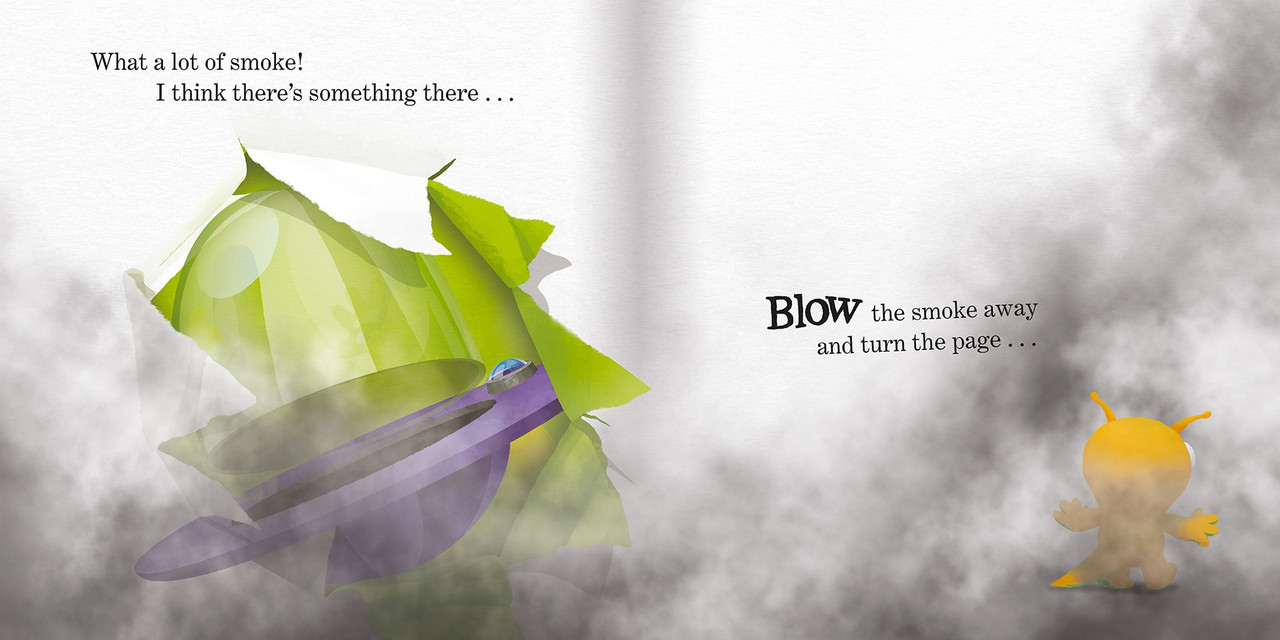
It’s time for another Who’s in Your Book? book. This book’s Who is an adorable little alien whose spaceship has crashed through its pages.
I managed to find an excerpt at Penguin UK so prepare yourself for image overload!
The interaction begins almost straight away because we need to find out just Who has invaded our book.
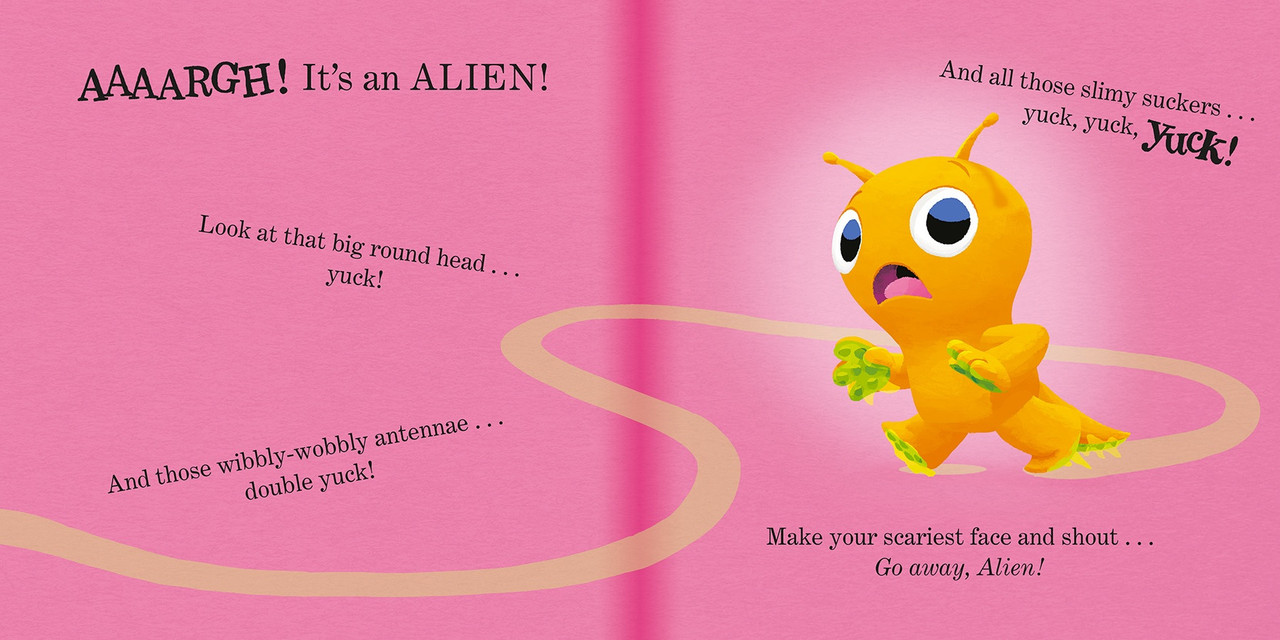
No! Don’t be mean to our potential intergalactic friend. What would Mulder think if he saw you being anything less than welcoming?
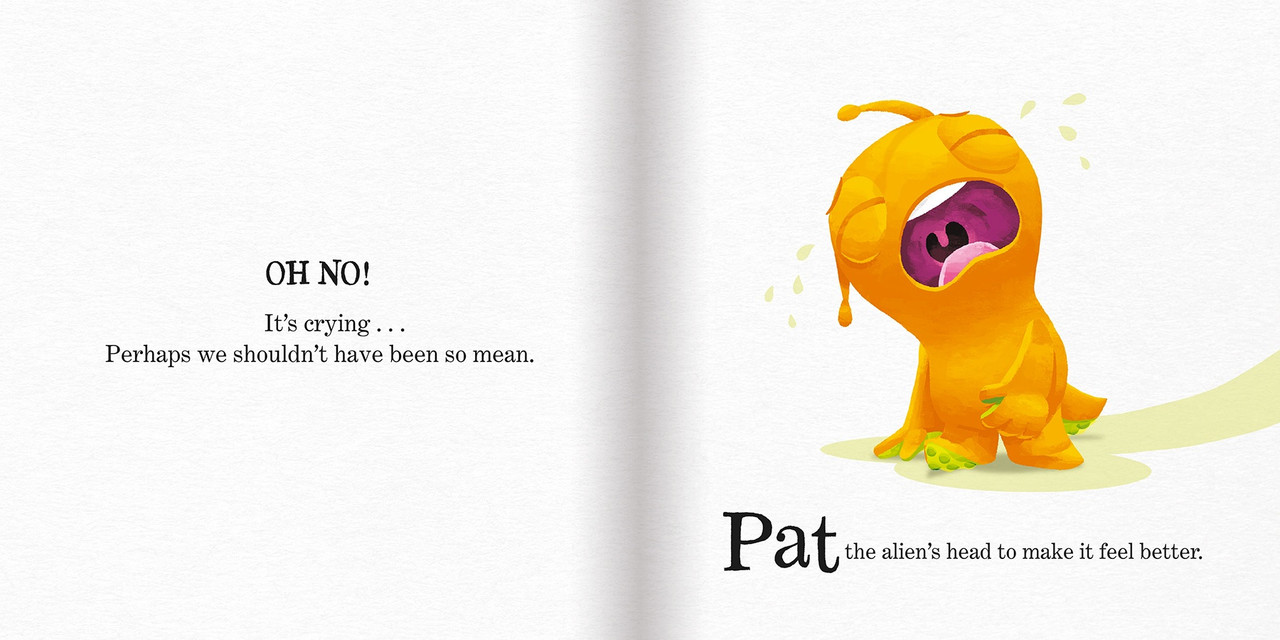
See what you did? Poor little guy.
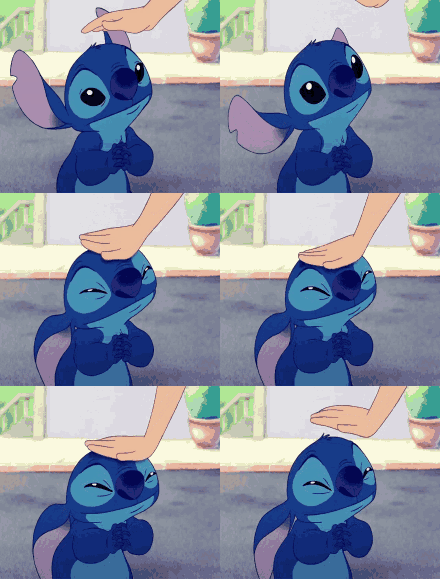
I’ll help! May I come with you, happy Alien friend?
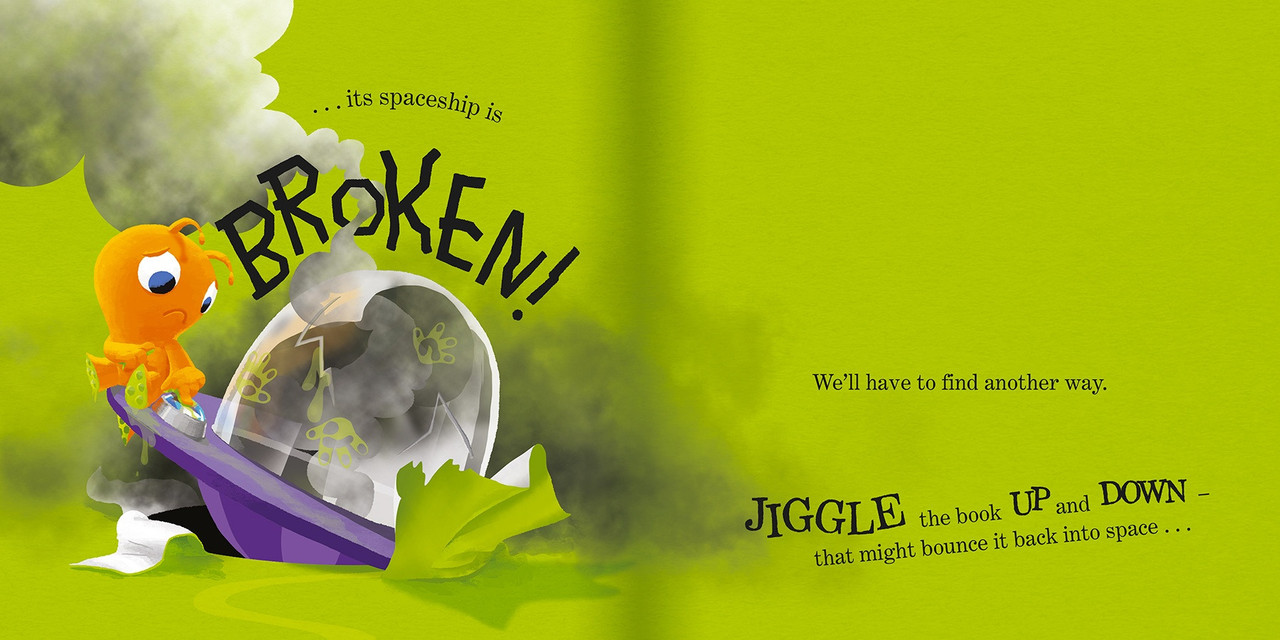
Oh, no. Our travel plans have been delayed. [I will not make a comment about 2020. I will not make a comment about 2020.]
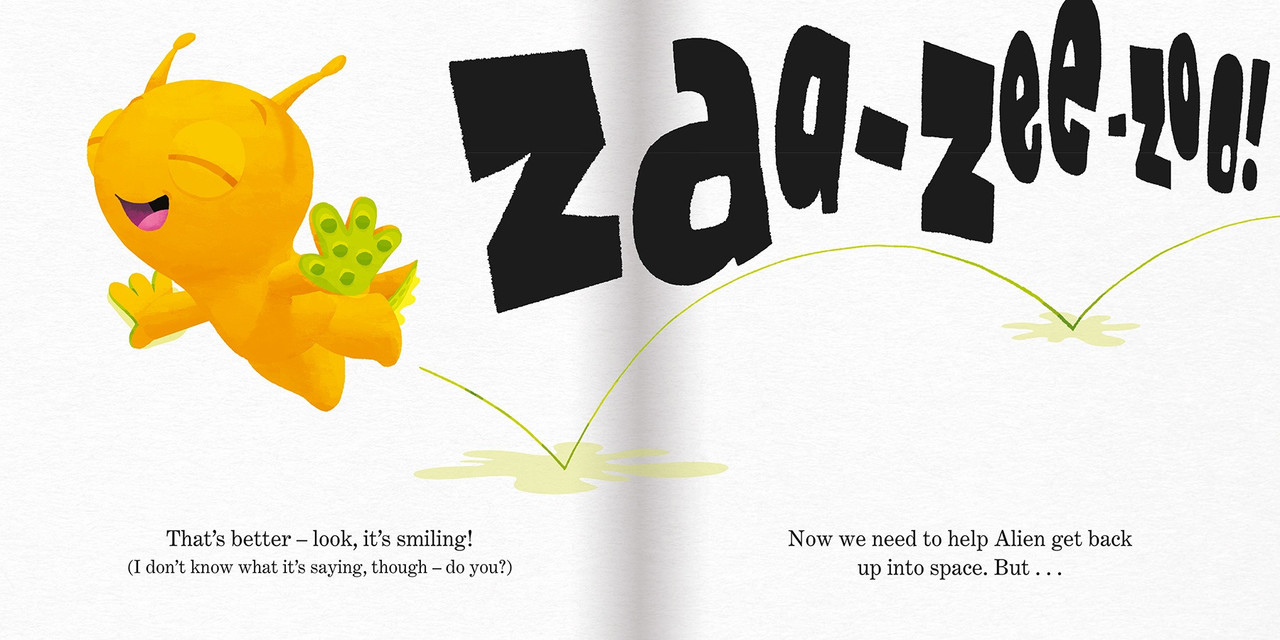
It’s now up to you, dear reader, to keep following the instructions to help Alien. Along the way we’re reminded that diversity is wonderful, with a message of inclusion. And there’s a bonus cameo from Monster so I’m a pretty happy camper.
I really enjoy how interactive this series is. As usual, Greg Abbott’s illustrations bring our new little Who to life, with all of their emotions clearly depicted, and the colours are as vibrant and fun as I’ve come to expect.
I just hope there’s room on the spaceship for me.
⭐⭐⭐⭐⭐
Rating: 5 out of 5.
Once Upon a Blurb
Tom Fletcher and Greg Abbott have created a new interactive adventure, this time featuring an adorable alien who has crash-landed in YOUR book!
You’ll have to help Alien back up into space, because aliens don’t belong on Earth … do they?
This sequel to bestsellers There’s a Monster in Your Book and There’s a Dragon in Your Book is packed full of interactive fun, with a gentle message about openness, acceptance and inclusion that will speak to the very youngest readers.
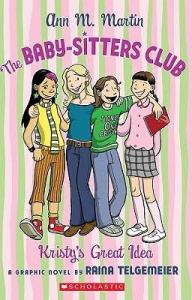
I stand by everything I said in my review of Ann M. Martin’s Kristy’s Great Idea so, rather than rehash that, I’m going to mention some of the differences I noticed between the book and graphic novel instead.
In the book Kristy wears a dress on the original front cover and it’s mentioned she wears a blouse and skirt to school. That’s not Kristy at all. In the graphic novel Kristy consistently wears what we come to know as her uniform. Much better.
In the book Kristy has a purse. Again, this is definitely not something I would ever picture her with. In the graphic novel her purse has transformed into a backpack. Definitely more Kristy-like.
While I absolutely love that Claudia has a section of her hair dyed in the graphic novel, I don’t think her parents would have allowed her to get away with that. She has to hide her earrings, junk food and Nancy Drew novels from them so hair dye would have to be forbidden as well, right?
The BSC logo that Claudia draws in the graphic novel is different than the one we all grew up with. Similar but different.
The amount the girls have earned by the time of the sleepover and how much they each need to contribute to buy pizza has increased. These aren’t 1986 prices anymore.
Class at Stoneybrook Middle School appears to finish at 3pm now, not 2:42pm like in the book. That makes much more sense.
The sheep barrettes in Claudia’s hair in the book are now a rainbow on her shirt. I’m good with either. It’s Claudia, after all. She can get away with whatever fashion choices she makes.
In my version of the first book, Kristy’s mother’s name is Edie and in the graphic novel it’s Elizabeth. Although I haven’t checked later books to confirm this, Elizabeth sounds right to me.
This isn’t a change, but I was really happy to discover that the landline in Claudia’s bedroom hasn’t succumbed to technology. The BSC meetings would look a lot different if everyone was sitting around with a mobile phone.
I’d forgotten I’d already read this graphic novel so I can’t tell you what I thought last time I read it but this time I was really impressed. The story and important details remain true to the original.
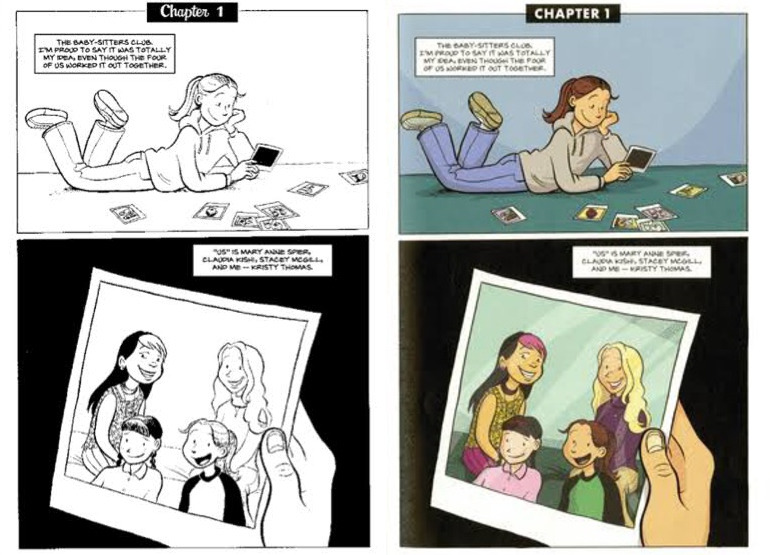
I read the black and white version of the graphic novel. I would be interested to check out the colour version at some point. For comparison, here are the black and white and colour versions of the first page.
As usual, Raina’s artwork is brilliant and the personalities of each character shine through. I’m really glad I read this straight after finishing the book so, where possible, I think I’ll keep doing this.
⭐⭐⭐⭐⭐
Rating: 5 out of 5.
Once Upon a Blurb
In this new graphic novel edition of the very first Baby-Sitters Club book, Raina Telgemeier captures all the drama of the original in warm, spunky illustrations. Witness Kristy’s eureka moment, when she gets the idea for a “baby-sitters club” and enlists her best friends, shy Mary Anne and artistic Claudia, in an exciting new venture. But the baby-sitting business isn’t the only thing absorbing their attention: Kristy is having a hard time accepting her stepdad-to-be, and the newest member of the gang, Stacey, seems to be hiding a secret.
The year was 1986. I was in the second grade. My childhood dog was still a puppy. It was my first year playing netball. It was also the year Kristy Thomas had a great idea.
It was an idea that meant that every Monday, Wednesday and Friday from 5.30pm to 6pm, I’d be thinking about Kristy, Claudia, Stacey and Mary Anne (and later in the series, new BSC members). I knew they would be hanging out in Claudia’s bedroom waiting for the phone to ring. She’d have junk food for those who partook and healthy options for those who didn’t. They’d talk Kid Kits (another of Kristy’s great ideas but she hasn’t thought of them yet), collect dues (ugh!) and run a thriving business (at 12!).
I never babysat when I was a kid so I’m not entirely sure what kept me coming back for more. It was probably a combination of the friendships and the introduction to the fun and mischief of little kids. I was an only child who desperately wanted a sibling so this was my window into a world of what if.
As an adult I’m pretty certain I wouldn’t be leaving young kids with a 12 year old babysitter. I wondered how long these girls have been babysitting if they are as experienced as they claim. I’m also slightly disturbed, realising it’s extremely likely I’m now older than the babysitters’ parents are in the series.
Kristy’s Great Idea was my second BSC book. It was Mary Anne who introduced me to the other babysitters when she saved the day and given I was a Mary Anne at the time (shy, quiet and serious), she was the perfect one to accompany me to Stoneybrook. But it was this book that made me wish my best friend lived next door so we could talk at night using a secret flashlight code.
I was never especially keen on Kristy but the bossiness that annoyed me when I was growing up seemed largely absent in this book. She’s organised and entrepreneurial. Sure, she’s a real little snot to Watson for a good portion of this book but she’s 12 and her own father is MIA, so you can kinda see where she’s coming from.
There’s a nice symmetry in this book: David Michael is both the reason Kristy thought of the Baby-Sitters Club in the first place and his mother is the first parent to call at the inaugural BSC meeting to request a babysitter for him.
Because of the time spent setting up the story, it’s not until the eighth chapter that we first see one of the famous handwritten notebook entries. It’s written by Claudia, who babysat for Jamie (“Hi-hi!”) Newton and his three cousins. I used to love being able to identify each babysitter by their handwriting (and seeing if I could find Claudia’s spelling mistakes).
When I read my original copy of Kristy’s Great Idea, the final few pages were out of order and the last page was missing entirely. I remember borrowing a copy from my library and the satisfaction I felt when I finally got to read that final page. I also remember dutifully transcribing every word on it and putting my folded handwritten page inside my own copy so I’d always have the entire story at my fingertips.
About the cover: The original covers are always going to be superior to any of the later ones. That’s a given. But why is this the very first time in 34 years that I’ve paid attention to the fact that Kristy is wearing a dress on this cover? That’s sacrilege!
Weird bits (besides Kristy wearing a dress):
Classes finish at Stoneybrook Middle School at 2.42pm. Why not 2.40 or 2.45?
Kristy has a purse. That’s almost as anti-Kristy as her wearing a dress.
I have trouble imagining Kristy voluntarily playing with dolls as a kid. Wasn’t she always a tomboy?
Kristy wears a blouse and skirt to school. Who is this imposter?!
A word this book introduced to me when I was a kid: decorum.
My current favourite quote:
You really haven’t lived until a dog has stepped on your face.
I’ve been planning a BSC binge for a long time. All of my childhood books were thrown away (not by me!) and I mourned their loss. I’ve repurchased many of them since and I finally finished my BSC collection almost ten years ago. This was before I started reviewing and at the time I made it up to #54. I’m now hoping to gradually work my way through the entire series.
⭐⭐⭐⭐⭐
Rating: 5 out of 5.
Once Upon a Blurb
Kristy thinks the Baby-Sitters Club is a great idea. She and her friends Claudia, Stacey and Mary Anne all love taking care of kids. A club will give them the chance to have lots of fun-and make tons of money.
But nobody counted on crank calls, uncontrollable two-year-olds, wild pets, and parents who don’t always tell the truth. And then there’s Stacey, who’s acting more and more mysterious. Having a baby-sitters club isn’t easy, but Kristy and her friends aren’t giving up until they get it right!
The last time we saw best friends Hotdog, Lizzie and Kev, they were solving crime, having tracked art thieves down to the Castle Creepy Fun Park. I loved this location and hope it will be explored further in another adventure.
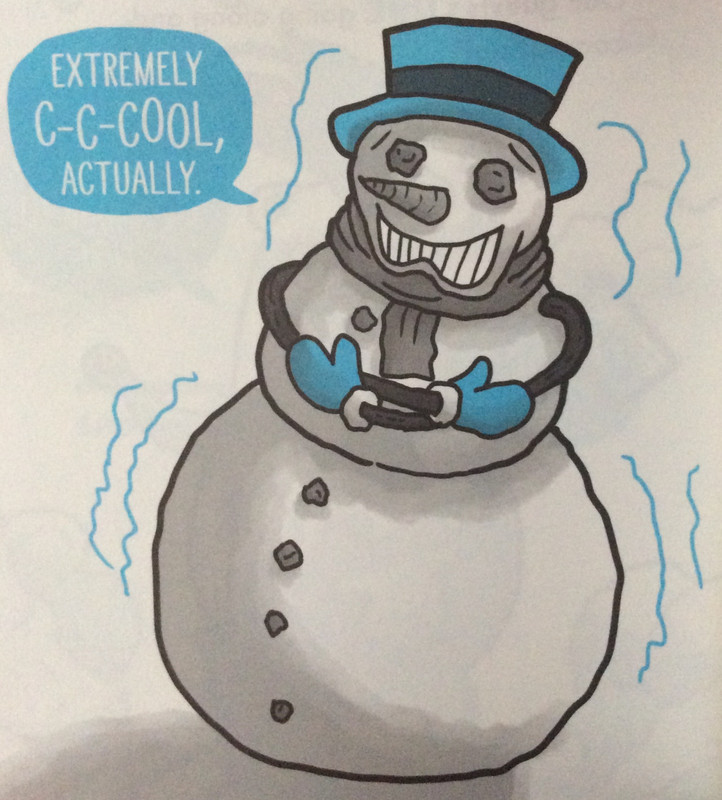
This time our friends are packing their bags for Rainbow Island. They’re looking forward to having some fun in the sun but it turns out they’re actually on their way to Snowville. So rather than surfing and soaking up the sun, they’ll be keeping cool, ice skating, skiing and making snowmen.
This is a series where it’s safe to check out that strange noise in the basement, where new friends are brave enough to face their fears and try new things, and where teamwork is key.
As usual, the story is fun and the illustrations are adorable. Be on the lookout for Hotdog in a hotdog outfit!
⭐⭐⭐⭐⭐
Rating: 5 out of 5.
Once Upon a Blurb
Hotdog and his friends think they’re headed for the hot sun and sand of Rainbow Island … but they end up in SNOWVILLE instead! Brrrrrr!
Can they make the most of their icy holiday? And maybe even compete in the Snowville Games?
Roald Dahl was my favourite author when I was a kid. I’ve read four of his books so many times over the years I’ve lost count: Charlie and the Chocolate Factory, Matilda, The BFG and The Witches. I could also pretty much ruin each of the movies (the originals, if they‘ve been remade) for you by telling you every line before they happen.
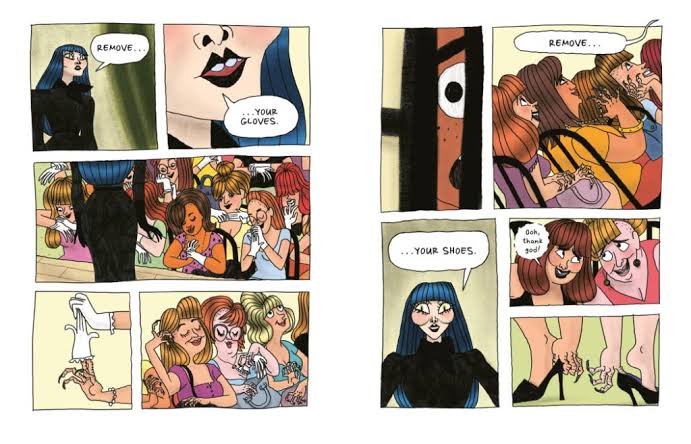
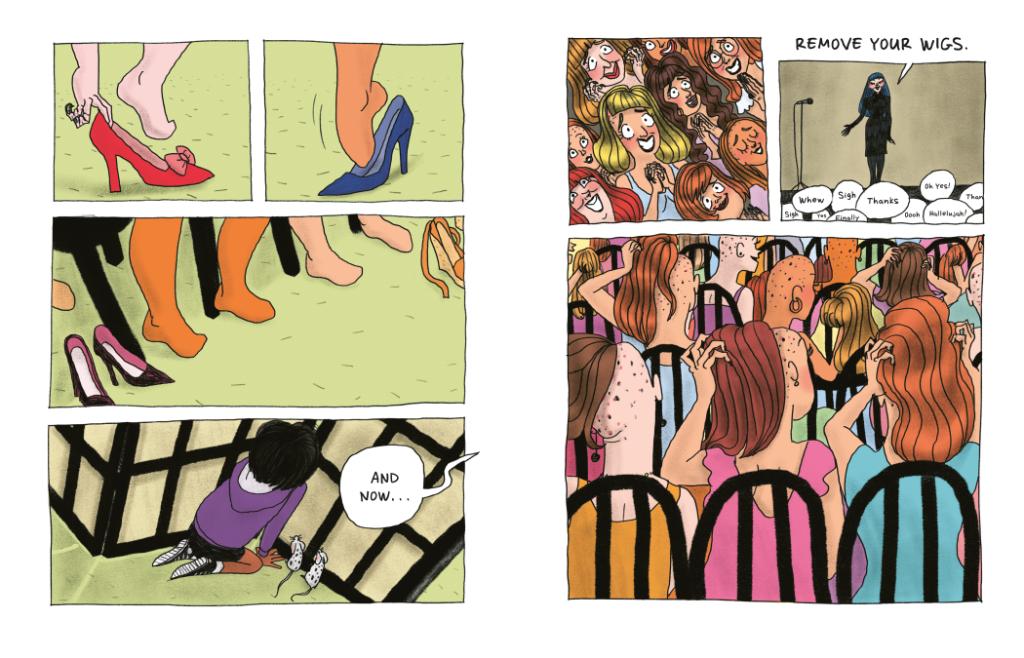
I loved searching for witches when I was a kid. Sure, I knew that this story was fiction but it was fun to play ‘what if’ and check to see if women walking past me were wearing gloves or scratching their head, or if their teeth had a slight bluish tinge.
Although I was really interested in reading this graphic novel adaptation, I was nervous about it too. I’m a bit of a purist where childhood favourites are concerned; while I’m mostly okay with minor changes, I don’t want you to mess with my cherished childhood memories.
I’m happy to report that the story I know and love remains intact here. Sure, there are some changes but none that make me want to point at a specific page number in the original book and demand that it be changed back because it ruined the story.
I’m sure I’ve missed some because it’s been a few years since I last read The Witches but the changes I noticed straight away were:
The story takes place in England, not Norway
Grandmamma and her grandson aren’t white (loving this!)
Bruno Jenkins is a girl, whose name I still don’t know. Her surname is Jenkins and she has much better lines than Bruno did
The Grand High Witch now says “remove” rather than “rrree-moof” and “wigs” instead of “vigs”
Formula 86 is hidden in a different location in the Grand High Witch’s room
There’s gambling at the hotel (whose name has changed) and mention of yoga and organic food
Grandmamma’s conversation with the Jenkins’ has a different outcome and happens at a different time in the story
Grandmamma ends up going into the kitchen to find her grandson rather than him meeting her back in the dining room
The Jenkins family now stays in touch with Grandmamma and her grandson.
There were only a couple of things from the novel that I missed in the graphic novel. While the story of the girl in the painting is explained well in the graphic novel, the other early witch stories are only mentioned briefly. Also missing was Grandmamma telling her grandson how many beats per minute a mouse’s heart beats (500!). Neither impacts the story at all. They were simply a couple of my favourite bits as a kid.
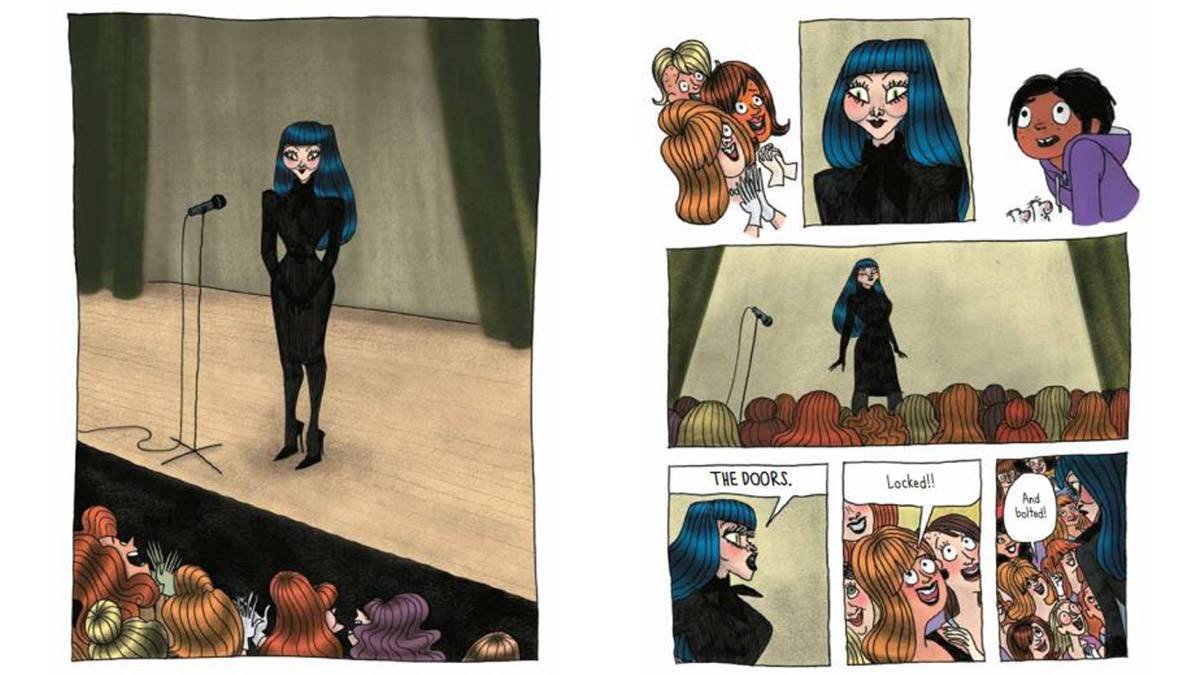
As a decades long Roald Dahl fan, I wholeheartedly approve of this adaptation. Besides the story remaining true to form, I also loved the illustrations. The Grand High Witch looked different unmasked than she does in my memory of the book and original movie but she was fantastic nonetheless.
I definitely need more Roald Dahl graphic novel adaptations.
⭐⭐⭐⭐⭐
Rating: 5 out of 5.
Once Upon a Blurb
Witches are real, and they are very, very dangerous. They wear ordinary clothes and have ordinary jobs, living in ordinary towns all across the world – and there’s nothing they despise more than children. When an eight-year-old boy and his grandmother come face-to-face with the Grand High Witch herself, they may be the only ones who can stop the witches’ latest plot to stamp out every last child in the country!
This full-colour graphic novel edition of Roald Dahl’s The Witches, adapted and illustrated by Eisner Award winner Pénélope Bagieu, is the first-ever Dahl story to appear in this format. Graphic novel readers and Roald Dahl fans alike will relish this dynamic new take on a uniquely funny tale.
This is the most important thing I have ever learned: the greatest thing you will ever do is be loved by another person.
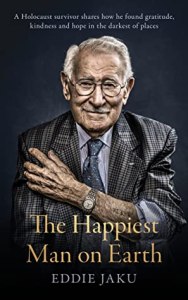
No matter how many books I read by Holocaust survivors, I always manage to encounter horrors I’ve never heard of before and marvel anew at the capacity humans have to survive the unimaginable. In his first sentence Eddie Jaku introduces himself as your new friend and I found that so endearing. It got me immediately invested in his story and I would have thought it was a clever way to grab you emotionally from the get to if I didn’t believe he meant it wholeheartedly. But I did believe him.
Intermittently addressing you, his friend, throughout the book, Eddie tells you his story. From his school days to his experiences in multiple concentration camps and beyond, you can’t help but feel you’re sitting across from him as he regales you with his stories and the wisdom he’s accumulated along the way.
Kindness is the greatest wealth of all.
Despite taking you on a journey through the darkest humanity has to offer (the murder of his dog hit me particularly hard, probably in part because it was before Eddie stepped foot in a concentration camp so I wasn’t expecting the brutality of this), Eddie has managed to hold onto hope.
There are always miracles in the world, even when all seems hopeless. And when there are no miracles, you can make them happen. With a simple act of kindness, you can save another person from despair, and that might just save their life. And this is the greatest miracle of all.
This is a quick read, one that is undeniably heartbreaking at times. I felt like Eddie was probably holding back on describing some of the more difficult aspects of his story, but fair enough. I can’t even begin to imagine how painful it was for him to write about any of his early life.
Ultimately, my experience of this book was one where I felt better after reading it than I felt before I began. I made a new friend, albeit one I’ll probably never meet. I was reminded that it is possible to be happy and live a fulfilled life, even when you’ve experienced pain that feels insurmountable. I was encouraged to inject some more kindness into the world.
It is never too late to be kind, polite, and a loving human being.
My only quibble, and this is simply because Eddie made me care deeply about them, is that I yearn to know what happened to Henni after she moved to Australia and to Kurt. I adored reading about Eddie and Kurt’s friendship and to leave Kurt’s story in 1946, without any information about their (I hope) continued friendship, hurt a little.
⭐⭐⭐⭐⭐
Rating: 5 out of 5.
Once Upon a Blurb
Life can be beautiful if you make it beautiful. It is up to you.
Eddie Jaku always considered himself a German first, a Jew second. He was proud of his country. But all of that changed in November 1938, when he was beaten, arrested and taken to a concentration camp.
Over the next seven years, Eddie faced unimaginable horrors every day, first in Buchenwald, then in Auschwitz, then on a Nazi death march. He lost family, friends, his country.
Because he survived, Eddie made the vow to smile every day. He pays tribute to those who were lost by telling his story, sharing his wisdom and living his best possible life. He now believes he is the ‘happiest man on earth’.
Published as Eddie turns 100, this is a powerful, heartbreaking and ultimately hopeful memoir of how happiness can be found even in the darkest of times.
We talk a lot about the danger of dark alleys, but the truth is that in every country around the world the home is the most dangerous place for a woman.
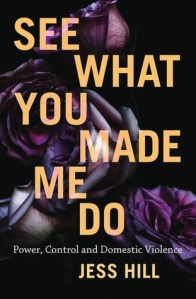
If you only ever read one book about domestic abuse, please make it this one. While I’d like everyone to read it, I think it should be mandatory for so many professions, including anyone involved in the judicial system, medicine, politics, teaching and counselling.
Domestic abuse is not just violence. It’s worse. It is a unique phenomenon, in which the perpetrator takes advantage of their partner’s love and trust and uses that person’s most intimate details – their deepest desires, shames and secrets – as a blueprint for their abuse.
I thought I knew a lot about domestic abuse already. I’ve experienced it firsthand. I’ve read plenty of fiction and non-fiction books that talk about it. I have a psychology degree. I worked in a women’s refuge for a short time. Yet I learned so much from this book.
What should surprise us about domestic abuse is not that a woman can take a long time to leave, but that she has the mental fortitude to survive.
When the author introduced Biderman’s ‘Chart of Coercion’, saying there are parallels between the experiences of returned prisoners of war and domestic abuse survivors, I admit I was a tad wary. Even as someone well versed in the experience of domestic abuse, I wasn’t sure how the two would or could line up. The way the author outlined the techniques, step by step, sucked me in though. It all made perfect sense and it was horrifying, but I was learning something new and I needed to find out more.
Accompanying extensive research are stories of people who have perpetrated and been victimised by domestic abuse. Prepare to brace yourself as you read these accounts as they are invariably brutal and heartbreaking, but please don’t bypass them, even though that would be easier. (Or else you risk missing out on aha! moments, like when emotional abuse is explained as someone bashing someone with their emotions instead of their fists.)
If you’ve experienced domestic abuse yourself, you will easily recognise the truth of these accounts. If you are fortunate enough to have made it this far without being impacted by this type of trauma, know that these stories are representative of so many people’s lives. Friends, family, neighbours …
I can’t imagine reading these accounts without having a visceral reaction and if you’re struggling to ‘witness’ them on the page, please be sure to practice self care. I don’t know if what helped me will apply to other readers but each time I came across something that was too difficult, I told myself that my discomfort wasn’t even in the same ball park as the horror of actually experiencing that firsthand.
The people who have told their stories have courage beyond my comprehension and I feel we owe it to them to not shy away from their words. It’s too easy to maintain the status quo; maybe what we all need is a wake up call to spur us into action.
There’s so much we still need to do. A recent Australian survey, conducted by White Ribbon, found that
Four in ten young men do not consider punching and hitting to constitute domestic violence
In NSW, Australia, coercive control is not even a criminal offence. Yet. Hopefully this will change, if proposed coercive control laws aren’t squished by the powers that be. You can find Women’s Safety NSW’s proposal here.
I want people to stop asking ‘Why does she stay?’ and start asking ‘Why does he do that?’
SURVIVOR, QUEENSLAND
P.S. There’s going to be a three part TV series in 2021 hosted by Jess Hill.
⭐⭐⭐⭐⭐
Rating: 5 out of 5.
Once Upon a Blurb
At the office of Safe Steps, Victoria’s dedicated 24/7 family violence response call centre, phone counsellors receive a call every three minutes. Many women are repeat callers: on average, they will go back to an abusive partner eight times before leaving for good.
‘You must get so frustrated when you think a woman’s ready to leave and then she decides to go back,’ I say.
‘No,’ replies one phone counsellor, pointedly. ‘I’m frustrated that even though he promised to stop, he chose to abuse her again.’
Women are abused or killed by their partners at astonishing rates: in Australia, almost 17 per cent of women over the age of fifteen – one in six – have been abused by an intimate partner.
In this confronting and deeply researched account, journalist Jess Hill uncovers the ways in which abusers exert control in the darkest – and most intimate – ways imaginable. She asks: What do we know about perpetrators? Why is it so hard to leave? What does successful intervention look like?
What emerges is not only a searing investigation of the violence so many women experience, but a dissection of how that violence can be enabled and reinforced by the judicial system we trust to protect us.
Combining exhaustive research with riveting storytelling, See What You Made Me Do dismantles the flawed logic of victim-blaming and challenges everything you thought you knew about domestic and family violence.







 Schizanthus Nerd