The Passengers – John Marrs

In a world where self-drive cars take the hassle out of getting from A to B, eight people go for a drive one morning. A hacker has set them on a collision course. Only one will survive. It’s up to the public to decide which one.

‘I have programmed your car to take you on an alternative route this morning. And in two hours and thirty minutes, it it likely that you will be dead.’

Scheduled to meet their maker in the near future are:

Passenger 1: A married young woman who is 7 months pregnant. She’s a teaching assistant who is driving to her husband’s workplace this morning.

Passenger 2: An unemployed and homeless young man who is suicidal.

Passenger 3: An elderly actress who is on her way to a hospital to visit teenage cancer patients. Even if you decide you don’t like her, then surely you wouldn’t kill her dog, who is travelling in the car with her, would you?

Passenger 4: A mother of two and a police officer.

Passenger 5: The husband of Passenger 4. He runs a refurbishment and construction company. He and his wife are travelling in separate cars.

Passenger 6: A stay at home mother of five who is trying to escape from an abusive husband.

Passenger 7: A disabled war veteran who’s on their way to the hospital.

Passenger 8: An asylum seeker.

It’s kind of like the trolley problem … if it was on steroids.

Who would you save?

How do you determine which life is the most valuable when you don’t know the whole story?

That is the task Libby, a mental health nurse with PTSD, has before her today.

‘For every one of your actions today, there will be a reaction.’

This entire book is like watching a car crash unfold. Literally. And because I’m apparently all about realism, I read some of this book while I was sitting in my car. It was not moving at the time.

Like all John Marrs novels I’ve read so far, I loved the concept and quickly made my way through the chapters. Unlike previous novels I didn’t become emotionally involved in the story. I think it was because I didn’t get to spend much time getting to know each passenger.

While I understand it was integral to the story that the people who are deciding the fates of the eight unfortunates don’t know much about them, I never felt an urgent need for a specific passenger to survive so I wasn’t as caught up in the drama as I’d hoped.

You don’t need to have read The One to enjoy The Passengers but they’re set in the same world. There are several mentions of Match Your DNA in this book, which won’t mean a lot to you if you haven’t read The One.

‘What’s not to love about a bit of anarchy?’

Rating: 4 out of 5.

Once Upon a Blurb

Eight self-drive cars set on a collision course. Who lives, who dies? You decide.

When someone hacks into the systems of eight self-drive cars, their passengers are set on a fatal collision course.

The passengers are: a TV star, a pregnant young woman, a disabled war hero, an abused wife fleeing her husband, an illegal immigrant, a husband and wife – and parents of two – who are travelling in separate vehicles and a suicidal man. Now the public have to judge who should survive but are the passengers all that they first seem? 

It’s OK Not to Be OK – Tina Rae

Illustrations – Jessica Smith

This is a good introduction to mental health for young readers. It provides basic information about some of the more common mental health problems, including anxiety, depression and eating disorders. There are also sections on bullying and discrimination.

While encouraging readers to seek help from a trusted adult if they are struggling, there are also plenty of ideas to boost their own mental health. These include self care, diet, exercise, managing stress, challenging negative thoughts and mindfulness.

description

Tips for parents and caregivers and lists of resources (apps, websites and helplines) are included at the end of the book.

Thank you to NetGalley and Quarto Publishing Group – words & pictures for the opportunity to read this book.

Rating: 3.5 out of 5.

Once Upon a Blurb

It’s OK Not to Be OK acknowledges and explores common mental health disorders such as depression, eating disorders and anxiety. Get the low down on these issues, why they happen and discover ways of looking after mental health in our fast-moving world.

This book will help children and young people develop the resilience to cope with whatever life throws at them and grow into well-rounded, healthy adults.

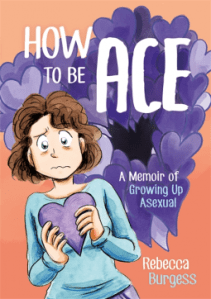
How To Be Ace: A Memoir of Growing Up Asexual – Rebecca Burgess

When Rebecca was growing up they weren’t interested in talking about relationships and sex like the rest of their classmates. They didn’t understand why sex was such a big deal but assumed they’d “grow into” it when they got older.

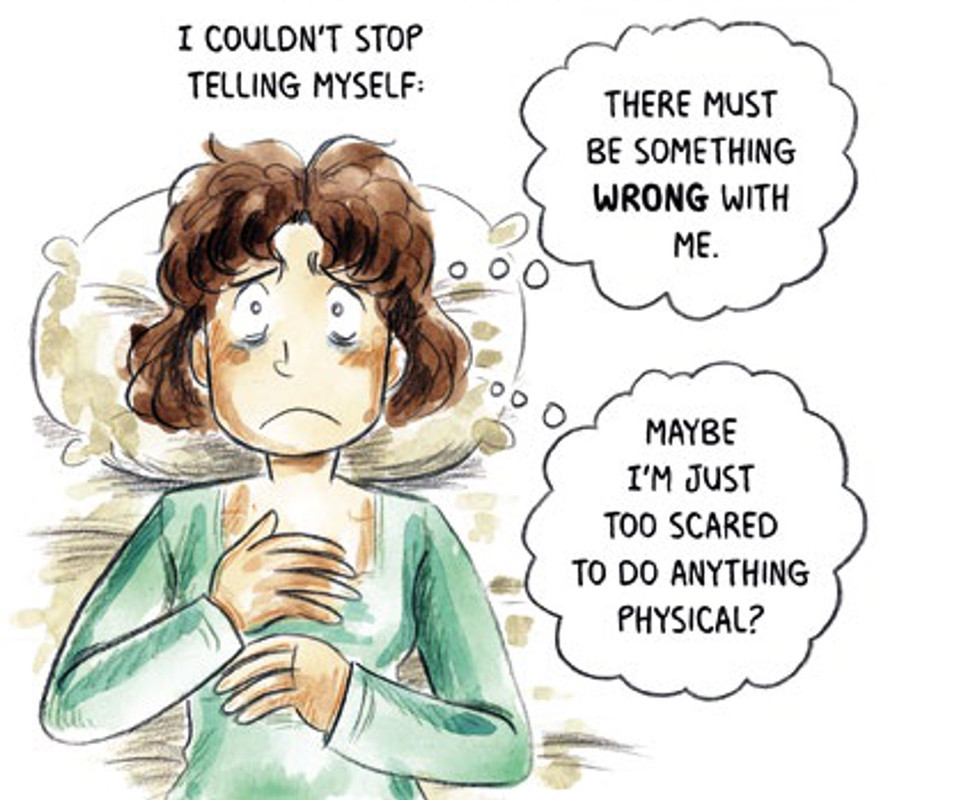
They tried to have relationships but it just didn’t feel right. They thought that something must be wrong with them.

description

It wasn’t until they were at university that they began to accept that being different was okay and that they didn’t have to pretend to be like everyone else.

description

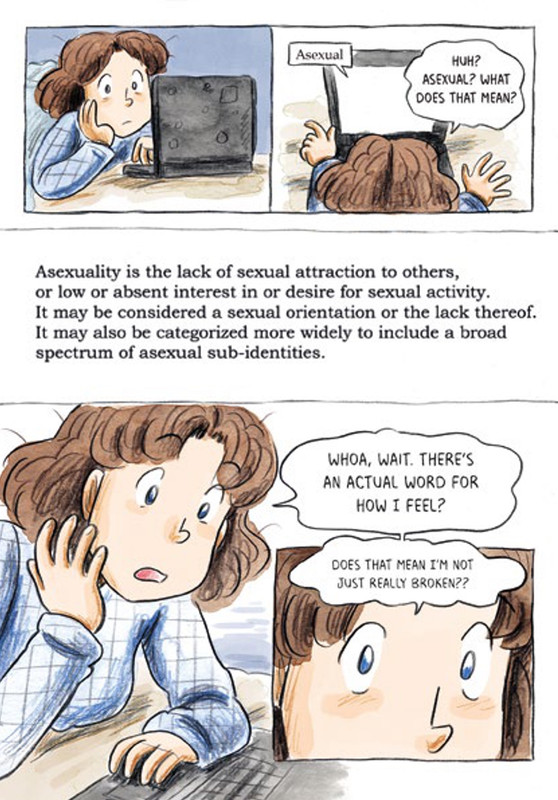
Rebecca’s story takes the reader from the bullying they experienced in childhood through to managing their mental health. Information about asexuality is scattered through the graphic novel, with insights into what relationships can look like for people who identify as asexual.

There was a greater focus on mental health than I had expected. I didn’t personally learn anything new about asexuality from the panels that provide information but they do give readers a good introduction. I anticipate that being able to follow Rebecca’s journey from struggling with their sexuality to their eventual acceptance of who they are will be helpful for readers who can relate to her experiences and provide new understanding for those who don’t understand asexuality.

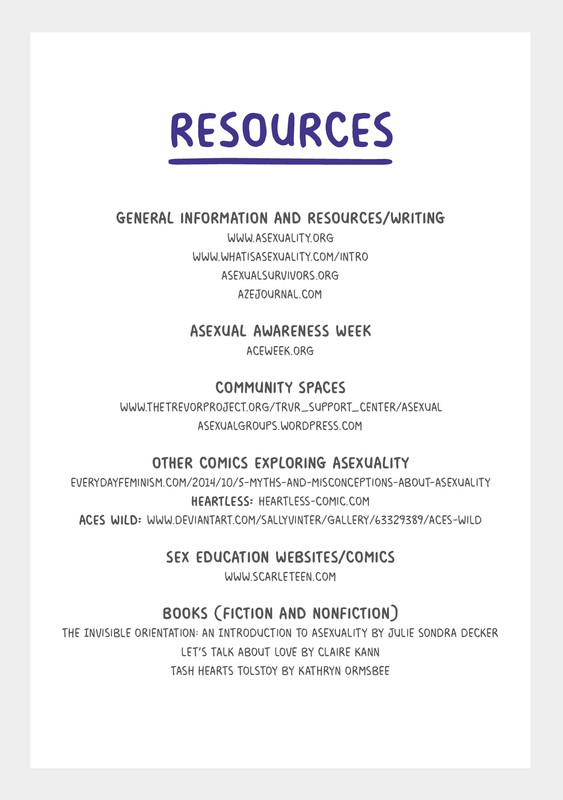
There are resources at the end of Rebecca’s story. Because asexuality is so misunderstood I’m including them here so you can check them out for yourself.

description

Thank you so much to NetGalley and Jessica Kingsley Publishers for the opportunity to read this graphic novel.

Rating: 3.5 out of 5.

Once Upon a Blurb

“When I was in school, everyone got to a certain age where they became interested in talking about only one thing: boys, girls and sex. Me though? I was only interested in comics.”

Growing up, Rebecca assumes sex is just a scary new thing they will ‘grow into’ as they gets older, but when they leaves school, starts working, and does grow up, they starts to wonder why they doesn’t want to have sex with other people.

In this brave, hilarious and empowering graphic memoir, we follow Rebecca as they navigate a culture obsessed with sex – from being bullied at school and trying to fit in with friends, to forcing themself into relationships and experiencing anxiety and OCD – before coming to understand and embrace their asexual identity.

Giving unparalleled insight into asexuality and asexual relationships, How To Be Ace shows the importance of learning to be happy and proud of who you are.

Liar Liar – Laurie Katz

Before I say anything else, I want to make a few things clear. I believe Laurie. What she experienced – being sexually assaulted, the perpetrator’s subsequent behaviour, the harmful responses she received from friends and university staff members – was horrific and she is not to blame for any of it. She deserved to be believed and supported while she was at college and she deserves those same things now.

What Laurie has accomplished here is remarkable. Writing about the events of your life is a difficult task under the best of circumstances. Needing to write accounts of my own experiences of sexual assault for non-public reasons has given me a general idea of just how daunting and painful a process this can be. I can’t even begin to imagine the vulnerability people must feel sharing this publicly and I commend Laurie for the courage and resilience this finished book represents.

Laurie was raped on the third Saturday of her freshman year of college. She was not only discouraged from reporting this to the police by university staff members but was also denied justice through the university’s own reporting process. Worse still, she was formally accused of lying by the university.

After essentially trying to cope with this trauma by herself, managing the best she could by overachieving and self-medicating, Laurie eventually found the support she deserved from the very beginning.

Given the subject matter, this was always going to be a difficult read, even though the book itself is quite short. If you find descriptions of sexual assault triggering, please be safe while reading this book. I had psyched myself up for the details I knew would be coming but was surprised by a few additional descriptions that I didn’t have time to prepare for. In particular, I thought the book was winding up so I let my guard down, then got hit by a major new revelation in the final chapter.

The next part of this review is difficult for me to write. I don’t feel like I have the right to judge anyone’s experiences or the choices they make so this isn’t that. However, I’m also uneasy critiquing the way anyone writes about their experiences, and that’s what this feels like.

Having said that, at times Laurie’s story came across as quite disjointed and could have benefited from some further editing. I recognise that traumatic memories are not formed in the nice, neat, linear way that non-traumatic memories are. Sometimes memories are only retained in flashes. They’re not necessarily remembered in the right order. There may be aspects of a sexual assault a victim never remembers.

All of this makes it harder to form a step by step narrative in our own heads, let alone when we try to make sense of it with others. I asked myself if I needed to take that into consideration as I was reading this book. I’d wonder about things, like where Sarah was or why no one accompanied Laurie to court, only to find out the answers in later chapters. The narrative jumped back and forth in time, making it more difficult to get a clear idea of the order of events.

The publisher says this book is part of a series that “tells the stories of the people who have battled and beaten mental health issues.” Although this should be obvious I feel I need to point out that sexual assault is not a mental health issue. Granted, it can result in a wide variety of trauma impacts, some of which include depression, anxiety and PTSD, but in and of itself it is not a mental health issue.

Thank you so much to NetGalley and Trigger Publishing for the opportunity to read this book.

Rating: 3.5 out of 5.

Once Upon a Blurb

Like any student about to start university, Laurie Katz was excited to see what the year would bring. Little did she know that just three weeks into her first term, her life would come crashing down around her. What had started as a fun night out with friends ended with Laurie, alone with a terrible secret: she had been raped.

Traumatised and confused, she set out to get justice against her attacker. But when the authorities at her university dismissed her case, and warned her that she could be expelled, she was left unsure where to turn. It seemed as though things couldn’t get worse, then her attacker filed his own case.

Laurie’s story is a brave and honest reminder of the injustice still felt in society around sexual abuse. Laurie offers readers her advice, and provides them with the hope that they too can overcome a similar trauma.

Fighting Words – Kimberly Brubaker Bradley

I could always count on Suki. Suki fixed everything.

Della has always been able to rely on Suki, her older sister. Suki has taken care of and protected Della her whole life. Now the sisters are in foster care and their mother’s boyfriend, Clifton, is in prison. Della keeps getting in trouble at school and Suki wakes up screaming each night.

I’ve learned that some things are almost impossible to talk about because they’re things no one wants to know.

I think we can sometimes underestimate the importance of young readers being able to see themselves in books. Although it’s wonderful to be able to escape into a world that only exists in your imagination, watching a character live through an experience that you can relate to is its own special type of magic.

Della and Suki’s story has the potential to reach readers who have experienced, or are still experiencing, sexual assault. I want Della’s words to reach through the page to let those readers know that they’re not alone and that there are people who will help them.

I loved Della. She’s a little spitfire but she’s also so courageous and resilient. Despite everything she’s experienced she is still loving and fiercely loyal. Her bond with Suki was beautiful, although the beauty was tinged with some sadness because Suki should never have been put in the position of caring for and protecting her younger sister.

I really hope this book finds its way to the readers it needs to. The story of these sisters is heartbreaking but ultimately hopeful. It clearly shows how important people’s responses to disclosures of sexual assault are to those who have the courage to speak up. Some of the impacts of this type of trauma are explored, as are some of the ways they can be managed.

Sometimes you’ve got a story you need to find the courage to tell.

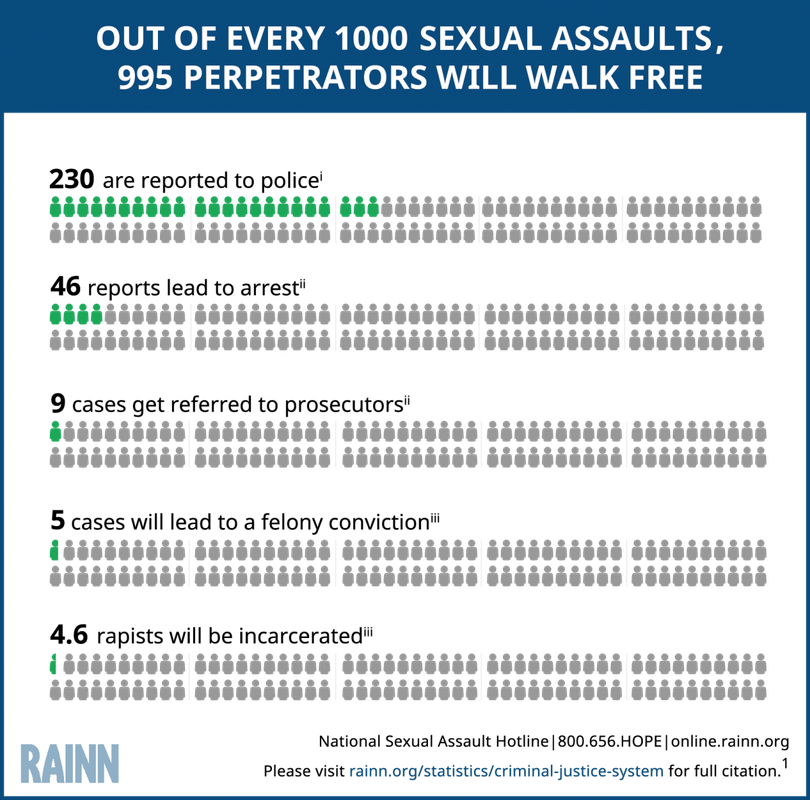
While I was relieved that the abuser in this story was incarcerated I know that this will not be part of the story for so many survivors. The majority of perpetrators of sexual assault will never spend a day in prison. The statistics are absolutely horrifying.

description

I don’t say this to discourage people from reporting what was done to them. It’s just that the majority of stories I’ve read that address sexual assault result in the conviction of the perpetrator. This is not a complaint about this book, merely a general observation.

We want the baddies to have consequences for their actions. I understand that. But when fiction only represents the outcome for the minority of victims of this crime, do we risk sending the message that being able to heal from this sexual assault is reliant upon the incarceration of the offender?

There are discussion notes at the end of the book, where the recommended reading age is said to be 14+. When I was a kid I only read books about kids who were my age or older so at 14 I wouldn’t have picked up a book where the main character was 12, but that’s probably just one of my quirks.

I can pretty much guarantee the word ‘snow’ will take on a whole new meaning once you’ve read this book.

Thank you to NetGalley and Text Publishing for the opportunity to read this book.

Rating: 4 out of 5.

Once Upon a Blurb

Della can’t work out why her adored older sister Suki screams in her sleep. Suki has always been Della’s protector, especially after their mother went to prison and her boyfriend took the sisters in. But who has been protecting Suki?

Della is in trouble at school for having a big mouth, but after she stands up to the class bully other girls rally to her cause. When Suki tries to kill herself, Della decides it’s time to tell their secrets and speak out about the terrible things that happened to Suki. Bound by love and trauma, these two sisters must find their own voices before they can find their way back to each other.

Based on the author’s personal experience, this gripping and essential story explodes the stigma around child sexual abuse. Written from the heart, with tenderness, compassion and humour, Fighting Words is about finding the words to talk about the most difficult things in young adults’ lives.

The Midnight Library – Matt Haig

‘Would you have done anything different, if you had the chance to undo your regrets?’

This was one of my most anticipated reads of the year. It had me at ‘library that contains an infinite number of books’. Then there’s my mild obsession with all things multiverse and my knowing that there isn’t a version of me that doesn’t end up reading this book. I was so hyped up about this book that I preordered three different versions of it. (Sorry, bank account …)

What I didn’t expect was to come to the realisation that I didn’t actually like Nora. It took almost no time at all for me to begin resenting her for squandering her potential. She was intelligent and gifted in various disciplines but she bailed on multiple opportunities that most people could only dream of having. Even though I also acknowledged and empathised with the pain she’d experienced, it still took a long time for me to stop being distracted by the privilege she took for granted.

‘Never underestimate the big importance of small things.’

I loved the idea of being able to test drive different versions of the life that could have been, although it did raise some questions for me. Some were addressed in this book but others are still ticking over in my mind.

Nora inhabits the bodies of a number of different versions of herself, all living lives that could potentially have been hers. When she returns to the library the other Noras resume their lives. Nora’s actions in a borrowed life could easily result in consequences that would derail an aspect of the life of the Nora that lives there, and I wondered if I would chance that if I was in her place. I’d hate to think that me acting in an unintentionally careless way could have real world consequences for another version of me.

If someone who has their own version of the Midnight Library chooses to stay in one of the lives they visit, what happens to the version of themselves who lived there first? Do they die? Swap existences with the interloper? Or is their existence undone entirely? Also, if you remain in another version of your life, could you ever truly feel like you belong or would you constantly feel like you need to fake knowing people that weren’t a part of your original life?

I did eventually get over my initial resentment/envy of Nora’s many opportunities and settled into exploring each new possible life with her. There were some lives I wanted to visit longer and others I wanted to escape from almost immediately. It seemed obvious from early on where Nora’s story was leading.

One thing that I hadn’t given much thought to in the context of this story prior to reading it was the impact that Nora’s choices in life, big and small, would have on the other people in her life. In this respect it reminded me of The Butterfly Effect, although Nora’s story is nowhere near as dark as Evan’s. Paulo Coelho’s Veronika Decides to Die and Robert Frost’s The Road Not Taken also popped into my mind as I was reading.

I wound up thinking a lot about who my Mrs Elm would be and the form that my Midnight Library would take. While my Library would have books (obviously!), I’m still not entirely sure who my Mrs Elm is.

I don’t know if it’s possible to read this book without thinking about your own regrets. Equally, I don’t know if it’s possible to read this book without considering the changes you could make in your life to erase them.

The story is told quite simply. It seemed to me to be part cautionary tale, part self help book and part Philosophy 101.

description

‘Now go on, live, while you still have the chance.’

Rating: 4 out of 5.

Once Upon a Blurb

Between life and death there is a library.

When Nora Seed finds herself in the Midnight Library, she has a chance to make things right. Up until now, her life has been full of misery and regret. She feels she has let everyone down, including herself. But things are about to change.

The books in the Midnight Library enable Nora to live as if she had done things differently. With the help of an old friend, she can now undo every one of her regrets as she tries to work out her perfect life. But things aren’t always what she imagined they’d be, and soon her choices place the library and herself in extreme danger.

Before time runs out, she must answer the ultimate question: what is the best way to live?

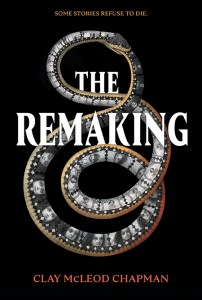
The Remaking – Clay McLeod Chapman

If you get too close to this urban legend, you risk becoming part of it.

The residents of Pilot’s Creek always knew there was something strange about Ella Louise Ford. Rumoured to be a witch, she became an outcast, but that didn’t stop the townsfolk from visiting Ella Louise’s apothecary shop to seek cures for what ailed them. Naturally, Ella Louise pays the price for being different.

Tonight, they were going to burn a witch.

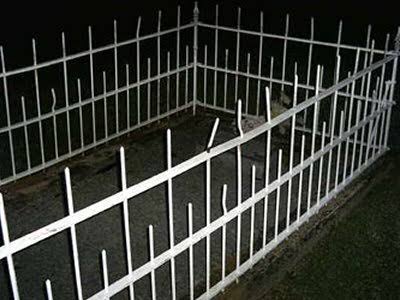
Ella Louise is buried in an unmarked grave. Her daughter, Jessica, who was rumoured to have been twice as powerful as her mother, is buried in the town’s cemetery. Jessica’s reinforced steel coffin is filled with concrete. Then there’s a layer of gravel and if that wasn’t enough, there’s a fence of crucifixes surrounding her grave. That little girl scared those men so much they wanted to make sure she would never escape her grave.

If you ask me, those two aren’t done.

Not with this town.

I love urban legends and ghost stories. I was even more invested when I learned Ella Louise and Jessica’s story was inspired by the real double murder of Mary Louise Ford and her daughter, Mary Ellen, which has become its own urban legend.

description
Image source: Scary for Kids

I was captivated by the story of this mother and daughter in Part One, but was disappointed when their story was subsumed by that of Amber Pendleton, a child actress. The rest of the story follows Amber, who played Jessica in a B grade movie. Later there is a reboot and finally a podcast, each delving into the urban legend but ultimately focusing more on Amber than the Fords. I really wanted Ella Louise and Jessica to be given more space in this story.

I didn’t find this story scary although, to be fair, I’m not easily scared by fiction. As the story progressed it began to feel more like a social commentary: on child actors and overbearing stage parents, horror movies, their reboots and sequels, horror fans, the victimhood of women, and the injustice of the justice system.

My main niggle was the reliance on repetition in this book. I don’t generally have a problem with repetition, but here it was overdone. It seemed like every other page I was finding passages like:

It’s only a movie …

Only a movie …

Only a movie …

Only …

I’m going to take you back home.

home

home

home

Keep it spinning. Spinning.

Spinning.

Spinning.

Spinning.

Thank you so much to NetGalley and Quirk Books for granting my wish to read this book.

Rating: 3 out of 5.

Once Upon a Blurb

Inspired by a true story, this supernatural thriller for fans of horror and true crime follows a tale as it evolves every twenty years – with terrifying results.

Ella Louise has lived in the woods surrounding Pilot’s Creek, Virginia, for nearly a decade. Publicly, she and her daughter, Jessica, are shunned by her upper-crust family and the local residents. Privately, desperate characters visit her apothecary for a cure to what ails them – until Ella Louise is blamed for the death of a prominent customer. Accused of witchcraft, Ella Louise and Jessica are burned at the stake in the middle of the night. Ella Louise’s burial site is never found, but the little girl has the most famous grave in the South: a steel-reinforced coffin surrounded by a fence of interconnected white crosses.

Their story will take the shape of an urban legend as it’s told around a campfire by a man forever marked by his childhood encounters with Jessica. Decades later, a boy at that campfire will cast Amber Pendleton as Jessica in a ’70s horror movie inspired by the Witch Girl of Pilot’s Creek. Amber’s experiences on that set and its meta-remake in the ’90s will ripple through pop culture, ruining her life and career after she becomes the target of a witch hunt.

Amber’s best chance to break the cycle of horror comes when a true-crime investigator tracks her down to interview her for his popular podcast. But will this final act of storytelling redeem her – or will it bring the story full circle, ready to be told once again? And again. And again

Survivors: Children’s Lives After the Holocaust – Rebecca Clifford

If you cannot recount the story of your own family, your home town, or your formative experiences, how do you make sense of your childhood and its impacts?

Most of us take our early childhood memories for granted. They form part of the story we tell ourselves about who we are and where we came from. For so many children who survived the Holocaust, these memories are either entirely missing or exist only in fragments. There are often no surviving family members who can help them fill in the blanks.

The survivors whose stories are explored in this book were all born between 1935 and 1944. Previous books I’ve read about Holocaust survivors were written by people who were either teenagers or adults during the war. The oldest survivors mentioned here were only ten years old in 1945.

“For most survivors who are not young child survivors, there was a before, you see.”

From an interview with Zilla C., conducted by psychoanalyst Judith Kestenberg in 1987

Even though I’ve now read the excerpts of their stories I’m still have trouble getting my head around what their lives have been like. For so many years they were not even counted as Holocaust survivors and were encouraged to simply move on with their lives and forget what memories they had of that time.

‘Just think it never happened,’ they urged, ‘and you will start a fresh new life.’

Paulette S., on how OSE staff tried to prepare her to move across the globe

In addition, there was a “disconnect between what children after the war felt and what their adult carers expected them to feel.”

The children’s wartime experiences consisted of at least one of the following:

survival in hiding, in flight to a neutral country or Allied territory, in ghettos and transit camps, and in concentration camps.

The ways these children coped with the trauma of the war and the subsequent traumas of being moved between institutional care, family members, and foster and adoptive homes is addressed. Some of the children lived in stable, loving homes during the war, albeit not with family members, only to be abruptly taken from them at the end of the war.

More often than not, they were moved to countries where they didn’t know the language. Many went to live with strangers and had to try to figure out who they were with little to no assistance.

Survivors has been extensively researched, with sources from “archival material, including care agency files, records from care homes, indemnity claims, psychiatric reports, letters, photographs, and unpublished memoirs, documents originating from nearly a dozen different countries”. The bibliography and detailed footnotes make up almost 15% of the book.

I had expected almost all of the book to consist of detailed stories of individual survivors. Snippets of interviews with survivors are included, as are overviews of the wartime experiences of a number of them. There is also a lot of information and commentary on changes that occurred throughout the decades that impacted on survivors. Some of these changes relate to what was happening in the world at the time and some examines the ways survivors have related to their stories as they grew older.

We should not be surprised to find that the way in which we tell the stories of our lives changes over time; this is true for child survivors as it is for all people.

I found it unusual that whenever survivors in general were discussed, most of the time they would be referred to as ‘she’ or ‘her’, even though interviews with male survivors are also included in the book. Some information was repeated in different chapters and I began to dread seeing the phrase ‘as we have seen’, but I came away with a much better understanding of both the short and long term impacts of the Holocaust on these young survivors.

I’m left wanting to know more about the individuals I was introduced to. Having said that, I agree with the author (an oral historian) that the level of detail I’m interested in would require many more volumes.

Thank you so much to NetGalley and Yale University Press for the opportunity to read this book.

Rating: 4.5 out of 5.

Once Upon a Blurb

Told for the first time from their perspective, the story of children who survived the chaos and trauma of the Holocaust.

How can we make sense of our lives when we do not know where we come from? This was a pressing question for the youngest survivors of the Holocaust, whose prewar memories were vague or nonexistent. In this beautifully written account, Rebecca Clifford follows the lives of one hundred Jewish children out of the ruins of conflict through their adulthood and into old age.

Drawing on archives and interviews, Clifford charts the experiences of these child survivors and those who cared for them – as well as those who studied them, such as Anna Freud. Survivors explores the aftermath of the Holocaust in the long term, and reveals how these children – often branded “the lucky ones” – had to struggle to be able to call themselves “survivors” at all. Challenging our assumptions about trauma, Clifford’s powerful and surprising narrative helps us understand what it was like living after, and living with, childhoods marked by rupture and loss.

The Choice – Edith Eger

“Just remember, no one can take away from you what you’ve put in your mind.”

Sometimes a book will find you at the very moment you need it. This is one of those books. I’ve previously marvelled at the resilience of some other remarkable human beings who survived the Holocaust. Elie Wiesel. Viktor Frankl.

Joining them is Edith Eger. A survivor whose courage both astounds me and gives me hope. A woman who will be occupying the space in my heart that she has made bigger with her compassion. A touchstone for the times I feel like I don’t have the strength to survive my own pain.

What follows is the story of the choices, big and small, that can lead us from trauma to triumph, from darkness to light, from imprisonment to freedom.

It would be so easy to hear even part of Edith’s story and say to yourself that your pain is insignificant compared to what she has experienced but after reading this book I realise that would be a disservice to her. Edith doesn’t rank pain and would prefer your response to be one of, “If she can do it, then so can I!” For someone whose power was taken away in such a brutal way at such a young age, Edith’s message is that much more empowering and impactful.

I can’t begin to imagine how I would have fared if I had been in Edith’s place. What I do know is, like everyone, I have experienced pain and trauma. Through Edith’s story and those of the people she’s counselled, I gained insights into my own life. Light made its way into dark corners that are painful to look at and while there’s still plenty of work to be done, it no longer feels impossible. Now I just need to make a counselling appointment with Edith. 😊

I expected to ugly cry my way through this book and surprised myself when I didn’t. The tears came unexpectedly, when I started rambling about how extraordinary Edith’s story is to someone. I was doing fine, right up until I began to explain that Edith would not have survived had it not been for a loaf of bread. Then I lost it.

Any story that even lightly touches on the Holocaust is bound to include the depravity that humans inflict on other humans. What touched me so much about that part of Edith’s story was it showed me the beauty that can still live within people, despite the ugliness that surrounds them.

I loved the way this book was written. I often felt like I was in conversation with Edith, that I was sitting across from her in a comfy chair in a room with a fireplace warming us as she was telling me a specific part of her story. I ran the gamut of emotions as I was reading but the style itself felt very down to earth.

No one heals in a straight line.

One of my favourite takeaways is the way Edith explains trauma. She doesn’t shy away from talking about the long term impacts she has lived with and that alone endeared her to me. So often the message seems to be that once you have survived the experience it’s all sunshine and roses from that day forward. No, pain hurts and surviving the aftermath of pain hurts too.

Edith’s authenticity when she talked about experiencing flashbacks and nightmares decades after her initial survival spoke to parts of me I can’t even verbalise yet, but I know some of what I felt as I read those parts was a bubbling hope rising up within me. When I read her take on PTSD I actually stopped reading to cheer; what I have long believed was actually being said by someone else.

This is why I now object to pathologizing post-traumatic stress by calling it a disorder. It’s not a disordered reaction to trauma – it’s a common and natural one.

I can already see a time in the near future where I’m going to need to reread this book. Different things are going to speak to me at different parts of my life; I can feel it in my bones.

What happened can never be forgotten and can never be changed. But over time I learned that I can choose how to respond to the past.

It’s not unusual for me to finish a book and be overcome by the need to book evangelise. Oftentimes it’s a wanting to shout from the rooftops, ‘Hey, you! Read this book! Then let’s talk about how much we both loved it.’ I also want to book evangelise The Choice but it’s coming more from a quiet knowing that this book can change lives. It’s a desire for people to get an infusion of compassion and empathy, to see in black and white what can happen when we don’t treat other humans like humans, and to make sure this never happens again.

We can choose what the horror teaches us. To become bitter in our grief and fear. Hostile. Paralyzed. Or to hold on to the childlike part of us, the lively and curious part, the part that is innocent.

I’m in awe of Edith surviving Auschwitz at all. To see what she has done since, both in working towards her own healing and facilitating the healing of countless others? I don’t know enough words to be able to adequately convey the way that makes me feel. This is truly a remarkable woman and if you haven’t already, you really need to read this book.

Thank you so much to NetGalley and Rider, an imprint of Ebury Press, Penguin Random House UK, for the opportunity to read this book.

Rating: 5 out of 5.

Once Upon a Blurb

In 1944, sixteen-year-old Edith Eger was sent to Auschwitz. There she endured unimaginable experiences, including being made to dance for the infamous Josef Mengele. Over the coming months, Edith’s bravery helped her sister to survive, and led to her bunkmates rescuing her during a death march. When their camp was finally liberated, Edith was pulled from a pile of bodies, barely alive.

In The Choice, Dr Edith Eger shares her experience of the Holocaust and the remarkable stories of those she has helped ever since. Today, she is an internationally acclaimed psychologist whose patients include survivors of abuse and soldiers suffering from PTSD. She explains how many of us live within a mind that has become a prison, and shows how freedom becomes possible once we confront our suffering.

Like Viktor Frankl’s Man’s Search for Meaning, but exceptional in its own right, The Choice is life changing. Warm, compassionate and infinitely wise, it is a profound examination of the human spirit, and our capacity to heal.

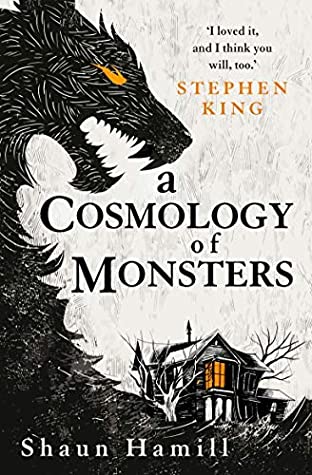
A Cosmology of Monsters – Shaun Hamill

Spoilers Ahead!

skritch-skritch-skritch

This book is a difficult one for me to review. It’s been on my radar for nearly a year and I loved the writing style and how well I felt I knew many of the characters, but it also had some problematic moments for me.

I loved hearing all about the history of this family, tragedy and all. I liked getting a feel for the dynamics between its members and the ways they individually coped with the pain that they’d experienced. The more I learned about their complexities as individuals and as a whole, the more I wanted to delve deeper. The unlikeable parts of certain characters made them even more real to me.

“How often do I get a chance to live out a true-life nightmare?”

I couldn’t get enough information about the Tomb and The Wandering Dark. I could easily visualise each room and I was eager to experience them for myself. I was even plotting new rooms that I could add to those the family had created and wondered how I could get involved behind the scenes to bring the scares to life.

description

I even loved it when the monster was introduced. I love monster stories so I was looking forward to getting to know this one but certain aspects of the monster’s behaviour didn’t work for me at all. Now, this is where my review becomes a spoilery rant, so you may want to skip the next four paragraphs. Sorry, my rants get kinda wordy.

Okay, if you’re still with me, I’ll assume you have either read the book already or spoilers don’t bother you. So, the monster. As Noah started spending more time with the monster I wondered about its why, how and what. When some vital information about the monster was revealed my curiosity quickly turned to ‘I no longer want to read this book’ and I would have DNF’ed at this point if I hadn’t committed to reviewing it.

The monster had been grooming Noah since he was six years old. This meant that when they eventually began having sex (apparently fairly regularly), my brain immediately went to ‘ewww!’ and I felt decidedly icky reading about it. If these scenes had involved a female child and male monster/adult, there would likely be an uproar and I don’t see why it should be any less abhorrent because the genders have been switched here. Thankfully, this is eventually called out for what it was by a minor character. Briefly.

Then there was Sydney, who thought she was having a relationship with a man, but there was a huge power imbalance as he was her teacher. Depending on where you live, legally this may or may not be called statutory rape, but even if it isn’t the power balance alone is enough to make alarm bells echo in my head. This whole thing is effectively silenced. Noah keeps the secret. Sydney gets put out that her ‘relationship’ is over. It’s never called out for what is really is. Even near the end of the book it’s described as a man who fell in love with a teenager.

I acknowledge that my experience of sexual assault could be colouring my perceptions of both Noah and Sydney’s experiences to a certain degree, but I still can’t imagine ever being okay with either situation. I do need to say that the minor character naming Noah’s experience redeemed that part of the narrative for me to an extent, although it will never be anything but icky to me. Sydney didn’t have anyone dismantling the truth she’d lived with and that wound up tainting some of my enjoyment of the book as a whole.

“It’s seen us. It has our scent.”

While I don’t generally have a problem with endings where the bows aren’t all tied, I did want to know more about the City and the history of the monsters. I was fine with not knowing exactly what was next for some of the human characters, although I could see the way the story resolved for Noah a mile off.

Loss, grief and the experiences that haunt us are central to this book. In exploring those through Noah’s story, the horror in part becomes about the parts of yourself that you hide and those that feed on your pain. I didn’t have to work at all to get into this book and the characters became real almost immediately. It wasn’t the horror I was expecting but I was sucked in and am interested in reading more books by this author.

“Noah, there is no such thing as a happy ending. There are only good stopping places.”

Thank you so much to NetGalley and Titan Books for the opportunity to read this book.

Rating: 4 out of 5.

Once Upon a Blurb

Noah Turner’s family are haunted by monsters that are all too real, strange creatures that visit them all: His bookish mother Margaret; Lovecraft-obsessed father Harry; eldest sister Sydney, born for the spotlight; the brilliant but awkward Eunice, a gifted writer and storyteller – the Turners each face their demons alone.

When his terminally-ill father becomes obsessed with the construction of an elaborate haunted house – the Wandering Dark – the family grant his last wish, creating themselves a legacy, and a new family business in their grief. But families don’t talk about the important things, and they try to shield baby Noah from horrors, both staged and real.

As the family falls apart, fighting demons of poverty, loss and sickness, the real monsters grow ever closer. Unbeknownst to them, Noah is being visited by a wolfish beast with glowing orange eyes. Noah is not the first of the Turners to meet the monster, but he is the first to let it into his room …