‘Yes, but also solving mysteries,’ explained Uncle Bernie.
When we last saw Friday Barnes she was being arrested, rudely interrupted while she was indulging in a second slice of chocolate cake, having just solved the case of Highcrest Academy’s swamp yeti. We pick up Friday’s story with her arrest.
‘Will you do “good cop, bad cop”, or are you doing it already and that’s why you’re being nice to me?’
Rather than becoming the central plot of this book, the story of Friday’s arrest is cleared up very quickly. Then we turn our attention to the problems of other Highcrest Academy students, who all now know that Friday is the girl detective that will solve them.
‘I assume you need help. Like the vast majority of students at this school, you have never spoken to me voluntarily.’
In this book, Friday applies her photographic memory to competitive baking and competitive rocket launching. She also solves a kidnapping and ponders the mystery of the man she met in the police station. Then we navigate our way around all of the holes that staff and students keep falling into all over the school grounds. We even discover why Friday is banned from the school library.
Melanie, Friday’s best (and possibly only) friend, is really growing on me. Her ability to go from vague to astute in an instant has endeared her to me and I find her fondness of naps very relatable.
We are introduced to a new Year 10 student, Christopher. The addition of a second handsome boy to the series immediately caused speculation of a ‘love triangle’, despite Friday and Ian denying they are in love with one another. Given Friday is only eleven I could do without so much of Melanie’s conversation revolving around her best friend’s potential love life.
Two books in and I’m already beginning to wonder if every book is going to end with the core mystery being solved and a sudden cliffhanger that comes out of nowhere. The mysteries are still fun though and I’m enjoying the creative laziness of many of Highcrest Academy’s teachers. I’m hoping Uncle Bernie finds a way to drop in during the next book for more than a few pages.
⭐⭐⭐⭐
Rating: 4 out of 5.
Once Upon a Blurb
Who knew boarding school could be this perilous!
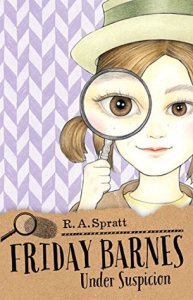
When Friday Barnes cracked the case of Highcrest Academy’s mysterious swamp-yeti, the last thing she expected was to be placed under arrest. Now with the law on her back and Ian Wainscott in her face, Friday is not so sure boarding school was the smartest choice. From a missing or not-so-missing calculator to the appearance of strange holes in the school field, she is up to her pork-pie hat in crimes – and she swears not all of them are hers. There’s also new boy Christopher, who has taken quite a shine to Friday, to contend with.
Can Friday navigate the dangerous grounds of Highcrest Academy and decipher a decades-old mystery without getting caught in an unexpected love triangle?
Friday Barnes is currently my favourite girl detective. I first read this book in 2016 and my reread has been just as enjoyable. Friday is eccentric, extraordinarily smart and forthright.
Friday was named after the day on which she was born. Well, she would have been if it had actually been a Friday. She was really born on a Thursday but her ever distracted (and dare I say, neglectful) parents confused the days. Their minds were no doubt on quasars or electrons at the time. Don’t believe me? Friday’s older siblings are named Quantum, Quasar, Orion and Halley.
Friday essentially raised herself and until recently has spent most of her time in silence, reading anything she can get her hands on. Faced with the problem of needing to attend high school, despite passing the entrance exam to study medicine at university, eleven year old Friday elects to send herself to an elite boarding school. She pays for the tuition with the reward money she earned from solving the case of a missing multi-million dollar diamond.
Once she arrives at Highcrest Academy, Friday becomes known as the resident mystery solver, taking on cases of missing homework and the swamp yeti who has been terrorising the students.
‘Swamp yetis don’t exist.’
She also finds a potential nemesis/love interest and spends much more time sitting on the bench outside the Headmaster’s office than she does in a classroom.
‘Sometimes I wonder if you are startlingly gifted,’ said the Headmaster, ‘or you simply have access to some sort of illicit counter-intelligence mind-reading device.’
Occasionally she even needs to suck on a lollipop when she’s considering all of the variables of a problem, something she only does when she’s “processing a difficult conundrum.”
Despite Friday’s off the charts IQ, she’s not the best at picking up on social cues, although she is slowly getting better at detecting rhetorical questions. It’s lucky for her that her new roommate, Melanie Pelly, notices things that other people don’t.
‘My brain just does it. The hard part is getting it to notice things that are useful.’
Uncle Bernie, although he doesn’t have a great deal of page time in the first book, quickly became my favourite character. He appreciates Friday for who she is (brown cardigans and all) and is the only family member that appears to even notice her existence.
I’ve been planning a Friday Barnes binge for several years. With the release of the ninth book I’ve decided it’s finally time.
I would have adored this series as a kid and am having fun with them so far as an adult. I’ve yet to decide if Friday and I would have been best friends or mortal enemies if we were in the same class. Either way, I know I wouldn’t have been bored.
Beware: this book ends in a cliffhanger.
⭐⭐⭐⭐⭐
Rating: 4.5 out of 5.
Once Upon a Blurb
Imagine if Sherlock Holmes was an eleven-year-old girl!
When girl detective Friday Barnes solves a bank robbery she uses the reward money to send herself to the most exclusive boarding school in the country, Highcrest Academy.
On arrival, Friday is shocked to discover the respectable school is actually a hotbed of crime. She’s soon investigating everything from disappearing homework to the Yeti running around the school swamp. That’s when she’s not dealing with her own problem – Ian Wainscott, the handsomest boy in school, who inexplicably hates Friday and loves nasty pranks.
Can Friday solve Highcrest Academy’s many strange mysteries, including the biggest mystery of all – what’s the point of high school?
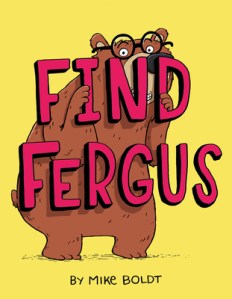
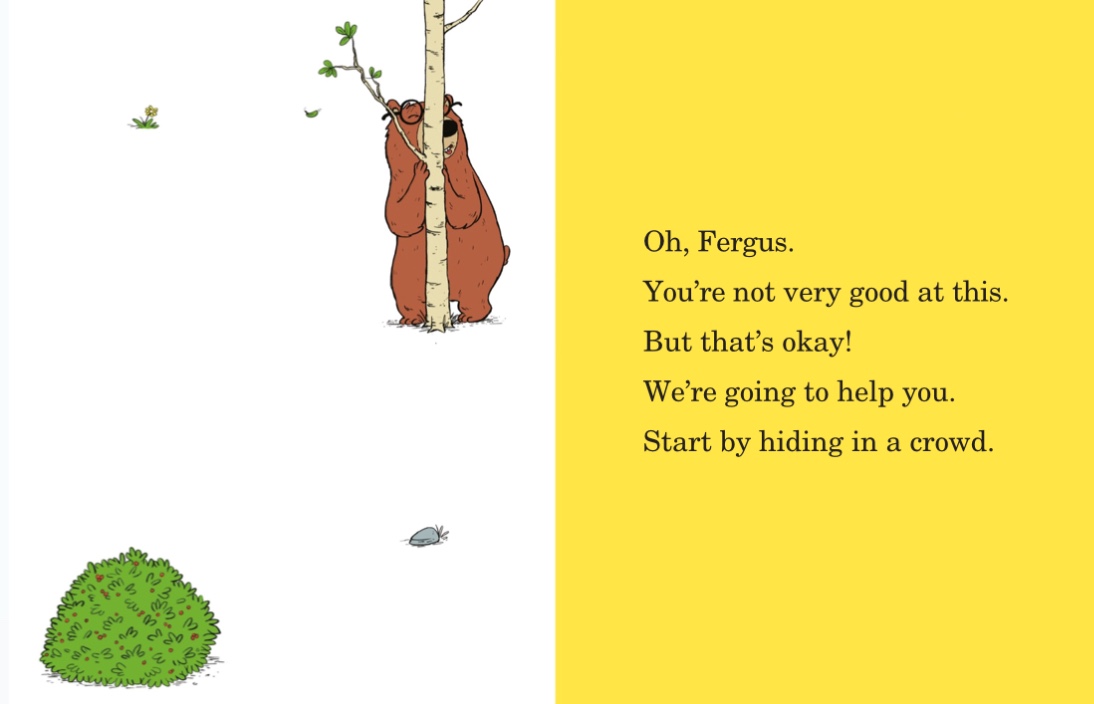
Fergus the brown bear is learning how to hide, only he’s not very good at it. Yet.
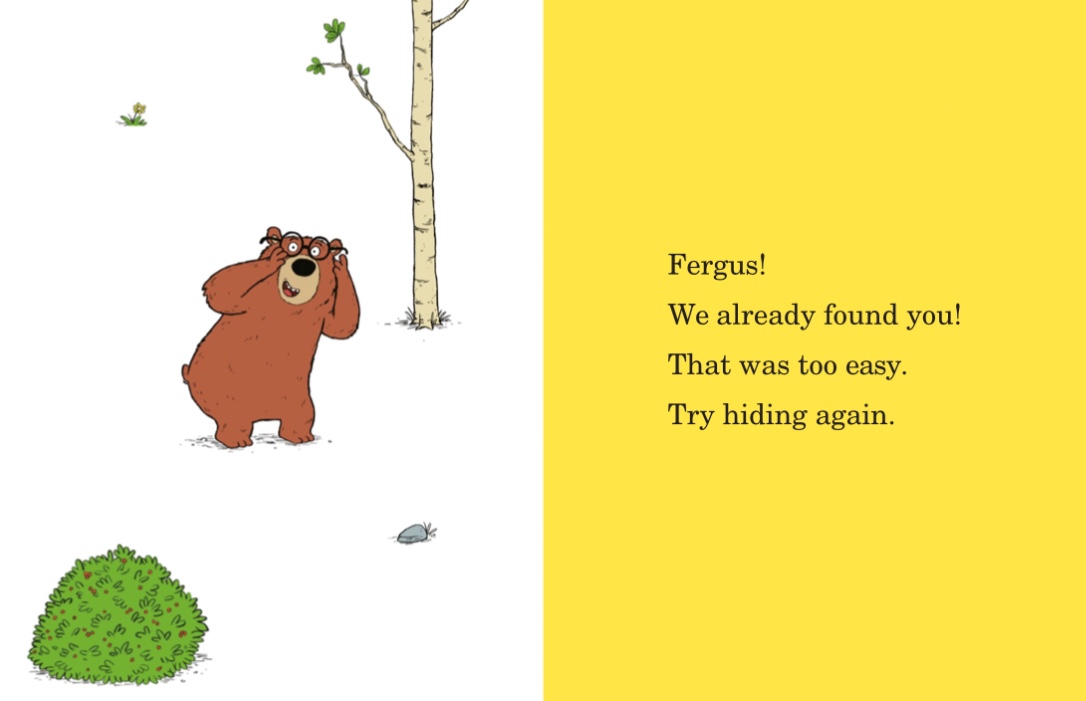
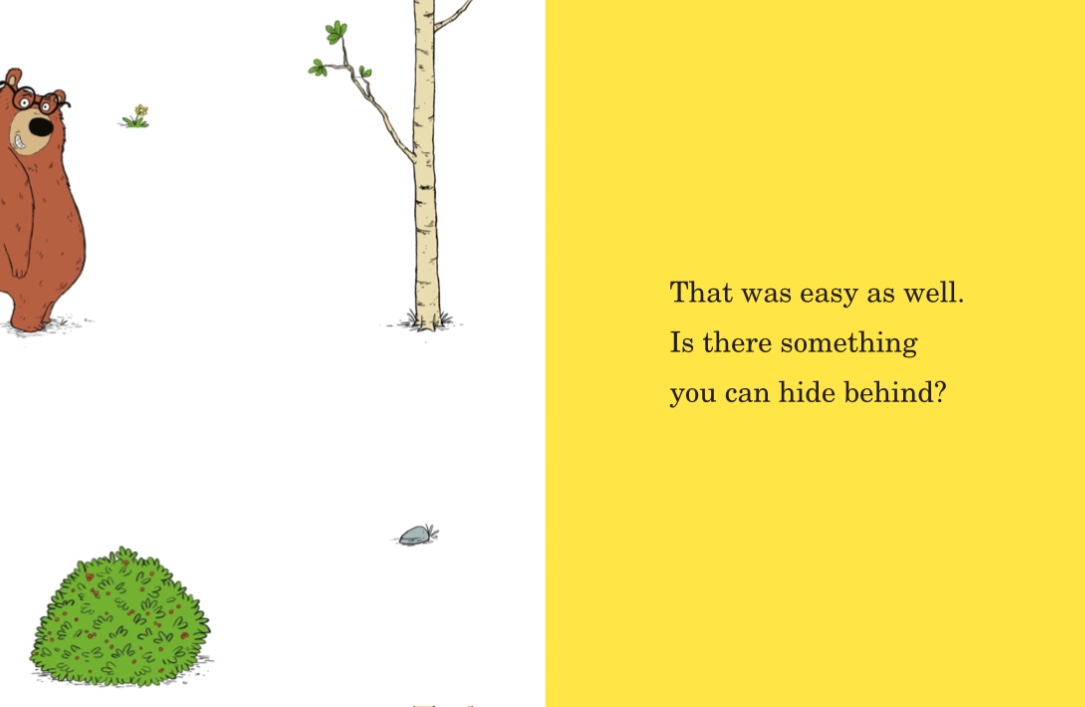
When we first meet Fergus, his attempts at hiding are pretty much equivalent to a child putting their hands over their eyes and assuming that means you can’t see them anymore. Or hiding behind the curtains but forgetting that their feet are still visible. Actually, maybe Fergus hasn’t quite reached that level yet.
You’ve got to give him credit though. Fergus listens to instructions and applies what he’s learned to his next attempt. With perseverance, he gradually gets better at hiding until he finally masters it.
This book would not be nearly as entertaining if the animals weren’t so expressive. Fergus is absolutely adorable but you’ll also meet a duck and a fox, and a whole bunch of rabbits, squirrels, elephants, moose and bears (of course).
My favourite finds included a polar bear who’s just heard a joke, a bear hug and “an elephant with a squirrel problem”.
After you finish reading you can go back to the fold-out pages to search for the things (other than Fergus) that there are to find.
⭐⭐⭐⭐
Rating: 4 out of 5.
Once Upon a Blurb
The hilarious mind behind I Don’t Want to Be a Frog and Bad Dog brings picture book fans the super-funny, interactive story of Fergus the bear, who loves to play hide-and-seek with the reader … but can’t really seem to get the hang of it.
Children will giggle from start to finish as they follow huge, loveable Fergus and see all the silly ways in which he is TERRIBLE at playing hide-and-seek such as hiding behind a VERY tiny tree (“Found you, Fergus! That was too easy!”) or hiding in a giant crowd of bunnies and squirrels (“Try bears, Fergus. Bears!”).
But wait the game isn’t over yet! The last two pages fold out into a giant panoramic look-and-find scene, where Fergus is well and truly hidden, and young readers can have fun looking for him and lots of other silly details in the the crowd.
‘If you’re told it’ll definitely come true,’ Masamune said, ‘then everyone will have a wish or two.’
Kokoro, a 7th grader who no longer attends school because of “the incident”, has the house to herself during the day while her parents are at work. She spends her time watching TV, hiding from the world outside her home.
One day a light appears from inside her mirror. Before she’s even barely begun investigating this strange occurrence, Kokoro finds herself on the other side of the mirror. There, in a castle that looks like it belongs in a fairytale, she meets others whose mirrors have learned the same new trick:
Aki is in the 9th grade and appears to have her act together
Fuka wears glasses, has a high pitched voice and is in the 8th grade
Masamune is in the 8th grade and is likely to be playing a video game whenever you see him
Subaru is in the 9th grade and is described as looking like Ron from Harry Potter
Ureshino is already in love with being in love and he’s only in the 7th grade
Rion is a handsome 7th grader who plays football.
The seven strangers are met by the Wolf Queen, who tells them the rules of the castle.
‘From now until next March, you will need to search for the key that will unlock the Wishing Room. The person who finds it will have the right to enter and their wish will be granted.’
Over the course of many months, the group slowly get to know one another and discover what they have in common. Despite the fairytale elements and some magical realism, the core of this book addresses some difficult topics, albeit in a sensitive way. I loved the focus on mental health, particularly anxiety, and how it impacts other areas of our functioning, including physical health and social interactions.
I liked the characters, although some were given more detailed backstories than others. I was most intrigued by Aki and wanted to spend more time behind what I saw as her protective wall. I would have loved to have learned what happened to all of the seven after the events of the story. I definitely wanted more page time with the mysterious Wolf Queen, hoarder of the best lines:
‘Can’t you simply be satisfied that you’ve been chosen as heroes in a story?’
Anyone who knows me knows I love portal stories and I found myself bingeing this one. There weren’t as many fantasy elements as I’ve experienced in other portal stories I’ve read. I also got to know the characters and the rules of the castle at a more leisurely pace than I’d expected. Neither were a problem for me, though. The payoff at the end ticked all the boxes for me, confirming some suspicions and answering most of the questions I had. This is definitely a book I want to reread.
How could a portal into a different world not be appealing?
Thank you so much to NetGalley and Doubleday, an imprint of Transworld Publishers, Penguin Random House UK, for the opportunity to read this book.
⭐⭐⭐⭐⭐
Rating: 4.5 out of 5.
Once Upon a Blurb
How can you save your friend’s life if she doesn’t want to be rescued?
In a tranquil neighbourhood of Tokyo, seven teenagers wake to find their bedroom mirrors are shining.
At a single touch, they are pulled from their lonely lives into a wondrous castle filled with winding stairways, watchful portraits and twinkling chandeliers. In this new sanctuary, they are confronted with a set of clues leading to a hidden room where one of them will be granted a wish. But there’s a catch: if they don’t leave by five o’clock, they will die.
As time passes, a devastating truth emerges: only those brave enough to share their stories will be saved.
Tender, playful, gripping, Lonely Castle in the Mirror is a mesmerising tale about the importance of reaching out, confronting anxiety and embracing human connection.
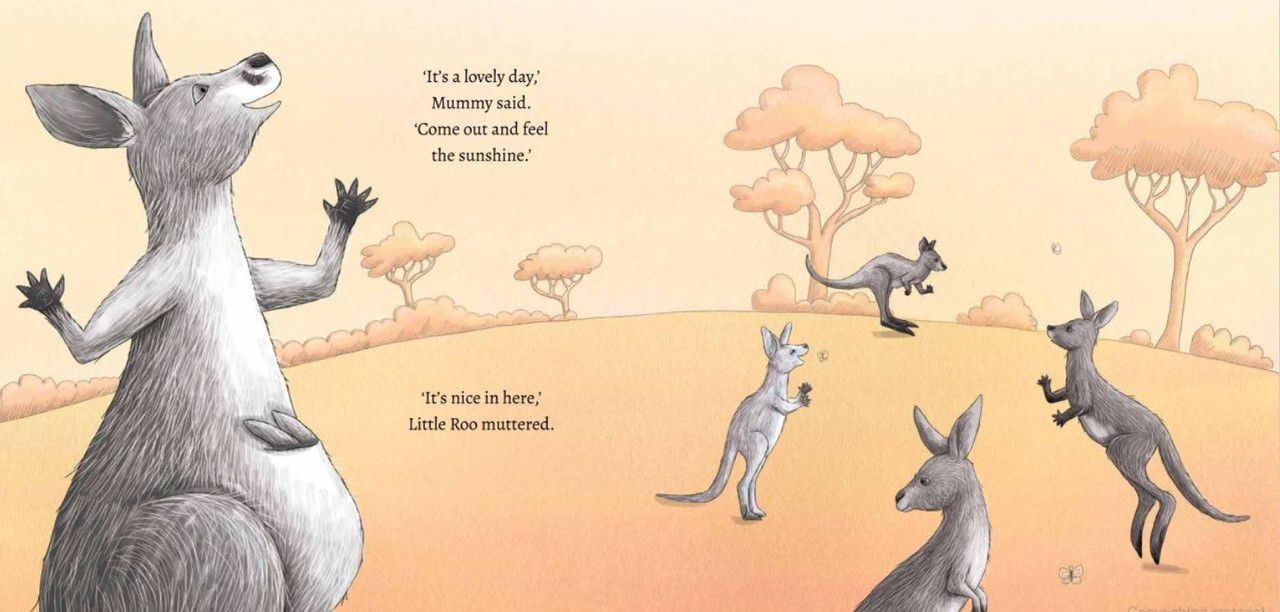
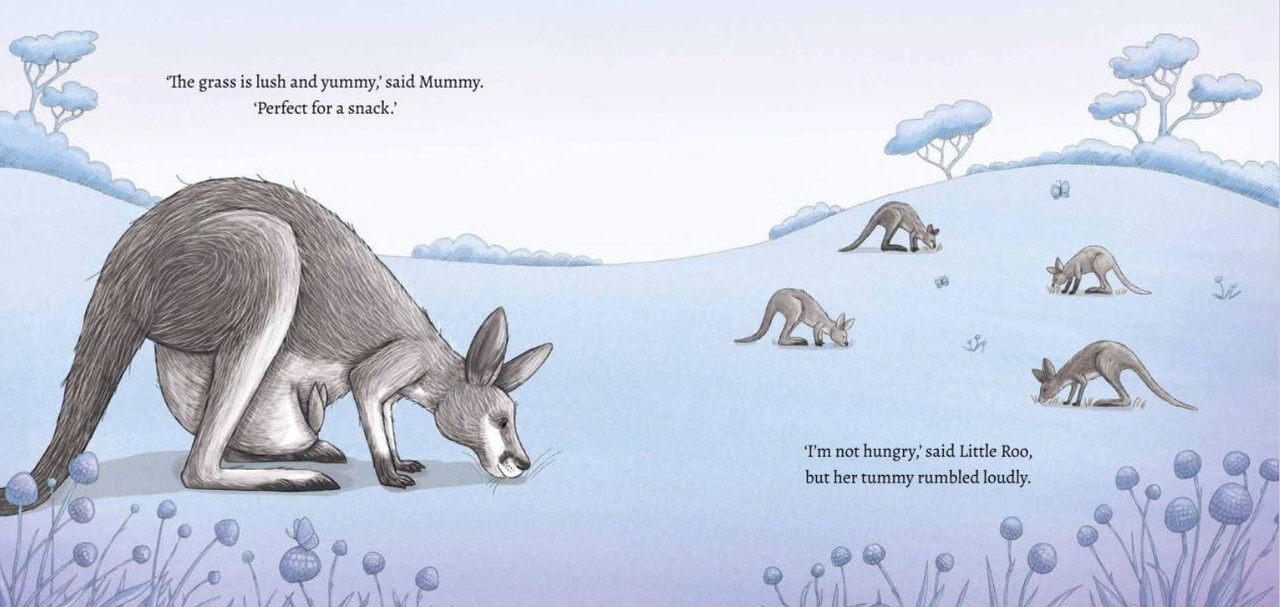
Little Roo wants to play with the other joeys and she would love to have a friend but she’s scared. It’s all new to her and she’s shy.
But Little Roo wanted to stay hidden even more.
With her mother’s encouragement she is brave enough to peek outside of the pouch. It’s then that she realises she’s not the only one who’s afraid of new things.
This is such a sweet picture book, with Little Roo discovering that when she is brave enough to try new things, they’re not as scary as she first thought.
The illustrations are beautiful and Little Roo is very expressive (when she’s not hiding in her mother’s pouch). The grayscale of the animals set against the soft pastels of the backgrounds makes the book itself feel non-threatening.
I can easily imagine other shy joeys borrowing some of Little Roo’s courage and taking the leap into some fun new experiences.
⭐⭐⭐⭐
Rating: 4 out of 5.
Once Upon a Blurb
‘Come along, Little Roo!’ called Mummy. ‘It’s time to go.’
Deep down, Little Roo wants to play, but everything here is new and different … and a little bit scary. With Mummy by her side, will Little Roo be brave enough to venture out?
Favourite Australian picture book creator Renée Treml is back with this gentle, comforting story of a shy kangaroo joey.
“Politics doesn’t have to be what people think it is. It can be something more.”
Long before I wanted Jacinda Ardern to be my prime minister, I wanted Barack Obama to be my president. Other than a few standout moments, like Julia Gillard’s efforts in establishing the Royal Commission into Institutional Responses to Child Sexual Abuse and our current prime minister’s poorly timed vacation while much of the country was burning in 2019, I couldn’t tell you a great deal about politics in Australia.
Billy Connolly taught me everything I knew about politics as a kid, with ‘The desire to be a politician should bar you for life from ever becoming one’ and ‘Don’t vote, it just encourages them’ recited on a regular basis in my home when I was growing up.
In A Promised Land, Obama mentions something known as the “What’s the point of voting if nothing ever changes?” syndrome, which pretty much sums up my political worldview as an adult.
[I’d be hard pressed to tell you anything that impacts me personally that’s a priority for politicians in Australia. My single attempt at getting my local member of parliament to mobilise any of their resources to help members of their constituent and the rest of the state in positions similar to mine (those who were being screwed over by changes to the Worker’s Compensation system, which had already resulted in several deaths by suicide by the time I met with them) resulted in an incredulous, ‘What do you want me to do about it?!’ and towards the end of the meeting, a more pointed, ‘You’re f*cked’ (actually, they said that twice during the meeting), before the obligatory, ‘Vote for my party in the next election if you want to see changes’. So, yeah. Politics and I aren’t exactly friends.]
To say that this book is outside of my comfort zone is an understatement. I never thought I’d voluntarily read anything classified as a political memoir. But it’s Obama and I was interested in what he had to say, even if I had to sift through politics that I previously haven’t either cared about or understood to hear it.
This, I was coming to realize, was the nature of the presidency: Sometimes your most important work involved the stuff nobody noticed.
I was surprised by how much I loved this book. I learned so much about the ins and outs of political decisions and the fact that I found the details interesting says a lot about the quality of the writing. But the human stories were what really sucked me in.
This is a book where a football is not a football, where Dr. No scrutinises all things ethical to avoid scandal (“If it sounds fun, you can’t go.”) and the president is the one who brings out the cake for people’s birthdays. Also, and I may be the only one who thinks this is kinda cool, although I’d hate it if anyone was paying that much attention to me, “Renegade to Secondary Hold” was Secret Service code for Obama going to the bathroom.
Make no mistake: this is a heavy book, providing in depth details of decisions relating to the financial crisis, war, healthcare, foreign policy, immigration, human rights and a whole bunch of other unfolding crises that wind up on a president’s to do list.
No one had nuclear war or terrorism on their minds. No one except me. Scanning people in the pews – friends, family members, colleagues, some of whom caught my eye and smiled or waved with excitement – I realized this was now part of my job: maintaining an outward sense of normalcy, upholding for everyone the fiction that we live in a safe and orderly world, even as I stared down the dark hole of chance and prepared as best I could for the possibility that at any given moment on any given day chaos might break through.
I found myself getting bogged down in the details of the financial crisis and for a few days I’d catch myself daydreaming about some of the books I could be reading instead. Everything after that, though, I couldn’t get enough of. Having read little else for almost two weeks, part of me feels like I’ve always been reading this book and another part of me is sad that it wasn’t even longer.
This is also literally a very heavy book and an awkward one to hold; I lay in bed the first night, when I hadn’t even finished the first hundred pages, trying to figure out why my hands hurt so much. It turns out that simply holding onto this book is its own workout.
Handy hint: If you rest the book on your body as you’re reading and use your hands to gently balance it so it doesn’t fall on your face and crush you, your hands will thank you for it.
The pages are also crammed with words so it felt like I was reading a lot more than 700 pages. I was curious to find out just how many words fit on an average full page of text. Because I’m me, I finally decided to count the words on one page – 430. I don’t know what a normal page count is but that sounded like a lot to me.
There’s a lot of serious in this book but that’s not to say there aren’t some smiles and misty eye moments along the way. I chuckled when the secure mobile communications system broke down at the wrong moment, necessitating a very important and very serious phone call being made instead on “a device that had probably also been used to order pizza.”
I lost count of the times I could have easily wandered into ugly cry territory: the outcome of the DREAM Act, when Obama visited soldiers as they recovered from injuries sustained serving their country, personal family moments.
The fuss of being president, the pomp, the press, the physical constraints – all that I could have done without. The actual work, though?
The work, I loved. Even when it didn’t love me back.
There are probably over 700 reasons why I should never be president of anything, let alone the U.S. Here are my current top 5:
The meetings. No one should have to attend so many meetings. I dreaded having to attend one team meeting each month at my last job. A coworker, who shared my disdain for meetings, and I frequently got in trouble for pulling faces at each other when everyone else had their serious faces on.
Filibuster. Just reading that word makes me want to spit the dummy. That the opposition think it’s a great idea to do whatever they can to prevent the other side from winning anything, because it might make them look like they’re competent, rather than prioritising what’s best for the people they claim to be serving? That makes my blood boil.
“The Death, Destruction, and Horrible Things Book”, A.K.A., the “President’s Daily Brief”. If I had to read about all of the possible ways the world might implode/explode every morning over breakfast, I’d not only forego the most important meal of the day, it’s highly likely I wouldn’t remain functional for very long.
I wouldn’t be diplomatic enough. If another world leader was doing something stupid I would be calling them on it, probably in public, and would more than likely wind up causing more problems than I was attempting to solve.
My priorities wouldn’t be overly presidential. My first order of business would be to get whoever had access to them to bring me the unredacted files relating to all things Area 51 and anything else Mulder might have a passing interest in. That’s what I’d be reading over breakfast.
I realized that for all the power inherent in the seat I now occupied, there would always be a chasm between what I knew should be done to achieve a better world and what in a day, week, or year I found myself actually able to accomplish.
When I was only about 200 pages in, I mentioned to someone that this book was really giving me a feel for the type of person Obama is. They asked me what type of person that is. My answer was something like, ‘He’s got values and acts in a way that is in accordance with them. He’s intelligent and likes to have a laugh. He’s a loyal and trustworthy friend and he absolutely adores his family. He’s the kind of person you’d want to know and someone I could see me being friends with.’
500 pages later and I can say with confidence that I still feel that way. My only cause for concern? The man doesn’t like sweets. That’s not something I usually look for in a friend but I suppose no one’s perfect. More sweets for me, I guess.
I’m wondering how it will be possible to fit everything else in only one more book as this one leaves readers in May 2011, but I’m really looking forward to reading the second volume. It turns out reading outside of your comfort zone can be a really good thing.
Whatever you do won’t be enough, I heard their voices say.
Try anyway.
⭐⭐⭐⭐⭐
Rating: 5 out of 5.
Once Upon a Blurb
A riveting, deeply personal account of history in the making – from the president who inspired us to believe in the power of democracy.
In the stirring, highly anticipated first volume of his presidential memoirs, Barack Obama tells the story of his improbable odyssey from young man searching for his identity to leader of the free world, describing in strikingly personal detail both his political education and the landmark moments of the first term of his historic presidency – a time of dramatic transformation and turmoil.
Obama takes readers on a compelling journey from his earliest political aspirations to the pivotal Iowa caucus victory that demonstrated the power of grassroots activism to the watershed night of November 4, 2008, when he was elected 44th president of the United States, becoming the first African American to hold the nation’s highest office.
Reflecting on the presidency, he offers a unique and thoughtful exploration of both the awesome reach and the limits of presidential power, as well as singular insights into the dynamics of U.S. partisan politics and international diplomacy. Obama brings readers inside the Oval Office and the White House Situation Room, and to Moscow, Cairo, Beijing, and points beyond. We are privy to his thoughts as he assembles his cabinet, wrestles with a global financial crisis, takes the measure of Vladimir Putin, overcomes seemingly insurmountable odds to secure passage of the Affordable Care Act, clashes with generals about U.S. strategy in Afghanistan, tackles Wall Street reform, responds to the devastating Deepwater Horizon blowout, and authorises Operation Neptune’s Spear, which leads to the death of Osama bin Laden.
A Promised Land is extraordinarily intimate and introspective – the story of one man’s bet with history, the faith of a community organiser tested on the world stage. Obama is candid about the balancing act of running for office as a Black American, bearing the expectations of a generation buoyed by messages of “hope and change”, and meeting the moral challenges of high-stakes decision-making. He is frank about the forces that opposed him at home and abroad, open about how living in the White House affected his wife and daughters, and unafraid to reveal self-doubt and disappointment. Yet he never wavers from his belief that inside the great, ongoing American experiment, progress is always possible.
This beautifully written and powerful book captures Barack Obama’s conviction that democracy is not a gift from on high but something founded on empathy and common understanding and built together, day by day.
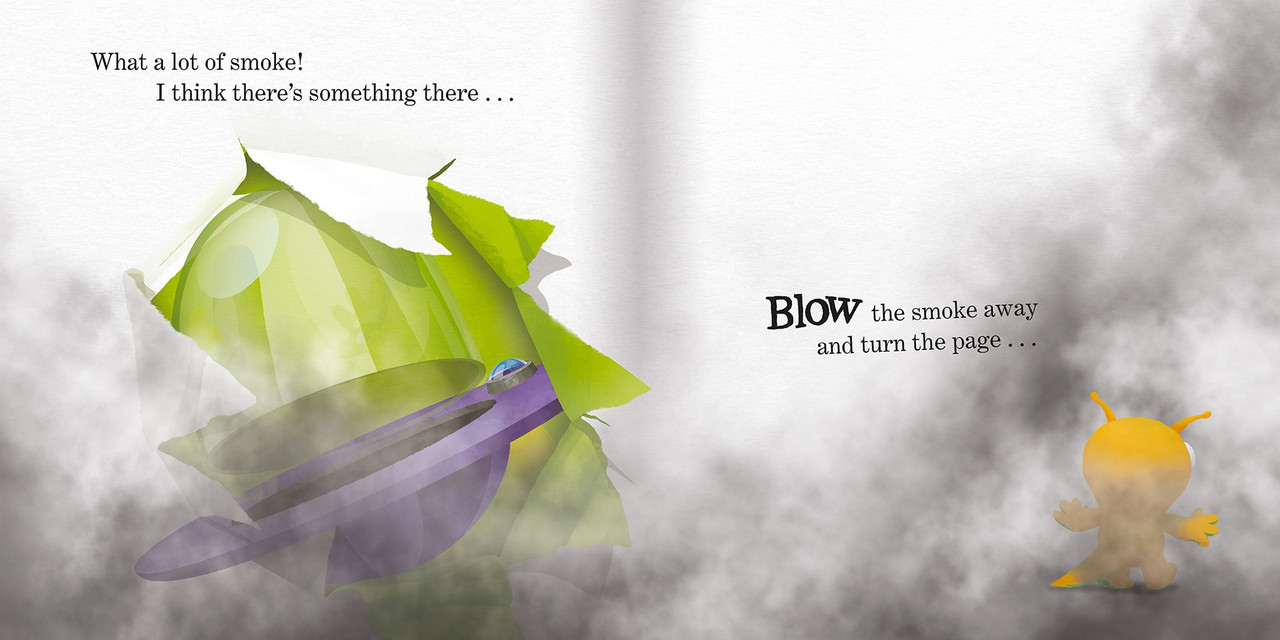
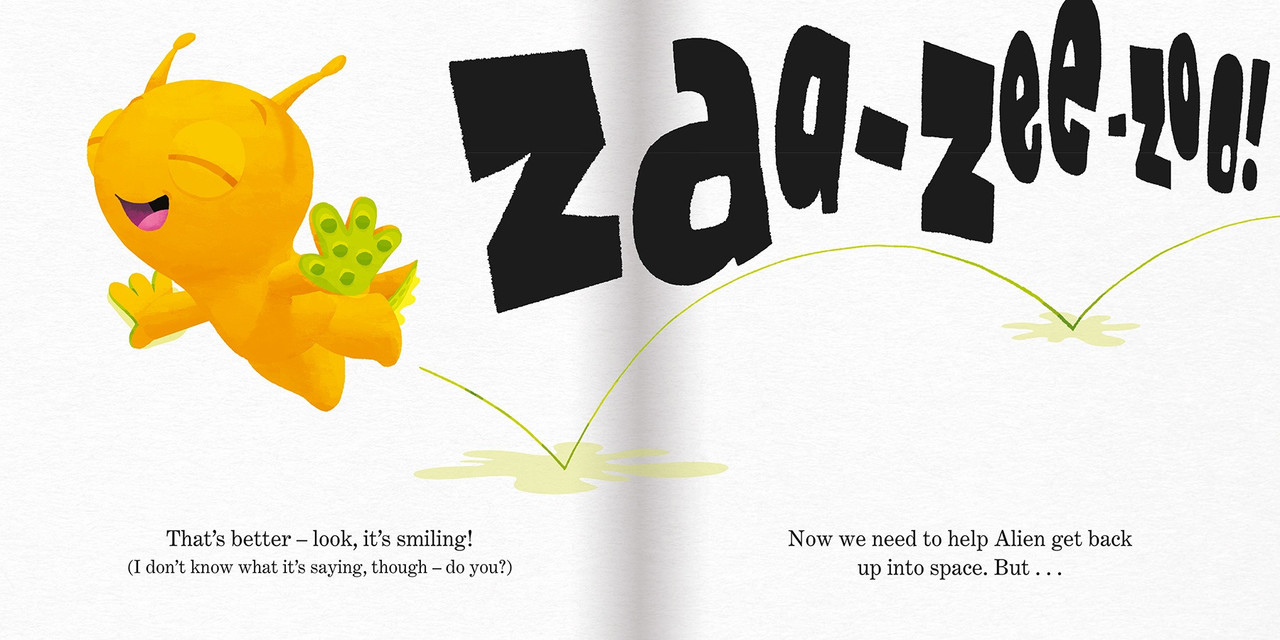
It’s time for another Who’s in Your Book? book. This book’s Who is an adorable little alien whose spaceship has crashed through its pages.
I managed to find an excerpt at Penguin UK so prepare yourself for image overload!
The interaction begins almost straight away because we need to find out just Who has invaded our book.
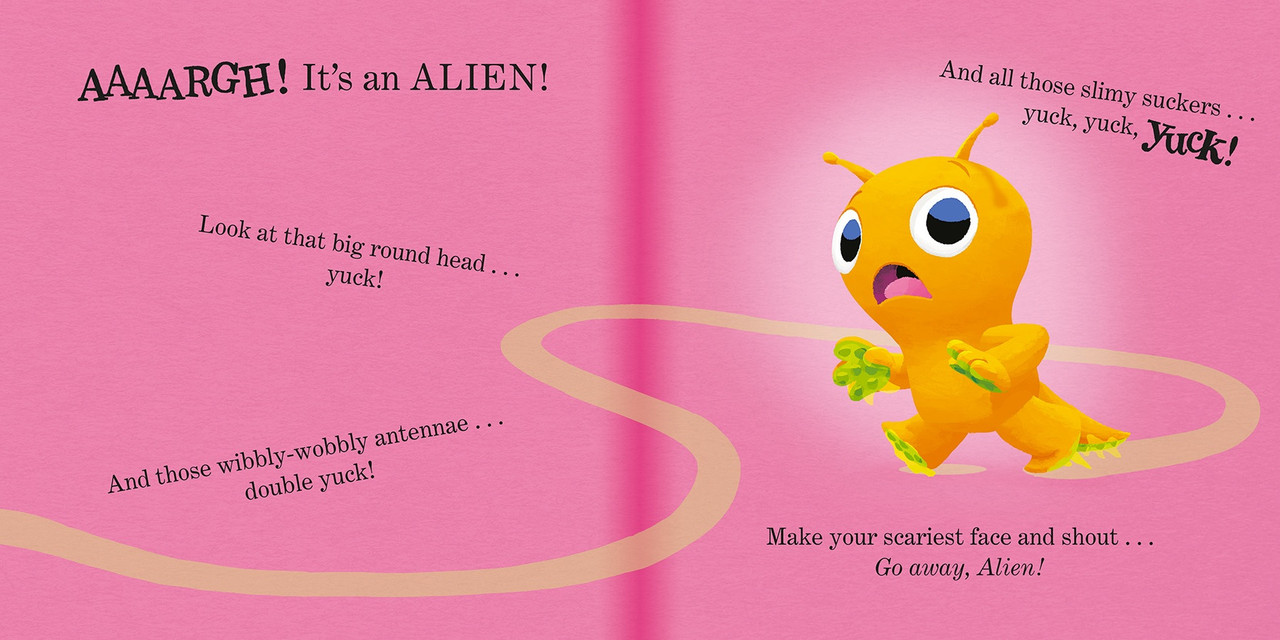
No! Don’t be mean to our potential intergalactic friend. What would Mulder think if he saw you being anything less than welcoming?
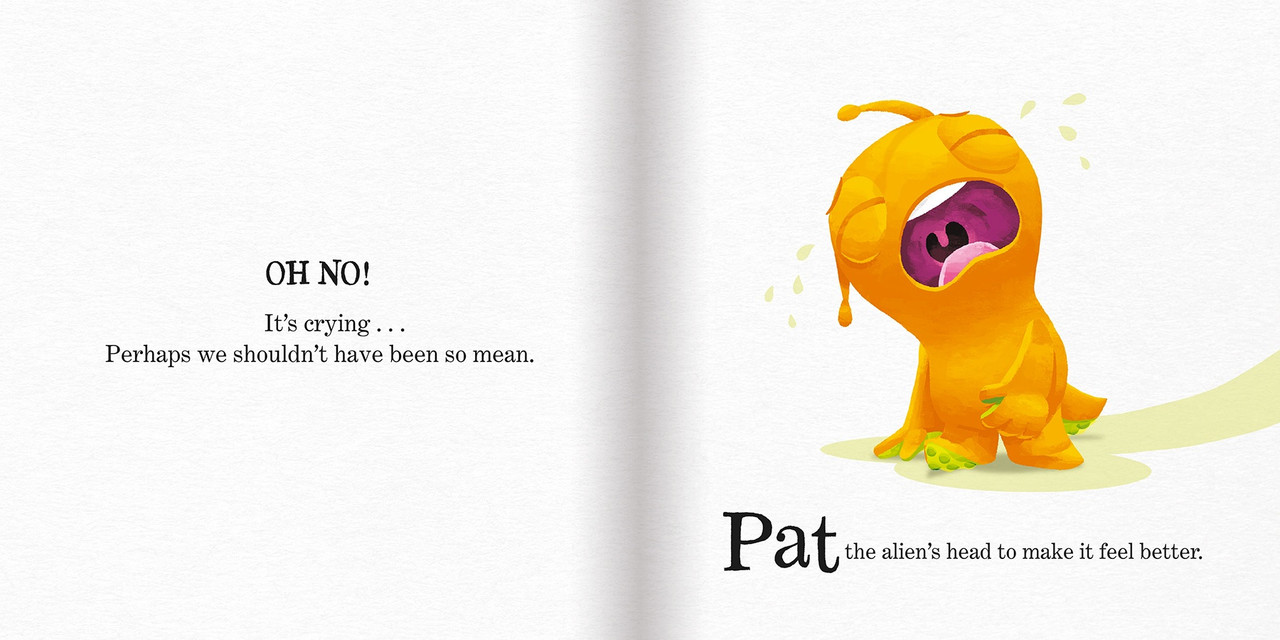
See what you did? Poor little guy.
I’ll help! May I come with you, happy Alien friend?
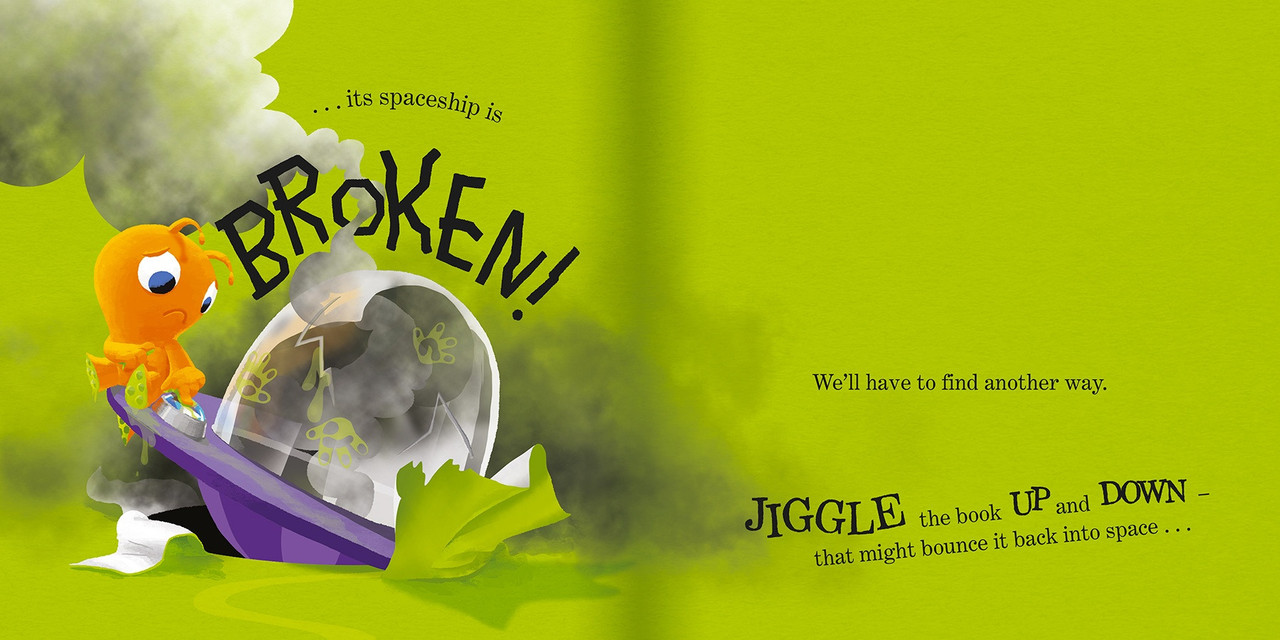
Oh, no. Our travel plans have been delayed. [I will not make a comment about 2020. I will not make a comment about 2020.]
It’s now up to you, dear reader, to keep following the instructions to help Alien. Along the way we’re reminded that diversity is wonderful, with a message of inclusion. And there’s a bonus cameo from Monster so I’m a pretty happy camper.
I really enjoy how interactive this series is. As usual, Greg Abbott’s illustrations bring our new little Who to life, with all of their emotions clearly depicted, and the colours are as vibrant and fun as I’ve come to expect.
I just hope there’s room on the spaceship for me.
⭐⭐⭐⭐⭐
Rating: 5 out of 5.
Once Upon a Blurb
Tom Fletcher and Greg Abbott have created a new interactive adventure, this time featuring an adorable alien who has crash-landed in YOUR book!
You’ll have to help Alien back up into space, because aliens don’t belong on Earth … do they?
This sequel to bestsellers There’s a Monster in Your Book and There’s a Dragon in Your Book is packed full of interactive fun, with a gentle message about openness, acceptance and inclusion that will speak to the very youngest readers.
The most important thing I need to tell you about The Minders is that it is set in the same world as The One and The Passengers.
While you could technically read this book as a standalone, ginormous spoilers are included in this book about characters and events from the other books. Make sure you read them in publication order if you’re ever going to read more than one or you risk ruining your reading experience.
Now that we’ve seen firsthand the complications that can come from meeting your one true love and been chauffeured around by driverless cars, it’s time to turn out attention to classified information. Conspiracy theorists could only dream of gaining unrestricted access to everything their government has been hiding from them.
Due to very credible threats to national security, technology has been developed to hide these cover ups, secrets and misdirections in a brand new way – implanted into the heads of a select group of people.
We need to protect ourselves and make sure we are future proof. Our freedom depends upon it.
We follow the stories of five Minders:
Flick is really struggling as a result of the events that unfolded in The One and her connection with two of its characters.
Charlie has anxiety and is into conspiracy theories. This should be right up his alley.
Sinéad’s husband is a domestic abuser. If you happen to imagine a piano falling on his head while you’re reading, I won’t judge you.
Emilia only knows her name.
Like Flick, Bruno is also one of John Marrs’ secondary victims. He was personally impacted by the big action scene in The Passengers.
This was my fifth John Marrs read and the first one I could actually put down. I’m not entirely sure what the problem was but I didn’t connect with any of this book’s Marrs victims and wasn’t invested in the calamities they faced.
Maybe I wasn’t in the right headspace this week? Maybe it was because I didn’t get to spend a great deal of time seeing the characters living their lives before they became Minders? I don’t know, but because I’ve loved all of the others I’m going to classify this book as an anomaly and look forward to my next John Marrs read.
Thank you so much to NetGalley and Del Rey, an imprint of Random House UK, Cornerstone, for the opportunity to read this book.
⭐⭐⭐⭐
Rating: 3.5 out of 5.
Once Upon a Blurb
Five strangers guard our secrets. Only four can be trusted …
In the 21st century, information is king. But computers can be hacked and files can be broken into – so a unique government initiative has been born. Five ordinary people have been selected to become Minders – the latest weapon in thwarting cyberterrorism. Transformed by a revolutionary medical procedure, the country’s most classified information has been taken offline and turned into genetic code implanted inside their heads.
Together, the five know every secret – the truth behind every government lie, conspiracy theory and cover up. In return, they’re given the chance to leave their problems behind and a blank slate to start their lives anew.
But not everyone should be trusted, especially when they each have secrets of their own they’ll do anything to protect …
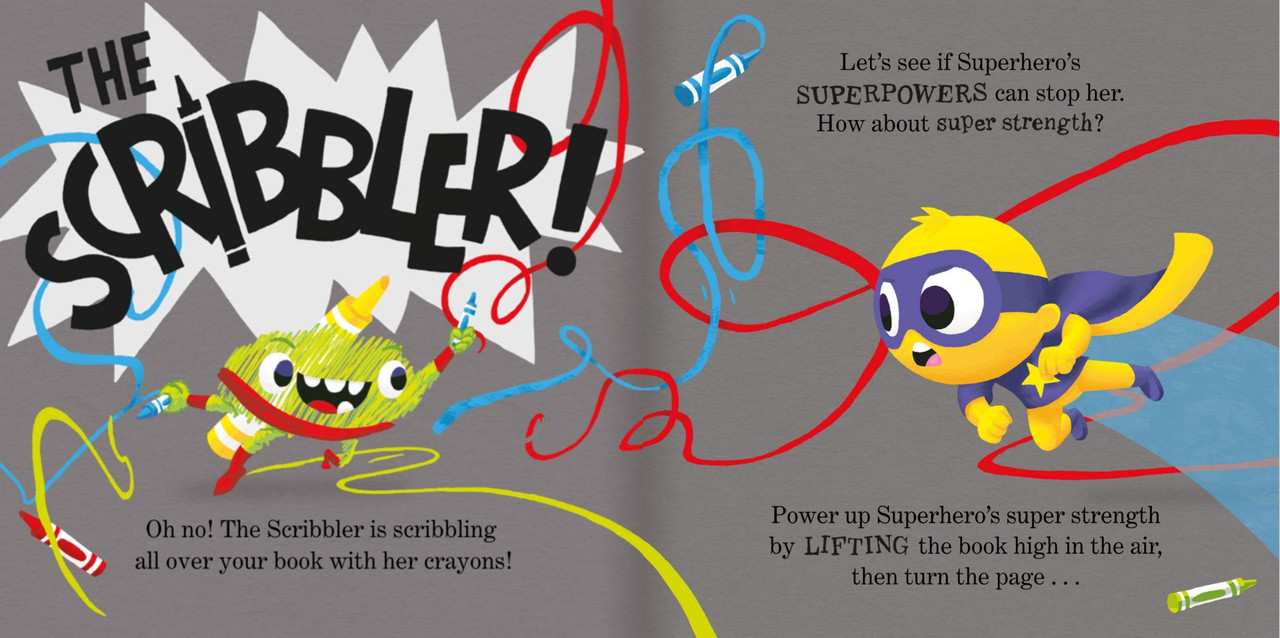
Superhero is trying to save this book from their nemesis, The Scribbler, who is “scribbling all over your book with her crayons!”
But Superhero can’t do it alone.
Readers can help Superhero by completing various activities, including tapping and lifting the book.
Fans of this series will find some familiar faces along the way, all of whom need help from the reader. Kids will love the interaction and parents will love the message, because the strongest superpower isn’t strength or speed; it’s something we can all do.
I love Greg Abbott’s illustrations. They’re colourful, the expressions are easy to read and there’s something so cute about a superhero sticking out their tongue to help them concentrate.
⭐⭐⭐⭐
Rating: 4 out of 5.
Once Upon a Blurb
Whoosh! A superhero has landed in your book! A new interactive adventure from the team that brought you There’s a Monster in Your Book and its companions.
Use the power of your imagination to unlock Superhero’s superpowers. But you’d better act fast before The Scribbler ruins your book completely! Readers will enjoy interactively tapping, stretching, and whizzing this book around as they help Superhero defeat the villain and save the day! As he did in all of the companion books, Tom Fletcher invites interactive fun while delivering a satisfying twist that celebrates the power of kindness and the true meaning of being a hero and a friend.
In a world where self-drive cars take the hassle out of getting from A to B, eight people go for a drive one morning. A hacker has set them on a collision course. Only one will survive. It’s up to the public to decide which one.
‘I have programmed your car to take you on an alternative route this morning. And in two hours and thirty minutes, it it likely that you will be dead.’
Scheduled to meet their maker in the near future are:
Passenger 1: A married young woman who is 7 months pregnant. She’s a teaching assistant who is driving to her husband’s workplace this morning.
Passenger 2: An unemployed and homeless young man who is suicidal.
Passenger 3: An elderly actress who is on her way to a hospital to visit teenage cancer patients. Even if you decide you don’t like her, then surely you wouldn’t kill her dog, who is travelling in the car with her, would you?
Passenger 4: A mother of two and a police officer.
Passenger 5: The husband of Passenger 4. He runs a refurbishment and construction company. He and his wife are travelling in separate cars.
Passenger 6: A stay at home mother of five who is trying to escape from an abusive husband.
Passenger 7: A disabled war veteran who’s on their way to the hospital.
Passenger 8: An asylum seeker.
It’s kind of like the trolley problem … if it was on steroids.
Who would you save?
How do you determine which life is the most valuable when you don’t know the whole story?
That is the task Libby, a mental health nurse with PTSD, has before her today.
‘For every one of your actions today, there will be a reaction.’
This entire book is like watching a car crash unfold. Literally. And because I’m apparently all about realism, I read some of this book while I was sitting in my car. It was not moving at the time.
Like all John Marrs novels I’ve read so far, I loved the concept and quickly made my way through the chapters. Unlike previous novels I didn’t become emotionally involved in the story. I think it was because I didn’t get to spend much time getting to know each passenger.
While I understand it was integral to the story that the people who are deciding the fates of the eight unfortunates don’t know much about them, I never felt an urgent need for a specific passenger to survive so I wasn’t as caught up in the drama as I’d hoped.
You don’t need to have read The One to enjoy The Passengers but they’re set in the same world. There are several mentions of Match Your DNA in this book, which won’t mean a lot to you if you haven’t read The One.
‘What’s not to love about a bit of anarchy?’
⭐⭐⭐⭐
Rating: 4 out of 5.
Once Upon a Blurb
Eight self-drive cars set on a collision course. Who lives, who dies? You decide.
When someone hacks into the systems of eight self-drive cars, their passengers are set on a fatal collision course.
The passengers are: a TV star, a pregnant young woman, a disabled war hero, an abused wife fleeing her husband, an illegal immigrant, a husband and wife – and parents of two – who are travelling in separate vehicles and a suicidal man. Now the public have to judge who should survive but are the passengers all that they first seem?







 Schizanthus Nerd