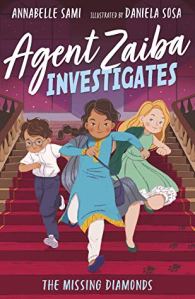
Agent Zaiba Investigates #1: The Missing Diamonds – Annabelle Sami

Illustrations – Daniela Sosa

“Agents assemble!”

I have always loved girl detective books so when I learned of Zaiba’s existence I couldn’t pass up the opportunity to go sleuthing with her. This book is absolutely adorable and even though I’ve only just finished reading about her first case I’m ready to help her solve the next one.

Zaiba is attending her favourite cousin’s pre-wedding Mehndi party at the Royal Star Hotel. Samirah (Sam) will be marrying Tanvir and Zaiba’s family are celebrating together, with food, music and dancing. Zaiba’s best friend, Poppy, is enjoying the fashion and free food and Zaiba’s cousin/nemesis, Mariam, is no doubt scheming up some trouble.

Zaiba longs to be a detective and uses her favourite book, Eden Lockett’s Detective Handbook, as a training manual. Solving mysteries runs in her family; Aunt Fouzia runs the Snow Leopard Detective Agency in Pakistan and was the one who introduced Zaiba to the Eden Lockett mystery books. It isn’t long before Zaiba, Poppy and Zaiba’s younger half-brother, Ali, are investigating their own case.

While I appreciated Zaiba’s determination and attention to detail, it was Ali I wanted to learn more about. Rather than simply being the cliché little brother tagging along on an adventure, Ali holds his own, using his incredible memory for facts and penchant for maths to shine a light on clues that others may overlook.

All good detectives make notes.

I always enjoy searching for clues myself as I read detective stories and I found myself highlighting key words and sentences as I peeked over Zaiba’s shoulder. There are clues which will help readers solve the mystery themselves if they pay attention to the details.

I want to learn more about Aunt Fouzia and Zaiba’s mother during future investigations. Mariam also intrigues me; she has the potential for an interesting character arc, one I hope will see her become an integral part of the team (fingers crossed). I’m keen to discover the true identity of Eden Lockett; I have my suspicions but will keep those to myself for now.

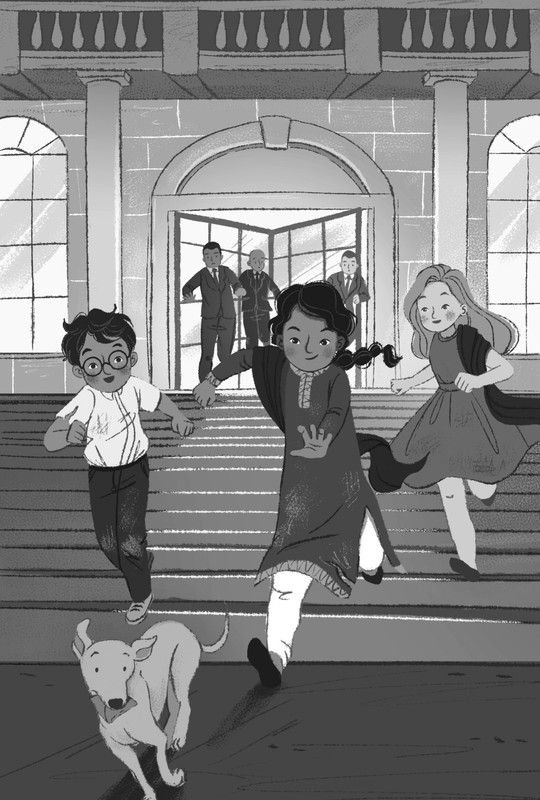
I loved Daniela Sosa’s illustrations and had trouble choosing a favourite, so I’ve chosen two. While this one captures the spirit of adventure and the determination of the trio solving the mystery,

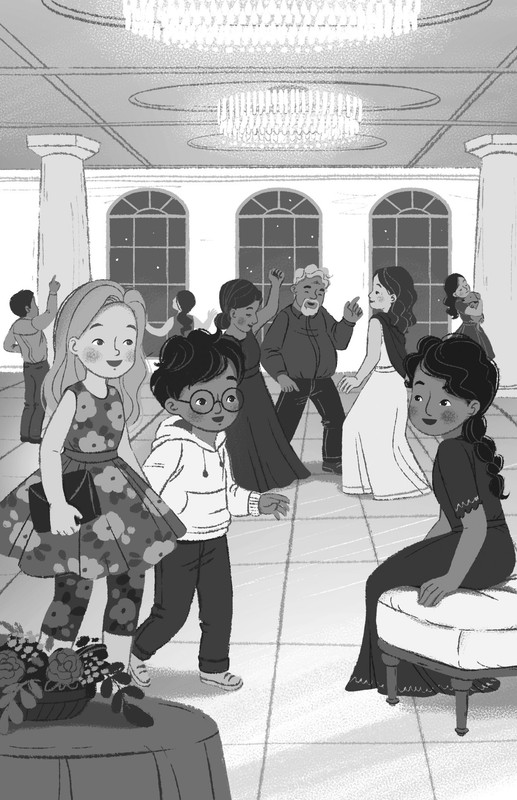
this one reminds me of how much fun I had reading and the book’s positive messages.

You can be anything you want to be.

This book highlights the importance of teamwork and how the support and encouragement of family and friends can give a child the courage they need to follow their dreams and face their fears.

A good agent always ensures the safety of her friends.

There are some fun bonuses at the end of the book, including an extract from one of Eden’s books and some handy tips for detectives in training. I really enjoyed learning more about Mehndi parties and deciphering the coded messages. I’m currently preparing my membership application for the Snow Leopard Detective Agency.

Thank you so much to NetGalley and Stripes Publishing, an imprint of Little Tiger Group, for the opportunity to read this book.

Rating: 4 out of 5.

Once Upon a Blurb

Eleven-year-old Zaiba is obsessed with crime. Her Aunt Fouzia runs a detective agency back in Karachi and has turned Zaiba on to the brilliant Eden Lockett Mysteries. She has every book in the series – and the quilt cover, and the phone case. All she needs now is a crime to solve …

Zaiba is attending a family Mehndi party at The Grand Royal Star Hotel when she hears that the prized Italian Greyhound of a famous actress has gone missing from the star’s suite. With the help of her best friend and her little brother, the amateur sleuth manages to foil the petnapping plot and save the day. 

The Sisters Grimm – Menna van Praag

Every daughter is born of an element, infused with its own particular powers. Some are born of earth: fertile as soil, strong as stone, steady as the ancient oak. Others of fire: explosive as gunpowder, seductive as light, fierce as an unbound flame. Others of water: calm as a lake, relentless as a wave, unfathomable as an ocean. The Sisters Grimm are daughters of air, born of dreams and prayer, faith and imagination, bright-white wishing and black-edged desire.

Each girl in The Sisters Grimm represents an element and a fairytale character. Goldi (Goldilocks) is earth, Bea (Beauty) is air, Liyana (I read somewhere that she represents Snow White but I cannot confirm this) is water and Scarlet (Red Riding Hood) is fire. Some of the comparisons between the characters and their fairytale equivalent were more obvious than others. While the Grimm connections will likely add to the book’s appeal for a lot of readers I would have been equally invested in the story had this not been included.

Goldie, whose perspective is the only one told in first person, is the sole caregiver for Teddy, her ten year old brother. She cleans rooms at a fancy hotel, liberating items from its rich guests to help support him. Her boss is sleazy and she’s experienced significant trauma in her childhood.

I’ve been a thief for as long as I can remember, a liar too. I might even be a murderer, though you’ll have to make up your own mind about that.

Bea was raised in various foster homes while her mother was being treated at St Dymphna’s Psychiatric Hospital. Bea studies philosophy and feels most alive when she’s soaring through the air in a glider.

For nearly eighteen years her mother has encouraged her to act audaciously and, although Bea relishes nothing more than reckless behaviour, she’s damned if she’ll give her mother the satisfaction of knowing it.

Liyana (Ana) was on track to be an Olympian before an injury derailed her plans but she remains at home in the water. Ana and her mother moved to London from Ghana when she was a child. Ana is an artist. Her girlfriend, Kumiko, hasn’t met her aunt Nyasha yet.

At the sight of a blackbird Liyana feels that, ultimately, all is right with the world, no matter how hopeless it might seem at the time.

Scarlet lives with her grandmother, Esme, whose health is declining. Scarlet now runs the café owned by her family. She lost both her mother, Ruby, and her home a decade ago as a result of fire.

Strangely, Scarlet finds she wants to immerse her hand in the flame, wants to feel the scorch on her skin. She believes, impossibly, that the fire will be kind to her.

I saw myself in all of the girls to a certain extent and, although I’d never heard of this author prior to this book and they certainly couldn’t pick me out of a lineup, I am almost always awake at 3:33am so I’m claiming this part of the dedication as my own. I knew from the blurb that one of the four would not survive but I liked them all and hoped against hope that the blurb was faulty. It was not.

This book reminded me of two important bookish things:

  1. Why I should not pay too much attention to a book’s star ratings and reviews before I finish reading it myself, and
  2. Why I should always give a book a little more time after deciding it’s not for me.

I had really been looking forward to this book so when I saw some unflattering reviews I admit that I allowed them to dampen my enthusiasm and even shuffled my TBR pile, moving a couple up the queue, as the thought of needing to drag myself through so many pages was unappealing. As soon as I began reading I realised the error of my ways – until I began reading from Leo’s perspective. He’s a what? From where? Seriously?

My initial failure to connect with Leo’s character, along with my impatience with the multiple perspectives that changed so frequently I had trouble keeping up for a while, caused me to very nearly write this book off as a DNF. Each sister‘s story is told from two perspectives (now and a decade ago). There are also varying amounts of time dedicated to Leo, Nyasha, Esme and their father. Then there are descriptions of Everwhere.

It’s a nocturnal place, a place crafted from thoughts and dreams, hope and desire.

If you count the descriptions of Everwhere as a perspective, which I did, you wind up with a baker’s dozen.

Thankfully I persevered just a little bit longer than I had planned before abandoning the book altogether and I’m so glad I did because I wound up entirely sucked in to this world and these sisters’ lives. I even got used to the rapid changes in perspective, although I still think I’d benefit from a reread to pick up connections I likely missed the first time through. I think this is the first time a potential DNF has suddenly morphed into an I love this book! for me and I can’t wait to reread it, soaking up the enjoyment I obviously missed early on.

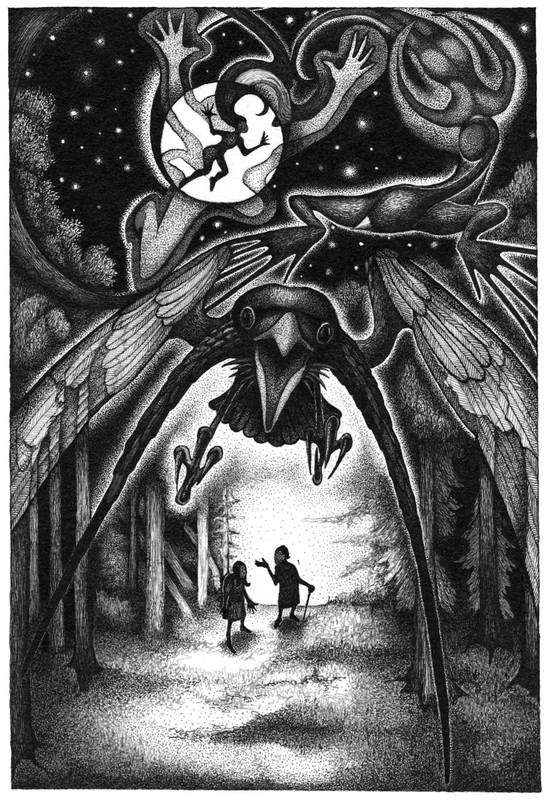
There’s always this childlike delight that wells up inside of me when I discover illustrations in a book I don’t expect to find them in. I absolutely fell in love with Alastair Meikle’s illustrations and had so much trouble choosing a favourite to share with you here. I’ve chosen the first one, mostly because it invokes the same sense of wonder every time I look at it.

Although I’m not usually interested in Tarot, the descriptions of the cards throughout the book made me want to send a wish to the book’s marketing team in the hope that they’ll commission a set of Tarot cards, illustrated by Alastair Meikle, that have a similar feel to the style used in the book.

The descriptions of Everwhere enchanted me so much I wanted to visit. I yearned to learn everything I could about each of the four sisters. I wondered what element and powers I would most want, if I had the ability to choose. I didn’t want this story to end and it wouldn’t surprise me if this book comes to mind when I think about my favourite reads of the year. I need to inhale more of this author’s words.

There are hundreds, possibly thousands, of Sisters Grimm on Earth and in Everwhere. You may well be one of them, though you might never know it. You think you’re ordinary. You never suspect that you’re stronger than you seem, braver than you feel or greater than you imagine.

If anyone needs me I’ll be stalking the internet to see if I can buy a signed copy of this book. My bookcase desperately needs one!

Thank you so much to NetGalley and Bantam Press, an imprint of Transworld Publishers, Penguin Random House UK, for the opportunity to read this book.

UPDATE: My day just got awesome! I found signed copies of this book at Goldsboro Books. I’ve ordered my copy and can’t wait for it to arrive. Happy book day to me!

Rating: 5 out of 5.

Once Upon a Blurb

There are hundreds, possibly thousands, of sisters Grimm on Earth.

You may well be one of them, though you might never know it. 

You think you’re ordinary. 

You never suspect that you’re stronger than you seem, braver than you feel or greater than you imagine. 

But I hope that by the time you finish this tale, you’ll start listening to the whispers that speak of unknown things, the signs that point in unseen directions and the nudges that suggest unimagined possibilities. 

I hope too that you’ll discover your own magnificence, your own magic …

This is the story of four sisters Grimm – daughters born to different mothers on the same day, each born out of bright-white wishing and black-edged desire. They found each other at eight years-old, were separated at thirteen and now, at nearly eighteen, it is imperative that they find each other once again.

In thirty-three days they will meet their father in Everwhere. Only then will they discover who they truly are, and what they can truly do. Then they must fight to save their lives and the lives of the ones they love. Three will live, one will die. You’ll have to read on to find out who and why …

Pretty Bitches – Lizzie Skurnick (editor)

While I’d never heard of a couple of the words explored in this book before, including yellow-bone, most have been attributed to either myself or women I know. I expected to get fired up reading this book and assumed I’d finish it with an overwhelming need to fix something, anything, everything, like I did after reading Not That Bad: Dispatches from Rape Culture.

Unfortunately, while some chapters stood out to me and made me want to know more about their authors (these are marked with 😊) I could take or leave others and even had a few ‘did you seriously just say that?!’ moments with one author.

For each chapter I’m including a quote that either spoke to me, said something I wanted to remember about what I’d read or most accurately summed up my experience of reading it.

Warning: I don’t usually include swearing in my reviews but a couple of the quotes I chose include it.

Preface by Lizzie Skurnick 😊

I began to realize these words weren’t pinpricks. They weren’t the punishment. They were the justification for the punishment: the jobs we lost, the promotions, the houses, the money, our respect, our bodies, our voices.

Introduction by Rebecca Traister 😊

“But now I mostly hear it as an aggressive word, a mean word, a word that suggests that the act of fucking itself is mean and aggressive and often particularly aggressive toward women … It’s really a shame.”

Too by Adaora Udoji

I didn’t yet know how easily that word could be weaponized against me as a woman, used against any woman, pulled from the ever-ready “stay in your place” toolbox.

Professional by Afua Hirsch

Woman are disadvantaged by ideas of the “professional” before we even walk through the door, because to be truly professional is to conform to the ideal on which it is based: an elite, white man.

Effortless by Amy S. Choi

We can’t change our culture when we lie about what the culture is. We can’t accept ourselves until we stop pretending that we already do.

Princess by Carina Chocano

A princess was nothing if not a pretty doormat, a machine that suffered abuse and exploitation nobly and exquisitely, not to mention without complaint. It was this quality – more than her hotness or her duets with songbirds – that caught the prince’s attention: how gracefully she endured abuse. Then he married her, turning her nobility of spirit into the other kind. Making her status official.

Ugly by Dagmara Domińczyk

The word for ugly in Polish is brzydka – which sounds eerily close to the word for razor blade, which is brzytwa. And for most of my formative life, ugly cut me. Quick and to the bone.

Shrill by Dahlia Lithwick

Shrill is much less about what the speaker is saying, as it turns out, and more about the listener’s capacity to cede ground. Shrill, in other words, is the word people use to signal they aren’t ready to listen – not to your voice, but to what you’re actually saying.

Lucky by Glynnis MacNicol

It was, I discovered, possible to live a notable life as a woman who had never achieved either of the two things women were noted for: being a wife and giving birth.

Mom by Irina Reyn

According to linguist Roman Jakobson, the reason ma is a root of the word for “mother” in so many global languages is that this is what babies are capable of saying first.

Mature by Jillian Medoff

Chuckling, Fuck Face let his eyes go from my breasts to my face then back to my breasts. He stared at me with intent, as if we were sharing a sleazy secret. “Jill sure is mature, isn’t she?”

Ambitious by Julianna Baggott

Here’s the message that I received early on: male ambition is good and necessary. People assume that any man who’s gotten far in his career has a lot of it. Female ambition, on the other hand, is dirty. It’s selfish. It’s ugly. Female ambition is suspicious. It comes at a cost. It’s necessary to get ahead – we’re told – but if a woman uses it to get ahead then she’s sacrificed her soul. And she’s going against society’s virtuous goal for her: motherhood.

Victim by Kate Harding

And it is true that any attempt to sort human beings into categories necessarily shaves of some of our humanity, replacing each unique individual with a type.

Disciplined by Laura Lippman

Anne Lamott once wrote that she thought if people knew how she felt when she was writing, they would set her on fire. That seemed about right to me. I knew no more powerful feeling, that was for sure.

Yellow-Bone by Lihle Z. Mtshali 😊

Yellow-bone is a loathsome term that we borrowed from American blacks. Though it refers to all light-skinned black people, in South Africa, it is mostly used to refer to light-skinned black women. Yes: people are woke, black pride is a thing, and #melaninpoppin is a popular hashtag. But black men post pictures of light-skinned black women, writing that the “yellow-bones” will give them beautiful kids.

Zaftig by Lizzie Skurnick

Because what if we reclaimed zaftig – and, like my grandmother, left the proportion of lipid to lean out of it entirely? What if we took out the sexy part, too? What if we made it, like my grandmother did, about being strong?

Crazy by Mary Pols

When Natalie Portman spoke at Variety’s Power of Women event in 2018, this was part of her speech:

“If a man says to you that a woman is crazy or difficult,” the Oscar-winning actress said, “ask him, ‘What bad thing did you do to her?’”

Small by Beth Bich Minh Nguyen

Being small was another way of being silent, and that’s what white people were always expecting of me too.

Funny by Meg Wolitzer

Being funny, or at least trying to be, felt like a real part of me, and I never questioned it – until suddenly I did.

Sweet by Monique Truong

These too are compliments: sugar, honey, candy, sweetmeat, honey bun, honey pie, sugar pie, sweetheart, sweetie, sweet cheeks, sweet lips, sugar tits, and sweet piece of ass. The slippery slope from compliment to insult begins with sweet.

Nurturing by Racquel D’Apice

My frustration lies with the people who say “Women are more nurturing” but mean “Women are nurturing and emotional rather than practical and logical,” which bleeds into “In a family, someone should stay home with the kids, and I think the people who should be doing that are women.”

Pretty by Stephanie Burt

To be pretty is to be appreciated and girly but small and impractical and, also, perhaps, defenseless.

Intimidating by Tanzila Ahmed

Society has all these expectations of how women are to show up in this world. Be yourself, they say. Be less of yourself. Be independent, but not too intimidating. Take care of yourself, but make a man feel like he can take care of you. Be everything, but not too much.

Good by Tova Mirvis 😊

You are allowed to change. You are allowed to decide what you believe. You are allowed to think what you think, feel what you feel.

Tomboy by Winter Miller

Tomboy is someone else’s idea about my gender.

Aloof by Elizabeth Spiers

Strong, silent women exist. Yet women who exhibit emotional control (women are always emotional!) and are taciturn in social situations (and they never shut up!) don’t get the benefit of being “strong, silent types.” In women, that alchemy of reserve and resolve makes a lot of people uncomfortable. They are people at once feminine and at odds with traditional ideas of what femininity connotes.

Exotic by Emily Sanders Hopkins 😊

They didn’t ask him his race; they just typed “white.” (Maybe race is just what you look like to white people.)

Fat by Jennifer Weiner 😊

And there it was. Fat. The other F word.

Feisty by Katha Pollitt

Feistiness takes the unpredictable, dangerous energy of anger and renders it funny and harmless. To call someone feisty is to imply they are in the one-down position. It’s the one-word version of “You’re so cute when you’re mad.”

Thank you so much to NetGalley and Seal Press, an imprint of Perseus Books, for the opportunity to read this book.

Rating: 3 out of 5.

Once Upon a Blurb

Words matter. They wound, they inflate, they define, they demean. They have nuance and power. “Effortless,” “Sassy,” “Ambitious,” “Aggressive”: What subtle digs and sneaky implications are conveyed when women are described with words like these? Words are made into weapons, warnings, praise, and blame, bearing an outsized influence on women’s lives – to say nothing of our moods.

No one knows this better than Lizzie Skurnick, writer of the New York Times‘ column “That Should be A Word” and a veritable queen of cultural coinage. And in Pretty Bitches, Skurnick has rounded up a group of powerhouse women writers to take on the hidden meanings of these words, and how they can limit our worlds – or liberate them. 

From Laura Lipmann and Meg Wolizer to Jennifer Weiner and Rebecca Traister, each writer uses her word as a vehicle for memoir, cultural commentary, critique, or all three. Spanning the street, the bedroom, the voting booth, and the workplace, these simple words have huge stories behind them – stories it’s time to examine, re-imagine, and change.
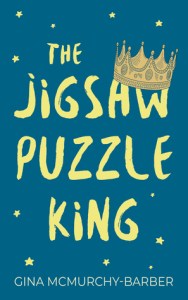
The Jigsaw Puzzle King – Gina McMurchy-Barber

Warren and his family have recently moved to a new town. He misses his friends and is nervous about starting over at a new school where he doesn’t know anyone. He spends a lot of time worrying about what others think of him. Warren enjoys playing soccer and ball hockey.

Warren’s twin brother, Bennie, doesn’t have any trouble making new friends. He doesn’t worry about what other people think of him. Bennie likes inventing games and loves peanut butter and pickles sandwiches.

Sometimes people who didn’t know Bennie thought he was weird. I liked to ease him into new situations slowly so we might avoid that.

Warren wishes he could only be responsible for himself but he also wants to protect his younger (by four minutes) brother. Bennie would never hurt anyone but sometimes he does and says things that embarrass Warren, like calling him Wart in public.

And then it came, the question someone always asked. “So anyway, what’s your brother got?”

Bennie has Down syndrome. Not everyone understands what that means and some people stare and say mean things about Bennie.

I absolutely adored Bennie. I also really liked Maya, a young spitfire who constantly stands up for what’s right, regardless of whether it’s the easy or difficult choice. I spent most of the novel waiting to be introduced to Owen and he did not disappoint. I’d love to read companion books that delve into both Maya and Owen’s backgrounds and tell me what happens in their lives after this novel ends.

I’m sure plenty of readers will be left hanging, not knowing the final result of the talent show. I assumed the honour would go to Owen, as well as Maya and Bennie, but it wasn’t actually confirmed. I would have liked to have been privy to Danny’s backstory as I’m certain I would have had more compassion for him had I known what had contributed to his behaviour.

I love novels that give me a glimpse inside the worlds of people whose experiences are different to my own. This story, through different characters’ responses to Warren and Bennie, highlights both what is helpful and what is harmful when interacting with those who are different from ourselves.

Although this book allowed me to see some of the joy and struggles of a family that includes a child with Down syndrome, its message is transferrable. Anyone who feels different for whatever reason could take hold of the hope infused in its pages.

Even though children are this book’s intended audience there are valuable lessons for adults as well, who may need a reminder to not waste their time and energy worrying about what others think of them. Learning this was a personal story for its author added weight to the authenticity I already felt reading about Warren’s often conflicting feelings towards his brother.

Thank you so much to NetGalley and Dundurn Press for the opportunity to read this book. I’m interested in reading more books by this author.

Rating: 4 out of 5.

Once Upon a Blurb

Being yourself isn’t always easy.

When you’re new in school, all you want is to fit in. When eleven-year-old Warren and his family move to a new city, his twin brother, who has Down syndrome, attracts too much attention for Warren’s liking. Bennie’s different and doesn’t care about it. But while Bennie may be oblivious to those who are curious or uneasy with him, Warren notices every smirk, comment, and sideways glance.

Warren is weary of flip-flopping between trying to be just like everyone else and being the protective brother of a boy with special needs. Sometimes he thinks his life would be easier if he had no brother. But what he really needs is to stop worrying about what other people think. 

The Sky is Mine – Amy Beashel

Spoilers Ahead!

Everyone seems to think Izzy is fine, but she’s not. Izzy and her mother’s life with Daniel had a fairytale beginning. The fairytale fractured a long time ago but Izzy’s mother can’t/won’t protect them.

And I get that she’s scared, cos me too. But I’ve been here before, watching her literally throw away some problem she can’t handle.

Then there’s Jacob from college, who’s blackmailing her by threatening to send photos from that night to everyone.

Izzy used to rely heavily on her best friend, Grace, for support but now that Grace is in love she’s not as available as she used to be. Even when they are spending time together Grace is preoccupied by being in love with being in love. There’s so much pressure building up inside Izzy and she feels alone.

If I thought it would make any difference, I would scream.

It’s been weeks since I finished reading this book but this is the first time I’ve actually been able to attempt anything approximating a review. This book was really well written and relatable. Some of its content hit very close to home for me, as if someone told it my address, so alongside my yeah, me too’s came emotions. So many emotions. I thought time and some emotional distance would help me write a well thought out, intellectual review, but it didn’t work that way so I’m afraid we’re all stuck with my feelings.

Not that you can love anything about the impacts of trauma but I did love the way I felt validated as I read. Whenever Izzy described the shame she felt or her self doubt or flashbacks or any other number of experiences that I’ve felt in the core of my being I wanted to somehow surgically remove those things from her. I knew what she was feeling and I knew her thoughts, often before she explained them to me.

But it doesn’t leave you. Even when your head tries to silence it, it’s still there.

I loved the concept of the Jar of Sunshine, even though its beauty was marred by its origin story. Unfortunately, even it was realistic; the ways we cope with trauma are inextricably linked with painful memories. Even if we find something that gives us strength, courage or a glimmer of hope in the midst of unbearable circumstances, that wonderful thing still reminds us of what it’s helping us to overcome.

I quite liked Rower Boy but I desperately wanted Izzy and Rower Boy to simply be friends. I always have trouble with narratives that includes a girl/woman who’s dealing with trauma being saved in any way by a boy/man, even if it’s only a little. That probably says more about me than it does about the book. However, I wanted Izzy to learn to stand on her own, without leaning on a man for support. I would have been happy for her to have gotten into a relationship once she’d had some counselling but I didn’t want any part of her self worth to be tangled up in Rower Boy, regardless of how nice he was.

This is a difficult read but an important one. If you have experienced abuse please be safe while reading this book.

‘What he did is not who you are, Izzy. It doesn’t define you.’

Thank you so much to NetGalley and Rock the Boat, an imprint of Oneworld Publications, for the opportunity to read this book.

Rating: 4 out of 5.

Once Upon a Blurb

No one has ever asked Izzy what she wants. She’s about to change all that …

In a house adept at sweeping problems under the carpet, seventeen-year-old Izzy feels silenced. As her safety grows uncertain, Izzy know three things for sure. She knows not to tell her mother that Jacob Mansfield has been threatening to spread those kinds of photos around college. She knows to quiet the grief that she’s been abandoned by her best friend Grace. And, seeing her mother conceal the truth of her stepdad’s control, Izzy also knows not to mention how her heart splinters and her stomach churns whenever he enters a room.

When the flimsy fabric of their life starts to unravel, Izzy and her mum must find their way out of the silence and use the power in their voices to rediscover their worth.

Rating Your Bunkmates and Other Camp Crimes – Jennifer Orr

I need to preface everything I say about this book with: I’m not the target audience. Sometimes this doesn’t matter as I consistently read books that are intended for readers born in a different century than I was. However, I’ve noticed as I’ve gotten older my tolerance for friendship drama has decreased exponentially.

Socially awkward twelve year old Abigail Hensley may have skipped three grades at school but she’s never had a friend. It’s not from lack of rigorous anthropological research on her part. Unfortunately other girls her age simply don’t share her interests – fencing, time travel, anthropology and French cuisine. They also have a bad habit of intruding in her personal space bubble, even though she has generously narrowed the recommended four feet to three and a half.

No matter how hard I try, I can’t seem to successfully befriend a girl my age. It’s like I’m helium, physically unable to mix with any other chemical element. Bonding with girls my age just doesn’t seem part of my atomic makeup.

Joining Abigail in Clovis Cabin are:

  • Sofia, Fia, Fia, with her impractical bejewelled fingernails
  • Quinn, who speaks like she’s a Magic 8 ball
  • Rachel, with her crooked name sticker and rule breaking tendencies
  • Mary Elizabeth George (Meg), who lives in the shadows of her perfect older sister
  • Gabby, who’s enthusiastic and agreeable. She’s Abigail’s roommate.

Despite being oblivious to social cues Abigail is trying her hardest to figure out the science of making friends. She’s determined to crack the code this week and will be making extensive Field Notes to help her navigate the process.

I plan to use these notes to help me with my ongoing experiment: finding a friend.

Unfortunately for Abigail this social experiment may not be as easy to implement as she hopes. Shortly after arriving at Hollyhock something is stolen from another Clovis camper and she’s the prime suspect.

While I’m always drawn to books where I get to attend summer camp vicariously (this was not something that was available when I was growing up and I’ve always felt I missed out on a rite of passage), too many of the conversations in this book revolve around accusations for my liking, so I didn’t enjoy my time at Camp Hollyhock as much as I had anticipated. I hope (and expect) younger readers will disagree wholeheartedly with me.

Thank you so much to NetGalley and Capstone Editions for the opportunity to read this book.

Rating: 3 out of 5.

Once Upon a Blurb

Twelve-year-old Abigail Hensley is a socially awkward aspiring anthropologist who has always had trouble connecting with her peers. Abigail is hopeful that a week at sleepaway camp is the answer to finally making a friend. After all, her extensive research shows that summer camp is the best place to make lifelong connections. Using her tried-and-true research methods, Abigail begins to study her cabinmates for friendship potential. But just when it seems that she is off to a good start, her bunkmate’s phone gets stolen, and Abigail is the main suspect. Can she clear her name, find the real culprit, and make a friend before the week is done?

We Are Monsters – Brian Kirk

Spoilers Ahead!

“It’s official. The Apocalypse has come to Sugar Hill.”

Alex, Eli and Angela work together in the forensics ward of Sugar Hill, which houses and treats the criminally insane. Angela is a social worker who is described by a friend as “Dr. Do Good by day and Little Miss Devil by night”. Alex Drexler is a psychiatrist whose views on treatment are diametrically opposed to those of his boss and mentor, Dr Eli Alpert, Sugar Hill’s Chief Medical Director. Eli’s approach is humanistic, with a focus on treating patients with dignity and respect. Meanwhile, Alex is in the process of trialling an experimental drug to cure schizophrenia.

Why did the mind have the capacity to create delusions? To hallucinate? To perceive the unreal? And why, so often, did such altered states appear to the perceiver as the actual reality? A world more real than this one.

When the funding for his trials is withdrawn, Alex winds up continuing his experiment. His latest subject is Sugar Hill’s newest patient, Crosby Nelson, the Apocalypse Killer. Because what could possibly go wrong when you use a mentally ill, traumatised serial killer as your guinea pig?!

More background information is provided about characters than I’m used to seeing in horror books. This took me out of the story initially although I could understand the relevance of this information later on. It’s not only the patients whose pasts haunt them and it’s not always obvious who should be a patient, especially when the workers’ own demons are revealed.

Either she is insane, or I am. Or nobody is. Or we all are. Either way, who am I to say?

The only character I really liked was Eli. I think I would have liked Crosby as well but I didn’t get much of a sense of who he was outside of his mental health and trauma histories. Fortunately it’s not necessary to love horror book characters. I enjoyed hoping Alex would get a taste of his own medicine and I couldn’t wait for a couple of other nasties to get their comeuppance.

At times it felt like a hallucinogen was wafting off the pages. I wasn’t always especially clear about what was really going on during the more trippy parts.

He was now unsure which reality had been a dream and which one was real.

If I’d encountered this sense of unease, not being able to easily discern reality, in another book I’d probably tell you it was a reason I didn’t like it. This book, though? It was like I was being given a glimpse into what life must be like all the time for some of the residents of Sugar Hill and it was scary to even contemplate living in their worlds.

While I’ve known a lot of people with various mental illnesses, my knowledge of schizophrenia and psychosis are limited to the DSM-5 and random articles and books I’ve read. Because of this I cannot comment on the accuracy of their depictions in this book but I didn’t come across anything that stood out to me as ‘there’s something wrong with this picture’ symptom wise.

Between the graphic violence (I almost DNF’ed this book when the dog died) and derogatory terms used for pretty much anyone you can think of, sometimes challenged but oftentimes not, this book isn’t going to be for everyone. If having anything uncomfortably close to your eyes makes you squeamish you may have trouble with some scenes.

Thank you so much to NetGalley and Flame Tree Press for the opportunity to read this book.

Rating: 4 out of 5.

Once Upon a Blurb

Some doctors are sicker than their patients. When a troubled psychiatrist loses funding to perform clinical trials on an experimental cure for schizophrenia, he begins testing it on his asylum’s criminally insane, triggering a series of side effects that opens the mind of his hospital’s most dangerous patient, setting his inner demons free.

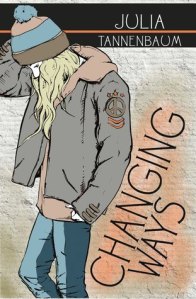
Changing Ways – Julia Tannenbaum

Grace is 16 and a junior at Chuck L. Everett High School (“Chuckles”) in western Connecticut. She lives with her mother and younger brother, Jamie, and misses her father. She’s trying out for Varsity soccer this year.

I’ve never been satisfied with how I look – even when I was younger, I was self-conscious of my appearance. Now that I’m older, those insecurities are more profound than ever.

Recently Grace has secretly been self harming and restricting her food intake. When another student catches her self harming at school Grace winds up hospitalised.

“I don’t know what’s making me do it. That’s the problem.”

Grace is fortunate that her treatment begins a lot sooner than it does for most people but this doesn’t mean recovery will be easy. I appreciated that recovery from eating disorders and self harm were portrayed realistically. Grace’s isn’t a success only journey. Recovery isn’t linear and there are setbacks along the way.

Grace’s best friend, Lou, is “bold and strong-willed and brutally honest”. Lou’s mother is undergoing treatment for stage 4 breast cancer, although the gravity of this didn’t hit the mark for me.

The way Grace’s mother’s boyfriend was introduced made it seem like he was going to be detrimental to their family dynamic but this didn’t really go anywhere.

While the conversations between Grace, her family and Lou flowed well, those that took place in a treatment setting tended to feel more like therapy speak than what you’d expect between a group of teenagers dealing with such difficult issues. I found most of the other patients interchangeable, not really getting a sense of who they were outside of their diagnoses.

I think I would have gotten into this book more if I’d read it as a teenager. It may also have helped if I hadn’t already read other books that have addressed eating disorders and self harm in a way that grabbed me more on an emotional level.

Unfortunately, while I applaud the author for tackling such difficult and personal subject matter, I never forgot that I was reading a book written by a teenager. If I’d written a book while I was a teenager I expect it would have much the same feel to it. That’s not necessarily a bad thing but I am interested to see how the author’s writing develops over time.

Thank you to NetGalley and Wicked Whale Publishing for the opportunity to read this book.

Rating: 3 out of 5.

Once Upon a Blurb

Growing up sucks. Struggling to cope with the constant stress of school, her mother, and her confusing social life, sixteen-year-old Grace Edwards finds sanity in the most destructive of ways: dieting and self-harming. But just when Grace thinks she has everything under control, a classmate catches her cutting in the girls’ locker room, and Grace’s entire life is flipped upside down.

Now she’s faced with the unthinkable – a stint in a psych ward with kids who seem so much worse than she is. After all, she’s not sick. She’s totally okay. She’ll never do it again. But the longer Grace stays, the more she realises that the kids in the ward aren’t that different from her.

Slowly Grace comes to terms with her mental illness, but as her discharge date crawls closer, she knows that the outside world is an unpredictable place … and one which whispers temptations about hidden food, dangerous objects, and failure to stay in recovery.

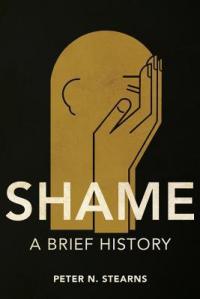
Shame: A Brief History – Peter N. Stearns

I’d never given much thought to the history of emotions so when I came across this “work of emotions history” I was intrigued.

This study seeks to sum up most of the existing historical findings, with related insights from other disciplines, while also extending historical analysis particularly around developments in the United States over the past two centuries.

In exploring the history of shame, the author touches on its psychology and includes references to sociology, anthropology and philosophy. Socrates, Plato, Aristotle, Confucianism, Christianity, Islam and Hinduism are all mentioned.

In China, it has been estimated that up to 10 percent of Confucius’s writings center around the importance of shame.

This book differentiates between guilt and shame throughout history, contrasting guilt-based and shame-based societies. It focuses on shame and shaming in a number of contexts, both public (from stocks to Jerry Springer) and private. Anticipatory, reintegrative and punitive shame are addressed, with examples given from around the world. The focus, however, is on Western society.

Precisely because shame takes root in a fear that others will turn away from us and find us wanting, we keep our shame to ourselves – we fear that revelation will actualize the very rejection we worry about.

I found the information connecting shame and the criminal justice system particularly interesting. The role that parents, schools, religion, sports, politics and the media have played over time in redefining shame were also addressed. The disparity that has existed as a result of gender, race, culture, sexuality, disability, poverty and social status were discussed. The anonymity of the internet along with the history and current prevalence of slut shaming and fat shaming were also mentioned.

One of my pet peeves, that I mostly come across in textbooks, is when the author spends a significant amount of time outlining what will be explored later in the chapter or subsequent chapters, or recapping what’s already been explained. When I first picked up this book I gave up before I reached 10% because I was so frustrated by constantly reading passages that included:

The third major section of this chapter explores

The overall goal of the chapter

As Chapter 3 and 4 explore

It got to a point where it felt like their main purpose was to add to the word count and I came close to discarding the book a second time because of it. When the actual information was provided I found it quite interesting, despite some sections that were very dry. It definitely had that textbooky feel throughout the book (it’s published by a university, after all) but when I came across passages that weren’t telling me what I was going to read about later I enjoyed them.

I disagree with the author when they claim that shame is only a human emotion, that animals “lack appropriate awareness of hierarchy”. If you’ve ever caught a dog doing something they know they shouldn’t have been, then I think you’d also beg to differ.

The footnotes, which include references, are quite extensive, making up over 10% of the book.

Thank you to NetGalley and University of Illinois Press for the opportunity to read this book.

Rating: 3.5 out of 5.

Once Upon a Blurb

Shame varies as an individual experience and its manifestations across time and cultures. Groups establish identity and enforce social behaviours through shame and shaming, while attempts at shaming often provoke a social or political backlash. Yet historians often neglect shame’s power to complicate individual, international, cultural, and political relationships.

Peter N. Stearns draws on his long career as a historian of emotions to provide the foundational text on shame’s history and how this history contributes to contemporary issues around the emotion. Summarising current research, Stearns unpacks the major debates that surround this complex emotion. He also surveys the changing role of shame in the United States from the nineteenth century to today, including shame’s revival as a force in the 1960’s and its place in today’s social media.

Looking ahead, Stearns maps the abundant opportunities for future historical research and historically informed interdisciplinary scholarship. Written for interested readers and scholars alike, Shame combines significant new research with a wider synthesis. 

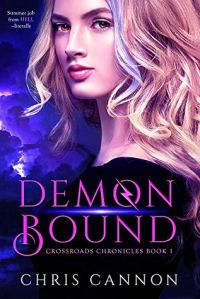
Crossroads Chronicles #1: Demon Bound – Chris Cannon

Spoilers Ahead!

As a long term romantiphobe it makes zero sense that I eagerly await the next book by an author who writes romance novels, but that’s the voodoo Chris Cannon has somehow managed to place upon me. After laughing at myself because of my accidental enjoyment of my first few Chris Cannon reads, I now get smiley when I realise there’s a new book on the horizon. See? Voodoo!

I don’t have to work to get into Chris’ books. I’m sucked in right about the time the main character is described as a bookworm. So, about page 1.

Meena lives in Crossroads, a small town in Southern Illinois with farmhouses and cornfields, a place she describes as “boring with a huge helping of judgmental”. Entertainment in Crossroads consists of the diner, library, pageants and bonfires. Meena isn’t a pageant kind of girl, unlike her older sister, so she spends a good portion of her time hiding out in the library. She lives in books and can’t wait to go away to college.

All of the trouble that follows Meena applying for a summer cleaning job with Wacky Winslow Old Lady Winslow Carol can be traced back to her need to feed her addiction to books, but as a fellow hopeless book addict I understand the pain of the money to book ratio only too well.

One of the reasons I liked to live in books is that real life mostly let me down.

Meena’s new job also requires she collects Carol’s orders from Madame Zelda, a fortune teller, whose nephew (sort of) is staying with her for the summer. I say ‘sort of’ because Zelda is actually Jake’s mother’s second husband’s aunt. Naturally Meena and Jake cross paths and then they’re practically insta-kissing, followed soon after by some insecurity and jealousy, then more kissing.

I was kind of afraid he’d forget about me as soon as another girl came along.

Previous Chris Cannon books I’ve read have been fun, bantery smooch-fests. This book also features some lip locking but a tad less banter than I’ve come to expect from Chris’ books. However, this one also includes some entertaining supernatural elements.

Witches, demons, spirits and vampires also make Crossroads their home, which makes for some interesting dynamics. Along with the good ol’ faithfuls like spells, wards and salt lines,

there are also imaginative additions like Super Soakers fuelled with holy water! I chuckled whenever a vampire said something “sucked”.

“Is it just me, or do you have a sense of impending doom?”

My favourite characters were Sybil, the vampire, and the familiars, Goblin and Sage. Bane, the crossroads demon, was an early contender but he creeped me out with his desire to keep touching Meena’s hair. He’s not the only supernatural being who seems fuzzy on the whole consent thing.

“You’re reading about demons? I’m flattered.”

Carol and Zelda, who seemed quite powerful in the lead up to the events in this book, disappointed me by seeming to accept the hands they were dealt without the fight that I expected from them. If there’s a sequel I’d love to see what they’re truly capable of.

It’s not a Chris Cannon book if I don’t get to drool over the food. I craved apple pie, pizza, hamburgers, chocolate shakes, cake, donuts,

cinnamon rolls, bacon, and ice cream during this book.

“Remember our family motto,” my dad said. “With ice cream, everything is possible.”

A few niggles and question marks (spoilers are included here!!):

I personally found some of the terms used, including “batshit crazy” and “nuts”, cringey. I also feel the language used when discussing suicide is important, so much prefer seeing ‘died by’ rather than ‘committed’ suicide.

When Meena says early on, “No, but it might explain the drinking”, she’s talking about Jake’s father. I’ve checked a few times and definitely acknowledge I could have missed something but as far as I can tell the only parent whose drinking had been mentioned up to that point was Meena’s father.

There’s a door that’s too small for Meena and Jake to use but when it’s opened from the other side they have no problem entering the room. I didn’t see any indication that the door changed size in the meantime.

Sage, Meena’s familiar, uses a credit card when he’s in human form. I wondered where he stores this when he transforms into a cat again. Also, what happens to the human clothing of familiars when they transform?

I may have misread this but there was a section which seemed to imply that dementia is a mental illness. My understanding is that dementia is a condition of the brain and sure, comorbidities with mental illnesses can and do exist, but isn’t one itself.

If Meena leaves her body for a week while she’s astral projecting, how did she not die of dehydration? Did the people around her physical body somehow get her to drink during that time? (Not to mention her bodily functions.)

When Jake says, “Did you call me to start a fight?”, it was he who called Meena, not the other way around.

I wanted to know more about the physical, emotional and behavioural impacts of being on a demon’s payment plan. One character mentions being more quick to anger since they’ve lost part of their soul but I’m greedy; if a concept like having your soul gradually removed is introduced, I want to know exactly how it works.

While this story is self contained there’s definitely room for a sequel. I’ll be hitching a ride to Crossroads if the story continues. I need to see a pageant in this town!

Thank you so much to NetGalley and Entangled Teen, an imprint of Entangled Publishing, LLC, for the opportunity to read this book.

Rating: 4 out of 5.

Once Upon a Blurb

When a summoning goes awry, suddenly booknerd Meena’s summer job becomes something drastically different. Instead of cleaning eccentric Carol’s house, she’s bound to a demon as his soul-collector. Soon Meena discovers that the boring, pageant-obsessed, bonfire-loving town that she’s never fit in to is a hotbed for soul-sucking demons, demon-hunting witches, and vampires who just wanna have fun … And then she comes into her own powers. 

Could things get any stranger? Good thing she meets new guy Jake – who gets her and still hangs around.

When Jake’s mum sends him off to his Aunt Zelda’s for the summer, he thought he’d be bored. But nothing is what it seems in this town. His aunt isn’t just odd, she’s a witch who fights demons and tries to maintain the magical balance of the town. Jake should get the hell out of there and, he would leave, except for bad-ass newbie witch Meena, who looks at him like he matters. 

He never counted on sticking around, but Meena’s bound to a demon who wants to destroy her soul – and Jake’s finally found someone worth fighting for.