Kasey & Ivy – Alison Hughes

Kasey has just learned she needs to spend an entire month in hospital. She’ll be away from her family and friends and surrounded instead by old people.

And you know how old people creep me out, Nina. I can’t help it. The slowness. The teeth. The tendency to be super crabby.

Kasey passes the time by writing a series of letters about the experience to Nina, her best friend. She also has Ivy, who helps her through the lonely and scary nights.

While she’s waiting to be released back into the world outside, Kasey makes some friends and realises how lucky she is. There wasn’t much of a transition between Kasey complaining about her situation and coming to the realisation that she has much to be thankful for.

Sometimes it felt like Kasey was younger than twelve and I wondered if this was because the author was reflecting on their own hospitalisation when they were nine years old.

I also wondered why Kasey was hospitalised and hooked up to an IV before she was even officially diagnosed. There wasn’t really any indication of how she was feeling physically during her hospitalisation either.

In the beginning of the book I wondered why this twelve year old was handwriting letters (this was answered) and why she didn’t spend her time complaining about the lack of internet access.

I had expected much of this story to consist of Kasey visiting the other patients and learning their stories. She did interact with some of the other patients but not as much as I had originally hoped.

I absolutely loved Missy Wong, though, and was delighted to learn that she was based on a real person. I also liked Louise, although I really wish I had learned the details of why she didn’t want to go home.

Thank you so much to NetGalley and Orca Book Publishers for the opportunity to read this book.

Rating: 3.5 out of 5.

Once Upon a Blurb

Through twenty-six letters to her friend Nina, twelve-year-old Kasey chronicles the often humourous observations and impressions of her unexpected, month-long stay in a geriatric ward for the treatment of a rare but treatable bone disease (“osteo-something-something-itis”).

Kasey tries to make her life less dull by wearing her own nightgowns, surrounding herself with her favourite stuffies and developing an unusual exercise routine. Hospital food, insomnia and the germy communal bath are enduring sources of dread, but some new (and unexpected) friends make her life bearable.

The Final Girl Support Group – Grady Hendrix

Spoilers Ahead! (marked in purple)

“Someone always wants to kill us. It’s never over.”

Dr Carol Elliott has been conducting regular group sessions with final girls for sixteen years. Our final girls are:

  • Marilyn Torres, who won’t let leather touch her skin
  • Adrienne Butler, who was a counsellor at Camp Red Lake
  • Dani Shipman, whose babysitting job didn’t quite go to plan
  • Heather DeLuca, who faced off against the Dream King
  • Julia Campbell, whose experiences were turned into the Stab movies
  • Lynnette Tarkington, who tells the story.

These women have watched friends and family members being butchered by “monsters” but they survived the unsurvivable. Many have even survived sequels. Their stories have been made into successful movie franchises, some have attended conventions and then there are the superfans to contend with.

No one except another final girl can truly understand what it’s like to live with the impacts of this type of trauma. Their scars are both physical and psychological. And it’s really hard to try to move on because there’s never any certainty that the past will stay in the past. These monsters have a habit of not staying dead, after all.

We get subjected to sequels. That’s what makes our guys different, that’s what makes them monsters – they keep coming back.

The final girl support group has been the one constant in the lives of many of these survivors but it’s no longer safe. Someone has been planning their deaths and it’s time for them to fight for their lives. Again.

“This is the sequel or a crossover, or I don’t know what.”

This book was so much fun! I was delighted to discover that the atrocities these women have survived were based on some of my favourite horror movie franchises. Between them, these women have survived Freddy Krueger, Michael Myers, Leatherface, Jason and Mrs Voorhees, Ghostface, and Billy and Ricky Chapman. I have never seen the Silent Night, Deadly Night movies but I’ve binged all of the others many times. Some details have changed but the basic plots remain the same.

I loved picking up on the similarities and differences between the backstories of these women and the movies I know so well. The chapter titles are spot on: The Final Girl Support Group’s New Nightmare, Season of the Final Girls, The Final Chapter, The Final Chapter II.

Even the names of the characters are perfect. For example, the woman whose story represents the Scream movies is called Julie Campbell. Neve Campbell, Scream’s final girl, played a character called Julia in Party of Five. Details like that really stood out to me.

After the trauma they have all experienced, it’s not surprising that the final girls live with a variety of long term impacts. I particularly appreciated that there was no ‘one size fits all’ approach in this book. While they all experienced living nightmares, these women cope with their trauma in individual ways. Their different personalities, their support systems (or lack thereof) and their individual strengths and weaknesses all play a part in what their lives look like now.

“Are those guys really that scary?” he asks.

“Scarier than you can ever imagine,” I answer.

In between the blood spatter I started thinking about serial killers. The names of those who commit heinous crimes are usually burned into our brains but how well do we remember the names of the people they murdered? I know the names and predilections of so many infamous serial killers. I often know in detail what they did to their victims but I’d be hard pressed to tell you the names of their victims. I think it’s time for me to rectify this.

Because I’m me, I tested out the address that a character in the book receives emails from. As usual, I was disappointed to get an automatic response saying my email was undeliverable. One of these days an author or marketing person is going to set up the email address that’s included in a book and I’ll finally get a real response. I’m hoping for an exclusive short story, a personal message from the character that I’ve emailed or even a treasure hunt or details of a competition where I can win a signed copy of the book. One day…

I own every single one of Grady Hendrix’s books. I knew I’d love them but somehow they made it into my Kindle’s black hole of good intentions so this is my first Grady Hendrix read. Believe me when I say it will not be my last!

Thank you so much to NetGalley and Titan Books for the opportunity to read this book.

Rating: 5 out of 5.

Once Upon a Blurb

Ever wonder what happens to those Final Girls? After the cops eliminate them as suspects, after the press releases their brace-faced, pizza-cheeked, bad-hair-day class photos that inevitably get included on the cover of the true crime book? After the candlelight vigils and the moments of silence, after someone plants the memorial shrub?

For Lynette Tarkington, it’s been a support group. Her, five other final girls, a therapist. Close to twenty years. Today’s the last day for group, but Lynne doesn’t know it yet. It’s also going to be the last day for one of the group. And maybe the final day for all of the final girls, because someone’s been planning a nasty surprise for them for a long time.

Clara Voyant – Rachelle Delaney

Clara can’t wait to write some groundbreaking investigative journalism pieces for her school newspaper, the Kensington Middle School Gazette. When she’s given the job of writing the paper’s horoscope column instead, Clara is devastated. She doesn’t even believe in horoscopes or anything else she considers “Woo!”

She’s hoping to only have to write the column once to pay her dues and then move on to more interesting articles, like the mystery of the missing school mascot, but the horoscopes Clara has written are coming true. All of a sudden everyone around her thinks she’s clairvoyant, despite her protests that she is most definitely not.

I liked Clara’s mother, who practices herbalism, has a group of new friends that Clara disapproves of and paints her home in colours Clara finds the outrageous, like Ripe Tomato and Mango Tango. Clara’s mother’s friends were a fun, eccentric bunch.

“Seriously?” Was there no end to these people’s weirdness?

I also liked Clara’s best friend, Maeve, who’s enthusiastic, loves crime dramas and wants to star in the school play.

Clara, though? I didn’t like her much at all. I understand that she’s missing her old home and her grandmother, who’s recently moved away, but her enthusiasm for most things was underwhelming at best and her attitude needed a serious realignment for the majority of the book. I didn’t like the way she judged everything she didn’t personally believe in and the people who did believe in those things.

“You can’t predict the future,” she told herself aloud. Could she?

I would have loved to have explored the Mystic Mart, which is like “Walmart, but with voodoo dolls.” Although we do solve the mystery of who stole the school mascot, we never learn the identity of the Counterfeit Kid.

Thank you so much to NetGalley and Puffin, an imprint of Penguin Random House Canada Young Readers, for the opportunity to read this book.

Rating: 3.5 out of 5.

Once Upon a Blurb

Clara can’t believe her no-nonsense grandmother has just up and moved to Florida, leaving Clara and her mother on their own for the first time. This means her mother can finally “follow her bliss,” which involves moving to a tiny apartment in Kensington Market, working at a herbal remedy shop and trying to develop her so-called mystical powers. Clara tries to make the best of a bad situation by joining the newspaper staff at her new middle school, where she can sharpen her investigative journalistic skills and tell the kind of hard-news stories her grandmother appreciated. But the editor relegates her to boring news stories and worse … the horoscopes.

Worse yet, her horoscopes come true, and soon everyone at school is talking about Clara Voyant, the talented fortune-teller. Clara is horrified – horoscopes and clairvoyance aren’t real, she insists, just like her grandmother always told her. But when a mystery unfolds at school, she finds herself in a strange situation: having an opportunity to prove herself as an investigative journalist … with the help of her own mystical powers. 

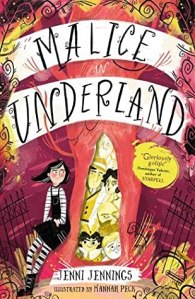
Malice’s Adventures in Underland #1: Malice in Underland – Jenni Jennings

Illustrations – Hannah Peck

Malice Malign and her family live in Malignant House, which has a skeleton in nearly every closet. The Maligns are Topunders, magical people who can live in Topside amongst the living or in Underland with the ghosts, but they don’t truly fit anywhere.

They’re a bit too alive for Underlanders and a bit too mischievous for the Topsiders.

Malice’s parents love being representatives of Underland, a “land of sorcery, spooks and skulduggery”. They run the Malign Haunting Agency, which takes some of Underland’s most troublesome ghosts and uses them to haunt houses Topside.

Malice was originally concerned about telling her best (only) friend, Seth, about her family but Seth loves talking to Malice’s ghost Grandad and thinks ordinary is overrated.

“I really enjoy your family’s weirdness.”

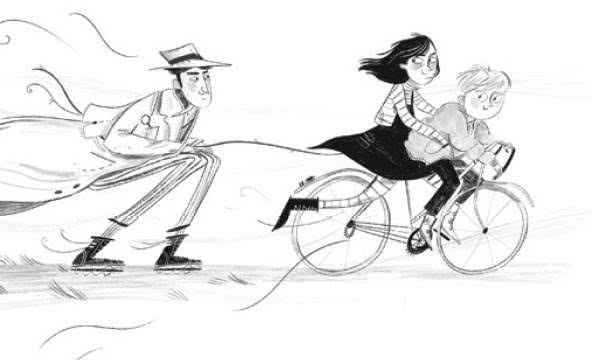
When ghosts begin to disappear, Uncle Vex, a private investigator in Underland, asks for Malice’s help. Now that her own Grandad has also disappeared, Malice is on the case.

description

Malice can talk to nighttime creatures, but has a special affinity with moths. Ma and Pa don’t understand Malice who, like Grandad, was born without the menacing-mischief gene. They disapprove of the things Malice likes, including reading and bathing regularly. Thankfully she has Grandad, who I absolutely adored. His brand of mischief is harmless fun.

Seth’s enthusiasm about all things weird was contagious. I hope he has a bigger role in the next book. I think he’s going to be my favourite character in this series.

This was a fun book. I enjoyed exploring both the Topside and Underland. All of the locations were easy to imagine and even the minor characters were interesting. I’ll definitely be continuing this series.

“And there’s nothing whatever the matter with being unusual!”

Rating: 4 out of 5.

Once Upon a Blurb

Meet Malice Morbid Malign.

She’s from Underland, land of sorcery, spooks and skulduggery.

But, she and her family live in Topside and mischief is their business … And the business of mischief is a very serious matter!

The Malign family hate books, they hate bathing, and they especially HATE helping.

But when grandad ghosts mysteriously start disappearing, including her own beloved grandad, Malice has no choice but to help. She partners up with her Uncle Vexatious, to solve the case of the missing grandad-ghosts.

The Boy from Earth – Darrell Pitt

Illustrations – James Hart

Twelve year old Bobby Baxter lives a quiet life with his father and Roger, their pet snail. That is, his life used to be quiet (and predictable) until the morning the front door of their apartment was smashed in. Now Bobby is on his way to the planet Andarma.

This is not ideal for a boy with so many fears. You should believe Bobby when he says he is afraid of 689 things (so far) because he has made a list. Although it’s not spelled out in DSM-5 language, I’d also like to diagnose Bobby with agoraphobia.

So, what’s a scared Earthling going to do on Andarma? He’s been chosen to attend Galactic Space Academy, a twelve week intensive training program. At the end of this program students (those who survive, that is) gain entry to the Space League.

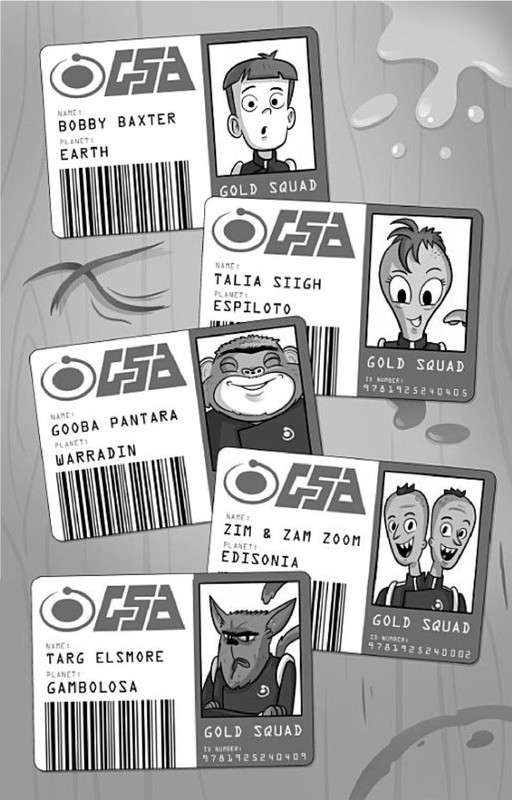
There Bobby meets the rest of the Gold team:

description
  • Conspiracy theorist Talia
  • Zim and Zam, who can finish each other’s sentences
  • Targ, who’s not a fan of Bobby, or hanging out with the rest of the team, or smiling
  • Gooba, who often quotes from The Book of Err, despite not understanding the meaning of most of its wise teachings.

‘Err says that life is like a planet within a melon inside a glass egg’

The thing is, no one from Earth has ever been invited to the Galactic Space Academy before. Earth aren’t even part of the Confederation. And it seems as though someone really doesn’t want a boy from Earth in attendance.

During their time at the Galactic Space Academy, Bobby and his team will learn the value of perseverance and teamwork. There’s danger, action, humour and the unexpected ahead.

‘Rule 1A: Expect the unexpected’

I definitely want to read more books by this author.

Thank you so much to NetGalley and Text Publishing for the opportunity to read this book.

Rating: 4 out of 5.

Once Upon a Blurb

Twelve-year-old Bobby Baxter’s not the bravest kid on Earth. His list of things that scare him is up to number 689, and includes lightning, crowds, spiders, alien abductions, crocodiles, falling from great heights, falling from small heights and eggs. 

So when he learns that he’s the first Earthling ever chosen to attend the Galactic Space Academy, light years away from home, he’s terrified – and that’s before he discovers that someone at the academy wants the boy from Earth gone.

The Valedictorian of Being Dead – Heather B. Armstrong

When you want to be dead, there’s nothing quite like being dead.

Heather B. Armstrong has lived with depression since she was a child but her experience in 2017 was more intense than anything prior. She spent eighteen months severely depressed, wanting to be dead but forcing herself to go through the motions, doing “All the Things Needing to Get Done”, because of her children.

It was during this time of desperation that Heather learned of an experimental study being run by Dr Brian Mickey. She was only the third person to qualify for and agree to participate in Dr Mickey’s study. About three times a week for ten sessions, Heather was put to sleep with propofol anaesthesia.

Dr. Bushnell would eventually clarify that they weren’t technically killing me; it was more of a really, really intense induced coma. They were just almost killing me.

Heather’s writing style is engaging, taking the reader on the journey with her: the good, the bad, the TMI, the scary and the funny. I met her family, some of her friends and the professionals treating her. I learned about the abyss and found the humour in Heather’s inability to recall what year it was when she was coming out of anaesthesia (1979 or 2012, every single time).

I particularly loved how candid Heather was in describing her depression, including the fact that she was able to hide its severity from many people for so long.

No one knew that I wanted to be dead. That’s how good I am.

Heather’s story not only showcases her perseverance and bravery, it also highlights how integral supportive family and friends are for people living with mental illness. I adored Heather’s friend, Stacia, who stayed the night with her when she didn’t have the internal safety to be alone.

However, Heather’s mother, Linda, and stepfather, Rob, were the ones who stole my heart. The practical and emotional support they offered almost had me ugly crying. They are everything you need family to be when you need help. I could have hugged Linda when she said:

“We have nothing else to do this month other than be there when you wake up.”

As I read, I kept thinking back to times when I’ve had suicidal ideation and the more I thought about it the more courageous Heather seemed. Regardless of how desperate I was, I don’t think I could have attempted a treatment option with a possible side effect (however rare) of death. That may sound absurd to you. Here I am saying I wanted to die yet I would have been too scared to try a treatment that might kill me. Isn’t that exactly what I wanted?

Well, yes and no. See, to submit yourself to an experimental treatment like Heather did, you would have to think that it’s the only or best option for you. But because it’s labelled as ‘treatment’ a part of you, even if that part is teensy, would hope that it might work. That’s the part that would have terrified me: the prospect of holding hope while knowing that hope could literally kill me.

It can be hard for a lot of people to ask for help when they need it. It’s especially difficult when your brain is lying to you, telling you that the people who love you would be better off without you. Heather’s recovery, with the help of the medical profession as well as her family and friends, will hopefully convince readers that it’s perfectly okay to ask for help and accept it when it’s offered.

Rating: 4 out of 5.

Once Upon a Blurb

Author and blogger Heather B. Armstrong writes about her experience as one of only a few people to participate in an experimental treatment for depression involving ten rounds of a chemically induced coma approximating brain death.

For years, Heather B. Armstrong has alluded to her struggle with depression on her website. But in 2016, Heather found herself in the depths of a depression she just couldn’t shake, an episode darker and longer than anything she had previously experienced. 

This book recalls the torturous eighteen months of suicidal depression she endured and the month-long experimental study in which doctors used propofol anaesthesia to quiet all brain activity for a full fifteen minutes before bringing her back from a flatline. Ten times. The experience wasn’t easy. Not for Heather or her family. But a switch was flipped, and Heather hasn’t experienced a single moment of suicidal depression since. The Valedictorian of Being Dead brings to light a groundbreaking new treatment for depression.

Corners – Corrina Austin

“Corners are something you fix up … and sometimes, you can’t fix people.”

Ten year old Davy doesn’t have any friends and has just been banned from the local swimming pool for the rest of the summer. It’s 1969, the summer he meets thirteen year old Ellis, who teaches him about corners. The two weeks he spends with Ellis change Davy’s life in ways he doesn’t anticipate.

I enjoyed getting to know the characters in this book. Ellis had a sadness that radiated from her, even as she made small corners of her surroundings more beautiful. Hannah, Ellis’ grandmother, was an absolute sweetheart. Davy’s mother, a single parent, is doing her best trying to provide for her small family. Mr Mosely, Davy’s mother’s landlord, had his own struggles.

This story is told in two timelines. Davy is recalling this time in his childhood to his son, who is now the age Davy was in 1969. While I found the progression of the story of Davy’s childhood interesting, it didn’t read to me like he was telling the story to his son. The language didn’t feel conversational.

Adult me figured out what was behind Ellis’ sadness early in the book and knew how the story would end from the get go. Child me probably would have been surprised by both of these revelations.

Thank you so much to NetGalley, Dancing Lemur Press and Independent Book Publishers Association for the opportunity to read this book.

Rating: 3.5 out of 5.

Once Upon a Blurb

Everyone needs their own special corner…

It’s 1969 and ten-year-old Davy is in a predicament. With two weeks remaining of the summer holidays, he’s expelled from the public pool for sneaking into the deep end and almost drowning. How will he break the news to his hard-working single mother? She’s at the diner all day, Davy has no friends, and he’s too young to stay by himself.

The answer lies in his rescuer, mysterious thirteen-year-old Ellis Wynn. Visiting her Grammy for the summer, Ellis offers to babysit Davy. She teaches him about “corners” – forgotten or neglected areas fixed up special. Together, the kids tackle several “corners” and Davy learns what it means to bring joy to others.

Davy begins to wonder, though. Why does Ellis want to be his friend? Why doesn’t she ever smile? And is Davy just one of Ellis’ “corners?”

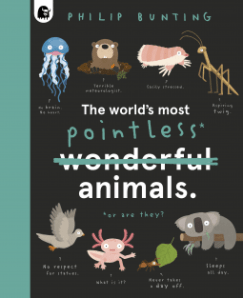
The World’s Most Pointless Animals – Philip Bunting

It’s no secret how much I love books that tell me a whole bunch of fun facts about animals. My favourite facts in this book are:

  • Leeches have 32 brains.
  • Elephant shrews “are typically 15cm long, but can jump almost a metre in the air”.
  • An axolotl can regenerate its body parts when it’s injured.

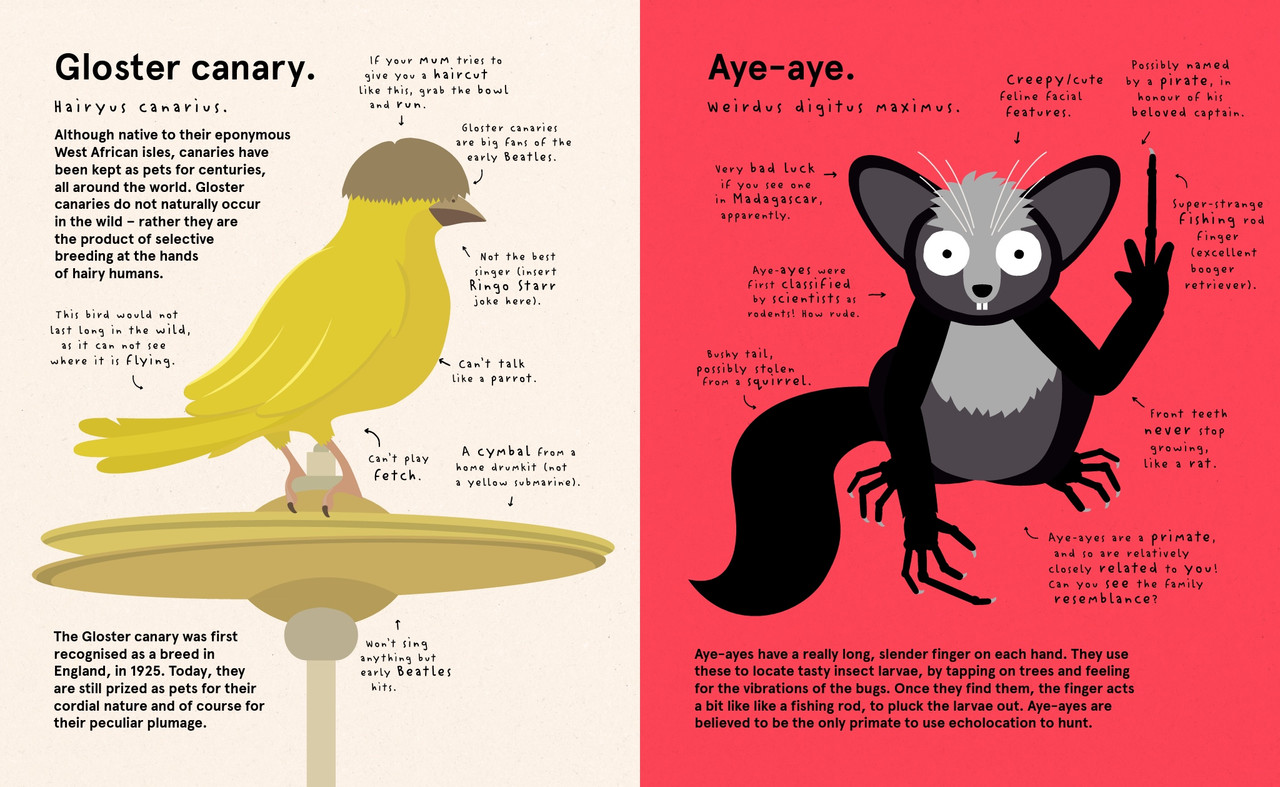
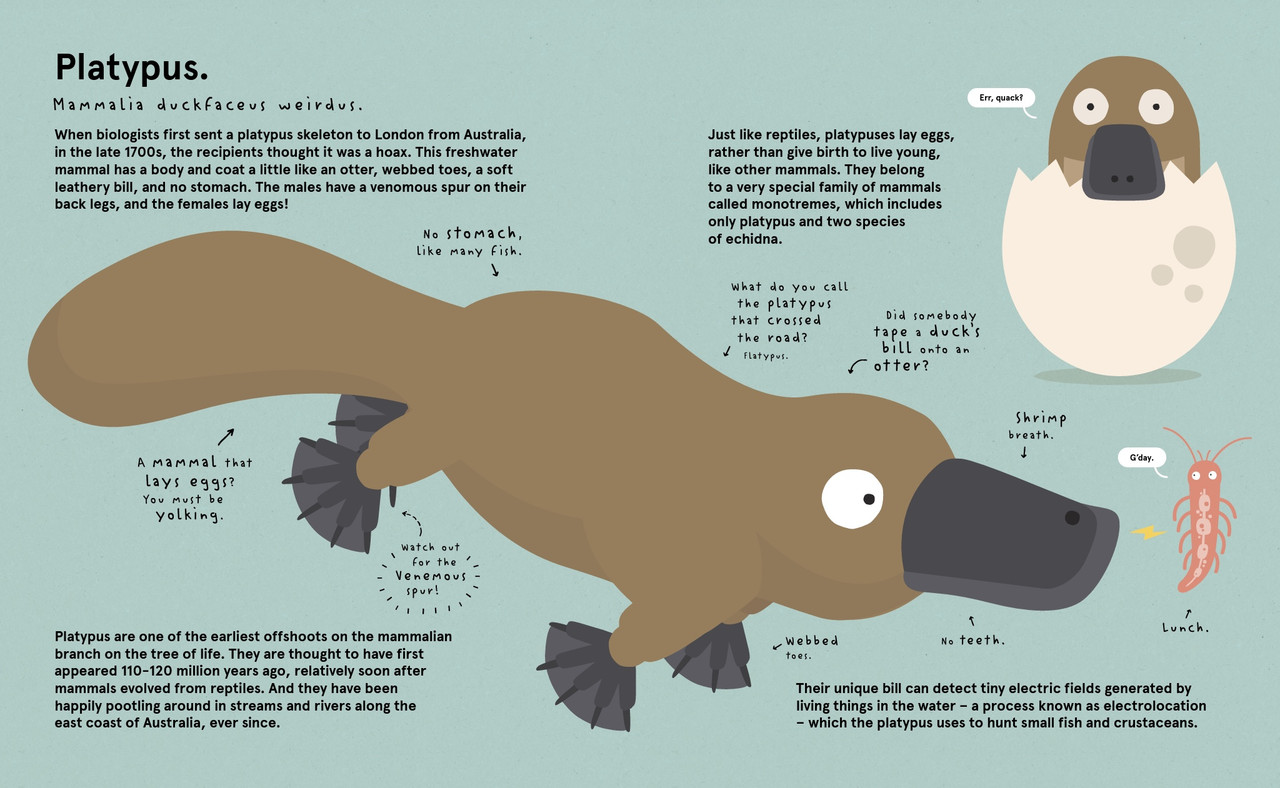
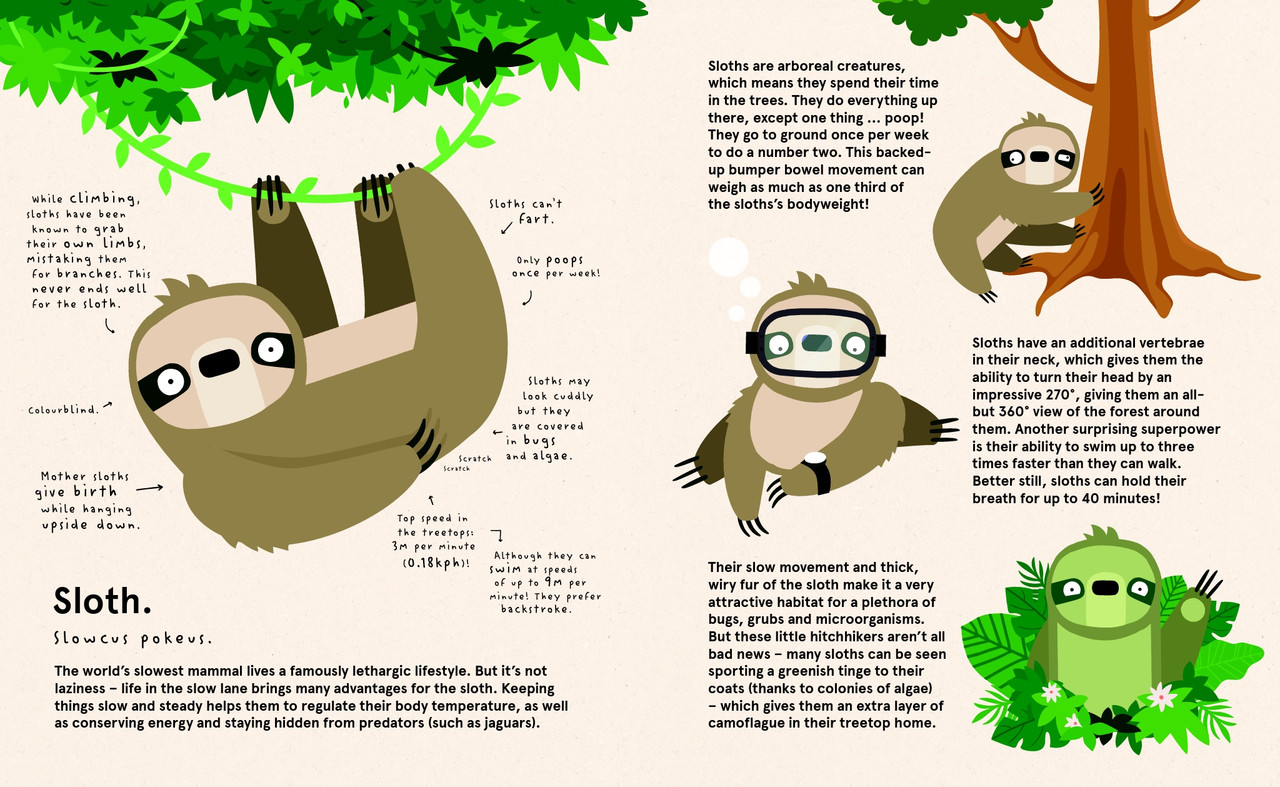
I’m not sure how well this book will work with its target audience (one website says 4+, others say 5 to 8 years). I didn’t find the humour funny, although kids may. I think some references will go straight over the heads of many kids. Have kids that age even heard of The Beatles?

description

Terms that adults would understand could confuse younger readers, especially without a glossary to refer to. A quokka is said to be a “pseudo-roo”. About the myotonic goat: “Somebody should teach them about the fight or flight response.” Do you want to explain to your 5 year old what it means for a stick insect to be “amorous”?

The illustrations are colourful and the animals are cute. I particularly liked the platypus and sloth.

description
description

Thank you so much to NetGalley and Happy Yak, and imprint of Quarto Publishing Group – Frances Lincoln Children’s Books, for the opportunity to read this book.

Rating: 3 out of 5.

Once Upon a Blurb

The World’s Most Pointless Animals is a witty, quirky, colourfully-illustrated book featuring fascinating facts about some very silly animals … who we find are perhaps not so pointless after all.

From familiar animals like giraffes (who don’t have any vocal cords) through to those that surely should not even exist, such as the pink fairy armadillo (absurdly huge front claws, super tough protective shell in baby pink, particularly susceptible to stress), our planet is full of some pretty weird and wonderful animals. For example:

  • Koalas spend up to 18 hours a day asleep!
  • Pandas are born bright pink, deaf, and blind.
  • Dumbo octopuses flap their big fin-like ears to move around.
  • A Narwhal’s tusk grows through its upper lip – ouch!

With hilarious text throughout and bright, contemporary illustrations, this guide to absurdly awesome animals contains funny labelled diagrams and some excellent made-up Latin names (N.B. The jellyfish’s scientific name is not actually wibblious wobblious ouchii).

Carrying an important message of celebrating diversity and differences, The World’s Most Pointless Animals inspires a drive to conserve our amazing planet and the creatures we’re lucky enough to share it with.

The Woman They Could Not Silence – Kate Moore

“Can [a woman] not even think her own thoughts, and speak her own words, unless her thoughts and expressions harmonize with those of her husband?”

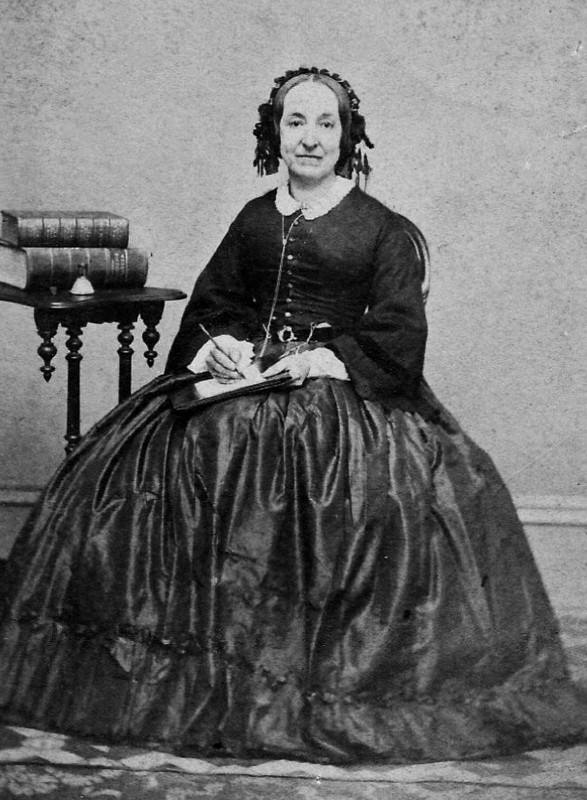
Taking inspiration from the #MeToo movement, Kate Moore delved into the history of women who, more often than not, have been labelled ‘crazy’ and silenced for speaking the truth. Kate wondered if there was a woman whose perseverance, despite everything that was done to discredit her, prevailed.

She found Elizabeth Packard who, in 1860, was taken against her will to Jacksonville Insane Asylum, two hundred miles from her home, because of her “excessive application of body & mind.” The person who was responsible for this injustice was her husband of 21 years and the father of her six children.

The evidence of her so called insanity?

“I, though a woman, have just as good a right to my opinion, as my husband has to his.”

Elizabeth, after being a dutiful wife, mother and homemaker for almost all of her adult life, heard about the women’s rights movement and gave herself permission to think for herself. She also disagreed with her preacher husband about matters of religion and, with her great intellect and her persuasive arguments, he was afraid of the consequences of her speaking her mind.

This was a time when most states “had no limits on relatives’ “right of disposal” to commit their loved ones”, where an insanity trial had to take place before you were admitted to a state hospital (but not if you were a married woman) and where “married women had no legal identities of their own.”

The thought of me living in 1860 terrifies me. I’m certain I too would have been institutionalised and I don’t know I would have been able to sustain the fortitude that Elizabeth displayed. Don’t think that you wouldn’t have also been at risk of such a fate, as

one common cause of committal to an asylum in Elizabeth’s time was “novel reading.”

In the asylum, Elizabeth met other patients, including other sane women who had been trapped there for years, similarly pathologised for their personality. The asylum served as a “storage unit for unsatisfactory wives”. She also witnessed patients being abused by the staff.

Elizabeth was determined to prove that she was sane and secure her release from the asylum. She also wanted to enact change that would see her new friends also released and to protect the mentally ill from abuse. But what Elizabeth wanted more than anything was to be able to parent her children again.

This is a thoroughly researched and well written account of the life of a woman I’m sad to say I had never heard of before but will certainly not forget.

description

So in the end, this is a book about power. Who wields it. Who owns it. And the methods they use.

And above all, it’s about fighting back.

Thank you so much to NetGalley and Sourcebooks for the opportunity to read this book.

Rating: 4.5 out of 5.

Once Upon a Blurb

From the New York TimesUSA Today, and Wall Street Journal bestselling author of The Radium Girls comes another dark and dramatic but ultimately uplifting tale of a forgotten woman whose inspirational journey sparked lasting change for women’s rights and exposed injustices that still resonate today.

1860: As the clash between the states rolls slowly to a boil, Elizabeth Packard, housewife and mother of six, is facing her own battle. The enemy sits across the table and sleeps in the next room. Her husband of twenty-one years is plotting against her because he feels increasingly threatened – by Elizabeth’s intellect, independence, and unwillingness to stifle her own thoughts. So Theophilus makes a plan to put his wife back in her place. One summer morning, he has her committed to an insane asylum.

The horrific conditions inside the Illinois State Hospital in Jacksonville, Illinois, are overseen by Dr. Andrew McFarland, a man who will prove to be even more dangerous to Elizabeth than her traitorous husband. But most disturbing is that Elizabeth is not the only sane woman confined to the institution. There are many rational women on her ward who tell the same story: they’ve been committed not because they need medical treatment, but to keep them in line – conveniently labeled “crazy” so their voices are ignored.

No one is willing to fight for their freedom and, disenfranchised both by gender and the stigma of their supposed madness, they cannot possibly fight for themselves. But Elizabeth is about to discover that the merit of losing everything is that you then have nothing to lose… 

Creatura – Bec Crew

What I’ve learned from my time writing about weird animals is that there is always something weirder than you could have ever imagined just around the corner.

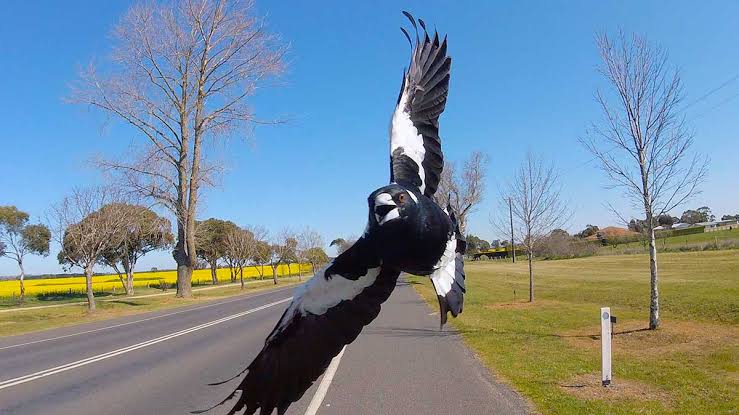
Australia is known for its wildlife, from the kangaroos we ride to school (not a thing; sorry) to drop bears (you can read all about them in this Australian Geographic article posted on 1 April 2021). You might fear our deadly spiders and snakes but the animal that’s most likely to scare an Australian is a territorial magpie during swooping season.

description

I love books about animals that are classified as weird and wonderful so it’s a special treat for me to find a book about the weird, wonderful creatures that live in Australia. It seems perfectly fitting that this book was published on my Nan’s birthday, who was her own special blend of weird and wonderful. (You would have loved her! And she would have loved me calling her weird and wonderful.)

Because I can’t help myself, I’m going to tell you a few of my favourite facts from each section of this book.

Mammals

Ningaui are small carnivorous marsupials that are named for an “Aboriginal legend that describes imp-like creatures that live in the mangroves and lure passers-by to their deaths, consuming them raw.”

Cuvier’s Beaked Whale, which is found around the world in tropical and temperate waters, holds the records for the deepest (2992m or 9816 feet) and longest (138 minutes) dives performed by a mammal.

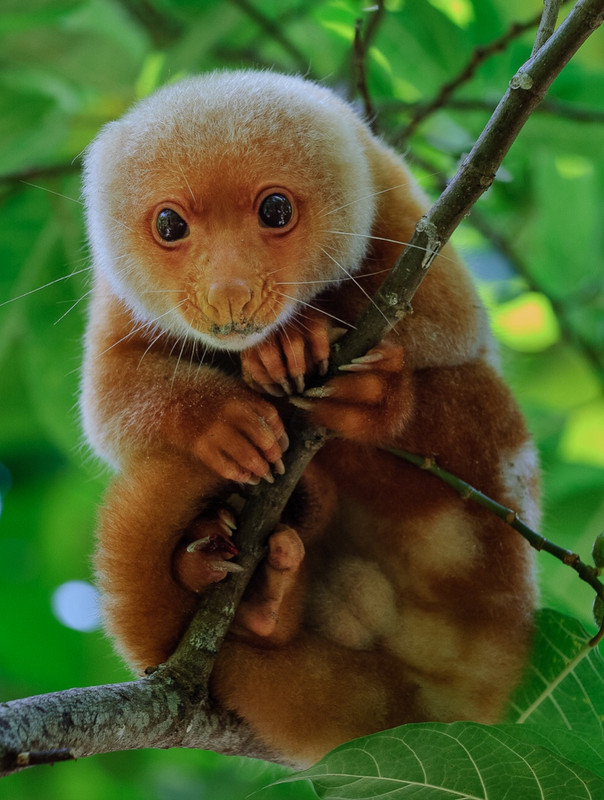
Common Spotted Cuscus sleep high in trees with their head between their legs. In what seems to be an ingenious way to camouflage themselves, they wrap leaves around themselves.

description

Fish and Sea Creatures

Bubble Algae are “one of the largest single-celled organisms on Earth”, with a diameter of up to 9cm (3.5 inches).

Banded Archerfish are omnivores whose diet consists of food found both in and out of the water. They can shoot ‘spit missiles’ (jets of water) at insects up to 3 metres (almost 10 feet) away to knock them off branches and into the water.

Blanket Octopus females can grow up to 2 metres (6.5 feet) long and 10kg (22 pounds), whereas males are only 2.4cm (just under 1 inch).

Invertebrates

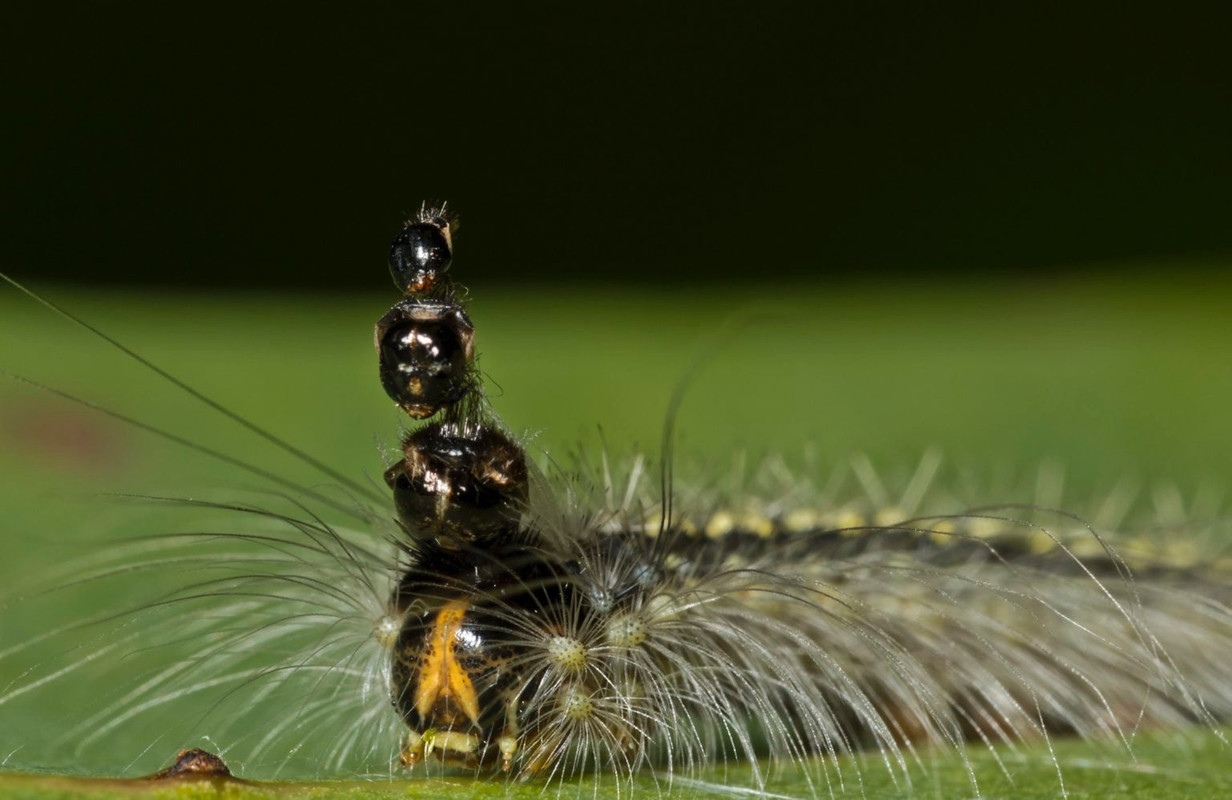
The Head-Stacking Caterpillar, the larvae of the gumleaf skeletoniser moth, moults their exoskeletons as it grows. It stacks its shedded heads on top of one another and wears them like hats.

description

If a Hammerhead Worm is “cut into bits, either lengthwise or across its body, each piece will become a new, perfectly functional worm over the course of two or three weeks.” I don’t want to meet the sadist that discovered this.

Leichhardt’s Grasshopper apparently taste awful because they only eat bitter-tasting plants.

Birds

A young Apostlebird will stay with its parents for 200 days.

The Nankeen Kestrel is the only bird of prey that can hover.

The Whistling Kite spread bushfires, “carrying lit twigs in their beaks and claws, to flush out exhausted and confused prey.”

Reptiles and Amphibians

Never having evolved the ability to survive on land, the Yellow-Bellied Sea Snake is the “most aquatic snake in the world”.

The Crucifix Frog is “one of the only species of Australian frog to employ aposematism, which is the use of bright patterning to ward off predators.”

The eyesight of geckos is 350 times better than ours and they can see in full colour in moonlight. The Golden-Tailed Gecko squirts a “putrid, sticky liquid from their tails straight at any would-be predators.”

I don’t know how it’s possible that I’ve lived my entire life in Australia and I’ve never come across or even heard of most of these animals before. I definitely want to check out the Australian Geographic Creatura blog to see what other wonders are in the neighbourhood.

Rating: 5 out of 5.

Once Upon a Blurb

There’s no doubt that Australia has more than its fair share of weird and wonderful animals – just think about the platypus – but the true diversity of our wildlife is more extraordinary than you might imagine. There’s the caterpillar that wears its old head shells as a macabre hat, the cuscus that wraps itself in a leafy camouflage while sleeping and the fish that targets prey with a high-powered jet of water. In this collection of stories from Australian Geographic blog Creatura, science writer Bec Crew celebrates the strange behaviours, special adaptations and peculiar features of our amazing Australian creatures.