In My World is an absolutely gorgeous book. With a beautiful rhyming story that takes you on a journey inside the hopes and dreams of a young child with autism and with artwork that captures your imagination, encouraging you to dream along with the child in the story, I adore this book and have already read it four times.
While I don’t know anyone who’s close to me with autism, an acquaintance’s son is on the spectrum and he’s an incredible kid. I’ve read bits and pieces about autism so I’m certainly no expert but have such an appreciation and admiration for these amazing people who experience the world differently than I do.
I made my way through this book with a smile on my face as Jillian Ma introduced me to this lovely child dreaming of adventures with dinosaurs, playing, conquering life’s obstacles and soaring through the sky free as a butterfly. Then after taking a step back to contrast how our view of their world differs from theirs, I was left with the hope that with help an autistic child’s dreams can come true.
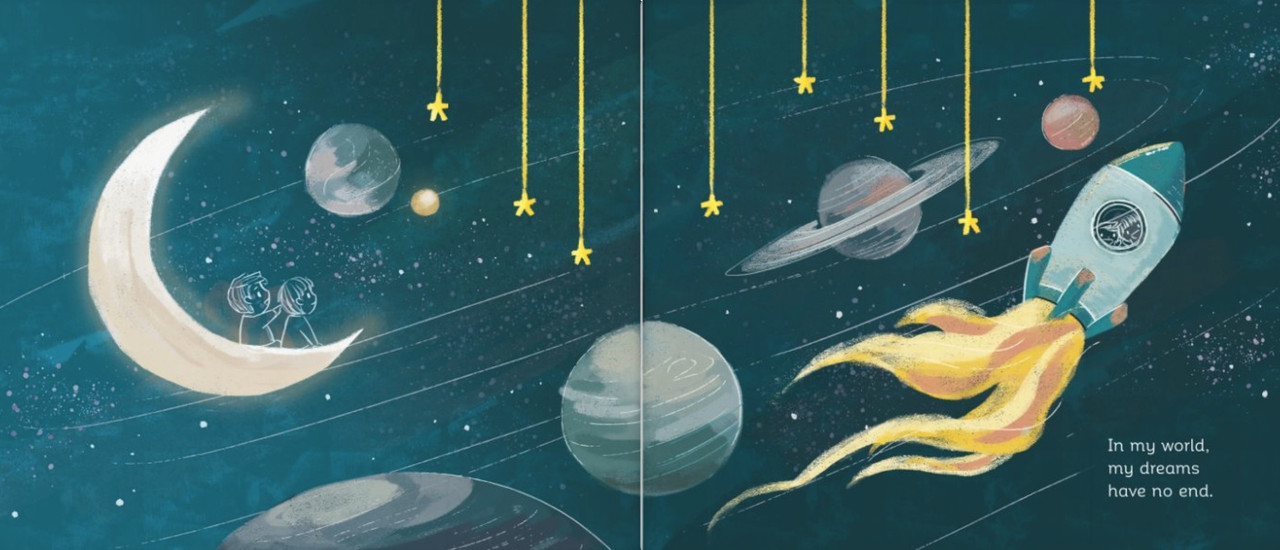
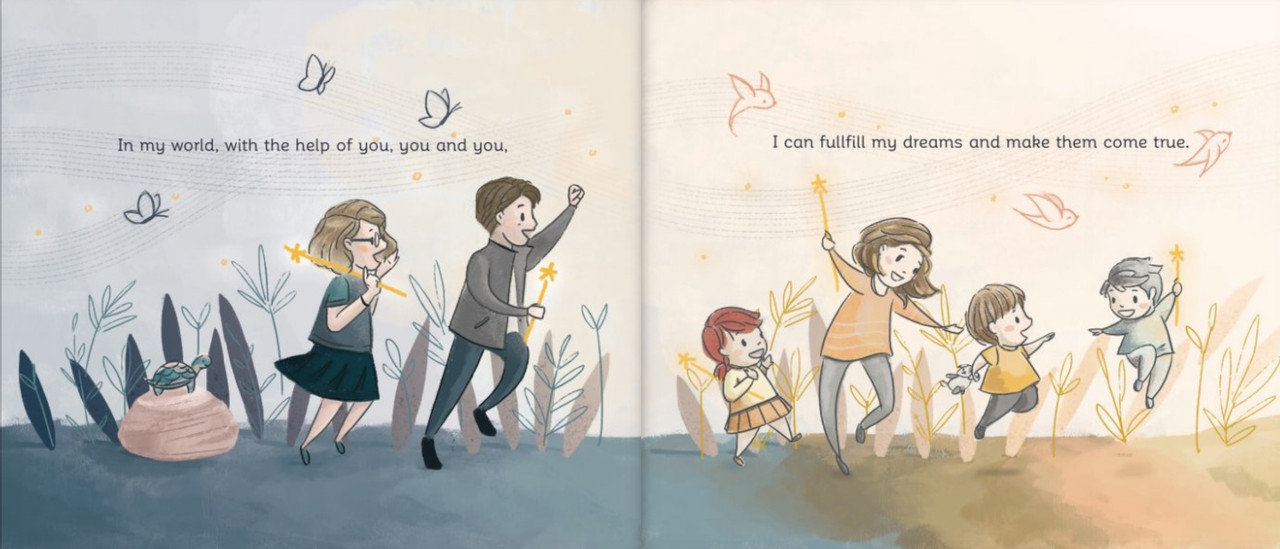
The illustrations by Mimi Chao were so beautiful and invited me into this child’s dreams in a way that words alone couldn’t have accomplished. There was a softness and calming quality to the illustrations and I loved the inclusion of the yellow stars throughout.
This is one of those books where you can feel the love that has gone into it just by looking at it. I can imagine this book becoming a treasured bedtime story. It would also be a wonderful tool to help siblings understand their autistic brother or sister more and promote kindness and love.
Thank you so much to NetGalley and Future Horizons for the opportunity to read this book.
⭐⭐⭐⭐⭐
Rating: 5 out of 5.
Once Upon a Blurb
A simple, heartfelt story that follows the life of a child with autism through his imaginative journey as he seeks to be accepted, loved and celebrated for his strengths and abilities. Despite the qualities that make children on the autism spectrum exceptional, they all have hopes, dreams and feelings of belonging that all children desire. This book is a powerful reminder that with a little help from each of us, children with autism can fulfill their dreams.
Girl Talk is a wonderful guide for young girls that takes them through what happens to their body and mind as they go through all of the joy and drama that is puberty. I would have devoured this book growing up if it had been available back in the olden days. It includes a couple of case studies and the answers to some of the more common but often embarrassing questions young girls need to know.
This book covers a wide range of topics:
What puberty is
Why it happens and how it affects the outside of your body as well as your brain
Individual sections with information about breasts, bras, periods, body hair, pimples and skin care, eyes and teeth, body odour and personal hygiene, feet
The stages that boys’ bodies go through during puberty
Love and relationships
Sex and how babies are made
Contraception
Healthy eating and fitness
Body image
Body shaming
Social media and phones
Cyberbullying
Bullying and peer pressure
School life
Sexism and gender equality
Family talk
Depression
Growing up happy.
One of the things I love about this book is how it keeps telling its readers that what they’re experiencing is completely normal and that they’re OK!
One of your breasts is bigger than the other? Normal!
You like boys, you like girls, you like both, you like neither? Totally OK!
You don’t know how to tell if a bra fits you correctly? Here’s a checklist!
Not ready to have sex yet? Then don’t!
The writing style is engaging. While Lizzie Cox never forgets who her target audience is, she also doesn’t talk down to the girls who’ll be reading this book. Her writing style is very down to earth so no topic feels sensationalised and there’s no drama. It’s all just good common sense advice. She also consistently encourages girls to talk to a trusted adult for information and advice if they’re worried, scared or have questions. The illustrations by [author: Damien Weighill] are age appropriate, humourous and quirky at times but in good taste.
The helplines provided towards the end are UK specific and the target audience is listed as 8 to 11 year olds.
When puberty hit me I was best friends with a few extraordinarily sheltered girls from church families. I have nothing against church families but these ones in particular had their daughters so embarrassed about anything to do with their bodies that the girls wouldn’t even use the word breasts in conversations. They were referred to “up top”. Interestingly hypocritical though, one of the families had no problem at all with their 13 year old daughter that couldn’t name her body parts dating a 20-something creepy, slimy leprechaun (sorry to all the leprechauns out there for disparaging your good name!).
Needless to say these girls, while lovely, weren’t the most useful buddies to talk birds and the bees with, so my education came mostly through sneaking short reads of Derek Llewellyn-Jones’ 1971 Everywoman when my parents were out or hoping that someone had written in (using actual paper, an envelope and postage stamp) to Dolly Doctor asking one of my burning “Am I normal?” questions. For those of you that didn’t grow up in Australia, reading Dolly magazine was one of those girl rites of passages for those of us growing up in the pre-2000’s and still exists today.
I’d recommend this book for parents to give to their young girls, either for them to read alone and ask questions at the end or to go through together. It would certainly make it easier for parents to discuss topics that they may not be overly comfortable explaining to their daughter. It would also be a great addition to public and school libraries, and during school sex ed classes. There’s also a companion book by the same author and illustrator called Guy Talk which I haven’t personally read but if it’s anything like this book I would recommend it by association.
Thank you very much to NetGalley and Quarto Publishing Group – QEB for the opportunity to read this book.
⭐⭐⭐⭐⭐
Rating: 5 out of 5.
Once Upon a Blurb
From puberty to relationships, social media to school, this essential guide for girls growing up covers everything you have always wanted to know but were afraid to ask. Growing up can be hard and, at times, embarrassing. This funny yet sensitive book is here to offer practical advice and helpful information to help make growing up just that little bit less scary. Covering daunting but important subject such as personal hygiene, different types of bulling, relationships, and how to stay safe online, this book features case studies and questions from “real-life” anonymous readers to explore those embarrassing questions you don’t want to ask! Written by a former teen magazine editor and with funny illustrations and diagrams throughout, this is the go-to guide for any girl going through or approaching puberty.
Wallace the Brave takes us through a year in the life of Wallace, his family and friends from one summer school holiday to the next. Wallace lives with his mother, father and little brother in Snug Harbour. He attends school at Moonstone Elementary where his teacher is Mrs MacIntosh.
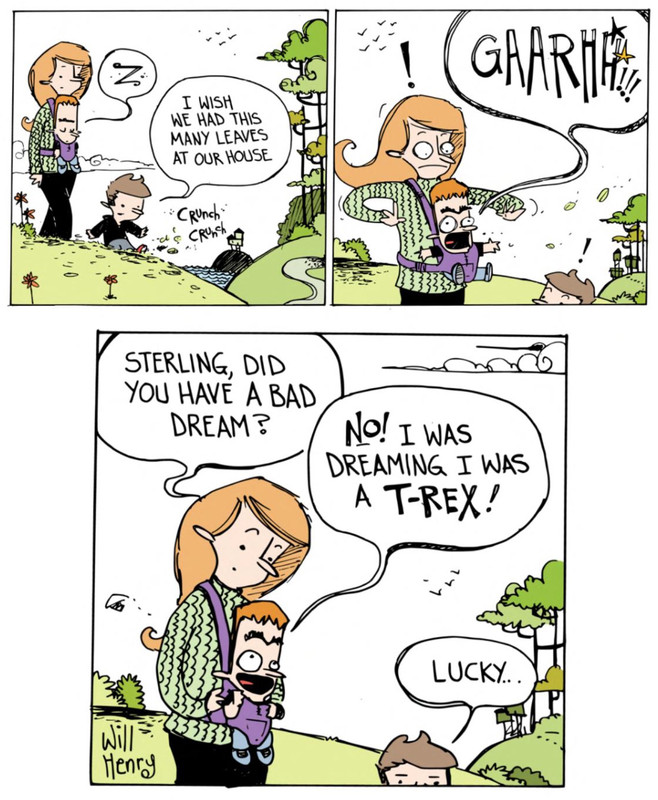
Wallace loves playing pinball and enjoys reading comics, his mother has recently discovered her very own comic addiction, his father is a fisherman and is fairly laid back, and his little brother Sterling is a weirdo with a unibrow. He’s best friends with Spud, a kid with anxiety, and has made friends with new girl Amelia.
Wallace the Brave sort of reminded me of a Charlie Brown comic but didn’t strike me as funny at all. I’ve read some reviews that thought it was hilarious but I was bored by it. If Wallace the Brave was a Charlie Brown comic then Spud was Charlie Brown, Amelia was Lucy, Scratch-N-Sniff was Pig-Pen and I have no idea who Wallace would be.
I wasn’t sure what age Wallace was supposed to be other than knowing he attends Elementary School. His younger brother was even harder to pick an age for as he attends school in the afternoon and talks but he’s carried around by his mother in one of those baby carrier harness thingies where you wear your kid like a backpack that you wear on your front … a frontpack? I’m not a parent so don’t know the technical name for these things but hopefully you know what I mean.
This comic book wasn’t terrible or anything. I just didn’t find it funny and couldn’t connect with it at all. I was really keen to read this when I read the blurb and saw the cover but once I made it past the first few pages I would’ve given up on it had I not committed to reviewing it.
Thank you very much to NetGalley and Andrews McMeel Publishing for the opportunity to read this graphic novel.
⭐⭐⭐
Rating: 3 out of 5.
Once Upon a Blurb
Welcome to Snug Harbor! Will Henry’s Wallace the Brave is a whimsical comic strip that centers around a bold and curious little boy named Wallace, his best friend Spud and the new girl in town, Amelia. Wallace lives in the quaint and funky town of Snug Harbor with his fisherman father, plant loving mother and feral little brother, Sterling.
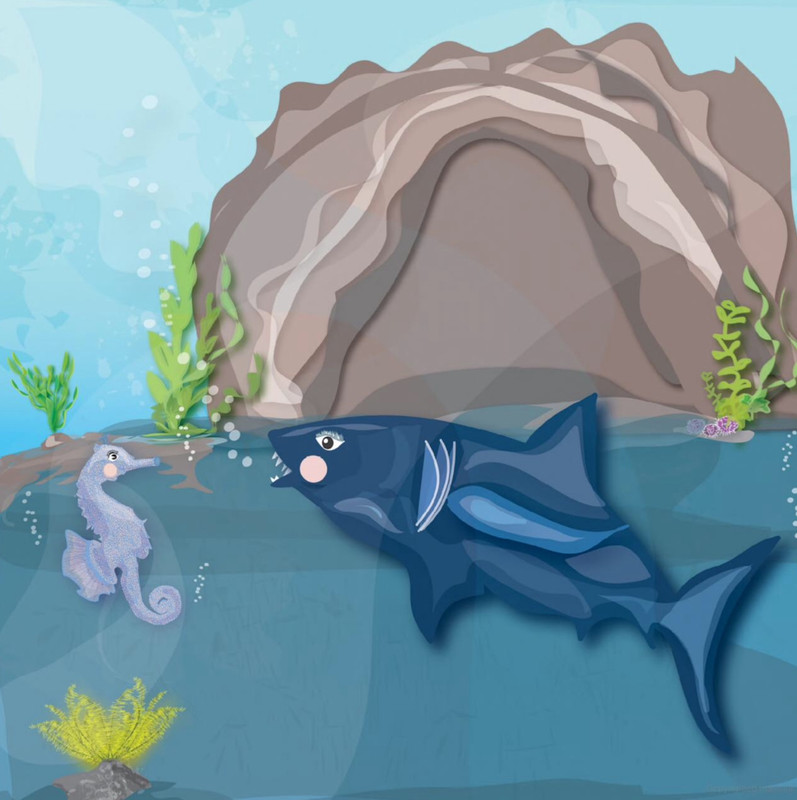
The (Not) Sleepy Shark is a cute bedtime story for little kiddies (👶🏽). It tells the story of Amelia the shark (🦈) who is unable to sleep one night and is bored so she meets up with some of her friends and finds out why they’re not sleeping either. We meet May the seahorse (🌊 🐴), a clownfish called Jester (🤡 🐟), Ada the turtle (🐢), Hanna the crab (🦀), Sasha the seal (🌊L), a large school of fish (🐟🐠🐟🐠), Olivia the octopus (🐙) and Lucy the whale (🐳).
Each friend Amelia meets has a reason they can’t fall asleep (except Lucy who’s ready for bed), mirroring the multitude of excuses reasons why kidlets will tell their parents why they can’t sleep yet … worries about bad dreams, wanting to tell jokes, needing a drink, too cold, too hot, annoyed by someone, hungry, and wanting to play. I personally excelled at the needing a drink trick. The payoff for going to sleep now is that tomorrow you’ll be rested and will wake up with plenty of energy.
I was disappointed that we never got to find out Amelia’s excuse reason for not being able to sleep. Whether it had something to do with the fact that there were no parents in sight during the entire book could’ve had something to do with it. Maybe Amelia was wanting to hang out with each of her friends because she was scared of having to go back to her cave all by herself?
I’ve loved sharks ever since I got over the trauma of watching Jaws for the first time at about 6 years old. You want a reason to not be able to sleep, kids? Just watch Jaws as a child with an overactive imagination. It’s one of my favourite movies now though. Go figure!!
So with my shark obsession in tow I decided I had to read this book. It was cute and I enjoyed it but felt like there was something lacking. I’ve pondered this for a few days now and I think my lack of connection to this book is because of the illustrations. Don’t get me wrong; they are nice pictures. It’s just none of the animals seemed to have personalities or individual little character traits that shone through.
Thank you so much to NetGalley and Xist Publishing for the opportunity to read this book.
⭐⭐⭐
Rating: 3 out of 5.
Once Upon a Blurb
Amelia the shark is tired but she’s not ready to sleep. In this fun bedtime book, a silly shark explores the way other sea animals get ready for bed until she’s finally ready to say goodnight.
In Overcoming Anxiety in Children & Teens, Jed Baker both outlines theory and provides practical advice for parents with anxious kids. The aim of treatment is realistic in that it doesn’t promise to eradicate anxiety completely as we all experience anxiety at times. The goal is to help the child/teen no longer be controlled by it.
Baker differentiates between true alarms and false alarms. True alarms are when someone is actually in danger. When someone experiences false alarms, reacting with anxiety over events that present no actual danger, gradual exposure therapy can reduce their anxiety. Cognitive behavioural therapy (CBT) aims to assist the individual to manage their fears by challenging their thoughts rather than allowing thoughts and emotions to rule their behaviour.
Touching on medications that may assist in the management of anxiety as well as their side effects but recommending they be used after trying other tools first, the author also outlines non-pharmacological alternatives such as exercise, meditation, mindfulness and neurofeedback. I’m not sure how I’d react as a parent being told in a book about anxiety that one of the possible side effects of medication use for my child is problems with their sexual performance. 😂
Baker describes his approach to making therapy less threatening to young people by initially focusing on their strengths while also addressing challenges (things that can prevent someone from reaching their goals) and the importance of taking into account other areas of a person’s life that may be contributing to their anxiety levels. Information is also given about how fear ladders can work to assist a child to gradually face their fears from least to greatest.
Intrinsic and extrinsic rewards for climbing the fear ladder steps were outlined. Personally I have some issues with a couple of the extrinsic rewards. Linking food rewards to preferred behaviour reminded me too much of Pavlov’s dogs and I wondered about the wisdom of rewarding children with junk food.
I can certainly see the benefit of rewarding them with time spent doing activities they enjoy but I baulked at the idea of paying kids for taking steps to overcome fear. Granted this is a different situation but it reminds me of a girl I played netball with whose father paid her $1 per goal she got each game. Naturally it made no difference to the girl if a teammate was in a better shooting position; she took every shot because she wanted her $1. We were kids in the 80’s and let me tell you that $1 was a lot of money to us at the time! Speaking of junk food, $1 could buy you 20 lollies of your choice in a white paper bag at the local shop.
I’m also not keen on 1 to 5 rating scales. This isn’t a specific problem with this book although it does use them but a pet peeve in general. My argument against these is twofold. People invariably will rate the same thing differently; what is an anxiety level of 2 out of 5 for one person, another may rate as 4 out of 5. Also, even an individual’s rating may not be consistent and could be affected by so many variables including whether or not they’ve had a good day, if they’re hungry or if they got enough sleep the night before.
Specific attention is given in this book to providing tools to manage fear for children who are less verbal, including those with autism. Chapters also provide case studies of the author’s work with children with specific anxieties – simple phobia, social anxiety, selective mutism, separation anxiety and school refusal, panic disorder, Obsessive Compulsive Disorder (OCD), somatic symptom disorder and/or illness anxiety disorder, Generalised Anxiety Disorder (GAD), perfectionism and other common fears that don’t fall into disorders outlined in the DSM-5, including fear of others’ aggression and fear of unexpected changed in schedule or routine.
The case studies, whilst fairly repetitive in parts, would be useful for parents who could read the first section of the book and then focus on the chapter that specifically covers their child’s experience with anxiety. I would anticipate that by reading an outline of a child facing a similar situation and what steps were taken to reduce their anxiety, this would provide much needed hope to a parent that their child will be able to replicate this success.
Having studied anxiety disorders fairly extensively, this book didn’t break any new ground for me but I found its concepts were explained in an approachable way, steering clear of the scientific mumbo jumbo that can put off people who just want answers.
Quoting from other people’s studies and theories (along with plugging their own books several times) the author doesn’t appear to be claiming they’re coming up with a new model for treating anxiety in children but instead explaining existing models and showing parents how they can be applied by using case study examples. While the majority of the references cited throughout the book are ten or more years old, additional tools were also provided in the form of potentially useful websites and apps.
Time is spent explaining how to get the child on board but fails to provide any information regarding what a parent is supposed to do if their child refuses to cooperate with the treatment plan.
I wasn’t a fan of the photographs used in this book. They silently scream, “Dodgy clichéd stock images!” Personally I’d prefer no images over ones that make me roll my eyes. However, this isn’t a photography book so the images have no bearing on my rating.
I particularly liked the scripts that parents and teachers can use to guide children through relaxation, breathing techniques and mindfulness. I’ve read ones similar to these before but have never come across ones written specifically for use with children and found the explanations of the techniques well done.
Thank you so much to NetGalley and Future Horizons for the opportunity to read this book.
⭐⭐⭐⭐
Rating: 3.5 out of 5.
Once Upon a Blurb
The key to this book is that it outlines both the science and art of anxiety therapy. The science of overcoming anxiety is using the well researched approach called gradual exposure therapy which involves helping individuals gradually face their fears. The art of therapy is figuring out how to actually convince someone to face their fears. Jed describes motivational techniques, cognitive behavioral strategies, exercises, relaxation and mindfulness guides to lower anxiety to the point where individuals can begin to confront their fears. The book covers: simple phobias, social phobia, selective mutism, separation anxiety and school refusal, panic disorder, obsessive compulsive disorder, somatic symptom disorder and/or illness anxiety disorder, generalized anxiety disorder, perfectionism, and other common fears.
OK, this book doesn’t fit in the horror genre nor is it set on or around Halloween. So why does it belong in this month’s theme? It’s about a teenage girl who goes missing and hasn’t been found a year later. If that isn’t one of the scariest, most horrific concepts ever then I don’t know what is.
The Witness became suspicious of the motives of the men on the train and thought about calling the Police but something stopped her. The next day one of the girls was reported missing. A year later she has yet to be found. The witness is wracked with guilt over their failure to act.
The Father is haunted by his missing daughter’s last words to him. He lied to the Police about where he was the night she disappeared.
The Friend has never told anyone what really happened that night.
The Private Investigator was in the Police force until something happened that haunts him to this day.
The First Postcard: “WHY DIDN’T YOU HELP HER?“
I Am Watching You takes you inside the search for a missing teenage girl. It draws you in and doesn’t allow you to sit comfortably on the fence. You are faced with the decisions each character made and forced to wonder what you would have done in their place. You may find yourself silently judging someone’s choice and later provided with further information that turns your preconceptions upside down.
Are we too quick to judge people based on what we see on the surface?
What is the media’s role in helping or harming an investigation?
Who’s to blame when someone goes missing?
What would you have done if you were the girl’s mother, father, sister, friend?
What would you do if you saw something that made you uncomfortable? Would you stand up for what you believe is right? Or would you look away and pretend you didn’t notice?
How do you live with the choice you made when that choice comes with ripple effects?
Told in third person, with the exception of the witness whose story is in first person, each of the alternating chapters leaves you on a knife’s edge. You’re craving resolution of the cliffhanger in that person’s story yet you’re so quickly immersed in the next person’s narrative that you find you can’t decide which answer you want first. Usually this sort of suspense would have me ready to throw my Kindle at the wall but that wasn’t the case with this book. I Am Watching You had me diving straight into the next chapter so I could uncover the answers sooner.
I found this an easy read in that the narrative flowed well and I didn’t have to work hard to immerse myself in the story. I got sucked straight into the story and each time I returned to it the vortex reopened and it felt like I never left. I also found it a challenging read as it required me to ask myself what I would have done over and over, and sometimes I was uncomfortable and didn’t like my answers.
I remained dry eyed but my heart ached for the anguish experienced by so many people I met through Teresa Driscoll’s words, and not solely because of the missing person case. While everyone’s story touches the missing girl’s life in some way, they each had their own lives with joy, torment and a depth that you rarely see with multiple character perspective novels. I look forward to reading future books by this author.
Thank you so much to NetGalley and Thomas & Mercer for the opportunity to read this book. I’m going to be watching this author, just not in a creepy way. 😜
⭐⭐⭐⭐⭐
Rating: 5 out of 5.
Once Upon a Blurb
What would it take to make you intervene?
When Ella Longfield overhears two attractive young men flirting with teenage girls on a train, she thinks nothing of it – until she realises they are fresh out of prison and her maternal instinct is put on high alert. But just as she’s decided to call for help, something stops her. The next day, she wakes up to the news that one of the girls – beautiful, green-eyed Anna Ballard – has disappeared.
A year later, Anna is still missing. Ella is wracked with guilt over what she failed to do, and she’s not the only one who can’t forget. Someone is sending her threatening letters – letters that make her fear for her life.
Then an anniversary appeal reveals that Anna’s friends and family might have something to hide. Anna’s best friend, Sarah, hasn’t been telling the whole truth about what really happened that night – and her parents have been keeping secrets of their own.
Someone knows where Anna is – and they’re not telling. But they are watching Ella.
Sloths!!! One of my very favourite animals! I can’t see a photograph of a sloth and not smile. I especially love three-toed sloths, those gorgeous creatures with perpetual smiles and great affection for eyeliner.
I’m a huge fan of Lucy Cooke’s previous book, A Little Book of Sloth, so when I found out she had another book coming out I was jumping up and down calling, “Pick me! Pick me!”
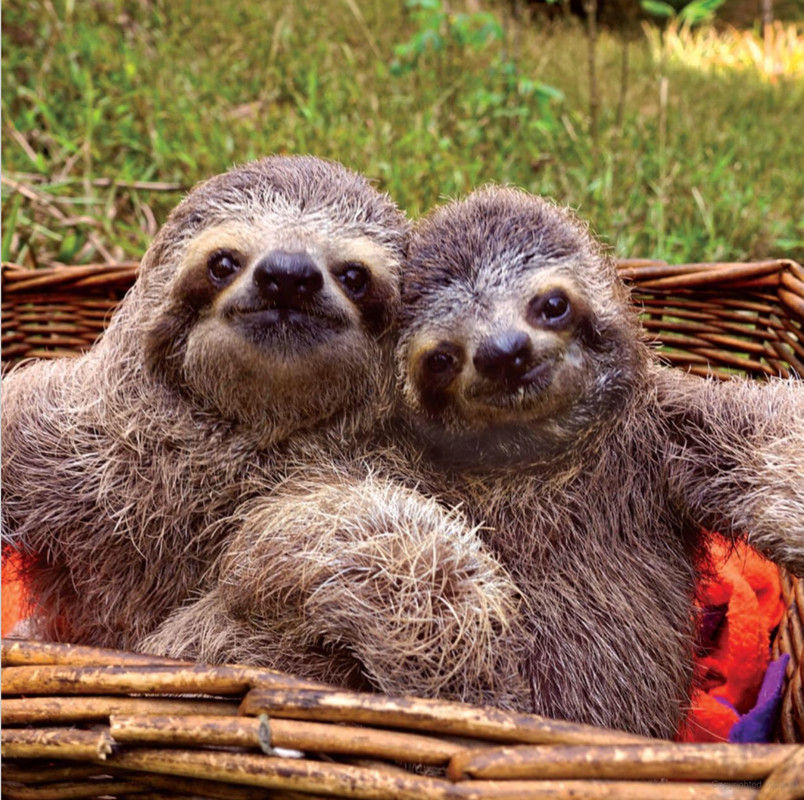
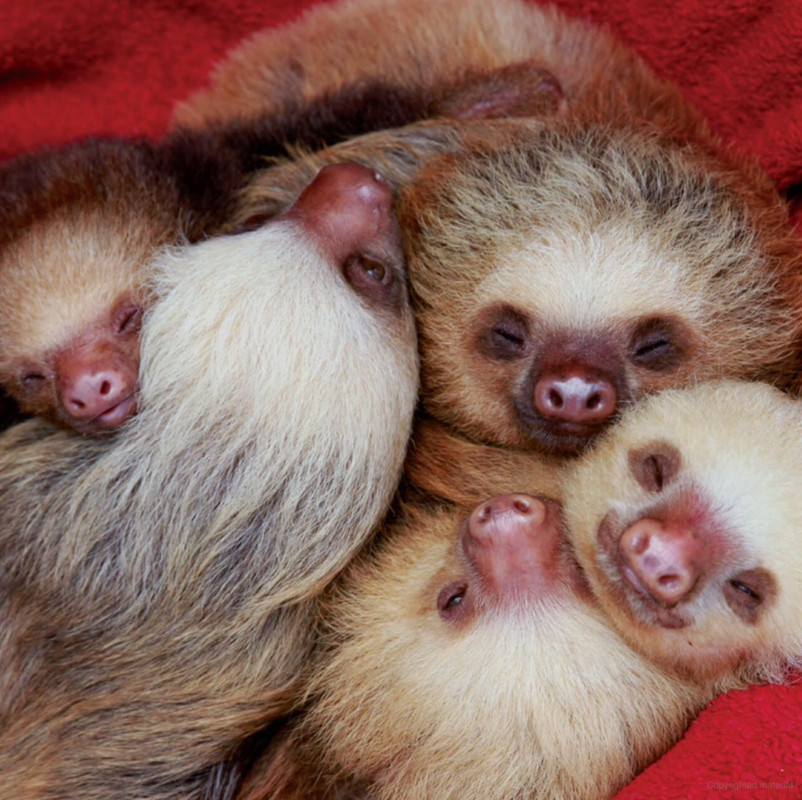
Filled with the most adorable photos of baby sloths, adult sloths, two-toed sloths, three-toed sloths, sloths hanging out in trees, sloths in buckets and hammocks, interesting information about sloths and peace inducing quotes, I loved Life in the Sloth Lane.
Sloths teach us many things, including:
Don’t sweat the small stuff, or any stuff for that matter if you’re a three-toed sloth and don’t sweat at all.
The importance of rest. They rest about 70% of the day. Now that’s the life!
My favourite quote of the book is by Chade-Meng Tan:
“Because inner peace and inner joy are independent of worldly circumstances, they are available to you anyplace and anytime.”
This would make a lovely gift or coffee table book. Anyone who needs a smile should enjoy plenty while reading this book. I was ready to reach through the pages, pull out some sloths and give them all huge hugs, most likely while sitting in that super comfy looking hammock.
Thank you so much to NetGalley and Workman Publishing Company for the opportunity to read this book.
⭐⭐⭐⭐⭐
Rating: 5 out of 5.
Once Upon a Blurb
Why are sloths always smiling?
Perhaps it’s because they’ve mastered the art of taking it slow in a world whose frenzied pace is driving the rest of us crazy. Here, in a mindfulness book like no other, heart-tuggingly cute photographs of these always-chill creatures are paired with words of wisdom, all to inspire us to slow down, stop to enjoy the little things, and come up relaxed, centered, and smiling.
I love dogs and the cover of My Secret Dog is so cute that I had to read it.
A young girl finds a dog who ends up following her home. She can’t bear to part with him so keeps the dog a secret. She hides him at home and school, and what was first a lot of fun ends up very worrying because hiding a dog in a small flat and at school is harder than she thought.
I loved the simplicity of the black and white line drawings, especially the expression on the mother’s face when she’s laughing, and I’m keen to try drawing the dog. I’m definitely no artist so chances are it won’t look anything like the example but I’ll certainly have fun trying.
I appreciated the mother in the story talking to her daughter about how secrets can start out small but grow over time and loved that she told her daughter that no matter what secret she had she could tell her Mum who would love her no matter what.
My soapbox complaint about this book is that the daughter learns nothing from this talk and winds up repeating the same behaviour all over again. I’m not a fan of children’s books that have a message but then don’t follow through. If there’s a message about not keeping secrets from your parents, then I expect the ending to be something along the lines of the child coming to tell the parent about a secret as they know they don’t need to hide anything from them anymore or choosing to not do the same thing all over again. I may well be an old fuddy duddy but I wouldn’t personally buy a book for a child that has a message with no follow through.
Thank you so much to NetGalley and Jessica Kingsley Publishers for the opportunity to read this book.
⭐⭐⭐
Rating: 3 out of 5.
Once Upon a Blurb
I always wanted a dog, but Mum said I wasn’t allowed.
So I got one anyway.
My secret dog lives in the cupboard and we sneak out at night to play.
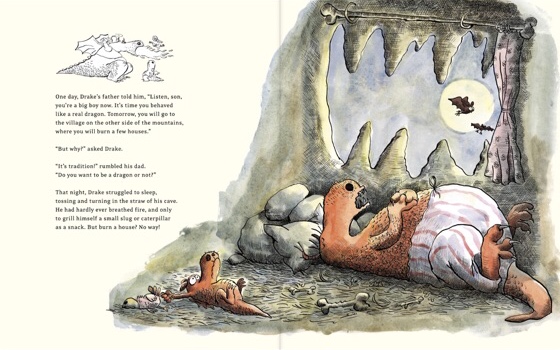
Dragons: Father and Son tells the story of a father attempting to teach his son the dragon tradition of burning down houses. Drake is not exactly proficient at fire breathing, having used his abilities for cooking snacks but nothing ever as big as burning down a house!
Drake finds that he’s not quite a chip off the old block when he flies to a nearby village the next day, ready to make his father proud. Humans don’t seem to be as ferocious as his father has taught him. Can Drake find a way to make his father proud and still stay true to himself?
I loved the expressions captured on particularly the father’s face in Ronan Badel’s illustrations. The father’s use of glasses near the end was a chuckle moment for me. The illustrations complemented the story well and I imagine children will enjoy the father’s cranky expressions at the beginning of the book and the son getting ready to burn down parts of the village in earnest to please his father. I really liked the drawings of the bats.
My favourite picture would have to be when Drake tries to go to sleep the night before he sets out for the village. The look on Drake’s face as he contemplates the next day’s activities is priceless and there was a special cute factor with him holding onto his bird’s leg while the bird sleeps peacefully.
Also, dragons!!! 🐉 😃
Thank you so much to NetGalley and Quarto Publishing Group – words & pictures for the opportunity to read this book.
⭐⭐⭐⭐
Rating: 4 out of 5.
Once Upon a Blurb
Strokkur is a young dragon, whose father instructs him to act like a proper dragon – and to go out and set fire to some houses. But Strokker isn’t confident about his skills and he doesn’t want to hurt anyone. How will be prove himself without upsetting his dad and everyone around him? A funny and moving story about the bonds between fathers and children, with a positive, peaceful message – and all the magic and mayhem you’d hope for in a tale about dragons.
While I strongly believe that clothing’s not supposed to hurt you, there are plenty of people that don’t seem to have a problem with suffering in the name of fashion. There are heels that ruin your feet, jeans so skinny the logo button ends up imprinted on your belly, clothes you can’t sit down in, clothes that make you sweat, clothes that make you freeze, and ties that should come with a choking hazard warning.
But what lengths would you go to in order to pull off the latest style?
Is a fashionable death in your future?
I loved Killer Fashion: Poisonous Petticoats, Strangulating Scarves, and Other Deadly Garments Throughout Historyso much that it has inspired me to break out in poetry to give you a taste of some of the wonderfully wacky causes of death in this book.
Disclaimer: I know some of these ‘rhymes’ don’t exactly rhyme but you will never, ever hear me claim that I think I’m a poet.
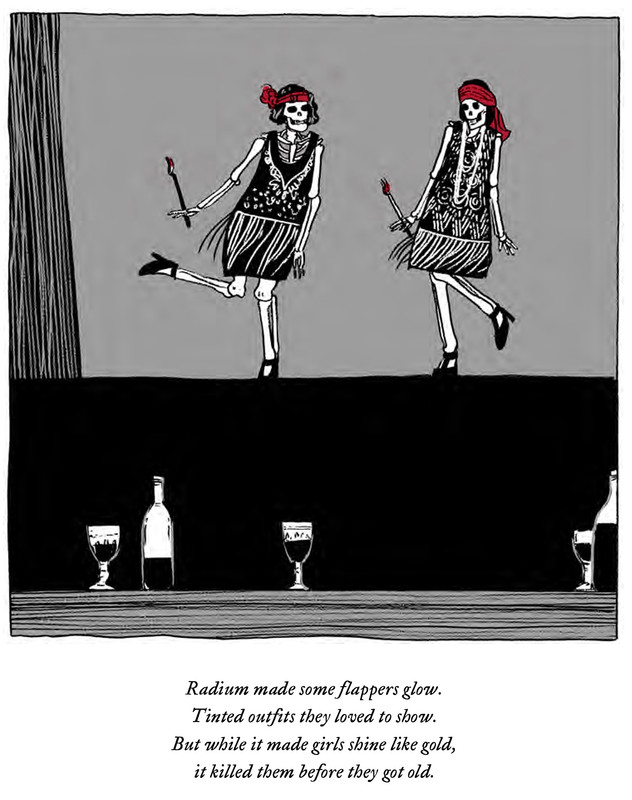
Radium’s glow makes you look hot Until your jaw begins to rot
Your fancy bra’s underwire May conduct that lightning’s ire
Are you ready to break your toes To fit into tiny shoes like those?
Dye turns dark hair pale Until your kidneys fail
Lice crawl all around your wig And that mouse is mighty big
A man lay dying in the gutter “Blame that skirt”, they heard him utter
Breathe in those toxic fumes And you’ll soon go looney tunes
Fake silky attire was a phase Until it set the room ablaze
Wear makeup laced with lead And you’ll soon look pretty dead
With plenty of opportunities to die gruesome deaths for both men and women, for wearers and makers of the often toxic or flammable items, Jennifer Wright’s quirky book is perfect for those strange and unusual kindred spirits of mine who gravitate towards equally strange and unusual books.
While I had heard of some of these torture devices and death traps disguised as clothes and accessories throughout history prior to reading this book, I hadn’t read them in such an entertaining way before. I also learned a lot more than I would have expected from a book that’s under 60 pages.
With quotes from such sources as newspapers, a magazine and a medical journal, and including citations that allow those of us who are so inclined to delve deeper, Killer Fashion is one of those books I got a lot more morbid enjoyment out of than I should probably admit.
Each fashion item is allocated two pages. One page has a paragraph ranging from a few sentences to a page of information. The opposite page has a four line poem under an almost full page illustration. Using black, white, grey and red (of course!), Brenna Thummler’s illustrations ramp up the quirky factor nicely. Skeletal flapper girls dancing on stage? Brilliant! Just brilliant!
I definitely need to read this book again and investigate some of the books referenced throughout. I’m saying this with the greatest respect to the book, its author and illustrator; this would be a perfect gift book for the weirdo in your life. I would love it if someone bought a copy for me!
Thank you so much to NetGalley and Andrews McMeel Publishing for the opportunity to read this book.
⭐⭐⭐⭐⭐
Rating: 5 out of 5.
Once Upon a Blurb
A beautifully illustrated book about deadly fashion – real historical stories of strangulation by scarves, neckbreaking high heels, and riot-causing top hats – from the author of the popular histories Get Well Soon and It Ended Badly.
Isadora Duncan was Red Put on a scarf; popped off her head Fashion is silly, thought Stein It may tear your head from your spine
A darkly comic book about some surprisingly lethal garments. Featuring stories like the untimely demise of dancer Isadora Duncan caused by her signature red scarf and the bloody riot that greeted the appearance of the first top hat, among many others, these bite-size accounts will frighten and delight. Killer Fashion includes over twenty of these short tales along with beautiful full-page illustrations. Both morbid and humorous, this book will appeal to fans of Edward Gorey and dark historical trivia.







 Schizanthus Nerd