Creature Files: Sharks – L.J. Tracosas

🦈 SHARK!!! 🦈

I’ve been fascinated by sharks ever since I first watched Jaws when I was too young to know he couldn’t come through the shower head in pieces, magically reform and attack me while I showered (true story! 🤪), so naturally this is my type of non-fiction kid’s book. There’s enough information to maintain your interest but not so much that you get bored or succumb to information overload.

It’s the sort of book I would have used for school projects in primary school and would have enjoyed reading it just for fun as well. Besides all of the cool shark facts there are plenty of quality photographs of the various sharks and the layout is eye catching. While there’s plenty to look at on each page it doesn’t look overly cluttered.

Of the over 400 types of shark, Creature Files: Sharks provides information and photographs of twenty. I personally learned a lot while reading this book and the facts below are only a snippet of what you’ll discover.

🦈 Great White Shark – My mate Bruce from Jaws is probably the most famous Great White. These sharks can have up to 300 teeth!

🦈 Bull Shark – These are the sharks most likely to attack people and have been found with strange objects in their stomachs including licence plates!

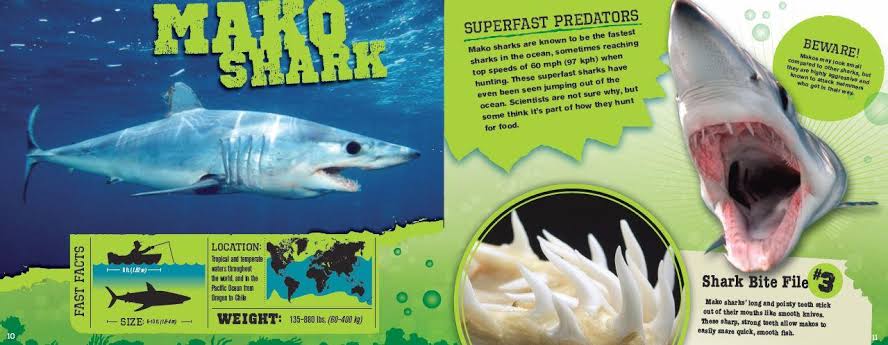
🦈 Mako Shark – The Fastest Shark award šŸ† goes to the Mako.

🦈 Sand Tiger Shark – A sand tiger shark in a New York aquarium lived more than twice as long as the average wild sand tiger shark.

🦈 Nurse Shark – Nurse sharks live at the bottom of the ocean.

🦈 Cookiecutter Shark – The bellies of these sharks glow in the dark.

🦈 Tiger Shark – Tiger Sharks have the nickname ā€œgarbage can of the seaā€.

🦈 Greenland Shark – The Slowest Shark award šŸ† goes to the Greenland Shark.

🦈 Spiny Dogfish – These sharks have been overfished and are in danger of extinction.

🦈 Lemon Shark – Their eyesight is poor so they need to rely on other senses to find food.

🦈 Sawshark – Their prey include shrimp, worms and shellfish.

🦈 Basking Shark – They form groups (schools) that can range from a couple up to 100 sharks, unlike most other sharks who are loners.

🦈 Frilled Shark – Rarely seen alive by humans, Frilled Sharks live at the bottom of the ocean.

🦈 Blue Shark – World travellers, these sharks swim about 1000 miles (1609 kilometres) each year.

🦈 Wobbegong Shark – They have flat bodies and are a type of carpet shark.

🦈 Leopard Shark – Groups of leopard sharks are social and are known to hang out with other types of sharks.

🦈 Great Hammerhead Shark – Their favourite food are stingrays but will also eat sharks, including other hammerheads.

🦈 Goblin Shark – Only 50 Goblin Sharks have been seen since they were first discovered in the late 1800’s.

🦈 Megamouth Shark – Megamouths are filter-feeders.

🦈 Whale Shark – The Largest Fish in the Sea award šŸ† goes to the Whale Shark.

Each shark file provides ā€˜fast facts’ which include the length of the shark and a picture showing the size comparison of that shark and a person (in feet and metres), how much the shark weighs (in pounds and kilograms) and a world map highlighting where it lives. I love that each shark file contains a Shark Bite that explains what that type of shark eats, what its teeth look like and for the majority of sharks an accompanying close up photo of its smile.

Included with the book are three replica teeth that kids can identify using their new knowledge and they can make a shark tooth necklace with the cord that’s also included. I would’ve loved wearing that necklace as a kid.

Thank you so much to NetGalley and Quarto Publishing Group – becker&mayer! kids for the opportunity to read this book.

Rating: 4 out of 5.

Once Upon a Blurb

Peek intoĀ the jaws of 20 of the ocean’s most dangerous predators with the next title in theĀ Creature FilesĀ series!Ā Creature Files: SharksĀ features photos, facts, and maps that provide up-close tours ofĀ some of the most terrifying sharks in the seas.

Did you know that a shark can grow over 20,000 new teeth in its lifetime? Or that some sharks will eat anything, from tiny fish to license plates from cars?

An incredible amount of information about sharks can be revealed by examining the teeth and jaws of the 20 jaw-snapping species covered here, inĀ Creature Files: Sharks. From aggressive sharks like the great white to the truly weird ones like the goblin shark, this book is packed withĀ awesome photos and fascinating factsĀ about the ocean’s most amazing predators. Ā Ā 

Three specially molded replica teethĀ are included in the front cover, so you can feel the power of a shark’s real bite – and deduce which sharks the teeth come from using your new shark-bite expertise.

This book also includesĀ a breakaway cord toĀ make your own shark-tooth necklace!Ā 

Animal Babies – Charles Fuge

āš ļø WARNING! Cuteness Overload! āš ļø

Perhaps calling it in February is a tad early but I’m calling it anyway. That’s how confident I am. I’d like to officially present Animal Babies with the award for:

šŸ† Favourite Board Book of the Year 2018 šŸ‘

If you have or know any children that are at or nearing the board book stage this needs to be on your radar. Charles Fuge has both written and illustrated this little gem. A sweet educational rhyme takes your child around the world with baby animals on land, ice, rivers and into the depths of the ocean.

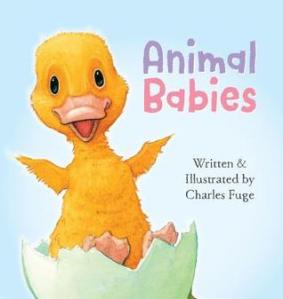
Simply looking at the front cover illustration I could already feel it coming on and by the end I had one of the most serious cases of Melted Heart Syndrome ever. I don’t think I’m exaggerating when I say that Charles Fuge’s baby animals are some of the best animal illustrations I’ve ever seen.

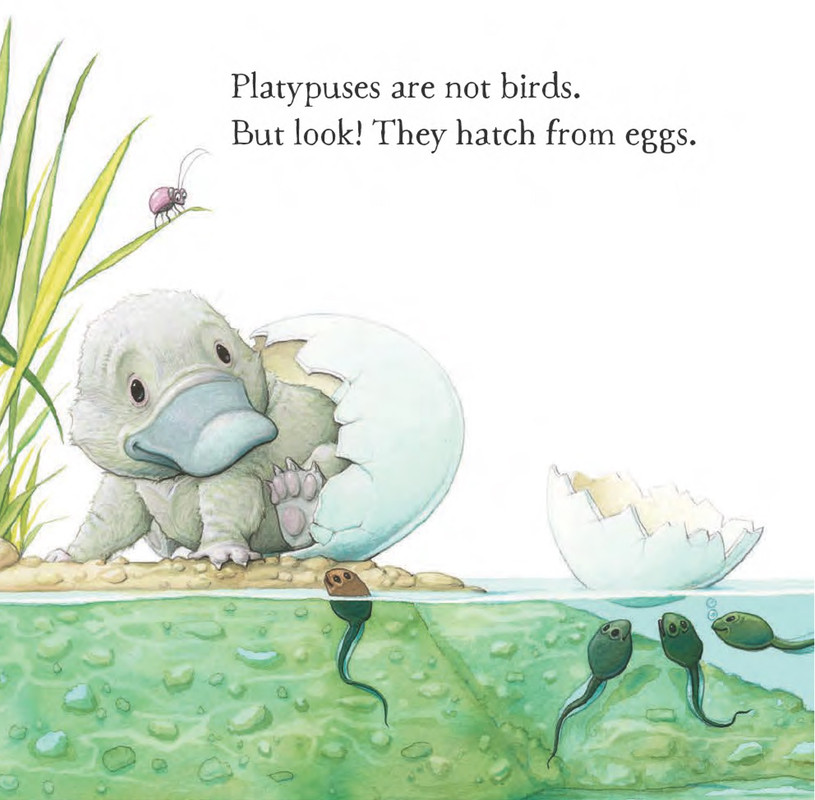
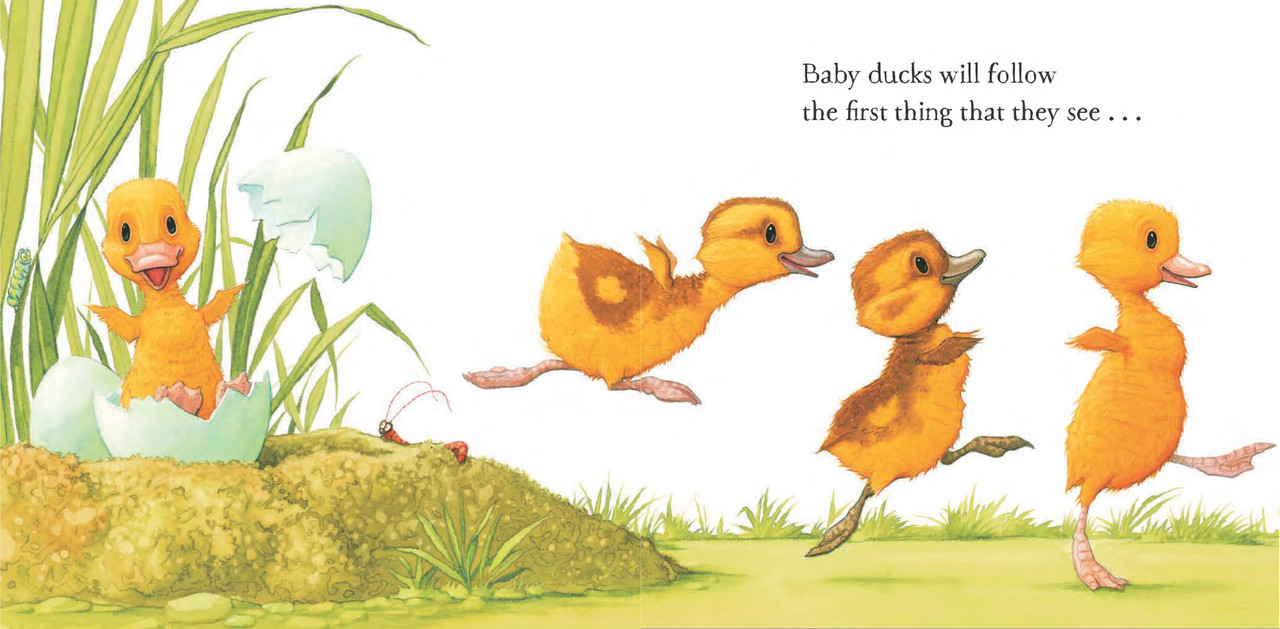
Each animal is detailed and gorgeous, from the cuddly baby bears up a tree to the cheeky meerkat babies hassling the bewildered cobra. Their expressions are varied and you can see that they all have their own personalities. Even the background and small foreground animals are captured beautifully.

My favourite is the hatching platypus that someone needs to replicate in plush toy form for kids me to cuddle.

I also need a framed print of the procession of adorable ducklings.

I don’t care that this is allegedly a ā€œchildren’s bookā€. I will be buying a copy that Mum and I will wear out together and another for my doctors’ waiting room.

Thank you so much to NetGalley and Quarto Publishing Group – MoonDance Press for the opportunity to read this book.

Rating: 5 out of 5.

Once Upon a Blurb

With simple, rhyming text and lavish illustrations by Charles Fuge, this vibrant board book explores the lives of the cutest critters in the land: baby animals!

From baby bears who feel safest up a tree and baby penguins who nest on their daddy’s feet to baby koalas who hitch a ride on their mama’s back, each spread features unlikely pairs of baby animals playing and interacting. Ducks, chimps, elephants, rhinos, meerkats, whales, and even sea horses all make an appearance to bring delight children of all ages. 

Little People, Big Dreams #10: Ada Lovelace – MĀŖ Isabel SĆ”nchez Vegara

Illustrations – Zafouko Yamamoto

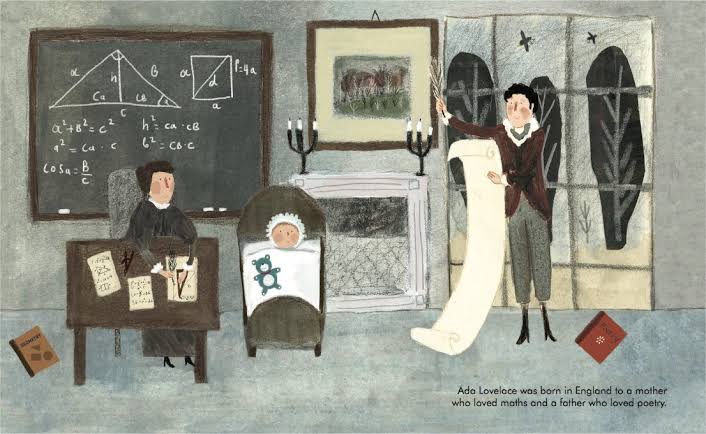
Whatever device you’re reading this review on, you have Ada Lovelace to thank for it. The child of poet Lord Byron and Lady Byron, Ada had big dreams. Although her mother tried to dissuade Ada from her passion of inventing and replace it with her own love of mathematics and logic, Ada was able to combine her mathematical talent with her dream.

She was introduced to Charles Babbage who was working on a machine that could solve maths equations quicker than people could. Ada thought she could make the machine do even more impressive things and so she worked on a code that would tell machines what to do, a code we still use today.

To say Ada was a visionary is an understatement. She became the world’s first computer programmer a century before computers were even invented!

Despite obstacles including illness and simply being a woman in the 1800’s, Ada proved that with determination and hard work, she could achieve greatness in her field. She was so ahead of her time that her work went largely unnoticed and unappreciated during her life, yet her contributions are vital to our everyday lives over 150 years after her death.

If Ada has something to teach us besides girl power, it’s that you should follow your dreams and not allow anyone to squish them.

This is only the second book I’ve read in the Little People, Big Dreams series. There’s enough information in them for kids to learn about the basics of the person they’re reading about’s life and their contributions to our society but not so much that they’re bogged down with dates and boring bits.

The illustrations are interesting and have a childlike quality to them but I would have preferred there to be more bright colours and for the peoples’ faces to be more expressive.

While I would have used books like this one for school projects, it wouldn’t have been the type of book I would have chosen at the library to read for fun. I was all about Roald Dahl with his wacky and whimsy worlds and cared little for non fiction, but that’s just me. I definitely appreciate this type of book now and can see how it would have inspired me to want to follow my dreams had I read it as a child.

Thank you so much to NetGalley and Quarto Publishing Group – Frances Lincoln Children’s Books for the opportunity to read this book.

Rating: 3 out of 5.

Once Upon a Blurb

Meet Ada Lovelace, the British mathematician and daughter of poet Lord Byron. Part of the beloved Little People, Big Dreams series, this inspiring and informative little biography follows the colorful life of Lord Byron’s daughter, from her early love of logic, to her plans for the world’s first computer program. 

As a child, Ada had a big imagination and a talent for mathematics. She grew up in a noble household in England, where she dedicated herself to studying. Her work with the famous inventor, Charles Babbage, on a very early kind of computer made her the world’s first computer programmer. This moving book features stylish and quirky illustrations and extra facts at the back, including a biographical timeline with historical images and a detailed profile of the mathematician’s life.

Little People, Big Dreams is a best-selling series of books and educational games that explore the lives of outstanding people, from designers and artists to scientists and activists. All of them achieved incredible things, yet each began life as a child with a dream.

50 Wacky Things Humans Do: Weird & Amazing Facts About the Human Body! – Joe Rhatigan

Illustrations – Lisa Perrett

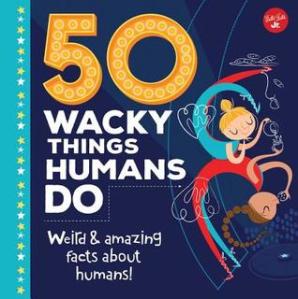
I’m all about the weird and the wacky, so between this book’s title and the cover illustration I was in! 50 Wacky Things Humans Do is such a fun book! Suitable for children and adults alike, this quick read is entertaining and informative (and yes, you will learn about farts and snot). Joe Rhatigan’s book gives plenty of answers to questions you won’t admit you didn’t know the answer to … until now!

  • Why do your fingers and toes get wrinkly when you’ve been in the pool for a long time?
  • What causes brain freeze?
  • Why can’t you tickle yourself?
  • Why do bruises change colour?
  • Why does your nose get stuffed up when you cry?

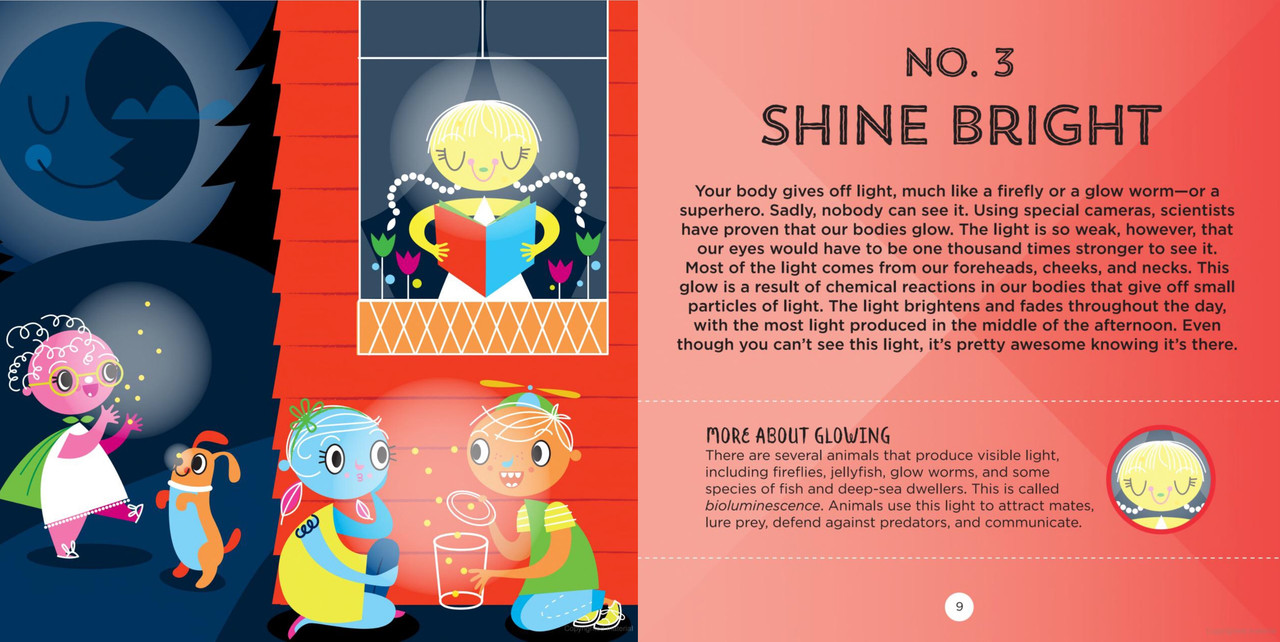
Each wacky thing is explored over two pages, one with just enough information to make it seem as though you’re smarter than you really are and the other with quirky illustrations by Lisa Perrett. The facts are suitable for impressing your friends with, and some that will gross them out. You’ll gain a whole new appreciation for how extraordinary your body is.

Lisa Perrett’s illustrations are wonderful. With bold colours and humour, Lisa brings the facts to life. Her people and animals are very expressive, as are the sun and moon, and plenty of the images are giggly worthy. There are such delights as fart clouds, irritable knees and a completely adorable teddy bear.

Fact of the day:

ā€œyour brain can perform 38 quadrillion operations per secondā€

For those unfamiliar with quadrillions, that looks like 38,000,000,000,000,000. That’s a lot of zeroes!!!

I’d love to receive this as a gift book and it needs to be in public and school libraries. It’s the kind of book I’d have fun sharing with a child, using it to teach them about how remarkable their body is and to trick them into learning some cool anatomy facts. The only downside of this book was that I was enjoying myself so much that I wanted to learn more than 50 wacky things.

Thank you so much to NetGalley and Walter Foster, Jr., an imprint of Quarto Publishing Group for the opportunity to read this book.

Rating: 5 out of 5.

Once Upon a Blurb

50 Wacky Things Humans Do describes 50 weird, wild, and unbelievable things the human body is able to do. Science has never been so much fun!

Did you know that when you sneeze it rockets out at over one-hundred miles per hour? How about that the average person sheds about five hundred million skin cells every day? What about the fact that most of the cells in your body are not even human?!

50 Wacky Things Humans Do gives you the dirt on 50 unbelievably weird things about the human body that seem too crazy to be true, but are! Whether amazing, silly, or just plain gross, these peculiar and fascinating things about the human body will surprise and delight fun-fact lovers of all ages.

Inside Out T. Rex – Dennis Schatz

I’ve now read all four books in the Inside Out series and if I was a parent I’d be buying the whole set for my kidlets. Between the die-cut models, the photos and illustrations, and the interesting information that makes you feel like you aren’t even learning, I’d have them on hand to read for fun and for use in school projects. And between you and I, I can imagine some pretty mighty die-cut model battles being fought between T. rex, the shark, the skeleton and the mummy in between reads.

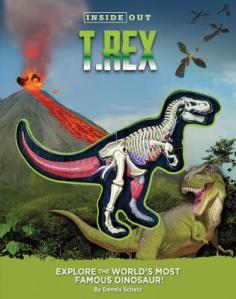
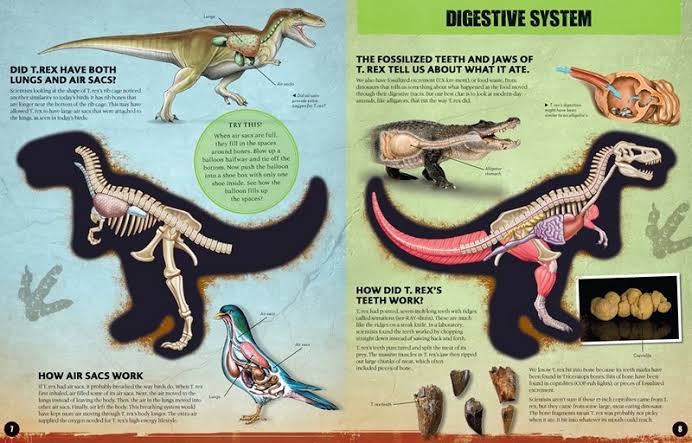
This book gives readers an introduction into what scientists know about T. rex based on the fossils that have been discovered so far and based on their knowledge of other animals’ systems, how they figure out what T. rex may have looked like and behaved.

With photos of fossils and plenty of illustrations, we learn about T. rex’s skeletal system and how scientist believe its other systems may have worked, including its cardiopulmonary system, digestive system, reproductive system, nervous system, muscular system and dermal system.

  • We may never know why T. rex had such short arms but we know they were too small for them to feed themselves with.
  • Scientists believe birds are the closest relatives of dinosaurs so look at how birds’ bodies work to make hypotheses about dinosaurs.
  • The T. rex may have had a digestive system similar to an alligator.

Assistance with pronouncing difficult words such as ā€œserrations (ser-RAY-shuns)ā€ are included. My favourite illustration is of a baby dinosaur curled up inside its egg. Aww!

Although we may never know the answers to some of our questions about T. rex this book gives its readers plenty of examples of how scientists work out what the most likely answer is based on current knowledge. Even if questions remain, T. rex will always be the coolest dinosaur!

Thank you so much to NetGalley and Quarto Publishing Group – becker&mayer! kids for the opportunity to read this book.

Rating: 4 out of 5.

Once Upon a Blurb

The Tyrannosaurus rex has long been hailed as the king of the dinosaurs, but what do scientists really know about this prehistoric creature?

Inside Out: T. Rex offers clues to understanding the most compelling and mysterious dinosaur of them all. Loaded with awesome illustrations and captivating text, a die-cut model within the book’s pages will take you inside T. rex’s body to reveal, layer by layer, how these giant beasts lived more than 65 million years ago.

Each page will bring you deeper into the world of the Tyrannosaurus rex, and show how its specialised anatomy, from its razor-sharp teeth to its massive size, established it as the top of the prehistoric food chain.

Look for Ladybug in Plant City – Katherina Manolessou

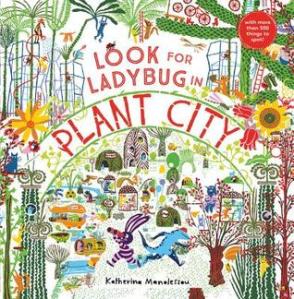
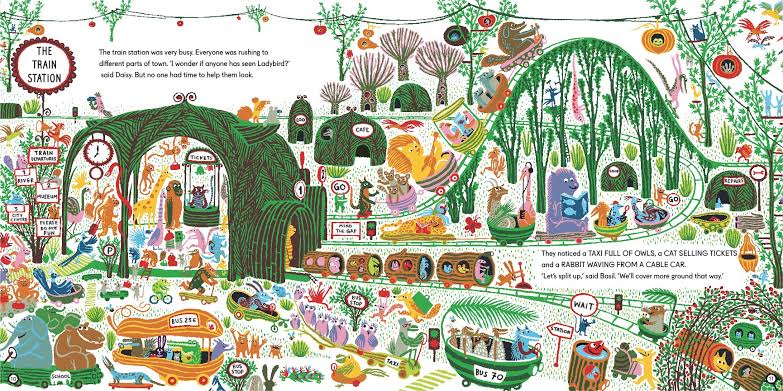
Daisy’s pet Ladybird has decided to play a game of hide-and-seek. Daisy enlists the help of the best detective in Plant City, Basil, to help find him. They search the school, train station, museum, fun fair, restaurant, garden centre, a concert, hospital, riverbank and market. Along the way they find many other animals doing fun activities including a skateboarding crocodile and items such as a picture of a pineapple.

The illustrations were colourful and jam packed with activity. Kids will enjoy spending time searching the pages for animals doing cute and funny things. This book is the first in a planned series and it definitely has potential but I think it could have been more interactive.

I had expected the book to ask the reader/seeker to find more things. As the front cover boasts that there are over 500 things to find I was surprised that each scene only required on average three things to be found. Perhaps additional items to find could have been listed at the back of the book, along the lines of, ā€œWell done! You’ve found Ladybird and some of the residents of Plant City. Can you also find ā€¦ā€ and then maybe list some more things to find in each scene.

I know kids can find their own items in the scenes and adults can ask a kid if they can see something but most of the fun of this sort of book is having a big list of items to find and then having the satisfaction of knowing where everything is in each scene.

While I liked the style of the illustrations there were a few animals I couldn’t identify. I’d be able to work around this with a child by asking them to find an animal of a certain colour doing a particular activity. I also would have liked a final page where Daisy and Basil actually find Ladybird. As it stands, Daisy wants to cry because she misses her pet so she and Basil try silly hats on to cheer themselves up so the story itself finishes on a bit of a downer.

Helpful Hint: Just because Daisy and Basil can’t find Ladybird in each scene doesn’t mean you won’t be able to find him.

Thank you so much to NetGalley and Quarto Publishing Group – Frances Lincoln Children’s Books for the opportunity to read this book.

Rating: 3.5 out of 5.

Once Upon a Blurb

Daisy’s pet ladybug goes missing, so she visits super-sleuth Basil, the best detective in Plant City. Can he help her find Ladybug? Follow Daisy and Basil as they look for Ladybug all over Plant City.

Is he in the museum, the carnival, the train station, the school, the concert or the restaurant? Witty, colorful, illustrations packed with visual jokes and plenty of wild things to spot in the background will delight children of all ages.

Inside Out Sharks – David George Gordon

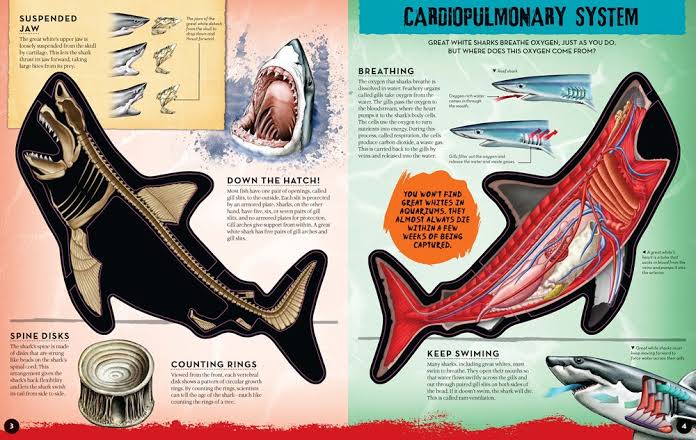
I’m really enjoying the bite sized chunks (sorry!) of information in this Inside Out series. This book provides interesting facts about sharks’ skeletal system, cardiopulmonary system, reproductive system, digestive system, liver, sensory/nervous system, muscular system, and dermal system.

Did you know that the disks in a shark’s vertebrae have growth rings? You can tell the age of a shark by counting the rings, just like you can with trees.

ā€œFemale blue sharks can have litters as large as 135 pups!ā€

Some of the more interesting items found in the stomachs of captured sharks include a cuckoo clock and a suit of armour.

Ever since Jaws taught me to be afraid to go back into the water I’ve been fascinated by sharks, especially Great Whites. Hey, did you know Great Whites can live 70 or more years? When I first saw Jaws he was the most terrifying thing I could imagine. After watching my mate Bruce rip people to pieces I was convinced he had the power to come out of the shower head in pieces and magically reform before my eyes before he ate me while I showered. I was under 7 at the time and had a marvellously detailed imagination.

Like the Egyptian Mummy book I’ve already read in this series I loved the layout of the pages, with a nice balance of text, illustrations and photos. I also personally appreciated the pronunciation help with more difficult words such as ā€œelasmobranchs (i-LAZ-muh-branks)ā€, the group of fish sharks belong to.

While my journey through this book wasn’t in 3-D as I received a digital copy, I can imagine how much fun a kid in my life would have learning about sharks while playing with the interactive die-cut model, if they managed to pry it out of my hands first. I would have loved using this as a resource for a school project or reading it for my own enjoyment. While aimed at kids aged 8 and above, adults will also enjoy learning more about these awesome creatures.

Thank you so much to NetGalley and Quarto Publishing Group – becker&mayer! kids for the opportunity to read this book.

Rating: 5 out of 5.

Once Upon a Blurb

Journey inside a shark and live to tell the tale! With Inside Out: Shark, you’ll take a three-dimensional tour through a different sharks to learn about the unique bodies of these eating machines! 

Sharks are some of nature’s largest and most ancient creatures on the planet. This is your chance to learn how they move, how they work, and tons of facts about how they live. Inside Out Sharks brings you all of this information and a whole lot more!

Why are shark eggs called ā€œmermaid pursesā€? What in the world are ā€œskin-teethā€? Do sharks deserve the nickname ā€œman-eaterā€? Find the answers to these questions and more in this action-packed book, which dives deep under the surface to explore the world of these astounding animals.

From the eerie goblin shark to the wide-eyed hammerhead to the most feared shark of them all, the great white, see the world from a shark’s-eye-view – and get an in-depth look at these most mysterious and misunderstood predators. 

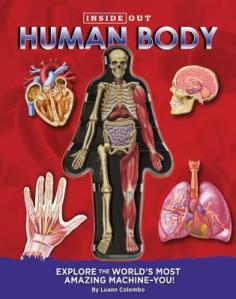
Inside Out Human Body – Luann Colombo

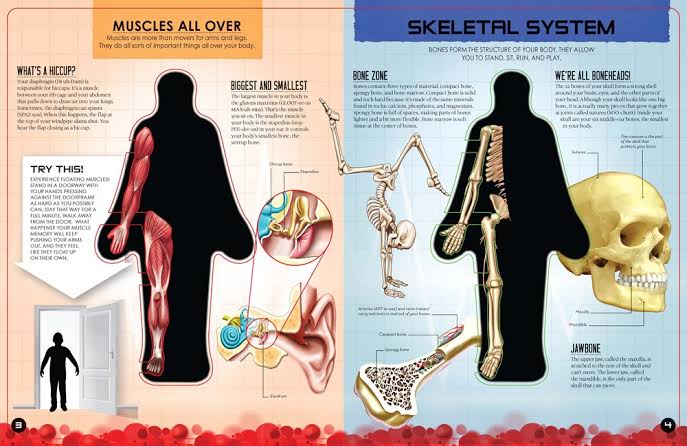
Did you know that your right lung has three lobes (or regions) and your left lung has two?

Or that you take about 20,000 breaths each day?

A layered human body model accompanies text, photos and illustrations that provide an introduction to some of the amazing things the different systems in our bodies do to keep us healthy. We often don’t think about these processes until something goes wrong but the fact that all of these systems work together in the first place is a marvel.

This book gives the reader information about our muscular system, skeletal system, joints, digestive system, urinary system, respiratory system, and nervous system. Pronunciation tips for more advanced words like ā€œpulmonary (PUL-muh-nare-ee)ā€ are provided and there are some simple experiments kids can do to demonstrate what they’re learning, such as looking at the underside of their tongue in a mirror to see their blood vessels (veins are blue, arteries are red).

One particular photo of a blonde girl with a cast on her right arm made me laugh even though it wasn’t intended to be funny. Someone’s obviously told her she needs to look super sad for this photo and she’s got one of the cutest frowny faces I’ve seen. Imagine you’ve just taken a bite out of a lemon and your mouth is drawn down so far that your chin gets that wrinkly, puckered look. That’s her.

While I didn’t find this book as engaging as the Sharks or Egyptian Mummy titles in this series it’s still an interesting read, is well set out and would be a useful school project resource.

Thank you so much to NetGalley and Quarto Publishing Group – becker&mayer! kids for the opportunity to read this book.

Rating: 4 out of 5.

Once Upon a Blurb

What do you think is the most amazing machine in the universe? A superconductor? The modern computer? A rocket ship? Think again: It’s the human body!

Astonishingly intricate and complex, your body grows, heals itself, and performs a mind-boggling number of complex functions all at the same time! Discover the amazing human body, system by system and layer by layer, in this fascinating book.

Inside Out: Human Body takes you on an incredible journey through the powerful muscular system, the “bone zone,” the long and windy road of the digestive system, the blood-pumping circulatory system, the forty-seven-mile long nervous system, and beyond! A unique layered model of the human body serves as the center point of each section, revealing key body parts and functions, while entertaining and informative text explains how the body works.

Each section is fully illustrated with colourful diagrams and includes fun, interactive lessons for you to try yourself. You can learn how to take your own pulse, how to make your arms float, and even what the color of your urine means! Sometimes the most incredible wonders are right under our noses.

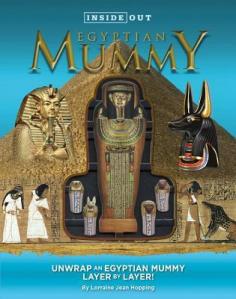
Inside Out Egyptian Mummy – Lorraine Jean Hopping

Did you know that the Egyptian mummy-making process took 70 days? Or that 15 of those days were needed to wrap the mummy?

I’ve been an Egypt nerd for most of my life. I learned so many new facts while reading this book and it’s ignited the need to learn more. I would have done some serious drooling over this book as a kid. My Nan and I shared our fascination of Ancient Egyptian culture, beliefs and customs, and for a time I was sure I was going to be an archaeologist when I grew up.

I read books and more books about Egypt. When we got to choose our own topic for a project in primary school I chose Ancient Egypt. That project is still sitting in a box in the garage, pulled out and leafed through from time to time when nostalgia finds me. I had a silver necklace I wore throughout high school with a Nefertiti bust charm on it. I laboured for months over a detailed Tutankhamun burial mask cross stitch for my Nan and although she was an incredible artist, she removed one of her paintings from the living room wall and hung my framed present in its place. My Nan was totally awesome!

I loved that this book takes you on a journey through the mummification process that is appropriate for children (it’s recommended for ages 8 and above), but it is also interesting enough to hold an adult’s attention. Just some of the snippets of information I enjoyed coming across while reading include:

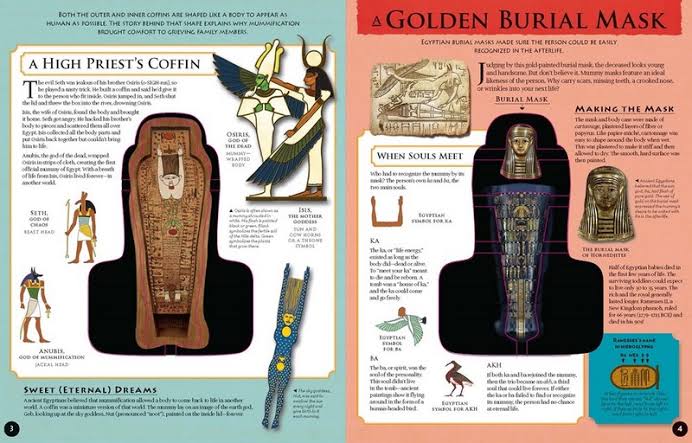
  • What images were on the inside of coffins and why
  • Who the first Egyptian mummy was
  • Where we get the English word mummy from
  • What determines whether you read hieroglyphs from left to right or right to left
  • What different colours symbolised in Egyptian culture.

While there were plenty of photos and illustrations interspersed with the text, the layout didn’t feel cluttered. The copy I read was digital so I haven’t seen the final die-cut model but from the photos throughout the book I can imagine it would help bring what you’re reading about to life. I’m also quite proud to be able to tell you that I now know how to write my first name in hieroglyphs thanks to this book.

Thank you so much to NetGalley and Quarto Publishing Group – becker&mayer! kids for the opportunity to read this book.

Rating: 5 out of 5.

Once Upon a Blurb

Calling all explorers and archaeologists!  Inside Out: Egyptian Mummy  comes with everything you need to start an Egyptian adventure, from discovering a tomb to unwrapping a mummy.

Though the ancient civilization of Egypt may be long gone, itsdead still have secrets to tell. From the myth of Isis and Osiris, to King Tut’s tomb, to the intricacies of preparing the body for its underworld journey, Inside Out: Egyptian Mummy takes you step by step into a tomb. Get a fascinating glimpse into how an ancient culture saw death and the afterlife beyond.

That isn’t all though! Alongside beautiful illustrations and photographs, an interactive die-cut model reveals the many rites of the Egyptian tomb. You will be amazed by everything from the iconic golden burial mask, to the lucky amulets the dead were buried with, protective linen wrappings, and even the mummified body and preserved sacred organs. And when it comes to hieroglyphics, hidden burial grounds, and missing treasure, there’s always more to uncover, so get your start now, who knows where your journeys will take you! 

Girl Talk – Lizzie Cox

Illustrations – Damien Weighill

Girl Talk is a wonderful guide for young girls that takes them through what happens to their body and mind as they go through all of the joy and drama that is puberty. I would have devoured this book growing up if it had been available back in the olden days. It includes a couple of case studies and the answers to some of the more common but often embarrassing questions young girls need to know.

This book covers a wide range of topics:

  • What puberty is
  • Why it happens and how it affects the outside of your body as well as your brain
  • Individual sections with information about breasts, bras, periods, body hair, pimples and skin care, eyes and teeth, body odour and personal hygiene, feet
  • The stages that boys’ bodies go through during puberty
  • Love and relationships
  • Sex and how babies are made
  • Contraception
  • Healthy eating and fitness
  • Body image
  • Body shaming
  • Social media and phones
  • Cyberbullying
  • Bullying and peer pressure
  • School life
  • Sexism and gender equality
  • Family talk
  • Depression
  • Growing up happy.

One of the things I love about this book is how it keeps telling its readers that what they’re experiencing is completely normal and that they’re OK!

  • One of your breasts is bigger than the other? Normal!
  • You like boys, you like girls, you like both, you like neither? Totally OK!
  • You don’t know how to tell if a bra fits you correctly? Here’s a checklist!
  • Not ready to have sex yet? Then don’t!

The writing style is engaging. While Lizzie Cox never forgets who her target audience is, she also doesn’t talk down to the girls who’ll be reading this book. Her writing style is very down to earth so no topic feels sensationalised and there’s no drama. It’s all just good common sense advice. She also consistently encourages girls to talk to a trusted adult for information and advice if they’re worried, scared or have questions. The illustrations by [author: Damien Weighill] are age appropriate, humourous and quirky at times but in good taste.

The helplines provided towards the end are UK specific and the target audience is listed as 8 to 11 year olds.

When puberty hit me I was best friends with a few extraordinarily sheltered girls from church families. I have nothing against church families but these ones in particular had their daughters so embarrassed about anything to do with their bodies that the girls wouldn’t even use the word breasts in conversations. They were referred to “up top”. Interestingly hypocritical though, one of the families had no problem at all with their 13 year old daughter that couldn’t name her body parts dating a 20-something creepy, slimy leprechaun (sorry to all the leprechauns out there for disparaging your good name!).

Needless to say these girls, while lovely, weren’t the most useful buddies to talk birds and the bees with, so my education came mostly through sneaking short reads of Derek Llewellyn-Jones’ 1971 Everywoman when my parents were out or hoping that someone had written in (using actual paper, an envelope and postage stamp) to Dolly Doctor asking one of my burning “Am I normal?” questions. For those of you that didn’t grow up in Australia, reading Dolly magazine was one of those girl rites of passages for those of us growing up in the pre-2000’s and still exists today.

I’d recommend this book for parents to give to their young girls, either for them to read alone and ask questions at the end or to go through together. It would certainly make it easier for parents to discuss topics that they may not be overly comfortable explaining to their daughter. It would also be a great addition to public and school libraries, and during school sex ed classes. There’s also a companion book by the same author and illustrator called Guy Talk which I haven’t personally read but if it’s anything like this book I would recommend it by association.

Thank you very much to NetGalley and Quarto Publishing Group – QEB for the opportunity to read this book.

Rating: 5 out of 5.

Once Upon a Blurb

From puberty to relationships, social media to school, this essential guide for girls growing up covers everything you have always wanted to know but were afraid to ask. Growing up can be hard and, at times, embarrassing. This funny yet sensitive book is here to offer practical advice and helpful information to help make growing up just that little bit less scary. Covering daunting but important subject such as personal hygiene, different types of bulling, relationships, and how to stay safe online, this book features case studies and questions from “real-life” anonymous readers to explore those embarrassing questions you don’t want to ask! Written by a former teen magazine editor and with funny illustrations and diagrams throughout, this is the go-to guide for any girl going through or approaching puberty.