Family doesn’t exist, I told myself. Not for people like me, anyway.
Cari has spent her life being bounced from one foster home to the next, never staying in one place long enough for any to feel like family. Now sixteen, her latest placement is with Dawn and Jacky, an elderly couple from Ballybaile, Northern Ireland who are “seasoned God-botherers”.
Three months into this placement Robin Merrow, a boy from Cari’s school, goes missing. The local rumour mill is having a field day, particularly Jessica and “the God squad”.
Cari has been spending time with Jessica and her Youth Fellowship friends at the urging of her foster parents but she’d much rather be hanging out with Stevie B., Brains and Muff, who relieve some of Cari’s boredom with actual fun. Jessica’s friends were mostly interchangeable to me but I really liked Brains.
The people in the town seemed to forget all about Robin’s disappearance after a while and while I did eventually learn a summary of his story, none of its content was really dealt with. While several social themes are touched on in this book, most don’t get a great deal of page time, such as when a character suddenly blurted out something huge about their past.
The blurb is accurate to a point, although the book ended up veering off into an entirely unexpected direction. Had I had any indication that a major plot point would focus on the intersection between homosexuality and Christian faith I may have steered clear.
To be fair, some characters in this book are not judgemental and others are well intentioned but naive. However there are also those who wander into conversion therapy territory. Sadly these conversations are quite realistic; I have heard eerily similar accounts from friends whose churches attempted to ‘heal’ them of homosexuality. With a reasonable amount of this story taking place around church activities I enjoyed Cari’s perspective as an outsider.
I identified with Cari’s feelings about foster care and would have liked to have seen this explored further. Her foster mother, Dawn, is firm but caring and Jacky, her foster father, is essentially a teddy bear. I adored Jacky. Cari fairly consistently doesn’t come home when she’s supposed to and they know she’s not truly sorry when she apologises, yet they still decide they need to trust her more by converting the garage into an apartment for her. This didn’t ring true for me. Having had my own experience with a Christian foster family that were of the ‘do as I say, not as I do’ persuasion, I appreciated Dawn and Jacky’s genuineness, but they did seem too good to be true.
Thank you so much to NetGalley and Atom, an imprint of Little, Brown Book Group, for the opportunity to read this book.
⭐⭐⭐⭐
Rating: 3.5 out of 5.
Once Upon a Blurb
‘Be nice to the majority of people and they won’t bother you much. Don’t get too involved. Have a laugh but keep your distance.’
These are the words 16-year-old Cariad lives by. She’s just been placed in yet another foster home, this time with an elderly Christian couple in a small town off the coast of Northern Ireland.
Cariad knows how to play this game. She’ll toe the line just enough that her new foster parents don’t ask what she gets up to when the sun goes down, just enough that they leave her alone. It’s easier that way.
But when a boy at school disappears – presumed dead – and no one seems to care, it really bothers her. Then one night out walking on the clifftops, she sees him and he asks her to keep his secret.
‘Don’t get too involved. Have a laugh but keep your distance.’
These are the words Cariad has lived by … until now.
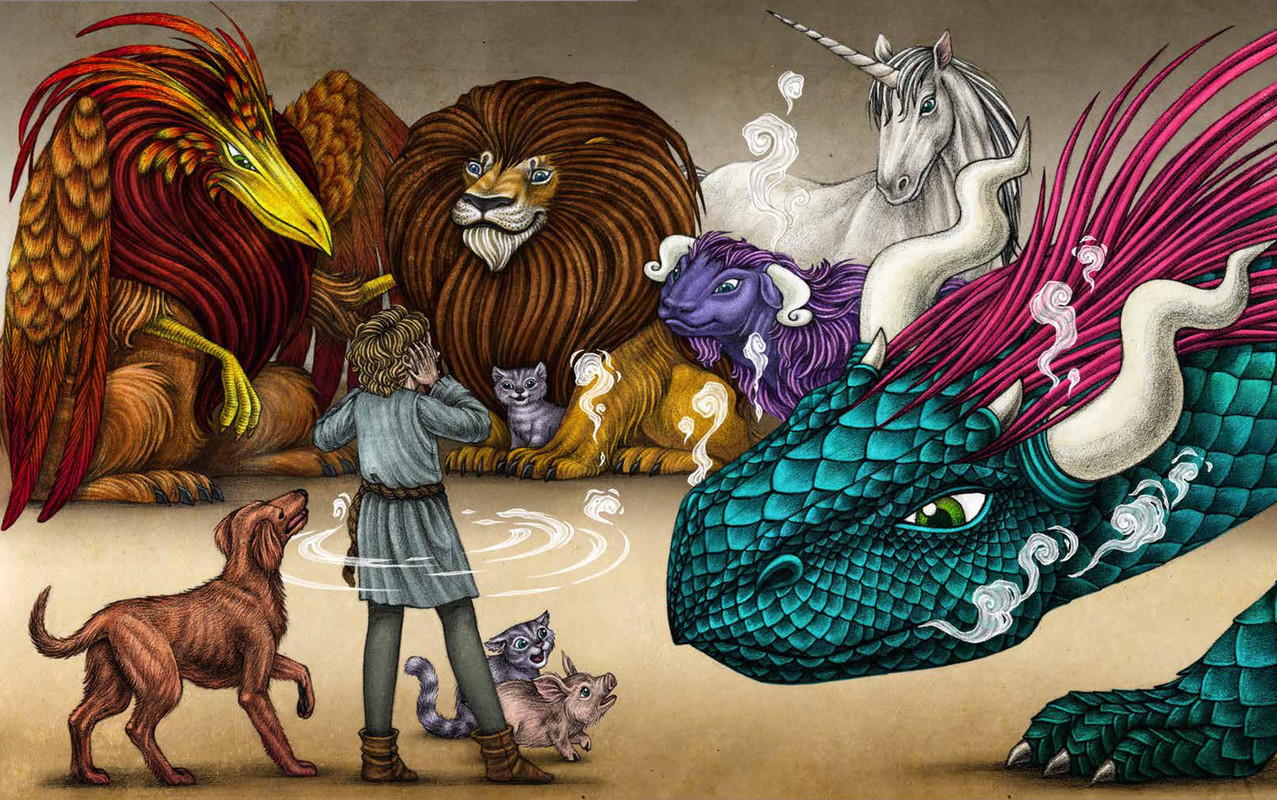
Godfrey, the son of peasant farmers, is distracted from his chores by the Book of Beasts, which an artist is working on for the lady of the castle. As he pages through the book he imagines the adventures of a “mighty hero, a bold knight … why, Sir Godfrey the Glorious, of course!”
While Godfrey goes about his chores he tells the animals about Sir Godfrey’s adventures, unaware of the chaos that begins to unfold as he names each of the beasties in the book.
I knew I needed to read this book solely because of April Lee’s incredible illustration of the dragon on the front cover. Over the past couple of months I’ve read this book at least four times but each time I finished reading I couldn’t decide what I wanted to say about it. While I am in awe of the detailed drawings of all of the beasties and know I would have been drawn to the colours of the griffin, bonnacon and dragon as a child, I don’t think child me would have really enjoyed this book.
I found the details at the end of the story about life in an English castle and the different beasts interesting but am certain I would have bypassed this information if I’d read this book as a child as my interest in history and mythology didn’t make themselves known until I was an adult. I was distracted by the text within the scrolls, which didn’t seem necessary as the illustrations clearly told those components of the story.
This book was inspired by Book of Beasts: The Bestiary in the Medieval World, an exhibition at the J. Paul Getty Museum in Los Angeles.
Thank you so much to NetGalley and Getty Publications for the opportunity to read this book.
⭐⭐⭐⭐
Rating: 3.5 out of 5.
Once Upon a Blurb
Godfrey, a peasant boy who works for the lord and lady of the castle, finds a bestiary, or illustrated book of beasts, on the way to do his chores one morning. He begins inventing his own story, placing “Sir Godfrey” at the center of numerous heroic deeds.
Sir Godfrey battles a lion, tames a unicorn, defeats a griffin, conquers a bonnacon, and triumphs over a dragon. Godfrey does not realise that each time he says the name of an animal, it magically emerges from the book, causing mayhem and inadvertently accomplishing his chores. The laughs pile up and the tension mounts: When will Godfrey realise that all this outrageous stuff is going on?
This book also contains engaging backmatter with information on life in the Middle Ages and a mini-bestiary drawn from original 13th-century manuscripts. Don’t Let the Beasties Escape This Book! is a humorous introduction to the medieval world.
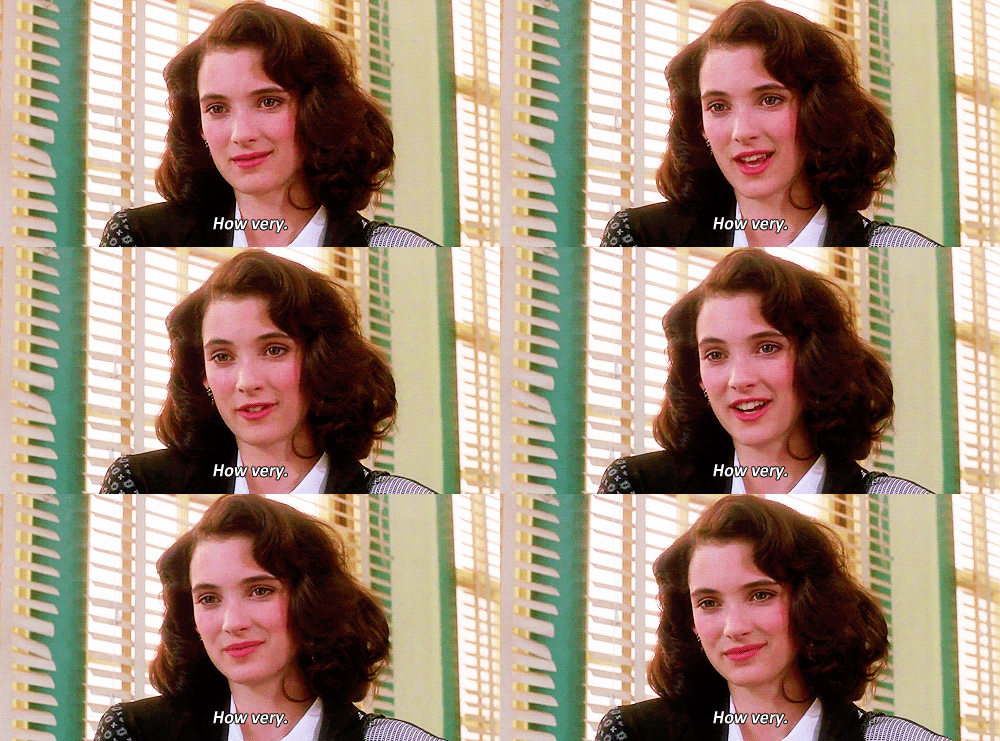
I gave myself some homework to complete before I would allow myself to pick up this book. I watched Heathers for the first time and it really helped having it fresh in my mind when I began reading. I understood references that likely would have whooshed over my head unnoticed otherwise and having just watched a revenge fantasy story, I had some idea of what was to come.
No one knows what she can do. No one has ever known.
Lottie and Stevie have been best friends all their lives. Stevie spends so much time at Lottie’s house she’s practically family and Lottie’s mother, Rhonda, is like a second mother to her. Lottie is a bookworm and Stevie loves movies (primarily those made between 1975 and 1995) so much that she’s had her own YouTube channel, FlickChick, since she was twelve.
Woepine High is like every other school: there’s a hierarchy.
The popular kids in their year have an undisputed leader – Athlete Barbie, A.K.A, Breanne. Then there’s Paige, Breanne’s “second in command”, and Paige’s boyfriend, Aidan. Lottie and Stevie have recently and quite accidentally become friends with them.
Some kind of wall went up when we started hanging out with all of them, and I’m not sure where the door is.
When a series of events results in Stevie being relentlessly bullied by ex-friends, other students and even complete strangers, her entire world comes crashing down and she has no one to turn to. Except Dee, the new girl.
“It’s people like us against the world, Stevie.”
Dee, who understands what Stevie’s going through. Dee, who decides it’s time the bullies were taught a lesson. Anonymously, of course. Each prank is accompanied by a message written in red lipstick: “LOVE, HEATHER”, an homage to teen revenge movie Heathers.
These acts of “mischief” soon take on a life of their own. The stakes are raised exponentially, with creative and sometimes brutal acts of revenge being played out across the school and beyond. What began with bullies being targeted becomes something where it’s harder to draw a line between bully and victim.
I mean, it’s hard to know who to root for, isn’t it?
I’ve agonised about what to write in this review for a couple of days. There was so much I loved about this book but there were also a couple of key points in the story that didn’t ring true and/or disappointed me. Please keep in mind that while yes, I had some niggles, that doesn’t necessarily mean you will agree with me.
After establishing the history of Stevie and Lottie’s friendship and Stevie’s sudden social pariah status, I felt this book then took off like a rocket. I was immersed in the acts of revenge and am fairly certain teenage me would have imagined some creative vigilante themed fantasies if I’d read this book then, much like when I conceived (but never acted upon) my own versions of poetic justice as I cheered Matilda on from the sidelines. Revenge fantasies are always fun, with their drama and the opportunity to cheer on underdogs.
If nothing else, this book reinforced my gratitude that I didn’t grow up surrounded by social media. Bullying is horrific enough when it’s physical and/or verbal. I can’t even imagine how the effects are compounded now that it follows you into your home, on your phone and spreading like a virus on the internet, where strangers can add fuel to the fire. Besides bullying, this book also delves into other complex and emotionally charged areas, including rape culture and gender identity.
Because I’m old now I have seen, or at least knew the general plot of, most of the movies referenced in this book but I’d be surprised if most young adults would have heard of the majority of them, unless their parents have introduced them to the movies they themselves grew up with. The lack of familiarity with these movies could potentially lead to the target audience not understanding some of the references to them in this book.
I found Lottie and Stevie’s friendship relatable and empathised with Stevie as she was bombarded with bullying and dealing with isolation. I ached for her as she was consistently let down by her parents. I kept wanting to read more about Pete and couldn’t decide if I was more interested in having them as my friend or teacher. I had problems with the character of Dee but can’t be specific because … spoilers.
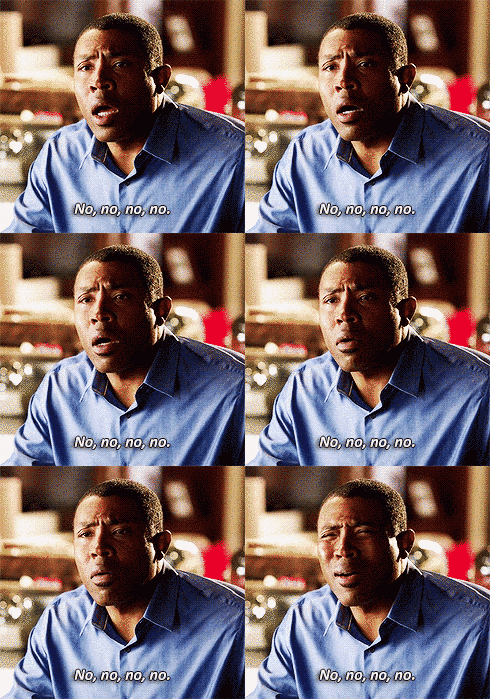
I really enjoyed the majority of this book but I had a couple of fairly significant problems with it. When I got to the twist, my reaction pretty much mirrored this:
(Yes, I am binge watching Hart of Dixie at the moment.)
Variations of this particular twist have been done so many times before in so many other books and movies. Because I’ve come across it too many times I’m desensitised to it and I expect I probably even have a bias against it now. It would take something remarkable to occur in conjunction with that particular twist for me to not groan or roll my eyes when I encounter it. My main problem with that twist being in this book was that the psychology of it just didn’t sit right with me. However, to partially undo this entire paragraph, I need to acknowledge that because this book’s target audience are young adults, (i.e., not me) this may well be the first time some readers encounter this particular brand of twist and I hope they are blindsided by it.
My biggest problem with this book was its ending. It felt rushed and too neat. All things considered, the consequences seemed minimal and peoples’ responses to the character in question were too easy. After spending sufficient time setting up the important aspects of the friendships, bullying and pranks, the finale fizzled for me. This was quite a dark book in places and the end felt much too polite. Where was the rage and all of the other complicated feelings that would be expected after what happened?
Sidebar: Had I known before reading this book that Lottie and Stevie had exchanged best friend necklaces I would have called the demise of their friendship immediately, without even reading the blurb. Those curses that came in the innocent forms of hearts that declare you’re ‘BEST FRIENDS’ and break in two so you each get half of the words and heart were the present when I was growing up but whenever anyone I knew shared them, they wound up having a massive, often irreparable, fight shortly afterwards. You may think that this is mere coincidence or paranoia talking but I kid you not: those cutesy charms have some sort of friendship voodoo attached to them! Exchange them with extreme caution! 😜
Thank you so much to NetGalley and Crooked Lane Books for the opportunity to read this book.
⭐⭐⭐⭐
Rating: 3.5 out of 5.
Once Upon a Blurb
Award-winning author Laurie Petrou makes her YA debut with this atmospheric thriller exploring the addictive pull of revenge.
What you see isn’t always what you get.
Stevie never meant for things to go this far. When she and Dee – defiant, bold, indestructible Dee – started all this, there was a purpose to their acts of vengeance: to put the bullies of Woepine High School back in their place. And three months ago, Stevie believed they deserved it. Once her best friend turned on her, the rest of the school followed. Stevie was alone and unprotected with a target on her back. Online, it was worse.
It was Dee’s idea to get them all back with a few clever pranks, signing each act Love, Heather – an homage to her favorite 80’s revenge flick. Despite herself, Stevie can’t help getting caught up in the payback, reveling in every minute of suffering. And for a while, it works: it seems the meek have inherited the school.
But when anonymous students begin joining in, punishing perceived slights with increasingly violent ferocity, the line between villain and vigilante begins to blur. As friends turn on each other and the administration scrambles to regain control, it becomes clear: whatever Dee and Stevie started has gained a mind – and teeth – of its own. And when it finally swallows them whole, one will reemerge changed, with a plan for one final, terrifying act of revenge.
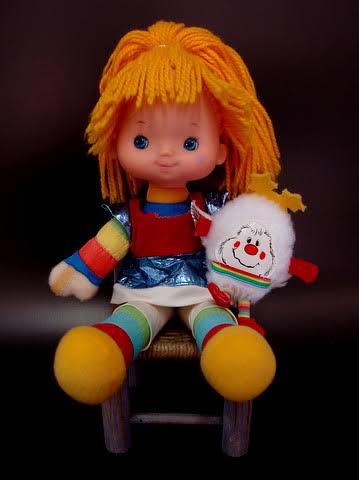
While I know for sure that I watched Rainbow Brite while I was growing up in the 80’s, the memory that stayed with me all of these years has been the merchandise, not the cartoon. I have fond memories of playing with this as a kid and can even remember the way the shiny part of her dress felt. I suspect this cartoon was also responsible for me rocking some pretty impressive rainbow shoelaces at the time.
Yet when I found the theme song and searched it for sparks of recognition I came away with barely a flicker.
I was still interested in taking a trip down memory lane, even though my memory appears foggy at best where Rainbow Brite and her friends from the colour wheel are concerned.
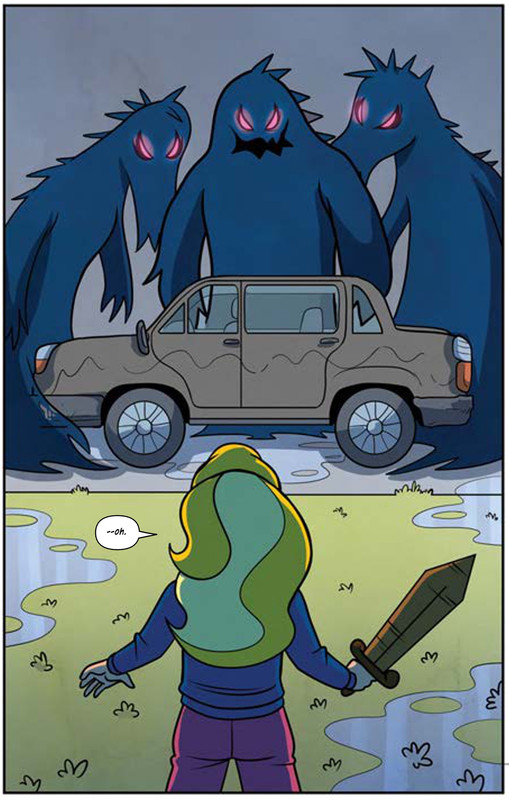
Wisp and Willow have had a fun day role playing as warrior and wizard. That night Wisp hears something outside.
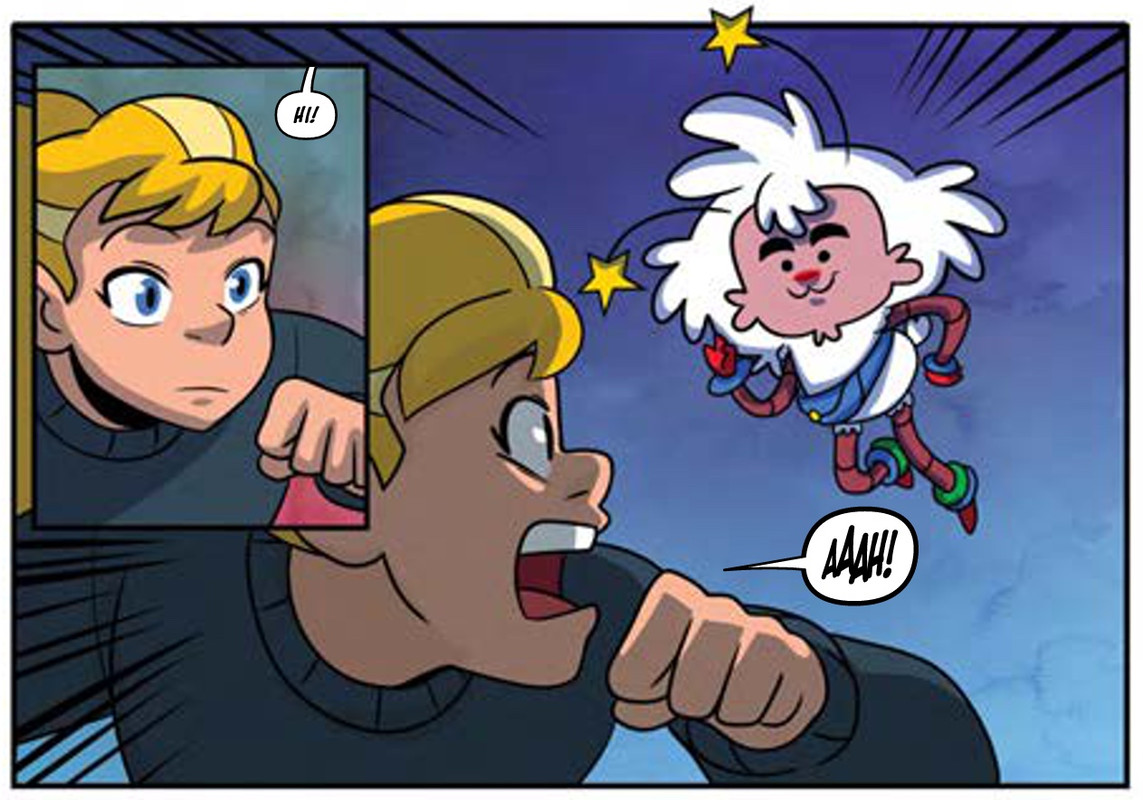
Or maybe that’s three somethings. Minions of the King of Shadows, to be more specific. These guys are leeching all of the colour from Wisp and Willow’s world, starting with blue, which Wisp’s mother’s car was pre-minion. Twinkle the sprite appears and isn’t quite as cute or cuddly looking as I remember.
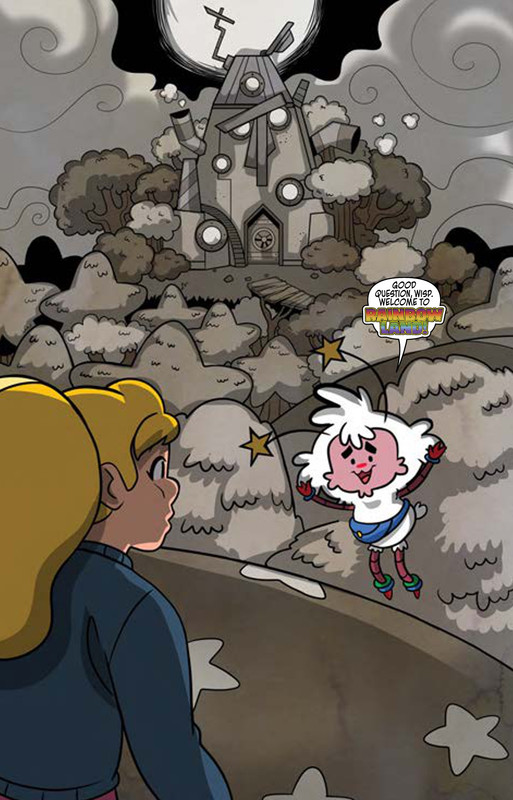
They also seemed a tad too focused on educating Wisp about etiquette and grammar while she was being chased by the massive minions and their glowing eyes. Anyway, Twinkle magics Wisp off to Rainbow Land, which doesn’t appear to be living up to its name right now.
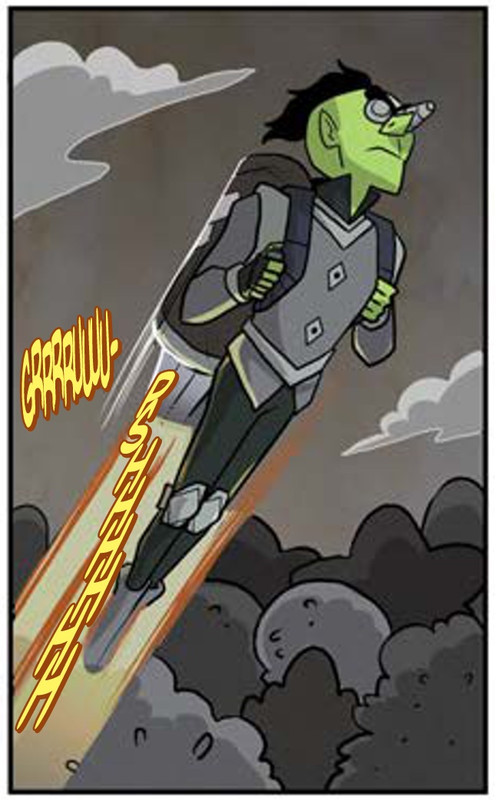
During their time in Rainbow Land Twinkle and Wisp encounter a shadow hound, Murky Dismal, an evil scientist who cannot be all bad in my books because he has a jet pack fuelled by colour,
and Lurky, Murky’s monster/bodyguard. We also meet Red Flare, a colour guard who is definitely cuter than I expected them to be. They got lost in the 80’s (dude! rad!), appropriate given Rainbow Brite was created that decade. We’re even introduced to Starlite, a talking horse that doesn’t have any problems whatsoever with their self esteem, and some other sprites and colour guards.
I found the language disparate at times. Shortly after Wisp was calling the shadow hound a “doggy” Twinkle was spouting words like “disinclination” and giving lessons on prisms and wavelengths, making me wonder what age the target audience was supposed to be.
Incorporating issues 1 through 5, Volume 1 begins Rainbow Brite’s origin story and naturally ends with a cliffhanger. I was reintroduced to a lot of characters I haven’t thought about in decades and enjoyed the action. While I could leave the story at this point, even with so much up in the air, I expect I will read Volume 2 when it becomes available at the library.
Thank you so much to NetGalley, Dynamite Entertainment and Diamond Book Distributors for the opportunity to read this graphic novel.
⭐⭐⭐⭐
Rating: 3.5 out of 5.
Once Upon a Blurb
Wisp and Willow are best friends who live in a small town. They are inseparable, until one night Wisp discovers something is stealing the colour from the world! To escape their grasp, Wisp must use her wits and the help of a new friend … from somewhere else! Then the adventure begins!
Follow along with writer Jeremy Whitley (My Little Pony, Unstoppable Wasp) and artist Brittney Williams (Patsy Walker, A.K.A. Hellcat!, Goldie Vance) as we find out how this seemingly normal girl becomes Rainbow Brite and how it changes Wisp, Willow, and their world!
That cover! 😍 It’s all kinds of creepy and intriguing. I’ve been look forward to reading this one for months.
Deidre has always lived in a world of fantasy, imagining elaborate kingdoms of queens, knights and monsters. Skye’s role as the Queen of Swords has always been to save Deidre but when they move to a new town that doesn’t know the sisters by reputation Skye sees a fresh start, a chance to have friends for once. Then Deidre disappears and Skye may have to pick up her sword once again.
I really enjoyed the introduction, with its promise of some weird and wonderful monsters. I liked getting to know Skye and trying to figure out Deidre, who we mostly get to know through her older sister. I’ve seen some reviews where Skye and Deidre cop a fair amount of disdain. While I can see where those readers are coming from, as a once upon a time teenage girl I can also see ‘Welcome to Adolescence’ written all over a lot of these sisters’ quirks. They can be mean, vindictive, antagonistic, manipulative, selfish and annoying at times.
I actually loved that Skye wasn’t all sunshine and sweetness. She isn’t a girl who’s obsessed with her appearance. She’ll never be head cheerleader. Instead her only claim to fame has been ‘freak by proxy’, the weird girl’s sister, protector and only friend. She’s a real girl with real problems.
If she was going to disappear into her imaginary world and make herself a target all over again, it wasn’t like I could stop her. But she wasn’t keeping me in there with her. Not anymore.
Skye’s story explores family, friendships and secrets, and the lengths we will go to in order to protect them. The family dynamics make it seem inevitable that Deidre will follow where her monsters lead her. It also seems predetermined that although Skye should never have been cast in the role of her sister’s only protector that she would feel the pull of this during a time of crisis, no matter how much she wants to hold onto the new life she has forged for herself.
I loved the alternating chapters, which told me what was happening now and caught me up on the past, giving much needed context to the present. For a long time I expected Deidre’s behaviour to come with a mental health diagnosis, even if some of her monsters were real. While Deidre came across as weird I never found the creepiness I expected from this book.
I was eagerly anticipating the appearance of this book’s monsters from the first time I read the blurb, but I found them disappointing. There was such a build up to them and while I loved their form, their voices didn’t work for me. I did find out why that was but even then it didn’t sit right with me. Their motivation was barely explored and their history was only hinted at. The resolution to their story was a let down for me.
If I could review this book in two parts, I’d be giving ⭐️⭐️⭐️⭐️ for the pre monster part and ⭐️⭐️⭐️ after they arrive.
Thank you so much to NetGalley and Sourcebooks Fire for the opportunity to read this book.
⭐⭐⭐⭐
Rating: 3.5 out of 5.
Once Upon a Blurb
The Blair Witch Project meets Imaginary Girls in this story of codependent sisterhood, the struggle to claim one’s own space, and the power of secrets.
Sixteen-year-old Skye is done playing the knight in shining armor for her insufferable younger sister, Deirdre. Moving across the country seems like the perfect chance to start over.
In their isolated new neighbourhood, Skye manages to fit in, but Deirdre withdraws from everyone, becoming fixated on the swampy woods behind their house and building monstrous sculptures out of sticks and bones.
Then Deirdre disappears.
And when something awful comes scratching at Skye’s window in the middle of the night, claiming she’s the only one who can save Deirdre, Skye knows she will stop at nothing to bring her sister home.
So, there I was, happily binge reading my way through Saga and I suddenly remembered that the first Volume of Paper Girls needs to be returned to the library urgently. I had planned on reading both series anyway for my barely started (😱) 2019 Hugo Awards readathon and while the two series have different illustrators they share an author. Since I am now obsessed with Saga I assumed I’d be gaining a new obsession tonight. After all, when I originally looked at the blurbs for both series, it was Paper Girls that I was more excited about.
Long story only slightly shorter (sorry!), it turns out that I was wrong. Yes, I enjoyed this first Volume but I’m almost certain that I wouldn’t be picking up Volume 2 if not for the Hugos. I’m not emotionally attached to any of the characters I’ve met so far (unlike the immediate connections I’ve felt with practically every Saga character I’ve encountered). I know hardly anything about any of the four Paper Girls and while I’m generally okay with multiple unanswered questions this early in a story I’m not that curious about the answers at this point.
Because Volume 4 has been nominated for a Hugo Award this year I’m convinced there’s awesomeness to come if I give it a chance. There’s a lot of potential here – countless people have vanished, the sky’s now very pretty but definitely not typical, pterodactyls, people speaking unknown languages, time travel, and a group of 12 year olds who are left to figure out what the hell is going on.
It may be a week or two before I begin Volume 2 so the rest of my review will consist of notes I’ve made to remind myself of what I think I already know. Beware: spoilers ahead.
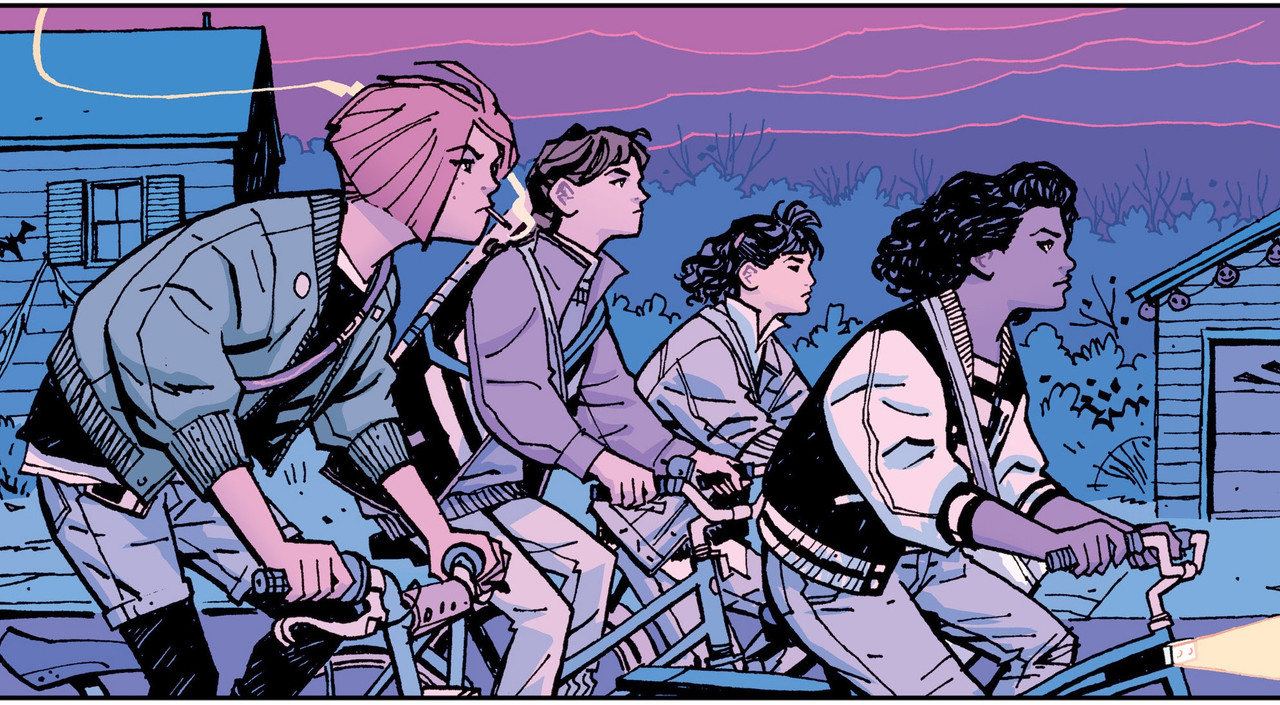
It all begins on All Saint’s, Tuesday, 1 November 1988 in Stony Stream, Ohio. Our four Paper Girls are (from left to right):
MacKenzie (Mac) – smokes, is a Girl Scout, and has a teenage brother. The local police are well acquainted with her family. Her father and stepmother, Alice, met at an A.A. meeting. She doesn’t attend private school.
KJ – carries a hockey stick, goes to Buttonwood Academy and is Jewish.
Erin – the new kid. Her younger sister Missy is her only friend and she attends St. Nicks.
Tiffany – saved up to buy the group’s walkie-talkies. Her mother is a doctor, she was adopted and she attends St. Pete’s.
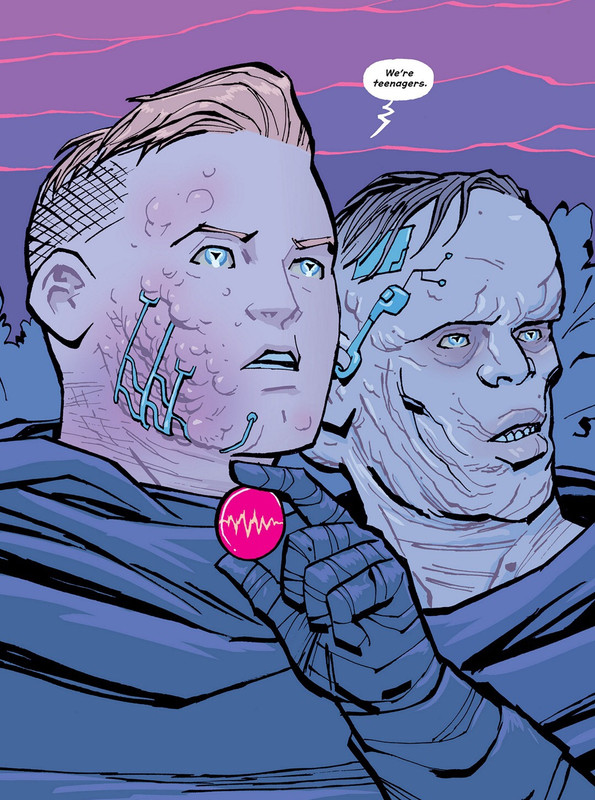
They don’t know what’s happening and they don’t know who to trust, the teenagers,
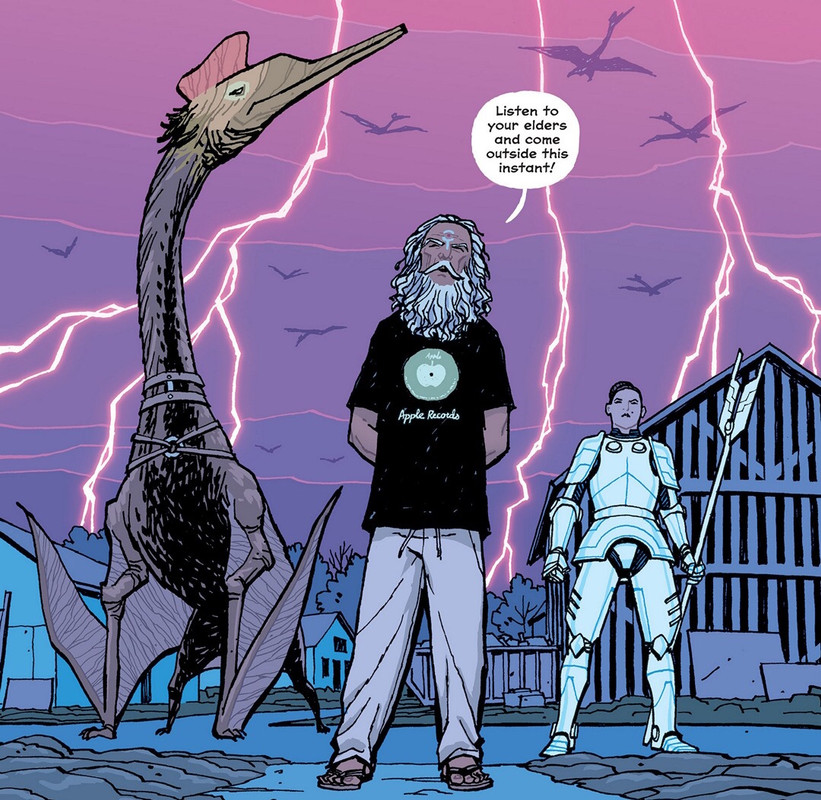
the old-timers,
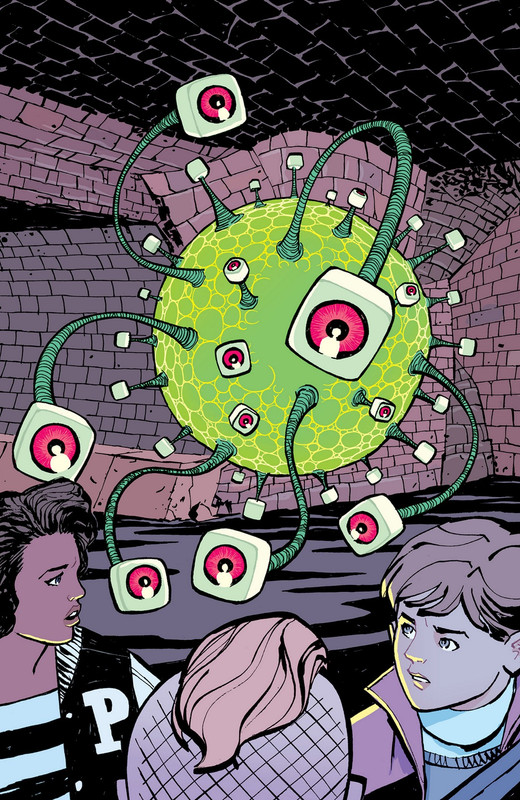
or neither. However they have figured out that they don’t want to be near an Editrix. This is an Editrix.
Teenagers, Heck and Naldo, are from Thirteen. “Oh, right, we kinda rolled back the odometer after Calamity ended all the – -”
The most sense I managed to get from someone I think was an old-timer was, “Children, your questions will be answered, but it’s very dangerous for you to be out during Ablution.”
I hope an eventual reread (after I figure out all of the pieces of the puzzle I’m currently missing) will result in both a higher rating and an updated review rambling about the brilliance that I missed during my first read.
⭐⭐⭐⭐
Rating: 3.5 out of 5.
Once Upon a Blurb
Saga writer Brian K. Vaughan launches a brand new ongoing series with superstar Wonder Woman artist Cliff Chiang! In the early hours after Halloween of 1988, four 12-year-old newspaper delivery girls uncover the most important story of all time.
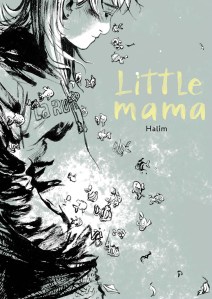
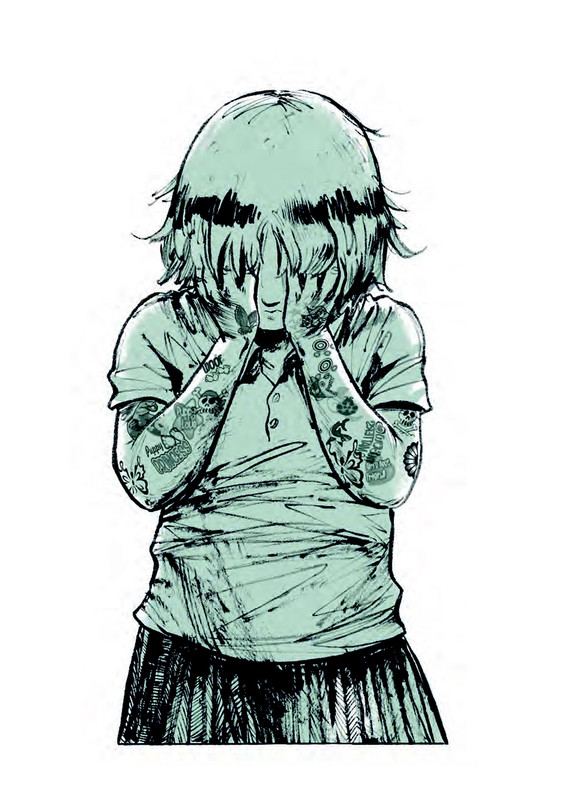
This is a confronting and brutal depiction of child abuse and family violence. Brenda’s only a small child when she earns the nickname ‘Little Mama’; she takes on adult responsibilities, looking after her own mother. Brenda’s mother is abusive and while Brenda’s bruises don’t go unnoticed at school, no one intervenes.
Brenda’s life becomes even more volatile when her mother’s new boyfriend moves in. The only good thing in Brenda’s life is her new baby brother, Kevin, who she cares for and adores.
Told mostly in flashbacks while adult Brenda tells her therapist about her traumatic childhood, this is not a fun read. The long term effects of trauma are evident in this story – Brenda’s guilt and shame, the effects on her self esteem, the intrusive nature of the memories – but you also get to see her resilience, despite experiences that understandably made her want to give up at times.
Because this story is told throughout therapy sessions it can feel disjointed at times, but each memory adds to the overall picture. I felt uncomfortable the entire time I was reading, always dreading the next violent act. This made the story feel more authentic to me because that’s what ongoing violence feels like – unable to enjoy any respite because you’re always waiting for the next time.
I fumed at the inaction of everyone who knew (or suspected) what was occurring in this home and failed to protect these children. We can always do better where child protection is concerned; I can only hope this is a story of how things used to be.
The colour scheme felt in keeping with the atmosphere of the story, essentially black and white, offset by a muted green throughout. I may be overthinking this but I did wonder if the green used was intended to mimic a faded bruise, even though it was a softer and prettier green on the screen I viewed the graphic novel on than a bruise is.
Thank you to NetGalley, Lion Forge and Diamond Book Distributors for the opportunity to read this graphic novel.
⭐⭐⭐⭐
Rating: 3.5 out of 5.
Once Upon a Blurb
Life isn’t easy for little Brenda, whose single teenage mum is immature, selfish, and prone to violent mood swings. Brenda takes care of her as best she can, missing out on many childhood joys to be her mother’s Little Mama. Sadly, her already challenging existence gets even worse when her mum’s abusive boyfriend moves in. Brenda loves having a new baby brother, but her home life soon turns into pure living hell. Finally, she reaches her breaking point, and must find the courage to save herself and embark on the difficult road towards recovery. A heartbreaking and inspiring tale of abuse and survival.
Hopping forward and backward through time through the framing device of therapy, the story unfolds as young Brenda recounts her tale, visibly maturing as the book (and sessions) continue. At first, we think it might be a child psychology session, but slowly we realize that it is in fact the adult Brenda merely feeling like the child she was at whatever age she is at during her storytelling.
A powerful story about child abuse, spousal abuse, and surviving the trauma toward hopeful blue skies.
I love abandoned places photography! I adore the atmosphere, the haunting quality of the images and imagining the history of the buildings and those who have lived in or visited them.
Most of the collections of abandoned places I’ve seen have focused on the buildings’ interiors. This book includes some interior photos as well as some bird’s-eye view shots that show an interesting blend of interior and exterior. However, a greater proportion show the overall exterior of the building, with sections of facades crumbling on some and nature overrunning others, and I really enjoyed those photos. I particularly liked those that highlight the contrast between neglected architecture and flourishing greenery surrounding it (and oftentimes growing over it).
The descriptions that accompany each image are succinct; you learn enough to provide context but not so much that the information overwhelms the picture. Each section includes a short introduction to the overall location: The Americas and Caribbean, Western Europe, Eastern Europe, Africa and the Middle East, and Asia and the Pacific.
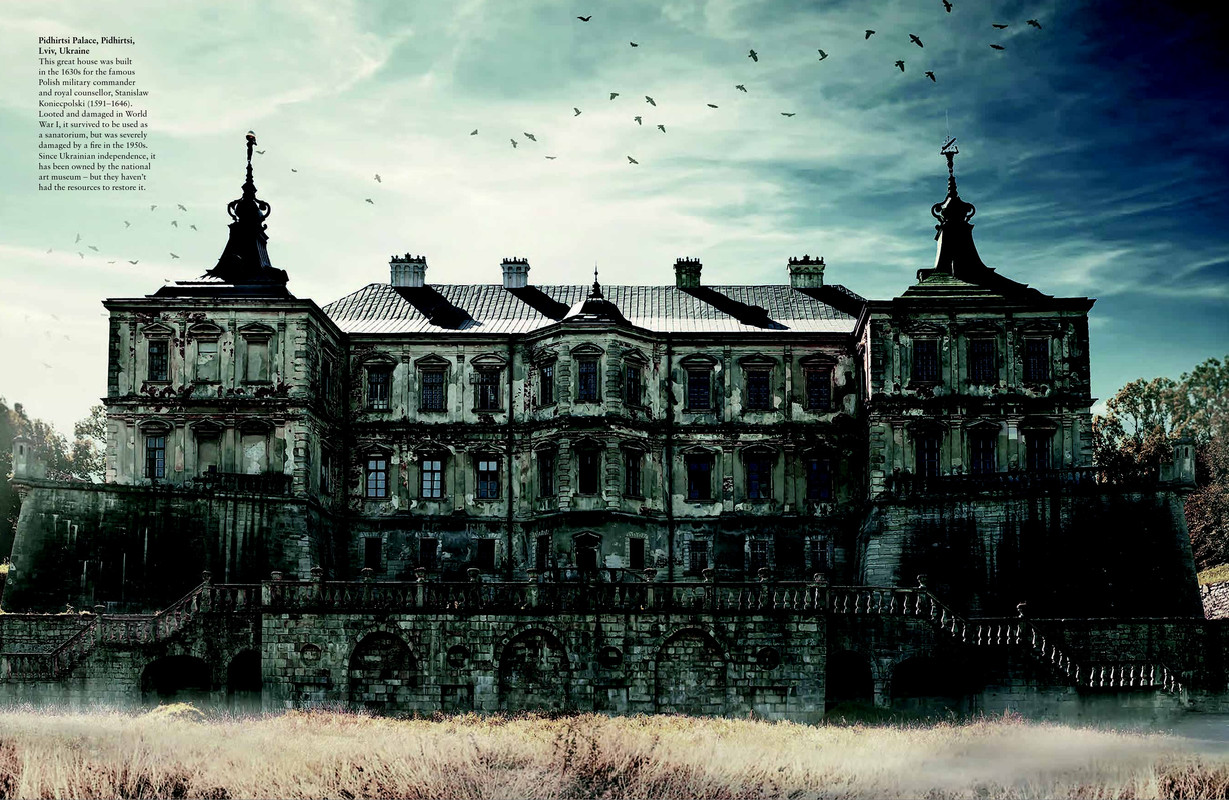
Each time I look through this book (three times so far) different photos catch my eye and details I’ve previously missed stand out. I do have a few favourites that I expect will remain, no matter how many times I return. The one that stands out the most and that I most desperately need to visit is Pidhirsti Palace in Lviv, Ukraine.
The original photo by LALS STOCK can be found on Shutterstock here. Editing of the image in this book (or it may be because I’m reading an ARC) has given it a creepier feel than the original, but that has added to my love for this particular photo.
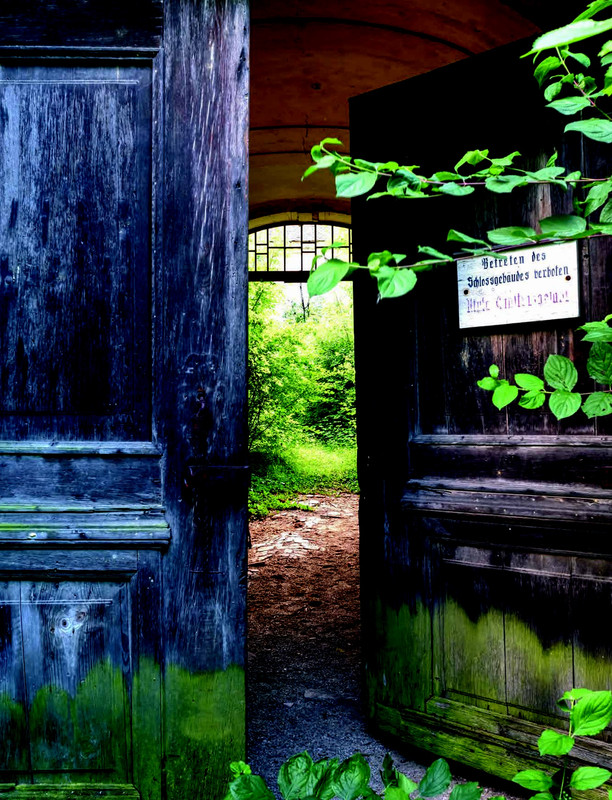
Although the colour feels off (again, this could be due to my viewing an ARC on an iPad) my favourite photo that showed some interior was of Ladendorf Castle in Mistelbach, Austria.
I loved that this open door felt like an invitation and, although it’s actually a courtyard you’re getting a glimpse of, I immediately imagined that a path out of view behind this building would lead intrepid explorers to another world. (That is one of the reasons why I love photography so much; it awakens my imagination.) This photo of Ladendorf Castle is by Viennaslide and can be found on Alamy here.
I was quite disappointed to learn that the photos were all sourced from stock image sites: 123RF, Alamy, Dreamstime, FLPA, Getty Images, Globallookpress.com, iStock and Shutterstock. In the past I’ve enjoyed collections of abandoned places photos by a single artist; I find this provides more of a cohesive feel to the project and gives me a sense of their ‘eye’ by the end of the book. I also enjoy the anecdotes a photographer can provide based on their experiences shooting at specific locations.
These details are missing here; this isn’t necessarily a bad thing but is certainly something I would have liked to have known before I started reading/looking. Also missing are the interior photos that show details of abandoned items that I love to pore over; they provide a small but important connection for me to the history of the buildings and the people who spent time there.
To be taken with a grain of salt as this relates to the ARC: There were some photos that appeared underexposed and others that appeared to have been edited so the colour was unnaturally saturated in places. These may be artistic choices by the individual photographers or the book’s editor or could be due to the fact that I viewed an advanced copy on an iPad. These comments may be entirely irrelevant once this book has been published.
Thank you to NetGalley and Amber Books for the opportunity to view this book.
⭐⭐⭐⭐
Rating: 3.5 out of 5.
Once Upon a Blurb
From imperial residences and aristocratic estates to hotels and urban mansions, Abandoned Palaces tells the stories behind dilapidated structures all around the world.
Built to impress, built with style and grandeur, built, above all, to last: it’s all the more remarkable when buildings such as these fall into disrepair and become ruins. From ancient Roman villas to the French colonial hill station in Cambodia that was one of the final refuges of the Khmer Rouge, Abandoned Palaces charts the decline of what were once the homes and holiday resorts of the super wealthy.
Ranging from crumbling hotels in the Catskills or in Mozambique, to grand mansions in Taiwan, to an unfinished Elizabethan summerhouse, to a modern megalomaniac’s partially completed estate, they were deserted for reasons including politics, bankruptcy, personal tragedies, natural and man-made disasters, and changing tastes and fashions. Filled with stunning, nostalgic images, this volume is a brilliant and moving examination of worlds left behind.
Vitrielli was working on transmigration of souls before he died. Ainsworth and Blaine need information from him. Cobb just wants tenure and got roped into this late night expedition to the cemetery. They had planned to summon Vitrielli’s ghost and take him back to the lab in a thermos to question him but naturally things didn’t turn out as expected.
“His memory is what we want. What he took away with him.”
I’m all for parallel universes and ghosts, and I loved that chocolate was one of the items required to attract ghosts in this novella (who isn’t attracted by chocolate?!), but ultimately the hype I created in my own mind let me down.
I wished for this novella on NetGalley (which was always going to be a long shot) and then patiently waited for its release, hoping I’d be able to buy the ebook. In the meantime I read an excerpt which hyped me up even more. I kept trying to find ways to buy the ebook but because I live outside of America that wasn’t an option. (Oh, the joys of loving books and not living in the bookish promised land!) I finally asked my library to buy it for me and they did! I love my library! But after months of anticipation I think my expectations became unrealistically high.
I enjoyed this story. Really, I did. It flowed well. It was written well. It left me half satisfied by the ending and half wanting more, which I quite enjoy in a story. I’d just hoped for something more groundbreaking and less predictable. I was waiting for all hell to break loose and, while the ramifications of this trio’s experiment with the afterlife were interesting, the story was a lot more contained than I had hoped.
⭐⭐⭐⭐
Rating: 3.5 out of 5.
Once Upon a Blurb
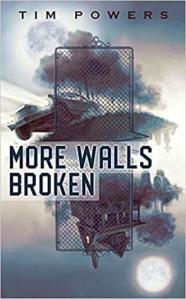
As this ingenious new novella, More Walls Broken, begins, a trio of academics have just entered a deserted California cemetery late at night, bringing with them a number of arcane devices aimed at achieving an equally arcane purpose. What follows is the sort of dizzying, mind-expanding entertainment that only the always reliable, always astonishing Tim Powers could have written.
These three men, professors in the “Consciousness Research” department at Cal Tech University, have come together to perform a seemingly impossible task. Their goal: to open a door between the world of the living and the world of the dead, and to capture the ghost of the recently deceased scientist Armand Vitrielli. For their own desperate reasons, they hope to avail themselves of the secrets Vitrielli left behind at the time of his death. Their experiment, naturally, fails to come off exactly as planned.
A door between the worlds does, in fact, open, letting in something – someone – completely unexpected, and setting in motion a chain of events that will reverberate throughout the narrative.
Intricate, intelligent, and always thoroughly absorbing, More Walls Broken mixes fantasy and quantum physics in utterly unique fashion. The result is a brilliantly imagined account of multiple realities and unintended consequences that is pure dazzle, pure storytelling, pure – and unmistakable – Tim Powers. In book after book, story after story, Powers has set the standard for literate imaginative fiction. With this essential, beautifully realised novella, he has done it once again.
Last time we saw them, Phoebe, Sue (Phoebe’s friend from camp), Max (Phoebe’s adorably nerdy friend) and their respective magical friends (Marigold, Ringo and Voltina) plus Marigold’s sister, Florence, were heading home from drama camp. I’ve loved the two graphic novels.
Now we’re back for another collection.
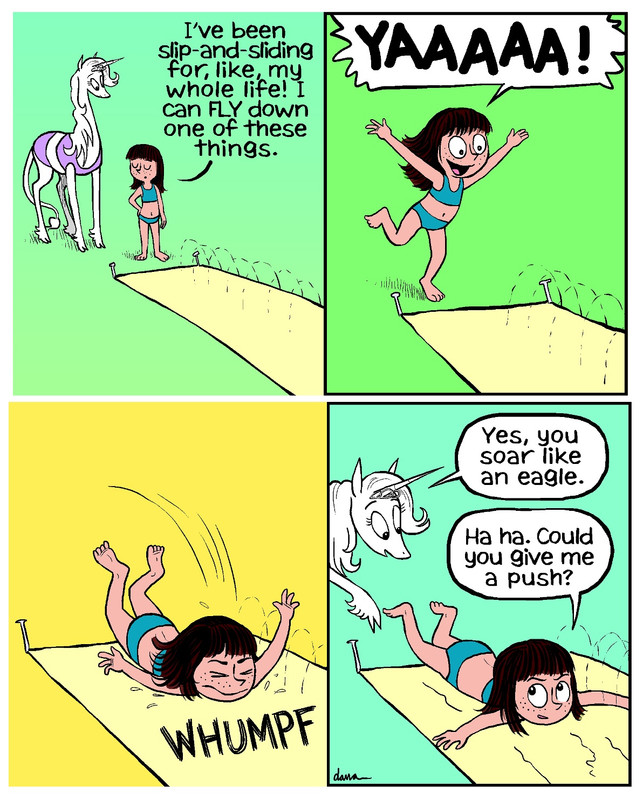
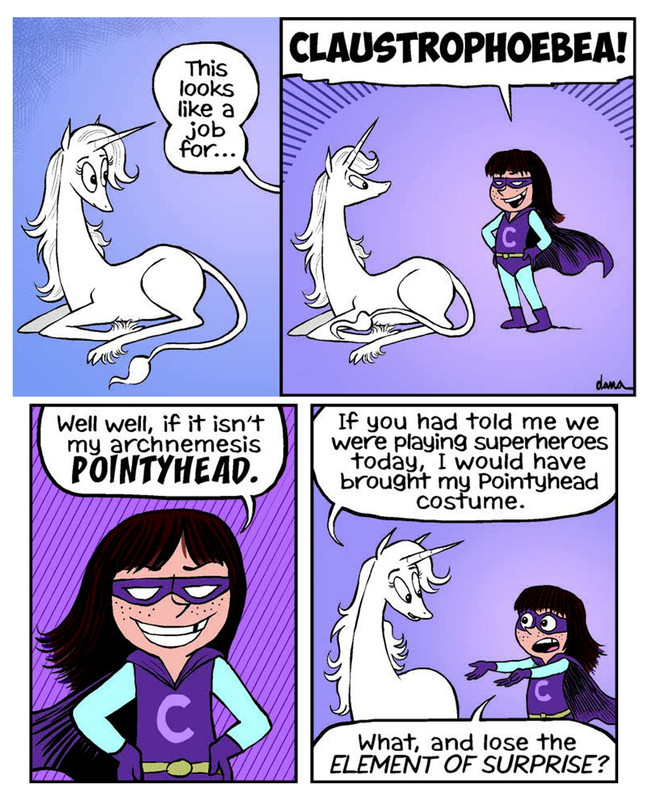
I learned that unicorn hiccups sparkle (of course they do!) and Marigold discovered the marvel that is bubble wrap. Phoebe’s father partook in some nostalgia and in the process made me feel really old because I remember those days too! Claustrophoebea and Pointyhead were back!
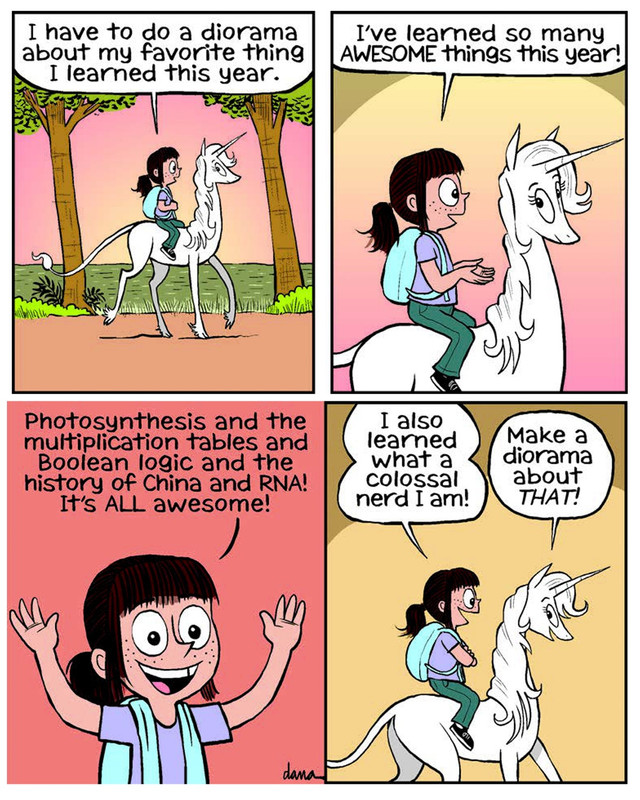
Phoebe doesn’t think she’s being assigned enough homework so Marigold provides some for her. Phoebe also nerds out about getting to make a diorama for school.
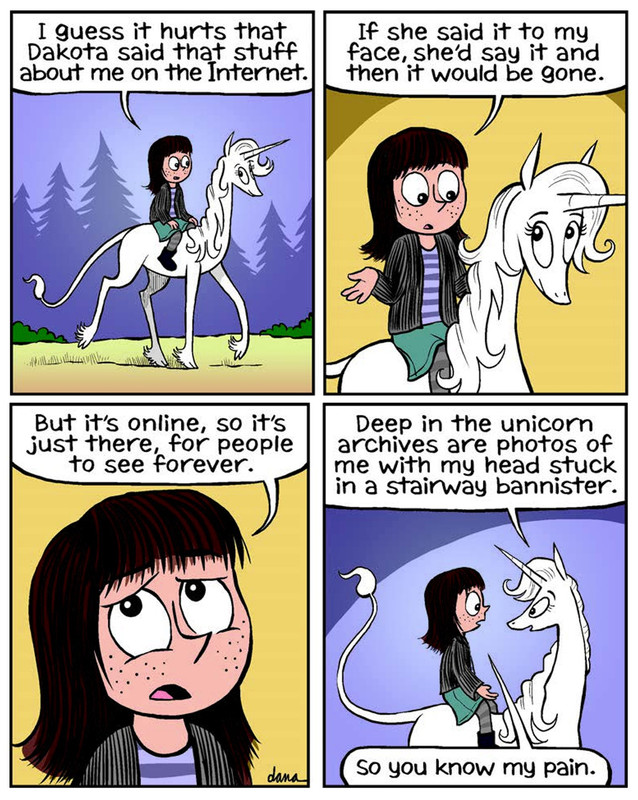
Phoebe and Marigold get somewhat serious when they discuss the meaning of life and Marigold regales Phoebe with multiple unicorn legends, some more recent than others. Dakota uses her vlog to bully Phoebe.
Marigold invites Phoebe to unicorn camp. Phoebe’s friend from camp, Sue, also attends but Ringo the lake monster is absent. While I was glad Max had a birthday party in this collection, I was sad his only guests appeared to be Phoebe and Marigold. Where was Voltina? She seems to only exist in the graphic novels. Also absent were the goblins who hang out with Dakota and some of Dakota’s personality.
Thank you to NetGalley and Andrews McMeel Publishing for the opportunity to read this collection.
⭐⭐⭐⭐
Rating: 3.5 out of 5.
Once Upon a Blurb
A unicorn in bowling shoes is quite a STRIKE-ing sight. But for nine-year-old Phoebe Howell, it’s just another fun outing with her best friend, the illustrious unicorn Marigold Heavenly Nostrils. This unique and magical friendship is at the heart of the ninth Phoebe and Her Unicorn collection, which includes adventures such as writing original songs, publishing rival news websites, and making a summer visit to the exclusive Camp Shimmerhorn.
Life with a unicorn BFF is not without its challenges, however, and whether it’s homework, friction with classmates, or talent show jitters, Unicorn Bowling is full of amusing, heartwarming reminders that when the going gets tough, the tough get sparkling.








 Schizanthus Nerd