Now Entering Addamsville – Francesca Zappia

How could you convince people of the truth when they had already decided what version of the story they wanted to believe?

When George Masrell’s home is engulfed in fire in the middle of the night, with 80 year old George inside, Zora quickly becomes the town’s prime suspect. Zora is a Novak and in Addamsville Novak’s are well known, but not for anything good.

And when your mom disappears, your dad goes to jail, and the whole town hates you on sight, sometimes you get it in your head to start doing stupid things to ease that anger. Stupid things like hunting firestarters alone.

Unfortunately for Zora, she has a history with fires (but not the way the townspeople think) and recently had an argument with George so people aren’t exactly lining up to defend her. To make matters worse, the cast and crew of the TV series The Dead Men Walking are coming to film in Addamsville, and tagging along are their groupies. While there are ghosts, they’re not the most dangerous things in Addamsville.

I absolutely adored this book! It’s been on my radar for months and now that I’ve finished it I want to dive straight into a reread, which I probably would have if I hadn’t read a library copy that someone with impeccable taste wanted to read once I was done. More on that later.

There was so much I loved about this book and I don’t want to be a gushy mess nor do I want to spoil it for you so I’m going to try to restrain myself. First, I have to mention that cover! If my eyes were capable of speech the colours would have made them say, “Gimmee!” before I even knew what the book was about. Then the illustrations inside were so darn cute! I got a sense of who each character was from the pictures in the beginning and I loved the illustrations at the end of some of the chapters, particularly the axe and the Chevelle.

Speaking of the car, it practically was its own character in this book. It certainly had its own attitude anyway. The 1970 Chevelle was Zora’s mother’s car and she now drives it.

And if we’re talking about attitude, Zora was awesome! She’s tough, she’s rude, she’s smart, she’s angry, she faces her fears, she kicks butt when she needs to. She’s got the entire town either actively hating her or at least suspicious of her, yet she still puts one foot in front of the other. Anyone who continues to try to do the right thing when everyone expects the opposite from them earns my respect. She’s also asexual and I cannot tell you how happy that made me; I’ve found so few asexual characters in books so she got bonus points from me for that.

I loved or loved to hate almost all of the other characters. Sadie, Zora’s sister, and Grim, Sadie’s boyfriend, were the most adorable couple. Bach was intriguing and mysterious and I wanted to see him on every page. History nerd, Artemis, was a pleasant surprise; I initially thought she’d be a boring character but I really had fun getting to know her.

I had the urge to hiss at a couple of characters whenever I encountered them and it was actively hating Zora’s main opponents that spoke more to me about how invested I was in the story than anything else. Well, except for the fact that I chose to forfeit my annual ‘have to watch Halloween on Halloween night’ tradition to finish it.

I loved idea of the “Bell of Shame” at Happy Hal’s Ice Cream Parlor and I cheered Zora on when she used it to call out one character’s slimeball behaviour. I think we could all do with a “Bell of Shame” in our lives that we can ring to announce bad behaviour to those around us.

Some questions remain at the end of the book and I’d love the opportunity to visit this town again. I definitely need to inhale this author’s other books.

So, now we’re up to the later part of the review, which is essentially a whinge, so you’re quite welcome to bypass this bit. I have been so keen to read this book and was eager for someone to take my money so I could highlight to my heart’s content on my Kindle. Unfortunately this is just another in a long list of books my Kindle is hungry for but because it lives outside of the Promised Land, it’s/I’m not allowed to have it yet.

On the upside, thank goodness for libraries! I asked mine to buy a copy for me and, woohoo, they did! I’m still going to buy a copy for my Kindle as soon as the Kindle gods deem my country worthy but at least I don’t have to hold my breath to read it for the first time any longer. Thank you, lovely librarians!

Rating: 5 out of 5.

Once Upon a Blurb

Zora Novak has been framed.

When someone burns down the home of the school janitor and he dies in the blaze, everyone in Addamsville, Indiana, points a finger at Zora. Never mind that Zora has been on the straight and narrow since her father was thrown in jail. With everyone looking for evidence against her, her only choice is to uncover the identity of the real killer. There’s one big problem – Zora has no leads. No one does. Addamsville has a history of tragedy, and thirty years ago a similar string of fires left several townspeople dead. The arsonist was never caught.

Now, Zora must team up with her cousin Artemis – an annoying self-proclaimed Addamsville historian – to clear her name. But with a popular ghost-hunting television show riling up the townspeople, almost no support from her family and friends, and rumors spinning out of control, things aren’t looking good. Zora will have to read between the lines of Addamsville’s ghost stories before she becomes one herself.

Kingdom of Souls – Rena Barron

I don’t really know where to begin with this review. There was so much about Kingdom of Souls that I loved. I adored the world building, the rich mythology and learning how magic works in Arrah’s world, yet at the same time I was introduced to so many characters, tribes and gods that I found it difficult to keep track of them.

Enter my cheat guide. I had no idea who or what was going to be important later on and I was so overwhelmed in the beginning (up to about 20%) that I found myself frantically making notes about practically everyone. I’ve included these notes in this review mostly for my benefit in case I need a refresher course prior to embarking upon the second book but if they help you in any way, you’re welcome.

I’ve marked them as spoilers because I mention some characters that don’t even appear in this story until near the end. I’ve tried to avoid spoilery type info dumps here but please still be aware that you may read something in there you don’t want to know yet.

Arrah’s Family

  • Arti – mother, from the Mulani tribe, “Ka-Priestess of the Kingdom”
  • Oshe – father, from the Aatiri tribe, has a store in the West Market
  • Efia – sister

Arrah’s Family’s Staff

  • Nezi – porter, has burnt hands and a limp
  • Ty – matron, does the cooking, doesn’t speak to anyone, has “episodes”
  • Terra – has only been on staff for 2 years, does the rest of the chores, Arrah’s age, gossips

Arrah’s Friends

  • Hassana – female, beautiful, Aatiri
  • Rudjek – male, smells of lilac and woodsmoke
  • Sukar – male, tattoos on his forearms and shaved head glow when the magic is there or he’s near someone with the gift, Zu

Rudjek’s Family

  • Serre – mother, daughter of the North, her country is Delene
  • Suran Omari – father, Vizier
  • Uran – older brother, whose mind was broken during the Rite of Passage
  • Jemi – older brother, whose mind was broken during the Rite of Passage, killed a merchant
  • Crown Prince Kelechi – brother, two years older than Rudjek
  • Second Son Narmer – brother, Arrah’s age (16)

Rudjek’s Attendants

  • Majka – best friend, gendar, parents are commanders under the Master of Arms, 17
  • Kira – 17, father is the Master of Scribes

Kingdom Hierarchy

  • Almighty One – the most powerful position, held by Dereje, who was best friends with Suran before he rose to the throne
  • Vizier – second most powerful position, held by Suran Omari, “governs the Kingdom”
  • Ka-Priestess – the third most powerful position, held by Arti, “the voice of the orishas”

The Vizier’s Guildmasters

  • Master of Arms – Rudjek’s aunt and the Vizier’s twin sister, General Solar, “leads the military forces of the Kingdom: the gendars, the guardsmen, and the shotani.”
  • Master of Scribes – Ny (Kira’s father)
  • Master of Scholars
  • Master of Laborers
  • Artisan’s guild – Guildmaster Ohakim

Shotani – elite assassins, have some magic, live in the Kingdom

Crests – show rank or position

  • Omari – lion’s head
  • Sukkara (the royal family) – ram, “symbol of their blood connection to the sun orisha, Re’Mec”

Some of the Locations

  • Tamar – where Arrah, Rudjek and their families live
  • East Market – in Tamar, Kofi (Arrah’s friend) works there, charlatans are also there
  • West Market – in Tamar, Oshe’s store is there
  • Kefu – time works differently there

Tribes of Heka – Heka gives magic to the tribes

  • Aatiri – “do not walk or leap, for clouds of magic carry them. Grandmother’s silver locs coil on top of her head like a crown, and she wears a half dozen necklaces of teeth. The Aatiri are tall and lean with prominent cheekbones and wiry hair braided like mine.” Arrah’s grandmother, Malikah, is the Aatiri chieftain. Malikah’s grandmother was Yaaba. Other ancestors are Machie and Ara.
  • Kes – the smallest tribe. Their lands “border the valley to the northwest. Their diaphanous skin and near-colorless eyes remind me of the Northern people.” “lightning cuts across the sky and sparks dance on their skin”
  • Litho – “lies southwest of the Temple of Heka in the woodlands. White dust covers their bodies and vests of rawhide.” “The ground shifts beneath their feet, moving as gentle as ocean waves”
  • Mulani – “live the closest to the Temple of Heka.” “It was a Mulani woman Heka revealed his presence to when he first descended from the stars a thousand years ago. Now the Mulani chieftain serves as his voice. The position would belong to my mother had she not left and never looked back.” – their witchdoctors are all women. “They have broad shoulders, curvy bodies, and skin ranging from deep brown to alabaster.” The Mulani Chieftain is Arti’s first cousin
  • Zu – “from the mountains south of the Temple” “leap above our heads, their feet supported by air. Tattoos cover their bodies and they wear crowns of antlers”, the Zu seer is Barasa

Orishas – worshipped in the Kingdom, they have human and animal aspects

  • Esi – the sky god
  • Fayouma – the mother of beast and fowl
  • Fram – the balancer of life and death
  • Kekiyé – orisha of gratitude
  • Kiva – protector of children and innocence
  • Koré – moon orisha – female, twin god
  • Mouran – master of the sea
  • Nana – god that shaped the earth
  • Oma – orisha of dreams
  • Re’Mec – sun orisha – male, twin god
  • Sisi – guardian of fire
  • Ugeniou – the harvester
  • Unnamed – cobras around each of her arms
  • Yookulu – weaver of seasons

Cravens

  • Fadi – the group’s leader, male, excels at shifting
  • Juhanah – female – group’s best tracker
  • Lumo – Mensah’s twin, group’s best healer
  • Mensah – Lumo’s twin, group’s best fighter
  • Riham – female, shortest of the group, “can bend space and manipulate her environment”

Demons

  • Dayo – Demon King
  • Merka – possesses a cat before they possess a fisherman

Familiars – shadowy, shapeless and ever changing. They can only be seen by people with tribal blood. They’re believed to be relics of people destroyed by demons. “Wherever the Familiars go, death soon follows.”

I think it was because I was so bogged down in my note taking that I managed to entirely bypass the whole ‘connecting with any of the characters’ experience. One character that I thought I would form a connection with early on died soon thereafter and the villain I was hoping to cheer on didn’t make much of an impact on me.

Had I found the guide on the book’s website before I read this book instead of after, my reading experience may have been vastly different. I learned things from this guide that I missed entirely when I read the book. However, considering a couple of the characters illustrated on the cast page don’t exist in the first book, perhaps some of the guide also relates to later books in the series.

Impacts of trauma play out in various ways with multiple characters, which I found very interesting. Although it’s not mentioned by name it’s almost certain a few characters could be diagnosed with PTSD. The violation involved in the mind manipulation wasn’t that dissimilar to survivors’ experiences of sexual assault.

Some of Arrah’s thought patterns were quite repetitive. Hearing about how much of a disappointment she was to her mother and how she had longed to have magic her entire life provided me with sufficient underdog fuel to want her to succeed initially, but the amount of times she lamented both began to annoy me as the story progressed.

Although I witnessed plenty of action, with fight scenes, destruction and all round mayhem, it also felt like I spent a good portion of this book waiting around with Arrah for the next sequence of events to begin to unfold.

The ending was quite abrupt and left a ton of unanswered questions, which will hopefully be addressed in the next two books (yep, I found out after I started reading that this is the first book of a trilogy). However, I’m not entirely sure if I’ll still be as eager to know some of the answers, like what two of the characters were whispering about, by the time the second book is released.

If I reread this book I would spend less time focusing on the minutiae and try instead to form meaningful connections with the main characters. It felt like Arrah’s world was real and this is why I’ve given this book ⭐️⭐️⭐️⭐️ instead of ⭐️⭐️⭐️. Had I been emotionally invested in Arrah’s journey this could have been a ⭐️⭐️⭐️⭐️⭐️ book for me.

Thank you so much to NetGalley and HarperVoyager, an imprint of HarperCollins UK, for granting my wish to read this book.

Rating: 4 out of 5.

Once Upon a Blurb

Magic has a price – if you’re willing to pay.

Born into a family of powerful witchdoctors, Arrah yearns for magic of her own. But each year she fails to call forth her ancestral powers, while her ambitious mother watches with growing disapproval.

There’s only one thing Arrah hasn’t tried, a deadly last resort: trading years of her own life for scraps of magic. Until the Kingdom’s children begin to disappear, and Arrah is desperate to find the culprit.

She uncovers something worse. The long-imprisoned Demon King is stirring. And if he rises, his hunger for souls will bring the world to its knees … unless Arrah pays the price for the magic to stop him.

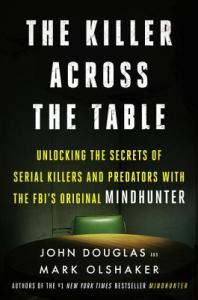
The Killer Across the Table – John Douglas & Mark Olshaker

Have you ever considered who you’d invite to your fantasy Ultimate Dinner Party? John Douglas is one of my top five fantasy guests; although, introvert that I am, I’d much prefer a one on one conversation with him.

My main takeaway from my psychology degree was my obsession with criminal profiling. My favourite assessment was when I was given a scenario that detailed a crime scene and my job was to profile the UNSUB. I bought and devoured every John Douglas book he’d written at the time and fantasised about moving to America to join the FBI. I wanted to be a criminal profiler way before Criminal Minds premiered and if I had a do-over of my life, you’d know me as Special Agent Nerd and I would have been mentored by Mr Douglas. Ah, fantasy land…

Why? + How? = Who.

Built around conversations with four violent predators, The Killer Across the Table provides relevant information about their backgrounds, how they offended, what they thought in the lead up to, during and after their offences, and importantly, gives valuable insights that can help investigators prevent similar crimes or assist in apprehending offenders.

With its content this book could easily have sensationalised the crimes but the authors recount the details of the cases and their perpetrators in a matter of fact way; as matter of fact as you can be when discussing sexual assault, torture and murder. With clear empathy and compassion for the victims and their loved ones, their stories are told in a way that at once honours the people they were but also affords them a dignity they were denied by their murderers.

Given his pioneering work in the field of criminal investigations and profiling, John Douglas could easily (and justifiably) come across as a know it all seeking glory for his brilliance. But he doesn’t. He explains his approach and why he treats the offenders he interviews well but I don’t feel any arrogance in the writing.

At first glance you could be forgiven for thinking the authors are name dropping when they casually explain something by making comparisons with renowned criminals like Bundy or Manson, but John Douglas has interviewed so many household names that it feels organic when he links certain aspects of cases. The explanations add to your understanding of not only the case he’s referencing, but also provides insights into others.

I haven’t read a John Douglas book in several years but this read has reawakened my need to reread all of my previous reads and to finally read the couple I haven’t actually read yet. If you have even a passing interest in what makes people who commit horrendous crimes tick, I can’t recommend these authors’ books to you enough.

Ecstatic Update:

I just ordered a signed copy of this book! I’m going to own a signed copy of a John Douglas book! Need morning to come so it’s more socially acceptable to jump up and down with glee!

Rating: 5 out of 5.

Once Upon a Blurb

Twenty years after his famous memoir, the man who literally wrote the book on FBI criminal profiling opens his case files once again. In this riveting work of true crime, he spotlights four of the most diabolical criminals he’s confronted, interviewed and learned from. Going deep into each man’s life and crimes, he outlines the factors that led them to murder and how he used his interrogation skills to expose their means, motives, and true evil.

Like the hit Netflix show, The Killer Across the Table is centered around Douglas’ unique interrogation and profiling process. With his longtime collaborator Mark Olshaker, Douglas recounts the chilling encounters with these four killers as he experienced them – revealing for the first time his profile methods in detail. 

Going step by step through his interviews, Douglas explains how he connects each killer’s crimes to the specific conversation, and contrasts these encounters with those of other deadly criminals to show what he learns from each one. In the process, he returns to other famous cases, killers and interviews that have shaped his career, describing how the knowledge he gained from those exchanges helped prepare him for these.

A glimpse into the mind of a man who has pierced the heart of human darkness, The Killer Across the Table unlocks the ultimate mystery of depravity and the techniques and approaches that have countered evil in the name of justice.

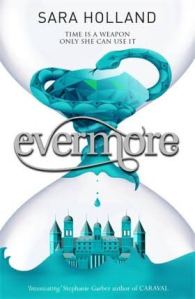
Everless #2: Evermore – Sara Holland

Is it a blessing or a curse, never to know how much time you have?

Let me start with this: I loved Everless. I’ve been impatiently waiting for my library’s copy of Evermore to arrive as it was one of my most anticipated reads of the year. Maybe the pedestal I built for it was too high; I did enjoy it but I was also disappointed. It may have helped if I’d read the books consecutively; I had forgotten important parts of the mythology until I was reminded of them.

Sempera is the only land with magic, a land where time and blood are bound. The Alchemist and Sorceress have been enemies for multiple lifetimes and their story has become legend in this land. I couldn’t get enough of the mythology surrounding the snake and the fox in Everless and was eager to learn more. After so many minor excursions into the previous lives of the Alchemist I did enjoy the huge info dump at the end of the book, but I wanted more.

Liam, who was one of my favourite characters in Everless, lost his mystery and complexity in this book and I had trouble remembering what was so incredible about him. I liked Stef and Elias and am fairly certain I would have loved them if I’d gotten to know them better; unfortunately they still felt like acquaintances at the end of the story.

I’m wondering if I would have appreciated this story more if it was told in more than one voice. Jules didn’t make my top five favourite characters in either book but I would have loved reading even part of the story from the perspectives of Caro and Ina.

I am left with several unanswered questions that are bugging me, including: If Caro’s guards had Liam surrounded while he was frozen in time at the end of the book how did he get past them to find Jules? Why didn’t Jules show the stone Stef gave her to Joeb? Also, what happened with Stef? Her story felt unfinished.

If this had been the first book in the series I probably would have put it down but the residue of my love for Everless made me persevere.

Rating: 3.5 out of 5.

Once Upon a Blurb

Jules Ember was raised hearing legends of the ancient magic of the wicked Alchemist and the good Sorceress. But she has just learned the truth: She is the Alchemist, and Caro – a woman who single-handedly murdered the Queen and Jules’s first love, Roan, in cold blood – is the Sorceress.

The whole kingdom believes that Jules is responsible for the murders, and a hefty bounty has been placed on her head. And Caro is intent on destroying Jules, who stole her heart twelve lifetimes ago. Now Jules must piece together the stories of her past lives to save the person who has captured her heart in this one.

Sawkill Girls – Claire Legrand

“There were monsters in that book.”

And I loved it! I can’t believe it took me so long to read this book or that this is my first Claire Legrand read. I have seriously been missing out!

Beware of the woods and the dark, dank deep. He’ll follow you home and won’t let you sleep.

So goes the island’s monster tale. But is the Collector just an urban legend? Why have Sawkill’s girls been disappearing? What happened to them?

Zoey needs to know, especially since her best friend Thora is the most recent missing girl, presumed dead for seven months. One of 23 girls.

Decades of dead girls. Poor girls and rich girls. Black and brown and white girls. All of them Sawkill girls.

I went into this book having read its blurb, and that’s all. I highly recommend you don’t know too much about this book before uncovering the secrets of the Sawkill girls yourself. So instead of me telling you much about the book itself I want to tell you who my favourite characters were, but quickly I want to address that romance. This romantiphobe wanted the romance to work, needed it to work, yearned to see more of it, despite everything that told me that it couldn’t, shouldn’t, wouldn’t work.

Absolute Favourite Character

Is it weird if I tell you that Zoey was my absolute favourite character? And also that in a lot of respects Zoey is me?! Some of the things that came out of her mouth felt like I’d spoken them.

Zoey is ME Example 1:

“Sorry. That isn’t helpful. God. I need to stop talking. I’m a really awkward person. It’s a chronic condition.”

Zoey is ME Example 2:

“Hi, Future Zoey, this is Past Zoey”

[Zoey, to her phone’s voice recorder]

Zoey is ME Example 3:

“Imagine, if you will, a sponge—“ “Animal, cleaning, or Bob?” Zoey interrupted.

Except sometimes Zoey was not me. At all. Because I would never say:

“Can I just say that I’m really disturbed by the number of secret rooms on this island?”

Because there’s no such thing. If Zoey was me she’d know that.

And a Very Close Second …

Grayson. Oh, I need a Grayson in my life. He’s adorable, he cooks, he cleans, he gives great hugs and did I mention he’s adorable?

But Let’s Not Forget …

the surprise standout character, the Rock.

No, not that one! Although he will always be a favourite.

Initially I found the Rock’s voice unsettling and a tad confusing but as I made it further into the book I began to look forward to those pages and they became my favourites.

I loved the creepy. I loved the moths. I loved the atmosphere. I loved the imperfect characters. I loved the diversity. I loved the girls sticking it to the patriarchy.

A girl with incredible strength. A girl who can vanish. A girl who burns.

Yes, I had some questions that weren’t answered and yes, I had the whole nitpick about how the moths’ markings on the cover of the book don’t match the colour described in the book but seriously, who cares?! If you haven’t already, you need to read this book!

Rating: 5 out of 5.

Once Upon a Blurb

Beware of the woods and the dark, dank deep.

He’ll follow you home, and he won’t let you sleep.

Who are the Sawkill Girls?

Marion: the new girl. Awkward and plain, steady and dependable. Weighed down by tragedy and hungry for love she’s sure she’ll never find.

Zoey: the pariah. Luckless and lonely, hurting but hiding it. Aching with grief and dreaming of vanished girls. Maybe she’s broken – or maybe everyone else is.

Val: the queen bee. Gorgeous and privileged, ruthless and regal. Words like silk and eyes like knives, a heart made of secrets and a mouth full of lies.

Their stories come together on the island of Sawkill Rock, where gleaming horses graze in rolling pastures and cold waves crash against black cliffs. Where kids whisper the legend of an insidious monster at parties and around campfires.

Where girls have been disappearing for decades, stolen away by a ravenous evil no one has dared to fight … until now. 

Bird Photographer of the Year: Collection 3

This book is gorgeous! Photography is one of my passions, one I don’t spend as much time pursuing as I’d like. I’ve followed the Wildlife Photographer of the Year competition since 2007 and accidentally found this book, the third Bird Photographer of the Year at my library. Yay, libraries!

I have a group of wild birds that I’ve been privileged to get to know over the past couple of years and have loved capturing their individual and often quirky personalities. This book, with its stunning collection of images, has sparked my creativity and given me so many ideas to improve my photos. I loved the compositions, the lighting and artistic choices made by the photographers that have resulted in photos that make you feel like you can almost reach out and feel the feathers.

You can find the winners featured in this book on the Photocrowd website.

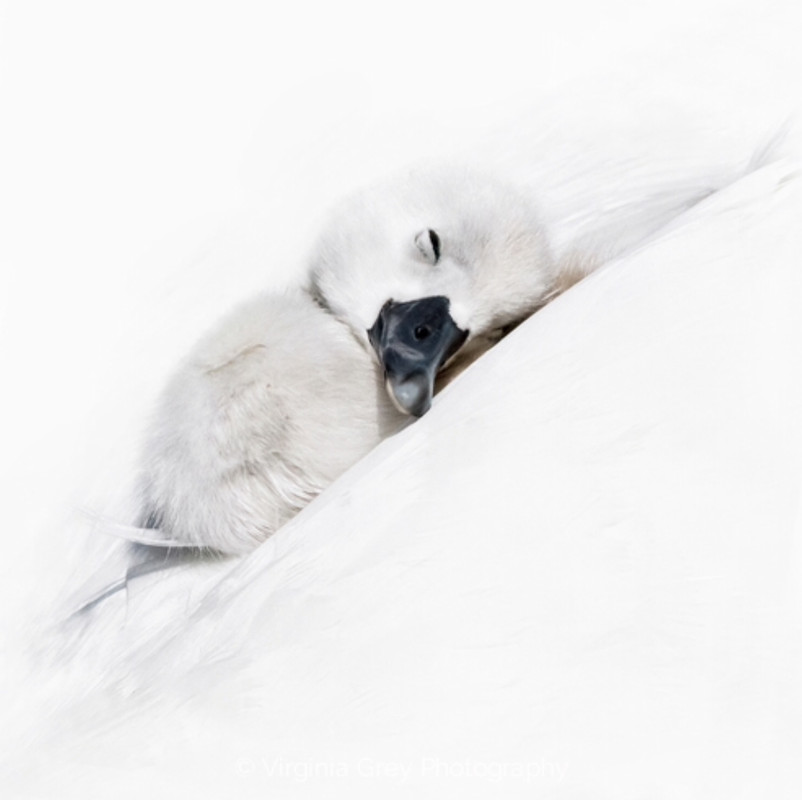
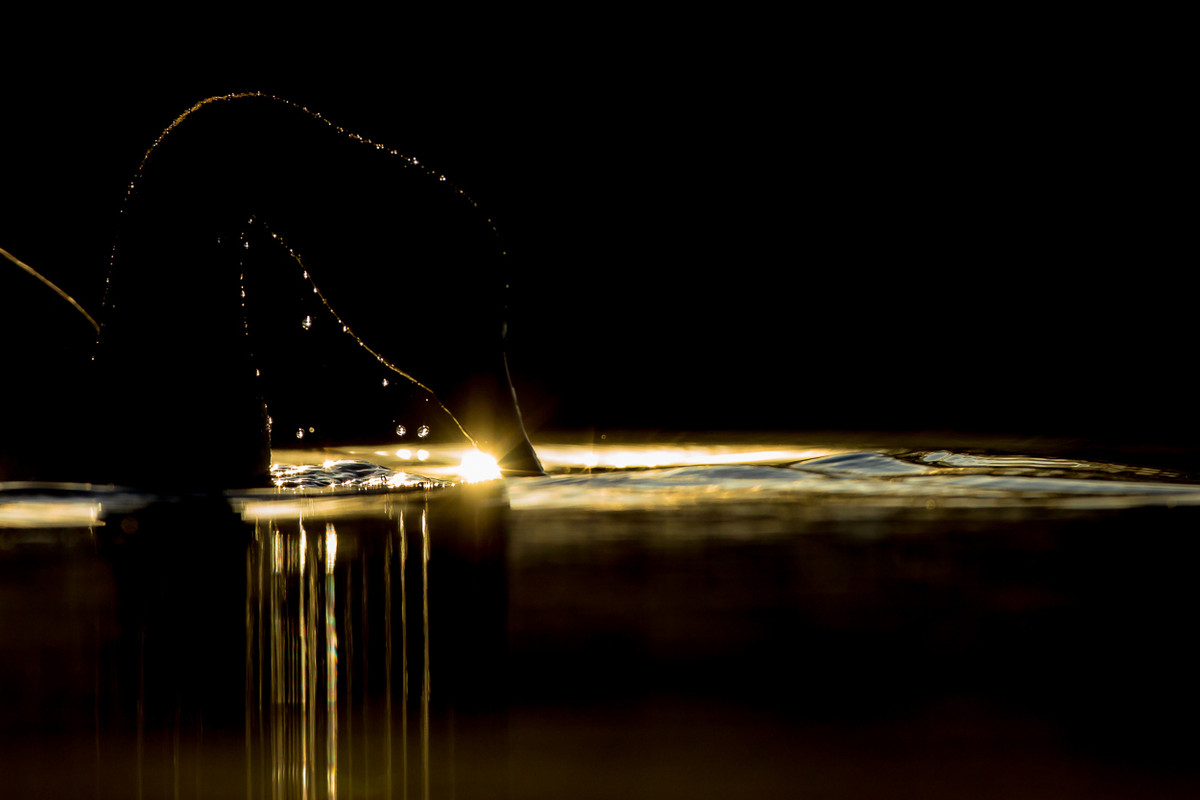
Sometimes words just don’t cut it so instead I have to show you my two absolute favourite photos, which were both commended in the Creative Imagery category:

Virginia Grey’s Muted Swan Cygnet, found here

description

and Kevin Morgans’ silhouetted Canada Goose, found here.

description

Aren’t they stunning?! I loved them so much I forced myself to learn how to add images to Goodreads just so I could show you. (It’s only taken me almost 2 years to learn how 🤪)

An added bonus is that this competition isn’t just about brilliant images; it’s also about conservation. From the Photocrowd website, “Over the past three years Bird Photographer of the Year has been able to donate over £7,000 to the British Trust for Ornithology.”

I just hope my library has the first two books!

Rating: 5 out of 5.

Once Upon a Blurb

The Bird Photographer of the Year competition celebrates the artistry of bird photography, and this large-format book is lavishly illustrated to reflect this. A celebration of avian beauty and diversity, it is a tribute to both the dedication and passion of the photographers as well as a reflection of the quality of today’s modern digital imaging systems.

The book includes the winning and short-listed images from the competition, now in its third year, showcasing some of the finest bird photography, with a foreword by BTO President and head judge, Chris Packham. A proportion of the profits from the book goes directly to the BTO to support their conservation work.

The advent of digital technology has revolutionised photography in recent years, and the book brings to life some of the most stunning bird photography currently on offer. It features a vast variety of photographs by hardened pros, keen amateurs and hobbyists alike, reflecting the huge diversity of bird enthusiasts and nature lovers which is so important in ensuring their conservation and survival.

Light Filters In: Poems – Caroline Kaufman

Illustrations – Yelena Bryksenkova

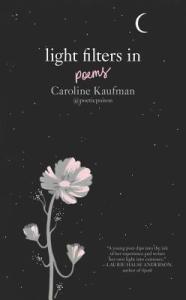
Caroline Kaufman is probably better known (so far) by her Instagram profile @poeticpoison. Published while still a teenager, this book is a mixture of dark and light, heartache and hope. Poetry can be very hit and miss for me and I found that to be the case with this collection as well. I connected with some of her words so deeply that I could have written them myself when I was Caroline’s age.

I’ve spent so much time trying to become who I should be that I lost myself along the way.

Others I struggled with but that’s probably more indicative of my stony cold heart than Caroline’s writing ability. When I read about relationships and heartache it’s akin to a vampire feeling the warmth of sunlight on their skin.

This book is divided into four sections: the darkness falls, the night persists, the dawn breaks, and the sun rises. What I loved above all else is the honesty of these poems.

sometimes I imagine my younger self and I worry she wouldn’t recognize me.

Once upon a nitpick: One of my pet peeves is sentences that don’t begin with a capital letter. It bugs me whenever I see it and for some reason that baffles me it seems to be a cool thing to do these days. Some poems in this book include my beloved capital letters; others don’t.

This collection reminded me of the tumultuous experience of adolescence, a place I don’t like to visit. There’s a rawness to the writing that I really appreciated although overall I don’t feel as though I’m the target audience. I probably would have been when I was a teenager but a lot of the writing felt very young (and rightly so as the author is only 18). I hope that Caroline continues to write from her heart as the authenticity of her voice has the potential to impact a lot of young lives.

Rating: 3.5 out of 5.

Once Upon a Blurb

In Light Filters In, Caroline Kaufman – known as @poeticpoison – does what she does best: reflects our own experiences back at us and makes us feel less alone, one exquisite and insightful piece at a time. She writes about giving up too much of yourself to someone else, not fitting in, endlessly Googling “how to be happy,” and ultimately figuring out who you are.

This hardcover collection features completely new material plus some fan favourites from Caroline’s account. Filled with haunting, spare pieces of original art, Light Filters In will thrill existing fans and newcomers alike.

it’s okay if some things

are always out of reach.

if you could carry all the stars

in the palm of your hand,

they wouldn’t be

half as breathtaking

Abridged Classics: Brief Summaries of Books You Were Supposed to Read but Probably Didn’t – John Atkinson

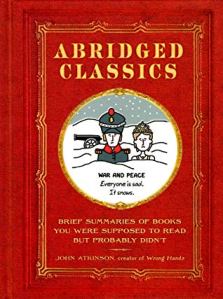
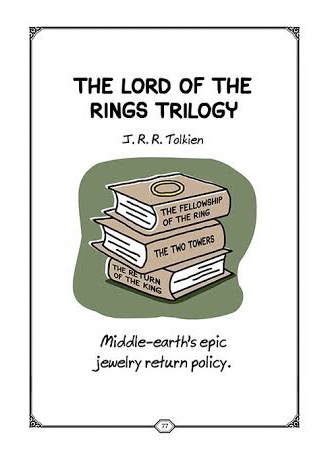
This is one of those super quick (about five minutes) and quirky reads. John Atkinson summarises classic novels in a few words, with each entry accompanied by an illustration or two.

I found I enjoyed the summaries if I’d read the book referenced already or at least knew the basics of the story. For those classics included where I wasn’t already familiar with the plot I found myself thinking some variation of ‘Oh, okay’ or ‘I don’t get it’.

My favourites summaries are:

The Handmaid’s Tale – An oppressive patriarchy controls women’s bodies. This book is also about that.

Charlotte’s Web – Clever web designer saves a pig.

I borrowed this book from my library (I love my library). I can imagine people buying this as a gift book. I’d already read many of the entries online though and while I’m glad I read the book I won’t be buying it.

Rating: 3 out of 5.

Once Upon a Blurb

A collection of irreverent summations of more than 100 well-known works of literature, from Anna Karenina to Wuthering Heights, cleverly described in the fewest words possible and accompanied with funny color illustrations.

Abridged Classics: Brief Summaries of Books You Were Supposed to Read but Probably Didn’t is packed with dozens of humorous super-condensed summations of some of the most famous works of literature from many of the world’s most revered authors, including William Shakespeare, Charles Dickens, Emily Brontë, Leo Tolstoy, Jane Austen, Mark Twain, J.R.R. Tolkien, Margaret Atwood, James Joyce, Plato, Ernest Hemingway, Dan Brown, Ayn Rand, and Herman Melville.

From “Old ladies convince a guy to ruin Scotland” (Macbeth) to “Everyone is sad. It snows.” (War and Peace), these clever, humorous synopses are sure to make book lovers smile. 

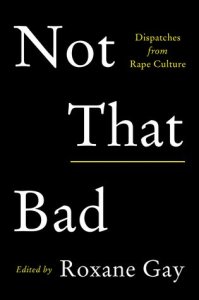
Not That Bad: Dispatches from Rape Culture – Roxane Gay (editor)

I went on a bit of a journey through Opposite Land while reading this book. I love that this book exists. I hate that it has to.

The title was what initially grabbed my attention: Not That Bad. How many times have I and countless others said that?! Was it because it wasn’t that bad? No. It was that bad but we still live in a world that, on the whole, doesn’t want to know about sexual assault.

It doesn’t quite feel right to say I have a favourite anything where rape culture is concerned so instead I’ll say that the best definition of rape culture I’ve read to date is by Clem Ford:

“A state of existence in which the impact and reality of sexual violence is minimised while the perpetrators of it are supported by a complex system built on flawed human beliefs, mythologies about gender, and good old fashioned misogyny.”

Usually I’d give each contributor in a book of essays an individual star rating and comment on their writing style or whether I connected with their story or not, but I won’t be doing that here. I’m so proud of everyone that contributed to this book and while some essays impacted me more than others, I’m not comfortable critiquing anyone’s experience of rape culture.

Instead I’ll be sharing a quote from each contributor. I highlighted so much of this book and found it difficult in most cases to choose just one for this review. In the end I decided to share the one that stood out the most when I reread my highlighted passages. As such, both the book and my review need to come with a trigger warning. Stop reading now if you need to. 💜

Introduction – Roxane Gay

It was comforting, perhaps, to tell myself that what I went through “wasn’t that bad.” Allowing myself to believe that being gang-raped wasn’t “that bad” allowed me to break down my trauma into something more manageable, into something I could carry with me instead of allowing the magnitude of it to destroy me.

But, in the long run, diminishing my experience hurt me far more than it helped.

Fragments – Aubrey Hirsch

If rape culture had a national sport, it would be … well … something with balls, for sure.

Slaughterhouse Island – Jill Christman

If nothing changes – and in thirty years, not nearly enough has changed – next year, there will be one hundred thousand more assaults on our campuses.

One is too many. One hundred thousand.

& the Truth Is, I Have No Story – Claire Schwartz

This is not about that. This is about everything after.

This is about how, all of a sudden, there was only one after.

The Luckiest MILF in Brooklyn – Lynn Melnick

I know that saying please stop made it no more likely that these things would stop.

Spectator: My Family, My Rapist, and Mourning Online – Brandon Taylor

The only way through all of it was to promise that I would remember it and that at some point, I would make it known what happened there.

I am a hard person because hardness is what comes from a life lived underground.

The Sun – Emma Smith-Stevens

So many times my mind left my body only to return to find it soiled

Sixty-Three Days – AJ McKenna

I resent having to face up to it. I resent having to be a survivor.

“Survivor” is the “special needs” of victimhood. If I say I have survived, I’m fooling nobody. I didn’t.

Only the Lonely – Lisa Mecham

And my hands, my hands. I wrapped them around my shins and pulled in tight and cried and thought about how when you’re hurt, way before you say it, you have to feel it.

What I Told Myself – Vanessa Mártir

I looked over at my daughter, who had moved on to the swings, and that’s when it hit me: I’d been blaming myself for thirty years for what happened to me when I was six.

Stasis – Ally Sheedy

I didn’t go on auditions for films that I felt glorified sex work, that depicted women being sexually abused in a gratuitous way, or that required me to leave my sense of self on the doorstep. (All of these films became huge hits.)

The Ways We Are Taught to Be a Girl – xTx

We learn not to tell everything. We know telling everything will make them see the bad in us. How it is our fault. How we contributed. We fear repercussions, albeit lighter than the ones we will administer to ourselves; slut, bad, ugly, weak, whore, trash, shame, hate. We tell just enough, if we tell at all.

Floccinaucinihilipilification – So Mayer

It’s a conundrum: if you survive, then it – that, the trauma – can’t have been that bad. Being dead is the only way to prove it was. It really was bad. It was terrible. It was so awful there was no way I could survive.

What did this child die of? Shame, mainly. And narrative necessity.

If you survive, you have to prove it was that bad; or else, they think you are.

Surviving is some kind of sin, like floating up off the dunking stool like a witch. You have to be permanently écorchée, heart-on-sleeve, offering up organs and body parts like a medieval saint.

The Life Ruiner – Nora Salem

Perhaps the most horrifying thing about nonconsensual sex is that, in an instant, it erases you. Your own desires, your safety and well-being, your ownership of the body that may very well have been the only thing you ever felt sure you owned – all of it becomes irrelevant, even nonexistent.

All the Angry Women – Lyz Lenz

Anger is the privilege of the truly broken, and yet, I’ve never met a woman who was broken enough that she allowed herself to be angry.

Good Girls – Amy Jo Burns

Much of the furor spread not because a crime occurred, but because these girls had the nerve to say that it had.

A good girl is a quick study, and this is what you, always a good girl, learned: It doesn’t matter how good you are, because a man will always be better.

Utmost Resistance: Law and the Queer Woman or How I Sat in a Classroom and Listened to My Male Classmates Debate How to Define Force and Consent – V.L. Seek

When your truth is so inherently questioned, it is easier to say nothing than anything at all.

Bodies Against Borders – Michelle Chen

The flip side of treating “victims” or “survivors” as subjects of a narrative is that the process of intellectualizing the issue also requires neatly transmuting the subject into the object. And objectifying people who have lived through sexual violence is not a good place to begin, or end, any story – not our own, and not theirs.

Wiping the Stain Clean – Gabrielle Union

Rape is a wound that throbs long after it heals. And for some of us the throbbing gets too loud. Post-traumatic stress syndrome is very real and chips away at the soul and sanity of so many of us who have survived sexual violence.

What We Didn’t Say – Liz Rosema

I don’t even remember his name but I remember what he said – the corner of that page is folded in my memory. I turn right to it.

I Said Yes – Anthony Frame

“It’s your eyes. They’re so … Was that the year it happened?”

Knowing Better – Samhita Mukhopadhyay

She had learned, somewhere in the interim, to do more than simply reveal what had happened to her; she had learned to tell the story of it so that it didn’t become her only story.

Not That Loud: Quiet Encounters with Rape Culture – Miriam Zoila Pérez

Sexual assault is no longer an undercurrent in political life: it shouts at us from news headlines, colors the electoral debates, shapes rally slogans and protest chants. But something doesn’t have to be loud to be deafening, to suck up all the oxygen in the room, to shroud the windows and dim the lights.

Why I Stopped – Zoë Medeiros

Sometimes I see ghosts. The worst ghosts for me are not usually the flashbacks, although those can be pretty bad, but the ones who show me what I might have been if it never happened. It’s like suddenly feeling what it would be like to run on a leg that had never been broken, just for a second, and then it’s gone and the old bone-deep pain is with me again.

Picture Perfect – Sharisse Tracey

For once, I was glad I didn’t have a little sister.

To Get Out from Under It – Stacey May Fowles

What I need is what most women need when they talk about the sexual violence they have endured. I need someone to listen. I need someone to believe me.

Reaping What Rape Culture Sows: Live from the Killing Fields of Growing Up Female in America – Elisabeth Fairfield Stokes

the world, I had learned, was a place that didn’t condemn sexual violence; it accepted and excused it.

Invisible Light Waves – Meredith Talusan

I stayed to prove that he could not affect me

Getting Home – Nicole Boyce

There’s something so naive about insisting that daylight makes a difference. Why do I imagine that violence wears a wristwatch?

Why I Didn’t Say No – Elissa Bassist

Because when a woman challenges a man, then the facts are automatically in dispute, as is the speaker, and the speaker’s license to speak.

Early this week I had my latest experience with rape culture. At a time when I had already read about half of this book I found myself in a room with a man in a position of authority who, while telling me that it wasn’t a matter of whether he believed me or not, also told me numerous times that my story was “unbelievable”, along with an incredulous “How is that even possible?!”

Feeling disempowered by his lack of belief and judgement, and vulnerable after being given no choice over the location of our meeting, I found myself minimising my experience by telling him that the sexual assault I’d experienced in that building (a few offices to my right) wasn’t as bad as the sexual assault I’d experienced across the street from where we were meeting.

“Not as bad.” As soon as the words were out of my mouth the title of this book flashed in my mind and I internally chastised myself. While I couldn’t take back those words I made sure I wasn’t silent when this man went on to talk about the “gains” people achieve by making up false allegations against “poor” men. I (we) have a long way to go but I believe that by refusing to be silent about the “unbelievable” we (I) can be catalysts for change.

If you have read this review and have experienced any form of sexual assault please know that you are not alone and it was not your fault. I believe you. Your story matters. You matter!

If you need support or information you can contact:

You can also search for resources in over a hundred countries at:

Rating: 5 out of 5.

Once Upon a Blurb

Cultural critic and bestselling author Roxane Gay has edited a collection of essays that explore what it means to live in a world where women are frequently belittled and harassed due to their gender, and offers a call to arms insisting that “not that bad” must no longer be good enough.

The Cabin at the End of the World – Paul Tremblay

This is one of those books where you’re certain going into it that you know what you’re getting yourself into, but then you learn you had no idea. An isolated cabin in the woods inhabited by a family whose respite is interrupted by a group of strangers with possible mayhem in mind. That’s been done before, right? I’ve seen the movies.

What if the strangers tell the family that the choices they make in that cabin have the power to press pause on the apocalypse or set it in motion?! Now you’re talking!

In this book you’ll learn who the family are as individuals and how their family dynamics work both before and during the invasion. Invited inside their heads, you’ll hear their thoughts as their lives are turned upside down and you’ll be given access to some of their most treasured and painful memories.

This is a loving and loveable family consisting of two doting dads and their adorable adopted daughter. I loved them all. It would have been so much easier if just one of them were the slightest bit irritating … but they’re not.

So, what about the invaders? Sorry, but all things considered I liked them too. I tried my hardest to demonise them but failed miserably. Whether you believe what they say or not, I believed that they believed it. From that perspective, scary as it sounds, it made sense to me where they were coming from. Much like our gorgeous couple, I went back and forth between not believing the people who had disrupted their peaceful lives and wondering if maybe they were actually telling the truth.

This is not a casual read and if you’re going through a stressful time in your life you may want to put this book on hold until your stress event has faded somewhat. It’s a testament to Paul Tremblay that his writing stressed me out so much. I kept getting this image of my life being this red stress ball at the time and reading this book felt like adding sharp metal spikes to it.

The Cabin at the End of the World may not have had as big an impact if my life had been floating on a calm lake while reading but I still think the constant tension, suspense and paranoia was always going to raise my blood pressure. I read some of this book in a doctor’s waiting room and at the beginning of my appointment my blood pressure was 132/100. Coincidence? You can decide for yourself after you read it!

I adore the way that Paul writes. I connected to his characters and felt like I was immersed in what was happening inside that cabin. I felt engaged the whole time and I was invested in the outcome of every character. I’m not quite sure how Paul did this but there were scenes where I had to pause and marvel at the beauty of sentences describing brutality. It doesn’t seem like the two should go together but they did here.

The pacing feels practically frenetic at times and I can’t see the story working as well any other way. You get to catch your breath when the characters do. Overall though, the stress of the situation doesn’t ease for the characters so it doesn’t ease for the reader either.

I expect some readers will be uneasy and maybe even cranky about some unanswered questions. While I would certainly read with interest a Q&A with the author I thought the book finished exactly where it should have and I’m okay with the unanswered questions. Throughout the book you’re only privy to information as it’s explained to the characters so it felt perfect to me how it ended.

My Nerd is Showing: I really appreciated the synchronicity between the number of grasshoppers Wen catches at the beginning of the book and the number of people that wind up in the cabin. I also picked up on some really interesting (to me) correlations between that and other numbers that pop up in the book and what those numbers are said to represent from a Biblical perspective. [Yes, I have a bazillion years of Bible College behind me. No, I won’t go all ooky spooky super spiritual on you and bore you with the Bible number meaning thing. You’re welcome!]

I wondered throughout the book if the specific numbers were intentional or not and wavered between thinking they had to be deliberate and thinking I was reading too much into something that meant nothing. Naturally after finishing the book I read the author’s bio. Upon discovering that Paul has a master’s degree in mathematics a nerdy smile may have escaped. Now I really want to believe the numbers were deliberate. 🤓

Favourite Phrase: “brain-bashed proto-zombie” … Seriously, how awesome is that word combo?!

The Bottom Line: I need to read every single thing Paul has or will ever write. I want to ramble on and on about all of the parts of this book that either surprised me, had me wanting to bite my nails or melted chunks off my icy heart but I won’t because I’m mean like that I don’t want to ruin your reading experience by getting into spoiler territory.

Thank you so much to Edelweiss and William Morrow, an imprint of HarperCollins Publishers, for the opportunity to read this book and discover a new favourite author in the process.

Rating: 5 out of 5.

Once Upon a Blurb

Seven-year-old Wen and her parents, Eric and Andrew, are vacationing at a remote cabin on a quiet New Hampshire lake. Their closest neighbours are more than two miles in either direction along a rutted dirt road.

One afternoon, as Wen catches grasshoppers in the front yard, a stranger unexpectedly appears in the driveway. Leonard is the largest man Wen has ever seen but he is young, friendly, and he wins her over almost instantly. Leonard and Wen talk and play until Leonard abruptly apologises and tells Wen, “None of what’s going to happen is your fault”. Three more strangers then arrive at the cabin carrying unidentifiable, menacing objects. As Wen sprints inside to warn her parents, Leonard calls out: “Your dads won’t want to let us in, Wen. But they have to. We need your help to save the world.”

Thus begins an unbearably tense, gripping tale of paranoia, sacrifice, apocalypse, and survival that escalates to a shattering conclusion, one in which the fate of a loving family and quite possibly all of humanity are entwined. The Cabin at the End of the World is a masterpiece of terror and suspense from the fantastically fertile imagination of Paul Tremblay.